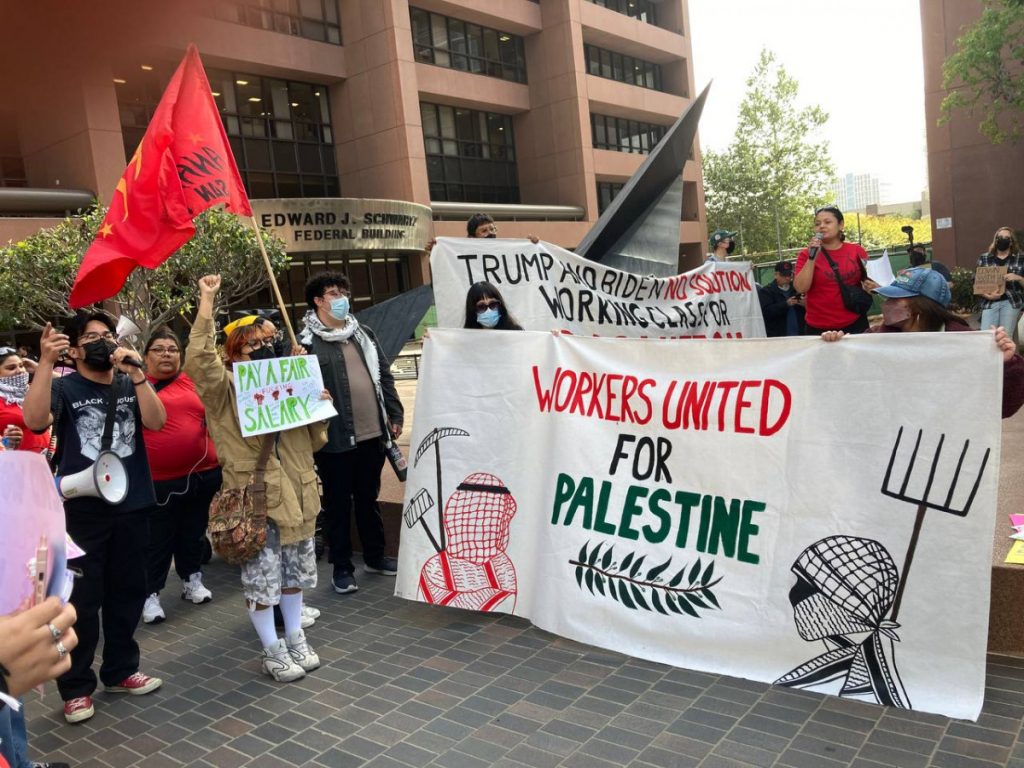
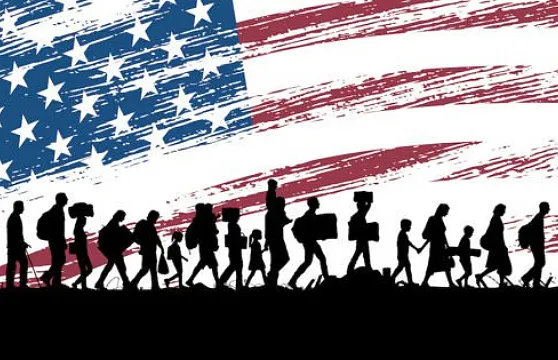
DHS is kidnapping and killing us… Ni un@ mas!

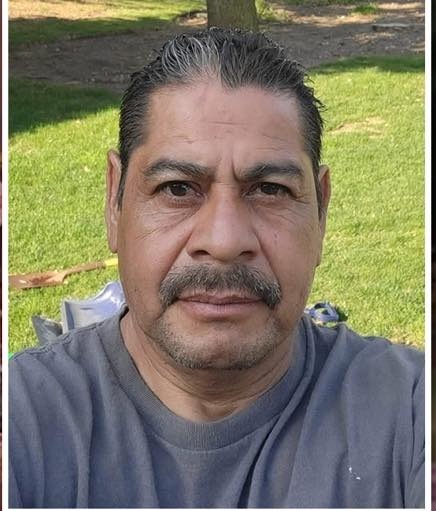
Carlos roberto montoya
Carlos Roberto Montoya

Los Angeles — On Aug. 14, the DHS (Department of Homeland Security) and its Federal Law Enforcement Collaborators killed yet another human being: Carlos Roberto Montoya. 

Like many immigrants living in the belly of the beast, Carlos was escaping extreme poverty in his home country and was forced to separate from his beloved family to try his luck in the U.S. Immigrants seeking a better life are forced to choose between being poor in their home country or being poor in the U.S. 

Carlos was the sole provider for his daughters back in Guatemala. He was a regular at a Home Depot parking lot in Monrovia, California, just outside Los Angeles, where so many of the most vulnerable and exploited workers are forced to exchange their hard labor for the green paper that allows them to pay for just enough food and a roof over their head.  

Per witness reports, day laborers ran as soon as they saw ICE was there because they knew that the risk of getting detained and disappeared while brown is high, regardless of immigration status. 

In an interview with Noticias Telemundo, one of Carlos’ fellow day laborers shares that he witnessed Carlos with his head down and in cuffs after being detained by ICE gestapo officials. He was later informed that Carlos had gotten onto the 210 freeway, but he doesn’t understand how that happened because he recalls seeing him already detained by ICE. 

Pablo Alvarado with the National Day Laborer Organizing Network (NDLON) is demanding a full investigation.  

Despite witness reports and a video showing Carlos detained by ICE, DHS claims they were not aware of his death until hours later, after they were finished with their operations for the day. 

It is not surprising that DHS would try to cover up their criminal and fascist behavior; it is also not surprising that they would receive assistance from the owners of corporate media, who continue to parrot the DHS line that “he was not being pursued at the time of the crash.” 

Carlos had a split second to make a decision between being taken to a second location or literally running for his life. He only had a split second to think about how his daughters would survive if he were kidnapped and disappeared, or if making a run for it would allow him to continue to struggle for survival.  

While DHS and its cronies are the main murderers, the Home Depot is also complicit. The Community Self Defense Coalition in Los Angeles has called for a boycott of Home Depot because of its complicity in the raids. 

The billionaire co-founder of Home Depot, Ken Langone, boasted about how excited he was about the future of the U.S. under Trump. 

It is no coincidence that the Home Depots have been center stage for so many horrifying incidents involving the ICE gestapo. They have kicked out community patrollers trying to keep day laborers safe, yet they allow ICE onto their property to terrorize laborers and customers in the parking lots and even inside the stores. In Monrovia, there were a total of 13 human beings who were kidnapped that day.  

Strugglelalucha256


ICE raids escalate in LA as community fights back

Tense confrontations are escalating in Los Angeles’ residential neighborhoods. In just the first two weeks of May, incidents in South Central include a raid near Exposition and Arlington.

According to witnesses, ICE agents arrived in force, shutting down the entire block with at least eight vehicles, including trucks and unmarked cars. Officers in full tactical gear, wearing bulletproof vests, detained at least five individuals.  

Neighbors reported hearing a detained individual shouting for a lawyer, while others described a heavy police presence nearby, including armored trucks.

Forcible removals and warrantless searches

In a separate incident, residents reported that a neighbor, sitting in her car, had her window broken by ICE agents who forcibly removed her.  

This writer, a member of the Community Self-Defense Coalition, witnessed another incident in South Central Los Angeles during a community self-defense patrol. Law enforcement, including West Covina Police and Department of Homeland Security (DHS) agents, entered a family’s home without a warrant. Minors were forced to provide DNA swabs without parental consent, and property was seized before a warrant was produced, at least three hours after the raid began.

The government continues to criminalize basic constitutional rights, break laws requiring warrants, terrorize families, and rely on intimidation. 

The raid is part of a broader escalation in immigration enforcement, with federal agencies increasingly collaborating with local police — a violation of California’s sanctuary city laws. Members of the Community Self-Defense Coalition, a grassroots network that monitors and challenges illegal ICE operations, witnessed and documented unlawful tactics. 

The Community Self-Defense Coalition has gained international attention for its efforts in organizing neighborhood patrols, providing know-your-rights education, and mobilizing rapid response teams during ICE raids. During these patrols, coalition members distribute literature and encourage residents to document the raid with cell phones, creating a visible counter-presence to law enforcement.

State repression and growing resistance

To discourage the fightback against the government’s fascist repression, the state is redefining constitutional rights in a way that denies the well-established principles of free speech and assembly. The FBI is now being redirected against immigrant communities, while white-collar crimes and criminals (think Elon Musk) are deprioritized.

Despite increasing repression, the coalition reports that its numbers have grown since May 1 (International Workers’ Day), with more militant patrols forming in heavily targeted neighborhoods and on college campuses.  

The Community Self-Defense Coalition will continue to do its work to push back fascist attacks of the Trump administration, which is a continuation of the previous administration’s genocidal police attacks and ICE deportations targeting primarily Black and Brown communities, and increasingly now, anyone in solidarity with the people of Palestine.

Palestine solidarity and campus protest

On May 15, the 77th anniversary of the Nakba — the mass slaughter of 15,000 Palestinians as over 400 Palestinian villages were depopulated or razed, removing more than half the Palestinian population from their homeland in 1948 — UCLA students and coalition member Maggie Vascassenno participated in a demonstration organized by Students for Justice in Palestine (SJP). The action occurred despite the university’s criminalization of pro-Palestine activities, which led to students and professors being subject to deportations and detentions.

Vascassenno described the action:  

“Today, at UCLA, Students for Justice in Palestine organized a powerful event to illustrate the loss that was Nakba. First they set up at Dickson N, then when the cops started creeping in, the organizers quickly moved the crowd to a new location, where they built a community with boxes and painted banners, and they planted an orange tree. It was Jaffa, and it was beautiful, until the cops started surrounding us, then we rushed down the long steps, carrying what we could and went to the final site, named Gaza, where again we were rapidly dispersed. Throughout the event, students recited the words and remembrances of Palestinian survivors of the original Nakba.” 

That fighting spirit will continue to grow from Los Angeles to Palestine.


Strugglelalucha256


Latinx youth lead anti-Trump protests in Los Angeles

Organizers from the Harriet Tubman Solidarity Center gathered on the steps of Los Angeles City Hall on the morning of Feb. 7 to send a message that the people will not tolerate landlord price gouging in the wake of the recent wildfires. That was how the day began, but not how it ended.

Roughly five minutes into the press conference, a large, organized group of high school students approached City Hall carrying homemade signs and flags from various Latin American countries. The demonstration was entirely composed of local Latinx teenagers who attend a high school about a mile from City Hall.

Once the march arrived, the Harriet Tubman Center emcee, John Parker, took the initiative to combine the two events. He invited anyone interested to speak using the center’s amplified sound system. Many of the young people accepted the offer.

Most of those who spoke identified themselves not only as Latina, Latino or Latinx, but also proudly announced themselves as queer, gay or trans. So why had these students taken to the streets?

This demonstration followed a week of similar protests by Latinx youth, all denouncing Donald Trump’s mass deportation policy. The speakers at the Friday demonstration made it clear that they, too, took to the streets to protest what they called Trump’s fascist deportations directed at the Latinx community.

These are quite literally the children of people being deported. The week leading up to Friday, Feb. 9, saw protests of thousands that blocked highways, walked out of schools, and directly confronted police forces. All of these actions were organized and carried out by Latinx youth.

At the peak of the demonstration, Harriet Tubman Center organizer John Parker led the students in anti-Trump and anti-Elon Musk chants. Another political point raised at the demonstration, which had echoed throughout the week, was: No one can be illegal on stolen land.

What is now called the U.S. state of California is, in fact, stolen Mexican land. In 1846, the U.S. military invaded Mexico under the orders of President James K. Polk. The invasion’s goal was no secret. The U.S. invaded Mexican land in Texas and California to expand its markets fueled by slave labor and to strengthen the position of slave states as opposed to free states.

Further, anti-immigrant deportation policies did not begin under Donald Trump. The U.S. has a long history of xenophobic laws and violent anti-immigrant raids by U.S. Immigration and Customs Enforcement and its predecessors. In fact, President Joe Biden broke Trump’s deportation record just last year.

For the U.S. government, whether led by a Democrat or a Republican, to deport anyone from land stolen from their ancestors for the purpose of strengthening chattel slavery is as evil as it is ludicrous.

All progressives must join the Latinx community in resisting Trump’s mass deportation policy. This expansion and escalation of Manifest Destiny cannot be tolerated, whether it is aimed at Indigenous, Palestinian or Latin American communities.


Strugglelalucha256


Senate Democrats capitulate to racism on anti-immigrant bill

Thirty-three Democratic Senators — led by Charles Schumer — voted on Dec. 9 to push along the anti-immigrant Laken Riley Act, virtually guaranteeing its eventual passage. This legislation will allow the deportation of immigrants, including children, who are merely charged — not convicted — of shoplifting and other minor offenses.

Whatever happened to the “presumption of innocence”? Weren’t we told in grade school that defendants in the United States were considered innocent until proven guilty?

The bill is demagogically named after Laken Riley, a 22-year-old nursing student in Athens, Georgia, who was killed last year while jogging. José Antonio Ibarra, an immigrant from Venezuela, was convicted of killing Riley.

Bigots in Congress and on Fox News are cynically using this tragedy to smear millions of immigrants as dangerous criminals. It’s no different than saying if a Black, Latinx, Muslim, Jewish, or transgender person was guilty of a crime, then all of “them” should be punished.

Georgia politician Mike Collins sponsored this hate legislation in the House of Representatives. He had earlier introduced his self-named RAZOR Act to allow Texas to string concertina wire in the Rio Grande so migrant children and their families could be cut to shreds. 

The NAACP has demanded Collins be investigated. He praised white fraternity students at the University of Mississippi who racially taunted and made ape-like gestures towards a Black woman who was protesting the genocide of Palestinians.

One of the loudest congressional backers of the Laken Riley Act is Collins’ fellow Georgian, Marjorie Taylor Greene. This nutjob claimed that the 2018 California forest fires were caused by space lasers, including those allegedly manipulated by Jewish people.

Both Collins and Greene were silent when another jogger, the 25-year-old Black man Ahmaud Arbery, was murdered in 2020 while jogging near Brunswick, Georgia. The local district attorney advised that no arrests be made. It took people mobilizing in Georgia and across the country that Arbery’s killers were brought to trial and convicted.

To mock the Black Lives Matter movement, Greene wears a t-shirt emblazoned “Say Her Name: Laken Riley.” Tens of thousands of people wore t-shirts saying, “Say Her Name: Breonna Taylor,” in memory of the Black woman who was killed in 2020 by Louisville, Kentucky, police. 

Greene hates the Black Lives Matter movement and compares it to the Ku Klux Klan. 

Cowardly retreat before Trump

Last year, Senate Democrats stopped this legislation using the Senate’s filibuster rule, which requires the approval of 60 senators before a bill can be voted on. But following Trump’s narrow victory, the vast majority of Democratic senators are jumping on the anti-immigrant train.

Only eight Democrats and independent Bernie Sanders refused to go along.

Democratic Senators John Fetterman from Pennsylvania and Rubén Gallego from Arizona are among the sponsors of the Laken Riley Act.

These politicians are not only craven but also shortsighted. In a country of 340 million people, Trump won by less than 2.3 million votes. Just the drop-off in Democratic votes in California — 1.8 million — accounted for most of that.

Trump’s nutty and dangerous cabinet picks are already provoking derision. So are his schemes to invade Greenland, Panama, Mexico, Canada, and maybe — with his sidekick Elon Musk — Mars.

The 33 Senate Democrats allowing this anti-immigrant bill to proceed are like those who supported the Iraq war over 20 years ago. Half of the Democratic Senators — including Joe Biden, Charles Schumer, John Kerry, and Hillary Clinton — voted for the 2002 resolution to allow George W. Bush to wage his bloody war.

Kerry’s vote didn’t do him any good when he ran for president in 2004. Neither did it help Clinton in 2016. 

Echoes of Dred Scott

In its notorious 1857 Dred Scott decision, the U.S. Supreme Court declared Black people had no rights that white people need to respect. The Laken Riley Act tells cops and judges that immigrants have no rights at all.

Any bigot with a badge will be able to racially profile someone who they think “looks funny’” and claim they stole a candy bar. In some states, a person can be accused of shoplifting without even attempting to leave a store.

That’s what happened to Frank Wills, the Black security guard who caught Richard Nixon’s Watergate burglars on June 17, 1972. In 1979, Wills was accused of hiding a pair of sneakers in a bag. South Carolina authorities jailed the Watergate hero in revenge for helping to drive Nixon out of the White House.

The congressional steamroller to pass the Laken Riley Act goes hand-in-hand with Trump’s vow to take away citizenship from children born in the United States whose parents are immigrants. 

Trump’s proposed action — which he promises to accomplish by 

executive order — would repeal the 14th Amendment to the Constitution, overturning the Dred Scott decision. Along with the 13th and 15th amendments, it was written in the blood of hundreds of thousands of members of the Union Army and Navy who defeated the slave masters.

States rights vs. human rights

The Laken Riley bill would also allow state attorney generals to sue the federal government on immigration matters. It gives them the right to take the State Department to court if visas are issued to people from countries that don’t allow deportations from the United States. 

This not only echoes Trump’s ban on immigrants from Muslim countries. It also recalls the old Confederate slogan of “states’ rights.” Immigration, like tariffs, was always a matter for the federal government.

Ronald Reagan began his 1980 presidential campaign by calling for “states’ rights” in Philadelphia, Mississippi. Reagan — who called the people of Watts, California, “mad dogs” — did so where the martyrs James Chaney, Andrew Goodman, and Michael Schwerner were murdered by the Mississippi Ku Klux Klan.

Any actions by state officials, like the corrupt homophobic and transphobic bigot Texas Attorney General Ken Paxton, concerning immigration recalls the repudiated doctrine of “interposition.”

Segregationists claimed that state legislatures had the right to overturn U.S. Supreme Court decisions. That’s what the Mississippi legislature did in 1956 by unanimously declaring invalid the Supreme Court’s Brown vs. Board decision that banned school segregation. 

The decision of most Senate Democrats to turn their backs on immigrant rights shows that we have to organize ourselves. The demonstrations scheduled in Washington, D.C., and across the country against Trump’s inauguration are a good start.

The labor movement should call a new Solidarity Day against Trump. We need to continue to struggle to stop the genocide in Gaza and the war against poor people here in the United States.

Strugglelalucha256


On May Day, New Orleans celebrates diverse working class

New Orleans, May 1 – Immigrant-worker organization Unión Migrante led a march to celebrate the international workers’ holiday, which has been revived across the country in recent years by immigrant activists. 

The march began on Conti Street beneath a statue of Mexico’s Indigenous president, Benito Juárez. (Juárez was a Zapotec leader from a peasant family who was exiled by a conservative government during the 1850s, first in Havana, Cuba, and then in New Orleans.) The May Day march ended with a rally in front of City Hall. 

Representatives from many endorsing organizations spoke, including unions like the National Association of Letter Carriers, United Teachers of New Orleans, and Starbucks Workers United. Speakers from revolutionary organizations also took to the mic, such as Workers Voice Socialist Movement, Freedom Road Socialist Organization, and Party for Socialism and Liberation. 

Reflecting the great movement that is sweeping the country, many participants wore keffiyehs and speakers emphasized the importance of the Palestinian liberation struggle. An organizer with Students for a Democratic Society spoke on behalf of Tulane University’s Palestine encampment, which had been brutally suppressed by police the day before. 

The prominence of Palestine solidarity on May Day is a very good thing. The workers’ movement cannot confine itself to narrow economics. All attacks on oppressed people are attacks on workers. These are all workers’ issues. Indeed, this was one of the main arguments in Bolshevik revolutionary Vladimir Lenin’s pamphlet, “What is to Be Done? 

He said that the workers’ struggle absolutely cannot confine itself to just wages or economics in the narrow sense. Instead, our movement must expose the oppressors and exploiters in whatever sphere they’re operating, and we must fight all their attacks. We might take this advice to heart, given that Lenin led the revolution that established the first lasting workers’ state.

‘Resist Landry!’ 

Queer and trans contingents were prominent throughout the march, from trans youth organization BreakOUT!, to La Familia LGBTQ del Sur, to the Queer and Trans Community Action Project (QTCAP), newly formed by members of the old Real Name Campaign. 

QTCAP activists held aloft a banner saying, “Resist Landry.” Jeff Landry is Louisiana’s far-right, bigoted governor, who recently tried to prevent hungry kids from accessing school lunch over the summer (doesn’t seem like much of a “family man”). Others in the crowd held up the blue, pink and white trans pride flag. 

One stage and film set worker with the International Alliance of Theatrical Stage Employees or IATSE gave a talk. He said:
“The union movement right now in this country is huge. The workers’ voice is being heard and they are very frightened. Stay together, fight the fight, continue to spread the message of what is right.”

This message of unity was echoed in all the speeches. We are living in dangerous times. Capitalism is in crisis and attacks are coming down everywhere. Things are bad in Louisiana. Landry and his fascist movement are ramming through anti-worker, anti-immigrant, anti-Black, anti-queer, and anti-trans legislation. They’re imposing anti-women legislation. (Landry made a career undermining abortion rights long before he was elected governor.)

But that speaker was right. Our ruling class enemies are afraid. If they weren’t afraid, they wouldn’t be attacking us so fiercely. Six southern governors wouldn’t have signed a letter denouncing the United Auto Workers union drive in Chattanooga, Tennessee. Despite the governors’ efforts, the workers won! They organized a union. 

As in cities and towns across the country, and around the world for that matter, the crowd that gathered in New Orleans on May Day was a microcosm of the working class. Our class is diverse. It is immigrant and non-immigrant, Black and white, Asian, Indigenous. It is trans, cis, straight, and queer. Despite these differences, we are all workers. The capitalists are afraid of that. 

May Day was a warmup. They know that we can come out in the thousands and the millions, just like we did for Black lives in 2020.

¡El pueblo unido jamás será vencido! The people united will never be defeated!

Strugglelalucha256


Los Angeles May Day marchers link arms with student protesters

In Los Angeles on May Day, hundreds of people set off on a march and motorcade from MacArthur Park for the annual celebration of the international workers’ holiday. The neighborhood that surrounds the park is home to thousands of immigrant workers and has become the traditional launching point for the annual event.

An opening rally was held from the back of a flatbed truck when the event kicked off. Then the loud procession slowly made its way downtown for a final rally at a busy intersection adjacent to the University of Southern California (USC).

Chants that called out all the issues that are important to working-class people at home were interspersed with expressions of solidarity for the people of Gaza. The anger over the Biden/Netanyahu genocide echoed off the storefronts along the three-mile route.

Originally, the march was to have ended at the Los Angeles Federal Building. But during the weeks of organizing for the May Day march, campus protests and encampments in solidarity with the people of Gaza seemed to pop up everywhere. By May Day there were tents occupying the grounds of college campuses not only across the country, but internationally. 

Students at USC had been arrested and their encampment had been cleared out when the L.A. cops were called in by the campus administration in the days leading up to the workers’ holiday. To the shock and dismay of the cops and campus authorities, the 93 arrests that they carried out didn’t end the protest. 

Students reconstituted their tent city almost immediately. It was this beautiful act of defiance that inspired May Day organizers to change their destination to make sure to express the utmost support for the campus protesters.

Shutting down traffic for Palestine

For the final rally, the flatbed truck that had led the march was parked across the intersection of Jefferson Boulevard and Figueroa Street for at least an hour and was surrounded by throngs of May Day marchers, blocking rush hour traffic.

There is a long tradition of May Day marches being organized by Union del Barrio, Harriet Tubman Center for Social Justice, BAYAN USA and others. This year took on a new level of determination and spirit. The courage of the students at USC and so many other campuses fed the militancy of the May Day demonstration. 

As the organizing days ticked by, a host of organizations joined in the effort, such as Unmute Humanity, which had held a demonstration at CNN to protest U.S. media support for the genocide, and the Palestinian Youth Movement, which has been organizing mass protests repeatedly since Oct. 7. 

The Association of Raza Educators, Gabriela LA, Stop LAPD Spying Coalition, United Teachers Los Angeles, American Indian Movement, Los Angeles Tenants Union and others all joined in the effort to build May Day. 

The beautiful poster for the event was printed in English, Arabic and Spanish, and sported the logos of 23 community and anti-war organizations. Every group helped spread the word for weeks to bring people out.

The deadly agenda of U.S. imperialism and its proxies has never been more visible. Biden and Netanyahu are despised by millions for their terrible crimes. Those brave students and activists who protest are being slandered with ridiculous accusations of antisemitism and claims they are all “outside agitators” by the capitalist media. But the slanders are ineffective. 

Around the world, working-class people understand the nature of the Zionist state. The campus protests are hailed in the Global South countries that have been exploited and targeted by U.S. imperialism. There is growing awareness that it doesn’t matter which of the two parties of the billionaire class occupies the White House. The hope for humanity is in a united global working-class struggle that resists imperialism.

Long live International Workers’ Day! Viva, viva Palestina!

Strugglelalucha256


‘Trump and Biden, no solution!’ A revolutionary May Day in San Diego

Hundreds showed up at the Federal Building in downtown San Diego on May 1 for the International Workers’ Day opening rally. The rally was followed by a three-mile march to Chicano Park, the heart of Barrio Logan in Logan Heights.

The May Day Organizing Committee, a coalition of grassroots organizations, unions, and workers, comes together annually to plan and organize the event. This year the committee, led by Unión Del Barrio, began organizing early in February. The committee united on the theme: “Trump and Biden, NO SOLUTION! Working Class for REVOLUTION,” recognizing neither Biden nor Trump prioritizes the struggles of the working class.

Chants emphasized the points of unity and demands: union jobs at a livable wage; free universal health care, housing, and education; end police terror; abolish all colonial borders and the U.S. war machine; end U.S. funding to Israel; and lift the siege on Gaza. 

Chants along the march included: “Not another nickel, not another dime! No more money for Israel’s crimes!”, “Abolish the war machine”; “Cancel RIMPAC”; and “Hands off Cuba, Venezuela, Nicaragua, Palestine, Africa, and the Philippines!”

Armed with banners and signs alerting the public about issues that have a direct impact on workers, the crowd swelled as marchers began the three-mile march from the Federal Building through Logan Heights to historic and artistic Chicano Park. There the Danza Azteca Dancers and Drummers performed while organizers prepared for the closing rally.

May Day is a day of international workers’ solidarity recognized in countries worldwide. Workers march – voicing our demands, showing we are determined to continue to fight until respect, dignity, and justice is won. Together we will end capitalism, colonialism, and U.S. imperialism.

We must believe we can change the world. The solution for the working class in the United States and around the world is revolution – a socialist revolution.

Endorsing organizations included: Unión Del Barrio, Movimiento Estudiantil Chicano de Aztlán (MEChA), United Auto Workers, Socialist Unity Party, Association of Raza Educators, Party for Socialism and Liberation, International People’s Democratic Uhuru Movement (INPDUM), Anakbayan S.D., Malaya, The Panther Party, Palestinian Youth Movement, Free Them All!, Friends of Friendship Park, and Armadillos Search & Rescue.

Strugglelalucha256


Immigration in the U.S. is big business

The foreign-born immigrant population in the United States grew by more than 15 percent in the last 12 years, and it is the labor force of these 32.5 million workers, generally overworked Latin Americans, that is one of the main causes behind strong U.S. economic growth.

In the United States, a country whose history was largely forged by immigrants, the discourse against foreigners arriving in search of better opportunities is one of the battle horses in pre-election speeches. But beyond the talk about the threat posed by immigrants are studies that clearly show that these communities benefit the country’s economy as a whole and the pockets of natives in particular.

“Relatively large immigrant populations show better outcomes than those with smaller percentages of immigrant populations,” says the George Bush Institute report, which shows their positive impact in areas ranging from income to cultural development and debunks myths that they take jobs away from locals or drive wages down. Cities with high percentages of immigrants are more innovative than others, and the contribution of non-U.S.-born people is high.

Studies reveal that immigrants invent new products and receive patents at higher rates than natives. Twenty-seven percent of master’s and doctoral students in Science, Technology, Engineering, and Mathematics are foreign nationals on temporary visas. Immigrants represent 14% of the population of metropolises but hold 23% of science and technology positions.

The least skilled immigrants fill millions of essential jobs that would remain vacant if they were not in areas such as healthcare, manufacturing, and construction. Their importance in healthcare was providential in the pandemic: one out of every three jobs was filled by immigrants. They have also helped “stabilize” industries in the Midwest, filling a shortage of skilled labor that would have forced factories to close.

And while the growing number of immigrants in the U.S. has caused division among politicians across the country and has become one of the big topics of debate in the run-up to the presidential election, it has stoked angst among a sector of voters, but there is one place where almost everyone seems to be optimistic: Wall Street.

Businessmen, investment funds are happy, especially after the Congressional Budget Office estimated that immigration will generate a seven billion dollar increase in gross domestic product over the next decade. Translated: immigration is big business, except for those who migrate, of course.

It is investment bank economists who account for the boost that migrants are giving not only to the labor force but also to consumer spending. Investment bank Goldman Sachs Group Inc. revised upward its short-term economic growth forecasts. JPMorgan Chase & Co. and BNP Paribas SA were among the banks that acknowledged the economic impact of increased immigration in recent weeks.

“Immigration is not only a very socially and politically charged issue, but also an important macroeconomic issue,” said Janet Henry, global chief economist at HSBC Holdings. She noted that no advanced economy is benefiting as much from immigration as the U.S. and “the impact of migration has been an important part of U.S. growth over the past two years.”

Immigrant workers account for roughly one in five U.S. workers, a record in government data going back nearly two decades. Economists and policymakers highlight the connection between the increased influx of foreign workers and the rapid post-pandemic recovery. Federal Reserve Chairman Jerome Powell has claimed that immigration is one of the reasons behind the strong economic growth.

According to official figures, the foreign-born population has grown considerably over the past 50 years both in size and as a percentage of the U.S. population. In 1970, it was 9.6 million (4.7 percent) of the total population, and in 2022, it was estimated at 46.2 million (13.9 percent) of the total U.S. population.

More than half of the immigrants in the United States come from South and Central America, with numbers increasing by more than two million in the last 12 years.

Despite declining by one million, the Mexican-born remain the largest sector of immigrants living in the United States today, totaling 10.68 million in 2022, representing one-quarter of the total immigrant population. The Mexican-born are only a portion of the total 36 million people of Mexican origin living in the country. They are also the largest group of undocumented immigrants entering the U.S., according to the Department of Homeland Security.

Some 80 percent of those born in Mexico have lived in the U.S. since before 2010, although some 2 million have arrived after that year. Over the past 12 years, the percentage of Mexicans who have obtained U.S. citizenship increased to the point that today, nearly one-third of Mexican-born immigrants, half of them without much education, are U.S. citizens.

The business of people smuggling

In December 2013, U.S. authorities began to warn that drug cartels were already involved in the huge business of people smuggling, but no one did anything to stop it. Today, the business is so big that it represents at least $10 billion annually.

In those days, migrants had to hire “coyotes” to help them cross into the United States and guide them along their route, but that has changed. Today, migrants have to hire the cartels because, obviously, it is those same cartels who have had, for several years now, control of the Mexican routes to the United States, according to the Mexican newspaper El Economista.

On their way before being stopped by the border patrol, today migrants are stopped by the cartels: at each stop they have to show the blue, red, green or yellow bracelets, which will tell the smugglers that the migrant is already paying the cartel’s people, a fee that is not for crossing into the United States, but just for letting them pass through Mexican territory to the border.

But the illegal immigration business in Texas generates thriving jails and employs loan sharks, loan sharks, and shady lawyers. In 2018, Texas was at the center of the scandal produced by President Donald Trump’s “zero tolerance” policy, which led to the separation of more than 2,300 children from their families upon entering the country illegally or seeking asylum.

Texas also has the largest number of prisons for immigrants. Built in 1983, the detention center in Houston was the first private prison in modern U.S. history. Its owners, Corrections Corporation of America (CCA), and GEO Group are the two largest prison corporations in the US. Both are publicly traded.

According to the research center In The Public Interest (INPI), this scheme causes mass incarceration for minor offenses to be promoted in the private sphere. Together both corporations, with profits of $4 billion in 2017, “invested” more than $10 million in political candidates and nearly $25 million in lobbying between 1989 and 2017.

According to a study by Mexico’s National Population Council migrants can pay between $5,000 and $9,600 for their crossing in that country and another $2,200 for crossing the border accompanied by a guide. Organized crime groups, in turn, rely on their relationship with corrupt state agents. Very few migrants make the journey without the involvement of organized crime.

In Mexico, the Sinaloa, Jalisco, and Zetas cartels are the ones behind migrant smuggling. In the Mexican city of Juarez, there are frequent clashes between the Mexicles (armed wing of the Sinaloa cartel) and La Linea (of the Juarez cartel) to capture the management of the migrant caravans.

In Colombia, the picture is not much different. According to Jeremy McDermott, Colombia director for InSight Crime, there are two organizations behind migrant smuggling in the country: the Aragua Train, a mega-gang that deals primarily with Venezuelan migrants, and the Gaitanista Self-Defense Forces, or Clan del Golfo.

Lucrative Darien Gap

The jungle-like Darien Gap has quickly become one of the political and humanitarian crises. What was a trickle a few years ago has now become a torrent: more than 360,000 people already crossed the jungle in 2023, according to the Panamanian government, surpassing the record of 250,000 in 2022.

In response, the United States, Colombia and Panama signed an agreement to “put an end to the illicit movement of people,” a practice that “leads to the death and exploitation of vulnerable people for significant profits”.

Today, those profits are larger than ever: in 2023 alone, local leaders have collected tens of millions of dollars from migrants in a huge and sophisticated human movement operation. “There is a nice economy,” said Fredy Marín, a former councilman in the neighboring municipality of Necoclí who runs a boat company that transports migrants on their way to the US. It transports thousands of people every month and charges US$40 per person.

Source: Cuba en Resumen

Strugglelalucha256


U.S. imperialism creates refugees, then criminalizes them at the border

With Nikki Haley out of the race, Trump and Biden are officially facing off in a presidential rematch. Both of these deeply unpopular politicians are attempting to get ahead by scapegoating migrants and refugees at the U.S.-Mexico border. In dueling publicity stunts, they both went to the border on Feb. 29., hundreds of miles apart in Texas.

Despite the polarized rhetoric, there is little substantive difference between their approaches to immigration. Biden seeks to present himself as a uniter who can “reach across the aisle” and get the job done, courting a supposedly reasonable section of the Republican Party less beholden to Trump. Trump depicts Biden as overseeing an open-border policy.

The reality is that the Biden administration has continued many of the more repressive Trump-era immigration policies.

Biden was Obama’s vice president from January 2009 to January 2017. Immigrant rights groups labeled Obama the “Deporter in Chief,” having deported three million people by the time he left office. Ultra-bigot Ron DeSantis even used these facts to try to make himself look more vicious than Trump, saying that he would deport more people than Trump, whose deportation stats trailed Obama’s.

Immigration legislation has been held up in Congress for months as different factions fight over the exact ways to manage U.S. imperialism’s borders. The legislation has been tied to funding for U.S. proxies in Ukraine, for example, which some Republicans oppose.

They do not oppose Ukraine funding on anti-imperialist grounds but rather because they represent the interests of different factions of the bourgeoisie who want to emphasize different theaters of conflict. Both parties are still absolutely united on continuing the U.S.-Israeli genocide of Palestinians and provoking China, risking World War III.

The bipartisan bill that has been held up – the showpiece of Biden’s “reaching across the aisle” – would enact further violence against asylum seekers. The bill would institute a trigger mechanism to shut down the border if an average of 5,000 people per day in a given week (or 8,500 in a single day) attempted to enter the U.S. outside the woefully inadequate legal channels.

The bill would involve pumping billions more of our tax dollars into the border police apparatus at a time when Kellogg’s CEO is telling us to just eat cereal for dinner because food and everything else is so expensive.

Sources close to the Biden administration have said that Genocide Joe is considering executive action to implement aspects of the immigration bill, bypassing the congressional morass.

In a special congressional election in New York, Democrat Tom Suozzi just won the House seat formerly occupied by George Santos. He scored this victory by bashing immigrants, calling the situation at the border an “invasion,” in fascistic, dehumanizing language reminiscent of Trump.

Biden’s racist edge

Immigration was a focal point in Biden’s March 7 State of the Union address, which marks the beginning of his campaign in earnest. Biden used racist terminology, referring to human beings as “illegals.”

Marjorie Taylor Greene put on her own show – wearing a shirt that read, “say her name” – and disrupting Biden by yelling this slogan, which came from the Black Lives Matter movement. Greene and other Republicans are capitalizing on the tragic killing of 22-year-old University of Georgia nursing student Laken Riley. A Venezuelan national is being charged with the crime.

The Republican narrative, of course, is that this incident is part of an epidemic of immigrant crime and violence and that the Biden administration’s policies are too lax. The immigrant crime wave is a pure myth. Very good data has come from multiple studies showing that there is no correlation between crime rates and immigration.

Stanford University economist Ran Abramitzky has even found that, since the 1960s, immigrants are 60% less likely to be incarcerated than people born in the U.S. – and that’s not because immigrants are treated more lightly. If anything, the opposite is probably true, as immigrants are criminalized in every aspect of their lives.

Since Greene and others have chosen to use the phrase, “say her name,” we should note a huge, glaring difference between what she and her cohorts are doing and the BLM movement. While the immigrant crime wave narrative is a big lie, the constant murder of Black people by police is not. All the data backs this up.

Overall, the political situation for immigrants continues to worsen, with both parties relying on this tried-and-true method of dividing up the working class by pitting one group of workers against another.

Who are the migrants?

But who are the migrants, and why are they coming in increasing numbers? U.S. Border Patrol claims to have had a record-breaking 250,000 encounters with migrants at the southwest border in December 2023. Books have been written on this topic, but the short answer is that it is because of U.S. imperialism.

Forty-seven thousand Venezuelans were encountered in December. Washington has dealt Venezuela’s economy deadly blows for many years, with sanctions that have increased dramatically since the Obama years. On March 8, 2015, Obama signed Executive Order 13692, declaring Venezuela an “unusual and extraordinary threat to the national security and foreign policy of the United States.”

As with Cuba, the “threat” represented by Venezuela’s Bolivarian Revolution was simply that they pursued national sovereignty, making it more difficult for Wall Street to plunder the country’s natural resources and exploit the people; they were pursuing a non-capitalist direction. The Venezuelan people held on firmly to the gains they had made and resisted repeated Washington-backed coups, but the sanctions were devastating. The country’s economy contracted 24.7% between 2013-16.

Trump’s administration pursued a “maximum pressure” campaign, especially targeting Venezuela’s leading industry, oil and gas. As with all U.S. sanctions, from Venezuela to Cuba to Iraq, the goal was to immiserate the population, leading to social collapse. The Biden administration let up just a little bit when it comes to Venezuelan oil exports but is threatening to ramp up sanctions again.

In 2021, the largest proportion of migrants came from Honduras, some 200 families a day, according to Border Patrol. The Obama administration – remember, Biden was vice president – orchestrated a coup in Honduras in 2009, sending democratically elected President Manuel Zelaya into exile.

For years, the country was plunged into economic chaos and violence. Politically, Honduras is just now getting back on its feet, with progressive President Xiomara Castro being elected in 2022 – much to the dismay of Washington.

The Border Patrol claims to have encountered 76,100 Haitians in the 2023 fiscal year. Haiti is in the news now because of the political and economic crisis following the assassination of President Jovenel Moïse in 2021. The bourgeois media typically depicts Haiti’s troubles out of context rather than talk about the history of colonialism and slavery and the U.S. imperialists’ domination of Haiti. The U.S. occupied Haiti militarily from 1915 to 1934.

SLL writer Stephen Millies says:

“The super-rich have never forgiven the Haitian people for overthrowing slavery. More than two centuries of revenge followed with the U.S. military occupying Haiti for 20 years, followed by support for the Duvalier family dictatorship.

“It was the CIA which was behind the coup that overthrew democratically elected President Jean-Bertrand Aristide in 2004. Trump called Haiti, which helped liberate Latin America, a ‘sh–hole country.’”

Politicians like Trump and Biden orchestrate the poverty and violence that drive people from their homelands, and they repress them when they come to the U.S. out of desperation. Sanctions and coups are only the tip of the iceberg. Capitalist imperialism is a global system. Exploitation and oppression are structural. It is not defined by one policy or another.

But it is important that we grasp that it is the capitalist class – the filthy rich like Jeff Bezos and Elon Musk – who create these inhumane situations to amass more wealth, that is, to accumulate capital. The politicians work for capitalists. Workers have no interest in upholding their system or going along with the scapegoating campaigns.

Strugglelalucha256


Migrant caravans are challenging an oppressive border regime

Over Christmas, images of thousands of women, men, and children walking behind a banner and a man carrying a white cross appeared on the front pages of media outlets worldwide. They were Venezuelans, Hondurans, Guatemalans, Cubans, Haitians, and others who together formed the “exodus from poverty” (Exodo de la Pobreza), as the banner reads. Many of them looked tired after walking dozens of miles through southern Mexico. Many carried their children, belongings, and even their pets toward the North.

Mexican authorities disbanded the caravan by offering regularization and transport buses just after New Year’s Eve. About ten days later, the caravaneros reassembled in Oaxaca to make their way northward.

This was by no means the first border caravan to progress through Mexican territory. A month earlier, another caravan, also several thousand participants strong, had marched through the south of Mexico. In April 2023, three thousand migrants gathered in Tapachula, united in a northward march to protest the country’s detention system.

The urgency of their cause was underscored just weeks prior when a fire killed forty detained migrants in Ciudad Juárez, within sight of El Paso, demonstrating the lethality of the existing border-control system. The people who take part in the border caravans are mounting a challenge to that system by voting with their feet.

Challenging the border regime

When the largest caravan to date approached the US border during the 2018 midterms, Donald Trump sent the military to the border. Trump spoke of a foreign invasion and promised to crush the caravans.

Joe Biden’s rhetoric as president has been less harsh. However, despite Republican claims that his administration has somehow pulled US border security to pieces, Biden has quietly continued and intensified the violent, senseless border and migration strategies of his predecessor.

Nevertheless, “irregular” migration has increased, and caravans full of people fleeing dispossession become increasingly frequent. It is almost as if the globalized US border regime and the imperialism it backs are not preventing but rather precipitating the caravans.

Decades of dispossession and destabilization in Latin America have shrunk the space people see for their future. Yet, when they gather to take on one of the world’s most tightly-knit border regimes, they find collective agency precisely where hope seems least probable.

False Images

Too often, analyses of these caravans, be they in Mexico, Belarus, or Turkey, take one of two positions. The Right paints them as “invading hordes” directed by NGOs, activists, or other enemies of the state. Liberals, on the other hand, tend to see them as pawns manipulated by politicians and deceived by smugglers.

Migrants themselves rarely appear in these analyses as anything other than passive witnesses of the horrors of irregular migration. While there is much truth in the descriptions of violence, exploitation, and abuse along the US’s vertical border, a crucial part of the story is missing: self-organization by migrants to overcome this violence. This makes it all too easy to shift the blame to anyone and anything but the imperialist border regime that produces it.

Caravans are an active response to border externalization — the extension of border regimes into the territory of third countries. This strategy makes migration increasingly dangerous and produces the precarity that makes migrants particularly exploitable once they arrive at their (often temporary) destination. It is an integral part of what migrant activist and author Harsha Walia calls “border imperialism.”

US foreign policy is to blame for much of the violence and poverty that robs people in Latin America of their right to stay in their home regions. This impact manifests itself in the form of direct or indirect interventions and dispossession through unequal trade and waves of ruthless privatization backed by US-supported local autocrats.

For a few decades now, the United States has attempted to remove the result of its politics — displaced people — from its immediate territorial boundary. This becomes evident through repeated statements from the US Customs and Border Protection (CBP) that declare the Southwestern border to be the “last line of defense, not the first.”

Borders without borders

Through a series of deals, the US border has, in effect, been extended deep into Mexican and even Guatemalan territory. The highly militarized, internationally active Border Patrol Tactical Unit (BORTAC) that “defends” the United States against transit migrants in Mexico and black lives matter protesters in Portland is just the most obvious example of this stretching.

Although such practices began earlier, the 2014 Southern Border Program (Programa Frontera Sur) introduced by the Mexican government under US pressure marks the beginning of its most intense period so far. This program declared migration to be a top priority of Mexican national security. It turned militarized and securitized approaches into the country’s main instruments to fend off Central American transit migrants and satisfy Mexico’s Northern neighbor.

One year later, Mexican authorities had already apprehended more Central Americans within their territory than the CBP did at the US Southwestern border. The process of externalization thus shifted the impact of the US border several thousand miles southward.

However, when we combine the numbers published by US and Mexican authorities, it reveals no significant change in apprehensions. Instead, the shift in border enforcement has restructured the transit space within Mexico.

Because migration is treated as a security issue, migrants have to become invisible. Aggressive border practices, which often include abuse and extortion by authorities, force migrants to move where they cannot be detected. The further they move away from public space, the more dangerous their journey becomes. Many migrants now refer to the journey across Mexican territory as “The Corridor of Death” (El corredor de la Muerte).

Crushed hopes

In late 2018, the biggest migrant caravan yet pulled thousands of migrants out of this invisibility. During the same period, left-wing candidate Andrés Manuel López Obrador (AMLO) won the Mexican presidential election in a landslide. There was a short glimpse of hope that the Corridor of Death might be abolished, as AMLO likened the Central American transit migrants to Mexican migrants in the United States and announced a far-reaching shift in Mexican migration policy.

Instead of securitizing the issue, he declared that his administration would approach migration from the standpoint of human rights and development. Migrants received transit documents and humanitarian assistance, and AMLO’s government lobbied the United States for a development initiative that would include not only the Mexican South but also Guatemala, El Salvador, and Honduras.

Unfortunately, these hopes of a new approach to migration and development in the region were quickly crushed. Trump infamously threatened to increase tariffs on all Mexican products on a monthly basis if Mexico refused to clamp down on migrant transit routes. For a country that has been highly dependent on regional trade since the introduction of NAFTA, it was easier to comply with Trump’s demands than to risk an open trade war.

US pressure did not merely restore the status quo ante but intensified it, with the newly created National Guard, a highly militarized police force, now focusing on the management of migration. Since then, there have been mass detentions and arbitrary internal deportations. Leon, a migrant activist, says that violence against migrants and activists has reached a new level:

They act with complete impunity. It is a violation of all rights a person has. They steal and destroy our papers, and the National Guard persecutes, beats up, and kidnaps activists and migrants. Before, you could at least exercise some of your rights.

Tapachula, a major transit site close to the Guatemalan border, has become such an intense focus of the National Guard that migrants started calling it “Prison City” (Ciudad Carcel). In spite of this pressure, “irregular migration” continues to the extent that commentators in the United States speak of “record levels” and conjure the specter of another “border crisis.”

The only thing that seems to have changed is that migration is now even more risky, and the trafficking business has become a major income source for Mexican cartels. If nobody is able to leave Tapachula through their own efforts, let alone reach the US border, they have to rely on the services of smugglers with their highly professional infrastructure.

On the march

It is this background that produces caravans. Migrants can only break out of invisibility, precarity, exposure to violence, and dependence on organized crime if they act collectively. It is not “false promises” or “manipulation” by smugglers that motivate people to join caravans. They do so because it is the safest and most accessible way for them to cross Mexico and overcome the vertical border that the United States installed within its territory.

In his study of the caravan of late 2018, Eduardo Torre Cantalapiedra concludes that most of the people who joined it were “involuntary nonmigrants” before the caravan picked them up. These are people who either got stuck in transit or were never able to leave in the first place. Most of them form part of what Mike Davis called the “outcast proletariat,” a class of people who never even had the chance to be exploited for profit by capital.

Many have been displaced and dispossessed through several rounds of land reforms and privatization. They suffer from chronic underemployment due to the premature deindustrialization that many Latin American economies have gone through in recent decades.

The caravan gives them the opportunity to change these circumstances without having to rely on organized crime. This is also why the caravans tend to have a more heterogeneous makeup than other forms of irregular migration. As Carla, an NGO worker in Tapachula tells me: “In every caravan, we see more women, more children, more families, people in wheelchairs, people with suitcases, with dogs, and people of the LGBTQ community.”

Misery and joy

Joining and keeping up with a caravan is hard. Often, the National Guard tries to break up the crowd violently, while organized crime tries to subvert them.

Even in the absence of such threats, the journey itself is exhausting and draining. People cross many hundreds or even thousands of miles by foot or on the back of La Bestia, the infamous freight train that many migrants use to travel northward. Upon reaching Mexico City, it is common for them to have blisters on their feet or wounds that have not been properly attended to.

Nevertheless, participants often describe the caravan as an exciting experience. It forms as a disorganized crowd and slowly develops into a cohesive collective. Sharing the misery and joy of transit, confronting and negotiating with authorities, and planning the next steps in democratic assemblies is a uniquely politicizing experience for many.

A movement that starts with the most fundamental political demand, the right to a better life, becomes increasingly self-aware as it crosses the vertical border regime. As they face that regime together, participants develop their own critiques of dispossession and border imperialism. As Leon puts it:

You learn a lot along the way. A migrant is very different when the caravan picks them up in Tapachula than when the caravan drops them in Tijuana. After they walk together all the way and see the struggle, they become a completely different person. Suddenly, they demand the right to asylum, free movement, and the right to walk in peace.

On January 21, another caravan formed in San Pedro Sula, Honduras. It is the first one that has been formed within Honduras in a while, but it will certainly not be the last.

US Secretary of State Antony Blinken speaks of great progress in Washington’s cooperation with Mexico in the “shared goal” of cracking down on what he calls an “unprecedented surge of migration.” The present and future caravaneros, however, already know that such cooperation is not going to provide them with the possibility to stay nor with the right to move. To challenge border imperialism, they have to move collectively. The caravans will not end until we undo the regime that produces the Corridor of Death in the first place.

Source: Internationalist 360
Strugglelalucha256
https://www.struggle-la-lucha.org/immigrants/