Pakistan floods and capitalist-fueled climate change

The year 2022 has seen so much devastation from climate change. Deadly heat waves plowed through all-time temperature records in Europe, the U.S., and South Asia.

Devastating floods from Eastern Kentucky and St Louis, Missouri, to Sydney, Australia, turned roads into rivers, washed away bridges, and destroyed thousands of homes. 

East Africa is enduring its most prolonged drought in many decades, and 20 million people are at risk of severe hunger. The death toll from all of this is elusive, but when estimates are possible, it will certainly be in the hundreds of thousands. 

Capitalist-fueled climate change is a war on the planet and all its inhabitants.

With all that, what is happening in Pakistan stands out. A monsoon season nearly double compared to “normal,” compounded by the rapid melting of glacial ice, has unleashed floods that have a third of this poverty-stricken nation under water. 

More than 1,150 people have died since the middle of June when the rains began, and 33 million others are affected. Millions of people have fled their damaged or destroyed homes, and search and rescue operations are finding more victims daily. More rain is on its way. Language describing the situation includes “epochal level,” and “nothing left.”

Capitalist-caused climate change

U.N. Secretary-General Antonio Guterres made an emergency appeal for a $160-million relief fund. He warned of the perils of capitalist-caused climate change in his video to a ceremony launching the fund. Guterres said, “Let’s stop sleepwalking toward the destruction of our planet by climate change. Today, it’s Pakistan. Tomorrow, it could be your country.”

Guterres’ remarks could easily be seen as a veiled criticism of the dismal U.S. response to climate change. For more than a century, while emitting the most significant volume of greenhouse gases, the capital created by labor throughout the world flowed into the coffers of imperialist corporations and banks. Being the preeminent imperialist country, the U.S. is considered the most well-equipped and, simultaneously, the most obligated to battle climate change. But for decades, U.S. energy companies, banks, and the entirety of corporate U.S. have blocked and sabotaged actions to curb emissions.

IMF austerity imposed on Pakistan

A 2019 IMF “bailout” of Pakistan’s economy imposed austerity measures as is typical. When exploitative imperialist corporations bleed a country dry, the IMF swoops in and demands that the government lower wages, cut social services and push living standards down in exchange for funds to “rescue” the spiraling economy. After a long delay, they finally released a scheduled payment of $1.17 billion during the devastating flooding.

The government of Pakistan estimates that the recovery from the floods will cost $10 billion. However, if the U.N. appeal for $160 million comes to fruition, combined with the long-delayed IMF payment, that will provide less than 12% of the estimated needs.

Since 1994 the U.N. has organized annual conferences on climate change called Conference of the Parties (COP.) In 2009 at COP15 in Copenhagen, wealthy capitalist countries were forced into an agreement to provide $100 billion annually to the Global South by 2020. The funds are meant to finance mitigation and adaptation in those countries that are not the cause of climate change but have been so exploited by imperialist policies that they are the least able to recover from the consequences of an overheated global atmosphere. 

Pakistan is a sterling example. According to CBS News, “Since 1959, Pakistan is responsible for only 0.4% of the world’s historic CO2 emissions. The U.S. is responsible for 21.5%.”

So far, not one penny of the funds promised in 2009 has been paid. Because of the explosion of climate-change-related, devastating crises around the world in the last few years, the lack of payment is anticipated to be a huge issue at the November COP27 in Sharm el Sheikh, Egypt.

Climate scientists have shown that because of rising ocean temperatures due to greenhouse gas emissions, rainstorms, tropical storms, and hurricanes lose their strength and move along more slowly than before capitalist industrialization. Rainstorms hang around for days dumping water on land. Urban areas with concentrations of tall buildings slow the storms down even more. This phenomenon has been especially apparent in the last 50 years and was expressed most clearly when Hurricane Katrina devastated New Orleans. Katrina also showed the world that racism and national oppression compound the problems of climate change. The experience of nations of oppressed people within the borders of the U.S. in many ways mirrors that imposed on people in the Global South.

Hoping for a solution from a capitalist government is like appointing the fox to guard the henhouse.

Writing this week in the journal Nature Climate Change, a group of scientists has called on their colleagues for activism. April saw protests by more than a thousand scientists from 25 countries. In the UK, scientists were arrested for gluing their scientific papers — and their hands — to the Department for Business building. 

The fight against climate change must be taken from the hands of the corporate class and their government. A militant mass movement in solidarity with the most impoverished and oppressed throughout the world will surely grow.

Strugglelalucha256


Did you know? Greenland melts, billionaires profit

Did you know?

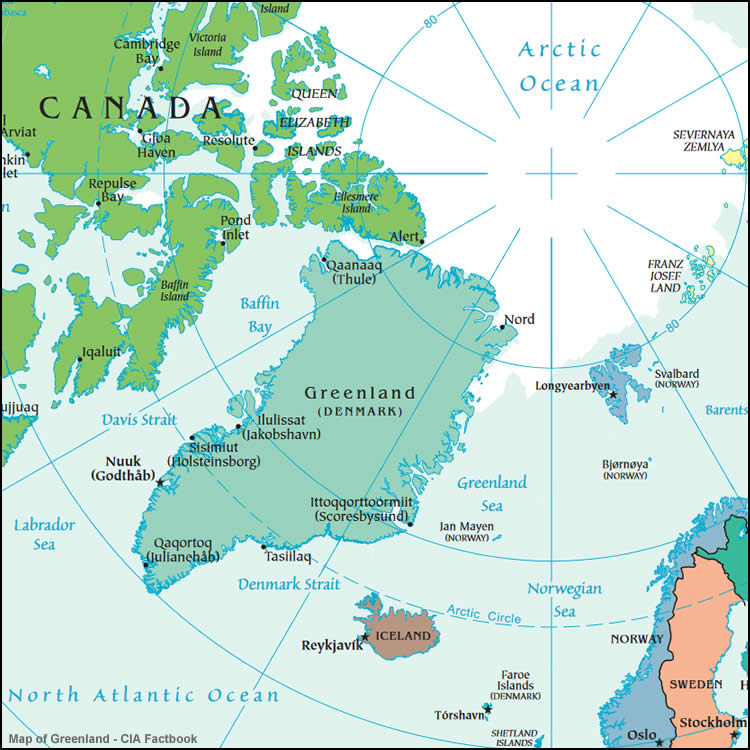
While the ice in Greenland is melting at an alarming rate, billionaires are figuring out how to make a profit out of this disaster.

Global warming is exposing precious minerals that were locked under previously permanent layers of ice. But Jeff Bezos, Michael Bloomberg and Bill Gates, so-called climate-conscious billionaires, aren’t crying — they are busy trying to figure out how to profit from what could be a bonanza for capitalists.

The hunt is already on for minerals like nickel, cobalt, copper, gold and zinc, believed to now be easily accessible to mining equipment and transport ships, according to a CNN report

Kobold Metals, a California startup that counts Gates and Bezos as investors, has been very quiet about its activities. Profiting off of melting Greenland isn’t a very good look.

Doesn’t look like “green” capitalist billionaires are the solution.

Strugglelalucha256


Heat waves tied to Big Energy capitalism

The population of the world is enduring crises from climate change that, until recently, climatologists thought may only happen decades from now. 

Still, major energy companies and their banking partners are quietly investing heavily in oil wells and coal mining projects that would produce a massive surge in greenhouse gas emissions. The capitalist government is supposed to rein in the greed of corporations when it threatens the stability of the system. 

But the earth is cooking, people are dying, livelihoods being destroyed, and even larger environmental crises are looming, and the three branches of the U.S. government are enabling at best  — and facilitating at worst — the continued deadly emissions of methane and CO2 that threaten the habitability of the Earth.

Contradictions of capitalist science

It was a long time before climatologists acknowledged the correlation between extreme weather events and greenhouse gasses. One of the great contradictions of the capitalist economy is that science has moved forward at an astonishing rate compared to previous social systems, but at the same time scientific knowledge is kept on a short leash. 

The unbelievable heatwave that hit the Pacific Northwest a year ago was so outside the realm of normality that it broke the scientific information blockade. Forces seeking to protect fossil fuel investors have pushed climate denial, but the June 2021 heatwave brought about the public debut of “Attribution Science,” a branch of climate change research that has been developing for years. 

Attribution scientists can now use statistics and, with a good degree of confidence, determine how much more likely extreme weather events are in the era of rising global temperatures. Dr. Sjoukje Philip of World Weather Attribution Initiative asserted that the Pacific Northwest heatwave “would have been virtually impossible without human-induced climate change.” She and others estimated that event to be a one-in-a-thousand-year occurrence.

The science is still developing and some types of severe weather – like tornados – are less understood. But the study of heatwaves has yielded the most success. The study is more than academic. Understanding the relationship between heatwaves and other extreme weather and being able to forecast will help with adaptation to changing climate and can save lives.

A 2018 article on climate-xchange.org that focused on the increase in deadly heat waves over the last several decades said: 

“Heat waves are more than just uncomfortable, they are dangerous, deadly, and the most obvious manifestation of a warming climate. They are repeated events of increased prevalence around the world, which are only forecasted to get worse as we keep pumping heat trapping gasses into the atmosphere.” 

To understand the significance of this quote, one need only think back to the 1995 heat wave in Chicago that killed 739 mostly senior citizens over five days. 

Year-over-year all-time temperature records are dropping like flies. BBC reported that in 2019 between May 1 and August 30 almost 400 records were toppled in 29 countries. The year 2022 has seen more high-temperature records broken. 

On July 30, 2020, the temperature in Baghdad, Iraq, was 125℉. Triple digit temperatures in two separate areas of India persisted for weeks, moderated slightly and then resumed until the monsoon season finally brought some relief. 

Beginning in June and continuing as of this writing, heat records have been topped in France, Switzerland, Austria, Poland, Germany, Spain and Portugal. The second of nearly back-to-back heat waves in the U.S. is affecting some 50 million people with temperatures in some parts of the South reaching 115℉ or higher. Also in June, the hottest temperatures ever for the region were recorded in 25 different areas of eastern China and throughout Japan.

Every dangerous event caused by the use of fossil fuels yields others. The crises are cascading. Scientists are now studying how the world’s ocean and air currents, distorted by the effects of greenhouse gasses, are distributing heat waves to particular areas of the Northern Hemisphere causing them to be concurrent, as they have been in the U.S. and India in 2022.

No ‘green new deal’

The Biden crew put on a good “green” show in the election campaign and in the early days after winning the White House. The new administration pushed a $2 trillion climate-change proposal. 

The proposal was less substantial than the “green new deal” that was circulated by the more progressive Democratic congressional group nicknamed “the Squad,” but still stood no chance of passage in the face of an energy corporation-backed onslaught in Congress. 

Now, however, Biden’s White House doesn’t look so “green.” They’ve issued more gas and oil drilling permits than the Trump administration, pushed Saudi Arabia to pump more oil and held the largest offshore drilling rights federal auction in years. 

This is all being done to counter Russia’s oil and gas sales to Europe which the U.S. is trying to supplant. Their effort to do so has been ratcheted up with the sanctions against Russia and the pressure on European countries over the war in Ukraine. The surrender by Biden to the big energy section of the ruling class points to the dominance of energy companies and their investors under U.S. capitalism.

But none of that means that big energy can’t be stopped. After winning the drilling rights in Biden’s auction in the Gulf of Mexico, ExxonMobil and others were salivating over the potential profits. But in January, a federal judge invalidated the auction saying that the Biden administration failed to properly account for the climate change impact. 

Earthjustice and four other environmental groups had challenged the sale and won. Activism to stop the energy giants is the key. So many lives are affected that the struggle will inevitably be taken up by the working classes and oppressed people who suffer the most throughout the world. A portion of the U.S. ruling class recognizes that potential for a heightened struggle that could morph into a class battle that would finally  bring capitalism itself to an end.

Strugglelalucha256


$2 trillion for war vs $100 billion to save the planet

During late April and early May, South Asia experienced the terrible impacts of global warming. Temperatures reached almost 50 degrees Celsius (122 Fahrenheit) in some cities in the region. These high temperatures came alongside dangerous flooding in Northeast India and in Bangladesh, as the rivers burst their banks, with flash floods taking place in places like Sunamganj in Sylhet, Bangladesh.

Saleemul Haq, the director of the International Center of Climate Change and Development, is from Bangladesh. He is a veteran of the UN climate change negotiations. When Haq read a tweet by Marianne Karlsen, the co-chair of the UN’s Adaptation Committee, which said that “[m]ore time is needed to reach an agreement,” while referring to the negotiations on loss and damage finance, he tweeted: “The one thing we have run out of is Time! Climate change impacts are already happening, and poor people are suffering losses and damages due to the emissions of the rich. Talk is no longer an acceptable substitute for action (money!)” Karlsen’s comment came in light of the treacle-slow process of agreement on the “loss and damage” agenda for the 27th Conference of Parties or COP27 meeting to be held in Sharm el-Sheikh, Egypt, in November 2022.

In 2009, at COP15, developed countries of the world had agreed to a $100 billion annual adaptation assistance fund, which was supposed to be paid by 2020. This fund was intended to assist countries of the Global South to shift their reliance on carbon to renewal sources of energy and to adapt to the realities of the climate catastrophe. At the time of the Glasgow COP26 meeting in November 2021, however, developed countries were unable to meet this commitment. The $100 billion may seem like a modest fund, but is far less than the “Trillion Dollar Climate Finance Challenge,” that will be required to ensure comprehensive climate action.

The richer states—led by the West—have not only refused to seriously fund adaptation but they have also reneged on the original agreements, such as the Kyoto Protocol (1997); the U.S. Congress has refused to ratify this important step toward mitigating the climate crisis. The United States has shifted the goalposts for reducing its methane emissions and has refused to account for the massive output of carbon emissions by the U.S. military.

Germany’s money goes to war not climate

Germany hosts the secretariat of the United Nations Framework Convention on Climate Change. In June, as a prelude to COP27, the UN held a conference in Bonn on climate change. The talks ended in acrimony over finance for what is known as “loss and damage.” The European Union consistently blocked all discussions on compensation. Eddy Pérez of the Climate Action Network, Canada, said, “Consumed by their narrow interests, rich nations and in particular countries in the European Union, came to the Bonn Climate Conference to block, delay and undermine efforts from people and communities on the frontlines addressing the losses and damage caused by fossil fuels.”

On the table is the hypocrisy of countries such as Germany, which claims to lead on these issues, but instead has been sourcing fossil fuels overseas and has been spending increasing funds on their military. At the same time, these countries have denied support to developing countries facing devastation from climate-induced superstorms and rising seas.

After the recent German elections, hopes were raised that the new coalition of the Social Democrats with the Green Party would lift up the green agenda. However, German Chancellor Olaf Scholz has promised €100 billion for the military, “the biggest increase in the country’s military expenditure since the end of the Cold War.” He has also committed to “[spending] more than 2 percent of the country’s gross domestic product on the military.” This means more money for the military and less money for climate mitigation and green transformation.

The military and climate catastrophe

The money that is being swallowed into the Western military establishments does not only drift away from any climate spending but also promotes greater climate catastrophe. The U.S. military is the largest institutional polluter on the planet. The maintenance of its more than 800 military bases around the world, for instance, means that the U.S. military consumes 395,000 gallons of oil daily. In 2021, the world’s governments spent $2 trillion on weapons, with the leading countries being those who are the richest (as well as the most sanctimonious on the climate debate). Money is available for war but not to deal with the climate catastrophe.

The way weapons have poured into the Ukraine conflict gives many of us pause. The prolongation of that war has placed 49 million more people at risk of famine in 46 countries, according to the “Hunger Hotspots” report by the United Nations agencies, as a result of the extreme weather conditions and due to conflicts. Conflict and organized violence were the main sources of food insecurity in Africa and the Middle East, specifically in northern Nigeria, central Sahel, eastern Democratic Republic of Congo, Ethiopia, Somalia, South Sudan, Yemen and Syria. The war in Ukraine has exacerbated the food crisis by driving up the price of agricultural commodities. Russia and Ukraine together account for around 30 percent of the global wheat trade. So, the longer the Ukraine war continues, the more “hunger hotspots” will grow, taking food insecurity beyond just Africa and the Middle East.

While one COP meeting has already taken place on the African continent, another will take place later this year. First, Abidjan, Côte d’Ivoire, hosted the UN Convention to Combat Desertification in May and then Sharm el-Sheikh will host the UN Climate Change Conference. These are major forums for African states to put on the table the great damage done to parts of the continent due to the climate catastrophe.

When the representatives of the countries of the world gather at Sharm el-Sheikh, Egypt, in November 2022 for COP27, they will hear Western representatives talk about climate change, make pledges, and then do everything possible to continue to exacerbate the catastrophe. What we saw in Bonn is a prelude to what will be a fiasco in Sharm el-Sheikh.

This article was produced by Globetrotter. Murad Qureshi is a former member of the London Assembly and a former chair of the Stop the War Coalition.

Strugglelalucha256


Oil barons, Pentagon knowingly wreck the planet

The U.S. government and all the corporations that profit from fossil fuels are cherry picking the actions that they are taking in response to the global climate emergency. Everything that they are pursuing is potentially profitable, and they are paying less attention to reforestation, wind power, solar power or other alternative energy sources. 

As they have done and are continuing to do during the COVID pandemic, they treat the climate crisis as if the United States is the only country enduring the consequences. 

The whole scenario raises the question of how, in spite of divergent interests among the rich and powerful, they could have reached this consensus of inaction and callous disregard. The world is on fire and they aren’t even looking for a fire extinguisher. 

The poorest populations are suffering the worst disasters when extreme weather created by CO2, methane and other pollutants hit their homes.

In 1984, Congress demanded the presence of top tobacco executives to answer for the lies they had been telling for decades about the harm of tobacco use. The hearings were a big deal, covered by the national media before and after, and tobacco CEOs’ lies to Congress made headlines and were talked about for years. 

Not that it did that much good, but contrast that to what was supposed to be a similar hearing – this time with top energy company executives, to answer for misinformation about climate change that they’ve been funding through phony think tanks. 

The October 2021 hearing was held electronically because of the pandemic. The CEOs didn’t even bother to join it. They had lower-level flunkies answer questions, and the news media barely covered the events. 

The way that they brushed off Congress with barely a second thought was a clear demonstration of the hierarchy. Capitalist government works for corporations – not the other way around. Any events that hint at another relationship in which giant corporations have to answer to the government are theater.

Oil companies expanding

A May 11, 2022, article in the Guardian revealed something that even further elucidates their power. It turns out that despite claims by the major oil companies that they are going green, they are in fact expanding as never before. The article revealed:

  • “The fossil fuel industry’s short-term expansion plans involve the start of oil and gas projects that will produce greenhouse gasses equivalent to a decade of CO2 emissions from China…
      
  • “These plans include 195 carbon bombs, gigantic oil and gas projects that would each result in at least a billion tons of CO2 emissions over their lifetimes, in total equivalent to about 18 years of current global CO2 emissions. About 60% of these have already started pumping. 
  • “The dozen biggest oil companies are on track to spend $103m a day for the rest of the decade exploiting new fields of oil and gas that cannot be burned if global heating is to be limited to well under 2 degrees Celsius.”

Here are some of the events happening now that are caused by energy corporation criminals:

The Colorado River is in an unprecedented crisis. Warming and drying weather for decades has led to a drought that has broken records that go back 1,200 years. Water levels at Lake Mead, Lake Oroville, Lake Powell and dozens of other lakes are all at the lowest point ever recorded. 

The river and its tributaries supply water to more than 40 million people and 3 million acres of crops. Hundreds of hydroelectric power generators electrify most of the southwest and are closer to their breaking point than ever before.

In northwestern India and in Pakistan a heatwave hit in the latter part of April and beginning of May, and is projected to return at the end of May. The heat was so bad that schools closed, crops were damaged, and there were power outages. A deadly cholera outbreak has infected thousands and killed people because of lack of access to clean drinking water. 

On May 15, the temperature in the city of Jacobabad in Pakistan’s Sindh province was 124 degrees Fahrenheit. India’s capital city of Delhi hit 120 degrees Fahrenheit on the same day.

A study by the British national meteorological service concluded that without the impact of climate change, a heatwave such as this might occur once every 312 years. But the frequency is now likely to be every 3.1 years – roughly 100 times more frequent. By the end of the century their frequency will be about once per year. 

This is similar to what has been forecast recently for Baghdad, Iraq. Many experts question whether such heat is fit for human survival.

KwaZulu-Natal slammed again

After torrential rains destroyed hundreds of homes and killed 435 people in the impoverished KwaZulu-Natal province of South Africa last month, flooding is happening again. Hundreds had to flee their dwellings in late May. 

KwaZulu-Natal Premier Sihle Zikalala told Al Jazeera reporters, “Some areas are inaccessible and have become islands at this stage.”

In Bangladesh and parts of northeastern India, flooding in hundreds of villages has stranded 2 million people, including many children. The region is impoverished and because of lack of mobility, starvation is actually a concern.

The biggest obstacle to curtailing rising atmospheric temperatures is capitalism. But it isn’t just the rise of industrial capitalism that Biden & Co. can blame on the system’s earlier phases. The hyper-militarism of the U.S. imperialist era has exacerbated the global crisis. 

That isn’t only because of the emissions spewed during the manufacture of the machinery of war – although the Pentagon itself emits more than the economies of 46 entire countries. But the plunder of the global south made possible by murderous warfare has left much of the world more vulnerable to extreme weather. 

No one is safe from hurricanes, floods, rising sea levels or extreme heat. But when poverty is added to the equation, climate change is much more deadly for the world’s poorest populations.


Congressional hearings are nothing more than an attempt to rescue the reputation of the Biden administration that has come nowhere near being the champion of saving the planet that it promised during the 2020 election campaign and the early months of the administration. 


The transition to a non-fossil-fuel world has to be run by the people. The oil barons that are knowingly destroying our planet belong in jail for the rest of their lives.

Strugglelalucha256


Climate crisis rages as U.S. pushes war for energy profits

For a brief period last summer, even as the COVID-19 pandemic dominated the headlines, climate change news burst to the forefront. 

There were wildfires in several western U.S. states, where record-breaking droughts dried up the water system. There were floods in China, Central Europe and India, where 1,300 people died. A Pacific Northwest heat wave took the lives of more than 1,000 people in the normally temperate and humid region. 

Considered the most extreme heat wave in world history, it shocked climatologists and was a basis for the reassessment of climate change timelines.

All of this was happening as President Joe Biden’s proposed “Build Back Better” legislation, which included funds for action on climate change, was being crushed in Congress. The legislation was already not enough – but still too much for the powerful energy industry and giant banks to allow. 

The defeat left the White House without a plan of action to bring to the United Nations Climate Change Conference (COP26) in Glasgow last October.

The humiliation and consequent surrender by Biden revealed the weakness of the executive branch of the capitalist U.S. government when it is forced to confront the power of the ruling class, and in particular, giant energy corporations and banks.

Washington prioritizes war

Because of the resources ostensibly at the fingertips of the U.S. empire, capitalist media throughout the world interpret the role of the U.S. as primary in the global effort to fight climate change. This is false hope. The U.S. military is itself the worst single entity that emits CO2 in the world and has evolved into nothing less than a brutal police force for the U.S. energy industry in its efforts to control the world’s oil, natural gas and coal. 

The energy industry is a powerful section of the capitalist class and garners huge and growing investment by the giant banks. Instead of aiding the replacement of fossil fuels with wind and solar, or pushing reforestation on a massive scale, the major oil companies are now investing in ventures that by design can enable their continued drilling and fracking of oil and natural gas.  

They can’t lead this fight. A leopard doesn’t change its spots.

Nonetheless, and understandably, during the leadup to the Glasgow conference, tens of millions of people throughout the world were hoping the White House would take charge and work to alleviate the menacing climate crisis.

Despite the U.S. delegation attending the conference with obvious empty promises instead of a list of actions already funded and soon to be underway, the conference stiffened some of the goals set at previous conferences. All agreed on preventing the global rise in temperature since the industrial revolution from topping 1.5 degrees, reaching “carbon neutrality” by 2050, and mobilizing financing for the global south for mitigation and adaptation.  

Since the conference, the White House’s failed climate proposals are all but forgotten. The media is focused now on the conflict in Ukraine – a crisis created by Washington that threatens the world with nuclear war, as U.S. imperialism maneuvers to increase its domination of oil, gas and energy pathways. 

The Intergovernmental Panel on Climate Change (IPCC) has issued strident warnings that not enough progress has been made in the five months since COP26 and humanity is not on pace in the fight to save the planet. The funding promised to the global south has not come to pass.

Without the blazing headlines over climate change nagging Biden, the White House has now made a u-turn. To alleviate the consequences of Biden and NATO’s campaign against Russia and Donbass, he greenlit the auction of 1.7 million acres in the Gulf of Mexico to oil giants Exxon, Shell, Chevron and others, in a realization of right-wing Sara Palin’s cry to “drill, baby, drill.”

The people pay the price

But there’s no need to hear from the IPCC, or to do a deep dive through mainstream media, to know that the crisis is ongoing. Hundreds of thousands of people are experiencing the consequences firsthand.

An April 5 Newsweek headline reported, “Texas Flash Flooding Sweeps Cars Away as Roads Turn Into Rivers.”

Firefighters in drought-stricken Flagstaff, Arizona, have finally made headway in battling a 19,000-acre fire that was within miles of the city.

In Durban, South Africa, families are mourning more than 400 victims and cleaning up after devastating floods swept away homes of many of the poorest South Africans.

As if the people of Iraq haven’t endured enough at the hands of U.S. imperialism, after wars and sanctions that killed millions, a report by the European Union’s Institute for Security Studies says that Baghdad could be uninhabitable by 2040. The number of 120-degree days will increase from 14 per year not long ago to 40 per year by then.

Awareness of the impending threat is as old as the problem itself. The pioneer of climate science was a remarkable scientist and women’s rights fighter – Eunice Newton Foote, who studied and wrote about the dangers of greenhouse gasses. Her work had to be introduced to other scientists by a male colleague in 1856. But the science was isolated and largely ignored for nearly a century. 

Now there are hundreds of thousands of expert climatologists throughout the world. Engineers are constantly pushing innovations that should be invested in, developed and employed. All of this science and every resource needs to be freed from the influence of the capitalist class. 

Though every criminal U.S. energy corporation today claims to be “green,” it’s never been more clear that the fight against climate change must be severed from their grasp to turn the situation around. The needed momentum won’t come from any occupant of the White House – Democrat or Republican. The only real power capable of saving our planet is in the independent mobilization of the people.

Strugglelalucha256


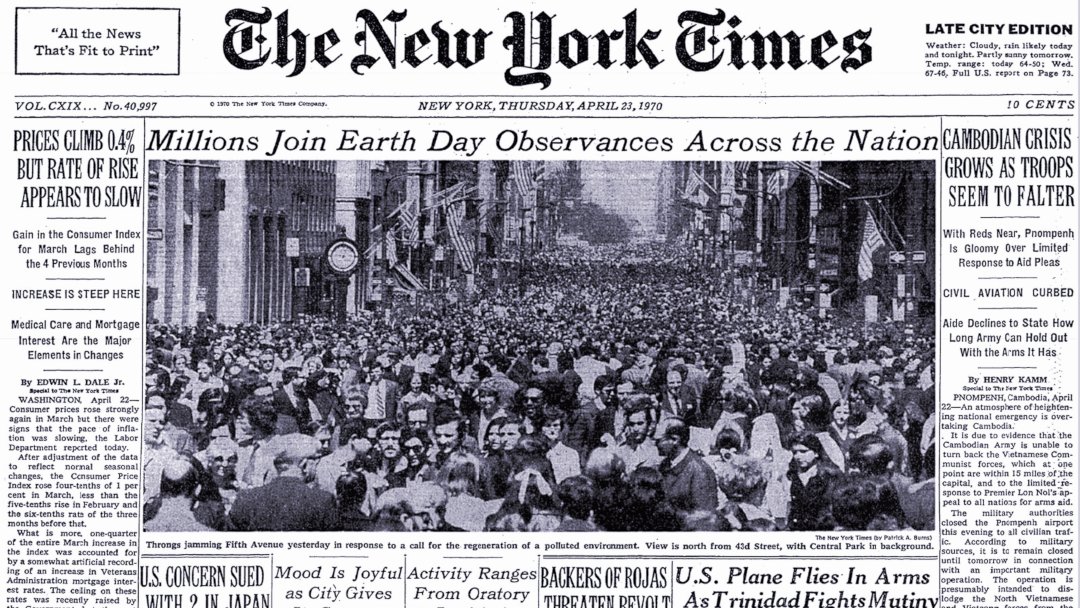
Why is Earth Day on Lenin’s birthday?

Millions of people around the world rally for environmental justice every year on April 22, which is Earth Day. This struggle is more important than ever as capitalist climate change continues to cook the earth.

A big step forward in the environmental movement has been targeting toxic racism. It’s not accidental that children in the Black-majority city of Flint, Michigan, were poisoned by their lead-contaminated drinking water.

Water protectors from Indigenous nations fight Big Oil and its dangerous pipelines. Hundreds of people who stopped the Dakota Access Pipeline were arrested.

Latinx and Haitian farmworkers can be poisoned by pesticides. Ninety percent of pesticides used in the U.S. are applied in agriculture. Five out of six farmworkers are Latinx.

Twelve of the 14 markers for harmful pesticides were found in the blood and urine of Black and Latinx people at levels five times that of whites

Chemical plants throughout the southern United States are often located in Black communities. While in the North, Black and Latinx people living in the South Bronx have the highest number of asthma cases in the country. 

Millions of poor white people also suffer from pollution. Cancer clusters exist alongside petrochemical plants from Philadelphia to West Virginia to Louisiana and Texas.

Only through struggle has any progress been made. Auto companies didn’t want to use catalytic converters that have reduced smog.

The waters off the African country of Somalia were used as a dumping ground for toxic waste from Europe until the polluters were fought off.

Capitalist politicians have learned to speak differently than when Ronald Reagan was elected California governor in 1966. At the time people wanted to save the redwood forests from the clear-cutting lumber companies.

Reagan’s response to this concern was to remark “once you’ve seen one redwood tree, you’ve seen them all.”

Hijacking a movement

So how did April 22 get to be Earth Day? The 1960s were a time of revolt throughout the world.

Socialist countries accounted for nearly a third of the world’s population. The Vietnamese and Laotian people were fighting 500,000 U.S. troops as well as napalm bombs and agent orange pesticides. Their courageous struggle found support all over the planet.

The Black liberation movement terrified the wealthy and powerful. Hundreds of thousands of anti-war demonstrators filled the streets of Washington D.C. The women’s and the LGTBQ2S movements were on the rise.

The widespread readership of books and pamphlets by V. I. Lenin – the leader of the Bolshevik Revolution – indicated how strong the movement of workers and oppressed people was. 

By 1970, Lenin’s writings had been translated into more languages than the New Testament worldwide. April 22, 1970, was the centennial of Lenin’s birth. Meetings and events were planned around the world to commemorate Lenin’s life.

The U.S. ruling class wanted to divert attention from this important anniversary. They sought to keep an environmental movement within the bounds of capitalist politics.

Capitalists also wanted to put the socialist countries on trial as polluters. 

Many of the socialist countries ― including China, Cuba, North Korea, and Vietnam ― had been open or disguised colonies of the big capitalist countries. These countries that liberated themselves from colonial underdevelopment were always trying to catch up.

They often had to use coal as their main fuel supply. Money that could have gone to protect the environment had to be spent to defend themselves from the U.S. and NATO.

The capitalist answer was to establish Earth Day on April 22. Big business claimed it was against pollution, too.

Capitalist media used the slogan “people cause pollution,” as if it didn’t have anything to do with making profits, the profits-before-people system.

The TV networks almost never mention that the Pentagon is the world’s biggest polluter. Today the banks, utilities and other corporations claim to be “green” as the earth continues to heat up.

We need to take Earth Day away from the billionaires. And we need to learn from V.I. Lenin and the Bolsheviks who first broke the capitalist chains enslaving humankind.

Strugglelalucha256


Protecting the waters of Moanalua (underneath U.S. Navy’s Pearl Harbor fuel storage tanks)

The waters of what is now known as the Moanalua-Waimalu aquifer have long sustained the life of the plants, animals and people of the region.

Straddling the traditional boundary between the moku of Kona and ʻEwa, these waters have fed area streams and springs that supported ecosystems that our ancestors cared for and were fed by. The aquifer sits mauka of Ke Awalau o Puʻuloa (Pearl Harbor), an area once renowned for its bountiful seafood, like oysters (pipi) and awa (milkfish), as well as the sweet kāī kalo and ʻawa — all made possible by abundant fresh water. These sacred waters were brought forth by the akua Kāne and Kanaloa in nearby Waimalu and Waiawa, their first stop in Hawaiʻi.

In 1940, just before the Japanese attack on Pearl Harbor, the Navy began constructing a massive fuel facility in Kapūkakī, or Red Hill, above the Moanalua-Waimalu aquifer.

It took three years and the lives of 16 workers to construct 20 massive, 250-foot tall tanks to hold 250 million gallons of petroleum fuel. Despite the high costs, the Navy got what it wanted: an underground, protected facility that could use gravity to deliver fuel to its warships in Pearl Harbor.

In 1948, an earthquake hit Oʻahu, spilling 1,100 barrels of fuel. Despite the Navy’s continuous efforts, chronic leaks would plague the facility for the next seven decades, resulting in at least 180,000 gallons of fuel spilling from these tanks over time.

As decades passed, concern grew as more people realized that these aging, leaky tanks were located just 100 feet above what had now become the principal water source for hundreds of thousands of residents in urban Honolulu, from Hālawa to Maunalua.

In 2014, the Navy reported a massive release of 27,000 gallons of fuel from one of the Red Hill tanks, which had just been inspected. The Navy struck a deal with regulators to, among other things, assess the risk of future releases – a deal which seven years later it has yet to fulfill.

In 2019, the Sierra Club of Hawaiʻi, which had previously sued to require the Navy to obtain a state underground storage tank permit for the Red Hill facility, filed a legal challenge to the Navy’s permit application. The Honolulu Board of Water Supply, having expressed its own concerns for years, also joined in this “contested case hearing.”

The facts and evidence highlighted in the contested case hearing revealed that the Red Hill facility may be the biggest imminent threat to the aquifer that has been a foundation of life as we know it on Oʻahu, from time immemorial to the present day:

  • Eight of the tanks, each containing millions of gallons of fuel, have not been inspected in over two decades; three of these have not been inspected in 38 years;
  • Leaked fuel and fuel components have already been found in the groundwater below the facility;
  • The thin steel tank walls are corroding faster than the Navy anticipated due to moisture in the gaps between the tanks and their concrete casing;
  • The Navy’s system to test and monitor tanks for leaks cannot detect slow leaks that may indicate a heightened risk for larger, catastrophic leaks; cannot prevent human error that has led to large releases of fuel in the past; and cannot prevent an earthquake, like the one that spilled 1,100 barrels of fuel when the tanks were brand new.

Recent news regarding whistleblower e-mails has also indicated that Navy officials withheld important information during the contested case hearing, such as the existence of holes, active leaks from attached pipelines, and other potential vulnerabilities. And most recently, the Department of Health fined the Navy $325,000 after a routine facility inspection found multiple regulatory violations.

The Navy cannot be trusted with the sacred water that sits a mere 100 feet below these massive fuel tanks. We owe it to the many generations who cared for this resource before us to protect this aquifer so that life can continue to thrive here for generations to come.

Freshwater is life-giving not only as a physical element but through its spiritual significance in frequent ritual invocation and offering. The last stanza of the well-known pule “Aia i hea ka Wai a Kāne?” reminds us that the freshwater, buried deep in the earth, is sacred to Kāne and Kanaloa and calls on us to protect these waters essential to life itself.

Aia i hea ka wai a Kane?
Aia i lalo, i ka honua, i ka wai hu
I ka wai kau a Kane me Kanaloa
He waipuna, he wai e inu
He wai e mana, he wai e ola
E ola no, ea! Aia i laila ka wai a Kane!

Where is the water of Kāne?
It’S below, in the earth, in the water that gushes forth,
In the water placed by Kāne and Kanaloa
Spring water, water to drink
Water that imbues mana, water that imbues life
Life! There is the water of Kāne!

Shelley Muneoka is a board member of KAHEA: The Hawaiian Environmental Alliance. Kepoʻo Keliʻipaʻakaua is a member of the Kaliʻuokapaʻakai Collective’s ʻAha Kuapapa and is a WKIP Instructor with Huliauapaʻa 501(c)3. Wayne Chung Tanaka is the Director of the Sierra Club of Hawaiʻi.

Source: Ka Wai Ola

Strugglelalucha256


Climate change and the Global South

More than two weeks have passed since the 2021 United Nations Climate Change Conference (COP26) in Glasgow closed. In the days leading up to the conference there was anticipation – maybe even hope – that in light of the disastrous weather events that hit the U.S. and Europe in 2021, real plans might be concretized, the rich capitalist countries might be held accountable for their assault on our planet’s atmosphere, and the vast riches they have stolen from the rest of the world through a century of military brutality and economic sabotage might be used to begin healing the planet. 

Instead, the deliberations were steered by Big Capital, voices from the Global South were largely absent and profits were favored. The World Petroleum Council and the World Coal Council, big bankers, insurance executives, pension funds, the head of NATO and other imperialist military brass, all worked to ensure that nothing would impede the flow of profits.

Outside the halls, amid the massive protests, the names of more than 1,000 environmental activists who have been murdered in recent years were projected on an outdoor screen. They included Berta Cáceres of the Lenca people in Honduras. 

Indigenous people from the Americas and other protesters from Mexico, Guatemala, Ecuador, Brazil and the Philippines chanted, marched and held signs demanding climate action, and denouncing the racist exclusion of people from Africa, Latin America, the Caribbean and Asia.

In a Nov. 8 article in The Independent, Diane Abbott, the first Black woman to serve in the British Parliament, wrote about the COP26 conference: “… thousands who intended to travel from poorer countries were excluded. A hostile environment from the Home Office to those travelling from countries in the Global South (especially those from Africa), high costs of accommodation and a failure to deliver on a pledge to offer COVID vaccines to all delegates has excluded many of those who face the worst of the climate crisis every day.”

Dipti Bhatnagar from Mozambique, a co-coordinator of Friends of the Earth International, wasn’t able to attend because the “chaotic and last minute nature of plans to help support participation from overseas are too little and too late for many delegates from Global South countries.” Mozambique is listed as the seventh most affected by extreme weather on the Global Climate Risk Index for 2021.

Ita Mendoza of Futuros Indígenas, an environmental collective from Mexico that spent months crowdfunding to be able to attend COP26, was unable to successfully navigate the bureaucracy to be accredited for the full length of the conference.

Most affected, most excluded

The Global South being excluded from the discourse and from international negotiations isn’t new. Reports by climate change scientists from populations worst hit by global warming have been excluded from important science journals for years. 

A study by Carbon Brief, an environmental website, found that 90% of the most cited climate change research papers between 2016 and 2020 were from North America, Europe or Australia.

Rising sea levels threaten island nations and others whose low elevation and long coastal borders make them susceptible to flooding. 

In Bangladesh, farmers are trying different methods to deal with the problems of high salinity in streams and soil that is killing crops. The outlook is bleak, as scientists predict that 17% of their land will be submerged by 2050 and 20 million people will be uprooted. 

Senegal has lost up to a kilometer of shoreline. Villages have been washed away in minutes, huge swaths of farmland lost, many are homeless and thousands of coastal residents have had to be moved to temporary camps further inland. 

Together, the West African countries of Benin, Ivory Coast, Senegal and Togo lost $3.8 billion in 2017. Floods, air and water pollution have caused an average of 13,000 deaths a year for several years running. Many West Africans are risking everything to cross the English Channel into Europe.

It isn’t only geography that makes the Global South more vulnerable. The bigger factor is the deep and widespread poverty caused by more than a century of pillage by imperialism.

One of the promises made at an international climate conference in 2009 was that the rich capitalist countries would provide $100 billion per year to the Global South by 2020 to help them adapt and combat climate change. So far, the highest amount pledged was $80 billion in 2019, and the U.N. reported that funding for 2020 would fall far short of the goal. 

Oxfam has pointed out that much of what’s pledged is in the form of loans. Actual grants are far less than what is being reported. 

Shamefully, the per-capita worst polluter in the world — the U.S. — provided less than $8 billion of the total for 2018 and 2019.

Mitigation over adaptation

Further, the imperialist countries dictate what the money being provided will be used for, with little input from climate scientists in the recipient countries. The giant energy monopolies and the banks that invest in them favor what is called mitigation over adaptation. 

The immediate need in the Global South is adaptation – efforts to protect the population from cyclones, tornadoes, hurricanes, flooding and drought. These countries need funds to build seawalls, help relocate those displaced by disasters, transport food and water and develop alternative industries to deal with unemployment caused by climate change. 

But the banks and energy giants push what is called mitigation in global warming parlance. They want carbon capture devices, and wind, solar and nuclear power, in regions whose greenhouse gases are only a small portion of the global problem. 

At least half of the accumulated CO2 in the atmosphere is from the U.S. and Britain, where global manufacturing was centered for 150 years. The projects being pushed by the U.S. and others will be profitable enterprises for engineering firms in the Global North countries and do little to lower global greenhouse gas emissions.

Impoverished countries have been demanding more since the early 1990s, when small island nations first raised the demand for a mechanism to compensate them for destruction that was already evident from climate change. The U.S., Canada, Europe, Japan and Australia have resisted since that time. 

By the time of COP26, the demand became a proposal for a guaranteed fund for recovery and rebuilding as well as technical support. The proposal was intended to be in addition to the pledge of $100 billion per year, which many climatologists consider grossly inadequate even if it were lived up to. Many economists believe that by 2050, financial damage from climate change could be 20% of the gross domestic product for nations in the Global South. 

At COP26, Scotland offered the first ever commitment from an industrialized country. But the U.S. and Europe blocked the effort. Scotland’s gesture drew praise from Saleemul Huq of Bangladesh, an advisor to the Climate Vulnerable Forum group of 48 countries. He remarked “The U.S. is giving us zero dollars. Europe is giving us zero euros.”

Even in the U.S. and Europe, hundreds of lives have been lost to climate change just in the last few years. Entire towns and villages have been destroyed. Global warming is a huge crisis and an enormous challenge. But it can be solved. 

The obstacle isn’t a scientific one. The disappointing outcome of COP26 in Glasgow shows that the profit system has to be eliminated in order to end global warming and literally save the planet.

Strugglelalucha256


Bill Dores: Wall Street and the Pentagon, not China, pose the largest climate threat

Press TV

Political analyst and activist Bill Dores says Washington’s “attempt to frame China for the world climate crisis is one of the most hypocritical acts in history,” as the United States is the source of the deadliest corporate and military assault on the planet in history, not China.

Dores, a writer for Struggle-La Lucha and longtime antiwar activist, made the remarks in an interview with Press TV on Thursday after Democrats in the United States House of Representatives and Senate called on U.S. President Joe Biden to use targeted sanctions to punish individuals and companies that are worsening the global climate crisis.

In a letter to U.S. Secretary of State Antony Blinken and Treasury Secretary Janet Yellen last week, Democratic lawmakers particularly targeted China and its companies despite the fact that studies show that the U.S. military is the largest consumer of hydrocarbons on the planet and one of the largest polluters in history.

According to the New York Times, the United States has contributed more than any other country to the atmospheric carbon dioxide that is scorching the planet.

Senators Ed Markey (D-Mass), Elizabeth Warren (D-Mass.), Bernie Sanders (I-VT) and Rep. Veronica Escobar (D-Texas), who signed on the letter, called on the Biden administration to target individuals and companies “that are perpetrating the worst climate damage.”

Following is the complete text of Dores’s comment to Press TV:

U.S. hypocrisy on looming climate disaster

Washington’s attempt to frame China for the world climate crisis is one of the most hypocritical acts in history. It is also one of the most dangerous. It is a deliberate effort to sabotage the international cooperation needed to prevent looming climate disaster. And it is a step toward war, the ultimate environmental destroyer.

Fracking industry agent Donald Trump claimed that climate change is a “hoax created by and for the Chinese.” Joe Biden admits the climate crisis is real but seeks to blame it on China. Some U.S. senators even say China should be sanctioned for its alleged environmental misdeeds.

What mendacity! China leads the world in renewable energy production, reforestation, electric vehicles, high-speed rail and solar panel manufacture.

In recent years, China has surpassed the U.S. in overall carbon emissions. But China is the largest country in the world. It has nearly five times the population of the United States. Its per capita emissions are less than half those of the U.S.. And it has a concrete strategy to seriously reduce them.

Meanwhile, the watered-down infrastructure bill passed by Congress gifts tens of billions of dollars to the U.S. fossil fuel industry. That’s not surprising considering 28 U.S. senators are directly invested in fossil fuel companies. And that 11 lawyers for ExxonMobil helped to write the bill.

The Trump regime imposed tariffs on Chinese-made solar panels at the behest of his oil company bosses. Biden has outright banned the import of Chinese-made solar panels.

The White House claims Chinese solar panels are made with forced labor. Yet the racist U.S. prison-industrial complex is the biggest exploiter of forced labor in the world. Imagine how many jobs installing those panels could create for workers here.

If Washington were really concerned about human rights, it could stop sending cops and marshals to attack the Water Protectors, Native activists and their allies defending their land against fracking and pipelines. They have been gassed, clubbed, shot and jailed by federal and state agents in the U.S. and Canada. Under HR1374, a law now before Congress, state agents would be authorized to murder anti-pipeline protesters.

Biden seeks to weaponize the climate crisis

Trump denied the climate crisis. Biden seeks to weaponize it. Though their tactics be different, they share one object: To try and restore the stranglehold the U.S. corporate ruling class once had on the world economy.

For decades, Washington and Wall Street used their power to strangle economic development in Africa, Asia and Latin America.  They kept themselves at the center of the world economy by keeping most of the world impoverished. Meanwhile, U.S. companies poisoned the air with abandon.

Greenhouse gases don’t go away. At least 25 percent of those that now fill the atmosphere are made in the U.S. That doesn’t count the output of the offshore operations of U.S.-owned corporations.

For decades after World War II, U.S. corporations owned most of the world’s known oil reserves. That was key to U.S. global power. They purposely kept oil-rich countries “underdeveloped” and dependent on selling oil. Today Washington tries to achieve that with war and sanctions.

In the 1970s and 1980s, oil-producing countries began to take back ownership of their own resources. The Libyan Revolution of 1969, the Iraqi nationalizations of 1972 and the especially the Iranian Revolution of 1979 were catalysts in this process.

In 1991, as soon as the Cold War ended, the U.S. went to war against oil-producing countries. Under different names and pretexts, that imperialist war has raged for 30 years. It has destroyed millions of lives and cost trillions of dollars. The climate is also a victim.

U.S. war machine is the most polluting institution on earth

From 2001 to 2017, the U.S. military poured 1.6 billion metric tons of carbon into the atmosphere. At least 400 million tons of that came from U.S. military operations in Afghanistan, Iraq, Pakistan and Syria.

The U.S. war machine, with its massive global operations, is the most polluting institution on earth. In 2017, it unleashed 60 billion metric tons of carbon dioxide into the air. That was more than the individual output of 140 countries. Every year it dumps 750,000 tons of toxic waste-depleted uranium, oil, jet fuels, pesticides, defoliants, lead and other chemicals into our air, water and soil.

The U.S. Army’s M1 Abrams Main Battle Tank uses nearly 4 gallons of fuel per mile. An Air Force B2 bomber burns at least 4.2 gallons of jet fuel per mile and has to be refueled every six hours. In the so-called “war on terror,” B2 bombers flew 44 hours from Missouri and Nebraska to rain bombs on people in Iraq and Afghanistan. But the biggest waste of energy is the constant transport of troops, weapons and supplies around the world.

When the Clinton administration signed the Kyoto climate agreement in 1997, it insisted the U.S. military be exempt from the treaty’s restrictions.

Washington’s 30-year oil war had another devastating impact on our planet’s climate. It unleashed the “shale oil revolution” that has made the U.S. the world’s No. 1 fossil fuel producer.

U.S. fracking industry poisons the earth

After the U.S. invaded Iraq, Corporate America pumped hundreds of billions of dollars into fracking-the hydraulic fracturing of oil and gas from shale rock. War and sanctions against oil-producing countries created a triple-digit energy price bubble that made these huge investments seem profitable. They stimulated the plunder of Canada’s tar sands, the DAPL and Enbridge 3 pipelines and mountaintop removal projects in Appalachia.

Fracking not only poisons the earth and water, it unleashes much more methane than conventional drilling. The collapse of the fracking boom has left many of these wells abandoned. There are over 3 million abandoned oil and gas wells across the United States. At least 2 million are unplugged and gushing out methane and other chemicals.

Plugging those wells and reclaiming the land around them would create a lot more jobs than fracking and pipelines do. So would investing in renewable energy, reforestation, mass transit and high-speed rail instead of war.

Attacking China over climate change is a red herring. If Washington is serious about preventing environmental disaster, it should end the U.S. corporate and military assault on the planet. To make that happen will take a people’s struggle against corporate power.

End the wars and sanctions. Bring home all the troops, war fleets and warplanes. Invest that money in renewable energy, expanding mass transit systems, affordable high-speed rail and reforestation. And to help poorer countries do the same. Those things could create millions of high-paying jobs. Ban fracking and shut down the DAPL and Enbridge pipelines. The sky is the limit when the needs of humanity are put before corporate profit.

Source: Press TV

Strugglelalucha256
https://www.struggle-la-lucha.org/environment/page/2/