Capitalism’s climate catastrophe: How fossil fuel giants fueled the storm crisis

The mountain community of Asheville, N.C., was utterly destroyed by flooding.

On Sept. 26, Hurricane Helene hit near Tampa, Florida, and tore north and then northwest through Georgia, South Carolina, and North Carolina, even reaching the eastern part of Tennessee.

Helene stretched about 400 miles across and sustained 140 mph winds, smashing into homes and leaving millions without electricity. The flooding and devastation from the wind were at a historic level. 

No areas near the path were spared, and the mountain community of Asheville, North Carolina, was utterly destroyed by flooding. A local journalist reported seeing two homes being swept away by raging water that then crashed into each other.

Just two weeks later, Hurricane Milton landed 75 miles south of Helene’s landfall and ripped its way north/northwest across the panhandle and then out into the Atlantic. Work crews were clearing debris from Helene when Milton arrived. 

It’s not unusual for hurricanes to spawn a few tornados. Usually, they’re weak and fizzle out quickly. Not these. The storm yielded a record 38 of them, and they smashed everything in their paths.

As of Oct. 15, the combined death toll had climbed to 268, and there were still 192 people unaccounted for. Damage estimates are all over the map, from $35 billion to $200 billion.

These were two of the most destructive storms in history. “Thousand-year” storms are happening frequently now. Hurricanes, droughts, and cyclones are increasing in severity. Heat waves are more frequent and threaten to make some cities that millions call home uninhabitable.

This is all a product of the capitalist economy. Giant energy companies and their banking partners have pushed the exploitation of fossil fuels, spewed gigatons of CO2, methane, and other greenhouse gases into the atmosphere, and caused global warming. 

They’ve spent millions of dollars to spread misinformation to deny climate change or push the responsibility onto individuals. British Petroleum invented the whole idea of a “carbon footprint,” as if the working class could just change our habits and solve the problem. 

Oil company scientists have known the consequences of continued fossil fuel use for decades. They kept the information secret, ridiculed scientists who sounded the alarm and ignored endless dire warnings from the United Nations.

Fracking for natural gas intensified as the U.S. took over the European market, a consequence of the U.S. proxy war against Russia. During roughly the same period, Biden began handing out new oil drilling contracts like candy on Halloween. 

Instead of yielding to the growing awareness and anger over the global capitalist destruction of the planet, the energy giants have literally stepped on the gas. Emissions of greenhouse gases are now at an all-time high.

Scholarly reports have also revealed that military activity is responsible for a hefty percentage of greenhouse gases. But the U.S. is the motivator of constant military exercises to threaten China, active wars in Ukraine, and now the horrible Zionist genocidal campaign against Gaza and war against the people of Lebanon.

Hurricanes are not only more severe

As the earth’s atmosphere has heated, hurricanes are not only more severe but also intensify more quickly, leaving less time for preparation and evacuations. 

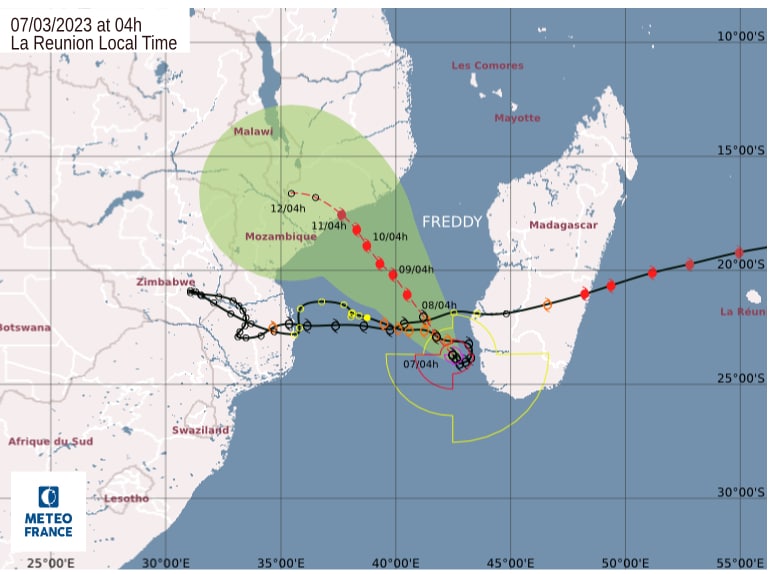
This was particularly so with Helene and Milton. That rapid intensification was noted about Hurricane Otis in October 2023, which slammed into Acapulco, Mexico, as well. High ocean temperatures also fueled a cyclone in February of last year that was the longest-lasting cyclone ever recorded — Cyclone Freddy. It lasted for 36 days, crossed the entire Indian Ocean, and ravaged Madagascar, Malawi, and Mozambique.

Ocean temperatures have reached all-time highs in the last several years, alarming climatologists. 

This phenomenon is creating superstorms. Rising sea temperatures are destroying marine life and acidifying seawater, and sea levels are rising. 

That happens for the same reason that a pot of boiling water rises as it warms. Water expands from heat. 

The Gulf of Mexico’s rise in sea level is nearly twice that of the rest of the world, which means storm surges are worse. Beyond that, the heat and energy from the oceans is being picked up by tropical storms, fueling their rapid development into more destructive, less predictable hurricanes. 

As they develop, the storms pick up much more moisture as they work their way across oceans. It isn’t uncommon now for hurricanes to slow down after landfall and dump rain on a region for sustained periods. What Katrina did to New Orleans and now Helene did to Asheville, North Carolina, are perfect examples of that.

Global warming and climate change can be reversed. Renewables in the form of solar, wind, and geothermal energy are already an important component, even with the question of intermittency, which still needs to be resolved. Electric vehicles can limit emissions from the millions of cars traveling daily. 

The People’s Republic of China has been instrumental in the progress that has been made in those areas. Other technologies and ideas may improve on these or spawn whole new ideas that can lower global temperatures. 

The hard science developed around climate change proves that fossil fuels are the root cause. But another kind of science leads us to the solution: social science. Private ownership of the means of production – the profit system – is a roadblock to our planet’s recovery. Part 2 will explore the role of the U.S. empire in causing global warming and the role China is playing in cleaning up the atmosphere.

Strugglelalucha256


Don’t let warmongers greenwash their ecocide this Earth Day

Destruction to the environment and acceleration of the climate crisis happen silently under the veil of “national security,” despite the fact that the environmental toll of war is the most significant threat.

As Earth Day approaches, prepare for the annual spectacle of U.S. lawmakers donning their environmentalist hats, waxing poetic about their love for the planet while disregarding the devastation their actions wreak. The harsh reality is that alongside their hollow pledges lies a trail of destruction fueled by military aggression and imperial ambitions, all under the guise of national security.

Take Gaza, for instance. Its once-fertile farmland now lies barren, its water sources poisoned by conflict and neglect. The grim statistics speak volumes: 97% of Gaza’s water is unfit for human consumption, leading to a staggering 26% of illnesses, particularly among vulnerable children. Israel’s decades-long colonial settler project and ethnic cleansing of Palestine have caused irrefutable damage to the land, air, and water, consequently contributing to the climate crisis. In fact, in the first two months of the current genocide campaign in Gaza, Israel’s murderous bombardment, which has killed nearly 35,000 people, also generated more planet-warming emissions than the annual carbon footprint of the world’s top 20 climate-vulnerable nations. Yet, despite these dire circumstances, U.S. lawmakers persist in funneling weapons to Israel, perpetuating a cycle of violence and environmental degradation.

The ripple effects of militarism extend far beyond Gaza’s borders. In Ukraine, the Russia-Ukraine War has left a staggering $56.4 billion environmental bill, with widespread contamination of air, water, and soil. Landmines and unexploded ordnance litter 30% of the country, posing long-term risks to both the environment and human health. The United States’ answer to all this has been to reject diplomacy and fuel a long, protracted war with a seemingly endless supply of weapons and military support—a war that most experts will tell you is not a winnable war. The proxy war the United States is funding not only leaves Ukrainians at risk of never achieving peace but also significantly contributes to the ever-growing climate crisis.

At the heart of this destructive cycle lies a perverse economic incentive, in which war becomes a lucrative business at the expense of both people and the planet.

Then, there is our government’s desire to go to war with China. The U.S. military’s heavy footprint already looms large in the Pacific, and with the war drums now beating harder for war than ever before, the footprint is growing. With over 200 bases dotting the region, the Pentagon’s voracious energy consumption fuels greenhouse gas emissions and environmental degradation, from polluted drinking water in Okinawa to severe contamination near military installations in Guam. Yet, our government insists that it is China that is our greatest enemy and not the looming threat of climate destruction. The U.S. military’s presence in the Pacific is destroying natural, Indigenous ecosystems, favoring the idea of environmental destruction over attempting any form of diplomacy and cooperation with China.

All of this destruction to the environment and acceleration of the climate crisis happen silently under the veil of “national security,” while discussions on how the environmental toll of war is the most significant national security threat are absent in D.C. While the threat of nuclear annihilation and civilian casualties rightfully dominate headlines, the ecological fallout remains an underreported tragedy. The Pentagon is the planet’s largest institutional emitter of fossil fuels; Its insatiable appetite for conflict exacerbates climate change and threatens ecosystems worldwide. To make matters worse, the U.S. government wants to fund this destruction to the tune of nearly a trillion dollars a year while poor and low-wealth communities worldwide bear the brunt of climate catastrophes with little to no resources to protect themselves.

At the heart of this destructive cycle lies a perverse economic incentive, in which war becomes a lucrative business at the expense of both people and the planet. The narrative of GDP growth masks the actual cost of conflict, prioritizing financial profit over genuine progress in education, healthcare, and biodiversity. However, instead of war-economy metrics such as the GDP, we could embrace alternative metrics such as the Genuine Progress Indicator (GPI)that reckon with the actual toll of war on our world. We can shift from endless growth toward genuine well-being by valuing air quality, food security, and environmental sustainability.

This Earth Day, let us reject the empty rhetoric of environmentalism without action. Let us demand accountability from our lawmakers and insist on an end to the cycle of violence and ecological devastation. By prioritizing peace and sustainability, we can protect our planet and safeguard future generations.

Source: Common Dreams

Strugglelalucha256


Earth Day: Time to act against capitalism destroying our planet

April 22 marks Earth Day, highlighting decades of environmental activism. Since 1970, this date has symbolized the ongoing battle waged by environmental advocates, notably from Indigenous communities, against the relentless pollution of our planet’s air and water by Big Oil and large corporations driven by profit. Their actions have led to the destruction of natural habitats, the conversion of fertile lands into deserts, and, significantly, the alarming escalation of global warming.


Strugglelalucha256


Crawfish in the coal mine: Climate disruption is here

Last weekend, my partner and I ate at a local restaurant in Baton Rouge, Louisiana. Crawfish season had clearly begun. People were crowded at the bar with trays piled with these “mud bugs.”

It’s a typical Louisiana scene. Crawfish boils are part of the culture here, a time-honored ritual. From the rural parishes to New Orleans, people gather in backyards to cook and dine on crawfish – like at a barbecue. It’s part of the Cajun, Creole, and even Vietnamese cuisine here.

But this year, scenes like the one at that Baton Rouge restaurant will no doubt be less common and more expensive. LSU AgCenter experts have been making the rounds explaining the ongoing shortage.

The combination of winter cold fronts and summer heat and drought took a toll on crawfish, which are mostly grown in water-logged rice fields. 2023 was the hottest year on record. Those same heat and drought conditions caused multiple crises in the state, including the saltwater intrusion and an epidemic of wildfires.

An LSU AgCenter report released in November 2023 said that the drought and heatwave cost the state’s agricultural sector $1.67 billion. If the Louisiana agricultural sector as a whole is valued at $11.7 billion, that would mean that the 2023 losses are equal to 14.27% of the sector’s value.

The AgCenter projects that 2024’s crawfish industry losses will be about $140 million, that is, equalling 60% of the industry’s $230 million value. This will be the worst crawfish season on record.

Losses like that should be frightening to the capitalist class. But this comes at a time when the capitalists and their politicians are doubling down on protecting fossil fuel industry profits at the expense of life on earth. That was the thrust of the debacle that took place at the 2023 COP 28 conference in Dubai.

That isn’t stopping U.S. Representative Clay Higgins (R-Louisiana) from trying to get federal relief money for the industry. He wants a crawfish bailout. 

Meanwhile, Louisiana’s knock-off Trump governor, Jeff Landry, just appointed Tyler Gray as secretary of the Louisiana Department of Natural Resources. Gray is not even a former but rather the CURRENT corporate secretary of the Placid Refining Company. Seems like a conflict of interest.

But what can we expect? Racist Landry is an oil-and-gas investment millionaire who doesn’t care whether we live or die.

What’s clear is that the capitalists are going to try to squeeze out every last bit of value (even if it means killing the planet) while unloading the burden onto working-class and oppressed people, whether that means higher crawfish and other food prices, flooded homes, or layoffs as agriculture and other industries are disrupted by climate shocks.

I say enough. Let’s give these scoundrels a run for their money. We’re coming for you Jeff, Trump, Biden, and all the rest. Time to hit the streets.

Strugglelalucha256


Deadly hazards of capitalist profit system

Global heat soars, wildfires spread toxic smoke

UPDATED July 7

The beginning of July saw the hottest days on record globally. Daily heat records were set on July 3, 4, 5, and 6. Each day topped the previous day’s record, according to data from the University of Maine’s Climate Reanalyzer. The temperatures on these days are the hottest since record-keeping began.

“This record is the visible part of a huge amount of silent and often unnoticed suffering and dying of people and ecosystems,” says Friederike Otto, a climate scientist at Imperial College London. “We live in a dramatically different world to just a few years ago.”

At the same time, many parts of the U.S. are being blanketed with some of the worst air quality recorded, caused by particularly severe wildfire activity in Canada. It is likely that smoke will continue its penetrations, as Canada’s fire season is expected to run until at least October.

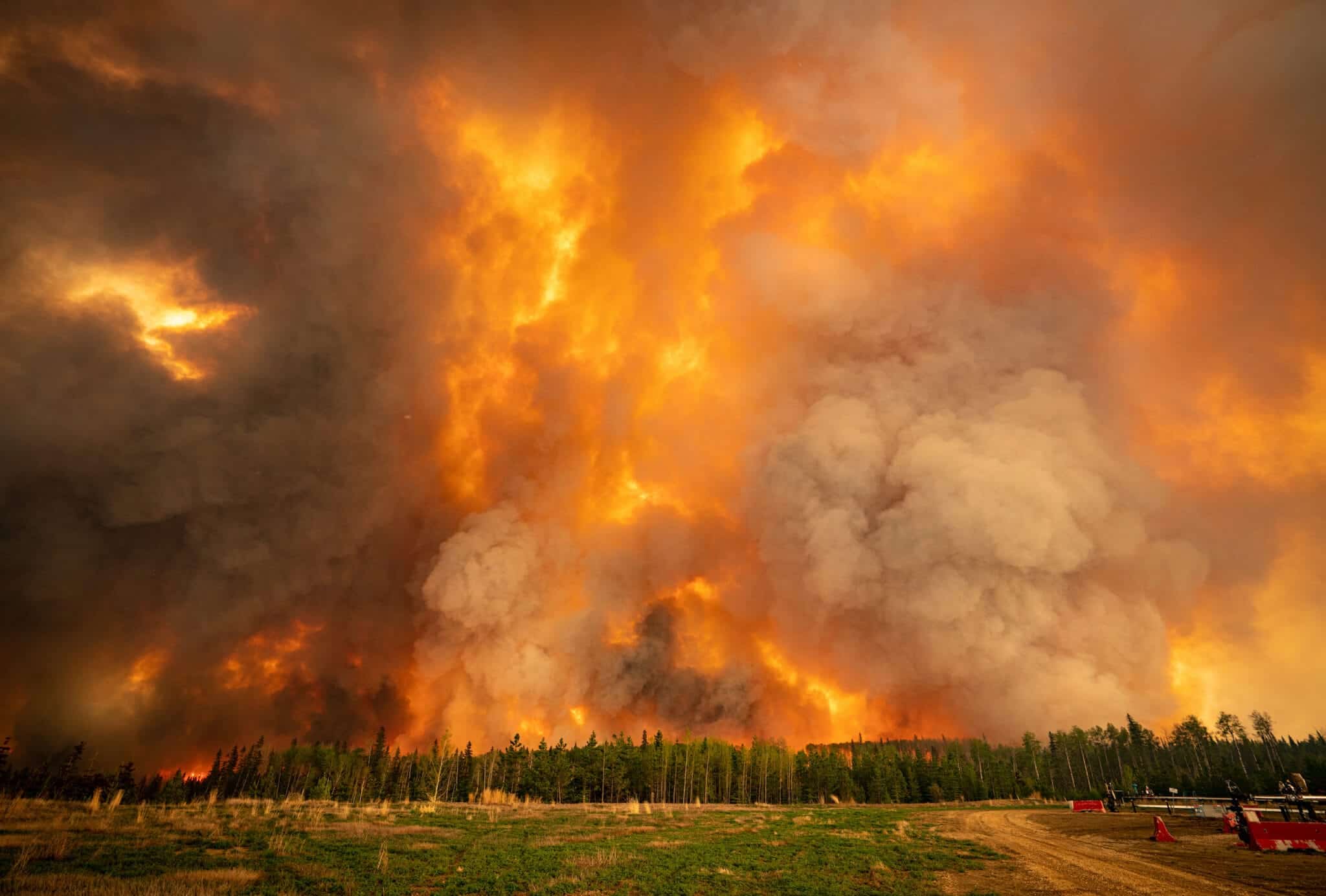
Canada is currently experiencing its worst wildfire season on record. As of June 29, 2023, over 3,000 wildfires in Canada have burned over 19 million acres of land. This is more than ten times the average number of fires and acreage burned during this time of year. 

The fires have been particularly destructive in Quebec, where over 2 million acres have burned. The smoke from the fires has made air in parts of Canada and the U.S. among the most polluted in the world.

On June 29, Chicago and Washington, D.C., had the worst air quality in the world, while Detroit and Minneapolis were in the top 10, according to IQAir.com.

The smoke from the Canadian wildfires has laid a thick blanket over parts of the Midwestern and Eastern U.S. Over 120 million people, or more than a third of the U.S. population, were under air quality alerts. It’s a major health hazard. The particulate matter, fine particles that can be breathed deeply into the lungs, poses considerable health risks.

Studies have linked wildfire smoke with higher rates of heart attacks, strokes, and cardiac arrests, increases in emergency room visits for respiratory conditions, and weakened immune defenses. The effects of exposure can persist for years.

In addition, prolonged exposure to elevated ozone levels is also dangerous and considered to be a cause of asthma.

Because of the shroud of smoke, solar power generation in parts of the Eastern U.S. plummeted by more than 50%. According to the region’s grid operator, solar farms powering New England were producing 56% less energy at times of peak demand compared with the week before. 

Reports in the big business media generally mention weather conditions and climate change as factors, including:

  • Drought: Much of Canada is experiencing a severe drought, which has dried out vegetation and made it more susceptible to fire.
  • Warm temperatures: The average temperature in Canada has been above normal this year, contributing to the severity of the fires.
  • Wind: Strong winds have helped to spread the fires and make them more difficult to control.
  • Climate change: Climate change makes wildfires more likely and severe in Canada. As the planet warms, the risk of drought and extreme weather increases, creating the perfect conditions for wildfires to start and spread.

Nothing to argue with there. But it leaves out another key factor: the industrialization of Canada’s forests.

A reference to this can be found in a careful reading of a New York Times report, “How Could This Happen?: Canadian Fires Burning Where They Rarely Have Before”:

“A combination of factors, fire officials said, laid the groundwork for the spread of wildfires in the Chibougamau area … Built on mining and the logging industry, Chibougamau is one of the few bold names on maps of Quebec’s vast, thinly populated northern regions.”

Canada is now mostly tree plantations and “managed forest,” which is more like a mono-crop farm than a forest, and much more prone to catastrophic burns. Clearcut logging and mono-crop replanting make wildfires worse.

A report, “Are the Canadian wildfires really ‘natural’ disasters” by Lambert Strether, documents this. 

First, from the Natural Resources Defense Council:

The logging industry relies heavily on replanting efforts that create tree stands that are less biologically and structurally diverse and less resilient to future disturbances like extreme weather and climate change than the trees that have been removed. This exacerbates clearcutting impacts because even when these forests regrow, many have been turned into monoculture tree plantations that do not have the same ecological health as intact, multispecies forest ecosystems. 

One 2012 study argued that “the widespread application of even-aged, single species management at all scales of boreal forest management interferes with fundamental ecological processes that maintain ecosystem integrity in boreal forests.”

In the report “Forest Herbicides, Monocultures Drive Wildfires, Harm Wild Species,” the Edmonton Journal says:

Forest companies using herbicides and mechanical removal methods to eradicate aspen from the spruce and pine crops they want to harvest are depriving moose of a winter food source and making wildfires more likely in Alberta forests, the Edmonton Journal reports.

The clumps and colonies of aspen that grow around Edmonton and northern Alberta “are less likely to burn than spruce or pine and cool the forest so well that, when fully-leafed out, wildland firefighters flee to a stand of aspen if the fire unexpectedly shifts,” the Journal explains.

But “forestry companies consider aspen a weed when growing conifers, spruce or pine. So roughly 30,000 hectares a year of forest are sprayed with glyphosate, the active ingredient in RoundUp. That’s roughly half the size of Edmonton, or 40% of the 80,000 hectares of forest harvested annually” across the province.

By killing off all the broad-leafed species, the companies create a monoculture, “making a coniferous tree plantation instead of a forest,” the paper adds.

The Halifax, Nova Scotia, Examiner reported in “The NS wildfires are not ‘natural’ disasters: climate change, forest management, and human folly are all to blame”:

“What’s really changed is the condition of our forest,” [professional forester Wade] Prest tells me. “It’s no longer diverse.

“Our original forest was probably mostly mixed. It tended towards a softwood mix in some areas, and to hardwood mix in others,” Prest explains. Prior to European settlement, he says Wabanaki-Acadian forests would have good canopy coverage, and underneath the canopy, it would be generally damp most of the time, without a lot of sunlight getting through to the forest floor.

“And that in itself would be what would stop the fires from either starting or being widespread,” Prest says. “Certainly, the forest has changed.

“I’ve always been critical of industrial forestry practices, and have vigorously promoted the natural Acadian forest as a model for ecological, social, and economic sustainability for Nova Scotia,” Prest says.

The Halifax Examiner report adds:

One of the greatest defenses that we have against fire risk is diversity … not just of species composition but also age and physical attributes. [Mike Lancaster, coordinator of the Healthy Forest Coalition in Nova Scotia] notes that after World War II and the Vietnam War, there was an explosion in the development of herbicides that were used to kill off deciduous species and manage forests for softwood species industry was looking for.

“It is widely known that conifer forests present a greater forest fire risk than those which are deciduous dominant,” Lancaster says. Because the forestry industry in Nova Scotia has historically been geared to favor coniferous species, in his view, “That translates as an increased forest fire hazard.”

Finally, author Peter Gelderloos in Quebec says on a Twitter thread:

The fires in Quebec are raging in tree plantations that get counted as carbon offsets. … Tree plantations are part of the industrial system of extraction and production. A form of mono-crop farming, they are the basis for the profits of the logging industry, which is more in demand as green products proliferate. … Tree plantations are also advantageous because they are fully integrated with the mining industry, using some of the same extraction infrastructure and helping cover up part of the sacrifice zones mining leaves behind. …

Most urban people and settlers do not know what a forest is. They see trees and think it is a forest.

Governments use the term “forest” without distinguishing between a forest ecosystem and a tree plantation. When I talk about a forest, I’m talking about a robust ecosystem. Granted, non-forests exist on a continuum from mono-crop tree plantations planted in rows to post-clearcut regrowth that is managed and commercially harvested.

The forest fires in Quebec and Ontario originate disproportionately in “managed forest,” which are on the continuum of tree plantations.

Strugglelalucha256


Tree plantations and logging industry make wildfires hazardous

Canada is currently experiencing its worst wildfire season on record. As of June 29, 2023, over 3,000 wildfires in Canada have burned over 19 million acres of land. This is more than ten times the average number of fires and acreage burned during this time of year. 

The fires have been particularly destructive in Quebec, where over 2 million acres have burned. The smoke from the fires has made air in parts of Canada and the U.S. among the most polluted in the world.

On June 29, Chicago and Washington, D.C., had the worst air quality in the world, while Detroit and Minneapolis were in the top 10, according to IQAir.com.

The smoke from the Canadian wildfires has laid a thick blanket over parts of the Midwestern and Eastern U.S. Over 120 million people, or more than a third of the U.S. population, were under air quality alerts. It’s a major health hazard. The unhealthy air quality conditions, while rising or falling on a daily basis, are expected to last for several months, if not longer.

Because the shroud of smoke, solar power generation in parts of the Eastern U.S. plummeted by more than 50%. According to the region’s grid operator, solar farms powering New England were producing 56% less energy at times of peak demand compared with the week before. 

Reports in the big business media generally mention weather conditions and climate change as factors, including:

  • Drought: Much of Canada is experiencing a severe drought, which has dried out vegetation and made it more susceptible to fire.
  • Warm temperatures: The average temperature in Canada has been above normal this year, contributing to the severity of the fires.
  • Wind: Strong winds have helped to spread the fires and make them more difficult to control.
  • Climate change: Climate change makes wildfires more likely and severe in Canada. As the planet warms, the risk of drought and extreme weather increases, creating the perfect conditions for wildfires to start and spread.

Nothing to argue with there. But it leaves out another key factor: the industrialization of Canada’s forests.

A reference to this can be found in a careful reading of a New York Times report, “How Could This Happen?: Canadian Fires Burning Where They Rarely Have Before”:

“A combination of factors, fire officials said, laid the groundwork for the spread of wildfires in the Chibougamau area … Built on mining and the logging industry, Chibougamau is one of the few bold names on maps of Quebec’s vast, thinly populated northern regions.”

Canada is now mostly tree plantations and “managed forest,” which is more like a mono-crop farm than a forest, and much more prone to catastrophic burns. Clearcut logging and mono-crop replanting make wildfires worse.

A report, “Are the Canadian wildfires really ‘natural’ disasters” by Lambert Strether, documents this. 

First, from the Natural Resources Defense Council:

The logging industry relies heavily on replanting efforts that create tree stands that are less biologically and structurally diverse and less resilient to future disturbances like extreme weather and climate change than the trees that have been removed. This exacerbates clearcutting impacts because even when these forests regrow, many have been turned into monoculture tree plantations that do not have the same ecological health as intact, multispecies forest ecosystems. 

One 2012 study argued that “the widespread application of even-aged, single species management at all scales of boreal forest management interferes with fundamental ecological processes that maintain ecosystem integrity in boreal forests.”

In the report “Forest Herbicides, Monocultures Drive Wildfires, Harm Wild Species,” the Edmonton Journal says:

Forest companies using herbicides and mechanical removal methods to eradicate aspen from the spruce and pine crops they want to harvest are depriving moose of a winter food source and making wildfires more likely in Alberta forests, the Edmonton Journal reports.

The clumps and colonies of aspen that grow around Edmonton and northern Alberta “are less likely to burn than spruce or pine and cool the forest so well that, when fully-leafed out, wildland firefighters flee to a stand of aspen if the fire unexpectedly shifts,” the Journal explains.

But “forestry companies consider aspen a weed when growing conifers, spruce or pine. So roughly 30,000 hectares a year of forest are sprayed with glyphosate, the active ingredient in RoundUp. That’s roughly half the size of Edmonton, or 40% of the 80,000 hectares of forest harvested annually” across the province.

By killing off all the broad-leafed species, the companies create a monoculture, “making a coniferous tree plantation instead of a forest,” the paper adds.

The Halifax, Nova Scotia, Examiner reported in “The NS wildfires are not ‘natural’ disasters: climate change, forest management, and human folly are all to blame”:

“What’s really changed is the condition of our forest,” [professional forester Wade] Prest tells me. “It’s no longer diverse.

“Our original forest was probably mostly mixed. It tended towards a softwood mix in some areas, and to hardwood mix in others,” Prest explains. Prior to European settlement, he says Wabanaki-Acadian forests would have good canopy coverage, and underneath the canopy, it would be generally damp most of the time, without a lot of sunlight getting through to the forest floor.

“And that in itself would be what would stop the fires from either starting or being widespread,” Prest says. “Certainly, the forest has changed.

“I’ve always been critical of industrial forestry practices, and have vigorously promoted the natural Acadian forest as a model for ecological, social, and economic sustainability for Nova Scotia,” Prest says.

The Halifax Examiner report adds:

One of the greatest defenses that we have against fire risk is diversity … not just of species composition but also age and physical attributes. [Mike Lancaster, coordinator of the Healthy Forest Coalition in Nova Scotia] notes that after World War II and the Vietnam War, there was an explosion in the development of herbicides that were used to kill off deciduous species and manage forests for softwood species industry was looking for.

“It is widely known that conifer forests present a greater forest fire risk than those which are deciduous dominant,” Lancaster says. Because the forestry industry in Nova Scotia has historically been geared to favor coniferous species, in his view, “That translates as an increased forest fire hazard.”

Finally, author Peter Gelderloos in Quebec says on a Twitter thread:

The fires in Quebec are raging in tree plantations that get counted as carbon offsets. … Tree plantations are part of the industrial system of extraction and production. A form of mono-crop farming, they are the basis for the profits of the logging industry, which is more in demand as green products proliferate. … Tree plantations are also advantageous because they are fully integrated with the mining industry, using some of the same extraction infrastructure and helping cover up part of the sacrifice zones mining leaves behind. …

Most urban people and settlers do not know what a forest is. They see trees and think it is a forest.

Governments use the term “forest” without distinguishing between a forest ecosystem and a tree plantation. When I talk about a forest, I’m talking about a robust ecosystem. Granted, non-forests exist on a continuum from mono-crop tree plantations planted in rows to post-clearcut regrowth that is managed and commercially harvested.

The forest fires in Quebec and Ontario originate disproportionately in “managed forest,” which are on the continuum of tree plantations.

Strugglelalucha256


Earth Day 2023: Biden’s betrayal, government repression and sodium batteries

April 22 is this year’s “Earth Day.” Since 1970 that date highlights the struggle by environmental activists, particularly from the Indigenous communities, against Big Oil and big business in their ceaseless profit-driven pollution of the planet’s air and water, of destroying natural habitats, of turning vast arable lands into deserts, and, most importantly, greatly increasing global warming.

President Joe Biden campaigned on a “turnaround policy” from Trump’s dismantling of long-standing environmental policies, as well as his approval of oil and gas pipelines and oil well drilling in pristine wilderness areas. Biden promised not to approve drilling projects on federal lands.

But as a NBC News March 13 article reported, that promise went out the window in the face of Wall Street pressure, specifically the energy giant ConocoPhillips, Alaska’s largest oil producer, with its “Willow Project.”

The Biden administration on Monday gave the green light to a sprawling oil drilling project in Alaska, opening the nation’s largest expanse of untouched land to energy production.

The multibillion-dollar project will be located inside the National Petroleum Reserve, about 200 miles north of the Arctic Circle, and could produce nearly 600 million barrels of crude oil over the next 30 years, according to the Interior Department.

The department estimated that the project could produce nearly a quarter of a billion metric tons of carbon dioxide emissions.

Environmental activists attacked

Meanwhile, Biden’s justice department, at the behest of the oil and gas giants, has seen fit to label environmental activists as “terrorists” even though they have not hurt any people and only damaged oil pipeline equipment. According to an April 28 ABC News article:

In the fall of 2016, under the cover of darkness, Jessica Reznicek had a singular focus: to halt the construction of the Dakota Access Pipeline. At valve sites across America’s heartland, she snuck through security fences, set fire to equipment, and used chemicals to burn holes in the pipeline itself.

To Reznicek, a veteran climate activist, the damage was justified: a nonviolent act of civil disobedience in pursuit of saving the planet. The Justice Department saw it differently. After Reznicek publicly acknowledged her crimes and entered a guilty plea, federal prosecutors subsequently persuaded a judge to apply a sentencing increase known as the “terrorism enhancement” against her, putting her behind bars for eight years.

 The terrorism enhancement doubled her amount of time in prison.

The article goes on to describe how the oil and gas industry has succeeded in having their minions in the government declare “open season” on its opponents in the environmental movement:

In the last five years, 17 states have adopted so-called critical infrastructure protection laws that do just that — and 40 additional anti-protest bills are pending across the country, including a federal one.

“These laws introduced extraordinary penalties,” said Elly Page, a senior legal adviser at the International Center for Not-for-Profit Law. “Protesters who even momentarily cross onto property that contains a pipeline … can now face multiple years in prison.”

“They’re discouraging people from turning out and making their voices heard about what’s really the crisis of our time — the climate crisis,” Page said.

In 2017, 80 Republican and four Democratic members of Congress — who over the course of their careers received a combined $36 million in campaign contributions from the oil and gas industry — pressed the Justice Department to treat all eco-saboteurs as domestic terrorists.

The Department of Homeland Security later grouped some environmental activists — the so-called pipeline “valve turners” — with mass killers and white supremacists in a description of domestic threats, according to internal documents obtained through a Freedom of Information Act request by the nonprofit group Property of the People.

The state of Georgia has joined this wave of anti-protest repression. Police attacked a camp of peaceful protestors at a site where hundreds of trees were cut down to make room for a police training site in Atlanta:

Over the course of December and January, 19 opponents of the police training center have been charged with felonies under Georgia’s rarely used 2017 domestic terrorism law. [A] review of 20 arrest warrants shows that none of those arrested and slapped with terrorism charges are accused of seriously injuring anyone. Nine are alleged to have committed no specific illegal actions beyond misdemeanor trespassing. Instead, their mere association with a group committed to defending the forest appears to be the foundation for declaring them terrorists.

Police shot and killed an environmental activist there named Tortuguita on January 18. Police had claimed that [Tortuguita] had fired a shot at police first before they riddled [their] body with at least 57 bullets. But an official autopsy report released on April 19 states that [Tortuguita] had no gunpowder residue on [their] hands. And a family autopsy report indicates that Tortuguita had [their] arms raised when [they were] killed.

Neither Dylann Roof, who pleaded guilty to massacring nine people at a Charleston church, nor James Fields, who was convicted of killing a Charlottesville demonstrator with his car, were sentenced with the terrorism enhancement. Nor were any of those arrested for participating in the violent January 6, 2021, insurrection charged with terrorism.

Obviously, none of those acts challenged Big Oil’s revenues or Wall Street’s profit stream.

People’s China makes breakthrough with sodium batteries

An April 12 article in the New York Times titled “Why China could dominate the next big advance in batteries” details how Chinese research workers are advancing development of sodium rechargeable batteries. These would replace or work alongside the current lithium batteries in many applications. With the low cost of sodium versus the higher cost of lithium, this development may advance the effort to replace fossil fuels and counter global warming.

Sodium, found all over the world as part of salt, sells for 1 to 3 percent of the price of lithium and is chemically very similar. Recent breakthroughs mean that sodium batteries can now be recharged daily for years, chipping away at a key advantage of lithium batteries. The energy capacity of sodium batteries has also increased.

And sodium batteries come with a big advantage: They keep almost all of their charge when temperatures fall far below freezing, something lithium batteries typically do not do.

Unlike lithium batteries, the latest sodium batteries do not require scarce materials like cobalt, a mineral mined mainly in Africa under conditions that have alarmed human rights groups.

Chinese battery executives said in interviews that they had figured out in the past year how to make sodium battery cells so similar to lithium ones that they can be made with the same equipment. The Chinese giant CATL, the world’s largest manufacturer of electric car batteries, says it has discovered a way to use sodium cells and lithium cells in a single electric car’s battery pack, combining the low cost and weather resistance of sodium cells with the extended range of lithium cells. The company says it is now prepared to mass-produce these mixed battery packs.

The article states that sodium batteries need to be bigger than lithium batteries to hold the same charge, making them less useful in cars by themselves. But they could be very useful to store power from the electric grid, where space is not a problem. They could store vast amounts of power from solar panels and windmills to be used at night and when there is no wind.

This could make “green” energy production far more practical and cost-effective and thus could go a long way to eliminate fossil fuels, the main culprit in global warming.

China has an abundance of coal. But transitioning to solar and wind is far more possible there because it is a socialist country, a workers’ state, where its workers’ political party, the Communist Party, can plan and order that change without having to deal with a ruling class of capitalists obstructing that process to shore up their profits. That’s why the politicians and the corporate media here label China as “authoritarian” because the workers, through their Party, have the “authority” to control production.

The sodium battery development by the research workers will greatly assist that transition away from fossil fuels.

But the article does point out that China has one problem with sodium. While the country has deposits of lithium, it has to use coal-fired plants to produce “artificial” sodium. The U.S., on the other hand, has huge deposits of soda ash in Wyoming that could be used to make sodium without those power plants, but no large deposit of the high-priced lithium.

This means that the two countries theoretically could work together to manufacture both sodium and lithium batteries, which could create a vast reduction in the generation of greenhouse gasses from oil, coal, and natural gas around the world. This could greatly reduce carbon emissions.

The obstacle to this development is U.S. imperialism, dominated by the banks and Big Oil, who are now bent on an all-out effort to overturn socialism in China, even if it means a devastating war, possibly with nuclear weapons. And they do not hesitate to line up federal, state, and local police agencies to attack the environmental activists who they consider to be obstacles to their amassing huge profits.

For all the talk about “green energy” and “fighting climate change” coming out of Washington, the oil and gas industries, who have trillions of “sunk costs” in oil drilling and refineries and who are inflating gas prices as they make huge profits, are going to fight tooth and nail against the environmental movement struggle against global warming.

Just as the activists in Atlanta have combined the environmental movement with the anti-racist police terror struggle, the environmental movement as a whole cannot separate itself from the ongoing anti-imperialist struggle. Only then can this key movement succeed.

Source: Fighting Words

Strugglelalucha256


The meek won’t inherit the earth: Mass action will save the planet

On Earth Day 2023, Struggle-La Lucha presents this article by the Marxist thinker and fighter Sam Marcy, written for the 20th anniversary of Earth Day in April 1990.

Back in the Middle Ages, when a natural catastrophe like a crop failure or storm devastated large areas of a country, reducing the mass of the peasants to starvation while the lord’s manor was well stocked with provisions, it was considered wise policy for the lord to call the peasants into the courtyard. There a priest would intone the old biblical adage that the meek, the humble, the submissive will inherit the earth.

Today’s giant predatory corporations know the efficacy of such a tactic. They also resort to an even earlier practice, from the era of ancient Rome, when rebellious slaves were pacified with bread and circuses.

The monopolies which have vandalized the environment respond to the fear of an ecological catastrophe by encouraging a festive, carnival atmosphere on Earth Day, diverting what should be a serious anti-government, anti-capitalist demonstration away from the real polluters.

The largest corporations in this country, and the worst polluters, including Exxon, Mobil, Weyerhaeuser and Dow Chemical, to name only a few, have assembled a sophisticated media and political campaign aiming to show that they have done their utmost to use their immense technology for environmentally sound purposes, all for the good of the people.

The first Earth Day

Twenty years ago, on the first Earth Day, the environmental movement was officially born in the United States. In that year, 1970, millions of workers, young and old, men and women, able and disabled people, gay and straight, and nationalities from all over the world demonstrated their keen desire to avoid the terrible ill effects of pollution and the destruction of the physical elements of the environment.

It was a day of great promise, an outpouring of mass enthusiasm for ending the environmental damage that was rampant throughout the world but affected the industrialized countries, especially the U.S., most of all.

Today, 20 years later, there is more pollution, more damage to the air, the forests, the oceans, the rivers, indeed to all life. Acid rain, the ozone layer, global warming, toxic and radioactive wastes, and endangered species have become household words.

Earth Day 1970 came in the midst of the bloody carnage in Vietnam. That year, the U.S. invaded Cambodia. The Nixon government was under acute pressure from the anti-war and civil rights movements. It was a year in which huge masses of people were awakening to the real problems facing this country: war, hunger, racism, sexism, pollution.

For another five years, the U.S. government got around the movement, continuing the war while making promises of an alluring peace, at which time all these problems would be solved and, above all, there would be an effort to clean up the environment.

Finally, the mass protests against the Vietnam war in the U.S. and all over the world put an end to it. Glowing promises then began to flow freely like water in a stream. Now, it was said, the air would be cleaned up, nuclear waste would be eliminated, and environmentally clean plants would be built. Polluting sources of energy like coal, petroleum and nuclear energy would be put under strict governmental control. The damage would first be reduced and eventually, certainly by 1990, would be eliminated.

Promises of peacetime conversion

Such were the promises 20 years ago. You can look them up in the yellowed pages of the old newspapers. “Conversion planning” was the buzzword. Military-related companies especially were anxious to show they had already drawn up the blueprints for converting to cleaner, more peaceful methods of production.

What happened to them? Was it all fraud? Was it make believe? Or was it both?

The fact of the matter is that no sooner was the war in Vietnam ended than the Pentagon and the military-industrial complex began not to scale down the armaments, not to beat their swords into plowshares, but to expand and modernize on an unprecedented scale.

This is of critical importance to all questions relating to the security of the physical environment, for there is no greater polluter of the air, the water and the land than the military. Even when it is not actually using them, the Pentagon is constantly testing all kinds of weapons — conventional, nuclear, chemical and biological.

Trillions for the Pentagon

Scientists may argue over how old the planet is, how fragile is its ecology, or its degree of warming, but there can be no disagreement that since Earth Day 1970, literally trillions of dollars have been spent by the Pentagon.

Since Earth Day 1970, countless acts of war have been carried out or supervised by U.S. forces in El Salvador, Nicaragua, Grenada, Panama, Libya, Lebanon and Afghanistan, lately in Peru and Bolivia, and innumerable covert operations in Cambodia, Angola, Mozambique, Ethiopia and dozens of other countries. Large-scale military exercises take place each year in Korea, Germany and the Caribbean, as well as in the U.S. itself.

Today, just like 15 years ago at the end of the Vietnam war, there is a flood of peace promises. Congress is agog with them. The White House has given its blessings. Even the Pentagon speaks of the peace dividend. But is there any substance to it?

The kind of Pentagon operation just referred to is expanding more rapidly than ever. Of course, redundant nuclear weapons are being discarded on both sides of the East-West confrontation line. But mark well. Not one nuclear test related to the modernization of the nuclear fleet, submarines, aircraft carriers or the new “super-supersonic” planes has been canceled, except for reasons of bad weather or malfunction. The brave men and women of Greenpeace and other groups that have tried to stop these tests can tell you what is really going on with the alleged reduction of the nuclear threat.

The greatest of all polluters, the biggest offender and the most significant element in the vandalism of the environment remains the Pentagon.

As this is being written, Secretary of Defense Cheney is opposing even the smallest cuts in sea-based missiles. On the contrary, they are continuing to MIRV the sea-based missiles (add multiple warheads), which means multiplying their capacity for devastation.

War-related industries and banks

Lest some think we are taking a narrow, pacifist view by focusing in on the war-making establishment, let it be said that the Pentagon is, of course, not an island unto itself. Every single one of the 100 largest banks in the U.S. lends to, holds deposits of or floats securities for corporations in league with the so-called defense industry. That’s a lot of banks.

Of all the 15,000 banks in the U.S., small, medium and large, not one would relinquish the profits it gets in connection with defense orders. There is not one bank, not one huge corporation that will put people ahead of profits. Such is the reality of the situation on Earth Day 1990.

It is now estimated that the bailout of failing banks will cost the government $500 billion. The amount appropriated for the environment is a mere pittance, a tiny fraction of this gigantic sum.

Of the giant industries which play a key role in the U.S. economy, petroleum and coal pollute and vandalize the environment the most, even though hundreds of thousands of workers have been displaced from these industries. All manufacturers, especially in the petrochemical industry and pharmaceuticals, and including those using the most sophisticated technologies, contribute their share to pollution. For the most part they are completely unregulated; any government supervision is strictly superficial.

Good will vs. profits

To get to the core of the problem, one must take into account that it is profits which motivate the operations of the capitalist economic system in the U.S. Ever fewer and more powerful groupings of industrial and financial magnates control the means of production and run the country, from the local county offices all the way up to the White House.

If we overlook this fact, if we believe that just protesting, just appealing to the good will and humanitarian instincts of these giant, avaricious and predatory elite financiers and industrialists will change the situation for the better, we will be building upon illusions.

The mass of the people have been told over and over again to be patient, to have good will toward their oppressors, that in time good behavior on the part of the masses would reach the consciences of the evildoers. The meek shall inherit the earth.

But the meek in history have never made it. There’s not a single example over hundreds of years where the rich and powerful have given way to the poor, to the ordinary workers and peasants, just because they have been good and subservient and passive.

To appeal to the good will, common sense and even self-interest of the big financiers and industrialists is to expect them to be able to abandon the lucrative profits, exploitation and oppression which are linked to pollution. This is a bankrupt theory, unsuitable in this or any other age.

The history of the environmental struggle shows that relying on the multinational corporations, on the banks, on the insurance companies and on capitalist politicians brings no results.

At this critical phase in world history, it is only the deliberate activity of the masses themselves, when they intervene and threaten the system of capitalist exploitation and oppression, that can sweep away the polluters like the hazardous waste they have created on this planet.

Strugglelalucha256


While Biden unleashes climate bomb in Alaska, Cyclone Freddy ravages eastern Africa

The U.S. corporate-controlled media are concealing the climate crisis’s severity and breadth. Coverage of extremely destructive weather is so slanted, biased, and Eurocentric that people in the United States and Europe may not even realize how calamitous the situation is for the Global South.

Weeks of rain and snowstorms, a cyclone, and a tornado that slammed the West Coast of the U.S. were all over the headlines. The damage was horrific. There was extreme flooding from breached levees near Sacramento. Flooding and debris flow throughout the state. 

A rare double-eyed cyclone attacked the Bay Area. Snow in the San Bernardino and Sierra Nevada mountains left 10-foot drifts. A tornado hit the Los Angeles area, leaving thousands without power and trapped in their homes. Dozens died.

Earth’s longest-lived tropical storm ever

There was no way to downplay what happened to the West Coast. But during March, the deadly tropical Cyclone Freddy slammed Malawi, Madagascar, Zimbabwe, Mauritius, and Mozambique. Most U.S. media did not cover the immense death toll and damage to eastern Africa.

As of March 27, the Institute for African Studies reports, more than 700 people died, and almost an equal number are reported missing. Most of the deaths occurred in Malawi. Nearly 700,000 people in the region have been displaced. Floods have destroyed power structures, washed away infrastructure, and contaminated community wells. Mozambique and Malawi were already dealing with a cholera outbreak, and the case numbers are rising.

Cyclone Freddy was the longest-lasting storm ever and traveled a greater distance than any before. The energy equaled an average entire hurricane season in the North Atlantic. Winds blew for ten minutes straight at 140 mph. Its peak wind was 168 mph, mowing down wood-frame buildings as it moved. It hit Madagascar after crossing the entire Indian Ocean, then Mozambique and Zimbabwe a few days later. It headed out over the water and regained strength, only to return to land and carry out more destruction, then repeated that two more times.

Industrial capitalism has been the driver of global warming. The biggest contributors to greenhouse gas emissions in the atmosphere today are the United States and Great Britain. Today on a per-capita basis, the United States is still the worst. 

Global South nations are responsible for only a tiny fraction of carbon emissions. But after more than a century of wars, trade sanctions, and the theft of their natural resources at the hands of U.S., British, and French imperialism, they are far less able to recover. 

‘A litany of broken climate promises’

Deep poverty, debt to the giant banks in the U.S., and the IMF’s debt-trap aid have left much of the world extremely vulnerable. At the most recent conference that took place in Egypt – COP27 – representatives from the Global South took a united stand. Finally, they forced the imperialist countries into an agreement for a “loss and damage fund” after decades of the U.S. and other imperialist countries resisting. But predictably, there are already delays in nominating members to a committee to carry it forward.

United Nations Secretary-General Antonio Guterres reacted to the latest report by the Intergovernmental Panel on Climate Change issued on March 20, which followed the pattern of not naming the U.S. directly. In an April 4 Op-Ed in the Washington Post, Guterres described the report as “a litany of broken climate promises,” revealing a “yawning gap between climate pledges, and reality.” 

Guterres wrote that high-emitting governments and corporationsare adding fuel to the flames by continuing to invest in climate-choking industries. Scientists warn that we are already perilously close to tipping points that could lead to cascading and irreversible climate effects.”

Since Biden’s whittled-down legislation that was supposed to be a big step toward mitigating global warming was finally passed, and promises were made to curtail fossil fuel production, the administration has done an about-face. Instead, their proxy war against Russia has escalated the lucrative exploitation of fossil fuels. The Willow project in Alaska – a gift to Conoco Phillips and a climate change bomb – is only the latest in a series of betrayals of the goals set at international conferences.

In this era of the “New World Order,” imperialist wars and punishing sanctions are not fought for victory alone. Even if U.S. troops pull out from a war as they did in Afghanistan, the destruction they leave behind continues the process of concentrating wealth and power in the hands of mega-corporations and banks. It strengthens them against workers at home as well. The climate crisis is a by-product of capitalism that adds to that process. 

Contributing to a full-blown, cooperative, international effort to deal with climate change, fulfilling the “loss and damage fund,” helping the Global South recover as fast as possible, and ending the destructive exploitation of fossil fuels are simply not on the agenda of the U.S. ruling class. The climate crisis won’t be whittled away with a few reforms here and there. It has never been more evident than now. A militant and international workers’ movement for socialism and the end of imperialism is the only solution to keeping the planet habitable for the future.

Strugglelalucha256


U.S. on hot seat at Sharm el-Sheikh climate meeting

The 27th Conference of the Parties of the United Nations Framework Convention on Climate Change (COP 27) is underway in Sharm el-Sheikh, Egypt. Delegates from all over the world are gathered to try to agree on proposals to slow down and eventually eliminate rising atmospheric temperatures from the emission of greenhouse gasses (GHGs).

At its conclusion, the White House and faithful media will speak in glowing terms of the U.S. role. This practice of issuing a rosy, self-serving assessment each year has masked the contentious deliberations that have taken place since the conferences began in 1995.

In reality, the U.S. has bullied its way through the annual conferences. In 1997, when the 3rd COP took place in Kyoto, Japan, Vice President Al Gore led the U.S. delegation. Already posturing as a leading figure on battling climate change, his team still insisted that the U.S. be allowed softer requirements than the rest of the world. They shoved an agreement down the throats of the other delegations to exclude most military emissions from agreed-upon calculations. 

This was huge and continues today. The U.S. is by far the largest and most active military in the world and the number one institutional emitter of GHGs. U.S. emissions per capita are among the worst in the world — even excluding the millions of gallons of jet fuel and diesel fuel needed to keep the Pentagon’s tanks, jet fighters, and aircraft carrier groups threatening and brutalizing the world.

But the U.S. is now on the hot seat over another long-simmering issue – climate finance. 

In 2009, at COP 15 in Copenhagen, industrial, developed countries were backed into a corner over the damage that rampant capitalism has done to the Global South. Under pressure, they were committed to a pledge of $100 billion annually beginning in the year 2020.

The payments are lagging. The U.S., Australia and Canada have provided less than half their share. Often, instead of outright payments, government figures and financial institutions have been trying to count already agreed-on aid funds and loans as part of the payments.

The terrible consequences of climate change worsened in 2021 and 2022. All around the world, extreme weather events took thousands of lives, left millions homeless, and destroyed infrastructure and agriculture. Normally temperate regions in the Pacific Northwest of the U.S. and many parts of southern and central Europe became ovens. 

Historic droughts continued to plague East Africa and the Western U.S. China suffered a 70-day heatwave, and one-third of Pakistan was left underwater from floods – the severity of which has never occurred before.

This torrent of destruction has pushed the issue of climate finance to front and center at COP 27. President Joe Biden will attend on Nov. 11 and plans to boast about his legislative success. His Inflation Reduction Act grants billions to cherry-picked, profitable projects that cost the energy industry absolutely nothing, doesn’t do enough to curtail the use of fossil fuels and ignores potential planet-saving projects among the landscape of innovations and technologies that have emerged.

It will be interesting to see how Biden glosses over the real issue at hand. Global South countries are no longer only demanding the fulfillment of the $100-billion annual pledge. There is now discussion of further transfer of funds referred to as “loss and damage” payments. Any funds that the capitalist robbers are forced to pay should be seen in the context of the trillions of dollars robbed during the colonial period. That process of exploitive theft continues today in the period of modern imperialism.

When President Ranil Wickremeshinghe of Sri Lanka spoke at the conference, he said, “The practice of colonialism transferred the rich resources of Asia and Africa to Europe to industrialize their countries, which is also the root cause of climate change — the consequences of which we, the poor countries, are forced to suffer.” 

The issue of climate finance, and loss and damage payments, has to be seen in that context by all those who want to leave a livable planet for future generations.

But for the U.S. capitalist class and their representatives, this treads dangerously close to a demand for reparations to all those brutally oppressed in the development of U.S. capitalism.

Paul Bledsoe, who was the communications director of the White House Climate Change Task Force during the Clinton administration, was candid when he told the New York Times, “America is culturally incapable of meaningful reparations. Having not made them to Native Americans or African Americans, there is little to no chance they will be seriously considered regarding climate impacts to foreign nations. It’s a complete non-starter in our domestic politics.”

U.S. delegates may be made to feel uncomfortable in Sharm el-Sheikh, and it remains to be seen whether or not the rising anger of those delegates from the Global South will be enough to pressure the U.S. and others to come up with more funds or even to meet previously agreed on obligations. In any case, the global progressive movement, and particularly activists in the U.S., must unite around the issue of reparations for the Global South.

Strugglelalucha256
https://www.struggle-la-lucha.org/environment/