Russia and Cuba, beyond warships

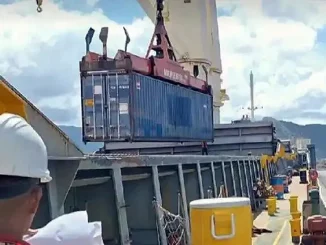
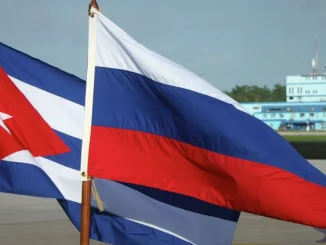
Russian naval detachment docks in Cuba.

While the international media only report on the arrival of a Russian naval detachment in Cuba, relations between the Russian Federation and Cuba go much further and are getting stronger. Unlike the policy of Joe Biden’s administration, which is focused on maintaining the economic and financial persecution measures against the island, the Russian government is working together with the Cuban government to reach mutually beneficial agreements, which you will evidently not read about in the major press chains.

Bruno Rodriguez Parrilla, Minister of Foreign Affairs, visited Russia to attend a meeting of the BRICS Plus Forum and to hold official talks with his Russian counterpart. At the same time, several news reports confirmed the strengthening of economic ties between Havana and Moscow.

Bruno Rodriguez Parrilla, Cuba’s Minister of Foreign Affairs meeting with Sergey Lavrov, Minister of Foreign Affairs of the Russian Federation.

Within the framework of the St. Petersburg International Economic Forum Sputnik news agency announced that the Russian Deputy Energy Minister, Evgueni Grabchak, said that there is an intention to build renewable energy facilities in Cuba.

He pointed out that they are working on the modernization of thermal power plants and specified that: “as regards the construction of power plants and networks, it is above all with Cuba, with which we maintain an intense collaboration (…) in relation to the energy projects that we are implementing, some of which are related to the construction of renewable energy facilities”.

Likewise at the Forum, the Russian Ministry of Agriculture informed TASS news agency, that that country “has all the necessary resources to expand supplies of products of the agro-industrial complex to Cuba.”

“Russia and Cuba are historically united by close relations. Not only is political dialogue developing, but also economic-trade cooperation is gaining momentum,” the ministry officially reported, noting also that in 2023 the volume of Russian-Cuban trade in agro-industrial products increased twice compared to 2022.

On the other hand, the Russian Direct Investment Fund (RDIF) announced the signing of a cooperation project with BioCubaFarma, to invest more than 11.2 million dollars in the development of innovative drugs against geriatric and oncological diseases.

On the subject, the general director of the fund, Kiril Dmitriev, informed the press that: “the BioCubaFarma company has become the first partner of RDIF in Cuba (…) investments in the biopharmaceutical industry will facilitate assistance to a greater number of patients and will significantly expand the capabilities of Russian medicine”. They also point out that the fund gives full priority to the health sector and the initial financing approved could increase tenfold, exceeding $100 million in the future.

Also, Russian Deputy Prime Minister Dmitry Chernyshenko proposed the prompt issuance of Mir cards in the territory of Cuba, which would allow Cuban tourists to pay for goods and services in the territory of Russia and transfer money by card number, thus establishing a direct monetary flow between people in both countries.

“The next stage in the development of retail payments could be the issuance of Mir cards on the territory of Cuba. Taking into account the great social importance of this project, we propose to initiate its practical development,” the official said. This could be accomplished in the very short term due to the recent approval of a Russian bank branch in Havana.

Regarding the MIR, the Cuban state-owned Fincimex reported the execution up to May of at least 67,000 transactions in Cuba since the establishment of the system in December 2023, which means an incentive to tourism from Russia.

Finally and most importantly, the director of the Latin American department of the Ministry of Foreign Affairs, Alexander Shetinin, declared that “there are advances” in the negotiations on the de-dollarization of trade with countries of this region and Russia, where the largest of the Antilles is included.

According to the note published by RT, there is a “process of negotiations between banking and business entities […] on the search for the most acceptable and comfortable forms of interaction to ensure trade and economic ties between our countries”.

The talks on the transition to alternative forms of financial transactions include the proposed use of national currencies or the use of the MIR system with direct payments; the latter seems to be the most promising option with tangible steps forward for Cuba.

Abandoning the use of the dollar in commercial exchange is a strategic step for both Cuba and Russia, due to the application of unilateral sanctions of all kinds to the financial sector of both countries by the US.

Taking into account all of the above, we can affirm that, while the Western media tries to sell Russia as that malevolent enemy that comes to invade your lands, unlike those who try to impose their interests with pure bombs, the Russian Federation maintains mutually beneficial relations of cooperation and complementation with Cuba, which go far beyond the simple arrival of warships to this Caribbean island.

Source: Razones de Cuba, translation by Internationalist 360°

Strugglelalucha256


Building Relations with Cuban Labor: ‘Take Cuba off terrorism list’

On the eve of May Day 2024, a group of union members, their union officers, and supporters, mainly from the West Coast of the U.S., participated in a trip aptly named Building Relations with Cuban Labor (BRCL). The visit was planned to provide support for Cuban workers and to experience the wide spectrum of developments they have accomplished.

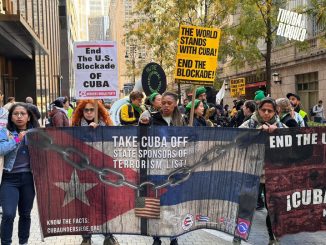
As everyone in the group got to know each other, they discussed their goals, such as reporting back to their organizations about the horrific impact of the U.S. blockade of Cuba and the urgent need to demand that Cuba be taken off the Trump (then Biden) list of “State Sponsors of Terrorism.”

On May 15,  the Biden administration, facing upcoming elections, made news by announcing it was removing Cuba from a short list of countries that they allege are “not fully cooperating against terrorism.” That was not the same as removing Cuba from the State Sponsors of Terrorism list, according to a U.S. State Department official. They did not remove Cuba from that list, which has served to tighten the 62-year-long U.S. blockade of Cuba, contributing to a severe economic crisis on the island and to shortages of food, fuel, and medicine.

U.S. union members learn about Cuba

The BRCL group was composed of union representatives and labor coalitions, community groups, women, lesbian, and socialist organizations, all of whose activities included support for Cuba. There were longshore workers from the ILWU Local 10 and Local 52, the A. Philip Randolph Institute, SEIU Local 73, and professors and teachers from the Federation of Teachers. 

At a meeting in the offices of Central de Trabajadores de Cuba (CTC — the Cuban Workers Central union federation), Julio Morales Verea, the CTC’s secretary general, and Nancy Roman spoke before opening the floor for discussion.

Morales talked about the revolutionary Cuban Labor Code, which legally establishes the rights of all unions and workers, ensuring they hold power. 

  • Unions have the right to participate in company management, receive management information, and use facilities for representatives. 
  • Union agreement is required for layoffs, changes in working hours, and access to the annual safety report.
  • Workers have the legal right to participate in workplace assemblies to debate and approve the Collective Bargaining Agreement negotiated by the union. The contract covers local pay systems and the implementation of employment production plans.
  • The union’s contract protects worker rights, including a 40-44-hour week and 30 days paid annual leave in the state sector.
  • Unions have the right to stop any work they consider dangerous as part of a comprehensive health and safety policy. 
  • Grievance and disciplinary complaints go before workplace boards called Organs of Labor Justice, the majority of whose members are elected by workers.

Some other highlights of the BRCL visit included:

  • ELAM, the Latin American School of Medicine, has trained tens of thousands of physicians from low-income communities in Africa, Asia, and the Americas, as well as the U.S. New doctors from over 100 ethnic groups, half of whom are women, make a commitment to return to work in underserved areas after receiving a scholarship.

    They study in a school that recognizes every patient’s right to care and care that centers learning in the community, where health promotion is as important as disease management.
  • Cuba’s Center for Genetic Engineering and Biotechnology conducts world-recognized research and development of biopharmaceuticals for the treatment and prevention of diseases. One of their successes was finding a treatment that prevents amputations for diabetics.

    Speakers emphasized the need to provide medicine where it is most needed without the constriction of profit-driven competition. A current goal of their research is finding a cure for dementia, a disorder women suffer more than men.
  • FANJ, the Foundation of Antonio Nunez Jimenez. Here, the BRCL delegation learned about Cuba’s commitment to environmental sustainability under climate change. They are working on solutions to the rising ocean level and the threat of superstorms in the Caribbean basin.  

There were many opportunities to visit local communities, see the restoration of Old Havana, and enjoy Cuba’s vibrant culture at jazz clubs, dance concerts, and art centers.

Most thrilling was May Day in Havana where tens of thousands of Cuban workers greeted their guests representing labor unions from all around the world. Music and dances began as the sun rose over the Atlantic. Former Cuban President Raul Castro and President Miguel Díaz-Canel Bermúdez spoke under a banner reading, “POR CUBA JUNTOS CREAMOS.” (Together, we create for Cuba.)

On the following day, the BRCL delegation attended the Conference of Labor Solidarity with all the other international labor delegations at the Cuban Palacio de Convenciones.

Union leaders from many countries spoke. Before President Canales addressed the packed hall, a news video showing the horror of genocide in Gaza was broadcast.

Strugglelalucha256


Remove Cuba from the U.S. list of alleged state sponsors of terrorism

Statement by the Cuban Ministry of Foreign Affairs

According to U.S. official media reports, on 15 May 2024, the country’s State Secretary submitted to Congress one more of the arbitrary reports that normally describe countries without any international mandate or recognition. This time, he listed four countries who allegedly “do not fully cooperate with the United States antiterrorist efforts for the 2023 calendar year.” As opposed to what has happened in recent years, the list does not slanderously include Cuba among such countries.

Nonetheless, the State Department keeps Cuba as one of the States in a list of those allegedly “sponsoring” terrorism. It is nothing but a totally unilateral and unfounded list whose sole purpose is to smear sovereign States and serve as a pretext for imposing coercive economic sanctions on them, as those ruthlessly imposed on Cuba.

The demand for the United States government to amend such an injustice continues to be firmly and repeatedly made not only by the Cuban people and many governments, especially in Latin America and the Caribbean, but also by political, social, and religious organizations in the United States itself and by several U.S. politicians.

The clear and absolute truth is that Cuba does not sponsor terrorism, but it has been a victim of it instead, including State terrorism. This is a question that can be confirmed by anyone interested in the topic, and that is very well-known by the government of the United States, its State Department, and its intelligence and law enforcement agencies. They are also fully aware of how significantly harmful for the Cuban economy the sanctions and actions are and the intimidating effect that they automatically have on any State, having it included in such a list, regardless of what the truth might be.

It is not enough to acknowledge that Cuba fully cooperates with the United States. Cuba does so with the entire international community as well. That is a widely known fact and public opinion is not to be misled about it. The President of the United States has all the privileges to act honestly and to do what is right.

Havana, 15 May 2024
(Cubaminrex)

Strugglelalucha256


Guantánamo Peace Seminar: A global call for justice and resistance against imperialism

Guantánamo, May 5 — An international peace seminar held in Guantánamo, Cuba, brought together delegates from 30 countries demanding a world free of U.S. imperialist intervention and military bases. 

During the VIII International Seminar for Peace and the Abolition of Military Bases, participants echoed the international condemnation of Israel’s genocide against the Palestinian people, demanded the return of Cuban territory occupied by the U.S. Naval Base at Guantánamo, and repudiated the wars organized by NATO under U.S. leadership. Fernando González Llort, President of the Cuban Institute of Friendship with Peoples (ICAP), emphasized that the seminar is being held amidst a complex global situation.

The seminar expressed solidarity with countries and peoples under occupation and colonial rule, such as Palestine, Western Sahara, and Puerto Rico.

Regarding the genocide committed against the Palestinian people by Israel, with the collaboration of the U.S. and the European Union, participants agreed that a comprehensive, just, and lasting solution requires the Palestinian people’s right to self-determination.

Speakers highlighted the imperative to end NATO’s expansionism and called for the dissolution of the aggressive military bloc. They also stressed the need to strengthen the anti-imperialist struggle and solidarity for a world of peace and social justice. Iraklis Tsavdaridis, executive secretary of the World Council for Peace (CMP), noted that the U.S. imperialist military presence and NATO are not only the source of the Russia-Ukraine war but also support Israel’s genocide against Palestinians.

Delegates pointed out that the United States has over 900 military bases in 90 countries, with 1.3 million men and women in these military installations, making it the main promoter of wars worldwide. The U.S. Naval Base at Guantánamo, Cuba, established in 1902, is the oldest and first U.S. military base in Latin America. Its presence significantly affects the economy of Guantánamo province and causes environmental damage.

Voices of resistance

Murid Abukhater, a Palestinian medical student in Cuba, expressed gratitude for the international solidarity with the Palestinian cause and Cuba’s unwavering support. He condemned the U.S. blockade against Cuba and demanded the closure of the Guantánamo Naval Base and the return of the territory to Cuban sovereignty.

During the last day of presentations, delegates discussed cyberwar and cyberterrorism as new weapons used by imperialism to undermine the sovereignty of nations. Speakers emphasized the need for Cuba to continue advancing in cybersecurity research and innovation, as the U.S. Naval Base in Guantánamo poses a real threat to the island. They also highlighted how cyber warfare is silently used to attack countries and manipulate international public opinion.

Key points from the final declaration included:

  1. Condemn U.S. and NATO imperialism: Denounce the aggressive and interventionist policies of the U.S. and NATO that threaten world peace through expanding their network of military bases and increasing military spending.
  2. Support Cuba: Support Cuba’s fight against the unjust U.S. blockade, remove Cuba from the illegal U.S. list of terrorism sponsors and express solidarity with Cuba’s pursuit of a just and sustainable socialist society.
  3. Call for base closures: Demand closure of all foreign military bases worldwide, particularly the illegally occupied Guantánamo territory, and oppose NATO expansion and increased military spending.
  4. Support sovereignty and self-determination: Support nations’ rights to self-determination and independence, particularly calling on Colombia, Brazil, and Argentina to abandon NATO partnerships.  Stand in solidarity with countries and peoples facing occupation and colonial domination, including Guyana and Puerto Rico in the Caribbean; Argentina’s Neuquén province and the Malvinas, South Georgia and South Sandwich Islands in South America; Palestine, Syria, and Cyprus in the Middle East; Western Sahara in Africa.
  5. Solidarity with Haitian people: Stand in solidarity with the Haitian people’s right to determine their own path towards a peaceful, sustainable, and prosperous future. Reject any foreign military intervention and call for solutions that respect Haiti’s sovereignty and independence.
  6. Advocate nuclear disarmament: Warn against nuclear conflict and campaign for a world free of nuclear, chemical, and biological weapons, opposing the militarization of space and cyber warfare.
  7. Promote peace zones: Amplify the Proclamation of Latin America and the Caribbean as a Zone of Peace and advocate against the presence of the U.S. Southern Command in the region. Condemn U.S. interference and militarization in the region (e.g., Peru, Guyana Essequibo, Venezuela) and support regional peace processes (e.g., Colombia).
  8. Defend Indigenous and African communities: Demand reparations for the damages of colonialism and slavery while expressing solidarity with Indigenous and African communities of Latin America.
  9. Oppose imperialist actions: Oppose imperialist actions globally, including in Nicaragua, Haiti (supporting its right to self-determination and development), and Ukraine (calling for an end to the conflict and denouncing U.S./NATO involvement).
  10. Establish World Day of Action: Observe February 23 as “World Day of Action against Foreign Military Bases”  for actions and initiatives to be carried out in all countries against these installations.

A symbol of hope and resistance

The seminar took place against a backdrop of escalating global tensions fueled by the increasing aggressiveness of imperialism and the interventions of the United States, the European Union, and NATO. These powerful entities continue to impose their agendas through propaganda campaigns and military conflicts, threatening peace and sovereignty worldwide.

The event concluded with a powerful demonstration of solidarity from the people of Caimanera, a town located near the U.S. Naval Base at Guantánamo Bay, a stark symbol of this imperialism. Their joyful resistance in the face of such a powerful symbol of oppression underscored the importance of the seminar’s mission and the ongoing fight for a world free from war and oppression.

Strugglelalucha256


U.S. activists condemn acquittal of Cuban Embassy attacker

May 10, Washington, D.C. — Carlos Lazo, coordinator of the Puentes de Amor solidarity project, who also works in support of lifting the United States blockade against Cuba, told Prensa Latina “This decision surprises us, scandalizes us, and worries us.”

He also asked: “How is it that a person who committed a terrorist attack against an embassy in the United States, who opened fire with a high powered rifle and endangered the lives of families and embassy staff and who was accused of four charges was acquitted by the U.S. justice system?”.

Lazo said that it is a tremendous irony that the United States has Cuba on a list of terrorist countries with lying justifications. Meanwhile, someone who has committed violent acts against the Cuban embassy and the Cuban people is declared free of any charges.

“Any Cuban with dignity, with love for his country, must be scandalized by this fact; furthermore, it establishes a precedent of impunity that those who commit acts like these will not receive the weight of justice,” he stressed.

A similar sentiment was raised by Cheryl LaBash, co-chair of the National Network on Cuba (NNOC), who added that she considers the perpetrator of the attack “a danger to himself and society.” The judge’s ruling “gives the green light to politically motivated violent crimes against Cuban embassies. The United States Government shown once again its willingness to violate international law and conventions,” concluded the NNOC leader. The NNOC is made up of over 70 organizations that work in solidarity with the island and for the end of the over 60-year blockade that is designed to economically strangle the Cuban people.

Alleging the perpetrator’s insanity, on May 1st, a judge from the District of Columbia acquitted Alexander Alazo, of Cuban origin and resident in the United States since 2010, of the four charges against him for the terrorist attack he perpetrated against the Cuban embassy in Washington four years ago.

A statement from the Cuban Foreign Ministry expressed its deep concern about the decision, even though Alazo himself confessed that he had gone there with the intention of firing on whatever was in front of him, including human beings, in case they were in his line of fire. The Foreign Ministry warned that the ruling of the judge sends a dangerous message of impunity for those who propose to take violent actions against embassies in Washington.

Cuban Ministry of Foreign Affairs Statement on the release:

Source: Prensa Latina

Cuban Ministry of Foreign Affairs Statement on the release:

United States Continues to Protect Terrorists

May 9, 2024

The Ministry of Foreign Affairs has learned with deep concern the decision of a judge of the U.S. District Court for the District of Columbia, issued on May 1, 2024, which acquitted Alexander Alazo Baró of the four charges against him as a result of the terrorist attack perpetrated by him against the Cuban Embassy in the United States in the early morning of April 30, 2020, for which he alleged conditions of insanity of the perpetrator.

Alazo, a person of Cuban origin who has lived in the United States since 2010, fired all 32 bullets from a magazine of an AK-47 semi-automatic rifle at the Cuban diplomatic headquarters in Washington, causing extensive material damage to the exterior and interior of the building and endangering the lives of several people inside the building.

Allazar himself confessed that he intended to shoot whatever was in front of him, including human beings, if they had been in his line of fire. This was a terrorist act in the capital city of the United States against a permanent diplomatic headquarters.

At the time of his arrest, Alazo’s regular association with the Doral Jesus Worship Center in Miami Dade, which brings together people with known behavior in favor of aggression, hostility, violence, and extremism against Cuba, was well known.

The terrorist was immediately arrested at the scene, and the United States government charged him with four crimes under the United States Federal Code. However, it has been unable to qualify the action for what it is: a terrorist act.

The politicization by the United States of the attack perpetrated against the Cuban Embassy in Washington was evident from the very first moments. This is demonstrated by the lengthy process of analyzing proven facts.

Four years after the events and in a criminal process full of opacity, the judge accepted a joint report by the Prosecutor’s Office and the defense of the terrorist Alexander Allazo Baró, which presents the perpetrator as someone who, at the time of the events, was not in possession of his mental faculties and, therefore, declares him innocent.

This decision sends a dangerous message of impunity to those who intend to take violent actions against diplomatic headquarters in Washington.

On September 24, 2023, in the evening hours, an individual threw two Molotov cocktails over the perimeter fence of the Cuban Embassy in Washington and against the front facade of that facility. It is an event that occurred three years and five months after the attack perpetrated by Alazo. Even U.S. law enforcement authorities claim not to know the perpetrator or have details of what happened.

These terrorist acts are a direct result of the aggressive policy and discourse of the U.S. government against Cuba, of the permanent instigation of violence and hatred by U.S. politicians and extremist anti-Cuban groups.

Source: Resumen

Strugglelalucha256


‘No to war and foreign military intervention’: a unanimous cry at Guantanamo Bay

The VIII International Seminar for Peace and the Abolition of Foreign Military Bases began this Saturday in the easternmost province of Cuba, an event that from the Mariana Grajales Square denounces the imperialist military presence around the world as a restriction to peace among nations.

Accompanied by the Government, the Cuban Communist Party (PCC) and institutions of the province of Guantánamo, the International Seminar was chaired on the first day by Yoel Pérez García, First Secretary of the PCC of Guantánamo; Fernando González Llort, Hero of the Republic of Cuba and President of the Cuban Institute of Friendship with the Peoples (ICAP); Víctor Fidel Gaute López, Vice President of ICAP, Iraklis Tsavdaridis, Executive Secretary of the World Peace Council (WPC) and Alis Azaharez Torreblanca, Governor of the province.

With the participation of 82 delegates (73 foreigners and 9 Cubans) from 26 countries, the anti-imperialist meeting echoes the international rejection of the genocide perpetrated by the Zionist army of “Israel” on the Palestinian people; and the unanimous demand for the return of the Cuban territory usurped by the United States with the installation of the Naval Base in Guantanamo; first Military Base of that country in the world, as well as the repudiation of the wars organized by NATO under the direction and auspices of the US.

In this context, Fernando Gonzalez Llort, stressed that “the Seminar takes place in a complex world scenario for just causes”, especially for Palestine, Western Sahara, Europe and the Middle East.

“There will be no peace in the world as long as there are weapons pointed against the peoples”, stressed the Cuban top leader.

The Cuban Hero reaffirmed that his nation vindicates Peace and the Sovereignty of the Peoples and “will not cease in its struggle for the return of the territory illegally occupied by the US Naval Base in Guantanamo. It will also not cease to demand the lifting of the economic, commercial and financial blockade imposed on our country more than 60 years ago”, and will maintain the struggle “for the elimination of Cuba from the arbitrary list of alleged countries sponsoring terrorism”.

Fernando González Llort considered it imperative to put an end to the expansionism of NATO and its allies, to aim at the dissolution of that aggressive military bloc, mainly responsible for the rise of the arms race in the world.

“We Guantanameros are very proud that our province is an international meeting place to defend peace”, expressed Yoel Pérez García, First Secretary of the PCC of Guantánamo.

Pérez Garcia thanked the presence of anti-imperialist fighters and leaders who debate and expose strategies to counteract the threat of extermination suffered by humanity, “the better world we dream of is possible and together we can achieve it,” he said.

“Let us strengthen the anti-imperialist struggle and solidarity, for a world of Peace and Social Justice”, urged the president of ICAP.

On the consequences of the imperialist military presence of the US, NATO and their allies around the world, -Iraklis Tsavdaridis, Executive Secretary of the World Peace Council (WPC) – stressed that they are not only the source of the war between Russia and Ukraine; they are also the support and prop of the Zionist army of “Israel” to perpetrate genocide against the Palestinian people.

“Not since the Cold War crisis in 1962 has the world been so threatened as it is today by the use of weapons of mass extermination”, warned Lt.Cr. Manuel Carbonell Vidal, vice-rector of the Higher Institute of International Relations of Cuba (ISRI). Therefore, it constitutes a threat to all life and human beings.

Gabriel Aguirre, representative of World Beyond War, pointed out that according to public information, “there are 6 or more military bases with nuclear weapons in Italy, Belgium, the Kingdom of the Netherlands, Germany, Turkey and it is very likely that there are others whose information is not in the public domain”.

The Venezuelan researcher denounced that “there are more than 900 U.S. military bases in 90 countries which of course turn this imperialist force into the main promoter of wars all over the world”.

There are -according to the references exposed by the delegates of the VIII International Seminar for Peace and the Abolition of Foreign Military Bases- around 1.3 million men and women in U.S. military installations, the country with the greatest presence of military bases outside its national territory.

The United States, the United Kingdom and France are the countries with the most military bases worldwide.

The US Naval Base in Guantanamo-Cuba, with 122 years of existence, is the oldest military base in the world and the first anti-imperialist trench in Latin America.

The origin of the base officially dates back to 1902, but the occupation is much earlier, dating back to the brief period when Cuba was invaded by the British Empire, at a time when the United States had not yet gained independence from the British crown.

During the period of interventions, 7 invasions of Latin American countries were carried out from the Naval Base.

U.S. specialists point out that the Naval Base was the second port in the world with military movement during the Second World War.

“The period from 1939 to 1945 was the only historical period in which the Naval Base played a least bit positive role in history in the fight against Nazi Germany”, said the historian of the city of Guantánamo, José Sánchez Guerra.

From the Guantanamo Naval Base, terrorist actions have historically been orchestrated in sister countries of the region; it is a center for the organization and execution of terrorist activities.

Its presence significantly affects the economy of the province of Guantanamo and causes damage to the environment.

However, Guantanamo, as an anti-imperialist trench, is a meeting point of International Solidarity where the U.S. military presence in Cuban territory is condemned, and strengthens the world movements for Peace in defense of injustices.

International support for solidarity in Guantanamo is also embraced by the Palestinian cause.

Murid Abukhater, a medical student in Cuba, born in Gaza, – expressed on behalf of his people – “the deepest gratitude and thanks to all the free and honest people of the world, who today stand in solidarity with our people and their just cause, in the face of imperialist-Zionist crimes”.

“We appreciate the solidarity of Cuba with our just cause, which considers it as its own and calls and defends Palestinian rights for the liberation, self-determination and full recognition of the Palestinian State in the United Nations.”

“Also for us, defending Cuba is our cause, we condemn the criminal and illegal US blockade and the infamous and arbitrary inclusion of Cuba in the list of alleged sponsors of “terrorism”, together with all the friends of Cuba we demand the end and the elimination of the blockade and to remove Cuba from this infamous list, as well as, we demand the closure of the US Base in Guantanamo and the return of this territory to the Homeland of Cuba and its national sovereignty.”

The Palestinian student, sent from this international event  a special greeting to the students of the American universities, who are protesting against the crimes of the occupation and the support of the Biden administration to the genocide and demand the end of the aggression against the Palestinian people.

The VIII International Seminar for Peace and the Abolition of Foreign Military Bases will conclude tomorrow with the reading of the final declaration of its participants. The town of Caimanera will welcome the delegates this Sunday to thank them for their support in the struggle they are facing from the first trench against imperialism.

Source: Resumen English

Strugglelalucha256


Cuba marks May Day with unity and strength despite adversity

This May Day, Cuba did not hold its traditional parade in the capital’s Revolution Square for the second consecutive year. The lack of fuel made it impossible to provide the necessary transportation for thousands of Cubans in the surrounding neighborhoods and provinces to travel to the iconic Paseo Avenue in Havana. This event every year attracted all generations of Cubans parading with Cuban flags in hand, and with the typical excitement and pride that characterizes us. The blockade’s impact is real and today is like a punctuation mark on what we face on a day to day basis.

Nevertheless, despite the obstacles, over 260,000 Cubans and international supporters today filled the squares of the country. This date could never go by unnoticed on the Caribbean island because Cuba as a country is solidly on the side of working people and not the rich and privileged and has been that way since the revolution in 1959.

It should be remembered that International Workers Day began in the US in 1886 when police in Chicago attacked workers fighting for the 8 hour work day. The government would like to forget that but it won’t go away. For example the Port of Oakland today, one of the busiest in the US, was shut down by members of the International Longshore and Warehouse Union (ILWU) in honor of the holiday. Retired leader of the ILWU, Clarence Thomas, who participated in the rally in Havana said that, “there is an effort going on in the Teamsters Union to include May Day as a holiday in future contracts.”

The  José Martí Anti-Imperialist Tribune, located next to the U.S. embassy,  was the main event on the island. The feeling there was strong, enthusiastic and united despite the difficult economic situation the country is going through, aggravated by the blockade imposed on Cuba for more than 60 years.

A major theme that underscored the air of resistance at the Tribune was the pervasive support of the heroic Palestinian people that was evident amongst Cubans and the solidarity activists attending from around the world. Palestinian flags, buttons, t-shirts and keffiyehs could be seen throughout.

The U.S. policy of maximum suffocation of the Cuban people and our internal insufficiencies mark this new anniversary of proletarian struggle. The problems derived from the blockade constantly affect Cuban workers in their own lives and the fulfillment of their work in fields such as production, education, health, science, and agriculture.

In this context, Cubans once again demand an end to the U.S. economic blockade and the exclusion of the island from the illegal list of countries allegedly sponsoring terrorism. The great majority of people on the island continue to stand behind Cuba’s socialist project.

The First Secretary of the Central Workers’ Union of Cuba (CTC), Ulises Guilarte, addressed the event, which was attended by Army General Raul Castro Ruz, President Miguel Diaz-Canel, and other senior leaders of the Revolution. He referred to the current complex and adverse socio-economic context of the country by explaining, “The hostilities of the U.S. government negatively impact the quality of life of the people, who suffer daily food and medicine shortages, as well as the devaluation of salaries and pensions. It limits access to inputs and raw materials destined for our industrial plants and puts pressure on banking institutions and companies around the world interested in commercial exchange and foreign investment in Cuba.

“There is not a single sector of the country free from these effects. Faced with these challenging circumstances, we dedicate this celebration of the world proletariat to the heroism of the Cuban working people, who concentrate their efforts on the country’s economic recovery as their fundamental cause.

“There are good examples in all the territories of the country that show that it is possible to achieve productive efficiency beyond the limitations of material and financial resources. And at the center of these good experiences are men and women who show us that human capital is the most secure and solid resource we have today, and we are not allowed to waste it,” Guilarte concluded.

Source: Resumen Latinoamericano – English


Strugglelalucha256


When Che Guevara came to Gaza

Since the explicit Israeli colonization of historic Palestine in 1948, supported by colonialist and imperialist powers, namely Britain and the US, the Palestinian struggle has become a global cause. Resistance was a natural response to the invasions and incursions better known as “the ethnic cleansing of Palestine.”

Even before then, as the military occupation entrenched itself at the hands of pre-state Zionist militias and paramilitary units, massacres and forceful expulsion were committed, leading to the 1948 Nakba, the catastrophe of the loss of the Palestinians’ homeland. The 1967 Naksa, or “set back,” followed with the defeat of Arab armies.

Displaced indigenous Palestinians were forced to live in refugee camps in makeshift tent cities in Gaza, the West Bank, Lebanon, Syria, and Jordan, relying on food hand-outs provided by UNRWA.

At first they assumed that they would one day return to where they had been driven out by force. During the Nakba, some 500 towns and villages were wiped off the map as they were looted. Today, 70 years later, the displaced and dispossessed are still waiting for the implementation of that dream – “the right of return.”

Amid all the developments at the time, a sense of revolt began to emerge among Palestinians to defend their land.

“Fedaeyyeen” – the Arabic term for “freedom fighters” – began to assemble and carry out reprisal attacks against occupying Israeli forces. Some fighters infiltrated the security border fence from neighboring Arab countries.

Horrendous massacres followed, most notably in 1953, 1955, and 1956, in which hundreds of Palestinians were killed at the command of Ariel Sharon, then a hawkish army general charged with uprooting the Fedaeyyeen and punishing the refugees for supporting them.

Revolutionary spirit in Egypt

Egypt, known then as “The United Arab Republic”, had administered the Gaza Strip between 1948 and 1967 and lost dozens of its soldiers, police, and security officers, especially in south Gaza’s Khan Younis and Rafah towns during a triple-pronged offensive against Egyptian forces by Britain, France, and Israel in 1956, following Nasser’s decision to nationalize the Suez Canal.

The spirit of revolution was running high in Egypt under leader Gamal Abdel Nasser, the godfather of pan-Arabism, who was known for his anti-imperialist and anti-colonialist stance. Nasser, who dominated Arab politics and the imagination of the Arab masses at the time, extended an invitation to none other than Ernesto Che Guevara, the Latin American revolutionary, to visit Cairo.

It’s not known if visiting Gaza was on Che’s agenda, or if it was Nasser’s idea. But the timing of the visit was of great importance for the Palestinian national movement, which was comprised of Fedaeyyeen. The movement drew inspiration from guerrillas in Latin America, Vietnam, and Algeria.

The ideology of the Palestinian Fedaeyyeen was mainly left-wing nationalist, socialist, or communist, and their proclaimed purpose was to defeat Zionism and liberate Palestine through armed struggle to establish it as “a secular democratic state. “

The idea of liberation gained momentum as Palestinians had never achieved any form of real national independence in their homeland, and a few years later, in 1964, the Palestine Liberation Organisation (PLO) was formed and led by Ahmad Shukeiri. Yasser Arafat became the PLO’s chairman in 1969 until his death in 2004.

Che Guevara in Gaza

After accepting Nasser’s invitation, Guevara was sent to the region by Cuba’s Fidel Castro on a three-month tour of 14 countries. A one-day visit was dedicated to Gaza which was then under Egyptian rule. Guevara landed in Gaza wearing his dark military fatigues on 18 June 1959 after traveling about 450km from Cairo.

He received a hero’s welcome from the Egyptian de facto governor of Gaza, General-Lieutenant Ahmad Salim, as well as from Palestinian officials and heads of municipalities and many ordinary people.

During his short visit, he toured several Palestinian refugee camps including Al-Buraij camp, where he was welcomed with chants from the Cuban revolution. Cuba went on to welcome the founding of the Palestine Liberation Organisation, making official contact with it in 1965.

One of Che’s goals for a visit was to support Arab and Palestinian national liberation and revolutionary movements against Western imperialism and colonization.

Zulfiqar Swirjo, an official affiliated to the Popular Front for the Liberation of Palestine, stated during a previous interview that his father was there during that historic visit that aimed to share Guevara’s beliefs and revolutionary ideas with Gaza’s fighters. They had wanted to put together a strategic plan for a popular struggle to fight the Israeli forces using guerrilla warfare tactics.

Gaza

The Gaza Strip is a small slice of the eastern coastline of the Mediterranean Sea in the southern part of historic Palestine. It borders Egypt to the southwest and Israel to the east and north. At 45km long and between 5 and 12km wide, it has a total area of just 365 square km—around the same size as the city of Bakersfield, California (pop. 380,000).

Today, two-thirds of Gaza’s two million inhabitants are refugees, ethnically cleansed from their original homes.

According to Palestinian researcher Salman Abu Sitta, after Guevara’s visit to Gaza, Cuba gave scholarships to Palestinian students, granted citizenship to stranded Palestinians and held many conferences in support of Palestine. And as Palestine has become a symbol of struggle against colonialism, it’s no surprise that India’s first prime minister and anti-British colonialist Jawaharlal Nehru also visited Gaza in 1960 and met with the United Nations Emergency Force (UNEF), whose presence was to protect the old armistice line between Israel and Egypt.

The Argentinean revolutionary leader was summarily executed by Bolivian forces in October 1967, nearly four months after the “six-day war”, when Gaza was annexed from Egyptian control and came under total Israeli occupation.

Che became an icon of resistance, especially for leftist Palestinian resistance movements such as The Popular Front for the Liberation of Palestine, The Democratic Front for the Liberation of Palestine, and the Palestinian People’s Party.

His legacy endures, and, for many Palestinian activists, he remains a source of inspiration, as a popular icon of rebellion against imperialism, colonialism, and military occupation.

Yousef al-Helou is a freelance Palestinian journalist.

Source: Resumen

Strugglelalucha256


Cuba’s victory at Playa Giron and the U.S.’s moral punishment

April 19, 1961, is marked in the Cuban popular imagination as a day of national pride. Barely 72 hours after the landing of 1500 U.S.-backed mercenaries at Playa Giron (Bay of Pigs) in Matanzas, Cuba demonstrated to the world its willingness and determination to defend with arms the revolutionary process initiated on January 1, 1959. Witnesses of that three-day battle remember the complexity of the combat. Although Cuba was expecting the attack, it was surreal that it was really happening.

The memory of the roar of bullets and tanks hurts. The Zapata Swamp was stained with blood and gunpowder. The consequences of that mercenary incursion are shocking: 118 people lost their lives, many of them peasants and children of the area. Three hundred and sixty people were wounded, and 1,202 mercenaries were captured.

“Do not let our war tanks stop until the mats are soaked in the beach water, because every minute that those mercenaries are on our soil it is a threat to our homeland,” the maximum leader of the Revolution, Fidel Castro, had ordered. And so it was. The forces of the Rebel Army, the National Revolutionary Police, the popular militias, and the peasants residing in the area closed ranks and drove the invaders back to the sea. That feat marked the first military victory against U.S. imperialism in Latin America.

The aggression was organized by the U.S. Central Intelligence Agency (CIA) and had the air and naval support of the Army of that northern power whose government has intended, since then, to reverse the process of social transformations in Cuba. Most of the mercenaries were Cuban emigrants who were recruited and trained by the CIA after the triumph of the Revolution to overthrow the revolutionary government of the island.

In an act of commemoration for the victory’s anniversary in 1965, Fidel affirmed that the victory of the Bay of Pigs “marked the day when the plans drawn up by the brainy generals of the Pentagon, by the luminaries of the Central Intelligence Agency, fell apart.”

This is the best-known story of the invasion. What is less well known is what happened to the mercenaries after the victory. Let’s remember that the attack was doomed to failure before the first shot was fired. President John Fitzgerald Kennedy, from the White House, canceled at the last minute the air strikes that would seek to “neutralize” the Cuban air force, and he did so because the U.S. wanted to camouflage its true role as the driving force behind the invasion. The mercenaries, armed to the teeth and loaded with the coffers of the White House money, were left alone to avoid damaging Washington’s image. But this did not take long to come to light.

The book “Battle for Indemnity” by Verde Olivo Publishing House tells the story of the political process that followed the victory. Authors Acela Caner Román and Eugenio Suárez Pérez explain that imperialism was forced to pay a war indemnity for material damages for the first time in U.S. history. This revealed in no uncertain terms the responsibility of the U.S. government for the invasion, despite its attempts to cover it up. That agreement is considered Cuba’s second victory in the Bay of Pigs.

It has often been said that once the victory at Bay of Pigs was won on April 19, 1961, the mercenaries who invaded the country were exchanged for baby food after a negotiation with the government of President John F. Kennedy. However, this was not exactly what happened. During the trial of the mercenaries, the majority of the participants supported the commander-in-chief’s idea of requesting compensation. Although the people of Cuba demanded the death penalty for the mercenaries, “Fidel, rightly, convinced everyone that the important thing was to get compensation, and he got it,” according to the book.

President Kennedy’s administration never paid 100% of the agreed indemnity, the authors of “Battle for Indemnity” explained and recalled the words of the Commander in Chief concerning the victory: “What we wanted was for them to pay us, not because we needed the money, but because it represented the recognition of the U.S. Government of our revolutionary victory. It was a moral punishment from us to them. It was our second victory.”

Source: Resumen Latinoamercano  – English

Strugglelalucha256


April 16: Three glorious Cuban anniversaries on one date

Every April 16, Cuba celebrates three glorious anniversaries. First, the declaration of the socialist character of the Cuban Revolution. Second, the Day of the Militiaman. And the third, the founding of the Cuban Communist Party. These three events are nourished by a single root: patriotism, unity, and the people’s willingness to defend the Revolution at any cost.

Sixty-three years ago, on April 16, 1961, the island bid farewell to seven Cubans who had lost their lives on the previous day, victims of the U.S. bombing of the airports of Santiago de Cuba, Ciudad Libertad and San Antonio de los Baños, a precursor to the Bay of Pigs invasion on April 17, 1961. In the busy avenues of 23rd and 12th, in the capital’s Vedado district, Commander in Chief Fidel Castro proclaimed that the newborn Revolution of 1959 would be patriotic, democratic and socialist, of the humble, by the humble, and for the humble.

With their fists and rifles raised, the militia people swore to defend the Revolution that Fidel discribed at whatever cost. In every corner of the country, the armed people were ready to defend the revolutionary work and the socialist ideology.

Those who witnessed that day remember April 16, 1961, as if it were yesterday. The combatants of the 148th battalion of the National Revolutionary Militias were part of that crowd gathered with rifles in hand at the corner of 23rd and 12th. The emotion multiplied after Fidel’s words, which were immortalized in newspapers and radio stations of the time: “Fellow workers and farmers, this is the socialist and democratic Revolution of the humble, with the humble and for the humble”.

After his words, the notes of The Internationale, the official anthem of the workers of the world and of the majority of the socialist and communist parties, were sung. Hours later, the militiamen present there fought alongside Fidel on the sands of the Bay of Pigs.

That disposition materialized in combat, when the militia, along with the Rebel Army and the National Revolutionary Police, fought the invaders, annihilating them in less than 72 hours. Every inch of land in the country became a trench. And in honor of that victory, April 16 was chosen as Militia Day, celebrated every year, as a tribute to the men and women who fought the mercenaries or were willing to do so throughout the country.

Many witnesses of that struggle are the same ones who in 1965 joined the ranks of the Communist Party of Cuba, which took April 16, 1961, as its founding date, given the symbolism of that occasion. The protagonists of that struggle will relive today the emotion of those April days, in a political tribute that will take place in the same avenues of 23rd and 12th this afternoon.

Today, Fidel’s words will resound once again: “The people of yesterday, semi-literate, with a minimal political culture, were capable of making the Revolution, defending the Homeland, later attaining an extraordinary political consciousness, and initiating a revolutionary process that has no parallel in this hemisphere or the world. I say this not out of a ridiculous chauvinist spirit, or with the absurd pretension of believing ourselves to be better than others; I say it because the Revolution that was born on January 1st, 1959, by chance or destiny, was subjected to the hardest test to which any revolutionary process in the world has ever been subjected to.”

Those words do not lose their validity, nor does the Revolution, which frightens the reactionaries in the world so much, but which today stands as a lighthouse before the eyes of the world. This hardest test of ours continues but we are aware of the enormous responsibility we have to the peoples of the world, and we will always know how to be up to that responsibility.

Source: Resumen Latinoamericano – US

Strugglelalucha256
https://www.struggle-la-lucha.org/cuba/page/9/