Book on the LGBTQ+ rights revolution in Cuba is presented
written by Struggle – La Lucha
July 30, 2025
Photos: Iliana García Giraldino
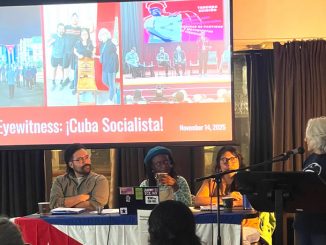
Havana, July 29 — The presentation of the book “Love is the Law: The Queer Rights Revolution in Cuba,” published in the United States by Struggle-La Lucha, the publishing house of the Struggle for Socialism Party, took place on Tuesday at the Casa de la Amistad in an event that became an expression of solidarity with Cuba, just causes around the world, and the LGBTQ+ community.
Among those in attendance were Fernando González Llort, president of the Cuban Institute of Friendship with the Peoples (ICAP); Mariela Castro Espín, director of the National Center for Sex Education (CENESEX); Cheryl LaBash, co-Chair of the National Network on Cuba (NNOC) in the US; and Gregory Williams and Onyinye Alheri, members of the Struggle-La Lucha delegation.
The US “Venceremos” brigade, in its 53rd edition made up of members of the LGBTQ+ community, accompanied the presentation of the book that brings together materials (in English) from various authors on the approval and explanation of the Family Code in Cuba, highlighting that this legal system expands the rights of women, children, LGBTQ+ people, people with disabilities, the elderly, and all Cubans.
Gregory Williams
This was stated by the book’s editor, Gregory Williams, who described the presence of “Venceremos” as an achievement “considering the intensification of Washington’s blockade of Cuba and the growing repression against queer (those who reject the male-female binary system) and trans people in the United States.”
The true face of US imperialism is revealed
In his speech, Williams reflected that “at this moment, the true face of US imperialism is being revealed more clearly to the world, through the genocide in Gaza, and the vulgarity and cruelty of the Trump regime… the brutality of imperialism is being exposed.”
“And they seek to destroy Cuba and its socialist system that made the Family Code possible. They want to impose a government that will allow Wall Street to plunder the island as it did in the 1950s,” he added, asserting that “this decline of the imperialist system is fueling the resurgence of fascism.”
He denounced that within its own borders, the US government furiously attacks workers and oppressed people, including the trans community and immigrants.
The struggle for the rights of queer and trans people is part of a broader struggle against capitalism; we have the same enemy, he stressed.
Williams called for continued pressure to end the blockade and remove Cuba from the list of State Sponsors of Terrorism, exclaiming, “The US government is committing genocide in Palestine and has the audacity to accuse Cuba of terrorism!”
Justice for All
“Love is the law…” brings together testimonies from the delegation of American Friends Against Homophobia and Transphobia that visited the Caribbean nation in 2023 to learn about the Family Code approved in 2022 by popular referendum.
In the dialogue prompted by the presentation of the book, Mariela Castro Espín spoke of the educational work, persuasion, and awareness-raising, as well as the advances in the rights of the LGBTQ+ population in Cuba as part of the social justice inherent in the Revolution.
Referring to the defense of the rights of the LGBTQ+ population, she emphasized that “solidarity among us unites us in the struggle for equality among people, for freedom, and against all forms of injustice,” and told attendees that “in your struggle for LGBTQ+ rights, you are also fighting against the blockade of Cuba and for justice for all.”
Francisco Rodríguez Cruz
A book against the blockade of knowledge
On behalf of CENESEX, journalist Francisco Rodríguez Cruz, an activist for the rights of LGBTQ+ populations, considered that “Love is the law…” is a book against the blockade of knowledge, an act of resistance and a beacon of truth and solidarity in a world where misinformation about Cuba is systematic and where advances in LGBTIQ+ rights on the island are ignored or distorted.
The work not only documents the legal content of the Family Code, but also contextualizes its emergence from a Marxist, anti-colonial, and deeply humanist perspective, emphasizing that “it is a rich reflection on how Cuban socialism has created conditions for the sustained expansion of rights, in contrast to the regressive offensive taking place in the United States.”
Rodríguez Cruz described as brutal the conditions are resulting from the economic, political, informational, and cultural blockade against Cuba by the United States that has gone on for more than six decades, “a blockade that not only suffocates the country economically, but also imposes an informational siege.”
Casa de la Amistad
At a time when the international fascist movement—led by figures like Donald Trump—is attacking LGBTIQ+ rights and public services, the book counters that dangerous view and underscores the importance of learning from Cuba, Rodríguez Cruz concluded.
Also participating in the meeting were representatives of IFCO-Pastors for Peace, including executive director Claudia de la Cruz, Gail Walker, and Samira Audrey; representatives of various LGBTIQ+ groups; and Graciela Ramírez, coordinator of the International Committee for Peace, Justice, and Dignity.
July 26: The legacy that Cuba transforms and defends
written by Struggle – La Lucha
July 30, 2025
Havana, July 26 — The importance of July 26 for the new generation of Cubans extends far beyond a historical date; it represents a living challenge to the present and a commitment to the nation’s future.
The assault on the Moncada Barracks in 1953, led by Fidel Castro and a group of young revolutionaries, not only marked the beginning of the struggle against Batista’s dictatorship, but also laid the foundations for a political and social project that redefined Cuba’s sovereignty, its Latin American identity, and its internationalist vocation.
For younger generations, July 26 holds significance in three key dimensions. The first is the preservation of active memory and the defense of a sense of continuity. This year, the main celebration took place in Ciego de Ávila. As has been tradition since 1959, the date was not only commemorated but also lived as an active memory that challenges young people to grasp the deeper meaning of the Revolution: dignity, social justice, and national emancipation.
“In the face of attempts to depoliticize, forget, or trivialize history, July 26 represents an anchor of sovereignty, self-determination, and cultural resistance,” said Prime Minister Manuel Marrero Cruz in his speech at the event.
The second dimension is its role as an ethical reference point in times of crisis. Amid an economic downturn, the tightening of the U.S. blockade, and internal challenges, the legacy of Moncada offers a moral compass: the decision not to give in, to seek collective alternatives, to build with one’s own effort.
“It’s not about repeating slogans, but about revitalizing the spirit of that gesture—rebelling against what is unjust, even when conditions are adverse,” Marrero added.
Finally, July 26 is a date that also points toward the future. For many young Cubans, it is a call to rethink the Revolution and make it their own. That means fostering debate, questioning what doesn’t work, and contributing to scientific, cultural, technological, and community spaces.
Moncada was a triumph of youth, and today the challenge is to channel that same energy toward a Cuba that holds firm to its principles while reinventing itself in terms of digital sovereignty, ecological justice, socialist innovation, and participatory democracy.
July 26 remains a symbol of rebellion with a cause—a source of inspiration for building a future without renouncing foundational values. For the new generation of Cubans, it is not just a date: it is a legacy that is critically embraced, transformed, and defended—both in Cuba and around the world.
Alejandra Garcia is a Cuban journalist living and working in Havana where she is the lead correspondent for Resumen Latinoamericano in English and a news anchor for Telesur.
Statue of Fidel Castro and Che Guevara in the struggle
written by Struggle – La Lucha
July 30, 2025
Once again, bronze statues are taking the front line in an ideological war. The statues of Fidel Castro and Che Guevara, both dressed in combat garb (one might say looking very Mexican), have been seated in a small park in Mexico City’s Colonia Tabacalera neighborhood since 2017. The Monumento Encuentro (Encounter Monument) monument was placed there by the Mexico City administration of then-Mayor Andrés Manuel López Obrador.
The statues were located near the historic first meeting place of Che and Fidel. It was here in 1955 that they began to plan their revolutionary campaign to free Cuba from the grasp of U.S. imperialism and the brutal despot, Fulgencio Batista.
Currently, a social media storm has countered the abrupt removal of the popular Encuentro monument by a right-wing borough president in the Cuauhtémoc district, where the monument was located.
Outspoken opposition has come from Mexico’s President, Claudio Sheinbaum. She has said she will make arrangements with Mexico City’s mayor, Clara Brugada, to place the historic monument in another part of the city.
Sheinbaum suggested that the removal of the Monumento Encuentro was political retaliation for her own widely applauded monument removal — the banishment of one of Mexico’s most infamous symbols.
In her former position as Mayor of Mexico City, Sheinbaum ordered the removal of the bronze statue of the genocidal conquistador Christopher Columbus from a pedestal dominating the capital’s Paseo de la Reforma.
Indigenous activists have led campaigns protesting the monument for years.
The traffic circle where the Columbus statue once reigned has been renamed “Glorieta de las Mujeres que Luchan” (Roundabout of the Women Who Fight). Today, it is a rallying point for the struggles of Indigenous peoples.
Women have installed an “anti-monument” featuring a purple-clad woman with a raised fist to honor women who have faced violence and injustice for their activism and struggles.
Cuba: ‘The beauty of this difficult hour lies in knowing that we are part of an undefeatable people’
written by Struggle – La Lucha
July 30, 2025
Speech delivered by Miguel Mario Díaz-Canel Bermúdez, First Secretary of the Central Committee of the Communist Party of Cuba and President of the Republic, at the closing of the Fifth Ordinary Period of Sessions of the National Assembly of People’s Power in its 10th Legislature, at the Convention Palace, on July 18, 2025, “Year 67 of the Revolution”
(Shorthand Versions-Presidency of the Republic)
Dear Army General Raúl Castro Ruz, leader of the Cuban Revolution;
Dear comrade Esteban Lazo Hernández, President of the National Assembly of People’s Power;
Dear deputies;
Compatriots:
This has been an authentic Assembly of the people, as the young deputy Danhiz expressed here. It has been so because its debates were the debates of today’s Cuban society on the enormous challenges ahead of us, but also because they once again revealed the impressive willingness of this people to fight when everything becomes more difficult.
Neither pessimism, nor defeatism, nor discouragement. What we found here were sober presentations, criticisms based on commitment and, above all, concrete proposals and demands to change what must be changed without delay.
The wisdom and enthusiasm that has characterized practically all the interventions of these days do not surprise me, it is what I have seen in the tours through the provinces. Just where the situation is hardest, after long hours of blackout, you always find the extra of Cubans.
It is not the first time nor will it be the last time that the Cuban Revolution faces its “most difficult moment”, although it will always seem to us that nothing can be worse than what we face at the instant we face it.
I will cite a few episodes in the history of Cuba: the Zanjón Pact after ten years of a bloody war that ended with the death or exile of its leaders; the fall in combat of José Martí and Antonio Maceo; the Yankee intervention that robbed us even of the right to enter the heroic city and to attend the signing of the Treaty of Paris because there two empires negotiated our freedom; the neocolonial republic with its appendix, and the Yankee military base where human dignity is tortured and violated.
Then comes the Machado times with its pomp and misery, and Julio Antonio Mella assassinated, and the Revolution that went to the dogs, and Antonio Guiteras massacred in El Morrillo for his profoundly anti-imperialist action. And the corruption of the authentic ones, and Batista’s coup d’état, and the murders of “our children” denounced by the Cuban mothers, and the repressed students and the massacre of the assailants of the Moncada, the Presidential Palace, the Goicuría.
With all this inheritance of heroism and frustrations of the revolutionary struggles, the Centennial Generation entered history, with its setback marking the victory in the attack to Moncada. They already had a program, an ideal and a willingness to carry it to the ultimate consequences. And so they did.
When we review all the periods of the 66 years of the Revolution in power, what we find, in addition to victories, are third world challenges, enemy obstacles and also our own mistakes and lessons learned, all fruits of the never abandoned eagerness to conquer and sustain social justice as a supreme aspiration, in a completely adverse world context, since the Soviet Union and the socialist camp ceased to exist.
If, in spite of all that, the Cuban Revolution is standing and fighting for the possible prosperity, it is because of its authentic and genuine character. We are not an accident of history. We are the logical consequence of a history of resistance and rebellion against abuse and injustice that has very deep reasons to believe in its own strength.
That is why the national dignity is offended by those who play at comparing times to praise “how well Cuba was before 1959”, posting photos of the palaces and the elegance of its ladies and gentlemen, but hiding those of the eviction, the machete plan, the misery, the children swollen with parasites who worked when they should have gone to school, the prostitutes, and the Italian-American mafias sharing the spoils of the hotels and cabarets for whites only in a mestizo country.
Because the Revolution that finally took power in 1959 was started by a small group of revolutionaries, but it was made by a whole people. And the people who made it have defended it and defend it today even with their teeth, let there be no doubt about it! (Applause).
Otherwise, it will never be possible to explain its existence in this uncertain decade of the 21st century, where dissidence from the single way of thinking, imposed by predatory capitalism, is paid for with smart bombs, the destruction of entire nations or with asphyxiating economic blockades, like the one that this small country of courageous people has been enduring for more than 60 years.
It is deeply insulting to human dignity that those who use the Internet in campaigns to denigrate the Cuban people do not react with equal indignation in the face of the scandalous crimes of those who blockade the country; They avoid calling by name the Israeli genocide in Gaza and Lebanon, and do not protest, do not rebel, do not have the courage to point the finger at those guilty of so much xenophobia, so much war, so many weapons and so much injustice, competing in news prominence with the rampage of billionaire pedophiles and the deportation or imprisonment, without proven crimes, of tens of thousands of migrant workers and their families.
What we learned from the Cuban Revolution is that ideals are not changed because circumstances change; that the trench is not abandoned when the enemy siege tightens. We learned that only by having clear convictions as principles is it possible to sustain and win battles. And we also learned that we can fight our way out of the siege! (Applause).
Fellow Members:
I am not going to expand on the topics already addressed. The gravity of the times demands more actions than words, although we will always have the duty to say them and above all to honor them before the people who elected us. The guide is in the concept of Revolution that Fidel bequeathed us: “Never lie or violate ethical principles”.
These working sessions leave us with an important lesson. This is the Assembly of the Cuban people and everything that is discussed and approved in it has to connect with the feelings, needs and demands of the Cuban people. But let us not forget, as we rethink these days, the revolutionary ethics, that which Fidel taught us; let respect and not hatred prevail in us after learning, we cannot for any reason resemble our enemies.
On the other hand, it would not be realistic or honest to commit ourselves to fulfill the solution of all those needs and demands, always growing, where the main obstacle to achieve it is external. What we can and have the duty to commit is our energy, our effort, our tireless search for new ways and actions towards the satisfaction of those demands.
As the main obstacle is not within reach, all solutions depend entirely on the ability to foresee, to anticipate events and to face them with intelligence, effort and innovation. But, first of all, with the indispensable participation of our heroic people.
The recently launched Soberanía information and services platform and the proposal of several deputies to reach a consensus and make transparent the measures of the Government Program to correct distortions are strengths of the digital transformation, which should speed up processes that are still running too slow for the seriousness of the urgencies.
The Cuban economy operates under many risks for any decision, largely derived from the fierce enemy persecution. We cannot add more with our own inadequacies.
We maintain the conviction reiterated by Army General Raúl Castro Ruz that it is possible to move forward and overcome the current situation through our own efforts and results; but to achieve this, more discipline, organization, awareness and perseverance are required.
I believe that the reports of the Prime Minister and the Ministers of Economy and Planning and of Finance and Prices have been sufficiently commented on and received observations and proposals that should be taken into account.
An encouraging example is the fiscal results analyzed in this Assembly. I will not dwell on the details, but I do think it is good to remember that we will close the year 2023 with a 35% increase in the fiscal deficit. Many will remember the alarm that this caused and the fatalistic prediction of those who calculated up to a decade to recover that indicator. A year and a half later, the encouraging news is that we were able to achieve a significant reduction. In fact, during the first four months of this year we had surplus results and up to this moment the current account closes without deficit, which had not been achieved for more than ten years.
This has been an authentic Assembly of the people. Photo: José Manuel Correa
How was this possible? The main formula: discipline and exigency in the fight against tax evasion, in the collection of taxes and fines. The work is not perfect yet, this is an area in which a lot of awareness and control work is needed, until we gain in tax culture.
This result, very important for the economy, has a transcendental social impact: it will allow us to redistribute that income to the most vulnerable sectors, such as our retirees. This is what has enabled us to bring their pensions to a level that, while not sufficient, does put them in a better condition.
The main currency in fiscal policy is and will continue to be to attend to those, in society, who suffer most severely from the difficult situation of the country under the noose of the asphyxiation plan contained in Mr. Trump’s Presidential Memorandum.
With the conviction that “Yes we can”, we have to turn to other vital areas for development, such as achieving an increase in foreign currency income, in the midst of a very hostile scenario in which the United States Government is reinforcing its siege to prevent the entry of a single cent into the country every day.
We cannot remain impassive, much less feel defeated. We must focus on all our export capacities, which inevitably start from an increase in production in all possible areas, to do so in sufficient quantity and quality, which will then allow us to impose ourselves against the siege and global competition.
It is up to us, and only us, to be sufficiently efficient, even in the difficult circumstances of acting with our hands tied by the blockade that some try to avoid. It is a challenging challenge, but not an impossible one.
Here, I would like to return to what we find in every tour we make week after week through the country’s municipalities: how some, in the same circumstances of shortages, can overcome difficulties and demonstrate results.
An undeniable answer to this question, which we constantly ask ourselves, lies in the potential of leadership and the value of successful collectives.
The import mentality that has corroded us for years, in addition to generating dependence, whose negative effects are felt more in times of crisis, curbs internal capacity and potential and facilitates the actions of persecution against Cuba.
We cannot say that we will renounce imports, they will always be necessary at some level; but it is urgent to change the matrix and work on the basis of consuming more of what we produce internally than what is imported.
These productive processes, which we urgently need to dynamize, we cannot expect them to be only from large structures or companies.
As a way of contributing to municipal development, we must bet on boosting local production systems. Let us defend once and for all that the municipalities finally occupy the leading role they should have in national development.
Dear deputies:
We are facing a world in which an attempt is being made by the main military and economic power to impose a hegemonic and neoliberal approach.
During this semester we have consolidated foreign relations, which are being strengthened in the midst of constant pressures from sectors of extreme anti-Cuban hatred to promote economic and political isolation, which they will never achieve.
Cuba continues to be that benchmark of dignity and national sovereignty that many governments and peoples of the world look up to with admiration.
We have reached a higher level in strategic relations with China, Vietnam, Russia and other friendly countries that participate in a growing and mutually beneficial way in economic and social development plans.
Our support for the Bolivarian Revolution, the Sandinista Revolution and the ever-sister nation and people of Mexico is ongoing.
We have continued the respectful dialogue and cooperative relations with the member countries of the European Union, on the broad basis and legal framework offered by the Political Dialogue and Cooperation Agreement between Cuba and that bloc of countries.
Cuba will maintain its solidarity and cooperation with the sister nations of Africa and Latin America and the Caribbean that continue to denounce the blockade and the arbitrary certifications, in spite of the different pressures to which they are subjected.
In the important events we have participated in this year, such as CELAC, the summits of the Eurasian Economic Union and the BRICS, the understanding, sensitivity and willingness to insert and support Cuba in these international mechanisms have been ratified.
We observe in the reactions of the people many favorable expectations about the strengthening of these exchanges and their results. Although it takes time to consolidate the incorporation into these mechanisms, they mean new and hopeful opportunities.
For this we also have to work together, at all levels, with a high sense of belonging, responsibility and without that persistent bureaucracy that we still encounter and not infrequently hinders and frustrates important projects.
Any strategy to move forward must take into account that the new U.S. doctrine, which seeks to impose peace by force, is a latent threat to true peace at the global level, which poses, in the particular case of Cuba, a very dangerous scenario.
No one is safe when the most powerful empire in history breaks all the rules of international relations to impose its hegemonic will against countries it intends to subjugate, even, as we have seen, its own traditional allies.
In our case, the attempt to subjugate us, much older than the Revolution, has intensified in recent years, and very recently the current Republican administration has taken it upon itself to declare it, formally and publicly, in a Presidential Memorandum on National Security.
The main measures contemplated in this Memorandum have actually been applied since Donald Trump’s first term in office and are aimed at closing all access to the financing that is essential for the normal performance of the economy.
This brutal siege, in combination with the unacceptable inclusion of Cuba on the list of alleged sponsors of terrorism, reinforces the blockade policy to unprecedented levels and causes a multiplied impact of the coercive measures on the economy and, by extension, on the standard of living of the Cuban population. We cannot hide or ignore this effect, much less its destructive purpose.
The combination of the limited availability of foreign currency income, as we have already mentioned, the high dependence on imports and the transversal effects caused by the instability of the national electro-energy system cause a significant paralysis or slowdown of economic activity which imposes a deficit in the supply of goods and services to the population, and a contraction of exports.
Consequently, the capacity to import foodstuffs for the basic food basket and the fuels necessary for the generation of electricity and the functioning of the economy is limited. The scarce availability of medicines, the decrease in transportation services, solid waste collection and water supply, among others, make up the harsh panorama that our people face every day.
To overcome this situation, we have been forced to accept the partial dollarization of the economy, which undoubtedly, in some way, favors those who possess certain capital resources or receive remittances, which translates into an undesired widening of the gaps that mark social inequality.
In this context, we must increase the effectiveness of the redistributive social function of the State with public and fiscal policies that, without restricting solutions, prevent the concentration of wealth in the hands of a few, thus increasing inequality and poverty. And to pay the greatest attention to inflation which, although maintaining a slight deceleration, is still very high, limiting the purchasing power of workers’ salaries and the lower income of pensioners and retirees.
It is urgent to reorder the relations between the state sector and the private sector to correct distortions, bad practices and negative tendencies that deviate from the principles of socialist construction. Strengthen business ethics to avoid bribery, favoritism and corruption.
It is precisely in this scenario that we are working to enforce and support the Government Program to eliminate distortions and re-drive the economy, whose progress, results and projections were presented by comrade Marrero.
It is essential to make it known, from its foundations to its actions, so that it can be truly supported with popular participation and control.
The eminent scientist and member of our Council of State, Yury Valdés Balbín, very graphically exposed here the importance of the people’s participation in the control and in all the processes that have an impact on their welfare, always from a perspective free of formalisms, which really connects with the interests of those who participate.
It is necessary to articulate and promote in municipal and community spaces participatory forms to meet the needs of citizens. And municipal management must be based on avoiding and preventing problems in the community, leaving behind tolerance and justifications, and designing a true and effective popular control, exercising it on the fulfillment of approved public policies and their effective implementation.
Another decisive front of national sovereignty is the battle in the digital ecosystem. This is demonstrated by the constant discrediting operations against the country; the networks of influencers, media and algorithms that amplify negative narratives; digital weapons such as bots and fake accounts that saturate that space with distorted narratives. It is also confirmed by the use of emotional techniques that seek to erode the credibility of leaders, institutions and public media.
There we also have to be able to defend the truth with ethics, decency, ingenuity, optimism, confidence and energy; go on the ideological offensive; seek international alliances that allow us to break the media encirclement; promote sovereign technological solutions and, increasingly, build an articulated cyberspace of emancipation.
Ladies and gentlemen:
In the Session that concludes today, four laws were approved, all with a gender focus, which will strengthen the institutional order of the country, with a determining role in the economic and social sphere of the nation.
The Law of the Cuban Sports System establishes and regulates the areas, objectives, principles, components, organization and its operation, favoring its integral development in the midst of the current challenges.
The Law of the General Regime of Contraventions and Administrative Sanctions provides modifications that bring its content into greater harmony with the constitutional postulates and with the legislative provisions adopted lately, related to public administration to guarantee compliance and respect for legality.
The Civil Registry Law makes it possible to set up a single civil registry for the whole nation that contributes to achieve a more agile and efficient processing of the population’s affairs, incorporating the use of new information and communication technologies.
They are all important norms, but one, in my opinion, stands out among them all and reveals in all its beauty the importance of what we do as legislators: I am referring to the Code of Children, Adolescents and Youth. By approving it, we legislate on the most sacred rights in our society, according to the future that is already walking with us.
The Code of Children, Adolescents and Youth is a source of pride for Cuba, as was and still is the Code of Families. Photo: José Manuel Correa
The Code is a guide and a tool. Everyone who has to do with the formation of Cuban children, adolescents and youth must imbibe the spirit and the letter of the norm so that the future they symbolize finds its life project in the nation. And that this project is saved from the terrible plagues of this era, such as drugs and violence.
This Code is a source of pride for Cuba, as was and still is the Code of Families, in the midst of an increasingly hostile and aggressive world. It is also a tribute to Vilma, who dedicated her life to Cuban children, adolescents and young people, and opened the way for us with her always humanist, feminist and, above all, revolutionary vision (Applause).
Nothing of what we dream and do would make sense without our greatest treasure: the new generations. Or to put it in more personal words: our children and grandchildren. Their happiness and the better possible world we want to bequeath to them is what the Code seeks to promote. Thanks to those who made it possible in such a short time (Applause).
On the other hand, the approved constitutional reform constitutes a legitimate and fair fact, responds to the current realities of the country and is faithful to our history. In such a way that the Constitution favors the possibility of a wider selection of comrades with conditions to be elected as President of the Republic. Finally, we defend the future of the nation with the approval of this constitutional reform (Applause).
Compatriots:
Today, when only hours away from a new commemoration of that key moment in history that was July 26, 1953, it is worth remembering what Fidel said at the Fourth Party Congress in 1991, the year that would end with the disappearance of the USSR and the socialist camp.
Faced with the challenging uncertainty that this scenario posed for Cuba, the Commander-in-Chief responded as follows: “To those who say that our struggle would have no perspective in the current situation and in the face of the catastrophe that has occurred, we must respond categorically: The only thing that would never have any perspective is if the homeland, the Revolution and socialism were lost. It is as if we had been told that we had no perspective after the Moncada attack…”.
His legendary optimism is summed up in that phrase and in the ways out that he always saw, not outside but within the people, with his tremendous intelligence potential, which is one of the great resources at hand. Aware of the absolute validity of those ideas, I reiterate today what Fidel told us then: “There are possibilities, that is the important thing, there are possibilities, but the possibilities are for the peoples who fight, the firm peoples, the tenacious peoples, the peoples who fight; the possibilities exist for a people like ours” (Applause).
That is the Cuban people who, represented by you, have illuminated the days to come and have done so with just criticisms and hopeful proposals, from the magnificent sessions of this Assembly that has left us with lessons, lessons learned, heartbreaks, but above all an extraordinary inspiration to undertake today’s decisive combat: to prepare ourselves to leap over the obstacles of the economic war that the greatest empire in history is waging against us with its infamous Memorandum and its plan to suffocate our sacred independence and sovereignty.
On July 26th in Ciego de Avila, whose industrious people we congratulate, we shall celebrate the certainty that Yes we can! History says so and the present certifies it! (Applause).
On behalf of the Party and the Government, I extend my congratulations and deepest gratitude to all the people of Cuba (Applause). For their resistance to so many difficulties. For their inexhaustible creativity. For never giving up when everything is lacking, sometimes even the indispensable communication that we are obliged to give them.
In less than a month we will be celebrating the beginning of Fidel’s centennial year, which will take place in August 2026. The best tribute to the political-military genius, the educator, the scientist, the leader of just causes in Cuba and the world, is the work of the Cuban people! (Applause).
Thank you, Cuba! The beauty of this difficult hour lies in knowing that we are part of an undefeatable people.
Surrender has never been an alternative. Independence or death, yes! Homeland or death, yes! Socialism or death, yes! Surrender, never! (Applause).
This was certified with his powerful voice by Commander Juan Almeida under a hail of bullets in Alegria de Pio:
Nobody surrenders here…!
Fatherland or Death!
We will win!
(Ovation)
CUBA: travel, fake news and clickbait
written by Struggle – La Lucha
July 30, 2025
July 12 – It was not that long ago that the shiny new internet and social media world dangled before us visions of instant communications with friends and the possibility of international collaboration for a better world.
Increasingly, it seems harder to sort through all the layers of ads and fake news. An example of how far the online world has become a political battleground can be seen in the topic of travel to Cuba.
Suddenly, previously unknown online travel sites are popping up with blaring and alarming false headlines that travel to Cuba could result in exorbitant fines. Not true!
The reality is that travel to Cuba is legal for many purposes that are not “tourism.” Every day, many regularly scheduled flights depart from U.S. airports carrying hundreds of travelers to Havana and other Cuban cities, just like anywhere else.
Check out this thorough YouTube video for details on the many ways YOU can travel to Cuba:Yes You Can Travel to Cuba.
But, in the online world, the headline often is the story. That false headline may be all a reader digests to scare them away.
Was the travel site just trying to get people to make their online publication look popular with clicks to find out the details? Maybe their online advertisers will pay more. There is also a very good chance that those scary headlines aren’t clickbait to boost web viewers – they could be part of the media war against Cuba. The media war is high on the State Department agenda, as demonstrated in a March 19 Resumen article about how news outlets squealed at USAID’s initial budget cuts. (Funding has since been restored.) The article states:
“The Pan American Development Foundation (PADF) had an active grant approved in 2023 and valid until September 2025, for $2 million, for ‘democracy programs in Cuba for independent media and free flow of information.’
“According to USAID’s own statistical sources, in 2023 the agency dedicated a budget of $9.5 million to programs on Cuba. While in 2024, USAID graciously handed over a total of $2.9 million to these dependent media outlets alone.”
For fiscal year 2024, the U.S. government’s Office of Cuba Broadcasting alone had a $25 million budget.
Like all Caribbean islands, the tourism industry provides critical income for Cuba. Tourism underwrites the free healthcare, education, and other rights that Cuba guarantees to all its people, thereby maximizing human development to the best of its ability.
It isn’t far-fetched to conclude that false headlines predicting astronomical fines for exercising the statutory right to travel to Cuba are another weapon in the media war.
Baltimore bookstore hosts launch of book on Cuba’s LGBTQ+ rights revolution
written by Struggle – La Lucha
July 30, 2025
Baltimore, June 7 – Urban Reads bookstore hosted a launch event for the book, “Love is the Law: Cuba’s Queer Rights Revolution,” published by Struggle-La Lucha. This book documents the mass-democratic development of Cuba’s new Families Code, a comprehensive legal framework expanding the rights of women, children, LGBTQ+ people, seniors, those with disabilities, and ultimately all Cubans. Urban Reads is a Black-owned bookstore targeted in recent months by neo-Nazis. They continue to stand firm. Solidarity with Urban Reads! Following is the presentation given by the book’s editor, Gregory E. Williams. BUY BOOK NOW | FREE PDF
Stonewall means fight back!
Thanks for having me here, and happy Pride Month! This is a special Pride Month because of the conditions of this period. The fascist movement is attacking queer and trans people’s struggles, and the struggles of the working class and all the oppressed in many countries. In the U.S., fascists aligned with Donald Trump have the reins of the government. Now is really the time to fight back. They’re trying to cut off working-class and oppressed people from their histories of struggle. By attacking Pride, they’re trying to cut us off from the radical legacy of Stonewall and ACT UP. They don’t just attack it for cultural reasons, because “people are tired of seeing it,” as if the optics were what’s most important. It’s not about Pride merchandise in stores. They’re attacking the struggle itself. They’re attacking the very idea of struggle, in hopes that we will lie down to be oppressed and exploited. So, in this context, I’m here to talk about the LGBTQ+ struggle in Cuba. We can learn a lot from Cuba. This talk builds on an interview I did with a longtime gay communist activist, Bob McCubbin, whose analysis is part of the bedrock of what I’m going to say. I was interviewing him, and he wanted to interview me about this book. We have his book available today, “The Social Evolution of Humanity: Marx and Engels Were Right!” Please pick up a copy.
Significance of Families Code
So, this collection that we’ve published through Struggle-La Lucha is called “Love is the Law: Cuba’s Queer Rights Revolution.” “Love is the law,” or “el amor es ley,” is one of the main slogans used in Cuba to promote the new Families Code, which is the focus of this book. The Code is a comprehensive overhaul of the legal system, expanding the rights of women, LGBTQ+ people, children, elders, disabled people, and ultimately all Cubans. It’s about much more than same-sex marriage.
The book also includes the full text of Leslie Feinberg’s “Rainbow Solidarity in Defense of Cuba.” Feinberg was a U.S.-born transgender communist – a secular Jewish activist committed to the Palestinian liberation struggle. (Leslie used she / zie pronouns.) Zie had done a lot of analysis of what was happening in Cuba up through 2009 when “Rainbow Solidarity” was published. It forms the backdrop to the passage of the new Code. I’ll recap that history.
There’s a lot of disinformation about Cuba. The imperialists promoted the idea that Cuba was homophobic without giving any context. (Of course, at the time Cuba had its revolution, queer and trans people were routinely arrested in the U.S., subjected to shock therapy, etc. That’s why Stonewall happened in the first place.) But anyway, Leslie analyzed the history of colonialism in Cuba. It was a very repressive society. Spain had colonized Cuba. The Cuban people fought three wars of independence during the 1800s. The U.S. imperialists became dominant after that, taking control of former Spanish colonies in Puerto Rico and the Philippines. They kept Cuba under neocolonial conditions, exploiting laborers and stealing natural resources for Wall Street. In the 1950s, the country was controlled by a U.S.-backed dictator named Fulgencio Batista.
And Havana was basically being run by the mob for foreign tourists. There was a lot of what nowadays they call sex tourism, where these wealthy businessmen come in. There were prostitution rings that catered to people of any sexuality. And so a lot of the gay, lesbian, and trans life in that time was distorted by that. Many were forced into prostitution. They lived on the outskirts of society. When the revolutionaries came to power in Cuba in 1959, they had to deal with this legacy.
Colonial Cuba had a slave system just like in the U.S. People of African descent were enslaved. The revolutionaries had to deal with this legacy, too.
They had to figure out how to integrate queer and trans people into the new revolutionary society. And revolutionaries are affected by the same prejudices as anybody else. They’re human beings. Everybody is affected by their historical context. It’s a learning process. They had to develop an understanding over time as they worked to build a better society. Women led the way
And really, it was the women’s movement in Cuba that blazed the trail. In the early period of the revolution, the Federation of Cuban Women was doing a lot of work on the ground just in terms of literacy campaigns, teaching people – agricultural laborers – how to read, and other incredible things. The revolution allowed women to take on a bigger role in society and advance their own rights.
And the women’s organizations spearheaded the creation of the first Family Code in 1975. This was an advanced new legal framework that expanded the rights of women and children, providing equal pay and many other things that have not been achieved yet in the capitalist United States.
By the 1980s, the AIDS epidemic had come about, and it affected Cuba. They took a proactive stance in stopping the spread of the epidemic in their country. They provided care to people who contracted HIV and AIDS and supported them. Nobody had to worry about losing their job, being homeless and dying on the street. No, that’s not an issue in Cuba. They provided health care and housing to all, and that remains the case today as well.
Under the horrible conditions of the U.S. blockade, they had to do all these things with very few resources, but they were able to care for people with HIV and AIDS at a time when the U.S. government, under Reagan, was barely acknowledging the crisis. People had to throw their bodies on the ground in legislatures and churches, with the activist group ACT UP, and so on, demanding some bit of dignity. But in Cuba, they were taking care of people.
Cenesex launched
They developed an organization called Cenesex in the late 1980s, the National Center for Sex Education. It’s under the Ministry of Health. And to this day, this remains the main hub in Cuba advancing the rights of queer and trans people. Think about it. Cuba’s government of the people proactively advances queer and trans rights. The government doesn’t just respond after the fact of a long struggle as in the U.S.
For example, Cenesex spearheaded the development of a law providing state funding for gender-affirming surgery. It passed in 2008.
Cuba has a popular democracy
And then in 2018, Cuba started a big process to write a new constitution. It’s remarkable how this was done.
We have to understand that because of their socialist system, Cuba has institutions of mass democracy that we do not have in the U.S. They have Committees for the Defense of the Revolution throughout the neighborhoods, and local councils made up of regular workers from those communities.
They don’t have millionaire legislators like we do, making money through investments (bribes) from the corporations they’re supposed to be regulating, including the military industry. The representatives in Cuba’s Congress come from the working class. They come from the communities they serve and continue to live in their communities
Contrast Cuba’s approach to reform with Trump’s “big beautiful bill.” While Cubans carry out mass-democratic processes to reform their system, in the U.S., officials – who generally can’t be elected without big money – work in the dead of night to cram anti-people measures into legislation, including anti-trans legislation. All to enrich the few and take from the majority.
(By the way, 75% of this budget is for the military, ICE, and the repressive state generally. This is a big giveaway to the rich war profiteers.)
Cuba has all these democratic mechanisms that we don’t have. Developing the 2019 Constitution involved people throughout the society, a mass consultative process. To create this constitution, they had meetings in the unions, women’s organizations, youth organizations, in the universities, and more.
This constitution advances women’s and LGBT+ rights. Imagine if we had the opportunity to write a new constitution instead of having our rights decided by how unelected Supreme Court judges choose to interpret a document written by slave owners in the 1700s.
Discrimination outlawed in constitution
Article 42 of Cuba’s 2019 Constitution says:
“All people are equal before the law, receive the same protection and treatment from the authorities, and enjoy the same rights, liberties, and opportunities, without any discrimination for reasons of sex, gender, sexual orientation, gender identity, age, ethnic origin, skin color, religious belief, disability, national or territorial origin, or any other personal condition or circumstance that implies a distinction injurious to human dignity. All people have the right to enjoy the same public spaces and service facilities. Likewise, they receive equal salary for equal work, with no discrimination whatsoever. The violation of this principle is proscribed and is sanctioned by law.”
So, they made many advances with the Constitution, but there was still resistance because of the colonial legacy of homophobia, etc. A lot of it came from the churches, but not all the churches. Many churches in Cuba support LGBTQ+ rights. But particularly the churches that are receiving funding and other influence from the U.S. and right-wing forces in Miami. These churches organized campaigns against any kind of progress for LGBTQ+ people.
So, there was resistance. But over the next couple of years, revolutionaries campaigned to have a referendum for a new Families Code, to update the legal framework to reflect the ways that Cuban society has changed since the 1970s. They had to go back to the drawing board with another mass consultative process. They went through about 60 drafts of this new Families Code. Between February and April 2022, they held more than 79,000 meetings, with over 6.5 million participants, making more than 397,000 proposals.
They held meetings in the neighborhoods, and people would raise issues, arguing them out. The population had a lot of input into creating this new code. And it passed with 66.85% of the votes in favor. The majority of the population voted to expand rights. That’s not an automatic process. That was a long process of mass democracy. This Code recognizes all kinds of families, including those led by grandparents or step-parents. Or, say a lesbian couple and a gay male couple decide to start a family together, and they have children together. They are supported.
The Code specifies that all rights acquired with the 1975 Family Code are maintained. Rights aren’t taken away; they are expanded. Relations of affection and progressive autonomy The Code recognizes relations of affection as the basis of the family, not just blood ties. This is a guiding principle, hence “love is the law.” Another guiding principle is “progressive autonomy.” That is to say, the autonomy and dignity of the individual are paramount – whether children, disabled people, or the elderly. Children and youth are recognized as having increasing, age-appropriate autonomy over their lives and bodies.
“Family defense” offices are established. In the case of custody or domestic violence situations, for example, children and youth can go to these offices and get aid from social workers, lawyers, and psychologists. They are creating mechanisms to give these young people an age-appropriate say in how family life is handled. The focus is no longer on parental control, but on parental responsibility.
Contrast this with the U.S. fascist movement’s focus on parents being able to control exactly which ideas their children are exposed to in school. They’re trying to limit children and youth from accessing information they need to understand their gender and sexuality. This is part of the push to dismantle public education and replace it with private schools and homeschooling. Socialism allows people to flower
In Cuba, people aren’t vulnerable in the same way that we are in the U.S. For example, here, if your family is broken up because of domestic violence, you risk being homeless. Cuba has problems, many because of the U.S. blockade, but the people don’t have that kind of problem. Everybody has a right to housing. Nobody loses their health care because they leave a situation of domestic violence.
I asked a Cuban friend of our 2023 U.S. Friends Against Homophobia and Transphobia delegation whether she had paid maternity leave after her baby was born. She said, “Yes, one year. And nowadays, it is extended to 15 months.” This extension of benefits was enacted with Decree-Law 84 in 2024.
Therefore, we must consider how all these aspects of socialist society support people so that they can truly flower.
That delegation to Cuba in May 2023 – organized by Women in Struggle-Mujeres en Lucha – focused on learning about the New Families Code. We met with Cuban trans and queer organizers at Cenesex headquarters. We met with delegates from the neighborhood assemblies. We went to the National Assembly of People’s Power and met with a deputy of the assembly. That’s like their version of the U.S. Congress. But they’re not millionaire career politicians. Even the highest-level representatives come from the communities and continue to work as plumbers, teachers, doctors, and so on. Solidarity is the key
The blockade is not just economic. It’s political and also cultural. It’s a blockade of knowledge. Those of us struggling in the U.S. and other imperialist countries are being deprived of knowing about what’s possible with revolution, all while our rights are being reversed.
But the Cuban people are absolutely in solidarity with us. As much as we’re in solidarity with them, they’re in solidarity with us. They care about our struggle in the U.S., in the belly of the beast. They want to see us secure our rights. They want a future where we can develop together.
There’s a lot in this book. Everybody in our delegation wrote testimonies. We also have statements from Cuban people. Cenesex director Mariela Castro’s talk, which you heard earlier, is included.
A Cuban transmasculine activist named Verde gave a talk for us, which is included. His organization is doing incredible organizing. He describes the difficulties trans people face in being able to access hormones because of the blockade, made much worse when Trump put Cuba on the State Sponsors of Terrorism list in 2017.
Let me say something about the State Sponsors of Terrorism designation. Biden took Cuba off the list at the very end of his term, even though he could have done it earlier. Trump put it right back on.
But what audacity! The U.S. is literally committing genocide in Palestine right now, burning children alive in refugee camps. Cuba exports doctors and nurses. The U.S. bombs and sanctions. The monsters in Washington are the world’s number one terrorists. Take Cuba off the list!
Finally, I just want to emphasize again that this book is continuing a tradition, continuing the work that was done by comrades like Leslie Feinberg and Bob McCubbin. I hope this book will help bridge the generational gap, making the history of struggle more accessible. There is a continuity of struggle. We must push back against those attempting to erase history. I hope it brings hope to people in the U.S. and elsewhere. There is an alternative to capitalist oppression. With socialist revolution, people can continually advance instead of always being on the defensive, fighting each new attack from the ruling class. So, I say: Stonewall means fight back!
Take back Pride!
¡Hasta la victoria, siempre!
Cuba’s Mariela Castro: ‘The world’s problems belong to everyone’
written by Struggle – La Lucha
July 30, 2025
Following the broadcast of the Round Table on Friday, May 9, dedicated to the 18th Conference Against Homophobia and Transphobia, the Miami press took excerpts from the program and began a campaign to manipulate its content.
Several digital media outlets financed by the US government echoed the action and replicated it. These are the same media outlets that have never spoken out against the blockade or said a word against the vote that the United States and Israel cast together every year at the UN to maintain it, in disregard of the will of almost all nations.
To keep our people and the revolutionary LGBTIQ+ activists informed, in response to this manipulation, we are publishing below the full text of the words of Dr. Mariela Castro Espín, Director of the National Center for Sex Education (CENESEX), during the exchange of ideas at the Round Table.
Randy Alonso: Each of the 18 editions of the conference against homophobia and transphobia has included, in addition to the defense of these rights, the defense of other rights, even beyond our borders.
“The rights of the Palestinian people have been defended. The rights of the Cuban Five Heroes to return to their country have been defended. The right of Óscar López Rivera to return freely to his Puerto Rico has been defended. And that is why I would like, Mariela, to open our Round Table by talking about what this 18th edition of the Conference Against Homophobia and Transphobia is about.”
Mariela Castro: Well, first of all, we are continuing with the slogan Love is the law. We are celebrating that love is the law for all families, and we continue to celebrate it, educate, communicate, and contribute to the processes of cultural transformation of our people, as evidenced in the new Constitution of 2019 and the Family Code, because, if we compare it with the 1976 Constitution and the 1975 Family Code, we can see very clearly how the revolutionary process has contributed to the cultural enrichment of our people in order to advance in closing the remaining gaps in equity, to advance in meeting people’s needs, as they are identified through consensus building to determine important changes in policies and in our laws.
“This is the first thing we are working on. That is, to continue working with our people to understand, read, and interpret the meaning of normative texts in their proper context, starting with the Constitution, because sometimes interpretation leads to the violation of rights.
“So this is a way of contributing to that process of guaranteeing or effectively exercising the rights of all people, with special emphasis on LGBTIQ+ people, especially those for whom these actions are specifically intended, that is, so that all families understand their responsibilities according to what has been established, to everything that is being instituted as humanist values of the revolutionary process.
“Before, they used to say, ‘Well, they didn’t do it before.’ No, before we were learning, before all societies were transforming, they were integrating new elements for the advancement of society itself.
“But as we understand more, as scientific institutions contribute elements of analysis to political decision-making, well, these elements that were not understood before are being introduced. And this was true globally, not just in Cuba.
“Now, as you rightly said, our activism is not only oriented toward looking selfishly or seeking very specific reforms for certain social groups, which is a bit what capitalism has tried to do: that everyone fight for their specific rights and not for general rights.
“The world’s problems belong to everyone. The problems of humanity affect LGBTIQ+ people, and the problems of LGBTIQ+ people affect all of humanity. Therefore, all transgressions, discrimination, social exclusion, and social injustices must be viewed in an integrated manner.
“Capitalism, and especially neoliberalism, insisted heavily on the social segmentation of different groups of popular struggles. Why? So that they would not unite in understanding the need for systemic change, as did the first Latina activists who stood out in those famous Stonewall protests in New York, which later led to the development of activism and struggle.
“In this sense, those comrades fought against the capitalist system, they fought against capitalist oppression, and attempts have been made to sugarcoat them and make them very superficial so that the next generation who identify with these struggles will also be very superficial. And that is what we defend: the depth of popular struggles, of struggles for social justice. And this year, of course, we dedicate it to them.
“Last year, it went to Palestine, to the struggle of the Palestinian people, and we were convinced that this year we would not have to talk about the struggle of the Palestinian people because victory would have been achieved and respect for the sovereignty of this people would have been achieved. Well, it’s quite the opposite, it’s worse. With impressive impunity, imperialism continues to use the Zionist entity entrenched in the same occupied territories that they identify as the State of Israel to achieve complete and total ethnic cleansing and impose a vacation spot in Gaza because they like that wonderful place on the Mediterranean.”
Randy Alonso: Something more or less similar to what Hitler’s fascism wanted to do to the Jewish people themselves.
Mariela Castro: Exactly. Well, there is no Jewish people, there is a Jewish religion. There were actually many people of the Jewish religion in Europe who were used and victimized in an exaggerated way, using biblical myths to lead them to occupy Palestinian territories.
“Of course, at that time, imperialism was led by the United Kingdom, then by the United States, in order not to lose geopolitical control of the Bosporus Strait and the Red Sea.
“In other words, they didn’t want to lose their colonial power, so they established a very brutal neocolonial power that got worse over time, using people who initially came from Europe.
“They are not Hebrews, they are of the Jewish religion, and many are also Christians, but they are not Hebrews, nor are they Semites, and above all, what they imposed was a Zionist power that distances itself from the values of the Jewish religion, because it is not the same thing.
“Zionism is a political supremacist movement that emerged shortly before Nazism and was closely linked to the persecution of Jewish families. It is closely linked to all the worst aspects of Nazism and fascism, which are now resurging with great force.
“That is why this year we are drawing attention not only to one place, Palestine, but to all of humanity. In other words, we are focusing on the historic anti-imperialist, anti-fascist, and anti-colonial struggles, which also include the situation in Cuba, which has been suffering for more than 60 years from economic, financial, and commercial blockade and many other forms of aggression by imperialism.”
Source: Cubadebate, translation Resumen Latinoamericano – English
Cuban days against homophobia and transphobia have begun
written by Struggle – La Lucha
July 30, 2025
The National Center for Sex Education (CENESEX) launched the 18th edition of the Cuban Days Against Homophobia and Transphobia on Monday. Under the slogan “Love is the law,” the event will run until May 18 in the largest of the Antilles.
During the inauguration of the initiative, CENESEX director Dr. Mariela Castro Espín commented that Cuban LGBTIQ+ activism cannot be disconnected or alienated from the current circumstances of the world, which is why these conferences are dedicated to anti-fascist and anti-imperialist struggles.
She referred to the setbacks occurring in several countries with regard to the rights of women and the LGBTIQ+ community.
“We are living in times of uncertainty very similar to those years when Nazism and fascism were established in Europe. Before, it was only in Europe, and now it is globalized,” she said.
He therefore emphasized that this is the time to highlight the daily struggles related to the defense of rights reflected in national laws, such as the Constitution and the Family Code.
Castro Espín recalled that the slogan of this campaign not only refers to the affection between the LGBTIQ+ movement, but also between all families, and called for the creation of spaces for dialogue to better appropriate knowledge.
What to expect in the coming days?
With this initiative, CENESEX and other state institutions and civil society organizations will carry out academic, educational, community, communication, and artistic activities in all provinces.
These activities include the Cuban Gala Against Homophobia, which will take place on the 8th at the National Theater of Cuba; a Cuban Conga on the 10th; a Community Fair for Family Well-being on the 15th; a lecture by Dr. Mariela Castro on the 16th at the University of Medical Sciences in Holguín; and a Diversity Party on May 17.
The main venues for the event will be Havana and Holguín, with both in-person and virtual activities.
The latter province, with only 53.58% of the total votes cast (539,851) in favor of the approval of the Family Code, was the territory with the lowest levels of acceptance, which is why the organizers consider it necessary to deepen educational work on the effective exercise of the rights of all people.
The celebration of Love is Law does not ignore persistent challenges in Cuban society, such as disagreements over adoption and marriage rights for homosexuals, the treatment of these people in the media, and difficulties in socialization within the family.
For this reason, these conferences will emphasize the right to sexual equality, emotional sexual expression, free sexual association, and free and responsible reproductive decision-making, among others.
They also aim to reflect on family plurality, highlight different forms of discrimination and violence, facilitate scientific and activist exchanges, and raise awareness on issues of political communication and LGBTIQ+ activism.
Cuba brings hope to Alzheimer’s patients and their families
written by Struggle – La Lucha
July 30, 2025
Dr. Lauren Collins reports on the positive results coming from new drugs that the world hears little about because they are developed in Cuba.
With aging populations increasingly common around the world, degenerative brain disease is on the increase. Alzheimer’s disease, the most common form of dementia, has a devastating impact on the lives of patients and their families.
Worldwide, the number of people with dementia is expected to reach 82 million in 2030, rising to 152 million in 2050, with most cases among people in low- and middle-income countries.
Currently, there is no universally accessible, adequate, or globally accepted treatment to inhibit its progression, which makes it one of the biggest public health challenges of the 21st century.
Cuba, which has its own rapidly aging population, has given high priority to research associated with degenerative brain diseases, specifically Alzheimer’s. Such research is possible thanks to the commitment to and investment in health and education from the start of the Revolution. Prevented from accessing U.S. drugs, it was imperative that Cuba produce homegrown treatments, and this remains the case today.
However, the manufacturing of new drugs is a long and expensive process. First, there is the painstaking research and development of a new candidate drug, followed by pre-clinical trials to establish safety and efficacy. Only then can human trials begin, carried out in three phases over a number of years. Cuba faces challenges at every step of this process as a result of the U.S. blockade.
In 1981, Cuba established the Biological Front to develop its biotechnology industry. Since the establishment of the Centre for Genetic Engineering and Biotechnology (CIGB) in 1986, the sector has grown. Today, it comprises 34 institutions and 200 engineers and scientists, which make up the biotechnology and pharmaceutical sectors known collectively as BioCubaFarma.
Two research and development institutions under this umbrella have candidate drugs for treating Alzheimer’s disease: the Cuban Centre for Neurosciences CNEURO and the Centre of Molecular Immunology (CIM). CNEURO-201 is a molecule developed by CNEURO that targets multiple neural pathways altered during the course of Alzheimer’s disease.
Currently, this drug is at the pre-clinical trials stage, where tests indicate that the drug potentially halts, or at least significantly delays, the progress of the disease when used by patients in the early stages. CTM has developed NeuroEPO, which works by stimulating red blood cells in the brain and is at a more advanced stage of development.
Just as with the vaccines Cuban research institutions developed for COVID-19, CNEURO and CIM are not in competition with each other. In fact, they often collaborate on research projects, but they approach problems from a different scientific standpoint: CNEURO focuses on neurological conditions, and CIM on illnesses arising from immunological problems. These different approaches lead to different types of medication, potentially increasing the chance of success.
NeuroEPO was first developed to treat several brain diseases, such as Parkinson’s, strokes, and ataxia. However, ClM scientist Dr. Teresita Rodríguez Obaya realised that it might help Alzheimer’s sufferers, and she was proved correct after using it to treat her own mother and noticed an improvement in her symptoms. This led to clinical trials in Alzheimer’s patients.
The drug is a form of the naturally produced erythropoietin protein (EPO), which stops neuron cells from dying, promoting their growth and communication mechanisms. During Phase 2 clinical trials, NeuroEPO was shown to improve cognitive decline in patients with mild to moderate disease, and it is now undergoing Phase 3 clinical trials.
This story is the subject of a forthcoming documentary by Belly of the Beast, the media collective of Cuban and U.S.-based journalists and filmmakers whose work has highlighted the impact of the blockade, Cuba’s medical internationalism, and the stories rarely told by the mainstream media, especially in the U.S.
Teresita’s Dream: Cuba’s Battle against Alzheimer’s features Dr. Obaya, who has worked in Cuba’s biotechnology sector since its inception in the 1980s, was a founder of CIM, and now heads the team working on NueroEPO. The documentary explains how U.S. sanctions hinder research and development and prevent Cuban treatments from reaching the rest of the world.
Margarita, one of the patients who took part in the Phase 2 clinical trials, is interviewed with her husband and daughter about her progress.
Although the film has not yet been released, I was lucky enough to see a preview screening in February in Havana. The distress that this terrible disease causes both patients and their families is captured through Teresita’s memories of her own mother and the joy and relief of Margarita and her family that hope is on the horizon. The visible enthusiasm of clinical staff involved in the trials points to the significance of NeuroEPO. The cinematography accurately renders the details of everyday life in Cuba, and the musical score responds to the viewer’s emotions as they watch: a blend of poignancy and of pride in what has been achieved under such difficult conditions.
Source: CubaSi Spring 2025
Cuba: International solidarity conference follows up massive march of the people
written by Struggle – La Lucha
July 30, 2025
Havana, May 3 — In a strong display of defiance and solidarity, over 5 million people marched in the cities of revolutionary Cuba this May 1. Through these impressive marches the Cuban people combated against the designs of the US to crush Cuba for its insistence that it will not succumb to imperialism or go back to the neo colonial status it had prior to 1959. Just when the tightening of the more than 60 year old blockade of Cuba seems like it could not be any more draconian something else is piled on, but now, more than ever the US finds itself isolated as the Cuban people stand strong and solidarity with them grows.
International Meeting of Solidarity with Cuba, Anti-Imperialism and against the Resurgence of Fascism
The following day the theme of solidarity continued at the same high level at the International Meeting of Solidarity with Cuba that took place at the Palace of the Conventions with over 969 people, representing 269 organizations from 39 countries.
The dialogue was led by the first secretary of the Central Committee of the Communist Party and president of the Republic, Miguel Díaz-Canel Bermúdez; the member of the Political Bureau and secretary of organization of the Central Committee of the Party, Roberto Morales Ojeda; the minister of Foreign Affairs, Bruno Rodríguez Parrilla; the secretary general of the CTC, Ulises Guilarte de Nacimiento; and the president of ICAP, Fernando González Llort.
The meeting was dedicated to the legacy of Commander-in-Chief Fidel Castro, on the 25th anniversary of the concept of Revolution, the 65th anniversary of the Cuban Institute of Friendship with the Peoples (ICAP), and the 22nd Congress of the Cuban Workers’ Central (CTC).
President Miguel Díaz-Canel Bermúdez emphasized in his talk that solidarity is not just a word but an essential component against the increased aggression of the Trump administration.
“Thank you for being the voice of Cuba in the world. This meeting shows that, before the empire, the answer is more solidarity, a solidarity that symbolizes resistance to neocolonialism and support for the self-determination of peoples; a solidarity that becomes a weapon of struggle, that transcends borders and that we assume, as Fidel said, as an ethical duty in the fight against neocolonialism,” he stressed.
The inhumane policy of the United States against Cuba
Carlos Fernández de Cossío, director general for the United States at the Ministry of Foreign Affairs, spoke about the damage caused to Cuba by US policy.
“Our country is going through times of great adversity, reflected in the material and economic conditions of our people. This is a scenario planned by the US government to try to make life as difficult as possible for Cubans,” he said.
He recalled the words of the popular leader of that country, Malcolm X, when he warned that nothing teaches more than adversity.
“The people of Cuba are not discouraged by the current circumstances. They take on challenges and develop their creativity, the fruit of the teachings of the Revolution,” he said.
The sentiment in the northern country, according to the diplomat, is that the largest of the Antilles belongs to them and they have the right to dictate the course of the nation, which explains the incessant dispute since Cuba achieved true independence and began to exercise its right to self-determination.
This prohibits the importation of products originating in the United States and the use of the most important international payment systems. Most Americans are denied the right to travel to Cuba, and threats are made against investors who bet on the national market.
Regarding Cuba’s inclusion on the list of state sponsors of terrorism, Fernández de Cossío said that it has had serious repercussions for tourism on the island and is exacerbating its economic situation.
Solidarity: the Bridge that unites the oppressed of all latitudes
The Hero of the Republic and ICAP President, Fernando González Llort, referred in his speech to the need to promote cooperation and the right of peoples to self-determination.
“The response to neo liberal capitalism must be unity and internationalism. We have a duty to forge alliances against the common enemy: the great elites who control the world,” he said.
“If capital and imperial ambitions are transnational in nature, solidarity among peoples must also transcend borders,” he said.
According to González Llort, the rise to power of figures such as Donald Trump is a reflection of a world in crisis and of a 21st-century fascism that seeks technological advances to control and alienate the working class.
For the ICAP president, the promotion of dignified peace in defense of sovereignty is key in the battle against imperialism. But it must be a peace that contemplates the full dignity of people based on social justice.
“That is why Cuba stands with Palestine against the Zionist regime that for more than 75 years has murdered, kidnapped, abused, and besieged its people. We stand with Puerto Rico in its struggle for independence, we support the cause of the Sahrawi people, we support the legitimate rights of indigenous communities, and we endorse the declaration of Latin America and the Caribbean as a zone of peace.”
González Llort conveyed the opposition of the largest of the Antilles to NATO interference, as well as its desire for a world free of nuclear weapons.
“While the military-industrial complex of the great powers manufactures wars for its own benefit, Cuban medical collaboration, which has helped more than five million people around the world, is denigrated,” he said.
He criticized the way in which hegemony is established through cultural colonization, which makes what is foreign seem desirable and what is one’s own seem inferior. In this scenario, resistance means creating art, schools, and popular communication.
“Unity and solidarity play a decisive role. The latter, not as charity, but as a revolutionary and humanist bulwark. It is the bridge that unites the oppressed of all latitudes,” he said.
For González Llort, peoples who do not defend their sovereignty are condemned to be appendages of the empire.
Medals of Friendship
Near the end of the event the Cuban President,awarded Medals of Friendship to 2 long time Cuba solidarity activists Cheryl LaBash, co-chair of the National Network of Solidarity with Cuba in the United States, and André Chassaigne, former deputy and president of the France-Cuba Friendship Group of the French National Assembly.
As is the usual case the event went out with a performance of love and solidarity from the Cuban National Children’s Theater; La Colmenita.