Cheryl LaBash: What Fidel means to me today

Cheryl LaBash. Photo: Prensa Latina

Cheryl LaBash’s speech on a panel organized by the Cuban Embassy in the United States as a tribute to Fidel Castro’s life. LaBash is a co-chair of the National Network on Cuba. 

I am humbled and honored to be on this panel today. I do not have a deep personal story like we have heard in the past two years about working together with Cuba’s historic leader Fidel Castro whose life, work and example we remember here today. Really I have been the young woman in the back row, who though now no longer young and often no longer in the back row, still tries to absorb lessons from the Cuban revolution, to understand the world and act to change it.

My work in solidarity with Cuba was interrupted when I began a new job in the 1990s. Inspecting Detroit road construction required me to work overtime from April to November — sun up to sun down and weekends, too. But when I heard Fidel was coming to Riverside Church on September 8, 2000, I had to go.

People who know me will not be surprised. Instead of going to work that Friday morning, I got into my car and hit the highway for the 10 hour drive to New York City. Then driving around and around lower Manhattan hoping for a free parking spot, and onto the subway up to Harlem. The mass of people already trying to get in was overwhelming, but I was one of the lucky thousands who did get inside the church. My seat was high in the balcony — to hear Fidel speak to us.

When Fidel physically left us three years ago, even in the U.S. we were able to watch the caravan that returned his ashes to Santiago de Cuba. Live internet television broadcast from Cuba showed us the assemblies in Havana and Santiago. I will never forget hearing Nicaraguan President Daniel Ortega asking where is Fidel? And the quiet, mourning crowd answered “here” beginning a chant that became a roar Yo soy Fidel.

I couldn’t imagine such technology that would let me see a live broadcast from Cuba when I traveled there for the first time in 1985. At that time Fidel’s speeches and interviews explained the external foreign debt was an unpayable burden for developing countries. Then it seemed a topic very removed from daily life in the U.S.

But today it has become very close — it is not only the IMF external debt, Debt extracts the life itself out of workers and families, student debt, credit card debt, mortgage debt, payday lenders — all unpayable. From Puerto Rico to Detroit, we have learned that our debt is very much like what Fidel taught.

More interesting to me in 1985 was Cuba’s health care system that demonstrated it was possible to reduce infant mortality with little resources but with maximum will. Detroit was headline news then. Scandalously, in Detroit, a city where nearly 90 percent of the people were Afro-descendent — babies died at a rate more than twice the US national statistics. In 1990, a stunning 23 per 1000 births and in 2017 still 15.5. Now maternal mortality for Black women is rising, too.

Is it a miracle that infant mortality in blockaded developing Cuba is 4 per 1000 live births? No it is Cuba’s will to prioritize human beings, in Cuba and everywhere through internationalism and an economic system that makes it possible to do it.

It was there in Riverside Church that Fidel explained how the Latin American medical school and scholarships for U.S. students came about. ELAM — the Spanish acronym for Escuela Latinoamericana de Medicina — had been founded not even a year before Fidel spoke that night. He noted there was a “3rd world” inside the U.S. without doctors.

Twenty years have passed since ELAM was founded on Nov. 15, 1999. In those 20 years, 29,749 new doctors from 115 countries have graduated — including 182 from the United States. Of the 466 doctors graduating this past summer from 82 countries, 10 were from the U.S. [go to ifconews.org/medicalschool]

U.S. students at ELAM volunteered and went to serve in Haiti after the massive January 2010 earthquake. A US graduate raised her own funds and volunteered to fight the West Africa Ebola outbreak.

ELAM is only a part of Cuba’s internationalism that encompasses medical, literacy, sports, culture and much more. The Henry Reeve Emergency Medical Brigade mobilized to save lives five years after Riverside, when Hurricane Katrina drowned New Orleans. Blocked by the U.S. government, they went to the Hillsides of the Himalayas after Pakistan’s earthquake. The Yo si puedo literacy tool developed by Cubans in Haiti was also explained by Fidel at Riverside.

What Fidel means to me today.

An ideological campaign is being carried out against Cuba. It aims to cast doubt on Cuba’s ideals by trying to reflect capitalism’s crimes of exploitation, racism, human trafficking on Cuba. It is what Fidel called a Battle of Ideas.

This propaganda campaign zeroes in to discredit the very points mentioned in Fidel’s speech at Riverside Church — Cuba’s medical internationalism, that Cuba does not torture and disappear people, that Cuba actually practices equal rights for all regardless of gender, gender identity or skin color, and democracy for all to participate in elections and the direction of their country.

It is calculated and intentional, a weapon to justify the very real genocidal blockade. It is a propaganda campaign to create doubt, uncertainty and divide the millions of people who have come to know Cuba, its people, its socialism through going to Cuba to experience it for themselves.

This campaign regurgitates the same lies that permeated popular US culture about Cuba after the revolution, lies refuted by the solidarity movement especially in Black communities each time Cuban delegations and leaders came to the United Nations in New York.

Those lies cannot be reinserted into the minds of the people who have traveled to Cuba who have studied in Cuba, who have noted that Cuba has no foreign investments, bases or extractive concessions anywhere. Or the climate justice movement that knows Fidel spoke at Riverside about the danger of mass extinction due to climate change. But the lies can push Cuba lower on the list of concerns. It is why we in the U.S. must act in every sector and platform to #unblockCuba.

There are powerful tools in the battle of ideas, not only spoken or written, but deeds. Why else would the U.S. restrict visas for medical professionals to speak at conferences; for Cuban academics to participate at LASA?

The scholarships at the Latin American School of Medicine, the development of medicines to improve human life for example taking away the horror of limb amputation due to diabetic ulcers which is costly and profitable. Is there a working class family whose relative or friend who doesn’t have diabetes and fear amputation? The very cities where human services have been cut to push debt service to banks and tax dollars directed to feed the military and police, are looking to Cuba.

Cuban doctors came to Chicago to help improve maternal and infant outcomes. Detroit is investigating health collaboration. And this month New Orleans signed a memorandum of understanding with Cuba.

For me, and I would humbly suggest for us in the U.S., engaging in the battle of ideas is the important message for today.

But why Cuba? The example of Fidel, the Cuban revolution, and the generations who were raised to be like Che, are the powerful antidote to the dehumanizing, divisive, consumer culture driven by capitalism and its mass media.

It is a legacy of Fidel we can all build with for the better world that is possible and necessary.

Source: MinRex –  Ministry of Foreign Affairs, Republic of Cuba

https://www.facebook.com/sharon.black.1650332/videos/10157959984639703/


Strugglelalucha256


International Solidarity Conference in Cuba calls for ‘counteroffensive against imperialism’

Havana — According to the conference final declaration, 1,332 activists and revolutionaries from 86 countries around the world attended the three-day Anti-Imperialist Solidarity Conference for Democracy and Against Neoliberalism in the Cuban capital from Nov. 1-3. 

Contingents represented more than 750 organizations united in remarkable and vigorous solidarity for socialist Cuba. 

The call for this gathering was announced following May Day 2018 by the president of the Cuban Institute of Friendship with the Peoples (ICAP), Fernando Gonzalez Llort. Gonzalez is one of the Cuban 5 heroes who spent long years imprisoned in the U.S., which Jose Marti rightly termed “the belly of the beast.” 

Gonzalez and Cuban Foreign Minister Bruno Rodrigez Parrilla opened the conference, along with a video tribute to historic leader of the Cuban Revolution Fidel Castro, whose leadership was remembered throughout the weekend.

The event took on the character of a call to united action for international solidarity in what a delegate from Peru named a counteroffensive to imperialist aggression and intervention in the Global South. 

‘Dare to debunk myths’

Six work commission focused discussion and action proposals on topics ranging from people before free trade and transnationals; integration and common struggles; democracy, sovereignty and anti-imperialism; and decolonization, strategic communication and social struggle. 

Young people from all around the world spoke in the youth commission, organized by Cuba’s Union of Young Communists (UJC). 

The largest commission by far was solidarity with Cuba and other just causes. 

This Cuba solidarity commission became a conference inside a conference. It was held at the campus of the Latin American School of Medicine (ELAM), with two plenaries and cultural presentations from medical students. 

ELAM students in their white coats, national dress and with some holding their national flags, lined the walkway into the school in a joyous greeting. Participants discussed action proposals divided by geographical regions to be reported back the next day.

Uniting all attendees was the common need to combat incorrect and slanderous attacks on socialism being made online and in the bourgeois news media. 

In his keynote speech at the end of the conference, President Nicolás Maduro of Venezuela declared, “It’s necessary to take paths of courage and dare to debunk myths, blackmail, and lies.” 

In the final action plan assembled by the conference, eight different proposed actions involved media strategies, such as creating an Anti-Imperialist Media Alliance to create media that is “collectively organized and coordinated, for the truth and based on peoples’ resistance.” 

The program pledged to support alternative news sources such as HispanTV, Russia Today, and Cubainformación, meant to be an alternative news source for solidarity with the Cuban struggle. Additionally, the conference resolved to carry out coordinated international media campaigns on the 17th of every month.

Cuban representatives and supporters vigorously denounced the U.S. blockade and demanded: #ManosFueraDeCuba (Hands Off Cuba)!

Internationalist unity

Resoundingly, the activists and representatives in the conference plenaries affirmed and reaffirmed their support for President Evo Morales and Bolivia. Speakers praised Evo for championing the fight against climate change in Latin America and the rights of Indigenous people and for implementing progressive reforms for the people of Bolivia. 

Speakers opposed the neoliberal undertakings of the International Monetary Fund in various countries, including Ecuador. Representatives from Chile called for solidarity in the popular struggle against the brutal Piñera regime and overturning the legacy of the Pinochet dictatorship. 

Again and again, representatives and speakers demanded freedom for falsely imprisoned former Brazilian President Luiz Inácio Lula da Silva. Chants of “Lula Livre” rocked Havana’s Convention Center. Boxes containing more than 2 million Cuban signatures for his release were delivered to the Brazilian delegation. 

Among many issues raised, the conference called for the liberation of Palestine from Israeli apartheid, the fall of the fascist Duterte regime in the Philippines, an end to the trade war against China, and support for the people’s movement in Democratic Republic of the Congo. 

Indigenous activists from the Wet’suwet’en nation sang a protest chant in defense of Native land and the climate. Anti-imperialists from the United States raised the big banks’ racist austerity measures in Detroit and big business attacks on public housing tenants in the South Bronx. 

The conference celebrated the revolutionary advances made by Cuba in the fields of education and healthcare. Cuba founded the Latin American School of Medicine, which trains and sends doctors all over the world to countries where medical care is needed. Numerous current and former students of ELAM attended. 

Cuba’s historical defense of the liberation struggles on the African continent, including those in Angola, Namibia, Libya and Zimbabwe, was held in the highest esteem.

Venezuelan leader speaks

In the closing session, Cuban President Miguel Diaz-Canel Bermudez and Army General and First Secretary of the Communist Party Central Committee Raul Castro Ruz were joined by Bolivarian Venezuela’s President Nicolás Maduro Moro. 

Greeted by thunderous chants and cheering, President Nicolás Maduro put into words the overwhelming spirit of unity that flowed through the conference. “The revolutionary force of a conscious people is unstoppable,” he proclaimed to an enthusiastic and emotional audience. 

After analyzing 30 years of the history of struggle and revolution in Latin America, Maduro stated that through building unity, the people of Latin America may stand together and form an unstoppable resistance to neoliberalism and imperialism. He emphasized that building unity and solidarity is crucial for opening up “roads to the truth” in the face of campaigns to divide left-wing, progressive and popular movements. 

Furthermore, Maduro stressed, “It is the people that must stand together and obligate that our rulers stand together and respect each other.” He concluded that the people of Latin America share a common destiny and that the road to victory must be charted by the people with courage. 

President Maduro described threats aimed at Bolivia’s President Evo Morales Ayma made by Luis Fernando Camacho, a fascist millionaire figure of the right-wing opposition. Morales was forced to renounce his title of democratically-elected leader of Bolivia under pressure from the OAS-backed fascist coup on Nov. 10, just a week after Maduro’s address in Havana. 

According to Maduro, Camacho gave Evo an ultimatum to either leave his office in 24 hours or get “knocked out.” Maduro compared this threat to a Nazi tactic. Nevertheless, he confidently declared, “[The Bolivian opposition] will not be knocking out Evo. They will not be able to knock out the people of Bolivia. This ultimatum is not against Evo, it’s against the people of Bolivia — the Native people. That is the truth.”

The Bolivian military may have turned on the people in favor of the fascist opposition, but the people of Bolivia have not wavered in their support for Evo. Marches of tens of thousands of people, led by Indigenous Bolivians, have crowded the streets of El Alto and La Paz. The military has brutally injured hundreds and killed more than two dozen protestors, mainly Indigenous people, but the people’s resistance has not let up. 

As Maduro projected: “The Native people, the miners, the peasants, the young people of the universities will be in the streets doing whatever it takes to support Evo Morales.” The people of Bolivia have yet to prove him wrong.

With emphasis on unity and the duty of the people to propel their leadership forward, Maduro concluded: “Let us have faith and optimism that a historic time has come for unity, and let us have the spiritual force to drive forward in these times in our history. Nobody will take that away from us. Brothers and sisters, ever onward to victory. We shall overcome.”

Strugglelalucha256


Cuba demands release of health workers in Bolivia

The Cuban government on Friday demanded the release of four health workers unjustly detained in Bolivia, and announced the immediate withdrawal of members of its medical mission in the Andean country.

A statement from the Foreign Ministry stressed that the accusations against the four collaborators are completely false, after they were arrested for encouraging violent acts in Bolivia by the authorities who took power after the coup against President Evo Morales.

The statement also calls for an end to the instigations to violence against medical personnel who offer their services in that nation under government agreements.

In these circumstances, it emphasizes, Cuba will immediately withdraw the members of its medical mission.

Prensa Latina offers below the full text of the statement from the Ministry of Foreign Affairs of Cuba:

STATEMENT:

In recent hours different authorities acting in the Plurinational State of Bolivia have presented the idea that Cuban collaborators are encouraging the protests that are taking place in Bolivia, joined by a similar approach on social networks, through accounts of doubtful origin and false profiles that incite violence against health personnel.

In that context, on November 13, four members of the Medical Brigade in El Alto were arrested by the police as they travelled to their place of residence with money withdrawn from a bank to pay for basic services and the rent of the 107 members of the Medical Brigade in that region.

The arrest came under the slanderous presumption that the money was dedicated to financing protests. The representatives of the police and the Public Ministry visited the headquarters of the Medical Brigade in El Alto and La Paz and confirmed, from documents, payrolls and bank details, that the amount of money coincided with that withdrawn regularly every month.

The four collaborators arrested are:

Amparo Lourdes Garcia Buchaca, Bachelor of Electromedicine. In Cuba he worked at the Provincial Center of Electromedicine in the province of Cienfuegos before starting the mission in Bolivia in March of this year.

Idalberto Delgado Baro, Bachelor of Economics from the Special Municipality of the Isle of Youth, who worked at the Municipal Electromedicine Center of the Isle of Youth when he joined the mission in Bolivia last March.

Ramon Emilio Alvarez Cepero, Specialist in Intensive Care and Endocrinology who worked in Cuba at the General Gustavo Aldereguia Hospital in the province of Cienfuegos until he began his mission in Bolivia in July 2017.

Alexander Torres Enriquez, specialist in Comprehensive General Medicine who worked in Cuba at the Carlos Verdugo Polyclinic in the province of Matanzas when he left to complete the mission on February 3, 2019.

Permanent contact with these Cuban cooperators has been maintained, through the Cuban Embassy in La Paz and the Medical Brigade Headquarters.

The four Cuban collaborators have a recognized career in accordance with their occupational profile and, like the remaining personnel of the mission in Bolivia, they have strictly and rigorously adhered to the humanitarian and cooperative work that motivated them to travel to that country under intergovernmental agreements.

The Ministry of Foreign Affairs rejects the false accusations that these compañeros encourage or fund protests, which are based on deliberate lies without any grounds whatsoever.

In the circumstances described, the immediate return to the Homeland of the Cuban collaborators has been decided.

The Ministry of Foreign Affairs demands that the detained cooperators be released immediately and that the Bolivian authorities guarantee the physical safety of each of the Cuban collaborators in accordance with the responsibilities acquired by the Bolivian State regarding their security and protection corresponding with signed intergovernmental agreements.

The Ministry of Foreign Affairs calls on the Bolivian authorities to stop the exacerbation of irresponsible anti-Cuban and hateful expressions, defamations and instigations to violence against Cuban collaborators, who have provided their solidarity contribution to the health of that Bolivian sister people.

The millions of Bolivians who have received the altruistic care of the hundreds of Cuban doctors know perfectly well that lies cannot conceal the meritorious contribution and noble purpose of our health professionals.

Strugglelalucha256


Cuba demanda que cese la instigación a la violencia contra los colaboradores de la salud en Bolivia

En las últimas horas distintas autoridades actuantes en el Estado Plurinacional de Bolivia han presentado la idea de que colaboradores cubanos alientan las protestas que se están produciendo en Bolivia, a lo que se une un enfoque similar en redes sociales, a través de cuentas de dudosa procedencia y perfiles falsos que incitan a la violencia contra el personal de la salud.

En ese contexto, el 13 de noviembre cuatro miembros de la Brigada Médica en El Alto fueron detenidos por la policía cuando se trasladaban hacia su local de residencia con el dinero extraído de un banco para pagar servicios básicos y alquileres de los 107 miembros de la Brigada Médica en esa región.

La detención se produjo bajo la calumniosa presunción de que el dinero se dedicaba a financiar protestas. Los representantes de la policía y del Ministerio Público, visitaron las sedes de la Brigada Médica en El Alto y La Paz y corroboraron, a partir de documentos, nóminas y datos bancarios, que la cifra de dinero coincidía con la cantidad extraída regularmente todos los meses.

Los cuatros colaboradores detenidos son:

  • Amparo Lourdes García Buchaca, Licenciada en Electromedicina. En Cuba se desempeñaba en el Centro Provincial de Electromedicina de la provincia de Cienfuegos antes de iniciar la misión en Bolivia en marzo de este año.
  • Idalberto Delgado Baró, Licenciado en Economía del Municipio Especial de la Isla de la Juventud, quien trabajaba en el Centro Municipal de Electromedicina de la Isla de la Juventud al incorporarse a la misión en Bolivia el pasado mes de marzo.
  • Ramón Emilio Álvarez Cepero, Especialista en Terapia Intensiva y en Endocrinología que se desempeñaba en Cuba en el Hospital General Gustavo Aldereguía de la Provincia de Cienfuegos hasta comenzar su misión en Bolivia en julio de 2017.
  • Alexander Torres Enríquez, especialista en Medicina General Integral quien laboraba en Cuba en el Policlínico Carlos Verdugo de la provincia de Matanzas cuando partió a cumplir misión el 3 de febrero de 2019.

Se ha mantenido el contacto permanente con estos cooperantes cubanos, a través de la Embajada de Cuba en la Paz y la Jefatura de la Brigada Médica.

Los cuatro colaboradores cubanos tienen una reconocida trayectoria acorde con su perfil ocupacional y como los restantes que prestan misión en Bolivia, se han atenido estricta y rigurosamente a la labor humanitaria y de cooperación motivos por los que viajaron a ese país con arreglo a acuerdos intergubernamentales.

El Ministerio de Relaciones Exteriores rechaza las falsas acusaciones de que estos compañeros alientan o financian protestas que se basan en mentiras deliberadas sin fundamento alguno.

En las circunstancias descritas, se ha decidido el retorno inmediato a la Patria de los colaboradores cubanos.

El Ministerio de Relaciones Exteriores demanda que los cooperantes detenidos sean liberados de inmediato y que las autoridades bolivianas garanticen la integridad física de cada uno de los colaboradores cubanos de acuerdo con las responsabilidades adquiridas por el Estado boliviano con la seguridad y protección de los colaboradores en correspondencia con los convenios intergubernamentales firmados.

El Ministerio de Relaciones Exteriores llama a las autoridades de Bolivia a detener la exacerbación de irresponsables expresiones anticubanas y de odio, difamaciones e instigaciones a la violencia contra los cooperantes cubanos, quienes han brindado su aporte solidario a la salud de ese hermano pueblo boliviano. Los millones de bolivianos que han recibido la altruista atención de los cientos de médicos cubanos, conocen perfectamente que las mentiras no podrán ocultar la meritoria contribución y noble propósito de nuestros profesionales de la salud.

Strugglelalucha256


The world says No! to the U.S. blockade of Cuba

Nov. 7 — For the 28th year in a row, an almost unanimous United Nations General Assembly demanded an end to the United States economic blockade of Cuba. Over 7 billion people live in the 187 countries that voted for the resolution entitled, “The necessity of ending the economic, commercial, and financial blockade imposed by the United States of America against Cuba.” 

For nearly 60 years, the U.S. has imposed cruel sanctions on Cuba. They’ve blocked Cuba from buying insulin and other U.S.-made medicines. The cost to the small country has been $138 billion, or $12,000 for each Cuban.

Every African country voted for Cuba. So did all of Cuba’s neighbors in the Caribbean. China and India voted yes. Even the 28 countries belonging to the European Union voted against the U.S. blockade.

All these countries said No! to the biggest bully on the planet: the Big Oil and bankster government of the U.S. Under the 1992 Torricelli Act, if any country’s ships trade with Cuba, they are barred from visiting any U.S. port for 180 days.

Provisions like these attempt to force the rest of the world to obey Wall Street’s blockade of Cuba. It’s a violation of international law.

Just three countries voted against the resolution: the United States of Trump, Brazil and apartheid Israel, which occupies Palestine. 

For the first time, Brazil voted against the annual resolution defending Cuba’s sovereignty. That doesn’t represent the feelings of the peoples of Brazil.

It’s the decision of fascist president Jair Bolsonaro, who kicked out Cuban doctors healing poor people. Bolsonaro has been linked to the assassination of the socialist Marielle Franco, a lesbian activist who was Rio de Janiero’s only Black woman city councillor. 

The two countries that abstained were the death squad government of Colombia and Ukraine. 

The action of the Ukrainian government was shameful. Over 20,000 Ukrainian children who suffered cancers and radiation poisoning from the Chernobyl nuclear disaster have been treated in Cuba for free. 

Love for Cuba

Ambassador after ambassador spoke with admiration and respect for the people of Cuba. “This meeting is indeed a show of solidarity from the world to Cuba. … It is a meeting to express our thanks to the enormous, marvelous and exemplary solidarity of Cuba with the peoples of the world,” declared Sacha Llorenty, the ambassador from the Plurinational State of Bolivia.

“I wish to pay tribute to the almost 30,000 Cuban health care professionals who are providing support in 85 countries throughout the world,” said Ambassador Liorenty. “When Ebola, malaria and other illnesses attacked the poorest of the planet, Cuban solidarity was there. … When racism and colonialism held hostage our African brothers, Cuba was there. When illiteracy affected many of our peoples, Cuba was there.” 

Bolivia’s ambassador quoted the words of Nelson Mandela: “The Cuban people hold a special place in the hearts of the peoples of Africa. Cuban internationalists have made an unparalleled contribution to the independence, freedom and justice of Africa.”

Tragically, the CIA along with its local stooges have now, at least temporarily, overthrown Bolivia’s elected president, Evo Morales.  

Grenada’s ambassador, Keisha McGuire, spoke of Cuba helping the Bahamas after Hurricane Dorrian swept over it. What a contrast to racist President Reagan invading Grenada with 7,000 troops in 1983. Antigua and Barbuda, and Trinidad and Tobago also spoke against the blockade.

“Cuba’s emergency assistance to the African countries affected by the Ebola crises in West Africa is a great example of its solidarity with the international community,” said the Palestinian ambassador, Dr. Riyad Mansour. 

Dr. Mansour, who grew up as a refugee, spoke on behalf of 134 developing countries known as the Group of 77 plus the People’s Republic of China.

Namibia’s ambassador, Neviiie Gertze, declared, “To Namibia, the Cuban people are family. Cuba has been at the forefront of contributing to the freedom and independence of my country.”

Cuban volunteers shed their blood alongside Africans fighting against the apartheid regime then in power in South Africa. As the late Pan African teacher and organizer Elombe Brath said, “When Africa called, Cuba answered.”

Recalling Simón Bolívar’s warning 

As soon as Venezuelan foreign minister Jorge Arreaza began speaking, Trump’s delegation walked out. That insult didn’t stop Arreaza from telling the General Assembly that “The government of the United States has tightened the criminal blockade imposed for almost 60 years. … For 28 years now, the General Assembly, the most democratic body in this organization, has called for an end to the economic, commercial and financial blockade which thwarts the right to development of the heroic Cuban people and also seeks unconstitutional regime change in the sisterly socialist republic of Cuba, the Cuba of Martí, the Cuba of Fidel.”

Referring to Cuban doctors and other medical workers in his country, the foreign minister said that “Millions of lives have been saved, millions of Venezuelan families have been helped.” Trump claims these nurses and doctors are “occupying” Venezuela. Millions of poor people needing medical care from Harlem to Appalachia would love such an occupation.

Jorge Arreaza pointed out that “Now Washington is supposedly trying to breathe new life into that old infamous Monroe Doctrine.” Named after slave master President James Monroe, this policy claimed the right of the U.S. to overthrow any government in the Western Hemisphere, like what Reagan did in Grenada.

Arreaza reminded the General Assembly that “Almost 200 years ago the liberator Simón Bolívar said, ‘The United States seems fated by providence to bring misery to the Americas in the name of liberty.’” 

“It is time to put an end to this imperialist madness!” declared Venezuela’s foreign minister.

Billionaire diplomat

Trump’s ambassador, Kelly Craft, returned to the hall and admitted that “For the 28th time this resolution will likely pass almost unanimously.” Craft is the best diplomat that money can buy. A billionaire coal mine owner with husband Joseph Craft III, Craft got her job with the $2 million they shoveled to Trump’s campaign and inauguration.

Craft lied about Cuba refusing to buy goods from the United States. Diplomats in the hall must have chuckled when Craft attacked Cuba for having “collaborated with the former Maduro regime,” as if the elected president, Nicolás Maduro Moros, isn’t still governing in Caracas.

The U.S. Navy’s Seventh Fleet throttling the Pacific Ocean like its private Lake Michigan didn’t prevent the Solomon Islands representative from saying, “My delegation also wishes to thank Cuba … in particular … in terms of training of Solomon Islands students in the medical field.”

Cuba isn’t the only country enduring U.S. economic sanctions. So is the Democratic People’s Republic of Korea, Iran, the Russian Federation, Syria, Yemen and Zimbabwe.

Syria’s permanent representative to the U.N., Bashar al-Jaafari, said that the Syrian people, like the Cuban people, have been suffering for decades from the serious repercussions of unilateral coercive economic measures imposed by the U.S. and some other governments.

Iran’s ambassador, Majid Takht-Ravanchi, stated that “the inhuman sanctions and blockade imposed by the United States against Cuba for almost six decades is the most unjust and prolonged system of unilateral sanctions applied against any country.”

Zimbabwe’s representative also spoke out against the blockade.

Speaking truth to power 

Cuba’s foreign minister, Bruno Rodríguez Parrilla, spoke immediately before the vote was taken. Here are some of his hard-hitting, truthful remarks:

“In recent months, the government of President Donald Trump has initiated an escalation in its aggression against Cuba, with the adoption of unconventional measures to prevent the supply of fuel to our country from various markets through sanctions and threats to vessels, shippers, and insurance companies. Its objective, in addition to affecting the economy, is to damage the living standard of Cuban families. The United States government is responsible.

“In April of this year, the filing of lawsuits in U.S. courts against Cuban, U.S., and third-country entities was authorized under Title III of the Helms-Burton Act.

“The persecution of our banking-financial relations with the rest of the world has intensified.

“Remittances to Cuban citizens were restricted; the granting of visas was reduced and consular services limited; an agreement between baseball federations was canceled; individual trips by U.S. citizens were canceled, along with cruise ship stops and direct flights to Cuban airports, except for Havana; the leasing of airplanes with more than 10 percent U.S. components and the acquisition of technologies and equipment with the same was prohibited; commercial promotional activities and cultural and educational exchanges ceased. The United States government is responsible.

“It has aggressively intensified the extraterritorial impact of the blockade of Cuba on third states, their companies, and citizens.

“The goal of economically asphyxiating Cuba and increasing damage, shortages, and our people’s sufferings is not hidden. …

“The accumulated damages caused by the blockade over almost six decades have reached 922 billion dollars, taking into account the depreciation of the dollar as compared to the value of gold. At current prices, quantifiable damages of more than 138 billion dollars have been incurred. …

“The U.S. government has also proposed to sabotage the international cooperation that Cuba provides in the area of health. With a slander campaign, U.S. politicians and officials directly attack a program based on genuine conceptions of South-South cooperation, which has been recognized by the international community.”

Keeping pharmaceuticals from people with cancer

Foreign Minister Bruno Rodríguez detailed the suffering of individual Cubans because of the cruel blockade:

“As a result of the blockade, Bryan Gómez Santiesteban, 16, and Leydis Posada Cañizares, 19, of growth age, cannot receive expandable internal prostheses, but only fixed, and must therefore undergo frequent surgeries for replacement. Expandable prostheses are produced by the U.S. company Stryker. Yes, your government is responsible.

“The blockade also makes it impossible to access novel drugs for cancer treatment, only produced by U.S. pharmaceutical companies.

“Mayra Lazus Roque, 57, is a renal cancer patient who could not be treated with the optimal drug, Sunitinib, only produced by the U.S. company Pfizer. Thanks to the treatment she has received with products from Cuba’s biotechnology industry, she is in good general health.

“Eduardo Hernández Hernández, 49, suffers from metastatic melanoma. The optimal treatment for this type of cancer is Nivolumab, a drug only produced by the U.S. company Bristol Myers Squibb, which we cannot access. He is being treated with other alternatives. Your government is responsible.

“Year after year, the United States delegation at this headquarters, as the Ambassador just did, has expressed, with a good dose of cynicism, that her government supports the Cuban people. Can anyone believe such a statement?

“The government of the United States lies and falsifies data on alleged licenses for sales of medicines and food to Cuba, which are very difficult to obtain.

“The United States delegation in those seats should explain to this Assembly the conditions it imposes on Cuban purchases: there is no access to credit, official or private; payment in cash is required when goods reach the port; banks that process our transactions are persecuted; Cuban vessels cannot be used for transport. Yes, it is responsible. Who in the world conducts trade under such conditions?

“The successful, effective Cuban model has ensured and assures Cuban men and women equal opportunities, equity and social justice, despite hostility and coercion. …”

“The blockade policy’s definition is best expressed in the infamous memorandum written by Undersecretary of State Lester Mallory, in April of 1960, who I quote: ‘There is no effective political opposition. … The only possible way to make the government lose domestic support is by provoking disappointment and discouragement through economic dissatisfaction and hardships. … Every possible means should be immediately used to weaken the economic life. … denying Cuba funds and supplies to reduce nominal and real salaries with the objective of provoking hunger, desperation and the overthrow of the government.’”

For Mallory’s full memorandum, see 499. Memorandum From the Deputy Assistant Secretary of State for Inter-American Affairs (Mallory) to the Assistant Secretary of State for Inter-American Affairs (Rubottom) 

Solidarity with poor and working people in the U.S.

Cuba’s leading diplomat also exposed the hypocrisy of the Trump regime talking about “human rights” when so many people in the U.S. are poor and exploited:

The United States government does not have the least moral authority to criticize Cuba or anyone else in the area of human rights. We reject the repeated manipulation of this issue for political purposes and the double standards that characterize its use. … 

“The deaths of civilians caused by U.S. troops in various latitudes, and the use of torture merit condemnation; as well as the murder of African Americans by police and migrants by border patrols; the deaths of unaccompanied minors in immigration detention, and the abusive and racially disproportionate use of the death penalty. …  

“In the United States, there are 2.3 million individuals incarcerated, a quarter of the planet’s prison population, and in one year 10.5 million arrests are made.

“Opioid overdoses kill 137 U.S. residents every day and, for lack of proper treatment, 251 die of heart disease and 231, prematurely, of cancer. 170 preventable daily amputations are performed, associated with diabetes. 

“[The] repression and police surveillance of immigrants, the separation of families, the separation of parents and indefinite detention of more than 2,500 children, and the deportation of 21,000, and brutal measures that threaten the children of [undocumented] immigrants who were raised and educated in the United States are abhorrent. …

“There are 28.5 million citizens without medical insurance, and millions with low incomes will be deprived of coverage with the measures announced. … 

“The blockade also violates the human rights and civil liberties of U.S. citizens, for whom the right to travel to Cuba is unjustly and arbitrarily restricted, the only prohibited destination in the world. The United States government is responsible. …

“On behalf of the heroic, selfless, solitary people of Cuba, I once again ask that you vote in favor of the proposed resolution contained in document A/74/L.6, the necessity of ending the economic, commercial and financial blockade imposed by the United States of America against Cuba.”    

For the full speech, see Bruno Rodríguez: Cuba has been the victim of the most unjust, severe, prolonged system of sanctions that has even been imposed on any country.

What we must do

The vote in the General Assembly was a victory for Cuba. Nobody expects the lawless Trump regime and the capitalist class he represents to obey the U.N. resolution.

That’s our job in the belly of the beast. Activists have to tell about the vicious U.S. blockade in neighborhoods, work places, community colleges and universities. 

A good place to start is to build the 2nd National Conference for the Normalization of U.S.-Cuba Relations on March 21-22, 2020. For more information, call (917) 887-8710 or email info@us-cubanormalization.org

Source, unless otherwise noted: https://news.un.org/en/story/2019/11/1050891

Strugglelalucha256


Hundreds stand tall in solidarity with the people of Latin America at Havana Conference

From Nov. 1-3 more than 1,350 delegates from 86 countries representing 789 organizations, came to Havana to participate in the Anti-imperialist Conference of Solidarity, for Democracy and Against Neoliberalism. Delegates traveled from all continents, particularly from Latin America and the Caribbean.  The conference was organized by the Cuban Institute of Friendship with the Peoples (ICAP), Central Organization of Cuban Trade Unions (CTC), along with the Cuban Chapter of Social Movements and the Continental Conference for Democracy and against Neoliberalism.

This historic conference took place at a decisive moment for all progressive forces that resist neoliberal policies as it becomes increasingly clear on the intention on the part of the United States to reconquer Latin America and take over all its natural resources aided by servile oppressive governments and local oligarchs.

José Ramón Machado Ventura, second secretary of the Communist Party of Cuba and Esteban Lazo Hernández, president of the National Assembly of People’s Power and the Council of State presided over the opening plenary.

In a moving opening presentation, with songs and verses, the children of Cuba’s National Theater group, “La Colmenita” inaugurated the Conference embracing with love and tenderness all of those in attendance.  Also present at the conference were renowned intellectuals and writers like Ignacio Ramonet, Atilio Boron, Stella Calloni, Abel Prieto, Omar Gonzalez, and Pedro Calzadilla.

Fernando Gonzalez Llort, President of ICAP and one of the Cuban Five welcomed participants. “We will be able to face the most challenging adversities. Neither with asphyxiation nor with laws will they be able to get a single concession from the Cuban people, who do not surrender and will continue with their principles of solidarity with the world” he said.

Cuban Foreign Minister Bruno Rodriguez Parrilla started his speech by saying: “You can feel in this room the deep expression of our peoples and solidarity with Cuba…There will be no sustainable development without the right to the development of the countries of the South, nor can it be without social justice.” Bruno also referred to how in the present time lies become habitual, intolerance grows and the imposition of supremacist ideas appears. “The intention is to impose a totalitarian model that destroys cultures.”

During the second day of the Conference, a special event about the struggle to free the beloved former President of Brazil, Luis Ignacio Lula da Silva Lula took place with the participation of a large delegation from his homeland, who were presented with boxes of thousands of petitions signed by Cubans demanding Lula’s freedom.

Other constant and heartfelt expressions of support of countries in struggle, including the independence of Puerto Rico, echoed in the convention center along with pronouncements in solidarity with the right to self-determination of the peoples of Palestine and the Sahrawi Arab Democratic Republic. The second-day delegates participated in 6 different commissions. Solidarity with Cuba and other Just Causes took place at the Latin America School of Medicine (ELAM). Other commissions met at the Palace of the Convention, the site of the conference.

At ELAM arriving buses from the conference were greeted by lines of medical students in their white coats. After a welcoming, plenary delegates divided up by region to develop proposals for action against the blockade. The talents of students were on display at the end of the day with music, dance and poetry.

At the same time at the Palace of the Convention rooms filled with people participating in the commissions including 1) The People in the Face of Free Trade and Transnationals, 2) Decolonization and Cultural Warfare. Strategic Communication and Social Struggle, 3) Youth: Strategies and Continuity in Struggles, 4) Democracy, Sovereignty and Anti-imperialism, and 5) Integration, Identities and Common Struggles.

The Decolonization and Cultural Warfare, Strategic Communication and Social Struggle commission was moderated by Pedro Calzadilla, Historian and General Coordinator of the Network in Defense of Humanity, and Omar González, Writer and journalist, and Coordinator of the Cuban chapter of the Network in Defense of Humanity. Among the panelist were Abel Prieto Jiménez, Director of the Martiano Program Office and President of the José Martí Cultural Society and Ignacio Ramonet, Spanish and French, Sociologist, writer and journalist.

The third and last day brought endless emotions as participants heard a declaration of Solidarity with the Cuban Revolution and a final declaration of the Anti-Imperialist Conference including proposals for an action plan that includes establishing a common communication strategy as a weapon of action for the coming months.

Participants were nurtured by three days of positive energy to return to their respective places and continue the struggle for a better world. But the symbolic culmination of the 3 day experience was the presence at the closing ceremony of Army General Raúl Castro Ruz, first secretary of the Central Committee of the Communist Party of Cuba, Cuban President Miguel Díaz-Canel Bermúdez and Venezuelan President Nicolas Maduro Moros.

President Maduro spoke first, and brought applauses and loud chanting from delegates when he shouted, “We hear him, we feel him, Fidel is present here!”

He talked with optimism of the future…”with the strong resistance we’ve had, we can say today, towards the end of 2019, that a new geopolitical situation is developing in the region and a new wave is rising to face neoliberalism.”

He talked about the situation in Bolivia saying “Evo Morales is going to resist and triumph over the fascist threat of the Bolivian Right. The Venezuelan President said that the deadline of the opposition was not set just against Evo but against the Bolivian people.

He also talked about the United States Administration and described them and the regional right as being stupid for blaming him and Raul for the events in Brazil, Chile and Ecuador.  “No! it is only the IMF that is the one to be blamed, together with its neoliberal recipients. The ones they are blaming are searching for alternatives to face those wild neoliberal policies of hunger and misery.”

“If there is anything we learned from Chavez, it was to be brave. I always remember how brave Chavez was when he came to Cuba. He came to Cuba to support Fidel during the worst time of the special period. “More than a few told Chavez; don’t go to Cuba or you will lose credibility! They were in the midst of the special period and Chavez said, “Fidel is the light for the Continent. I’m going!” And here he was 25 years ago. A dose of courage is needed to pave the ways of truth.”

“In Venezuela with courage we united the revolutionary processes that began with Bolivar and Marti. And that was followed by the unity between Fidel and Chavez. It’s necessary to take those paths of courage and dare to debunk myths, blackmail, and lies.”

Maduro finished his talk to a thunderous applause when he said, “Good and better times are rising in Latin America. Let’s have enough spiritual strength to continue pushing in our century and then no one will be able to take it from us.”

Following President Maduro, Cuban President Miguel Diaz Canel spoke. He described the discourse of Trump “as aggressive and dismissive of all those who do not share his approach. The decisions that he makes affect millions on Twitter with the most abhorrent behavior. He talks about socialism without the slightest idea of ​​what it means. And orders the end of any process or political program that intends to overcome prevailing injustice, as if he held the course of history in his hands.”

“He is not the first emperor to try this. And surely he will not be the last to fail. Because history can only be changed by the people. Fidel said many times that the lie was the main adversary to defeat in politics and that telling the truth is the first duty of every revolutionary. This is one of our fundamental missions as practitioners of revolutionary politics. The first enemy to cut down is the lie and even more so, the imperialist lie.”

He addressed all delegates by saying: “In your beautiful Declaration of Solidarity with the Cuban Revolution, you have written: “The peoples of the world need the example of Cuba”, and he recalled Marti’s statement that maintains its relevance: “Whoever rises today with Cuba rises for all time.” Thanks for saying it and doing it! He continued, “You have called today for unity among political forces and the social and popular movements of the left, to continue to raise consciousness, generate ideas, and organize for the struggle”.

“We see this struggle in the battle for the truth. We must defeat the lies on which wars of all kinds against our peoples are launched: informing, persuading, mobilizing, marching with the poor of the earth, who have grown tired of lies and abuse. Proposing and creating programs that respond to the most pressing demands of workers, students, farmers, intellectuals, and artists.”

“In memory of Fidel and Chávez, two of the greats of Our America, whom we were fortunate to meet, listen to, and follow in the most altruistic practice of solidarity, we look to their work as a guide for the new, challenging times that await us. I believe we all feel that great avenues are opening up, where free men now walk to build a better society. A better world is possible and urgently necessary! Let us fight for it!”

Venezuela and Cuba are at the center of the most vicious attacks and lies by US imperialism and their lackeys, and the significance of having the historic leader of the Cuban Revolution and the current presidents of both countries together on the same stage was not lost on the audience. The powerful speeches of both presidents sent a message of strength to the struggling people of the world and at the same time a message of defiance to the neo liberal policies of the Empire of the North. Despite all the attacks and attempts at economic strangulation that both countries are having to endure, here they were standing strong, without fear, surrounded by cheering allies.

To view more photos from the conference go to:

https://www.flickr.com/photos/16954978@N05/albums/72157711687678386

Source: Resumen

Strugglelalucha256


Speaking out for Cuba

Cities across the United States are demanding the U.S. government stop its cruel blockade of Cuba. Activists came to the New York City council on Halloween to do the same.

The NYC Council Committee on Cultural Affairs, Libraries, and International Intergroup Relations held a hearing on Oct. 31 on resolution 1092 against the blockade and travel ban. Sponsors of this resolution are Inez Barron, Ydanis Rodriguez, and committee chair Jimmy Van Bramer, all of whom spoke in favor.

Eleven other people spoke in support of the resolution. Gilberto Villa, who was born in Cuba and who has for 60 years been defending the Cuban Revolution, denounced the blockade. So did Brodie Enoch and Emily Thomas, both from the Intereligious Foundation for Community Organization / Pastors for Peace. 

Cuba Sí NY/NJ coalition member Anne Mitchell spoke on behalf of Rosemari Mealy and Joan Gibbs while Shepard McDaniel of the Universal Zulu Nation spoke on behalf of James Haskins.  

Pat Fry spoke representing the Committees of Correspondence for Democracy and Socialism, and the Alliance for Global Justice. Tom Gogan, a national organizer of U.S. Labor Against the War, and Yhamir Chabur, a Colombian American and member of the Venceremos Brigade, also urged resolution 1092 be passed.

Doctors testify for Cuba 

Dr. Sapphire Ahmed and Dr. Damian Suarez urged the City Council to go on record against the blockade and travel ban. Dr. Suarez is a graduate of Latin American School of Medicine in Cuba.

While Trump is trying to strangle Cuba, the Cuban people provided Dr. Damian Suarez and over a hundred other U.S. residents with a free medical education. Harlem, Woodhull and Montifiore hospitals are among the medical centers in New York City where these Cuban-trained doctors are now practicing.

Yet Cuba’s assistance is actually resented by the super rich. In 2005, President Bush refused to let Cuban and Venezuelan doctors and other medical workers help the survivors of Hurricane Katrina. Bush let Black and poor people in New Orleans drown and starve instead.

Michael Leavitt, Bush’s Secretary of Health and Human Services, told the Center for Strategic and International Studies in Washington, D.C.. in December 2008 that “health also legitimizes revolutionary socialists… it’s not a good thing for the United States to have central American governments dependent upon Cuba” (for health care).  

Cuba has what we need: free medical care for all. Urge your local city council or state legislature to pass a resolution denouncing the blockade and travel ban against Cuba.

The writer, a retired Amtrak worker, spoke at the hearing in support of the resolution.

Strugglelalucha256


How socialist Cuba survives the U.S. blockade

Activists in New York City were able to hear a firsthand account about how socialist Cuba is surviving the U.S. blockade from Dr. Jourdy James Heredia on Oct. 17. The Cuban economist spoke at the People’s Forum in midtown Manhattan on “Socialism under economic warfare: Cuban strategies for a socialist future.”

The Cuban people have lost $138 billion to this cruel blockade, according to Dr. Heredia. Just from April 2018 to March 2019, these economic sanctions cost the Caribbean country $4 billion. 

Cuba is forced to go all over the world for many of its imports, especially food and fuel, instead of trading with the nearby United States. The U.S. Treasury Department fines foreign banks for financing trade with Cuba, forcing Cuba to pay with cash.

The 1992 Torricelli Act (the so-called “Cuban Democracy Act”) prohibits ships visiting Cuban ports from entering U.S. ports for 180 days. It’s reminiscent of laws passed by Southern states and Oregon before the Civil War penalizing ships with Black seamen.  

The Torricelli Act drastically increased shipping costs for Cuba by forcing the country to search far and wide to find ships to carry its trade. Large shipping outfits are charging $12 million for each tanker carrying oil between Venezuela and Cuba, reported Dr. Heredia. Thirty-four Venezuelan ships have been sanctioned by the U.S. for trading with Cuba. 

The special period

Dr. Heredia talked about the crisis that Cuba faced in 1991, when the Soviet Union and the socialist governments in Eastern Europe were overthrown. Cuba lost almost all its trading partners, and its economy had shrunk by 35 percent by 1993.

Fidel Castro spoke honestly to the Cuban people, telling them of the necessary measures needed to cope with this “special period in time of peace.” Despite economic problems, not a single Cuban hospital or school was closed. Cuban children continued to receive free milk. 

By 1994, the Cuban economy was growing again. The U.S. Congress responded by passing the Helms-Burton Act in 1996 with even more sanctions against Cuba.

Dr. Heredia reassured the audience that socialism in Cuba is very much alive. Laws have been passed to allow small businesses, particularly in agriculture. Yet of 4.5 million people in the workforce, only 600,000 are employed there. The overwhelming number of workers are still in the socialist state sector. Human need, not private profit, is still in command.

She also responded to the latest White House lies about thousands of Cuban soldiers allegedly “occupying” Venezuela. Dr. Heredia said that Cuba has sent “an army of doctors” to its sister Latin American country.

The economist was particularly eloquent about her own experiences as a Black woman with the advances in Cuban society.  Dr. Heredia has Ph.D.s from universities in Cuba and Spain, and has lectured in Spain, Jamaica, Canada, Germany, China and Kenya.

She is the subdirector and lead researcher of the Global Economy Research Center in Havana and associate professor at the University of Havana. She is a member of the editorial group of Cuba’s World Economic Issues journal.

Dr. Heredia is currently on a 24-day tour in seven states talking about the “Cuban economy under siege.” She will spend a month talking to audiences in California. Try to go hear her and learn the truth about Cuba’s socialist economy today.

Strugglelalucha256


New Yorkers say: ‘Lift the U.S. blockade of Cuba, now!’

Oct. 17 — People chanted “¡Cuba sí, bloqueo no!” as activists stood on the steps of New York City’s City Hall today to denounce the U.S. blockade of Cuba. A news conference was held to announce that a resolution against the blockade would soon be introduced in the City Council.

Cuba’s foreign ministry reports that the blockade has cost the Caribbean country $134.5 billion. Every year since 1992, the United Nations General Assembly has voted to denounce the blockade by overwhelming majorities.  

Councilperson Inez Barron read the resolution, which pointed out that the blockade deprives both countries of cultural exchanges and scientific research. It keeps people in the United States from access to Cuban-developed vaccines for meningitis, hepatitis and advanced lung cancer, as well as monoclonal antibodies for kidney transplants. 

Barron is one of the three sponsors of this resolution, along with council members Ydanis Rodriguez and Jimmy Van Bramer. Rodriguez called the blockade “a crime that we have to fight against.”

Longtime Cuba solidarity activist Rosemari Mealy announced that she had just come from Cuba. “I saw what this blockade is doing to the people of Cuba,” she said. “At the same time, I saw the resilience of the people.”

Mealy talked about the meeting between Malcolm X and Fidel Castro at Harlem’s Hotel Theresa at midnight on Sept. 19, 1960. Malcolm told the Cuban leader, “You have done everything in your country that we want here.” Mealy, who was a member of the Black Panther Party, wrote “Fidel & Malcolm X: Memories of a Meeting.”  

Joan Gibbs, a leader of the New York-New Jersey Cuba Sí coalition that organized the news conference, said that both Detroit and Hartford, Conn., have passed resolutions against the blockade. In Chicago and Washington, D.C., activists are working to pass similar resolutions.

The 12 U.S. cities already on record are Richmond, Berkeley, Oakland and Sacramento in California; Seattle; Helena, Mont.; Minneapolis; St. Paul; Detroit; Pittsburgh; Brookline, Mass.; and Hartford, Conn. APALA, the Asian Pacific American Labor Alliance, passed a significant union resolution in August. For information on how to pass a resolution in your city, contact the National Network on Cuba at ICanGoToCuba [at] nnoc.info

Watch the press conference on YouTube

Strugglelalucha256


CUBA: We hear you and see you

You have heard a lot about Cuba. Maybe your friends or neighbors traveled there after direct commercial flights from U.S. airports resumed in 2015. Or had their cruise to Cuba cancelled in June 2019. Or you could have been one of the hundreds of Venceremos brigadistas who have defied the U.S. ban on travel to see Cuba and work alongside Cubans, cutting sugar cane in 1969 and in annual solidarity brigades celebrating their 50th year last summer. 

In the past, it was very difficult to get news directly from Cuba. During the anti-Vietnam-War years, Radio Havana Cuba, on shortwave radio, reported war news censored in the U.S. corporate media. Print issues of Granma, the newspaper of the Cuban Communist Party Central Committee, were rarely seen and were already months old when they did become accessible in the U.S.

Now you can read, listen to or even watch what Cuba and Cubans — in Cuba — are doing and saying. Cuban media are now available on the internet, in English. But your U.S. search engines will not include them. 

Recently, Twitter blocked most major Cuban news accounts. Although some were restored with far fewer followers, others, like Cuba Debate, are still blocked. This is a tribute to the effectiveness of Cuba’s revolutionary voice in the digital arena. 

So, where can you find Cuban websites? Granma is available on the web at en.granma.cu, on Facebook at GranmaEnglish and on twitter @Granma_English.

Find the official website of Cuba’s Ministry of Foreign Affairs at minrex.gob.cu/en. The Cuban Central Workers union newspaper, Trabajadores, is available at trabajadores.cu/ingles. Other sites include:

  • Prensa Latina news service: plenglish.com

  • The Cuban News Agency: cubanews.acn.cu

  • Radio Havana Cuba: radiohc.cu/en

  • Radio Rebelde: radiorebelde.cu/english


  • CubaDebate: En.cubadebate.cu, on Facebook at Cuba Debate (English), and on twitter [@cubadebate_en] twitter account censored, suspended.

This sampling represents only major news outlets; Cuban provinces have newspapers and radio programming, too.

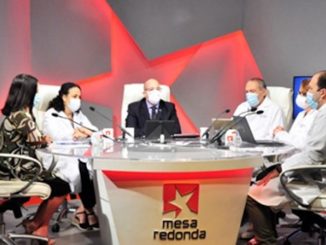
In addition, in Spanish, the 1 p.m. and 8 p.m. news programs can be viewed live on Facebook at Cubatv — Canal ­Caribe. Other important Spanish-language programming, like Mesa Redonda, also broadcasts live on Facebook.

The National Network on Cuba, the umbrella organization of U.S. solidarity organizations, is working to overcome technology issues to enable representatives from the Cuban Institute for Friendship with the Peoples to communicate through future webinars.

The U.S. economic, financial and commercial blockade against Cuba actively limits Cuba’s economy, but it also negatively impacts urban and rural communities in the U.S. But technology is now piercing the U.S. information blockade that has, for nearly 60 years, limited what U.S. residents learn about Cuba. 

LaBash is one of five NNOC co-chairs.

Strugglelalucha256
https://www.struggle-la-lucha.org/cuba/page/37/