Cuba: En su aniversario 60, la Federación Mujeres busca mayor empoderamiento de la mujer

Teresa Amarelle Boué, secretaria general de la Federación de Mujeres Cubanas.

El aseguramiento de un grupo de medidas en favor de la mujer y su empoderamiento en la sociedad actual es la principal divisa de la Federación de Mujeres Cubanas (FMC) de cara al Día Internacional de la Mujer, el próximo 8 de Marzo, y al aniversario 60 de la fundación de la organización.

De acuerdo con declaraciones a la Agencia Cubana de Noticias de Teresa Amarelle Boué, integrante del Buró Político del Partido Comunista de Cuba y secretaria general de la organización, desde ya convocan a trabajos productivos en todo el país por el Día de la Mujer, y hay muchas novedades para poder estar a tono con las transformaciones que el país necesita.

Llegaremos al 8 de marzo con un amplio trabajo comunitario, conscientes de que nuestra principal misión es garantizar la continuidad de la Revolución cubana, y con gran entusiasmo de las mujeres sobre todo por participar en proyectos productivos, enfatizó.

Estamos incursionando en lavatines comunitarios, en la proyección de alternativas para el cuidado de la familia, y se impulsa en los centros laborales con alta concentración de mujeres las casitas infantiles, aseguró.

En este sentido, refirió que las federadas trabajan en tareas productivas de conjunto con organizaciones y organismos como el Ministerio de la Agricultura, el Grupo Azucarero AZCUBA, y la Asociación Nacional de Agricultores Pequeños, además de otras con los Comités de Defensa de la Revolución, La Central de Trabajadores de Cuba y la Asociación de Combatientes de la Revolución Cubana.

La secretaria general mencionó que de manera especial las actividades de la FMC se dedican a la juventud, como vía para consolidar la unidad y seguir adelante en todos los proyectos de la nación, con énfasis en las arribantes a la organización y en las incorporadas al Servicio Militar Voluntario Femenino.

Otros puntos importantes en las actividades de la Federación son el estímulo de la recreación, el apoyo a los programas de salud y educativos, y el trabajo con la familia para romper estereotipos que persisten e impiden una igualdad de género plena.

Según datos ofrecidos por Amarelle Boué, en Cuba hay cuatro millones 300 mil federadas; de ellas, el 44 por ciento son jóvenes; y cada año ingresan a la organización aproximadamente 50 mil muchachas de manera voluntaria.

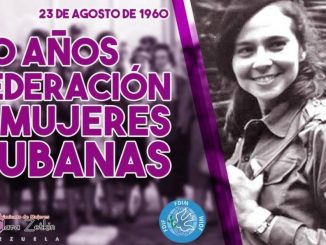
La FMC es una organización de masas fundada el 23 de agosto de 1960 por la destacada revolucionaria Vilma Espín, quien la presidió hasta su muerte, el 18 de junio de 2007, y defendió con todas sus fuerzas la emancipación de la mujer.

Fuente: Resumen Latinoamericano

Strugglelalucha256


Conference charts action to end blockade of Cuba

The newest endorsements for the International Conference for the Normalization of U.S.-Cuba Relations demonstrate once again that the people of the United States oppose the current president’s accelerating economic war against socialist Cuba. 

The event will be held at the Fordham School of Law in New York City on March 21-22. At this conference, participants can arm themselves with information and tools to bring the struggle to end the U.S. economic war into every social movement. Register and donate at US-CubaNormalization.org.

As demonstrated by 13 municipalities adopting resolutions against the blockade, organizers only need to ask to get support. In February, the Capital District of New York Democratic Socialists of America (DSA) unanimously voted to endorse the conference. Shortly after that, the Troy, N.Y., Area Labor Council, AFL-CIO, voted to support it. DSA chapters in Washington, D.C., and Richmond, Va., also recently added their support. 

The conference plenaries and six topic panels will culminate with a unified action plan to end the extraterritorial, unilateral, genocidal blockade that imposes great hardship and violates the sovereignty of the Cuban people. 

You can learn how to “Defend Your Right to Travel”;  “Build Cross Border Solidarity Between Canada and the U.S.”; and “Amplify Voices Against the Blockade” through resolutions and legislation.

Also find out about “The Impact of the Blockade of Cuba on the People of the U.S. and What We Can Do About It”; “Cuba, the Caribbean and Latin America”; and “Cuba and Medical Solidarity.” 

Hear from U.S. doctors who graduated from Cuba’s Latin American School of Medicine and doctors who’ve collaborated with Cuban medical teams to address the epidemic of Black infant and maternal mortality in U.S. cities. Meet environmental activists building exchanges with Cuba — internationally recognized as the globe’s most sustainable country. 

Learn how ministers are fighting to get U.S. visas for Cubans, something blocked by the intentional destaffing of the U.S. Embassy in Havana. Hear Cuban American voices against the blockade and activists from Puerto Rico, Haiti, Venezuela, Quebec and other parts of Canada.

In addition to representatives from the Cuban Mission to the United Nations in New York and the Cuban Embassy in Washington, members of the Federation of Cuban Women participating in United Nations Women’s Month activities will also attend to speak for themselves. 

On Saturday evening, March 21, at the historic Riverside Church in Harlem, a “Stand with Cuba” cultural event will feature the renowned Cuban Dance Band led by Pepito Gómez, movement hip-hop artists Rebel Díaz and Immortal Technique, plus the Legacy Women Drummers and Bomba Yo. 

So register now and join us in New York on the weekend of March 21-22!

Strugglelalucha256


National Network on Cuba responds to ‘60 Minutes’ interview

The National Network on Cuba (NNOC) deplores and denounces all Cuba-bashing and “red-baiting” attacks on any individuals. We take particular offense to the tone and substance of the Feb. 23, 2020, “60 Minutes” interview conducted by Anderson Cooper, in which he used the example of Cuba to criticize and demean presidential candidate Bernie Sanders.

In their conversation, Sanders praised the literacy campaign, one of Cuba’s first initiatives following the triumph of the revolution. The literacy campaign has been universally praised and replicated around the world for the past 60 years, including in the United States, whose own academic achievements and access to education compare unfavorably to Cuba’s.

For example, the state of California has just settled a lawsuit for $53 million due to its denial of basic education to its students. Fifty-three percent of third graders didn’t meet state standards. A similar complaint has been filed in Michigan, alleging that children in Detroit are receiving an education so inferior and underfunded that it’s as if they’re not attending school at all. We call on “60 Minutes” to report on these cases representing U.S. educational achievements, or rather lack of achievement, in the richest country in the world.

It is the height of ignorance and arrogance to denigrate literacy or to equate the Cubans’ prioritization of this as anything but exemplary. A totalitarian regime does not offer its citizens the ability to read and write, much less promote literacy. As everyone knows, it is the ability to read and understand that results in critical thinking and a well-informed populace. Cubans are an educated, cultured and curious society, not oppressed and ill-informed.

We further suggest that Cooper and the “60 Minutes” producers examine the political prison population of the United States and again suggest that they investigate and report on the U.S. children and adults who have been denied the educational opportunities guaranteed and enjoyed by all Cubans.

Source: NNOC

Strugglelalucha256


Let’s work to #UnblockCuba

When U.S. cruise ships were suddenly blocked from anchoring in Cuban ports, were you or someone you know one of the 800,000 people already booked to go to Cuba? Are you a Cuban living in the U.S., with family and friends in Guantánamo province, Holguín, Camagüey, Santiago or other eastern areas, who suddenly can’t fly to any Cuban airport except Havana? 

Every week, the U.S. government intensifies the unilateral economic, financial and commercial blockade just a little bit more. According to Engage Cuba, every Democratic presidential nominee is on record for more normal relations between the U.S. and Cuba. Yet during the Democratic presidential debate in Iowa, Cuba went unmentioned. 

Are you angry about this but don’t know what to do? Does Cuba seem like just another issue and you hope impeachment will solve It?

Don’t wait for impeachment or the elections in November 2020 to demand that Congress #UnblockCuba. No matter which presidential candidate is elected or which electoral party wins or loses, only our actions will make U.S.-Cuba relations a priority.

Normalization Conference

Organize for and attend the March 21-22 U.S.-Cuba Normalization Conference at Fordham University School of Law in New York City. Together we will develop an action program to organize in our communities. 

In addition to the Cuban people who now suffer cooking gas shortages, we will also benefit from ending the cruel U.S. blockade. 

To give an example: Black and Brown communities and other workers here know the horror of diabetic foot ulcer amputations. Cuba has a medical treatment to avoid the trauma and cost of 70 percent of these surgeries. Yet it is denied to our loved ones by the blockade. 

Why should we be forced to violate U.S. law to seek treatment for lung cancer in Cuba? Watch the Public Broadcasting System’s “Nova” program airing April 1 to learn more about Cuba’s lung cancer medication Cimavax and the trials being conducted at Roswell Park in Buffalo, N.Y. 

Let’s take action together and overturn the laws passed by Congress to take away the rights of the Cuban people to decide their own future. 

Let’s go to Cuba

Don’t let Trump’s White House tell you where you can go. Let’s go to Cuba. 

From April 26 to May 10, the 15th International May Day Brigade lets you live, work and learn with the Cuban people. Go to the celebration of International Workers’ Day on May 1 in Havana and an international solidarity conference on May 2. Watch the I Can Go To Cuba video. To reserve your space, apply now; download the application at NNOC.info.

Or you can join the 31st Pastors for Peace Friendshipment Caravan to Cuba from July 17 to July 30. For more information about the 2020 Friendshipment Caravan, to request an application, or to host or attend a meeting in cities across the U.S. and Canada in April, contact IFCO/Pastors for Peace by email at FriendshipmentCaravan [at] ifconews.org or call (212) 926-5757, ext. 6.

The 51st Contingent of the Venceremos Brigade is also in preparation. Meetings are being held across the U.S. reporting back about last year’s historic 50th Venceremos Brigade. Visit VB4Cuba.com for info. 

Building Relations with Cuban Labor is sponsoring one-week, union-oriented travel for May Day, plus other tours and events.

Demand change

Have your representative and senator signed on to the Freedom to Travel bills? HR 3960 and S2303 will end the restrictions on travel to Cuba. Tell your elected officials this is a priority for you. 

Resolutions from City Councils or other elected bodies count! So far, 13 U.S. municipalities have made the views of their residents to #UnblockCuba known to Congress and the White House. Currently, activists in Baltimore, Chicago, New York, Oklahoma City and Washington, D.C., are working on getting resolutions passed. 

Advancing resolutions and electoral work will be a topic at the U.S.-Cuba Normalization Conference. For advice or information, email Cheryl [at] nnoc.info.

Strugglelalucha256


The freedom of the Cuban Five will never be reversed

December 16 — Five years ago tomorrow, in near disbelief, we watched on television as the Cuban Five were released from U.S. prisons and flown home after a 16-year struggle. Leading up there had been some signs that their freedom was being negotiated by the Obama administration, but out of a healthy distrust of the U.S. government we didn’t accept it as reality until we actually saw them arrive in Havana, out of handcuffs, and into the arms of their families.

As intelligence officers, the Cuban Five had been assigned to come to the U.S. to monitor the activities of right-wing anti-Cuba terrorist groups operating with impunity in southern Florida in the early 1990s. They came without weapons, with their only intention being to defend the Cuban people against terrorist attacks of various natures that since the Revolution in 1959 have been responsible for the deaths of close to 3,500 Cubans.

On September 12, 1998, Antonio Guerrero, Fernando González, Rene González, Ramón Labañino and Gerardo Hernández were arrested and thrown into solitary confinement in a Miami Federal Prison. For the next 18 months they had no contact of any kind. The intention of the U.S. was to wear them down, break them and get them to renounce the revolution.

The guards would remind them constantly that they were forgotten and no one even knew they were there. But as Gerardo Hernandez, who was serving two life sentences plus 15 years, explained to Resumen Latinoamericano, it was there in June of 2001 when the struggle, which would turn into a worldwide movement, began. 

“When Fidel acknowledged us and said publicly ‘Volverán!’ (they will return), it was from that moment on when we knew they could not defeat us, that the struggle would be long and hard, as the Commander warned, but that we would return to the homeland. Only someone with his far-sighted vision could assure such a thing to the world, at a time when all the hatred and desires for revenge of the empire were turned against us. That’s how big Fidel was. That’s why the return of the Five was his victory, and we were able to celebrate it with him.”

While Fidel provided the spark that started this extraordinary struggle, it was the Cuban people, collectively viewing the Five as their own sons, who mobilized as a nation; never wavering. And it was their families, particularly the women, with remarkable strength and dignified courage, who travelled the world to explain that this was a case of simple justice and the right of a nation to defend itself and to coexist in peace. 

The Cuban Five were unique political prisoners who enjoyed the support of an entire country, inspiring thousands of solidarity activists to join a movement demanding their release. In the beginning it was a few committees and individuals, but coinciding with the advent of social media and the internet, it grew into a connected international campaign made up of hundreds of solidarity groups in the majority of countries, and also actors, artists, lawyers, workers, students, academics, writers and faith-based organizations. 

During those yea​_rs there were few U.S. embassies or consulates that were spared regular protests calling for the freedom of the Cuban Five. For three consecutive years people from different states and countries gathered for a week of activities in Washington, D.C., to demand their freedom, including protesting in front of the White House.

Gerardo explained how this support was never lost on the Five. “We never forget that if today we have the good fortune of so much happiness, we owe it to the efforts of compañeros and compañeras from Cuba and the world that for many years fought for our liberation. This was also their victory, and there is not a day that goes by in which we do not remember it.”

Five years have gone by, and these men who gave the best years of their lives, not for money or fame but for love of their country, something the U.S. government will never understand, are in the process of integrating into society. 

As Gerardo told us, “We always dreamt of someday returning to our homeland and contributing together with all our people to the construction of that society to which we all aspire to. Since we have been back, we have been contributing our modest efforts, side by side with all Cubans, in the different tasks assigned to us. Personally I feel very happy as Vice Dean of the Higher Institute of International Relations Raul Roa Garcia in Havana, where our diplomats are trained.”

The freedom of the Cuban 5 was an integral key in the steps made by Obama towards normalization of relations with Cuba that he carried out through negotiations with the Cuban government.

Since Trump came to office, he has reversed most of Obama’s gestures towards the island by that odd illusory and transitory privilege, the executive order. But Trump didn’t stop there. He has used one executive order after another to tighten the blockade that has gone on now for over 60 years. It seems like every morning the Cuban people wake to find yet another bolt of punishment, based on unfounded pretext, coming their way from the Oval Office.

While the Cubans constantly express their willingness to dialogue with the U.S. in an atmosphere of mutual respect, they will not bend to the threats and arrogant behavior.

And one thing is for sure, no executive order can be issued that would reverse the return of the five Cuban heroes to their homeland.

Source: Resumen

Strugglelalucha256


Our America confronts escalating attacks by imperialism and oligarchies

The most recent events in the region confirm that the U.S. government and reactionary oligarchies are responsible for the dangerous political and social upheaval and instability in Latin America and the Caribbean.

As the First Secretary of the Communist Party of Cuba, Army General Raúl Castro Ruz, foresaw January 1, 2019: “Those who have illusions about the restoration of imperialist rule in our region should understand that Latin America and the Caribbean have changed and so has the world (…) The region resembles a prairie in times of drought. A spark could generate an uncontrollable fire that would harm the national interests of all.”

President Donald Trump proclaims the validity of the Monroe Doctrine and appeals to McCarthyism to maintain imperialist domination of the region’s natural resources, impede the exercise of national sovereignty, and aspirations of regional integration and cooperation; in an attempt to re-establish its unipolar hegemony on a world and hemispheric scale; eliminate progressive, revolutionary and alternative models to savage capitalism; reverse political and social conquests and impose neoliberal models, regardless of international law, the rules of the game of representative democracy, the environment, and the welfare of peoples.

On Monday, December 2, Secretary of State Mike Pompeo threateningly accused Cuba and Venezuela of taking advantage of and helping to expand agitation in countries of the region. He distorts and manipulates reality and ignores, as a principal cause of regional instability, constant U.S. intervention in Latin America and the Caribbean.

The legitimate protests and massive popular mobilizations taking place on the continent, particularly in the Plurinational State of Bolivia, Chile, Colombia, Ecuador and Brazil, are caused by poverty and growing inequality in the distribution of wealth; the certainty that neoliberal formulas aggravate the exclusionary and unsustainable situation of social vulnerability; absent or inadequate health care, education and social security; attacks on human dignity; unemployment and the restriction of labor rights; privatization, higher prices, cutbacks in public services, and increased citizen insecurity.

Revealed is the crisis of a political system; the lack of real democracy; the extent to which traditional conservative parties are discredited; rejection of the historical corruption typical of military dictatorships and right-wing governments; limited popular support for official authorities; lack of confidence in institutions and the judicial system.

The people are also protesting brutal police repression, the militarization of the police under the pretext of protecting critical infrastructure, the exemption of repressors from criminal responsibility; the use of war weapons and riot police that cause deaths and serious injuries, including hundreds of young people with irreparable eye injuries caused by pellets guns; the outlawing of demonstrations; rapes, beatings and violence against those arrested, including minors; and the murder of social leaders, former guerrillas and journalists.

The United States defends and supports repression against demonstrators using the pretext of safeguarding the so-called “democratic order.” The duplicitous silence of some governments, institutions and figures, who are actively critical of the left, is a disgrace. The complicity of the corporate media is shameful.

People rightly ask where is democracy and the rule of law; what are institutions supposedly dedicated to the protection of human rights doing; where is the much touted independent judicial system?

Let us revisit some facts. In March of 2015, President Barack Obama signed a preposterous executive order declaring the Bolivarian Republic of Venezuela “an unusual and extraordinary threat to the national security, economy and foreign policy” of the great power. 

In November of 2015, a costly electoral defeat of the left in Argentina occurs.

The neoliberal offensive take a decisive step in August 2016, with the parliamentary-judicial coup in Brazil against President Dilma Rousseff, the criminalization and imprisonment of Workers Party leaders, and later of former President Luiz Inacio Lula Da Silva himself, with the early participation of the U.S. Department of Justice, through the Foreign Corrupt Practices Act, to install a dependent government, willing to reverse important social conquests through neoliberal policies, make nefarious changes to the development model, allow the destruction of state enterprises and devastating privatization, permit the cut-rate sale of the country’s resources and infrastructure to U.S. transnational corporations.

At the end of 2017, Hondurans protest the outcome of elections and face terrible repression.

In January 2018, the United States disrupts the signing of an agreement between the Venezuelan government and the Washington-run opposition. A month later, the Secretary of State proclaims the validity of the Monroe Doctrine and calls for a military coup against the Bolivarian Chavista Revolution.

In March 2018, the atrocious assassination of Brazilian councilwoman Marielle Franco takes place, causing a wave of indignation in the country and around the world, and raising unanswered questions about the suspicious role of powerful groups. In April, Lula is imprisoned through spurious legal maneuvers. Copious evidence emerges of U.S. intervention in Brazilian elections through specialized companies that use “big data” and polimetric technologies to individually manipulate the will of voters, like those wielded by ultra-reactionary Steve Bannon and the Israeli right wing.

In this period, judicial proceedings against former Presidents Cristina Fernández de Kirchner and Rafael Correa are launched. In April 2018, an attempt is made to destabilize Nicaragua through external interference and the application of unilateral coercive measures.

On August 4, 2018, an assassination attempt against President Nicolás Maduro Moros occurs. In January 2019, the self-proclamation of an unknown, the corrupt Juan Guaidó (as President of Venezuela), is organized in Washington. In March 2019, President Trump renews the executive order labeling Venezuela a threat. On April 30, an attempted military coup in Caracas fails miserably, and the United States, vindictively, escalates its unconventional war against the South American nation, that resists tenaciously and heroically with its people’s civic-military union.

Throughout this period, the U.S. government has implemented savage anti-immigrant policies, and adopted aggressive, hateful measures to fuel fear and division within the electorate. An attempt is made to erect a xenophobic wall on the border with Mexico. This country and Central American nations are threatened with terrible tariffs and sanctions if they do not stop those fleeing poverty and insecurity, and the U.S. increases deportations. Thousands of children are cruelly separated from their parents, 69,000 minors detained and attempts made to deport the children of immigrants born and raised in U.S. territory.

Showing shameless subordination to the United States, the far-right Brazilian government of Jair Bolsonaro resorts to lies, a xenophobic, racist, misogynist and homophobic discourse, combined with delirious projections about social and political phenomena such as climate change, Indigenous populations, fires in the Amazon, and emigration, which have generated the repudiation of many leaders and organizations. His administration is dismantling social programs that allowed Workers Party governments to notably reduce levels of poverty and social exclusion in Brazil.

Since May 2019, tens of thousands of demonstrators have taken to the streets against cuts in education, pension reforms, discriminatory policies and gender-based violence.

The Brazilian government has intervened in the internal affairs of neighboring countries, including Venezuela, Argentina, Paraguay and Uruguay, and has taken hostile positions against Cuba, in violation of international law. As reported in the Brazilian press, in April 2019, the Foreign Ministry instructed 15 of its embassies to coordinate with U.S. embassies to urge receptive governments to condemn Cuba in international forums.

For the first time since 1992, this year Brazil — accompanied only by the United States and Israel — voted against the United Nations General Assembly resolution calling for an end to the economic, commercial and financial blockade of Cuba, which the United States is now tightening, and for an end to the extraterritorial application of its laws against third states.

At the same time, the Colombian government abstained in the vote on the resolution it has supported since 1992, at a time when the genocidal U.S. blockade of Cuba and its extraterritorial scope is intensifying. To justify this reprehensible decision, the country’s authorities resorted to disgraceful, politically motivated manipulation of Cuba’s altruistic, devoted, modest, unobjectionable contribution to peace in Colombia, for which our country is universally recognized. The broad, critical debate that the process generated in this nation is well known, one which Cuba, despite everything, will continue to support in its efforts to achieve peace.

U.S. slanders, attributing to Cuba supposed responsibility for the organization of popular mobilizations against neoliberalism in South America, constitute an incredible pretext, to justify and tighten the blockade and hostile policies directed against our people. Likewise, it is useless to attempt to hide the failure of the capitalist system; to protect failing, repressive governments; to cover up parliamentary, judicial and police coups; and to revive the specter of socialism to intimidate people. In doing so, the U.S. also seeks to justify repression and the criminalization of social protest.

Cuba is only responsible for the example set by our heroic people in defending our sovereignty, in resisting the most brutal and systematic aggression, in the invariable practice of solidarity and cooperation with sister nations in Latin America and the Caribbean.

It bothers imperialism that Cuba has demonstrated that another world is possible and that an alternative model to neoliberalism can be built, based on solidarity, cooperation, dignity, fair distribution of income, equal access to professional advancement, citizen safety and protection, and the full liberation of human beings.

The Cuban Revolution also provides evidence that a firmly united people, owner of its country and its institutions, in constant, profound democracy, can resist victoriously and advance in its development, despite aggression and the longest blockade in history.

The coup in Bolivia, orchestrated by the United States, using the OAS and the local oligarchy as tools, demonstrates the aggressiveness of the imperialist escalation. Cuba reiterates its condemnation of the coup, of the brutal repression unleashed, and expresses its solidarity with compañero Evo Morales Ayma and the Bolivian people.

While the U.S. government continues its unconventional war to attempt to overthrow the legitimately constituted government of President Nicolas Maduro Moros and invoke the Inter-American Treaty of Reciprocal Assistance (TIAR), Cuba reaffirms our unwavering intention to maintain cooperation with the Venezuelan government and people.

To the Sandinista government and people of Nicaragua, led by President Daniel Ortega, who face destabilization attempts and unilateral coercive measures, we reiterate our solidarity.

The legitimate government of the Commonwealth of Dominica, and its Prime Minister Roosevelt Skerrit, deserve international solidarity and already have that of the Cuban people, at a time when this island nation is a victim of external interference that has provoked violence and is intended to undermine the electoral process.

In this complex scenario, the government of Andrés Manuel López Obrador in Mexico confronts neoliberalism, and defends the principles of non-intervention and respect for sovereignty, while the election of Alberto Fernández and Cristina Fernández as President and Vice President in Argentina expresses the unequivocal rejection by that nation of the neoliberal formulas that impoverished it, indebted it, and seriously hurt its people. The liberation of Lula is a victory of the people, and Cuba reiterates its call for a worldwide mobilization to demand his full freedom, recognition of his innocence, and restitution of his political rights.

The corruption that characterizes the behavior of the current U.S. government is obvious. Its impact on the peoples of Latin America and the Caribbean has cost lives, suffering, instability and economic damage.

Given the dramatic situation that the region and the world are facing, Cuba reaffirms the principles of sovereignty, non-intervention in the internal affairs of other states, and the right of all peoples to freely choose and construct their own political system, in an environment of peace, stability and justice, without threats, aggression or unilateral coercive measures; and calls for adherence to the postulates of the Proclamation of Latin America and the Caribbean as a Zone of Peace.

Cuba will continue to work toward the integration of Our America, which includes making every effort to ensure that the Community of Latin American and Caribbean States (CELAC), soon to be chaired by Mexico, continues to promote the common interests of our nations by strengthening unity within diversity.

Cuba responds to the relentless onslaught of the most reactionary forces in the hemisphere with the unwavering resistance of our people, and the will to defend the unity of our nation, its social conquests, sovereignty and independence, and socialism, at whatever cost necessary. We do so with optimism and unwavering confidence in the victory bequeathed to us by Comandante en Jefe Fidel Castro Ruz, with the guidance of our Party’s First Secretary, Army General Raúl Castro, and the leadership of President Miguel Díaz-Canel.

Havana, December 3, 2019

Source: Granma

Strugglelalucha256


Nossa América ante a investida do imperialismo e das oligarquias

Os mais recentes acontecimentos na região confirmam que o governo dos Estados Unidos e as oligarquias reacionárias são os principais responsáveis pela perigosa convulsão e instabilidade política e social na América Latina e no Caribe.

Como havia previsto, em 1º de janeiro de 2019, o Primeiro Secretário do Partido Comunista de Cuba, General de Exército Raúl Castro Ruz: “Os que se iludem com a restauração do domínio imperialista em nossa região deveriam compreender que a América Latina e o Caribe  mudaram, e o mundo também […] A região se assemelha a uma pradaria em tempo de seca. Uma faísca poderia gerar um incontrolável incêndio, que prejudicaria os interesses nacionais de todos”.

O presidente Donald Trump proclama a vigência da Doutrina Monroe e apela ao macartismo, para preservar a dominação imperialista sobre os recursos naturais da região; impedir o exercício da soberania nacional e as aspirações de integração e cooperação regional; tentar restabelecer sua hegemonia unipolar em escala mundial e hemisférica; eliminar os modelos progressistas, revolucionários e alternativos ao capitalismo selvagem; reverter as conquistas políticas e sociais e impor modelos neoliberais, sem considerar o Direito Internacional, as regras do jogo da democracia representativa, o meio ambiente, ou o bem-estar dos povos.

O secretário de Estado, Mike Pompeo, nesta segunda-feira, 2 de dezembro, acusou ameaçadoramente a Cuba e Venezuela de tirar proveito e ajudar a aumentar a agitação nos países da região. Distorce e manipula a realidade, e oculta, como elemento central da instabilidade regional, a permanente intervenção dos Estados Unidos na América Latina e no Caribe.

Os legítimos protestos e as massivas mobilizações populares que ocorrem no continente, particularmente no Estado Plurinacional da Bolívia, no Chile, Colômbia, Equador e Brasil, são causadas pela pobreza e a crescente desigualdade na distribuição da riqueza; a certeza de que as fórmulas neoliberais agravam a excludente e insustentável situação de vulnerabilidade social; a ausência ou precariedade dos serviços de saúde, educação e previdência social; os abusos contra a dignidade humana; o desemprego e a restrição aos direitos trabalhistas; a privatização, encarecimento e cancelamento de serviços públicos e o incremento da insegurança cidadã.

Eles revelam a crise dos sistemas políticos, a falta de democracia verdadeira, o descrédito dos partidos conservadores tradicionais, o protesto contra a histórica corrupção, típica das ditaduras militares e dos governos de direita, o escasso apoio popular às autoridades oficiais, a desconfiança nas instituições e no sistema de justiça.

Protestam, igualmente, contra a repressão brutal da polícia, a militarização desta, com o pretexto de proteger infraestruturas críticas, a isenção de responsabilidade penal aos repressores; o emprego de armas de guerra e antimotins que provocam mortes, lesões graves, inclusive irreversíveis lesões oculares a centenas de jovens, pelo uso de balas de borracha; a criminalização das manifestações; as violações, espancamentos e violência contra os detidos, entre eles, menores; e ainda o assassinato de líderes sociais, guerrilheiros desmobilizados e jornalistas.

Os Estados Unidos defendem e apoiam a repressão contra manifestantes, com o pretexto de salvaguardar a suposta “ordem democrática”. O silêncio encobridor de vários governos, instituições e personalidades, muto ativos e críticos contra a esquerda, é uma vergonha. A cumplicidade dos grandes meios corporativos de informação é escandalosa.  

Os povos se perguntam, com razão, onde está a democracia e o Estado de direito; o que fazem as instituições supostamente dedicadas à proteção dos direitos humanos; onde está o sistema de justiça cuja independência se apregoa.

Repassemos alguns fatos. Em março de 2015, o presidente Barack Obama firma uma insólita Ordem Executiva, que declara a República Bolivariana da Venezuela “uma ameaça inusual e extraordinária à segurança nacional, à economia e à política exterior” da grande potência. Em novembro de 2015, ocorre a custosa derrota eleitoral da esquerda na Argentina.

A ofensiva neoliberal teve um momento decisivo em agosto de 2016, com o golpe parlamentar judicial no Brasil, contra a presidenta Dilma Rousseff, a criminalização e prisão dos líderes do Partido dos Trabalhadores e posteriormente do próprio ex-presidente Luiz Inácio Lula da Silva, com a prévia participação do Departamento de Justiça dos Estados Unidos, mediante a Lei de Práticas Corruptas no Exterior, para instalar um governo dependente, disposto a reverter importantes conquistas sociais, mediante ajustes neoliberais; à mudança nefasta do modelo de desenvolvimento; a permitir a destruição da empresa nacional e a privatização espoliadora; à venda barata dos recursos e da infraestrutura  do país às transnacionais norte-americanas.

No final de 2017, ocorreu em Honduras o protesto contra o resultado eleitoral e a terrível repressão contra os manifestantes.

Em janeiro de 2018, os Estados Unidos abortam a assinatura de um acordo entre o governo da Venezuela e a oposição, manipulada desde Washington. Um mês depois, o Secretário de Estado proclama a vigência da Doutrina Monroe e conclama o golpe militar contra a Revolução bolivariana e chavista.

Em março de 2018, produz-se o atroz assassinato da vereadora brasileira Marielle Franco, que levantou uma onda de indignação em seu país e no mundo, e do qual permanecem ocultas as obscuras implicações de grupos no poder. Em abril, Lula é preso, mediante espúrias manobras jurídicas. Há abundantes evidências da intervenção dos Estados Unidos nas eleições brasileiras, através de companhias especializadas, que usam tecnologias de big data e polimetria para manipular individualmente a vontade dos votantes, como as manejadas pelo ultrarreacionário Steve Bannon e outras israelenses.

Nesse período, abrem-se processos judiciais contra os ex-Presidentes Cristina Fernández de Kirchner e Rafael Correa. Em abril de 2018, tentam desestabilizar a Nicarágua, mediante a ingerência externa e a aplicação de medidas coercitivas unilaterais.

Em 4 de agosto de 2018, há a tentativa de magnicídio contra o presidente Nicolás Maduro Moros. Em janeiro de 2019, ocorre a autoproclamação do desconhecido e corrupto Juan Guaidó, organizada em Washington. Em março de 2019, o presidente Trump renova a Ordem Executiva que considera Venezuela uma ameaça. Em 30 de abril, é a tentativa de golpe militar em Caracas, que fracassa de maneira estrepitosa, e os Estados Unidos, vingativamente, incrementam sua guerra não-convencional contra a nação sul-americana, que resiste, tenaz e heroicamente, com a união cívico-militar de seu povo.

Em todo esse período, o governo estadunidense aplica selvagens políticas anti-imigrantistas e uma conduta agressiva, cheia de ódio, para alimentar o medo e a divisão nos eleitores. Tenta o muro xenófobo na fronteira com o México, ameaça-o e a América Central com terríveis sobretaxas e sanções, se não detêm os que fogem da pobreza e da insegurança, e multiplica as deportações. Separa cruelmente milhares de crianças de seus pais, detém a 69 mil menores, e trata de expulsar os filhos de imigrantes nascidos e criados em território norte-americano.

Mostrando desavergonhada subordinação aos Estados Unidos, o governo ultradireitista do Brasil, encabeçado por Jair Bolsonaro, usou a mentira, o discurso xenófobo, racista, misógino e homofóbico, combinado com projeções delirantes sobre fenômenos sociais e políticos, como a mudança climática, os povos originários, os incêndios amazônicos e a emigração, as quais geraram o repúdio de numerosos líderes e organizações. Na gestão do governo, foram desmontando as políticas sociais que levaram o Brasil a reduzir notavelmente os níveis de pobreza e exclusão social, durante os governos do Partido dos Trabalhadores.

Desde maio de 2019, dezenas de milhares de manifestantes saíram às ruas, contra os cortes na educação, as reformas no sistema de previdência, as políticas discriminatórias e a violência de gênero.

O governo do Brasil interveio nos assuntos internos de países vizinhos, como a Venezuela, Argentina, Paraguai e Uruguai, e assumiu posições hostis contra Cuba, violatórias do Direito Internacional. Como publicou a imprensa brasileira, em abril de 2019, o Itamaraty mandou instruções a 15 de suas Embaixadas, de coordenar com as estadunidenses, para instar com os governos receptores a condenar Cuba em fóruns internacionais.

Pela primeira vez, desde 1992, o Brasil votou este ano, acompanhado por Estados Unidos e Israel, contra a resolução da Assembleia Geral das Nações Unidas, para pedir o fim do bloqueio econômico, comercial e financeiro, que os Estados Unidos agora intensificam contra Cuba, e o fim da aplicação extraterritorial de suas leis contra terceiros Estados.   

Paralelamente, o governo da Colômbia se absteve na votação da resolução que apoiava desde 1992 e que reclama, em momentos em que este recrudesce, o fim do bloqueio genocida dos Estados Unidos contra Cuba e o alcance extraterritorial deste. Para justificar esta censurável decisão, as autoridades daquele país utilizaram a manipulação, ingrata e politicamente motivada, sobre a altruísta, consagrada, discreta e inquestionável contribuição de Cuba à paz na Colômbia, um tema em que a conduta de nosso país é universalmente reconhecida. É conhecido o amplo e crítico debate que esse fato gerou naquela nação, à qual, apesar de todo, continuaremos acompanhando em seus esforços para alcançar a paz.

A calúnia norte-americana de atribuir a Cuba supostas responsabilidades na organização das mobilizações populares contra o neoliberalismo na América do Sul constitui uma absurda desculpa, para justificar e endurecer o bloqueio e a política hostil contra nosso povo. Do mesmo modo que é inútil proteger governos instáveis e repressivos, ocultar golpes parlamentares, judiciais, policiais, para esconder o fracasso do sistema capitalista; e agitar o fantasma do socialismo, para amedrontar os povos. Com isso, pretendem também justificar a repressão e a criminalização do protesto social.

A única responsabilidade de Cuba é aquela que emana do exemplo  dado por seu heroico povo, na defesa de sua soberania, na resistência ante as mais brutais e sistemáticas agressões, na prática invariável da solidariedade e da cooperação com as nações irmãs da América Latina e Caribe.

Dói ao imperialismo que Cuba tenha provado que, sim, há outro mundo possível, e que, sim, pode-se construir um modelo alternativo ao neoliberalismo,  baseado na solidariedade, na cooperação, na dignidade, na distribuição justa dos ganhos, no acesso igualitário à formação profissional, na segurança e proteção cidadãs e na liberação plena dos seres humanos.

A Revolução cubana é também evidência de que um povo estreitamente unido, dono de seu país e de suas instituições, em permanente e profunda democracia, pode resistir vitoriosamente e avançar em seu desenvolvimento, frente à agressão e ao bloqueio mais longos da história.

O golpe de Estado na Bolívia, orquestrado pelos Estados Unidos, utilizando como instrumento a OEA e a oligarquia local, é uma demonstração da agressividade da investida imperialista. Cuba reitera sua condenação ao golpe de Estado e à brutal repressão desatada, e expressa sua solidariedade com o companheiro Evo Morales Ayma e o povo boliviano.

Enquanto o governo dos Estados Unidos continua sua guerra não-convencional, para tentar derrubar o governo legitimamente constituído do presidente Nicolás Maduro Moros, e invoca o Tratado Interamericano de Assistência Recíproca (TIAR), Cuba ratifica a vontade inquebrantável de manter a cooperação com o governo e o povo venezuelanos.

Ao governo e povo sandinistas da Nicarágua, liderados pelo presidente Daniel Ortega, que enfrenta as tentativas de desestabilização e medidas coercitivas unilaterais estadunidenses, reiteramos nossa solidariedade.

O governo legítimo da Comunidade da Dominica e seu Primeiro Ministro Roosevelt Skerrit merecem a solidariedade internacional e já têm a do povo cubano, no momento em que essa ilha é vítima da ingerência externa, que já provocou violência e pretende frustrar o processo eleitoral.

Neste complexo cenário, o governo de Andrés Manuel López Obrador, no México, enfrenta o neoliberalismo e defende os princípios de não-intervenção e respeito à soberania, enquanto a eleição de Alberto Fernández e Cristina Fernández, como presidente e vice-presidente da Argentina, expressa a rejeição inequívoca daquela nação às fórmulas neoliberais que a empobreceram, endividaram e prejudicaram seriamente seu povo. A libertação de Lula é um triunfo dos povos, e Cuba reitera seu chamado à mobilização mundial, para exigir sua liberdade plena, a restituição de sua inocência e de seus direitos políticos.

A corrupção que caracteriza o comportamento do atual governo dos Estados Unidos já é inocultável. Seu impacto sobre os povos da América Latina e Caribe tem um custo em vidas, sofrimento, instabilidade e prejuízos econômicos.

Na dramática conjuntura atravessada pela região e pelo mundo, Cuba reafirma os princípios de soberania, não-intervenção nos assuntos internos de outros Estados, pelo direito de cada povo escolher e construir livremente seu sistema político, em um ambiente de paz, estabilidade e justiça, sem ameaças, agressões, nem medidas coercitivas unilaterais, e conclama a que se cumpram os postulados da Proclamação da América Latina e Caribe como Zona de Paz.

Cuba continuará trabalhando no rumo da integração de Nossa América, o que inclui a realização de todos os esforços para que a Comunidade de Estados Latino-americanos e Caribenhos (CELAC), logo presidida pelo México, continue promovendo os interesses comuns de nossas nações, mediante o fortalecimento da unidade dentro da diversidade.

À implacável investida das forças mais reacionárias do hemisfério, Cuba opõe a inquebrantável resistência de seu povo, junto com a vontade de defender a unidade da nação, suas conquistas sociais, sua soberania e independência, e o socialismo ao preço que for necessário. Nós o fazemos com o otimismo e a confiança inabalável na vitória que nos legou o Comandante-em-chefe da Revolução Cubana, Fidel Castro Ruz, com a direção do Primeiro Secretário de nosso Partido, General de Exército Raúl Castro, e a liderança do Presidente Miguel Díaz-Canel.

Havana, 3 de dezembro de 2019

Fuente: MINREX


Strugglelalucha256


NDFP salutes Cuba’s defense of Latin America & Caribbean against U.S. imperialism

The National Democratic Front of the Philippines firmly supports the powerful defense of the Republic of Cuba of the Bolivarian Republic of Venezuela led by President Nicolas Maduro, the Plurinational State of Bolivia, President Evo Morales and the Bolivian people, the Sandinista government and people of Nicaragua, and other progressive and anti-imperialist forces in Latin America and the Caribbean. 

Cuba likewise vigorously condemns the US for its permanent interference in Latin America and the Caribbean which Cuba identifies as the main reason for the instability in the region.

It declares with no hesitation that “the corruption that characterizes the behavior of the current US administration can be hidden no more. Its impact on the peoples of Latin America and the Carabbean has taken a toll on human lives and has caused hardships, instability and economic damages.”

Cuba declares with conviction: “The Cuban Revolution has also been a proof that a people that is closely united, that has become the owner of their country and institutions, living in a permanent and profound democracy, can successfully resist and develop in the face of the longest-lasting aggression and blockade in history.”

Cuba assures that it “will continue to work towards the integration of Our America, which includes all efforts so that the Community of Latin American and Caribbean States (CELAC), which will be very soon presided over by Mexico would continue to promote the common interests of our nations by strengthening unity amidst diversity.”

We salute the Republic of Cuba and the heroic Cuban people for asserting “with unswerving optimism and confidence” in their  glorious victory that “they inherit from the Commander in Chief of the Cuban Revolution, Fidel Castro Ruz, under the leadership of the First Secretary of the Party, Army General Raul Castro and the guidance of President Miguel Diaz-Canel.”

We recognize the valiant struggle of President Nicolas Maduro and the Venezuelan people, President Evo Morales and the Bolivian people, and President Daniel Ortega and the Sandinistas.

We, the revolutionary Filipino people, are engaged in a life-and-death struggle against US imperialism and its puppets, the big compradors and landlords. Ever since the US launched its war of aggression in 1898 to colonize the Philippines, as it did to Cuba and Puerto Rico, we have never stopped fighting against US imperialism. From 1898 to 1914, during the US war of aggression, the imperialist aggressors caused the death of 1.5 million Filipinos.

As we persevere in our struggle for freedom and liberation against US imperialism, we are united with the just struggles of the peoples of Latin America and the Caribbean.

Down with US imperialism and its puppets!

Victory to the liberation struggles of Latin America, the Cariabbean, the Philippines and elsewhere!

Long live international solidarity!

Luis Jalandoni
Member, National Executive Committee
Chief International Representative

Source: NDFP

Strugglelalucha256


Cheryl LaBash: Lo que Fidel significa hoy para mí

Discurso de Cheryl LaBash en un panel organizado por la Embajada de Cuba en los Estados Unidos como un homenaje a la vida de Fidel Castro. LaBash es copresidenta de la Red Nacional sobre Cuba.

Me siento muy honrada de estar hoy en este panel. No tengo una historia personal profunda como la que hemos escuchado en los últimos dos años sobre el trabajo en conjunto con el líder histórico de Cuba, Fidel Castro, cuya vida, trabajo y ejemplo recordamos hoy aquí. Realmente he sido la joven en la fila de atrás, que aunque ahora ya no es joven y a menudo ya no está en la fila de atrás, todavía trata de absorber lecciones de la revolución cubana, de entender el mundo y actuar para cambiarlo.

Mi trabajo de solidaridad con Cuba se interrumpió cuando comencé un nuevo trabajo en la década de 1990. Inspeccionar la construcción de carreteras de Detroit me requirió trabajar horas extras de abril a noviembre, desde el amanecer hasta el anochecer, y también los fines de semana. Pero cuando supe que Fidel vendría a la Iglesia Riverside [en Nueva York] el 8 de septiembre del 2000, tenía que ir.

La gente que me conoce no se sorprenderá. En vez de ir a trabajar ese viernes por la mañana, me monté en mi auto y conduje por 10 horas a la ciudad de Nueva York. Luego conduciendo alrededor del bajo Manhattan con la esperanza de encontrar un lugar de estacionamiento gratuito para luego montarme en el metro hasta Harlem. La cantidad de personas que ya intentaba entrar era abrumadora, pero yo fui una de los miles de afortunados que entraron a la iglesia. Mi asiento estaba en lo alto del palco para escuchar hablar a Fidel.

Cuando Fidel nos dejó físicamente hace tres años, incluso en los Estados Unidos pudimos ver la caravana que devolvió sus cenizas a Santiago de Cuba. La transmisión en vivo de la televisión por Internet desde Cuba nos mostró las asambleas en La Habana y Santiago. Nunca olvidaré oír al presidente nicaragüense Daniel Ortega preguntar ¿dónde está Fidel? Y la multitud callada y enlutada respondió "aquí" comenzando una consigna que se convirtió en un rugido: ‘Yo soy Fidel’.

No podía imaginar esa tecnología que me permitiera ver una transmisión en vivo desde Cuba cuando viajé allí por primera vez en 1985. En ese entonces, los discursos y entrevistas de Fidel explicaban que la deuda externa era una carga impagable para los países en desarrollo. Entonces parecía un tema muy extraño en la vida diaria en los Estados Unidos.

Pero hoy se ha vuelto algo muy cercano — no es sólo la deuda externa del FMI, la deuda extrae la vida misma de los trabajadores y las familias, la deuda estudiantil, la deuda de tarjetas de crédito, la deuda hipotecaria, los prestamistas de día de pago — todas impagables. Desde Puerto Rico hasta Detroit, hemos aprendido que nuestra deuda es muy parecida a lo que Fidel exponía.

Más interesante para mí en 1985 fue el sistema de salud de Cuba que demostró que era posible reducir la mortalidad infantil con pocos recursos pero con la máxima voluntad. Detroit era una noticia principal en ese tiempo.

Escandalosamente, en Detroit, una ciudad donde casi el 90 por ciento de la gente era afrodescendiente, los bebés morían a un ritmo de más del doble de las estadísticas nacionales de Estados Unidos. En 1990, un asombroso 23 por cada 1000 nacimientos y en 2017 aún un 15.5. Ahora la mortalidad materna para las mujeres negras también está aumentando.

¿Es un milagro que la mortalidad infantil en una Cuba en desarrollo y bloqueada sea de solo 4 por cada 1000 nacidos vivos? No, es la voluntad de Cuba de dar prioridad a los seres humanos, en Cuba y en todas partes a través del internacionalismo y un sistema económico que lo hace posible.

Fue allí, en la Iglesia Riverside, donde Fidel explicó cómo surgió la escuela de medicina latinoamericana y las becas para estudiantes estadounidenses. ELAM, el acrónimo en español de Escuela Latinoamericana de Medicina, había sido fundada ni siquiera un año antes de que Fidel hablara esa noche. Señaló que había un ‘tercer mundo’ dentro de los EUA sin médicos.

Veinte años han pasado desde que la ELAM fuera fundada el 15 de noviembre de 1999. En esos 20 años, 29.749 nuevos médicos de 115 países se han graduado, incluidos 182 de los Estados Unidos. De los 466 médicos que se graduaron el verano pasado de 82 países, 10 eran de los EUA. [ir a ifconews.org/medicalschool] Los estudiantes estadounidenses de ELAM se ofrecieron como voluntarios y fueron a servir a Haití después del enorme terremoto de enero de 2010. Una graduada estadounidense recaudó sus propios fondos y se ofreció como voluntaria para luchar contra el brote del ébola en el África occidental.

ELAM es sólo una parte del internacionalismo de Cuba que abarca medicina, alfabetización, deporte, cultura y mucho más. La Brigada Médica de Emergencia Henry Reeve se movilizó para salvar vidas cinco años después de Riverside, cuando el huracán Katrina azotó Nueva Orleans. Bloqueados por el gobierno de Estados Unidos, se fueron a las laderas del Himalaya después del terremoto de Pakistán. La herramienta de alfabetización ‘Yo sí puedo’ desarrollada por los cubanos en Haití también fue explicada por Fidel en Riverside.

Lo que Fidel significa hoy para mí.

Se está llevando a cabo una campaña ideológica contra Cuba. Su objetivo es poner en duda los ideales de Cuba tratando de reflejar los crímenes de explotación, racismo y trata de personas del capitalismo sobre Cuba. Es lo que Fidel llamó una Batalla de Ideas.

Esta campaña propagandística se centra en desacreditar los mismos puntos mencionados en el discurso de Fidel en la Iglesia Riverside — el internacionalismo médico de Cuba, que Cuba no tortura y desaparece a la gente, que Cuba realmente practica la igualdad de derechos para todos, independientemente de la identidad de género o color de piel, y que hay democracia para que todos participen en las elecciones y en la dirección de su país.

Está calculado y es intencional, un arma para justificar el verdadero bloqueo genocida. Es una campaña de propaganda para crear dudas, incertidumbre y dividir a las millones de personas que han llegado a conocer Cuba, su pueblo, su socialismo a través de visitar Cuba y experimentarlo por sí mismos.

Esta campaña regurgita las mismas mentiras que impregnaron la cultura popular estadounidense sobre Cuba después de la revolución, [pero] se ve refutada por el movimiento solidario, especialmente en las comunidades negras cada vez que las delegaciones y líderes cubanos llegaban a las Naciones Unidas en Nueva York.

Esas mentiras no pueden ser reinsertadas en la mente de las personas que han viajado a Cuba, que han estudiado en Cuba, que han observado que Cuba no tiene inversiones extranjeras, ni bases ni concesiones extractivas en ninguna parte. O en
el movimiento de justicia climática que sabe que Fidel habló en Riverside sobre el peligro de la extinción masiva debido al cambio climático. Pero las mentiras pueden empujar a Cuba a la parte inferior de la lista de preocupaciones. Es por eso que en los Estados Unidos debemos actuar en todos los sectores y plataformas para #unblockCuba (#DesbloquearCuba).

Hay herramientas poderosas en la batalla de ideas, no sólo habladas o escritas, sino en hechos. ¿Por qué otra cosa los Estados Unidos restringirían las visas para que los profesionales médicos hablaran en conferencias; para que los académicos
cubanos participen en LASA?

Las becas de la Escuela Latinoamericana de Medicina, el desarrollo de medicamentos para mejorar la vida humana, por ejemplo, eliminando el horror de la amputación de las extremidades debido a las úlceras diabéticas que son costosas y rentables. ¿Hay una familia de clase trabajadora cuyo pariente o amigo no tenga diabetes y tema una amputación? Las mismas ciudades donde se han recortado los servicios humanos para pagar el servicio de la deuda a los bancos y donde los dólares de los impuestos [del pueblo] van dirigidos a alimentar al ejército y a la policía, están mirando hacia Cuba.

Los médicos cubanos vinieron a Chicago para ayudar a mejorar los resultados maternos e infantiles. Detroit está investigando la colaboración en salud. Y este mes Nueva Orleans firmó un memorando de entendimiento con Cuba.

Para mí, y humildemente sugeriría para nosotros en los Estados Unidos, participar en la batalla de las ideas es el mensaje importante para hoy.

Pero, ¿por qué Cuba? El ejemplo de Fidel, la revolución cubana y las generaciones que se criaron para ser como el Che, son el poderoso antídoto contra la cultura deshumanizadora, divisiva y de consumo impulsada por el capitalismo y sus medios de comunicación de masas.

Es un legado de Fidel con el que todos podemos construir el mejor mundo que es posible y necesario.

Fuente: MinRex – Ministerio de Relaciones Exteriores, República de Cuba

Strugglelalucha256


New York City remembers Fidel

Nov. 25 ― On the third anniversary of Fidel Castro’s passing, people came to the Cuban mission to the United Nations to celebrate his life. The historical leader of the Cuban revolution, who was loved by poor people around the world, died on Nov. 25, 2016.

A film showed scenes of Castro and his comrades during the guerrilla war to defeat the U .S.-backed dictator Fulgencio Batista. Twenty thousand Cubans were killed by Batista’s secret police.

Those were the “good old days” for U.S. corporations and organized crime that exploited the Caribbean country. Their immensely profitable $2 billion investment ― worth almost $18 billion today ― kept Cubans poor.

The Cuban Revolution changed that forever. In one year, volunteer teachers abolished illiteracy. Despite Wall Street’s cruel economic blockade, Cuban children now have a lower infant mortality rate than kids do in the U.S.

Fidel Castro Ruz was also a teacher. The film showed Castro speaking to a 1992 UN conference in Rio De Janeiro about how capitalism was destroying the environment.

Helping poor people in the U.S.

Jorge Luis Cepero spoke for younger Cuban diplomats. “Fidel turned into a symbol of the anti-colonial, anti-apartheid and anti-imperialist struggle,” he said. Castro was able to combine “the thinking of Simón Bolivar, José Martí and Karl Marx.”

Ike Nahem spoke on behalf of the New York/New Jersey Cuba Sí Coalition that fights to end the U.S. blockade.

Dariel and David, two young brothers from Santiago de Cuba, read the poem “Ronda de la fortuna” by the Cuban poet Nancy Morejón.

Gail Walker, executive director of the Interreligious Foundation for Community Organization (IFCO)/Pastors for Peace, reminded listeners that when Africa called, Cuba answered. Cuban volunteers fought alongside African soldiers that defeated the fascist army of the apartheid regime that then ruled South Africa.  

Dr. Damián Suarez graduated in 2015 from the Latin American School of Medicine in Havana. Twenty years ago Fidel Castro founded this institution that has trained 30,000 doctors from 115 countries.

Among them are 200 hundred doctors from the U.S. who didn’t have to pay a dime in tuition. They’re helping poor people from Maine to Mississippi to Los Angeles. Cuban-trained doctors work in 10 New York City hospitals.

Her Excellency Ana Silvia Rodríguez Abascal, the Cuban ambassador to the United Nations, was the last speaker. She quoted the German playwright Bertolt Brecht: “There are people who struggle for a day and they are good. There are people who struggle for a year and they are better. There are people who struggle many years, and they are better still. But there are those who struggle all their lives: these are the indispensable ones.”

Fidel Castro and the Cuban Revolution are indispensable. 

Strugglelalucha256
https://www.struggle-la-lucha.org/cuba/page/36/