In Cuba, ‘We remember Lenin as we remember Fidel’

Describing the October Revolution in Russia, John Reed, in the prologue of his extraordinary book “Ten Days that Shook the World,” describes the forces vying for power, in the midst of a revolution that had not yet managed to define its destiny.

On the one hand, what he calls the possessing classes who aspired to remove the czar and replace him with a bourgeois power, in the style of the Western democracies of the United States and France; on the other, the Bolsheviks, who saw the revolution as based on the class struggle and insisted on the necessity of the soviets taking power.

Between these two forces, which he describes as extreme, Reed places the “moderate” socialists — the quotation marks are his, not mine. The moderates believed that Russia was not ready for a social revolution, and insisted on collaborating with the powerful classes in the government. From this moderate position, betrayal emerged quickly, as Reed explained. When the Bolsheviks disrupted this alleged compromise between classes, the moderates “found themselves fighting on the side of the possessing classes…. Today, in almost every country in the world the same phenomenon can be observed.”

Reed did not hesitate to cast his lot with one of the extremes: “Contrary to being a destructive force, in my opinion the Bolsheviks were the only party in Russia with a constructive program (…). If they had not come into government when they did, I have not the slightest doubt that the armies of Imperial Germany would have been in Petrograd and Moscow in December, and that Russia would again have been ruled by a czar.” The Bolshevik Communists were the only real force willing to fight the imperialist powers.

Leading the extremist forces was “the great Lenin,” as John Reed called him.

Ninety-seven years since his death, we remember him here as we remember Fidel, our Lenin, the Lenin of the peoples of the Third World. We remember him here on this island, where the Bolsheviks of today, defenders of the redeeming “extreme” of the dispossessed, remain determined to confront the empire, convinced that these 62 years of shaking the world are the prelude to taking the heavens by storm.

Source: Granma

Strugglelalucha256


En Cuba, ‘Recordamos a Lenin como recordamos a Fidel’

Al describir los acontecimientos de la Revolución de Octubre, John Reed, en el prólogo de su extraordinaria obra Diez días que estremecieron al mundo, hace un recuento de las fuerzas que pugnaban por el poder, en medio de una Revolución que aún no lograba definir el color de su destino.

Por un lado, lo que denomina las clases poseedoras que aspiraban a quitar al Zar y sustituirlo por un poder burgués, al estilo de las democracias occidentales de Estados Unidos y de Francia; por el otro, los bolcheviques, que reclamaban centrar a la Revolución en la lucha de clases y la necesidad de que todo el poder fuera a los soviets.

Entre estas dos fuerzas que califica de extremas, John sitúa a los socialistas «moderados», las comillas son de él, no mías.  Los moderados creían que Rusia no estaba lista para una Revolución que llevara a las masas populares al poder, es decir, una Revolución social: «Consecuentemente, insistían en la colaboración de las clases poderosas en el gobierno. De ahí a apoyarlas había solo un paso. Los socialistas «moderados necesitaban de la burguesía». De esa moderación emergió la traición o, en palabras de Reed, cuando los bolcheviques desbarataron todo el pretendido compromiso entre las clases, esos moderados «se vieron luchando del lado de las clases poseedoras… Actualmente, en casi todos los países del mundo se puede observar el mismo fenómeno».

Para cerrar su juicio de lo que acontecía, el periodista norteamericano no vacila en situar su militancia en uno de los extremos: «Contrariamente a ser una fuerza destructiva, en mi opinión los bolcheviques eran el único partido de Rusia con un programa constructivo (…). Si no hubieran llegado al gobierno cuando lo hicieron, no tengo la menor duda de que los ejércitos de la Alemania imperial habrían estado en Petrogrado y Moscú en diciembre, y que Rusia hubiera estado nuevamente dominada por un Zar». Los comunistas bolcheviques eran la única trinchera real contra el poder imperial que los amenazaba.

Al frente de la fuerza extremista «el gran Lenin», como lo llamó John Reed, quien lo describió «de pequeña y fornida figura, cabeza grande, calva, y protuberante, clavada en los hombros; ojos pequeños, nariz roma, boca ancha y generosa, y macizo mentón. (…) De apariencia poco relevante para ser el ídolo de multitudes que era amado y respetado, como quizá pocos líderes de la historia. Un extraño líder popular, que lo era solo por la virtud de su intelecto (…) con el poder de explicar profundas ideas en términos sencillos, el poder de analizar concretamente las situaciones. Y, combinada con la sagacidad, la mayor audacia intelectual».

A Lenin, a 97 años de su muerte, lo recordamos aquí como recordamos a Fidel, nuestro Lenin, el Lenin de los pueblos del Tercer Mundo. Lo recordamos aquí en esta Isla, donde los bolcheviques de ahora, defensores del extremo redentor de los desposeídos, nos mantenemos empeñados en ser trinchera contra el imperio, convencidos de que estos 62 años de estremecer al mundo son la víspera de tomar al cielo por asalto.

Fuente: Granma

Strugglelalucha256


Firm, absolute condemnation of fraudulent qualification of Cuba as a state sponsor of terrorism

Statement from Cuba’s Ministry of Foreign Affairs

January 12, 2021

The Ministry of Foreign Relations of Cuba condemns in the strongest and most absolute terms the fraudulent qualification of Cuba as a state sponsor of terrorism, announced by the United States government in a cynical and hypocritical act.

For months now, there has been speculation about the possibility of including Cuba in the State Department’s unilateral list that categorizes countries, without any authority or legitimacy, lacking genuine motivation, referring to terrorism and its consequences, and as an instrument of defamation to justify coercive economic measures against nations that resist bowing to the whims of U.S. imperialism.

The announcement made by Secretary of State Michael Pompeo is a superb act by a government that is discredited, dishonest and morally bankrupt. It is known, without a doubt, that the true motivation for this action is to impose additional obstacles to any prospect of recovery in the bilateral relations between Cuba and the United States.

Cuba is not a state sponsor of terrorism, a truth recognized by all. The official and well-known policy, and the impeccable conduct of our country, is the rejection of terrorism in all its forms and manifestations, particularly state terrorism, by whomever, against whomever and wherever it is committed.

Cuba is a victim of state terrorism and our population has suffered it firsthand, at the cost of 3,478 fatalities and 2,099 disabling injuries, due to acts committed by the United States government or perpetrated and sponsored from the country’s territory, with the tolerance of official authorities. Cubans repudiate with contempt any maneuver meant to manipulate such a sensitive issue, for crude purposes of political opportunism.

Havana, January 11, 2021

Source: Minrex / Resumen

Strugglelalucha256


Los Angeles car caravan says: ‘End the blockade of Cuba. Medical collaboration to fight COVID-19’

On Sunday, Dec. 27, Covid-stricken Californians filled Los Angeles hospitals. In response, an 18-car caravan showed support for Cuban families caravaning in Miami and other cities. Decked out with signs calling for an end to the U.S. economic war against Cuba, the protest also called for ending barriers to medical and scientific collaboration with Cuba. Spanish language TV Telemundo reported the action: Instan al gobierno que acepte ayuda de enfermeras y médicos cubanos.

In the fight against COVID-19, Cuba’s Henry Reeve Brigade responded to the call from dozens of countries on all continents to relieve exhausted medical teams and share their internationally recognized experience fighting epidemics and the aftermath of natural disasters. The U.S. attempt to strangle the Cuban economy intensified, even during the pandemic, blocking fuel and COVID relief to the island. Yet Cuba’s research and pharmaceutical industries have developed not just one vaccine, but four COVID-19 vaccine candidates now in trials. At least one Cuban vaccine can be administered through nose drops, really giving hope to the world that everyone can be protected from this virus.

While Black, Brown and Indigenous U.S. communities suffer disproportionate deaths from COVID-19, the U.S. blockade stymies collaboration that has proven it can save lives. Not one Cuban medical professional has died of COVID-19, nor have pregnant women or children. For more information on how you can help to open the door to medical and scientific collaboration with Cuba to save lives, go to SavingLives.US-CubaNormalization.org.

The caravan was initiated by the Los Angeles U.S. Hands Off Cuba Committee. Cars decorated with signs and banners spread the message as they drove from the Westwood Federal Building across Los Angeles to Echo Park. 

Organizers announced nationally coordinated actions to take place on Jan. 20 that will further the same demands.

SLL photos: Scott Scheffer

Strugglelalucha256


Traveling to Cuba in the time of COVID-19

Of course, by the time this small story is read, the conditions and procedures giving rise to these experiences will likely have changed. 

We hope that one thing will change and be no more: COVID-19, now spreading silently where people gather, especially inside, in enclosed spaces, where people are in close, extended contact.  Airlines say the air on planes is filtered. Passengers respected the marked-off, socially distanced seating at the gate, but, as Cuba travelers know, the U.S. economic, financial and commercial blockade makes our travel experience from the U.S. special.

Unable to travel to Cuba since March and with remittance transfers via Western Union newly blocked by the U.S., my co-fliers had plenty of luggage. Personal check-in required. The airline is required to ask, record and keep the category each passenger declares for the privilege of a general license to travel. A privilege only for travelers from the U.S. and those under U.S. jurisdiction. Cuban tourist visa? General license category? Surcharge for COVID-19 health screening? The line was long, slow and closely packed although with proper face coverings.

I drove from Detroit to Tampa, my direct flight to Havana departure point. The 17 hours in my coronavirus safe car seemed to be a wise decision to minimize airport time, especially when I heard that a recent traveler to Cuba tested positive in her second test. She traveled through three airports and planes.

My traveling outfit included an N95 mask donated by my scientist brother, a cloth mask over that plus a face shield. The airline notified us in advance that the center seats would not be reserved on this flight, offering to reschedule if we objected. I arrived at the airport at 8:30 a.m. My flight took off at 1 p.m. and landed about 50 minutes later. We were told to stay seated when the doors opened.

The first 12 rows were called to stand. In groups of 10, we deplaned down the steps, walking a short way to the terminal. Usually, the reception area is a wide-open space with passport control booths at the other side. Not this day. A barrier channeled us all to the left where our health certificate — with our passport number added to it — was collected by a nurse who gave me a small box with a number written on the top. I was number 51. 

The testing stations, each with two seats, made short work of the line, opening the way for the next 10. The little box had a vial for my test. A little swab in each nostril and I was on my way to the familiar passport control. Then carry-on x-ray and metal detectors. Collect bags with nothing to declare and off to the taxi stand. Oh, I thought maybe I’d go to an etecsa store [the government telecommunications service provider] and get a Cuban SIM card for my phone. Nope — directly to your place of accommodation and stay there until your test result.

Or so I thought. I arrived on Wednesday. On Thursday, a nice doctor came by to check on my health. She impressed on the person I am renting from, who lives just down the hall, that there are stiff fines for both of us if I violate the quarantine. The fine is not what keeps me in the apartment. Every day, I watch the COVID-19 report. Eighty-six new cases, most in Havana, many from visitors. Respect for the Cuban medical system that has controlled the virus and avoided most deaths, without a vaccine, keeps me inside. 

Cuba, too, is testing vaccines — four of them. But they didn’t wait to save lives. The Cubans know what they are doing. Then, on Friday, another nice doctor came by, but with a paper for me to sign that says to stay inside for 10 days! Friday is only day two or three. And I am only here for 14 days! 

The person I am renting from is intersecting with the Consultorio to explain the situation. Hopefully, I will get my second test on Monday — 5 days after arriving, then a day or two for results, and it will be seven or eight days not ten.

The process for people staying in hotels — by the way, people from the U.S. are forbidden to stay in Cuban hotels by the U.S. government — or people staying with their families isn’t part of my experience

It is in the interest of all of us on both sides of the Florida straits to #unblockCuba2021. Please support the Saving Lives Campaign (on Facebook or at SavingLivesCampaign.org) to get your union, city council or state legislature to pass a resolution to speak out against this 60-year injustice. 

Nine U.S. cities and three labor councils have done this since May 5. Together we can make 2021 the year to end the blockade of Cuba.

Strugglelalucha256


San Isidro, the latest episode of the imperial reality show

Donald Trump is leaving. But some Cubans, who arouse only shame in others, are claiming him as their president. “Trump 2020,” they shout.  As president, he’s done almost everything to choke the people of Cuba, and now he has the cynicism to say that this is to help them.  When he blocked, delayed, or increased the cost of the arrival of petroleum shipments, when he blocked commerce or transfers of funds to the country, he said sarcastically that they don’t know how to manage their economy. Cuba, nevertheless, managed the pandemic and the international economic crisis in an exemplary fashion, and – in an outpouring of humanism – sent 53 medical brigades to poor countries and rich countries alike; Cuba created its medications and vaccines, absorbed the extensive damages of the intense tropical rainstorms … and left no one behind without help.

These Trump-fanciers born in Cuba are “deserters that ask for arms in the armies of North America, who drown their Indigenous peoples (and Black people) in blood and who go from bad to worse!” in the words of José Martí.  After more than 150 years of struggles, does anyone doubt that US imperialism wants something other than the freedom or the well-being of Cuba?

There exists a controversial historical figure, La Malinche, a Nahuatl slave woman who was the lover and translator for Cortez, and with her advice contributed to the conquest of Mexico.  According to the dictionary of the Royal Spanish Academy, Malinche or malinchista today refers to any “person, institution or movement that commits treason” regardless of whether man or woman. The so-called San Isidro Movement is an episode from the reality show that Trump has made of his presidency. Those gathered there are called colleagues in a tweet by the officer in charge of the Embassy of the United States in Cuba.

I am not avoiding the facts. A uniformed police officer took a citation to Cuban citizen Denis Solis.  Solis insulted him, using words I cannot repeat here, and threatened him.  The police did not handcuff him nor hit him, nor place his knee on Solis’s neck. There is a video, taken by the supposed victim, which proves this. Denis was detained for contempt.  He had already previously received several administrative fines for disturbing the peace and two official warnings for harassing tourists. The crime of contempt is provided by law in Article 144.1 of the Penal Code.  Denis accepted the charges and did not appeal. But before this, he yelled that Trump is his president and he became a “dissident.” The San Isisdro strikers demand his release. They then declared a hunger and thirst strike, but on the seventh day Alcantara, the leader of the provocation, who has dishonored the national flag in other episodes of this strange theatrical play, appeared in a video taken by his colleagues (to use the same term as the imperialist diplomat) impetuously blocking the functioning of the health authorities, rather than prostrate in his bed, as medical logic would indicate should be the case after a lack of food.

There will always be gullible people and those sincerely concerned for the health of the “strikers.”  And also those who suggest that it does not suit us to let them die, as if the Revolution does not fight daily and hourly for the lives of all our citizens, whether or not they are with the Revolution, in the face of the attempts of the empire to defeat them with hunger and disease. If Denis is a prisoner, and not hospitalized or dead, it is because in Cuba there are no disappeared people, and the police, who keep order as they should, do not kill or torture.

Protest is so unthreatening – for Cubans, as I have said – that there are many people who are “neither for one side nor the other. “I’m not in agreement with those of San Isidro, but I’m not for what the government is doing either,” they say. If we are serious about this analysis, we should leave Denis (the pretext) aside for a moment and look for the real reasons.  Here I shall pass over any suppositions about money – although Denis confessed to receiving money from a person associated with attacks carried out in Cuba – but I prefer to discuss ideas.  And I do not know the motives of the writer-journalist who had to pass through the United States in order to go from Mexico to Cuba. But our actions give clues about who we really are; this is not about a decree or a decision that they claim to be mistaken, and, in their declarations, all are mixed up together and if the government decides something else tomorrow they will just add this to their sack of complaints. This is not about freedom of speech, much less freedom of artistic expression, but rather of the creation of a political opposition clearly already sponsored by imperialism, about the restoration of a bourgeois democracy and the death of any trace of people’s democracy.  Although perhaps many of those making these demands do not know it, the true purpose of all this is the restoration of a neocolonial Cuba. So that no doubt remains, high officials of the Trump government have immediately rushed to defend their supporting actors.  They know they are on the way out and they have to inflict as many knife wounds as they go.

This is why it is so outrageous to read some articles by mercenaries who compare the heroic combatants of the clandestine struggle during the Batista dictatorship with these deserters who are asking for rifles in the invading army, to paraphrase Martí.  Yes, some voices of certain trans-national media outlets are joining in this, attentive to the last Trumpish death-rattle. They say that we are living in the post-truth era, “a situation in which objective facts have less influence than emotions or beliefs when it comes to defining public opinion” according to one dictionary  But the Cuban Revolution is not accustomed to lie or to disguise the truth. To never lie is what we were taught by Fidel, who lives on in every revolutionary Cuban.

Source: Granma, translation Resumen Latinoamricano, North America bureau

Strugglelalucha256


‘This blockade is the largest economic war against any country’

Ambassador Jose Ramon Cabañas, Cuba’s ambassador to the United States, opened the first session of the U.S.-Cuba Normalization International Conference: “After the U.S. Elections: For Normalization! Why We Must End the Blockade on Cuba!” More coverage will follow on this important conference. Although the U.S. blockade has never been harsher, the possibility for ending this cruel injustice has never been closer. Let’s make 2021 the year to end the blockade. The transcription is by Gloria Verdieu.

We understand the many efforts you must have undertaken to organize something like this. You have people coming from Havana, you have technical issues, but the common will among ourselves is simply to continue the fight against the blockade.

This conference is especially useful to educate and share knowledge about what the blockade is all about and that it impacts not only Cuba but the United States and third countries all over the world.

This blockade is the largest, most comprehensive economic war, not only in economic terms, against any country. Its main purpose is basically to overthrow the Cuban revolution.

We can start our arguments with why this was established. It has many pieces. It is a Frankenstein monster in its legislations, norms, sanctions and executive decisions. 

We always like to quote from what we call the Mallory Memorandum. Lester Mallory was a bureaucrat in the State Department back in 1960. He wrote a memo saying in essence that the Cuban revolution has large support among the Cuban population. There was basically no opposition domestically speaking in Cuba, and to overthrow the Cuban revolution the United States needed to make the Cuban people surrender by hunger and imposing economic pressure. 

That memo was before the presidential proclamation by President Kennedy imposing the embargo on Cuba in 1962. And if we read from that Proclamation 3447, the main argument to impose an embargo on Cuba was about the relationship between Cuba, the Peoples Republic of China and the former Soviet Union. The Soviet Union is not there anymore, and China is the largest economic trade partner with the United States.

Since that moment on, we have been through a series of arguments to keep in place this policy. It is a state policy. Sometimes people relate the blockade against Cuba with one particular president. The fact is that we have had 12 presidents that have been living with these subjects and enforcing many of them.

It is important to understand the complexity of the whole structure of the blockade to know who we are fighting. We have to mention that several pieces of it are related to the Trade with the Enemy Act of 1917, the Foreign Assistance Act that was passed in 1961, and I mentioned Proclamation 3447 in 1962 by President Kennedy, and Cuban Assets and Control Regulations (CACR) of the Department of the Treasury, passed in 1963.

The Export Administration Act of 1979, Export Administrations Relations of 1979, and the so-called Cuban Democracy Act or Torricelli Act of 1992. Torricelli limits U.S. companies in third countries from dealing with Cuba, proving the blockade is more than a bilateral issue.

In 1996, the so-called Helms-Burton Act or Cuban Liberty and Democratic Solidarity Act, whose name is a bad joke, which is probably the most comprehensive piece of legislation, where you have integrated all elements in regards to the embargo. 

Still, you have Section 211 of the Emergency Supplemental Appropriations Act of 1999 that is something unique. It prohibits recognizing Cuban brand names in the United States. It was never discussed in Congress, but added in handwriting by a Cuban American lawyer.

And finally, the Trade Sanctions and Export Enhancement Act of 2000 with new regulations about the blockade.

The blockade has been in place for 60 years. We have to say that several senators and representatives in the U.S. Congress have been trying to change the whole thing, at least some parts of it. So far, they haven’t been successful.

The blockade was there during the Obama administration years, although we established bilateral ties, although we signed 22 MOU’s (memoranda of understanding) covering different areas of agriculture, the environment, public health and other issues. But the blockade, which is the core subject in the United States policy against Cuba, continued to be implemented.

During the Obama administration, we had several sanctions and measures and fines imposed on foreign banks to limit financial transactions with Cuba. It is important to remember that, even though the Obama administration years are probably the most positive moments we have had on bilateral relations with the United States in the last thirty years, the blockade was still actively enforced and implemented. From time to time, you heard people in the United States say that the agreements between Cuba and the United States at the time were one sided, and that is true because the embargo was still there and was a burden on the possibility of expanding further bilateral cooperation in many ways.

What has happened during the last four years under Trump rule is that we have had roughly over 235 new decisions: actions implemented against Cuba in a variety of sectors, including financial transactions.

It’s a policy that has been more or less used to force the Cuban people to surrender by economic pressure, limiting the supply of oil and other commodities to Cuba. We have to say that the blockade is something that impacts every single sector of Cuban life, from education, to quality health care, to agriculture, to trade, every sector, including the cultural sector. If you meet an artist and you ask them how the blockade impacts, they will say that it impacts every part of Cuban life.

It also limits possibilities for people in the United States. They don’t benefit from Cuban services and products. Just to mention one example: Cuba is a natural market for the export of agriculture commodities from the United States. You have seen how travel expanded quite easily during those years. Roughly five-and-a-half million people from the United States, including many Cuban Americans, have visited Cuba since 2015. That was basically up to early 2019. 

I don’t need to mention the family connections. There is a large community of Cuban Americans in the United States. They have also suffered the impact of these regulations, the way they were implemented under Trump in the last two years. One hundred and twenty-one decisions were implemented to limit travel, to limit remittances, and other kinds of exchange. The impact of the blockade is all over. 

The other day we were referring to the support we received from the solidarity movements during the Elián González campaign and to free the Cuban 5, when the solidarity movement made it possible to return the Cuban 5 to Havana. During those campaigns we heard many arguments. Why did we need to do that? Because it was fair that they should be sent back. They were fighting terrorism. In the end, we had an argument that everyone could understand: it is too much, it is enough. Sixteen years is too much time to incarcerate these people. 

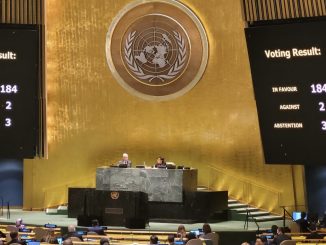
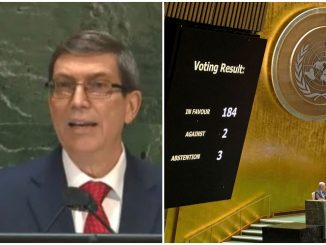
I would say 60 years of the blockade is too much. If some people don’t understand the technicalities of the blockade, if some people haven’t read this year’s Cuban report to the United Nations to support our resolution that was presented a few days ago by our foreign minister, Bruno Rodríguez Parrilla, if people are not sensitive to the details (but many people are by the way), it’s a good argument is that it is simply too much.

Sixty years of a failed policy, a fiasco. It is a moment to try something else. In that regard, it is important to remember that under the Obama administration we were able to engage in discussions — by the way, Ambassador Vidal was the head of our delegation for those negotiations — on many subjects. We delivered. There were important outcomes for both countries. People in the United States understood by a large majority the advantage of having a normal relationship with Cuba the same way we have with Canada, the United Kingdom, Spain, France and other countries all over the world.

Now, after the outcome of the last elections in the United States, there is new hope among people in the United States that a new kind of relationship can be built with Cuba. You have heard the statement that we feel that people in the United States have a sense that this is an opportunity for change, and we have to say that we remain open to any kind of talks or conversations if the principles of mutual respect and reciprocity are adhered to. Those are the two keys for any future relationship between Cuba and the United States with the upcoming president or any other administration into the future.

We have heard positive statements from the candidates, we have heard statements from other people that probably will be related to the new government, but Cuba doesn’t tailor a policy because someone is elected. We don’t tailor policies addressed to specific people. The principles of our foreign policies are consistent and we understand that we have and will have differences with the United States — we listed them by the way in 2015 and 2016 — but we do believe that we need for the benefit of our population and for the benefit of the world and region to find common ground on several subjects.

I will leave you this initial comment, with the idea that if the blockade against Cuba was always an act of war, it is a crime these days to keep and enforce that blockade on the conditions of the pandemic under COVID. Not once during the last year has the current president in the United States lifted any measures but, on the contrary, the government has implemented and enforced several limits that ordinary Cubans have to face because of the blockade.

Anyone supporting the blockade these days is as criminal as the essence of the blockade. Hopefully COVID, the common cause to fight COVID in the United States and in this hemisphere, will be an opportunity for all our countries to cooperate and to fight not only to find a cure but also a better future for our people.

Strugglelalucha256


Facebook bans Cuba solidarity conference

Facebook bans the event page for a conference featuring ambassadors, doctors, scholars, elected officials, labor and religious figures.

What is Facebook afraid of?

Even in the time of a COVID pandemic, when Cuba has been recognized for its leading humanitarian role, apparently in some circles discussion of U.S.-Cuba relations is unacceptable. Unfortunately, Facebook joined a politically motivated disinformation campaign when it removed the National Network on Cuba’s event page for the Nov. 14-15 conference. 

From Friday, Nov. 13 through Sunday, Nov. 15, 2020, hundreds from across the U.S., Canada and around the world will join together for a virtual concert and conference for the full normalization of U.S.-Cuba relations. Under President Trump, the embargo against Cuba has been tightened, leading to many day-to-day challenges for the Cuban people. Trump has also restricted U.S. travel to Cuba, undermining the ability of people in the U.S. to see Cuba with their own eyes.  

“We know that whether the next president of the United States is Donald Trump or Joe Biden, we will need to strengthen our campaign to push Washington to end the over 60 years of the cruel embargo against Cuba,” explains conference spokesperson Cheryl LaBash. “This dynamic 3-day event combining arts, culture, speakers and discussion will remind us that while the U.S. economic blockade has reached unprecedented levels, never has the possibility of ending it been closer.”

The weekend will kick off with a colorful and vibrant concert on Friday, Nov. 13, at 8 p.m. Eastern time. “We will bring together artists of all ages and backgrounds from Cuba, the U.S. and Canada,” explains conference spokesperson Tamara Hansen. “We are honored to be featuring the talents of two-time Grammy winners El Septeto Santiaguero and the U.S.-Cuba collaboration of jazz, afro, rock and salsa of Pablo Menéndez and Mezcla.”

On Saturday, Nov. 14, the first session at 2 p.m. Eastern time will feature José Ramón Cabañas, Cuba’s ambassador to the United States, and Josefina Vidal, Cuba’s ambassador to Canada. They will speak alongside politicians from the U.S. and Canada to discuss the importance of the full normalization of U.S.-Cuba relations.

The second session, at 7 p.m. Eastern time, will discuss Cuba’s leading role in combating the global COVID-19 pandemic both within Cuba and internationally with the Henry Reeve International Medical Brigade. It will feature Dr. Andy Coates, a physician in Albany, N.Y., on the frontline of treating COVID-19 patients, and Dr. Samira Addrey, a graduate of Cuba’s Latin American School of Medicine, along with other prominent panelists.  

The final session, on Sunday, Nov. 15, at 2 p.m. Eastern time, will be dedicated to planning and building a campaign to effectively end the U.S. embargo against Cuba in 2021. This will feature a variety of speakers from across the U.S. and Canada, including Cuban Americans and speakers from Puerto Rico and Quebec.  

This campaign is a united effort between the U.S.-based National Network on Cuba, Table de concertation et de solidarité Québec–Cuba and the Canadian Network on Cuba

Find registration and full conference details on our website:

us-cubanormalization.org

Media contacts for interviews or more information:

  • Cheryl LaBash (US) +1 313-999-1376
  • Tamara Hansen (Canada) +1 778-882-5223
  • Sean O’Donoghue (Quebec/French) +1 514-721-4527
  • Email: info@us-cubanormalization.org

Additional supporters of US-Cuba Normalization:

Alison Bodine, Fire This Time, Movement for Social Justice, Vancouver

Alicia Jrapko, co-chair of the Cuba Nobel Prize Committee

Bob Schwartz, vice president, Global Health Partners

Catherine Murphy, founder, The Literacy Project

Cheryl LaBash, co-chair, National Network on Cuba 

Chuck Kaufman, Alliance for Global Justice

Cindy Domingo, chair, U.S. Women and Cuba Collaboration

Clever Banganayi, Friends of Cuba Society (South Africa)

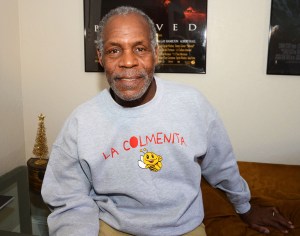
Danny Glover, actor and activist

Diane Stradling, delegation coordinator, Witness for Peace

Don Rojas, director of Communications and International Relations, Institute of the Black World

Erin Feely-Nahem, LMSW, domestic violence advocate

Frank Velgara, Call to Action on Puerto Rico

Gail Walker, executive director, IFCO/Pastors for Peace  

Ike Nahem, organizer, U.S.-Cuba International and 2nd National Cuba conferences

Isaac Saney, Canadian Network on Cuba

James Early, assistant secretary for Education and Public Service, Smithsonian Institution, retired

Joe Lombardo co-coordinator, United National Antiwar Coalition (UNAC)

Rev. Jim Winkler, president and general secretary, National Council of Churches

Joan P Gibbs, attorney at law, NY-NJ CubaSí

Jocelyn Velázquez, Jornada, Se Acabaron Las Promesas, Puerto Rico

John Waller, Seattle Cuba Friendship Committee

Jon Flanders, Railroad Workers United

Michelle Ellner, Latin America campaign coordinator, CODEPINK 

Medea Benjamin, co-chair of the Cuba Nobel Prize Committee

Malcolm Sacks, Venceremos Brigade

Margaret Gilpin, LCSW,

U.S.-Cuba Health Exchange (former president), producer, Cuba In Focus, WBAI Radio

Mark Friedman, organizer, U.S. delegation to MarCuba, Cubambiente International Environmental Conferences

Milagros Rivera, presidenta, Comité de Solidaridad con Cuba en Puerto Rico

Natasha Lycia Ora Bannan, former president, National Lawyers Guild

Robert Miller, Cuba Solidarity Campaign UK

Dr. Rosemari Mealy, author, “Fidel and Malcolm X: Memories of a Meeting”

Sharon Wrobel, board president, ProximityCuba

Shepard McDaniel, executive director of Universal Zulu Nation–World Department Of Community Affairs

Tamara Hansen, coordinator, Vancouver Communities in Solidarity With Cuba

Rev. Tom Warren, United Church of Christ, North Carolina

Wayne Smith, Former chief, U.S. Interests Section in Havana


Plus solidarity and U.S.-Cuba normalization coalitions in

Albany, N.Y.; Boston; Chicago; Detroit; Halifax; Hartford, Conn.; Houston; Los Angeles; Miami; Minnesota; Montreal; New York-New Jersey; San Francisco; Seattle; Toronto; Washington, D.C.; Wisconsin; and Vancouver.

Strugglelalucha256


Oakland, California, city council passes resolution regarding Cuba and the United States

October 21, 2020

Yesterday a resolution supporting medical and scientific collaboration between the City of Oakland California and the Country of Cuba to address the COVID-19 health crisis was passed unanimously. The resolution also urged the U.S. Congress to remove restrictions on collaboration by suspending economic and travel sanctions against Cuba.

City council member Dan Kalb from District 1, who introduced the resolution, acknowledged during the council meeting that the city had pressing and important issues like homelessness to be focusing on but that the resolution opening up the possibility of mutually beneficial collaboration with Cuba was important considering the work that the island nation has been doing towards world health.

Oakland resident Alicia Jrapko who is a co-chair of the National Network on Cuba and currently part of the Saving Lives Campaign said, “We could learn a lot from the accomplishments of Cuba’s approach to the Covid 19 virus both in their country and around the world. Cuba has a lower infection rate than most countries in the northern hemisphere and Cubans are 42 times less likely to contract the virus than people in the U.S. In collaborating with Cuba we will show people in this country the humanistic approach Cuba has to fight the pandemic.”

Helene Maxwell, another Oakland resident who commented in favor of the resolution, referred to the importance of the resolution, “Especially in this time of the Covid-19 pandemic, it is unconscionable, that because of the U.S. blockade of Cuba, patients in the U.S. are denied access to medicines that are available in every other country. Oakland’s approval of this resolution for medical and scientific collaboration between the City of Oakland and Cuba is a first step in ending this madness”

Oakland now joins a growing number of cities and organizations around the country including in the San Francisco Bay Area where the cities of Richmond, Berkeley, San Francisco, and the Sacramento Central Labor Council AFL-CIO who advocate for the concept of friendship and solidarity with the island have passed similar resolutions.

Source: Resumen

Strugglelalucha256


El Consejo de la Ciudad de Oakland-California aprueba Resolución sobre la Colaboración Médica entre Cuba y los Estados Unidos

21 de Octubre, 2020

Este 20 de octubre, se aprobó por unanimidad una Resolución que apoya la colaboración médica y científica entre la ciudad de Oakland-California y Cuba, para enfrentar la crisis de salud ocasionada por la COVID-19.

La Resolución insta al Congreso de los EE.UU. a eliminar las restricciones para hacer posible la colaboración médica, mediante la suspensión de las sanciones económicas y los viajes a Cuba.

El miembro del consejo municipal Dan Kalb del Distrito 1, quien presentó la Resolución, reconoció durante la reunión del consejo que la ciudad enfrenta cuestiones urgentes e importantes en las cuales enfocarse como la falta de viviendas, pero que la Resolución presentada abre la posibilidad de una colaboración mutuamente beneficiosa e importante con Cuba, teniendo en cuenta la labor que la nación insular ha estado realizando en pro de la salud mundial.

Alicia Jrapko, residente de Oakland, copresidenta de la Red Nacional de Solidaridad con Cuba y actualmente forma parte de la Campaña “Salvar Vidas”, dijo: “Podríamos aprender mucho de los logros de Cuba sobre la Covid-19 tanto en ese país como en el mundo. Cuba tiene la tasa de infección más baja que la mayoría de los países del hemisferio norte y los cubanos son 42 veces menos propensos a contraer el virus que la gente de los EE.UU. Al colaborar con Cuba mostraremos a la gente de este país el enfoque humanístico que tiene Cuba para luchar contra la pandemia”.

Helene Maxwell, otra residente de Oakland comentó a favor de la Resolución, se refirió a la importancia de la misma, “Especialmente en esta época de la pandemia de Covid-19, es desmesurado que debido al bloqueo de los Estados Unidos a Cuba, a los pacientes en los Estados Unidos se les niegue el acceso a las medicinas que están disponibles en todos los demás países. La aprobación de esta Resolución por parte de Oakland para la colaboración médica y científica entre la ciudad de Oakland y Cuba es un primer paso para poner fin a esta locura”

Oakland se une ahora a un creciente número de ciudades y organizaciones de todo el país, incluyendo el área de la bahía de San Francisco, donde las ciudades de Richmond, Berkeley, San Francisco y el Consejo Central Laboral de Sacramento AFL-CIO, abogan por la amistad y solidaridad con la isla. Ciudades en las que se han aprobado Resoluciones similares.

Más de 2 millones de habitantes de estas ciudades se verían beneficiados con la colaboración médica y científica con Cuba. (*)

La posibilidad de mejorar la salud de los estadounidenses y salvar vidas, en medio de la pandemia del SARS-CoV-2 no puede ser bloqueada.

Nota:

(*) Habitantes de las ciudades mencionadas de acuerdo al censo del 2018: Oakland 429.082, Richmond 227.032, Berkeley 121.643, San Francisco 883.305, Sacramento 508.529, las que suman 2.169.581 habitantes.

Fuente: Resumen

Strugglelalucha256
https://www.struggle-la-lucha.org/cuba/page/32/