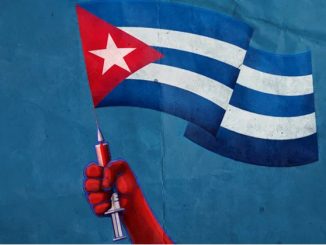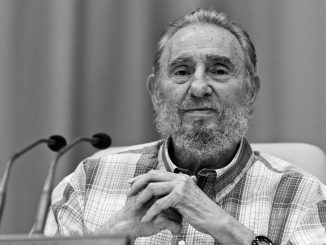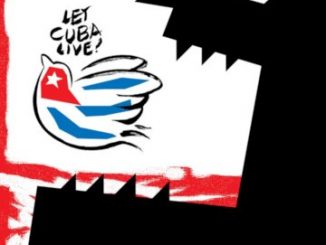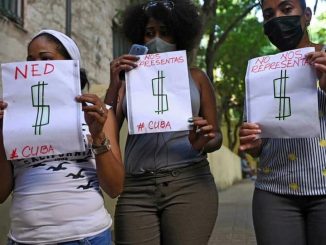
Organizations gather to demand immediate end to the U.S. blockade against Cuba

June 22, Detroit — Today, the National Network on Cuba (NNOC), partner organizations, as well as academics, elected officials, labor leaders and Cuban Americans will gather for a press conference highlighting the ongoing humanitarian crisis caused by the United States blockade against Cuba. Speakers include a representative from the Cuban-American organization Project EL PAN, an independent Cuban journalist, a leader of the Seattle chapter of the A. Philip Randolph Institute, and a member of the International Longshore and Warehouse Union.

Other representatives include the Interreligious Foundation for Community Organization and elected officials Commissioner Alicia Bell, Chair of the Wayne County Board of Commissioners and former State Representative Hon. Sherry Gay Dagnogo, Detroit Public Schools Community District Board Member.

This conference will be held prior to the United Nations (U.N.) annual vote on resolution 74/7 of the United Nations General Assembly: “Necessity of ending the economic, commercial and financial blockade imposed by the United States of America against Cuba,” scheduled for tomorrow, June 23. Participating organizations will speak to the urgency of the need for the U.S. to vote “yes” and end the blockade against Cuba immediately.

Cuban-American, Felix Sharpe-Caballero said, “Given the pandemic and the policies of the previous administration, intended to create suffering, never has it been more difficult for the Cuban People. But never before have Cuban Americans joined together to call on the genocide to end. In cities, counties, school boards and State Legislatures representing greater than 35 million people, through resolution, Americans are also calling on President Biden to act on Cuba.”

Since 1992, an overwhelming majority of U.N. member countries have continuously voted to end the embargo as well. During the most recent vote in 2019, 187 Member States demonstrated their support for the resolution to end the blockade, while only Brazil and Israel joined the U.S. in voting no.

“According to international law, the United States does not have the right, politically or morally, to dictate the actions of sovereign nations like Cuba, and those who wish to build relationships with Cuba. Why is the United States government positioned above international law? The world stands with Cuba, and so should we. It’s time to end the U.S. sanctions against Cuba,” said Gail Walker, Executive Director of the Interreligious Foundation for Community Organizations, the administering organization for U.S. medical students studying at Cuba’s Latin American School of Medicine.

This embargo, known in Cuba as el bloqueo (the blockade), is the longest documented economic war in modern history. It has resulted in the Cuban people suffering food and medical shortages, issues which have been exacerbated since the start of the COVID-19 pandemic. In addition to Cubans suffering domestically from the United States’ embargo, millions of African, Latin American and Caribbean people, who rely on medical support from Cuba, also suffer from this inhumane policy.

Interested parties can register here to attend the press conference, or submit questions here:
https://us02web.zoom.us/webinar/register/WN__hKNPTFSQDuTf7mVPDp1gw

For more information regarding the United States blockade against Cuba, please visit or contact the following partners:

Project EL PAN, breaking bread with the Cuban People
https://www.facebook.com/ProjectElPAN/

Interreligious Foundation for Community Organization
https://www.ifconews.org

Saving Lives Campaign
SavingLives.US-CubaNormalization.org

Global Health Partners
GHP.org/syringes4Cuba

WPFW-Voices with Vision

National Network on Cuba
NNOC.info

Canadian Network on Cuba
http://www.canadiannetworkoncuba.ca/

PRESS INQUIRIES:
National Network on Cuba:
Cheryl LaBash
313-999-1376
UnblockCubaJune23@NNOC.info

Strugglelalucha256


Cuba’s COVID-19 vaccines: A journey of collaboration and revolutionary solidarity

With its development of five COVID-19 vaccines and the promise of sharing know-how with developing countries, Cuba has remained faithful to Che Guevara’s values of international solidarity and people-oriented medicine.

Cuba’s emergency rollout of two homegrown vaccines last month has awed the world. For a developing country the size of the US State of Tennessee, it is quite a feat. The achievement is all the more significant when we consider the enormous difficulties caused by the US blockade which restricts access to high-technology equipment, state-of-the-art technologies and good-quality raw materials and reagents. Even when they are available, they are expensive. Cuba’s success in producing COVID-19 vaccines not only reiterates its scientific prowess but is also a testimony to its political approach to health — keeping it people-centric, ensuring mass scaling up and distribution, and using collaborative, rather than competitive, research methods.

Cuba has four vaccines and one booster shot in different clinical trial stages. Of those, Abdala has finished phase-3 clinical trials, and the trials for Soberana 02 should conclude by this month. Both trials enrolled nearly 45,000 volunteers. The placebo arm was kept small due to the pandemic situation, and those volunteers are now also being vaccinated. The vaccines are expected to get full regulatory approval in the next couple of months.

Rapid advancements in vaccine R&D

As cases started to rise steeply in late January, Cuba needed to urgently roll out vaccines. Interventional clinical trials started among health workers and biotechnology staff. After analyzing the phase-2 trial data of Abdala and Soberana 02 and establishing their safety for human use, the World Health Organization (WHO) allowed public health intervention on a higher scale. Cuba started the vaccine rollout in May, and within a month, had vaccinated almost 3.5 million people – nearly 15% of its population.

The other two vaccine candidates — Soberana 01 and Mambisa — are in the initial phases of clinical trials and are seen as promising by their developers. The booster shot — Soberana Plus is for people who have recovered from COVID-19. It may also be given to people who need a booster after two shots of Soberana 02. It has reached phase-2 clinical trials. Of note is that Mambisa is an intranasal vaccine: it is easy to administer and hence useful in resource-poor settings.

Cuba achieved all of this within 18 months of the start of the pandemic. The research has been carried out by public institutes which collaborate with scientists from institutes in other countries, such as Prof. Fabrizio Chiodo of Institute of Biomolecular Chemistry, National Research Council (CNR) in Italy.

But in addition to the promise that safe and effective vaccines will reach all Cubans by the end of year if everything goes as planned, the country has sent out much deeper messages. One, that science develops best when it is shared and not monopolized. And two, that scientific discoveries made in the Global South are best suited to respond to the needs of these countries.

Sharing at the heart of the Cuban research model

“Cuba has historically followed the model of sharing technology and know-how for its scientific research. The same can be seen in the case of COVID-19 vaccines,” said Luis Gil Abinader, Senior Researcher, Knowledge Ecology International, US. The research for COVID-19 vaccines in Cuba has been conducted in two institutes. The three Soberana versions were developed in Finlay Institute of Vaccines (IFV) while Abdala and Mambisa were developed in Center for Genetic Engineering and Biotechnology (CIGB). Both are government entities.

“The scientists of both institutes have been in close communication from the beginning. They meet once a week to share information about successes, challenges and failures. These meetings were facilitated by BioCubaFarma, which was established in 2012 to oversee implementation of research and development policy for drugs and other products,” said Abinader, who has been closely following the development of vaccine candidates. He pointed out the benefits of collaborative research.

“Working alone, you find challenges and take time to solve. When you collaborate, you find the solutions quicker. It is a way of fine-tuning the research. The final output takes less time,” said Abinader. He added that collaborative research consumes less money, which may be reflected in pricing of the final product.

A clearer picture of these advantages emerges when we look at the vaccine development model being followed in the US, a country merely 90 nautical miles from Cuba. The US spends ten times more on health per capita than Cuba (US$ 10,624 and US$ 987 respectively in 2018, according to WHO data) and yet has worse health indicators.

“Often two separate entities researching in the same field, do not talk to each other, especially in the private sector. They work as competitors and maintain secrecy around their work. This makes the research more expensive and time-consuming,” Abinader said.

In the end, these models have drastically different impacts. Products arising out of a competitive R&D model are the monopoly of a company, manufactured for the sake of profit. Thus, the company does its best to not share technology and know-how, and maintains patent protection for the longest possible period. Such secrecy and monopoly allows companies to charge exorbitant prices for medical products, even when the production cost is low.

The know-how of collaborative research model, on the other hand, is shared among many people, scientists and institutes and hence is antithetical to monopoly rights. It is usually led by public investment. Hence, the motive of R&D and scientific discovery is public health, not profit. Historically, in the true spirit of internationalism, Cuba has shared its vaccine technology with other countries, including a number of developing nations.

Developing vaccines and medicines for the Global South

A 2015 report by WHO and European Commission hailed the Cuban model with the following words, “Cuba has become a global leader in the South-South transfer of technology, helping low-income countries develop their own domestic biotech capabilities, providing technical training, and facilitating access to low-cost lifesaving drugs to combat diseases such as meningitis B and hepatitis B.” It has transferred technology to countries like Algeria, South Africa, India, Vietnam, Malaysia, Brazil, Mexico and Argentina. For the COVID-19 vaccines, it is working closely with the other two victims of the US blockade — Venezuela and Iran – where phase-3 clinical trials for Soberana 02 are underway. There is a high probability that these countries will be able to produce the vaccine locally.

Other Caribbean and Latin American countries have also shown interest in working with Cuba on vaccine research and development. According to the Caribbean Council, Argentina and Cuba signed a Letter of Intent in early June and it is expected that the two countries will collaborate in the production of Cuban vaccines developed against COVID-19. The letter specifies that the collaboration relates to ‘the immunization of the population of Cuba and Argentina, as well as of the countries of Latin America and the Caribbean.’

The Cuban vaccines have other scientific advantages useful for developing countries. They are using the technology of the protein subunit. Vaccines using this technology can be stored at a temperature range of 2-8 degree C, while remaining stable at room temperature. Most countries of the Global South are located in hot climates, so easy storage is of crucial importance.

“Cuba is a Caribbean country. They have been doing vaccines for a long time and they do it for their climate and temperature. This technology is more suitable for their needs,” said Abinader.

As opposed to this, US companies such as Pfizer and Moderna have used mRNA technology. Vaccines developed this way have to be stored at a very low temperature. The technology itself is expensive as it uses a lot of ingredients. These companies also follow a strategy of diversifying the production system, making it difficult for low and middle income countries to obtain all the materials for local manufacture.

Another important point is that Soberana 02 is a conjugate vaccine, the only one among 102 vaccine candidates in WHO’s COVID-19 Vaccine Tracker and Landscape. This technology is known to be safe for children. Taking this forward, beginning on June 14, Cuba started two clinical trials among children — one in the age group  of 3-11 years, and another among 12-18 year-olds. Finding volunteers for clinical trials is never an issue in Cuba, even among children. Parents trust the public system and do not hesitate to take part.

A March 2021 paper in bioRxiv, a pre-print journal, outlined another advantage of protein subunit products – it is an old technology, widely used for producing other vaccines. COVID-19 vaccines can use the already “existing vaccine production capacities available in several countries,” enabling cost-effective mass scale up, the paper points out.

According to the WHO’s Vaccine Tracker, vaccines using the protein subunit technology constitute 31% of 102 vaccine candidates in various clinical stages. However, only six have reached the phase-3 stage, including the two from Cuba. If approved, Cuba’s vaccines may well be the first to have been developed using this technology, leading the way for large scale production in a relatively simple, rapid, and scalable manner. All of these factors are key to vaccinating the whole world quickly.

Since the Cuban revolution of 1959, health care has been among the six priority strategic areas. Instead of succumbing to the pressure of the US embargo introduced in 1962, Cuba focused on developing biotechnology and using it to build south-south solidarity. Cuba’s public-led model of scientific development might well end up being a key contribution to the way out of the pandemic, not only for its own people but also for those in low and middle income countries too.

Source: Peoples Dispatch

Strugglelalucha256


Join week of action to #UnblockCuba June 17-23

The Biden-Harris administration is continuing Donald Trump’s war on Cuba. On June 23, the United States will vote at the United Nations General Assembly on a resolution to end the blockade of Cuba. 

We know the world will vote with Cuba, as it has since these resolutions were first submitted to the General Assembly in 1992. We also know that the people of the U.S. don’t support the blockade. Those voices need to be heard.

A week of actions is planned from June 17 to June 23, the day of the U.N. vote.

On June 17, the Cuban Institute for Friendship with the Peoples (ICAP) will hold a Facebook live event showing the people of the world opposing the blockade. Alicia Jrapko is taping a message from the National Network on Cuba for this event. It will be aired at 9 or 10 a.m. Eastern at Facebook.com/SiempreConCuba. It is important to tune in and comment from your location and organization.

On June 18 in New York City, ProLibertad and other Puerto Rican and Cuban solidarity groups are having a demonstration called “Two Wings of the Same Bird” at 5 p.m. The U.N. Decolonization Committee meets to discuss Puerto Rico on June 21.

On June 20, bike/car caravans will be held around the world again. Nineteen cities had caravans on May 30. New York, New Haven, Washington, D.C., Chicago, Albany, Detroit, San Antonio, Atlanta, Minneapolis, Seattle, San Francisco, Las Vegas, Los Angeles, San Diego, Bloomington, Indiana, Milwaukee, Albuquerque, Miami and Tampa all had caravans. How can we increase the number of cities?

On June 20 at 8 p.m. Eastern, the film “Sacha, A Child of Chernobyl” will have its online premiere. Cuba treated thousands of children who were impacted by the nuclear accident in the Soviet Union. This is the story of one child, now an adult. Check the NNOC Facebook page for further information.

On June 22 at 8 p.m. Eastern, a 24-hour Zoom event will begin and extend through 8 p.m. on June 23. It will broadcast the debate and vote at the U.N. and solidarity activities around the world, plus a celebration hosted by the Cuban Mission to the United Nations that evening. Register today: tinyurl.com/24hr4Cuba

In addition, many organizations will send letters to President Joe Biden against the blockade, including letters from religious groups and farmers. Some are sign-ons, like IFCO/Pastors for Peace’s “President Biden, Keep Your Promise.”

The Illinois State Assembly just voted against the blockade. Now 25 elected bodies — city councils, unions, labor councils, school boards, county commissions and small farmers’ groups — have called for ending the blockade since May 5, 2020, in just over one year! That’s more than the previous four years.

The Syringes4Cuba campaign has raised more than $100,000 to help Cuba fight COVID-19. More is needed. Cuba needs 20 million syringes to deliver the Cuban-developed vaccines into Cuban arms. Cuba has helped the world with medical solidarity — now let’s help Cuba. Donate directly through the website: Global Health Partners/Syringes4Cuba.

People from EVERY STATE — a veritable People’s Congress — posted photos taken with a sign that reads, “My State Says Hands Off Cuba.” Look at an interactive map, state by state, to see the photos.

https://www.facebook.com/2267312009947139/videos/3675257555912094

Video appeal from Carlos Lazo, a Cuban-American teacher whose bike ride across the U.S. has sparked a caravan movement calling for an end to the U.S. blockade of Cuba. Lazo and many other Cubans living in the U.S. join their powerful voices to this struggle. He calls on people to come out on June 20, when bike/car caravans will be held around the world.

Strugglelalucha256


The U.S. government, an accomplice of terrorists, accuses Cuba of terrorism

The political intolerance of an empire that has witnessed a Revolution taking place under its nose has hardened to the extent that – after 62 years of Cuba’s heroic resistance – the most fallacious and absurd arguments are deployed to justify the hostility, including accusations linking Cuba to terrorism, a scourge that the island has in fact suffered at the hands of self-confessed terrorists to whom the U.S. government has provided financing, logistics and immunity. Is it really necessary to recount the criminal U.S. record against Cuba? Apparently another repetition is needed, although its promoters in the immoral north are well aware of the history.

Intent on destroying the revolution, at any cost

One of the first terrorist attacks against the nascent Revolution occurred on October 21, 1959. On that day, a traitor pilot exiled in Miami, Pedro Luis Díaz Lanz, who had been an officer in the Cuban Air Force, flying a twin-engine B-25, bombed several Havana neighborhoods, causing 45 injuries and the death of two persons.

Diaz Lanz himself would later confirm his responsibility for the attack. With full impunity and protection from U.S. authorities, he departed from Pompano Beach, Florida, where no one created any obstacle to his plans.

Thus began the terrorist war against Cuba, sponsored by the U.S. government and conceived as state policy, fully documented and denounced by Cuba in international forums.

A wide variety of political, military, economic, biological, diplomatic, psychological, propaganda, espionage and sabotage methods have been utilized in the attacks. Armed gangs have also been organized and logistically supported, while desertion has been encouraged and plots hatched to assassinate leaders of the Revolution.

Numerous declassified secret documents provide evidence of these crimes, along with the millions of dollars approved annually for this purpose, an amount which is published in the media as just another line item in the government budget, behind the backs of taxpayers, who are largely unaware of the allocation’s final destination.

In this regard, the Cuban people’s demand for compensation from the United States government for damages states in its first Findings, “Hostile and aggressive actions carried out by the United States government against Cuba, since the triumph of the Revolution to date, have caused enormous material and human damage to the people, and incalculable suffering to the country’s citizens, hardships due to shortages of medicines, food and other items essential to life.”

The document reports that the loss of human lives has reached 3,478 and 2,099 individuals have been permanently disabled as a result of bodily injury.

One of the bloodiest attacks perpetrated by the CIA was the explosion of the steamship La Coubre, in the port of Havana, as legitimately purchased weapons and ammunition were being unloaded, March 4, 1960.

More than a hundred Cubans died in the sabotage, including longshoremen, port workers and members of the Rebel Army. While the lives of six French crew members were lost.

It should also be recalled that when Comadante en jefe Fidel Castro attended the Ibero-American Summit on the Venezuelan island of Margarita, the military wing of the counterrevolutionary organization Cuban American National Foundation attempted to assassinate him.

Several of its members were arrested and, found on board the yacht La Esperanza, registered in the name of Francisco “Pepe” Hernández, later president of the Foundation, was a 50 caliber rifle of his, capable of perforating armored vehicles. In December 1999, they were all acquitted.

Another terrorist attack that deeply touched the Cuban people was the mid-flight bombing of a Cubana Airlines plane over Barbados, in which 73 persons perished, including passengers and crew. The intellectual authors of this terrorist attack were Orlando Bosch Avila and Luis Posada Carriles. (Both later died as free men in the city of Miami.)

They were detained in Venezuela, until the Foundation financed Bosch’s freedom and facilitated the escape of Posada Carriles, who cynically acknowledged responsibility for the sabotage, while calmly walking the streets of Miami.

Referring to the sabotage, Fidel stated: “Surely U.S. citizens will understand the attack better if they compare the population of Cuba 25 years ago with that of the United States on September 11, 2001. The death of 73 persons on a Cuban plane downed in-flight is equivalent, given the United States’ population, to the mid-air destruction of seven U.S. airliners with more than 300 passengers each, on the same day, at the same time, by a terrorist conspiracy.”

In 1997, several bombs exploded in Havana hotels, and Cuba denounced the fact that the culprits were residents in the United States. The State Department responded that it would investigate if Cuba provided information.

The FBI was forwarded a fat, secret dossier from Cuban authorities, in which the name of Luis Posada Carriles appeared as the instigator of the attacks. But nothing was done to arrest the criminals. Instead, the information provided by the island’s government was used to pursue, arrest and prosecute Cubans in the U.S. conducting surveillance to protect their people from these terrorist groups

Three years later, in November of 2000, on the occasion of the People’s Summit at the University of Panama, which was held simultaneously with the 17th Summit of the Americas, Cuban State Security agencies uncovered a terrorist plot to assassinate Fidel.

Diplomat Carlos Rafael Zamora, a witness to the events, recalled: “The Cuban side gave the Panamanian side a list of terrorists, their aliases and the types of passports they used to enter the country. All the individuals who participated in planning of the attack were identified. I witnessed the conversations held with Panamanian authorities, in which we expressed the Cuban delegation’s concern regarding the presence of these terrorists and the threat they posed to the security of the Comandante en jefe and the delegation.”

Upon arrival in Panama, Fidel denounced the terrorists’ plans in a press conference and provided information that would allow for their arrest. Posada Carriles, using the alias of Franco Rodriguez Mena, was staying in room 310 at the Coral Suites Hotel in Panama City. He was detained there. Cuban agents neutralized the assassination attempt by four terrorists in the University’s principal auditorium, where they had hidden nine kilograms of C-4 explosive. Some 2,000 people would gather there to hear Fidel. It would have been a real massacre.

The government of President Mireya Moscoso, under national and international pressure, was obliged to prosecute the four implicated, but they were given purely symbolic sentences. Messages from the Foundation in Miami poured in calling for their release. Thus on August 26, 2004, just one day before Moscoso’s term as President came to an end, she pardoned them.

Posada Carriles took many secrets to the grave. But it is no secret at all that he was a life-long terrorist assassin in the service of the CIA.

One of the most outrageous elements of the Trump’s administration’s foreign policy was to add Cuba, once again, to the spurious unilateral State Department list of the countries they consider “state sponsors of terrorism.”

The immorality of the U.S. government is so great that the absurd accusation about Cuban support of terrorism has been passed from “one hand to another” as a political inheritance, fully aware of the dimensions of this colossal infamy, as befits the imperialists’ arrogance, to be recycled by the Biden administration and serve as a justification for more sanctions that will not take Cuba by surprise. They reflect the empire’s unchanged interest in forcing this heroic country to surrender.

It apparently does not matter that the failed attempt has been underway for more than six decades. What a fiasco.

Source: Granma

Strugglelalucha256


Solidarity saves lives: The world is mobilizing to send syringes to Cuba

In March, social organizations, political leaders, and solidarity movements launched a fundraising campaign to send syringes to Cuba. The world wants to support the vaccination process of this small nation, which has done so much to fight COVID-19 beyond its geography.

The campaign has gained momentum and size as the days have gone by. The initiative began in Europe, thanks to the Cuba Linda and France-Cuba Associations, and today it is spreading throughout the Americas. ‘Blockade Kills, Solidarity Saves Lives’ is the slogan of the cause that is taking everyone’s attention in Honduras, Nicaragua, Argentina, Canada, the U.S., and other countries in the region.

“In France, we have raised 30,000 euros to date, equivalent to 374,000 needles and syringes,” Cuba Linda assured and explained that they are looking forward to collecting 10 million of them, which will allow the Cuban authorities to immunize their entire population in record time, as planned. The UK Cuba Solidarity Campaign has also launched a campaign to raise funds for syringes, vials and other medical supplies

The world knows about Cuba’s efforts to face the pandemic. Amid the most difficult economic situation, the country set out to leave no one unprotected, and it has done so in the most challenging way possible, being a blockaded country with no resources to create its own vaccines.

“In light of Cuba’s extraordinary commitment and response to the fight against COVID-19, not only at home but in 52 nations around the world, it is the least we can do. We see it as a solidarity project,” said Bob Schwartz, CEO of U.S. Global Health Partners, an organization that recently joined the campaign.

In the U.S., several Cuban solidarity groups have set out to raise funds to buy even more of the syringes proposed by Cuba Linda and France-Cuba. According to Schwartz, “the Global Health Partners, Code Pink, MEDICC, and the Center for Cuban Studies plan to send five ship containers with over 10 million syringes to Havana.”

Honduran doctors who graduated from the Latin American School of Medicine (ELAM) and other universities in Cuba also joined the call, and are asking the Cuban community living in Honduras to also collaborate in the fundraising effort.

“People have responded, even though the economic situation in Honduras is adverse because unemployment has increased and salary payments have been delayed due to the pandemic,” explained Elena Flores, president of the Honduras-Cuba Association (AHC).

Given the lack of air connection from the Central American country to Havana, a situation that prevents the syringes from being sent to the island, the Honduran doctors opted to send the raised funds to Panama. There, several solidarity groups will buy and transfer the supplies to the Caribbean country through Cuban Airline (Cubana de Aviación).

Cubans living in Nicaragua are doing the same operation. According to Prensa Latina, up to 130,000 syringes have been collected in Managua. “We have already made two bank transfers to Panama for the amount of US$4,479,” The Augusto C. Sandino Anti-imperialist Solidarity Network Representative Rafael Ruiz confirmed.

The solidarity campaign comes at a critical moment of the vaccine roll out when Cuba needs it most. Health authorities have already begun immunizing residents in Havana, the Cuban city most impacted by the pandemic. On the Island, over 1,000 cases have been registered per day for the past two months. At least half of those daily cases were reported in the capital.

The government expects to vaccinate the country’s entire population as early as August. The donation of syringes will be essential for this purpose. Why? Because the over 200 restrictions imposed during the Trump era (2017-2021) are threatening to squeeze the Cuban economy even harder.

Besides the global shortage of syringes and rising prices, Cuba faces another equally complex challenge. The island can purchase health – and any other – supplies from a very short list of countries.

Due to the blockade, few nations are willing to sell products directly to Cuba because of the million-dollar fines the U.S imposes on anyone who dares to do so. The island is forced on buying everything from third countries, which makes each product more expensive, causes delays in shipments, and generates shortages.

Although Cuba has the best record in Latin America in controlling COVID-19, the disease is reaching its peak and vaccination is key to stopping it. As U.S. President Joe Biden looks on motionless at Cuba’s efforts to pull its economy forward, and protect its people from the deadly virus, the rest of the world is rallying around this tiny island. Cuba is not alone, it never was, it’ll never be. 

Source: Resumen

Strugglelalucha256


U.S. deception syndrome to discredit adversaries

The old story of sonic attacks in Havana, exposed as a fraud long ago, has been resuscitated by the Biden administration, a pretext used to justify denying the Cuban people fuel, food and medicine

Trailers for what appears to be a new season of the series “The Havana Syndrome” are beginning to be broadcast on the paid media. The story follows the script of previous productions.

The one-sided plot of alleged aggression against U.S. officials is back, despite the efforts of Cuba, the international community and even a significant number of U.S. scientists who know that there is no evidence whatsoever of the possibility of so-called sonic attacks.

According to CNN, U.S. federal agencies are investigating two new incidents, this time on U.S. soil, including one near the White House in November of last year, “similar to the mysterious and invisible attacks that have caused debilitating symptoms in dozens of U.S. officials abroad,” reports CNN.

The two “victims,” one a National Security Council official, allegedly suffered the same unexplained symptoms that U.S. personnel in Cuba, China and Russia began to experience around the end of 2016: ear pain, vertigo, severe headaches and nausea, sometimes accompanied by an unidentified “penetrating directional noise.”

We should recall that British and American scientists determined, in 2019, after analyzing a recording of the “penetrating directional noise,” that it sounded most like an echo of the chirping of an Indies short-tailed cricket.

In another incident reported by a former U.S. official, according to cnn, shortly after a Russian helicopter flew over a remote base in Syria, Marines there developed symptoms similar to those they insist on calling, and establishing as a real phenomenon in international public opinion, the “Havana syndrome.”

This is demonization, a rhetorical and ideological technique of disinformation, alteration of facts and descriptions, used to build a negative image and justify punishment of an adversary.

The story of alleged sonic attacks, baptized with full intention as the “Havana Syndrome,” served as a pretext to seriously strain relations between Cuba and the U.S. during the Trump administration, and to justify all variety of coercive measures against our country, as evidenced by recently declassified documents.

And now, President Joe Biden’s new National Security team has made the investigation of the sonic incidents a top priority, a senior official stated recently, according to the Chicago Tribune.

Bill Burns, the new CIA director, told Senators during his confirmation hearing that he intends to get to the bottom of the “Havana attacks.”

Not surprisingly, Senator Marco Rubio alleged that the number of people affected could be higher and involve more than 40 diplomats and family members at the U.S. Embassy in Havana, and at least a dozen diplomats at the consulate in Guangzhou, China.

These totally unsubstantiated attacks have served to justify attempts to deprive the Cuban people of fuel, food and medicine.

For some, “It is necessary to lie like hell, not timidly, not for the moment, but fearlessly and forever …. Lie, my friends, lie, I will pay you back when the time comes,” Voltaire wrote. Undoubtedly, they lie about Cuba, not timidly, like true demons.

Strugglelalucha256


Remembering Ramsey Clark

The news of his death did not come as a surprise since it was known that his health was declining and he was also affected by irreparable family losses.  But the death of Ramsey Clark is a source of pain and suffering for many, in many parts of the world.

His trajectory since the 1960s was one of admirable personal integrity and fidelity to the principles that made him one of the most respected personalities of the U.S. progressive movement.

Attorney General of the United States during the administration of U.S. President Lyndon B. Johnson, he played a key role in the approval and application of the Civil Rights Act, a decisive step in eliminating discrimination against African-Americans in electoral matters.  He also accompanied Johnson in his efforts to ensure affordable health care for all.  Both issues were flags that “liberals” raised but with increasingly hesitant hands while their elimination has become a priority for Trump and his supporters.

Ramsey Clark, for his part, became a point of reference for those who did not abandon the ideals of freedom and true democracy.  He opposed the war against the Vietnamese people to the point that the president excluded him from the National Security Council despite the fact that his participation in that body derived from the high office he held.

Outside the government, Ramsey waged a tireless battle to stop this aggression, which generated a growing mobilization not only in his country but throughout the world, and to which he contributed as few others did.  He contributed not only with speeches and declarations.  Of special significance was his physical, personal presence on Vietnamese soil in open violation of Washington’s official prohibition.

He had an exceptional capacity for work and delivering solidarity was for him a mission to which he gave his all.  No cause was alien to him.

We Cubans owe him a great debt.  Our cause was also his cause.  His voice was raised time and again to denounce Washington’s blockade against the island and the war that the Empire is waging against us on all fronts.

His participation in the campaign to free Elián González and in the hard, complex and prolonged struggle for the liberation of our Five Heroes was decisive.  Personally, as long as I live, I will thank him for his help.  And from the bottom of my heart I say: Thank you, Ramsey, for everything … dear friend, brother, compañero.

Source: Radio Habana Cuba

Strugglelalucha256


Today, defense of the revolution rests with the media

By Steve Lalla and Saheli Chowdhury for Orinoco Tribune – April 25, 2021

Víctor Dreke, legendary commander of the Cuban Revolutionary Armed Forces, called for those defending the Revolution today to recognize that the battlefield of the 21st century is the media.

The comments were made at a conference held on Thursday, April 22, commemorating the 60-year anniversary of the Bay of Pigs—Playa Girón to the Spanish-speaking world. Comandante Dreke, now retired at age 84, spoke alongside author, historian, and journalist Tariq Ali; Cuba’s Ambassador to the United Kingdom, Bárbara Montalvo Álvarez; and National Secretary of Great Britain’s Cuba Solidarity Campaign, Bernard Regan.

“It is no longer about us, the over-80s,” said Dreke. “It is the next generation, those who are here, who are going to be even better than us. It will no longer be a case of combat… Right now, the media across the world has to defend the Cuban Revolution, and we and you have to be capable of accessing the media across the world to spread the truth about the Cuban Revolution. That is the battle we are waging today—to fight attempts to weaken the people, to soften the people, to try to take the country again. They have changed their tactics. We are ready, but we want to say to our friends in the Americas and around the world that Cuba, the Cuba of Fidel Castro, Raúl Castro, Juan Almeida, the Cuba of Che Guevara, will never fail, neither with us nor with the future generations.”

Dreke joined the 26 July Movement in 1954, fought under Che Guevara in the Cuban Revolutionary War and in Democratic Republic of the Congo in 1965, and commanded two companies in Cuba’s historic defeat of US imperialism at the Bay of Pigs. Dreke’s autobiography, From the Escambray to the Congo: In the Whirlwind of the Cuban Revolution, was published in 2002.

Cuba and Venezuela provide inspiration for Latin America and the world
Comandante Víctor Dreke drew a comparison between Cuba’s historic defense of the revolution and that of Venezuela, as both countries now face a common weapon in the arsenal of imperialism: the economic blockade.

“They block medicines for Cuba, they block aid for Cuba,” said Dreke. “They blockade the disposition of aid for Venezuela because of the principles of Venezuela, the principles of Chávez, the principles of Maduro, the principles of Díaz-Canel, the principles of this people, due to the historical continuity of this people.”

Regarding the failed 1961 US invasion of Cuba, Dreke remarked, “it was an example for Latin America that proved that the US was not invincible; that the US could be defeated with the morality and dignity of the people—because we did not have the weapons at that time that we later acquired. It had a meaning for Cuba, the Americas, and the dignified peoples of Latin America and around the world.”

Tariq Ali: we must see through ideological fabrications to defeat imperialism
Tariq Ali, esteemed author of more than 40 books, recalled the precursor of the US invasion of Cuba, the 1954 CIA coup in Guatemala in which President Jacobo Árbenz was overthrown and forced into exile. A young Ernesto Guevara was living in Guatemala at that time and bore witness to the multifaceted CIA operation PBSuccess, which included bombing campaigns with unmarked aircraft and a propaganda blitz of leaflets and radio broadcasts. Ali described the evolution of CIA tactics since then:

“Normally the way they choose is to occupy a tiny bit of territory, find a puppet president, and recognize the puppet president. They are doing that in the Arab world today, or have been trying to do it. They did it with Guaidó in Venezuela, except that the Venezuelan army would not play that game and it blew up in their face, their attempt to topple the Maduro regime. They are trying it in parts of Africa. The weaponry has changed, it is more sophisticated, but the actual method they use, ideologically, is the same. That’s why it always amazes me as to why so many people believe the rubbish they read when a war is taking place.”

Ali also weighed in with a forecast for US foreign policy under the Biden administration:

“We can be hopeful for surprises… But effectively, whoever becomes president of the United States, whether it is Obama, or Biden, or Trump, or Clinton, or Bush, they are presidents of an imperial country, an imperial state, and this imperial state is not run all the time by the Congress or the Senate or the Supreme Court. The military plays a very important role in the institutions of the state, and the National Security Council, the Pentagon, the Defense Intelligence Agency, and the Central Intelligence Agency are in and out of the White House, so the president who decides to make a sharp shift—it can be done, I am not saying it cannot be done—would have to be very brave and courageous indeed.”

“Whoever from the Democrats gets elected—whatever their position—immediately comes under very heavy pressure,” Ali elaborated. “If you look at AOC [Alexandria Ocasio-Cortez]… initially very radical, but now she is totally on board… I have never heard her say sanctions should be lifted, and she certainly supports even the old Trump line on Venezuela.”

Hybrid warfare in the information age
“Direct warfare in the past may have been marked by bombers and tanks, but if the pattern that the US has presently applied in Syria and Ukraine is any indication, then indirect warfare in the future will be marked by ‘protesters’ and insurgents,” detailed Andrew Korybko in the publication Hybrid Wars: The Indirect Adaptive Approach To Regime Change. “Fifth columns will be formed less by secret agents and covert saboteurs and more by non-state actors that publicly behave as civilians. Social media and similar technologies will come to replace precision-guided munitions as the ‘surgical strike’ capability of the aggressive party, and chat rooms and Facebook pages will become the new ‘militants’ den.’ Instead of directly confronting the targets on their home turf, proxy conflicts will be waged in their near vicinity in order to destabilize their periphery. Traditional occupations may give way to coups and indirect regime-change operations that are more cost effective and less politically sensitive.”

Hybrid warfare, waged today by the US and its political allies in conjunction with transnational corporations that wield powerful influence over mass media and political institutions, comprises the fields of economic warfare, lawfare, conventional armed warfare, and the information war. This last and most important—according to Commander Dreke—element in turn includes the manipulation of the press to serve capitalist and imperialist interests, the manufacture of fake news stories out of whole cloth, and targeted attacks on individuals, parties, or peoples who speak out against the failings of the present order. Moreover, hybrid warfare extends to interference in the political field and in electoral processes, the mounting of media campaigns to drive public attention into particular channels, and myriad assaults on our consciousness that attempt to turn us against each other, prevent us from seeing our common interests, and confuse us as we try to overcome defeatism and work to build a better world.

Strugglelalucha256


Global protest demands: Biden, ‘Unblock Cuba’

Protests in over 50 cities around the world took place Sunday, April 25, demanding an end of the United States economic, commercial, and financial blockade against Cuba.

Events took place in major U.S. cities such as New York, Washington, Detroit, Chicago, Los Angeles, Sacramento, Oakland, San Diego, San Francisco, Tampa, Las Vegas, Minneapolis, Seattle, and Indianapolis.

In Cuba, some 3,000 people rode Cubans caravans in two cities: Las Tunas and Villa Clara, which were selected for being the two of the least affected  by COVID-19 contagions.

Similar caravans took place in Miami, New York, Tennessee, California, Illinois, Beijing, Illinois, Vancouver, Nanaimo, Winnipeg, and Montreal, among many others across the five continents.

This initiative came from Carlos Lazo, a Cuban professor living in the United States.

Caravans aim at showing worldwide rejection of the 60-year old blockade imposed on Cuba right after the Cuban Revolution led by Fidel Castro in 1959.

The blockade is a burden for Cuba’s development. Since 1992, year after year the United Nations General Assembly approves by large margins resolutions calling the US to stop the unilateral and illegal  punishment of the Cuban people. To no avail.

The laws and sanctions that make up the blockade are an illegal attempt of regime change, infringing severe food and medicine shortages on Cuba’s 11 million people.

Despite the COVID-19 pandemic, the embargo was heavily strengthened in 2020, causing losses of over US$5 billion to the Cuban economy.

Source: teleSUR

Strugglelalucha256


Cuban Foreign Minister Bruno Rodriguez Parilla speaks about the U.S. blockade against Cuba

National Network on Cuba

The United Nations General Assembly will vote against the U.S. unilateral economic war on Cuba, June 23, 2021.

Strugglelalucha256
https://www.struggle-la-lucha.org/cuba/page/30/