How U.S. interference in Cuba creates a false picture of its society

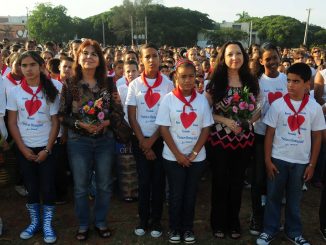
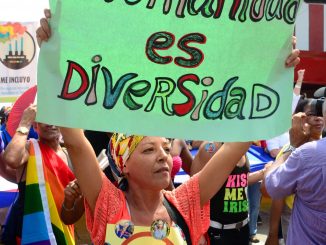
Afro-Cuban women denounced the foreign backing, such as NED funding, of the November 15 protests during the press conference of opposition leader Yunior García. Photo: Manolo De Los Santos

U.S. Senator Marco Rubio (R-FL) appears to be obsessed with Cuba. Every few days he takes to social media or makes remarks to the press about his desire to overthrow the Cuban Revolution. In recent months, Rubio has played a key role in drumming up support for anti-government protests in Cuba. On September 23, 2021, for instance, Rubio tweeted, “The brave people of Cuba lost their fear of protesting against the dictatorship that represses them. Holguín raises its voice against tyranny.” Rubio included an article about the Cuban town of Holguín in his tweet, where “a group of Cuban citizens” are planning to hold a “march against violence” on November 20. This article appeared in Diario de Cuba, a news site based in Miami, Florida, which received substantial funding from the National Endowment for Democracy (NED) from 2016 to 2019, an independent nonprofit that is largely funded by “the U.S. Congress.”

A quick study of the Diario de Cuba website reveals that it regularly publishes news relating to Marco Rubio’s views against the Cuban government. According to the Diario de Cuba article shared by Rubio on the November 20 march, the initiative has been promoted by a group called Archipiélago that proposes to carry out such peaceful demonstrations throughout Cuba. Rubio has extended his support for the march and on September 29 tweeted about a request by the citizens of Guantánamo seeking similar permission to hold a march on November 20. In his tweet, he shared an article from the news site CiberCuba, which is operated from Florida and Spain. There are several other news sites reporting on Cuba that are funded by the United States government and by foundations like the Open Society and NED, including ADN Cuba, Cubanos por el Mundo, Cubita NOW, CubaNet, El Estornudo, Periodismo de Barrio, Tremenda Nota, El Toque, and YucaByte.

A wide range of these U.S. government-funded websites and politicians such as Rubio have been leading the propaganda to support more protests in Cuba. On October 5, the U.S. administration of President Joe Biden also provided support to this agenda. The U.S. Assistant Secretary of State for Western Hemisphere Brian Nichols tweeted, “The fight for a free press and free expression continues in Cuba.” Meanwhile, during an event hosted by Georgetown Americas Institute, Juan Gonzalez, the senior director for the Western Hemisphere at the National Security Council, criticized the Cuban government for arresting artists and protesters. “[W]hen you put artists in jail for singing and for demanding freedom, there’s something wrong with you,” he said.

November 15

On October 9, the U.S. Embassy in Havana issued a statement that criticized the Cuban government’s decision “to hold military exercises throughout the country on November 18 and 19, ending on November 20 with National Defense Day,” calling it “a blatant attempt to intimidate Cubans.” The Cuban government holds this regular exercise to prepare its 11 million citizens for multiple scenarios that range from a possible U.S. invasion to natural disasters. Normally military personnel, the civil defense forces, and members of the general population participate.

To counter this announcement, Archipiélago announced on its Facebook page that the march would now be moved to November 15 (from November 20), the day Cuban authorities are expected to open its border to tourism. Meanwhile, several U.S. government officials and U.S. elected officials gave their support to what is now being called the 15N March.

The first wave of support came from the U.S. elected officials—most of them children of Cuban exiles—who have publicly committed themselves to overthrowing the Cuban Revolution. On October 10, Florida Congresswoman María Elvira Salazar gave her support for the 15N March. The Biden administration, she told the host of a news program on a Miami television channel, must provide Cuban protesters with clandestine internet access. Two days later, on October 12, Senator Rubio criticized the Cuban government for censoring news about the march, while on October 15 Florida Congressman Carlos Giménez, the child of Cuban parents who were landowners before 1959, also tweeted in support of the march. Giménez included an article from the Hill in his tweet that referred to 15N as a “civil liberties protest.” Florida’s other senator, Rick Scott, joined Rubio in tweeting that the U.S. government “can’t sit on the sidelines during this fight for freedom in Cuba.” Scott has introduced a bill in the Senate to increase economic sanctions on Cuba. Meanwhile, the Cuban government denied permission to Archipiélago to hold the march on November 15.

Soon after, on October 16, the U.S. State Department published a statement that condemned the Cuban government’s decision to “deny permission for peaceful protests.” U.S. State Department spokesperson Ned Price tweeted on October 16 about the U.S. support for “peaceful assembly” by the Cuban people, which was retweeted by the U.S. Embassy in Havana on the same day. On October 17, Nichols also tweeted about the Cuban denial for the 15N protest. This was retweeted by the U.S. Embassy in Havana and by Bradley Freden, interim U.S. permanent representative to the Organization of American States.

On October 20, Nichols shared a Human Rights Watch report on the July protests in Cuba to once more criticize the government for preventing peaceful marches. Two days later, on October 22, Gonzalez warned that the U.S. would have to take action if Cuba does not allow the 15N protest to take place.

The atmosphere is charged. The U.S. government and right-wing Cubans who are in the U.S. Congress have tried to define the terrain for events in mid-November in Cuba. They will ramp up pressure to overthrow the government.

Arrange an accident

In April 2021, the National Security Archive declassified the U.S. Central Intelligence Agency top-secret documents about Cuba. These documents showed that in July 1960, the U.S. government planned to assassinate Raúl Castro by paying a Cubana Airlines pilot to crash his plane. High-level CIA officials who were part of the agency at the time (former CIA Deputy Director of Plans Tracy Barnes, former CIA head of the Western Hemisphere Division J.C. King and a former CIA officer in Cuba William J. Murray) worked with the Cuban pilot (José Raul Martínez) to ensure a “fatal accident” that would lead to the death of Raúl Castro. The pilot, however, never found the “opportunity” to carry out such an accident.

The attempt on Raúl Castro’s life is one of many projects by the U.S. government to overthrow the Cuban Revolution, including 638 attempts to assassinate Fidel Castro and the invasion at the Bay of Pigs in 1961.

Reading the CIA documents from 1960 onward, most of which are available in the CIA reading room, shows how cliched—and yet dangerous—the attempts to overthrow the Cuban Revolution by the U.S. government have been. The buildup to 15N bears all the marks of this history, one ghoulish plot both cooked up in and executed by Washington and Miami.

Manolo De Los Santos is a researcher and a political activist. For 10 years, he worked in the organization of solidarity and education programs to challenge the United States’ regime of illegal sanctions and blockades. Based out of Cuba for many years, Manolo has worked toward building international networks of people’s movements and organizations. In 2018, he became the founding director of the People’s Forum in New York City, a movement incubator for working-class communities to build unity across historic lines of division at home and abroad. He also collaborates as a researcher with Tricontinental: Institute for Social Research and is a Globetrotter/Peoples Dispatch fellow. He is a co-editor of Comrade of the Revolution, available from 1804 Books and LeftWord Books.

Vijay Prashad is an Indian historian, editor and journalist. He is a writing fellow and chief correspondent at Globetrotter. He is the chief editor of LeftWord Books and the director of Tricontinental: Institute for Social Research. He is a senior non-resident fellow at Chongyang Institute for Financial Studies, Renmin University of China. He has written more than 20 books, including The Darker Nations, The Poorer Nations, and Washington Bullets, with an introduction by Evo Morales Ayma. He is a co-editor of Comrade of the Revolution, available from 1804 Books and LeftWord Books.

This article was produced by Globetrotter.

Strugglelalucha256


For the sake of global health: USA, stop lying about Cuba!

Oct. 8 — Today a People’s Peace Prize was awarded to Cuba’s Henry Reeve International Medical Brigade — not the Nobel Peace Prize, although more than 100 organizations and 40,000 individuals from the U.S. alone supported the Henry Reeve Brigade’s nomination. 

As the global community stumbled under the coronavirus assault, Cuba’s army of whitecoats rushed to hot spots when called, not shirking the danger. It’s nothing new for them. In 2014, 10,000 Cuban medical professionals volunteered to go to Liberia and Sierra Leone to fight terrifyingly deadly ebola in West Africa.

In 2017, the Pan American Health Organization (PAHO) recognized the Henry Reeve Brigade with its prestigious Dr. Lee Jong-wook Memorial Prize for Public Health at a World Health Assembly (WHA) ceremony. 

The PAHO press release says it all:

“The Henry Reeve International Medical Brigade has ‘spread a message of hope throughout the world,’ said the award presenter, John Linto, president of the Korean Foundation for International Health Care (KOFIH).  Linto explained that the brigade’s 7,400 voluntary healthcare workers have treated more than 3.5 million people in 21 countries ravaged by many of the world’s worst natural disasters and epidemics throughout the past decade. 

“He added that an estimated 80,000 lives have been saved as a direct result of the Brigade’s front-line emergency medical treatments to patients in these countries.” 

Cuba’s Henry Reeve Brigade was formed in 2005 from more than 1,500 fully-equipped doctors assembled to aid the people of New Orleans, who were displaced, suffering and dying in the wake of Hurricane Katrina. 

Named after a young U.S. Civil War veteran who joined Cuba’s war of liberation and died fighting there, the brigade was rebuffed by President George W. Bush. But many of those same doctors then traveled to the snowy hills of the Himalayas to treat earthquake survivors in Pakistan.

Cuba’s global struggle against COVID

Fast forward to 2021 and the coronavirus pandemic. Suddenly these same internationalist heroes are widely slandered by the U.S. State Department. Intentionally coded terms like “human trafficking” were used to create a negative initial reaction. But according to the standard applied to Cuba by the U.S. State Department, the biggest human trafficker is capitalism itself.

Countries that need more doctors and can afford to do so pay Cuba for medical or other professional services. The Cuban workers are paid for their international work, and they also receive their regular pay at home. Countries that can’t afford to pay still get help.

Yes, the total contract price may be more than is paid to the doctors, but it doesn’t go into the pocket of a billionaire. Instead, the additional money goes for the public good, to provide free healthcare for all the Cuban people. 

U.S. slander of the Henry Reeve Brigade and other economic interference is part of a regime-change plan to create unbearable hardship for the Cuban people, in the vain hope they will turn against their government. It has been an acknowledged plan since April 6, 1960, in the Mallory-Rubottom State Department memo. And it is cynically still being used, as demonstrated by U.S. involvement in the anti-Cuban government protests of July 11, 2021.

Even in a global medical crisis, the Trump and Biden administrations continue the anti-Cuba “maximum pressure” campaign to intentionally hurt Cuban families on both sides of the Florida straits. 

But more than that: the U.S. financial stranglehold has prevented Cuba from accessing raw materials to produce two of the five vaccine candidates developed by Cuban scientists. Slowing the vaccination of the Cuban people is biological warfare, using the coronavirus as a weapon.

On June 23 at the United Nations, the world voted for the 29th time for the U.S. to end its economic, financial and commercial blockade on Cuba. As the U.S. angled to use “humanitarian aid” as a knife against Cuba, other countries — including Mexico, Argentina and China — sent personal protective equipment, food and medicine. Supporters around the world united to send solidarity syringes to let Cuba live. 

Cuba’s vaccination program is moving forward, now including children as young as 2. Cuba is on target for 100% vaccination by the end of this year. Infection and death rates are declining. 

Hope for Global South

Cuba’s vaccines hold hope for the Global South, particularly Africa. According to Our World in Data, only 2.4% of people in low-income countries have been vaccinated. 

In March, Cuba and Zimbabwe announced construction of a state-of-the-art pharmaceutical production plant in that blockaded southern African country. 

Reuters reported Oct. 7 that Moderna has announced plans to build a plant in Africa. However, “Nkengasong, director of the Africa Centres for Disease Control and Prevention, said he had not seen the Moderna statement and the company had not consulted with him.

“At a news conference, he welcomed any efforts to address the continent’s medium-to-long term needs, but said Moderna’s plans would not solve its problems securing COVID-19 vaccine doses now.”

The World Health Organization continued its criticism of vaccine hoarding by the imperialist countries, reported CNBC Sept. 7: “‘This is not just unfair, it’s not just immoral, it’s prolonging the pandemic,’ said Maria Van Kerkhove, the WHO’s technical lead on COVID. ‘And it is resulting in people dying.’”

Kerkhove’s words echo the summary of the June 18-21 Summit for Vaccine Internationalism. Summit coordinator Varsha Gandikota-Nellutla said:

“A new international health order is in formation. It is desperately needed to overcome the vaccine apartheid which threatens our very survival, calls the South’s sovereignty into question and risks further murderous mutations of this virus.”

At that summit, “Cuba committed to not only open collaboration but affordable prices, with Dr. Regla Pardo, Cuba’s vice minister for health, telling the summit: ‘Cuban vaccines will be affordable and will benefit those most in need.’” 

This raises an interesting question. Is the blockade of Cuba also an international weapon to expand Big Pharma profits from COVID-19 vaccines? 

It’s happened before. In 2001, BBC reported that Cuba announced it would make generic forms of patented HIV/AIDS drugs, but the move was being challenged before the World Trade Organization by “some developed countries and large pharmaceutical companies.” 

It is in the interest of the world’s people to #unblockCuba, so #USAstopLying!

Strugglelalucha256


Cuba rejects Biden’s cynicism at the U.N.

U.S. President Joe Biden did it again. This Tuesday, he took the podium at the United Nations General Assembly to label Cuba and other progressive nations as authoritarian and inconsequential to the needs of their people in an attempt to justify the onslaught of sanctions that Washington maintains against the island.

In his speech, he did not mention the economic and social repercussions that the blockade is having on Cuba. Nor did he say anything about the food insecurity faced by the Cuban people due to the obstacles imposed by the White House, which hinder the Caribbean country’s access to basic goods.

But the island did not remain silent. “With what morals does Biden stand up in front of everyone to humiliate Cuba? The U.S. ran away from the swamp that its military created in Afghanistan for 20 years. And now its president pretends to get rid of the thorn of defeat by threatening Cuba and Venezuela in his cynical speech,” Cuban President Miguel Diaz-Canel wrote on Twitter.

The attack on Cuba, Venezuela, Nicaragua, Iran, and other countries which Biden is hostile to, is another attempt to score points in his favor, while his people are losing hope in any gain of popularity. This trend continues downward especially after the horrific scene this past weekend of federal agents on horses viciously attacked desperate Haitian immigrants on the Texas border; a scene reminiscent of the racist brutality that took place on slave plantations of the U.S. South.

“What should we call his attempt to establish a single universal political model? And what should we call the blockade, which was strengthened amid the coronavirus pandemic?” questioned the Cuban head of state.

“Biden is making a serious mistake by trying to separate the world from those who do not submit to his hegemony and defend with dignity their sovereign right to self-determination,” Cuba’s Foreign Affairs Minister Bruno Rodriguez reaffirmed.

After spouting these blasphemies in New York, the White House occupant flew to Washington to attend the summit he called to create a global strategy to contain the COVID-19 pandemic. Local human rights organizations, experts, and countries friendly to Cuba question how could such cynicism be possible.

How can he call for a global meeting to halt the pandemic while the U.S. is economically suffocating other nations that are struggling alone against the disease’s upsurge?

We have to go big, the president said during the opening of the virtual event while assuring that Washington will donate 500 million Pfizer-BioNTech vaccines to low-income countries starting in January 2022. Going big? 500 million doses might seem like a lot but in the real scope of this pandemic, according to the journal Nature, is that it will take 11 billion doses to vaccinate 70% of the world’s population.

However, Biden cynically failed to mention that he will send only 300 million injections out of the total of 1.1 billion doses he promised to donate to low-income countries before next December, The New York Times explained. This revelation occurred amid world wide criticism against his administration for its weak commitment to global vaccination.

The Biden administration’s attitude reaffirms what Díaz-Canel expressed during the High-Level Meeting of the United Nations General Assembly on Wednesday.

“Six years ago, almost all the world leaders committed ourselves to leave no one behind, in the common purpose of complying by 2030 with the so-called Sustainable Development Goals. But let the truth be told: millions of human beings are still unprotected,” the Cuban leader said.

Washington does not care about the underprivileged people nor the low-income countries. We are facing a more camouflaged version of former President Donald Trump and his America First policy. For Biden, defending the policy and keeping his administration afloat in the crossfire caused by his erratic steps is stronger than logic.

In the face of this reality, Cuba does not relent in its fundamental purpose of helping the world achieve full social justice.

“We the revolutionaries are optimists and seek to find ways out of even in the worst scenarios because we believe in the human being. Building the World we dream of is a mammoth task, but it is possible if we renounce selfishness. Let’s work together to transform the current unjust international order into a more just, democratic, and equitable one, in which, finally, no one is left behind,” Díaz-Canel concluded.

Source: Resumen Latinoamericano – English

Strugglelalucha256


Statement by president of the Republic of Cuba, Miguel Mario Díaz-Canel Bermúdez, at the General Debate of the Seventy-Sixth Regular Session of the United Nations General Assembly

Statement by H.E. Mr. Miguel Mario Díaz-Canel Bermúdez, first secretary of the Central Committee of the Communist Party of Cuba and president of the Republic, at the General Debate of the Seventy-Sixth Regular Session of the United Nations General Assembly. September 23rd, 2021.

Mr. Secretary General;

Mr. President;

We are living uncertain times. Under the demolishing impact of a pandemic that has worsened structural inequities and the global crisis, the role of multilateralism and the United Nations becomes ever more important. And international cooperation has been insufficient.

The implementation of neo-liberal formulas for decades has been reducing States’ capabilities to meet the needs of their populations.

The most vulnerable have been left unprotected, while rich nations, the elites and the pharmaceutical transnational corporations have continued to profit.

Not only it is urgent that we unite our wills and pool our efforts for the wellbeing of humanity. It is morally imperative

More than 4.5 million people have died because of the pandemic, which has worsened the living conditions in this planet. Its sequels and impact on societies today are incalculable, but it is already known that they will not be ephemeral.

It has been so pointed out by the “2021 Sustainable Development Goals Report”, while according to the International Labor Organization forecasts, there will be 205 million people unemployed in the world by 2022.

It is widely believed that the sustainable development goal of eradicating poverty by 2030, by which date the global poverty rate is projected to be 7 per cent, or around 600 million people, is already seriously compromised.

In the midst of this bleak prospect, Covid-19 vaccines have emerged as a hope. In August of 2021, more than 5 billion doses had been administered globally;  however, more than 80 per cent of them were applied in middle or high income countries, even when they account for much less than one half of the world’s population.

Hundreds of millions of persons in low-income countries are still waiting to receive their first dose and cannot even estimate when or if they will ever receive it.

At the same time, it is hard to believe that the world’s military budget in the year 2020 amounted to almost 2 trillion USD.

How many lives would have been saved should those resources had been invested in health or the manufacturing and distribution of vaccines?

The possible answers to this question involve changing the paradigm and transforming the unequal and antidemocratic international order that subordinates the legitimate aspirations of millions of persons to the selfish attitudes and narrow interests of a minority becomes an imperative.

We will never tire of repeating that the squandering of natural resources and the irrational capitalist patterns of production and consumption, which depredate the environment and cause the climate change that jeopardizes the existence of the human species should cease.

There must be a collective effort; but developed countries, the main responsible for the current situation, which own all the resources that are needed, have the moral obligation to take responsibility.

It is necessary to struggle so that solidarity, cooperation and mutual respect prevail if we are to provide an effective response to the needs and aspirations of all peoples and preserve what is most valuable: human life and dignity.

Our peoples have the right to live in peace and security; they have the right to development, wellbeing and social justice. A revitalized, democratized and strengthened United Nations is called to play a key role in this effort.

Mr. President;

A dangerous international schism, permanently headed and instigated by the United States, is being promoted.

Through the pernicious use and abuse of economic coercive measures, which have become the instrument defining the foreign policy of the United States, the government of that country threatens, extorts and pressure sovereign States so that they speak and act against those it has identified as adversaries.

It forces its allies to create coalitions to overthrow legitimate governments; break trade agreements; abandon and prohibit certain technologies and adopt unjustified judicial measures against citizens from the countries that refuse to submit.

It often uses the term “international community” to refer to the small group of governments that tend to irretrievably follow Washington’s dictates. The rest of the countries, which account for the overwhelming majority of this Organization, seem to have no place in the “international community” definition advocated by the United States.

It is a kind of behavior associated to ideological and cultural intolerance, with a remarkable racist influence and hegemonic ambition purposes. It is neither possible nor acceptable to identify the right of a nation to economic and technological development as a threat; nor is it possible to question the right of every State to develop the political, economic, social and cultural system that has been sovereignly chosen by its people.

In short, today we are witnessing the implementation of unacceptable political practices in the international context that go against the universal commitment to uphold the Charter of the United Nations, including the sovereign right to self-determination. Independent and sovereign states are being driven under multiple pressures to force them to subordinate to the will of Washington and to an order based on its capricious rules.

Mr. President;

For more than 60 years, the US government has not ceased for a single minute in its attacks against Cuba. However, at this crucial and challenging moment for all nations, its aggressiveness exceeds all limits.

The most cruel and longest-lasting economic, commercial and financial blockade ever applied against any nation, has been opportunistically and criminally tightened during the pandemic; and the current democratic administration maintains unchanged the 243 coercive measures adopted by the Donald Trump administration, including Cuba’s inclusion in the spurious and immoral list of countries allegedly sponsoring terrorism

It is in this context that an Unconventional War is launched against our country, to which the US Government has allocated, in a public and notorious manner, millions through manipulation campaigns and lies, with the use of the new information technologies and other digital platforms, in order to portray, internally and externally, an absolutely false image of the Cuban reality, sow confusion, destabilize and discredit the country and vindicate the ‘change of regime’ doctrine.

They have done everything to erase the Cuban Revolution from the political map to the world. They accept no alternatives to the model they conceive for their own backyard.

Their plan is perverse and incompatible (as) with the democracy and freedom they advocate.

But our enemies must be clear that we will not give away the Homeland and the Revolution that several generations of patriots bequeathed to us by standing their ground. Today I would like to reiterate before the respectable and real community of nations that every year votes almost unanimously against the blockade, what Army General Raúl Castro expressed some years ago: “…Cuba is not afraid of lies, nor does it give in to pressures, conditions or impositions, wherever these may come from…”

Mr. President;

We are not daunted by the colossal challenges. We will continue to create for Cuba.

We offer selfless solidarity to those who need our support and we also gratefully receive it from friendly governments and peoples and the Cuban community abroad. I would like to take this opportunity to thank you all for your support at this juncture, which dignifies humanity values and unconditional international cooperation without any interference.

At the same time, in response to the requests received and guided by its profound fraternal and humanistic vocation, Cuba has sent more than 4 900 cooperation workers, organized into 57 medical brigades, to 40 countries and territories affected by the COVID-19 pandemic.

Our dedicated health workers have not had a minute of rest in the struggle against the pandemic inside and outside Cuba.

They are the same who took to the streets to assist the brother people of Haiti after the devastating earthquake that shook that country hardly a few weeks ago. Those who travel from the most remote places to a Cuban province go, without dusting off the dust of the road, to deliver their expertise and knowledge to the mission of saving lives.

They are much more than everyday heroes; they are the pride of our nation and a symbol of its vocation for justice. Dozens of personalities and thousands of people have signed their candidacy for the Nobel Peace Prize.

We also take pride in the Cuban scientific community which, despite huge scarcities, created three vaccines and two candidate vaccines against the COVID-19 pandemic. They represent the realization of the idea expressed by Commander in Chief of the Cuban Revolution in 1960, who asserted that the future of our homeland must necessarily be a future of men and women of science.

Thanks to the support of our men and women of science and the health staff, during the first 10 days of this month, more than 15.8 million doses of the vaccines Abdala, Soberana 02 and Soberana Plus have been administered; and 37.8 per cent of the Cuban population is fully vaccinated.

We expect to achieve full immunization by the end of 2021, which will make it possible for us to advance in the struggle against the new outbreak of the pandemic.

Mr. President;

We ratify our aspiration to achieve the full independence of Our America and a socially and economically integrated Latin American and Caribbean region, capable of living up to the commitment established in the Proclamation of Latin America and the Caribbean as a Zone of Peace, in the face of the attempts to re-impose the Monroe Doctrine and neo-colonial domination.

We are opposed to every attempt to destabilize and subvert the constitutional order and the civic and military unity and destroy the work that was initiated by Commander Hugo Chávez Frías and continued by President Nicolás Maduro Moros in favor of the Venezuelan people.

We reiterate that the Bolivarian Republic of Venezuela will always be able to count on Cuba’s solidarity.

We ratify our firm support to the brother people of Nicaragua and its National Reconciliation and Unity Government, led by Commander Daniel Ortega, who are courageously and proudly defending the achievements attained against the threats and interventionist actions of the US government.

We support the Caribbean nations’ claim for fair reparations for the horrors caused by slavery and slave trade.  We likewise support their right to a just, special and differentiated treatment, which is indispensable to meet the challenges resulting from climate change, natural disasters, the unjust international financial system and the difficult conditions imposed by the COVID-19 pandemic.

We reaffirm that the brother people of Puerto Rico should be free and independent after more than a century of submission to colonial dominance.

We stand in solidarity with the Republic of Argentina in its just claim for its sovereign rights over the Malvinas, South Georgia and South Sandwich Islands and the surrounding maritime areas.

We reiterate our commitment to peace in Colombia.  We are convinced that a political solution and a dialogue between the parties is the appropriate way to achieve it.

We also call for an end to foreign interference in Syria and full respect for its sovereignty and territorial integrity, while we support the search for a peaceful and negotiated solution to the situation imposed on that sister nation.

We call for a just, comprehensive, all-encompassing and lasting solution to the Middle East conflict, which includes the end of the Israeli occupation of the usurped Palestinian territories and the exercise of the inalienable right of the Palestinian people to build its own State within the pre-1967 borders and with East Jerusalem as its capital.

We condemn the unilateral coercive measures imposed against the Islamic Republic of Iran.

We reaffirm our unswerving solidarity with the Saharan people.

We strongly condemn the unilateral and unjust sanctions against the Democratic People’s Republic of Korea.

We reiterate our unshakable support to the “one China” principle and oppose any attempt to harm the sovereignty and territorial integrity of the People’s Republic of China, as well as any interference in its internal affairs.

We reject the attempts to expand NATO’s presence up to the Russian borders; the interference in Russia’s affairs with regard to its sovereignty and the imposition of unilateral and unjust sanctions against that country.

We call for an end to foreign interference in the internal affairs of the Republic of Belarus and reiterate our solidarity with President Alexander Lukashenko and the brother people of Belarus.

The United Nations cannot ignore the lessons learned in Afghanistan. It took two decades of occupation, a toll of thousands of deadly casualties, 10 million displaced and billions of dollars in costs – which turn into profits for the military-industrial complex – to reach the conclusion that terrorism cannot be prevented or fought with bombs; that occupation only leads to destruction and that no country has the right to impose its will on sovereign nations. Afghanistan is not an isolated case.

It became obvious that wherever the United States intervenes, instability, death and hardships increase, leaving behind long-lasting scars.

Mr. President;

We ratify Cuba’s determination to continue speaking the truth in a transparent way, however much this might be upsetting to some; defending the principles and values we believe in; supporting just causes; confronting violations as much as we have confronted foreign aggressions, colonialism, racism and apartheid and struggling ceaselessly for the greatest possible justice, prosperity and development of our peoples, who deserve a better world.

Thank you, very much.

Source: Granma


Strugglelalucha256


The money that never arrives in Cuba

With the money she earns cleaning houses in the morning and an office at night, Virgen Elena Pupo, a 47-year-old Cuban migrant, has managed to raise her family in Washington, D.C., but has not been able to help her parents in Holguín, Cuba. She is separated from her parents by more than 1,246 miles. In Cuba’s eastern region, Holguín has been hit hard by an increase in COVID-19 cases, but Pupo cannot visit or send money to her parents due to the restrictions on flights and remittances from the United States as a result of former U.S. President Donald Trump’s policies that President Joe Biden has continued.

On October 27, 2020, a week before the U.S. presidential elections took place on November 3, Trump issued his final sanction against the island. Trump included Cuban financial company Fincimex, Western Union’s main partner in the country, in the Cuban Restricted List. The pretext was that it belongs to the Cuban business corporation, Grupo de Administración Empresarial S.A.

This measure cut off the channels for sending remittances to Cuba, and Pupo’s elderly parents have not been able to receive any help amid the pandemic as a result of this move.

Fincimex issued a statement on August 27, 2021, announcing delays in the delivery of remittances that arrive in Cuba from third countries due to the difficulty of finding financial institutions willing to authorize operations. The inclusion of this company in the list of restricted entities by the U.S. Treasury Department “continues to generate fears in the international banking sector about accepting operations directed to… [Fincimex] and tendencies to limit the scope of these transactions,” said the Fincimex statement.

The U.S. policy relating to remittances goes against all logic. Remittances have come to the rescue of families affected by the coronavirus all over the world. According to the World Bank, money sent by migrants to their families in “low- and middle-income countries surpassed the sum of FDI [foreign direct investment] ($259 billion) and overseas development assistance ($179 billion) in 2020.” For example, remittances grew historically in Mexico in the first six months of 2021, as La Jornada recently reported. They reached $23.6 million, which is 22 percent more than the remittances received during the same period in 2020.

“As COVID-19 still devastates families around the world, remittances continue to provide a critical lifeline for the poor and vulnerable,” said Michal Rutkowski, global director of the Social Protection and Jobs Global Practice at the World Bank. The regular remittances that poor Latin American migrants send to their families have become vital to many of the region’s economies. Generally, it’s the working poor who send small sums of money, sometimes up to eight times a year, usually sending more money than they earn during the year. For years, remittances have been one of Mexico’s main sources of foreign exchange, and remittances form close to or more than 20 percent of the gross domestic product of Honduras, El Salvador and other countries in Central America. They protect millions of people. But why do migrants do it? Why do they make sacrifices and send money back to their home countries? Surveys say that the explanation for this grand gesture of solidarity, with enormous macroeconomic impact, lies above all in supporting the institution of family. Migrants send money out of moral inspiration and loyalty to their parents, siblings, children, and nieces and nephews.

In a 2006 study on remittances and their imprint on the Cuban family, researcher Edel Fresneda Camacho recognized that this type of aid is not intended for productive investment. “It constitutes an important source of income for the recipient families, [for] their consumption and saving capacity, and implies an improvement in living conditions,” which in the case of Cuba includes the possibility of investing in a small private business.

Camacho and other researchers have given an account of the manipulative forays of the U.S. government on this front. In the 1990s, during the crisis known in Cuba as the “Special Period,” the United States reinforced the economic siege. The former U.S. President Bill Clinton prohibited remittances from August 1994 to 1998 except under strictly humanitarian conditions: illness or in cases of people with official immigration permission. Bush imposed even more cruel restrictions, allowing only visits to the island once every three years if the person visiting had very close relatives in Cuba—aunts, uncles, and cousins ​​were not considered “family.”

Even then, remittances managed to continue reaching the island. That is, until now. Without Western Union offices, without the possibility of shipments by DHL, with banks being intimidated and flights being suspended to all provinces, except for those very limited to Havana, Pupo can only hope that her elderly parents can survive the pandemic without any help from her. And she prays every day for common sense to prevail among those making policies in the White House, which is located just two blocks away from the office she cleans at night with the stubborn will to keep her loved ones afloat.

This article was produced by Globetrotter. Rosa Miriam Elizalde is a Cuban journalist and founder of the site Cubadebate. She is vice president of both the Union of Cuban Journalists (UPEC) and the Latin American Federation of Journalists (FELAP). She has written and co-written several books including Jineteros en la Habana and Our Chavez. She has received the Juan Gualberto Gómez National Prize for Journalism on multiple occasions for her outstanding work. She is currently a weekly columnist for La Jornada of Mexico City.

Strugglelalucha256


Cuba boosts its immunization campaign with the support of Chinese vaccines

The last Sundays of August are usually days of joy in Cuba due to the contagious excitement of children returning to school and the hustle and bustle of parents to get uniforms, backpacks, notebooks, and snacks ready for the big day.

But this August 29, the reality was different. The island woke up to another six thousand people infected with COVID-19 and 77 deaths due to the disease.

Students did not go back to school this time, and neither did they after last year’s summer vacations in many parts of the country. Today, it is riskier than ever.

However, it was not all bad news for Cubans at the end of August. On Sunday, Cienfuegos, one of the most affected provinces by the pandemic, began to be immunized against the deadly virus with a program that includes the using of Chinese vaccine Sinopharm and the Cuban Soberana Plus vaccine.

“Hope reaches the arms of the people of Cienfuegos” is the headline appearing in local outlets, alluding to the arrival in the territory of the donations made to the island by the Institute of Biological Products of Beijing, China.

“This immunization program has brought us relief after weeks of a hard fight against COVID-19 in the province, which is amid an uncertain epidemiological scenario,” journalist Robert Alfonso Lara reported for 5 de Septiembre newspaper.

In seven out of the eight Cienfuegos’ municipalities, hundreds of immunization centers were set up to immunize all the residents who are over 19 years old.

“We were waiting for this news with anxious anticipation. Everything was organized quickly by local authorities, medical staff, and social workers. If everything goes well, in the first days of October, almost 74 percent of our population will be immunized against the virus,” said Oskeimy Rodríguez, a health official in the province.

For pharmaceutical scientist Dagmar García, this is not a clinical trial but a new vaccination strategy to prompt people’s immunity. This decision, which took place amid an unprecedented economic crisis caused by the US blockade against Cuba that includes placing impediments for the island to access materials needed to produce and deliver the vaccines, fills people with confidence.

The Chinese vaccine is the third most widely used immunogen worldwide. The decision to combine it with Soberana Plus resulted from weeks of research and reviews by the Cuban Ministry of Public Health which concluded that the efficacy of the vaccine combo is above 90%.

“Vaccines have no flag nor nationality when it comes to saving lives. We are going through the worst moment of the pandemic. This strategy will help us overcome the health crisis. That is why I’ll give my arm to receive the Sinopharm doses,” said Yerovia Tirse, a resident of the Cruces municipality.

The news came while the world faces an exponential increase in the number of infections caused by the Delta variant of Sars-coV-2.

Studies show that the new mutation, which has put in check the health systems of several countries in the region, including some states in the US, does not escape the immunity induced by the vaccines known in the world today.

However, “Delta decreases the effectiveness levels of these vaccines and causes many immunized people to become ill. This new strategy will show us what happens when we combine two immunizers. We believe that the response to infection will be more effective,” Dagmar Garcia.

Since January 18, 2021, some 27,000 Cienfuegos students left school not to be back in September, something unprecedented in the province’s history. Today classrooms are empty, but it will not be for long. The return to face-to-face education is just around the corner, thanks to Soberana and Sinopharm, which together may open a new path to immunize millions of people around the world.

Source: Resumen Latinoamericano

Strugglelalucha256


Cuba: Is Joe Biden an Internet Liberator?

On Friday, July 16, on the White House lawn and before boarding the helicopter to his Camp David residence, Joe Biden told CNN that “disinformation on the networks is killing us.” In particular, the President of the United States was referring to the publications on the digital network Facebook against the vaccinations against COVID-19 and accused that company of doing nothing to prevent them.

Facebook is the same company that operates WhatsApp, and on both networks has spread not a few false news items related to the COVID-19 pandemic in Cuba. But if the President, the Foreign Minister or any other Cuban leader were to say what Biden said, the media and influencing device that his government finances against the island would immediately undertake the lynching of the author of such a phrase in the name of “freedom of expression.”

No matter if it is the “expression” of the old traditional media, those created in the Bush era, those emerged in the Obama era or in the Trump era, the participation in the disinformation war against Cuba is unanimous for those who claim plurality. From the UPI agency saying that the Bayamo “port” and the Habana Libre Hotel had been taken over by the invaders from Playa Giron to the “King, you know I am a biologist” at the beginning of the COVID-19 pandemic, the one who pays for disinformation and is still 90 miles north of Cuba.

However, all the digital social networking companies (Twitter, Facebook and Google) have spared no means to block Russian media accounts such as RT and Sputnik, and in the case of Google, even to temporarily remove them from internet searches. It is also a fact that many accounts of Cuban media, officials and journalists on Twitter have been blocked from the US especially in moments of political relevance. The same fate has recently befallen the account of the University Student Federation, which groups hundreds of thousands of young Cubans.

The organic links of these companies with the US special services and State Department are well documented by the Snowden and Wikileaks revelations, and reached a particular splendor in the two Obama terms during which Biden was Vice President. The Obama-Biden administration is pointed out as the one that has most persecuted whistleblowers in the United States, even greater than that of Richard Nixon, considered until then the most obsessive in that regard.

It was the alliance with the big technology companies that led the executive headed by the aforementioned Democratic duo to viciously persecute, to the point of suicide, the brilliant and very young computer scientist Aaron Swartz for becoming a leader in the free dissemination of knowledge on the Internet. Swartz, harassed by the FBI, was subjected to a federal prosecution, in which the government made him face 35 years in prison and a million dollar fine. His crime? Downloading a database of scientific research results funded with public money with the intention of releasing it on the internet for access by all interested parties. Unlike Biden, who talks about freedom and pursues it, Aaron was consistent: in 2008 he had published a manifesto denouncing “the private theft of public culture.”

There was no clemency from those who now claim to be concerned about Cubans’ access to information, and who conveniently use media figures to talk about freedom. It didn’t matter that Swartz, as a teenager, had contributed substantially to elements that are now commonplace for sharing information on the Internet, such as rss and Creative Commons, which have contributed much more to humanity than those who pay for songs and Molotov cocktails as part of a plan to unleash something that will contribute as much to the American national interest as to a bloodbath 90 miles from the United States.

The only freedom of interest to a government whose ministers were appointed by a banking corporation, as recorded in emails between Citibank and Barack Obama’s transition team leaked by Wikileaks, is the freedom to make money, and Aaron Swartz was a threat to that.

As Vice President, the current President of the United States did not lift a finger so that Cuba could access the internet through the several undersea fiber optic cables that pass within a few miles of its shores and which have remained off-limits to Cuban companies. Cuba had to finance a 1,062 km long connection, at a cost of 70 million dollars, extending from Camurí, near the port of La Guaira, in Venezuela, to Siboney beach, in Santiago de Cuba. Nor did he unblock the many blocked scientific and technological information sites for Cuban computer developers.

Eric Schmidt, someone who knows both Aaron Swartz and Biden well, visited Cuba in 2015 as CEO of Google. When he was at the University of Computer Science, where several students and professors expressed their complaints about not being able to access sites of his mega-company dedicated to software development. Schmidt said he would provide them with access “from the left”, as they say in Cuban, and a professor present replied, “we do not want to jump the fence, we want to enter through the door like everyone else”, and the U.S. executive promised to discuss it with his government, precisely the same government of which Biden was a member. What has happened since then until today is that the situation, far from improving, has worsened, but Joe Biden has pledged to give “uncensored Internet to Cuba” and for free!

Most likely by one more business for technology companies like the ones that lined their pockets with American taxpayers’ money, saying that a television that has never been seen in Havana would be seen. Biden calls Cuba a “failed state”, but there is nothing more failed than the US government’s 60-years of “creative” attempts to change the regime on the island. But sorry, yes there is something more failed, it’s the way Miami terrorists and extortionists have duped US governments over the same period.

Source: Resumen Latinoamericano – English

Strugglelalucha256


Cuba keeps achieving the impossible thanks to Fidel’s legacy

In 1969, Cuba achieved the impossible: the manufacture of the first micro-computer prototype on record in the Third World, the CID-201. That device, which did 25,000 sums per second and had a capacity of 4 kilowords -equal to 1024 words-, was a small step forward for science on the island.

Fidel (1926-2016) was the dreamer behind the creation of that minuscule creature — the rest of the machines used at the time were huge. Despite its technological limitations, it was mass-produced and used in companies, schools, and universities.

The idea arose during a visit to the University of Havana by Erwin Roy John, a pioneer in neurosciences in the U.S. During a long conversation with the eminent scientist, the Cuban leader’s anxiousness about the possibility of Cuba building its computer was noted on several occasions.

Roy John insisted that this would not be possible in Cuba for one reason that still rumbles: the U.S. blockade against the island. This policy applied almost immediately after the triumph of the Revolution in 1959 preventing Cubans from acquiring the necessary components to launch the project.

“The scientist proposed to the Chief of the Revolution a more modest and realistic plan: to produce calculators,” commented Dr. Jose Miyar Barruecos, alias Chomi, the revolutionary doctor, former Rector of the University of Havana, and Fidel’s secretary for over four decades.

This suggestion did not discourage Fidel, who secretly motivated a group of engineers from the then University City Jose Antonio Echeverria (CUJAE) to achieve the impossible.

The project’s engineers Luis Carrasco and Orlando Ramos traveled to Europe and Japan to purchase the components of the device that the commercial fence prevented them from importing.

Carrasco and Ramos gave shape and form to the CID-201 in just a few months. In 1970, engineer Rafael Valls developed software to allow a person to play endgame chess with the microcomputer. There were kings, rooks, bishops, and some pawns.

On April 18 of that year, the Chief of the Revolution confronted the CID-201. He spent over an hour battling with the machine and, as Fidel never accepted defeat, he only left it alone when he gave it checkmate, Chomi recounted.

With the CID-201, Cuba was ahead of the region in the technological world. Fidel overcame “the poor situation” in which the Latin American countries found themselves in amidst the information and Internet boom the rest of the world was experiencing.

“That brilliant world of knowledge and image exchange is still strange and forbidden to our countries,” the leader said in 1999 when the island had already created dozens of scientific centers, a minicomputer factory, and the Computer Palaces.

Twenty years later, his words still hold true. The Internet has an owner, the United States, and Washington uses it as a weapon of hate against the island.

This week, the U.S. State Department claimed once again that Cuba denies its citizens access to information and launched an amendment calling for “free access to the Internet in Cuba” through a fund to facilitate this “open and uncensored” service.

Cuban Foreign Affairs Minister Bruno Rodriguez condemned the new aggression, “which contributes to the lucrative business of the political-subversive machinery in Florida. The blockade is the fundamental obstacle to the Cuban people’s free and sovereign access to the Internet.”

In this scenario, Cuba will continue to achieve the impossible, as the young engineers of the CID-201 did in 1969. We will be independent, which does not mean only having a flag, an anthem, or a symbol. We are accustomed to working around the blockade to achieve our accomplishments. If it intensifies we will work harder.  “Independence relies on development, on technology, on science in today’s world. We will move towards that goal,” said Fidel, who would have been 95 years old today.

Source: Resumen Latinoamericano – English

Strugglelalucha256


The good people who will give internet to Cuba

GitHub, the largest free software platform in the world, has published an incomplete list of 60 computer programs, sites and services restricted for Cuba by the unreasonable U.S. blockade, which according to Senator Marco Rubio does not exist. The list includes everything from the most popular videoconferencing platform in these times of pandemic, Zoom, to most Google applications, such as Code, Cloud, Maps and Play Publics.

The list is partial because services blocked a few weeks ago, such as Wetransfer, which allows anyone who does not live in Cuba to transfer computer files over the Internet and which journalists used to send photos, audios or videos to our newsrooms, are not included. Wetransfer is a company based in Amsterdam, which suddenly decided to abide by U.S. laws and deny access to Cubans.

The paradox is that this is happening when the White House, always such good friends with those from the South, has focused on two axes of the same interference discourse: it will dialogue with the Cubans (meaning Miami) to decide what new sanctions it will impose on the island, and it has decided to provide Cuba with a “new free Internet infrastructure” to make us very happy.

The dialogue with (Miami) Cubans, who do not want to talk to Biden, for whom they did not vote for and still believe he stole the election from Donald Trump, are seen as an extravagance of U.S. foreign policy. David Brooks, correspondent of La Jornada newspaper in the U.S., referred a few days ago to Biden’s meeting with a small group of Cuban-Americans at the White House to hear opinions on what is happening on the island, although most of those present have not set foot on our archipelago in a long time. Senator Robert Menendez, for example, has only seen a Cuban palm tree in photographs, while businessman Emilio Estefan has not known for 58 years what the street lamp on the Morro de Santiago de Cuba, the land where he was born, looks like.

However, as Brooks states, experts in foreign policy and bilateral relations “have confirmed that the case of Cuba is unique, in which Washington, under both parties, consults with the diaspora of a country within the United States to elaborate policy towards that nation”.

The Internet is even stranger. Washington accuses the Cuban government of being the enemy of the Internet, but blocks applications commonly used anywhere on the planet. It promises a new infrastructure with stratospheric balloons and other surrealistic variants, but these days it has subjected Cuba to every possible variant of network information warfare and direct cyberwarfare.

Cuban users have seen an unprecedented increase in the deployment of fake news, photos and videos from junk sites in Florida, which are even replicated by transnational media companies. Videos from July 11 have been repeated ad infinitum as if they were new, a deceptive tactic to give the impression that the protests have continued until today, although the country is in total calm. The use of electronic gateways (VPN) is encouraged to circumvent the national public network and, in particular, the use of Psiphon, a technology developed and financed by the United States Agency for Global Media, Washington’s propaganda agency, is advertised.

Cuban media and institutional websites have received hundreds of denial of service attacks from U.S. soil, where, in addition, domain names have been registered with rude words that redirect to pages of the national network. And if that were not enough, we live under the harassment of cybertroops organized from Miami that use troll farms and robots to generate on Twitter and Facebook the perception of chaos in Cuba and insult and even threaten to kill the main leaders, journalists, artists and other public figures, as well as ordinary citizens who dare to criticize the riots, to call for common sense against the alleged military intervention or simply do not express explicit rejection of the Cuban government or join the fascism with lies, trash and gossip that floods the networks.

Source: Cubadebate, translation Resumen Latinoamericano – English

Strugglelalucha256


If the U.S. really cared about freedom in Cuba, it would end its punishing sanctions

The violent protests that erupted in Cuba in early July were the first serious social disturbances since the “Maleconazo” of 1994, 27 years ago. Both these periods were characterized by deep economic crises. I was living in Havana in the mid-90s and witnessed the conditions that triggered the uprising: empty food markets, shops and pharmacy shelves, regular electricity cuts, production and transport ground to a halt. Such were the consequences of the collapse of the socialist bloc, which accounted for about 90% of the island’s trade.

Betting on the collapse of Cuban socialism, the U.S. approved the Torricelli Act of 1992 and the Helms-Burton Act of 1996 to obstruct the island’s trade and financial relations with the rest of the world. Meanwhile, more sophisticated and multifaceted “regime change” programs were developed, from Clinton’s people-to-people programs to Bush’s Commission for a Free Cuba. From the mid-1990s to 2015, U.S. congress appropriated some $284 million to promote (capitalist) democracy.

The story of how, against the odds, the Cuban revolution survived the past three decades is the focus of my book. In some fields, like biotechnology and medical internationalism, it thrived. Since 2019, however, conditions reminiscent of the “special period” have been returning to Cuba, a direct result of U.S. sanctions. The Trump administration implemented 243 new coercive measures against Cuba, blocking its access to international trade, finance and investments at a time when foreign capital had been awarded a pivotal role in the island’s development strategy. The inevitable and intended result has been shortages of food, fuel, basic goods and medical supplies. Thus, while Cuba has Covid-19 vaccines, they cannot buy sufficient syringes to administer them, nor medical ventilators for their ICU units.

Strict sanitary restrictions, imposed by Cuban authorities in response to the pandemic, have impeded Cubans’ capacity to “resolver” (resolve problems through alternative channels), and to socialize. Covid cases keep rising, generating anxiety among Cubans, even though infection and death rates remain low relative to the region. In every Cuban household, people take turns to rise at dawn to join queues for basic goods. No one should be surprised that there is frustration and discontent.

Cuba’s critics blame the government for the daily hardships Cubans face, dismissing U.S. sanctions as an excuse. This is like blaming a person for not swimming well when they are chained to the ground. The U.S. blockade of Cuba is real. It is the longest and most extensive system of unilateral sanctions applied against any country in modern history. It affects every aspect of Cuban life.

At the UN general assembly on June 23, a total of 184 countries supported Cuba’s motion for the end of the U.S. blockade. It was the 29th year that Cuba’s vote had won. The U.S. representative, Rodney Hunter, claimed sanctions were “a legitimate way to achieve foreign policy, national security and other national and international objectives”. He also described them as “one set of tools in our broader effort towards Cuba”.

Another key tool in recent years has been social media. In 2018, Trump set up an internet taskforce to promote “the free and unregulated flow of information” to Cuba, just as the country expanded facilities enabling Cubans to access the internet via their phones. During this summer, the social media campaign, which sees Miami-based influencers and YouTubers encourage Cubans on the island to take to the streets, was ratcheted up. As spontaneous and authentic as this may seem, behind it lies U.S. funding and coordination.

On July 11, I was in Havana, watching the Euro finals at a Cuban home when the broadcast was interrupted by an announcement from the president, Miguel Díaz-Canel. He had been to San Antonio de los Banos, on the outskirts of the capital, where a protest had turned into a riot, with shops looted, police cars overturned and rocks thrown. Simultaneous protests had taken place in dozens of locations around the island. In Matanzas, where Covid-19 cases have soared, there was extensive destruction. Díaz-Canel ended the broadcast by calling for revolutionaries to take to the streets. Thousands of Cubans answered his call.

Meanwhile, the mayor of Miami asked Biden to consider airstrikes on Cuba, while there were half-baked plans for a naval flotilla from Florida. The international media depicted mass opposition to an incompetent government, peaceful protests violently repressed, and a regime in crisis. This narrative has counted on exaggerations and manipulations. Images have been shared in the press and social media purporting to show anti-government protests that have, in fact, been the opposite. Photos of protests in Egypt and sports celebrations in Argentina have been attributed to the Cuban protests of 11 July.

From the U.S., where violent protests and police killings happen with tragic regularity, and where a rightwing insurrection tried to overturn the 2020 election result, new president Joe Biden described Cuba as a “failed state”. By July 30 he had already imposed new sanctions, despite campaign promises to roll such sanctions back.

Since the July 11 protests, I have traveled throughout Havana for my work. The only significant protests I have seen in the capital have been those in support of the government, including a rally of 200,000 in Havana on July 17. The Cubans I speak to reject the violence and U.S. interference. They are confident that Cubans know how to swim, but they need the chains of the U.S. blockade to be cut.

Helen Yaffe is a senior lecturer in economic and social history at the University of Glasgow

Source: Resumen

Strugglelalucha256
https://www.struggle-la-lucha.org/cuba/page/27/