Struggle-La Lucha joins 24-hour marathon against U.S. blockade of Cuba

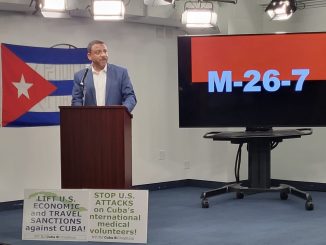
Struggle-La Lucha and the Socialist Unity Party based in the United States will join this weekend’s media marathon called by the Europe for Cuba and Europe for Cuba-Russia against the U.S. blockade on Cuba.

For 24 hours from April 2 to 3, media from around the world will broadcast a special uninterrupted program aimed at opposing the U.S. blockade of Cuba. People from around the world, those representing organizations large and small, will be saying: “Cuba, you are not alone! End the blockade!”

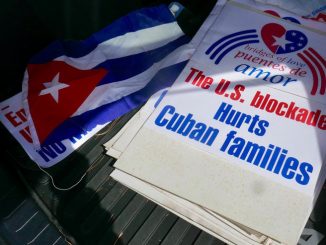
The U.S. blockade is now over six decades long. The tightening of the blockade during the COVID-19 pandemic is nothing short of criminal. The intention of these policies is to strangle the Cuban economy, create unbearable hardships for the Cuban people in an attempt to intervene, and overturn the right of the Cuban people to determine their own government.

Larger networks including teleSUR, Al Mayadeen, Cubavision International, HispanTV, Prensa Latina, Sputnik news agencies, along with radio stations Radio Rebelde, Radio del Sur, Radio Habana and others, will be participating.

The World Federation of Trade Unions and Latin American Network of Solidarity with Cuba are also supporting.

Struggle-La Lucha is proud to participate. You will see links on our website, Facebook page, Twitter and Telegram where you can access the program on April 2-3. The marathon begins on April 2 at 8 p.m. Eastern / 5 p.m. Pacific, and runs for 24 hours.

Watch here on YouTube: Europa X Cuba – Maratón Mediático contra el Bloqueo.

Strugglelalucha256


How socialist Cuba helped Ukrainian children

The United States Congress just cut $15.6 billion in coronavirus aid from a budget bill. It did so to ship nearly $14 billion in weapons and other war supplies to Ukraine. Other NATO countries have also sent billions of dollars in deadly arms.

But where was the U.S. government and its NATO allies when Ukrainians desperately needed medical help following the 1986 Chernobyl nuclear reactor disaster? 

These capitalist regimes didn’t do much as Ukrainians suffered and died from radiation poisoning. It was like President Bush letting Black and poor people drown and starve in New Orleans after Hurricane Katrina hit in 2005.

The April 26, 1986, Chernobyl tragedy occured as the Soviet Union was under increasing threat from the Reagan administration. In 1983 NATO staged the “Able Archer” exercises that ended with a simulated nuclear attack on the Soviet Union.

The year before Chernobyl, in a sharp turn to the right, Mikhail Gorbachev was elected General Secretary of the Communist Party. The country of 280 million people that defeated Hitler was starting to go down a swift slope towards the overthrow of its socialist system. 

The year after Chernobyl, Gosplan ― the agency that guided the Soviet Union’s planned socialist economy ― was dissolved. So was the socialist state’s control of its foreign trade that kept the capitalist world market at bay.

These reactionary measures unraveled the socialist economy that had been built by the working class through a dozen five-year plans. The first victim was the solidarity between different nationalities and peoples.

This friendship was forged by the 1917 socialist revolution that led to the world’s first and largest affirmative action program. It was further strengthened during World War II when 27 million Soviet people of a hundred ethnicities died saving the world from the Nazis.

Now it was everyone for themselves. Health care suffered as sectors became privatized.

Hundreds of thousands of Ukrainians, as well as Belarusians and Russians, fell ill from the Chernobyl meltdown and explosion. Many died. Most heartbreaking were the children who developed cancers and other diseases.

Fidel welcomes the children

Socialist Cuba stepped up to help. The small country treated 26,000 children from the former Soviet republics between 1990 and 2011. A large majority were Ukrainian.

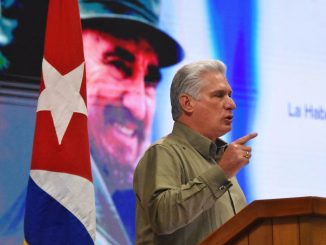
The first planeload of children arrived at Havana airport from the then existing Soviet Union on March 29, 1990. Even though it was late at night, Cuban President Fidel Castro Ruz was there. He sympathetically greeted each of the 139 children who came.

Fidel, the historical leader of the Cuban Revolution, described how this vast program came about: “This was a request from the Leninist Youth of Ukraine and later coordination with the authorities of Ukraine and the Soviet Union. We said ‘yes’ immediately and took all the necessary steps in the shortest time.

“I believe that we can give optimum attention to these children here. We have the necessary conditions and I hope that we can be as successful as possible.”

Tarará, a beautiful resort village on the eastern edge of Havana, was taken over to treat the children. The program lasted until Nov. 24, 2011.

During these 21 years, 26,114 children received care. The vast majority of children were saved. Over 21,000 were under 15 years old.

Thousands of surgeries were performed. The 170,000 clinical studies became an invaluable database on radiation-caused diseases in children. It was shared with the rest of the world.

No one was asked if they had insurance. In socialist Cuba health care is considered a human right ― not a commodity to make profits from like in the capitalist United States. 

Soon after the first children arrived Cuba was thrust into what it called a “special period.” More than two-thirds of the island country’s foreign trade was cut off as counter revolutions swept the Soviet Union and the socialist countries of Eastern Europe.

The U.S. continued trying to strangle the Cuban Revolution. It tightened its economic blockade with Congress passing the Helms-Burton bill.

Yet not a single Cuban hospital or school was closed. Cuba continued to treat Chernobyl survivors at no cost to their families.

Sacha’s story

Many of the sick children stayed at Tarará for 45 days. Others stayed longer, sometimes a year or more. That was the case of Olexandr Savchenko, nicknamed Sacha.

The young boy was from the Ukrainian village of Chernigov near Chernobyl. About a year after the explosion Sacha became sick.

In Cuba it was discovered he had a cancerous tumor. Chemotherapy is particularly rough for kids but Sacha pulled through. When the test results came back normal, meaning the cancer had disappeared, everyone around Sacha clapped.

Not every child won their battle with cancer. But the Cubans did everything they could.

Many of the children had skin diseases including alopecia, which results in the loss of all body hair. Here psychologists played a key role.

Children learned not to be ashamed of themselves. The friendships formed along with the beautiful beach were part of the remedy. 

Young women survivors would hold joint quinceañera celebrations of their fifteenth birthdays. Cuban translators became a vital connection between health workers and children.

A wonderful film about this humanitarian program is “Sacha, A Child of Chernobyl.” It can be seen on YouTube.

The film was directed by Cuban film-makers Roberto Chile and Maribel Acosta Damas and produced by the Argentine news agency Resumen Latinoamericano. Included are remarks by Her Excellency, Lianys Torres Rivera, the Cuban Ambassador to the United States.

The late Pan-African teacher and organizer Elombe Brath, a founder of the December 12th Movement, declared “When Africa called, Cuba answered.” 

Over 2,000 Cuban soldiers died fighting alongside their African comrades in Angola. Together they defeated the Nazi armies of apartheid South Africa.

Socialist Cuba also answered when Ukrainian children needed help. Many Ukrainians haven’t forgotten.

Strugglelalucha256


Cuba announces seminar to abolish U.S. bases and NATO

Friends in solidarity with Cuba are invited to come to Guantanamo for a two-day conference May 4 to 6 to abolish foreign U.S. military bases and the North Atlantic Treaty Organization (NATO), says the call by the Cuban Institute of Friendship with the Peoples and World Peace Council.

This VII International Seminar for Peace will demand “the end of the arms race that imperialism is developing together with its NATO allies, who with their eagerness to expand, and their propaganda and communication hysteria, place the world on the brink of a new global conflagration.”

At a moment when the United States seeks to add Colombia to the ranks of NATO, this conference will “reiterate the importance and full validity of the Proclamation of Latin America and the Caribbean as a Zone of Peace” approved by all the heads of state and government of the region who met at the Community of Latin American and Caribbean States 2014 Summit in Havana, Cuba.

Held in Guantanamo City in Cuba’s Guantanamo province, the conference program includes a visit to Caimanera, a small town on the edge of Guantanamo Bay in view of the U.S. military base illegally occupying Cuban territory. Delegates will meet with Caimanera residents in a social engagement hosted by the local Committee for Defense of the Revolution. 

“For 119 years the U.S. government has illegally maintained, against the will of the Cuban people and government, a naval base that has become a center of torture to prisoners in total violation of their human rights,” says the conference call. The demand to close the prison grows stronger each year, as prisoners who have been tortured so badly that no credible trial was possible after 20 years are finally released. 

But Guantanamo is more than a prison. A short video made by Resumen Latinoamericano exclaims: “All Guantanamo is Ours,” showing why the demand must also be “U.S. Out of Guantanamo.” Return that massive territory astride the mouth of an enormous, beautiful bay to the Cuban people!

More information about the seminar to abolish foreign bases and NATO can be found at ICAP’s website, SiempreConCuba.org, and will also be available in the near future through the National Network On Cuba (NNOC), the umbrella organization for U.S. activity in solidarity with Cuba.

The NNOC is organizing U.S. participation in the XV International Voluntary Work and Solidarity Brigade from April 24 to May 8. 

Strugglelalucha256


Honoring Alicia Jrapko on International Women’s Day

Here are my opening remarks at the International Tribute to Alicia on March 5. The link to the entire event can be found at the bottom of the page. 

On behalf of myself, Alicia’s three children and six grandchildren, we thank you for being here. After Alicia passed I expected that a lot of people would send their remembrance of her because being around and working with Alicia always made you feel like you were doing something positive and making some contribution towards a better world, one with less injustice, less racism and more human solidarity, it was an experience that people remembered. She was always tolerant and easy to work with and whether it was a long campaign or a short encounter her leadership style was attractive; always making people feel included and appreciated.

Alicia was a socialist, ..a Fidelista to be precise… but that didn’t get in the way of her rare ability to bring different political circles to work together for common cause, she once said, “The success of our efforts in the struggle to free the Cuban Five was based in the fact that we opened the door wide to work with all sorts of people some of whom I am not sure we can even call progressive”. Her sincerity always showed through making people’s defenses melt. Danny Glover told me that he could never figure out how to say no to Alicia.

But back to the response; what I didn’t expect was the avalanche of solidarity and appreciation that we have received and continue to receive from around the world….. Alicia always kept her focus on the objective; on the goals, and never ever looked for any accolades for her efforts, perhaps that is why she is getting so many now.

In all the projects and campaigns that she and I worked on we had an unwritten division of labor. We never started off trying to figure out who was going to be responsible for what, we just knew. Her office was on the kitchen table and mine here on the living room table and when we did need to figure something out we would leave the house and go walk the three miles around Lake Merritt in downtown Oakland.

Working on this tribute made me realize how little I actually knew about the depth of what Alicia did because of all the great things there were thousands of little things that went unnoticed. Alicia would of taken the lead on putting together an event like this and it’s made me think that you never really know a person until you’ve had to lift their load.

I know that there are many of you who would of liked to tell a story about Alicia today, but we have had to limit it to just a few of her closest collaborators. We hopefully are going to have a live event in the Bay Area in the not too distant future and one in Cuba when possible.

Having said that, of all the people that Alicia worked with none was closer than Graciela Ramirez, now the editor of Cuba en Resumen and the coordinator of the International Committee for Peace, Justice and Dignity in Havana. Both Alicia and Graciela were pushed into the struggle in Argentina during the US backed military dictatorship of their country in the 1970’s, and although they didn’t know each other at the time they could not have become closer sisters than they did… especially in the long campaign to free the Cuban 5,  the constant work to end the blockade of Cuba and establishing Resumen Latinoamericano in English.

So now in the spirit of International Women’s Day you will see in Graciela’s intervention how it was that these 2 powerful women became even stronger and more effective in the struggle by working together as one.

To watch the full tribute in English go to:

Source: Resumen

Strugglelalucha256


World Federation of Trade Unions supports initiative against blockade against Cuba

Paris, Feb 17 (Prensa Latina) — The World Federation of Trade Unions (WFTU) announced today its support to the media marathon called by the channel Europe for Cuba to denounce and condemn the blockade imposed by the United States on the island for more than 60 years.

The WFTU, the militant voice of more than 105 million workers worldwide, supports and participates in this initiative scheduled for April 2 and 3, said the organization’s Secretariat, in a communiqué shared with Prensa Latina by the European solidarity platform activated in October 2020.

In the document, the Federation recalled its traditional rejection of the economic, commercial and financial siege that Washington applies to the Caribbean country, a policy intensified in the midst of the Covid-19 pandemic.

Our union family denounced from the first moment the criminal blockade against Cuba, and through various militant actions organized throughout the planet, continues to demand its total lifting, it stressed.

The WFTU also repudiated the aggressions aimed at destabilizing the island, which it described as imperialist provocations.

On January 23, Europe for Cuba launched the call for 24 hours of uninterrupted broadcasts through social networks, radio, television and the written press against the U.S. blockade, starting on April 2 at 8:00 p.m. Central European Time.

The call consists of using all possible platforms to disseminate videos, interviews and testimonies on the siege imposed by Washington and its consequences.

According to the WFTU, the initiative is a also a good time to show its support and solidarity with the workers and people of Cuba, whom it congratulated for their achievements and resistance.

“Cuba is not alone,” the world organization concluded its communiqué.

In a statement to Prensa Latina, José Antonio Toledo — one of the coordinators of the channel — highlighted the progress made last month in responding to the call, which seeks to accompany the universal demand to put an end to the blockade against the largest of the Antilles.

We already have numerous channels, radio stations and written press that will join in on April 2 and 3, so that little by little the foundations are being laid for a world media marathon, he said.

Toledo insisted on the importance of the participation of the alternative media, many of them already confirmed, for their role against the prevailing information monopoly.

Source: Prensa Latina

Strugglelalucha256


Cuba battles COVID, defying 60-year U.S. blockade

Presentation by Sharon Black, writer for Struggle-La Lucha and national spokesperson of the Socialist Unity Party, at the Europe for Cuba online forum Feb. 9, 2022.

End the U.S. blockade of Cuba

It has been 60 years this month since U.S. President John Kennedy first proclaimed Executive Order 3447, prohibiting “the importation into the United States of all goods of Cuban origin and all goods imported from or through Cuba.”  

Feb. 7, 1962, marked the beginning of the U.S. blockade of Cuba. Its stated purpose was to inflict collective punishment on the Cuban people in an attempt to starve and suffocate the young Cuban Revolution.  

Every U.S. administration, regardless of party affiliation, has continued this policy, in one form or another. Not because Cuba represents a security risk for the United States, but because the Cuban socialist project is a beacon for not only Latin America and the Caribbean, but for the world’s people.  

Biden, who promised to continue the Obama administration’s loosening of restrictions on Cuba, reversed himself and expanded Trump’s draconian policies.  

The changes during the Obama administration were based on pragmatism, not ethics or principle. U.S. policies which included not only the blockade, but invasions and terrorist attacks, had not worked and only served to isolate the U.S. 

What hasn’t changed is the motive of U.S. imperialism to continue to strangle the island nation.  

The COVID pandemic and its consequent suffering became an opportunity to not only reignite the former course, but to attempt to go further.

It is no secret that National Endowment for Democracy (NED), the U.S. Agency for International Development (USAID), the CIA and non-profit organizations orchestrated a highly-coordinated destabilization campaign to create chaos and promote demonstrations in the streets against the Cuban government. They were unsuccessful.

U.S.-Cuba Friendshipment Caravan

On Nov. 15, 2021, I and two other Struggle-La Lucha reporters, Ellie McClain and Lars Bertling, traveled to Cuba as part of the 31st IFCO-Pastors for Peace U.S.-Cuba Friendshipment Caravan.  

Our group was one of the first delegations to travel to the newly reopened Cuba, which had been closed to international visitors because of the pandemic. Nov. 15 marked the opening of schools and services in Cuba and was also a day celebrating the anniversary of Havana.

We are from Baltimore, Maryland, where the police murder of Freddie Gray sparked a rebellion of the people of our city who were fed up with racist police terror.

Our members also represent the Peoples Power Assembly, which does community work, including setting up weekly free food distributions because our government won’t feed the people, and also a “saving lives campaign” to demand vaccines for our community.

Among our own organizers, six people contracted COVID-19, four were hospitalized, and six other volunteers died. Only 60% of the people of Baltimore are vaccinated.

We know the Cubans like to say, “We are not perfect.” But what we saw is heaven to us in comparison to our conditions under capitalism.

Our participation was as much to learn from the Cuban people as it was to show our solidarity in demanding an end to the blockade.

We stayed close to two weeks in Cuba, spending almost every minute visiting hospitals, clinics, schools, museums and especially participating in discussions with Cuban representatives on almost every aspect of Cuban life, from trade unions, to conditions of African descendents, artists and writers, and especially the deeply-damaging impact of the U.S. blockade.  We met with Latin American School of Medicine (ELAM) students and members of the Henry Reeve Brigade for international medical solidarity.

Finlay Vaccine Institute

Given our own experience with the lack of medical care in the U.S. and the sacrifice of so many lives because of the inability of the U.S. capitalist system to provide care, I wanted to underscore our visit to the Finlay Vaccine Institute.

The institute helped to produce three of Cuba’s five COVID-19 vaccines: Soberana, Soberana 2 and Soberana Plus. 

Under the most difficult conditions due to the blockade, Cuba was able to produce these three highly effective vaccines, rivaling the effectiveness of U.S. vaccines. The blockade had prevented Cuba from importing the reagents necessary for the production of the vaccine. And international patent restrictions blocked Cuban scientists from sharing important information. 

In addition, it was nearly the first time that Cuba had to produce a vaccine aimed at a virus rather than a bacterial infection – and they were able to do it in record time. So you might consider it a miracle.

So how did they do it?

One of the major reasons given was the cooperation between Cuban organizations, the lack of competition and personal profit. In fact, these were some of the same reasons, along with a few others, for the high vaccination rate in Cuba that has now reached an astounding 90% of the population. 

The people of Cuba trust the vaccines because the country has a long history of preventative health care that is steeped in education and community implementation. There is no profit motive to block health care in Cuba. 

U.S. movement in support of Cuba has grown

In contrast to Biden’s cynical and criminal attempts to choke and destroy Cuba, the sentiment of the people inside the U.S. to end the blockade has grown.

On Sunday, Jan. 30, Miami Cuban-Americans and their supporters gathered at City Hall to caravan with bikes and cars to a rally at the statue of Cuba’s national hero, José Martí. 

Over nearly two years, these monthly Miami actions have birthed a caravan movement across the U.S. and internationally on the last Sunday of the month – including in the streets of Cuba. Caravans kicked off the new year in Miami, New York City, Minneapolis, Las Vegas, Albuquerque, Tempe/Phoenix, Portland, Seattle and Los Angeles. 

No U.S./NATO war on Russia and Donbass

We cannot end our presentation without strongly condemning U.S. imperialist attempts to ratchet up war in Ukraine. What is taking place is a deadly game that only benefits U.S. imperialism.  

The U.S. rulers created this crisis and continue to pour fuel on the fire day by day.

The global capitalist system is in crisis. While some billionaires and sectors have profited handsomely from COVID, U.S. imperialism’s overall profits and strategic dominance are threatened at every turn. 

In particular, the oil industry – thoroughly entwined with the biggest U.S. banks and the military-industrial complex – has been in crisis for over a decade. U.S. capitalists are desperate to stop the nearly completed Nord Stream 2 pipeline project slated to bring Russian gas to Europe.

Washington’s actions in the Ukraine are not only aimed at the Donbass republics and Russia, but also Venezuela and Cuba, who have cooperative relationships with Russia.

In the United States, the fear of widening war has stirred the anti-war movement.  

Struggle-La Lucha and the Socialist Unity Party, along with many other groups including Code Pink, called for national days of protest.  We have demanded no war on Russia and Donbass. It is our responsibility to energetically reach out to the workers and poor in the U.S. and explain why a war on Russia and Donbass is not in our interest. 

No U.S/NATO war on Russia and Donbass!  End the U.S. blockade of Cuba!

Strugglelalucha256


The Code of Families, a document built among all Cubans

This week, Cuba began a historic process as Cubans started to going to more than 78,000 meeting points to discuss the new draft of the Family Code, a broad, complex, but very important process for Cuban families.

The document is the result of many people who have studied the Cuban social landscape for a long time. It is not a text fabricated by a single-family or a single person, and it did not just show up over night as a fait accompli.  “We did not shut ourselves in around a table to invent non-existent realities. Here all Cuban families reflected in one way or another,” the president of the National Electoral Council (CNE) Alina Balseiro Gutierrez explained.

These meetings, which will last until April 30, are not to disagree or discuss any issue, but to gather information and process it. It is a search procedure that will allow the legal authorities to detect if anything has been left unsaid.

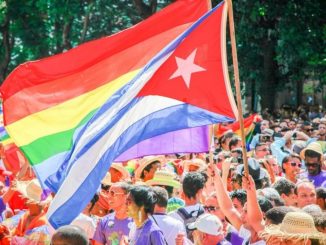
We are facing a revolutionary document, which includes changes of perspective in many aspects of our society’s daily life. It addresses family plurality and the right of people from the LGBTQ community to marry, opens new horizons to labor relations, and refers to the urgent attention that should be paid to the aging population.

“This will be a Code of affections. Good behavior, attention, and care in the family environment will have their reward. Likewise, abandonment, negligence, and emotional and economic neglect will also have their consequences in the Code,” Alvarez-Tabío added.

One of the most transcendental changes in the text will be around the family plurality issues. Everyone will have the right to form a family united by the affection of its members.

The norm clarifies that affiliation is the relationship established between mothers and fathers with their sons and daughters. However, it adds that this affiliation has been radically transformed. It is no longer just consanguineous parentage.

Affiliation can also be determined through the use of an assisted human reproduction technique, or it can also be defined by socio-affectivity (that bond of love, of feelings that unites two people, grandparents, and grandchildren, nieces and nephews…) There is a plurality of sources that can give rise to legal parentage.

“It is important to read carefully each letter of the Family Code to discover that there are many benefits for many people in the family space, and not only in the aspect of marriage,”  added Balseiro, who is a Doctor in Legal Sciences.

The text also opens new horizons to labor relations. It proposes regulations related to unpaid licenses for family responsibilities, which will benefit those people who are dedicated to the care of family members in vulnerable situations. This decision was taken into account due to the accelerated population aging in Cuba, and the shift of the main caregiver roles to women, who sometimes, by family decision, leave their jobs to devote themselves to this task.

Each proposal in the Code shows how it will benefit all legal relationships in Cuban society. No one will be left behind. Families will be viewed in the plural, in accordance with the current diverse, plural, and democratic scenario. The text will add rights and will make visible family models that were not recognized until now, in a country that does not stop looking inside itself and thinking about its people, despite the adversities.

Source: Resumen Latinoamericano – English

Strugglelalucha256


U.S. and international actions demand #UnblockCuba

On Sunday, Jan. 30, Miami Cuban-Americans and their supporters gathered at City Hall to caravan with bikes and cars to a rally at the statue of Cuba’s national hero, José Martí. Nearly two years since the election-campaign-filled months of 2020, throughout all of 2021 and now into 2022, these Miami actions have birthed a caravan movement across the U.S. and internationally on the last Sunday of the month – including in the streets of Cuba. 

This international outpouring of solidarity with the Cuban Revolution and its right to sovereignty and self-determination was especially noteworthy, as Feb. 7 marks 60 years since the effective date of President John F. Kennedy’s Proclamation 3447, prohibiting “the importation into the United States of all goods of Cuban origin and all goods imported from or through Cuba.”  

Also 60 years ago, on Jan. 31, 1962, under U.S. pressure, the Organization of American States expelled Cuba. Only Mexico withstood the U.S. demand to isolate the revolution. How the situation has changed in 60 years!

In the U.S., caravans kicked off the new year in Miami, New York City, Minneapolis, Las Vegas, Albuquerque, Tempe/Phoenix, Portland, Seattle and Los Angeles. Cars and – where temperatures permitted – bikes took to the streets. Outreach tables, pickets and educational online programs informed public gatherings about the U.S. economic, commercial and financial blockade of Cuba. 

In Miami, large posters displayed Cuban-American demands to undo some of the most painful of the 243 new economic blows imposed under Donald Trump and now continued and even expanded by President Joe Biden: reopen the U.S. Embassy in Havana; reunify families; restore direct flights from U.S. airports to provincial Cuban airports; and restore remittances, the right to travel and cultural-scientific cooperation between the two countries. 

In pre-pandemic Canada, pickets regularly reminded U.S. consulates that the Canadian people oppose the U.S. starvation schemes imposed on Cuba. Jan. 30 car caravans carried on the tradition in Montreal, Quebec, plus Vancouver, Calgary and Toronto. 

Information on the U.S. caravans are posted by the National Network On Cuba at NNOC.org/calendar with starting times and locations during the week before the last Sunday of the month. Local organizers can send details, images or Facebook event links for posting to SundayCaravan@NNOC.info 

Support mobilized from many countries as shown in this tweet.

Strugglelalucha256


El bloqueo a Cuba cumple 60 años

Se dice fácil, pero han sido seis décadas durísimas que comenzaron con una ligereza desconcertante y la creencia de que el bloqueo del Gobierno de Estados Unidos a Cuba no duraría demasiado. Un par de años, quizás.

El 2 de febrero de 1962 John F. Kennedy llamó a su secretario de Prensa, Pierre Salinger y le dio una tarea urgente: “Necesito muchos puros cubanos, Pierre”. “¿Cuántos, presidente?”. “Unos mil”. El funcionario visitó las tiendas mejor surtidas de Washington y consiguió 1.200 cigarros H. Upmann Petit Corona enrollados a mano en las vegas de Pinar del Río, en el extremo occidental de la Isla.

“A la mañana siguiente, cuando llegué a mi despacho, el teléfono directo al Presidente ya estaba sonando. ‘¿Qué tal te fue?’, dijo, mientras yo cruzaba el umbral. ‘Muy bien’, respondí. Kennedy sonrió y abrió un cajón de su escritorio. Tomó un gran papel y lo firmó inmediatamente. Era el decreto que prohibía todos los productos cubanos en nuestro país. Los puros cubanos eran a partir de ese momento ilegales en Estados Unidos”, contó años después Salinger a la revista Cigars Aficionado.

Los periódicos de la época relataron con bastante exactitud lo que significaba aquella decisión. The Nation escribió: “La economía de Cuba dependía de los Estados Unidos para artículos esenciales como camiones, autobuses, excavadoras, equipos telefónicos y eléctricos, productos químicos industriales, medicinas, algodón crudo, detergentes, manteca de cerdo, papas, aves, mantequilla, una gran variedad de productos enlatados y la mitad de los alimentos básicos en la dieta cubana como el arroz y los frijoles negros. … Una nación que había sido un apéndice económico de los Estados Unidos quedó repentinamente a la deriva; era como si Florida hubiera quedado aislada del resto del país, incapaz de vender naranjas y ganado o de traer turistas, gasolina, repuestos de automóviles o cohetes de Cabo Cañaveral”.

Entre el 3 de febrero de 1962 y el 22 de noviembre de 1963 mediaron 657 días. Kennedy fue asesinado antes de que pudiera quemar uno a uno su arsenal de tabacos cubanos y antes de que se concretara la agenda de la negociación para tal vez revertir o suavizar el bloqueo, un proceso que estaba en curso cuando el magnicidio de Dallas.

Las consecuencias del fracaso de la invasión de Cuba por Playa Girón, en abril de 1961 – los invasores habían sido cambiados por compotas y tractores – y la llamada crisis de Octubre que involucró a EE.UU., la URSS y Cuba, en 1962, fueron dos de los factores que habían determinado el arranque del intento negociador. Un memorando remitido por Gordon Chase, especialista del Consejo de Seguridad Nacional para asuntos de América Latina, a McGeorge Bundy, Consejero de Seguridad Nacional del presidente Kennedy, el 11 de abril de 1963, recomendó con cinismo: “Si una suave aproximación negociadora a Castro es factible y exitosa, los beneficios podrían ser sustanciales”.

De nada valieron los intentos de rectificación de Kennedy ni los llamados no ya a la elemental justicia, sino al pragmatismo. Decenas de analistas, funcionarios y hasta ex presidentes estadounidenses han reclamado cordura para evitar que el castigo impuesto al pueblo cubano siga basado en la pulsión sádica, la inercia o simplemente en la arrogancia de un cogollo de politiqueros. Pero Washington ha seguido moviéndose en unas constantes vitales perversas. Wayne Smith, quien fuera jefe de la Sección de Intereses de Estados Unidos en La Habana y una de las voces más firmes contra el bloqueo impuesto unilateralmente por su país, llegó a la conclusión de que Cuba parece tener “el mismo efecto en las administraciones estadounidenses que la luna llena tiene en los hombres lobo”.

Tienen nietos y hasta bisnietos los que nacieron cuando Kennedy, con sus razones oscuras y su trastienda de tabacos, firmó la Orden Ejecutiva 3447 que decretó un bloqueo total sobre Cuba, incluyendo las medicinas y los productos alimenticios, y la amenaza a cualquier país que decidiera aliviar las sanciones. Algunos de esos cubanos han muerto y muchos morirán sin saber cómo funciona un país en condiciones de normalidad, la vieja o la nueva con Covid, da igual. Sin entender cómo se ha podido actuar contra millones de personas por tanto tiempo y con tanto odio, un odio sin límite ni explicación racional.

Este artículo fue producido para Globetrotter y publicado primero en La Jornada.

Rosa Miriam Elizalde es una periodista cubana y fundadora de Cubadebate. Es vicepresidenta de la Unión de Periodistas de Cuba (UPEC) y de la Federación Latinoamericana de Periodistas (FELAP). Es autora y coautora de varios libros, incluyendo Jineteros en La Habana y Chávez Nuestro. Por su destacada labor, ha sido merecedora en varias ocasiones del Premio Nacional de Periodismo Juan Gualberto Gómez. Es columnista semanal de La Jornada, México.

Strugglelalucha256


The blockade against Cuba turns 60

It’s easy to say, but it’s been six very hard decades that began with disconcerting lightness and the belief that the United States government’s blockade of Cuba would not last long—a couple of years, maybe.

On February 2, 1962, U.S. President John F. Kennedy called his press secretary, Pierre Salinger, and gave him an urgent task: “I need a lot of [Cuban] cigars.” “How many, Mr. President?” “About a thousand,” Kennedy replied. Salinger visited the best-stocked stores in Washington and got 1,200 H. Upmann Petit Corona cigars rolled by hand in the fertile plains of Pinar del Río, at the western end of the island.

“The next morning, I walked into my White House office at about 8 a.m., and the direct line from the President’s office was already ringing,” Salinger told Cigar Aficionado magazine years later. “‘How did you do, Pierre?’ he asked, as I walked through the door. ‘Very well,’ I answered. … Kennedy smiled, and opened up his desk. He took out a long paper which he immediately signed. It was the decree banning all Cuban products from the United States. Cuban cigars were now illegal in our country.”

The media outlets of the time reported quite accurately what that decision meant. The Nation wrote: “Cuba’s economy… depended on the United States for such essential items as trucks, buses, bulldozers, telephone and electrical equipment, industrial chemicals, medicine, raw cotton, detergents, lard, potatoes, poultry, butter, a large assortment of canned goods, and half of such staple items in the Cuban diet as rice and black beans. … A nation which had been an economic appendage of the United States was suddenly cut adrift; it was as if Florida had been isolated from the rest of the country, unable to sell oranges and cattle or to bring in tourists, gasoline, automobile parts, or Cape Canaveral rockets.”

There were 657 days between February 3, 1962—when Kennedy issued a blockade on trade between the U.S. and Cuba—and November 22, 1963, when he was assassinated.

Kennedy was killed before he could burn his arsenal of Cuban cigars one by one and before the negotiation agenda was finalized to perhaps reverse or ease the blockade, a process that was underway at the time of the Dallas assassination.

Two key factors that determined the start of negotiations were the failure of the Bay of Pigs invasion of Cuba in April 1961—the invaders had to be exchanged for food and tractors—and the 1962 October missile crisis that involved the U.S., the USSR and Cuba. A memorandum sent by Gordon Chase, National Security Council specialist for Latin American affairs, to McGeorge Bundy, national security adviser to President Kennedy, on April 11, 1963, cynically recommended: “If the sweet approach [to Castro] turned out to be feasible and, in turn, successful, the benefits would be substantial.”

Kennedy’s attempts at rectification were of no use, nor were the calls, not just for elementary justice, but for pragmatism. Dozens of analysts, officials and even former U.S. presidents have since demanded sanity to prevail in order to prevent the punishment imposed on the Cuban people from these continuing embargoes, which are based on the sadistic drive, inertia or simply on the arrogance of a bunch of politicians. But Washington has continued to show vital signs of not backing down. Wayne Smith, who was head of the U.S. Interests Section in Havana and one of the strongest voices against the blockade imposed unilaterally by his country, concluded that Cuba seems to have “the same effect on American administrations that the full moon has on werewolves.”

Those who were born when Kennedy, with his hidden reasons and a secret stash of cigars, signed Executive Order 3447, which decreed a total blockade on Cuba, now have grandchildren and even great-grandchildren. Some of those Cubans have died and many will die without knowing how a country works under normal conditions—the old one or the new one with COVID-19, it no longer matters. They will never understand how it has been possible for the U.S. to act against millions of people for so long and with so much hatred, a hatred without limits or rational explanation.

This article was produced by Globetrotter. Rosa Miriam Elizalde is a Cuban journalist and founder of the site Cubadebate. She is vice president of both the Union of Cuban Journalists (UPEC) and the Latin American Federation of Journalists (FELAP). She has written and co-written several books including Jineteros en la Habana and Our Chavez. She has received the Juan Gualberto Gómez National Prize for Journalism on multiple occasions for her outstanding work. She is currently a weekly columnist for La Jornada of Mexico City.
Strugglelalucha256
https://www.struggle-la-lucha.org/cuba/page/24/