Beyond abortion, a struggle to win our future

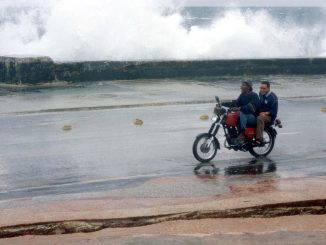
Photo: Bill Hackwell

Havana, Cuba — When you have touched a woman you have struck a rock, says a South African proverb. It continues, you have dislodged a boulder, you will be crushed. The U.S. Supreme Court justices who penned the recently leaked draft majority opinion abolishing voluntary legal pregnancy termination, should take heed.

Although the current debate centers on the issue of the women’s right to make decisions over their own bodies, in fact much more is at the root. Today’s political flashpoint holds within it the urgent need to overturn patriarchal gender norms, class oppression and the capitalist economic system that perpetuates them. The fight is really for life for the majority, not just for the few. 

This is not political jargon. The combat between the past and the future can be seen in real time when Cuba’s proposed Families Code and 2022 National Program for the Advancement of Women is compared with the hateful onslaught faced by women in the United States where the Equal Rights Amendment is still blocked.

In the United States, rights that were thought to have been won, at least in part, are now being slashed, eroded or reversed like the right to legal, safe abortion, or like universal voting rights. It must be noted that the U.S. is still the only industrialized country without a national health plan, so payment for medical procedures even where legal may not be covered by private insurance and require out of pocket payment. A poll published by CNBC.com reported that “66% of Americans fear they won’t be able to afford health care” in 2021

All Cubans can afford health care

On the other hand, no Cuban need fear they won’t be able to afford health care in any year. Despite the undeniable fact that the U.S. economic, commercial, financial and media war against revolutionary socialist Cuba hurts every aspect of daily Cuban life, all health care from organ transplants to abortion is the right of every Cuban who needs it. Not Obama Care, not Medicare for All – free, universal, community-based preventive health care. 

Revolutionary Cuba leaves no stone unturned to provide these rights even hampered by the laser-focused, intensified U.S. blockade. Somehow, through working together with solidarity, they do it: Witness the herculean COVID-19 vaccine development, now expanding to protect the six-month to two-year age group.

The right to health care and debate about abortion were settled in Cuba long before the recent  green bandana advances in Argentina, Colombia and Chile. Nonetheless, the Cuban people, too, are in the midst of debating rights – but not the rights for capitalists and landlords to exploit and steal or Big Pharma extortion for medicines. The groundbreaking 1975 Family Code that codified gender equality in the home and in society is being updated, modernized, and strengthened with more equality and inclusion, more protection, not less. Significantly, even the title has been changed from Family Code to Families Code.

As presented by Federation of Cuban Women leader Teresa Amarelle Boué, Secretary General of the Federation of Cuban Women, at the March 2022 U.S.-Cuba Normalization Conference in New York City, the proposed revisions include the rights of children and seniors, as well as expanding benefits important to and sought by women workers such as in-workplace childcare. Even with resources severely stunted by the U.S. economic warfare, the code proposes to boost income 50% for working women with three or more children under 18. Six thousand one hundred and eleven of these women and their children already received a new home free of charge, fully resolving their housing needs. Even more could be done without the U.S. blockade, she said. Community laundries are a new win-win proposal that provides new jobs while alleviating some household labor.

Child poverty across the U.S.

Contrast this with the U.S. where a “right to life” banner is cynically used to restrict women’s reproductive autonomy. In the U.S., right to life is purported to begin at conception, but stops before birth, sending Black maternity and infant death rates to scandalous heights in the richest country on the globe. In 2020, 16% of children under 18 years of age, 11.6 million, live in poverty. Students graduate from university with unpayable student loans. Tickets to concerts and sporting events are out of reach for most. The right to health care, education, housing, sports and culture and a dignified life with the possibility of developing each human’s potential are all constitutionally guaranteed in Cuba. 

Gender reassignment has notably been free in Cuba as part of medical care. Now free fertility assistance including surrogacy under certain conditions is included in the proposed Families Code, something unthinkably unaffordable to many in the U.S. who are unable to have children.

The Families Code provides legal rights for the various family formations that actually exist in Cuba today – officially married, or committed relationships without formality, same-sex relationships, grandparents or other close relatives raising children and more. Rights are expanded, not restricted so each family choice and need is respected. Amarelle explained the improvements this way: 

“This is a code of opportunities and alternatives, of adding and multiplying, that recognizes and guarantees rights for those who didn’t have them. In no way does it affect or limit the rights already recognized for others.

“It does not establish molds nor does it require anyone to choose a family model that is not the one desired by each family.

“It is a broad and comprehensive code, revolutionary and modern.” (transcript of simultaneous translation by Martin Koppel, https://youtu.be/wJJfDeVi3gI)

Cuba expands rights of children

The rights of children are expanded. The term “patria potestar” or parental authority was replaced with parental responsibility meaning physically and psychologically capable to guarantee and protect the rights, well-being and the happiness of the daughters and sons, provide participation, to listen to them, protect  them, bring them love, foster their growth and independence in an atmosphere of affection.

The discussions are not pro-forma to check off some abstract requirement, but take into consideration the comments, additions, suggestions and proposals gathered through multiple opportunities in 78,000 assemblies. As of the March conference, the version under discussion is the 24th draft. After approval by the National Assembly the final product of the consultations will then be voted on by the people in a national referendum, where as a result of the consultation processes, voters actually understand what they are voting on.

The secret weapon of socialist Cuba

Equality and development of the potential of each human being is the secret weapon of socialist Cuba. The current U.S. efforts to push women back into some past family form conflicts with development of technology and our globalized world. 

This equality was fundamental in the revolutionary process itself, recognized and promoted by the historic leader of the 1959 Cuban revolution, Fidel Castro Ruz. Women clandestine leaders like Celia Sanchez, Heidi Santamaria, Melba Hernandez and Vilma Espin also joined Fidel and the July 26 Movement in the Sierra Maestra. 

Fidel also supported the formation of a battalion of women combatants, the Marianas, named after Mariana Grajales, mother of five sons including Antonio Maceo who fought and died for an end to slavery and Cuban independence from Spain. Weapons were scarce, but Fidel prioritized arming the Marianas who were regarded as the best fighters. After the victory over the U.S.-backed Batista dictatorship Fidel and Vilma Espin founded the Federation of Cuban Women to erase the legacy of colonialism through education and job opportunities. Tradition’s chains were severed when thousands of young women joined Cuba’s historic Literacy Campaign teaching the country to read and write in a year. The success of this process is evident today where women scientists and technicians are integral leaders in the development and production of Cuba’s five COVID-19 vaccines. 

The following statistics were presented by the FMC delegation to the Commission on the Status of Women (CSW66): 

Women: 67.4% of workers in education, more than 70% of judges and attorneys general, 62% of doctors and 64.2% of those working in international collaboration in countries around the world. Participation in decision-making is increasing. As of the end of 2021, women held 51.6% of State and Government positions including 52.3% of the State Council, 52.7% of Municipal People’s Power Assemblies, 53.22% of parliamentary representatives, 54.35% of the Municipal Assembly presidents and vice-presidents.

So what are we fighting for? The Supreme Court has forced the question. Let’s answer it. Cuba represents our future.

Strugglelalucha256


The heroes of Hotel Saratoga

At first, there was an explosion. The six-story building vibrated, and a few wires snapped with the force of a whiplash. Immediately afterward, more than half of the facade collapsed without any warning, with each floor swallowing the one above as the ceiling crushed against the floor and the floor against the ceiling during the explosion, and a cloud of dust hid everything except the desperate screams of people. It seemed as if the ground had just opened and closed when two other buildings collapsed in the vicinity.

The causes of the incident at the Hotel Saratoga in Old Havana on May 6 were immediately known, although the investigation is still ongoing: it was a gas leak from a tanker truck servicing the hotel building, which was preparing to reopen during the second week of May. With no guests, the rooms were locked tight, and a simple click of the light switch would have been enough for the mass of accumulated gas to cause the shock wave that shattered the glass, marquetry and ornately decorated facade of green and white stucco, which was originally from the 19th century.

It is not the first time that Cuba has mourned tragedies like this. An accident like this might seem even minor in a country that has suffered more than 30 major hurricanes in half a century, dozens of deaths during the CIA sabotage of the steamship La Coubre in the port of Havana in 1960, the blowing up of a commercial airliner with 73 passengers in 1976, a chain of bombs in hotels and restaurants in the 1990s, the eternal blockade imposed by the United States government, a “rogue action,” as Mexican President Andrés Manuel López Obrador calls it—that has naturalized the shortage of almost everything and made the pandemic more desperate, just to cite a few dramatic examples.

But no. The explosion at the Saratoga Hotel, with almost 100 injured victims—including 43 deaths as of May 11—is something else. What made this story in particular the big news story was not the explosion that was felt in Havana, nor the dense smoke that could be seen overhead, nor the feeling of vulnerability that it left us all experiencing, but rather it was the solidarity of the citizens who crowded around the area demanding a place to rescue the victims from the rubble, and donated their blood for the wounded or helped alleviate the anguish of the victims. Two hours after the accident, the line of volunteers in front of blood banks, polyclinics and hospitals exceeded thousands, and most of them were young people, the same ones who Miami’s propaganda says are leaving Cuba en masse.

While the government acts and the public press teaches immediacy and sensitivity, people from the streets, from all kinds of professions, continue to help their compatriots. We do not know the names of all those who were part of the rescue teams—many of them are volunteer firefighters—or of the teachers of the “Concepción Arenal” school that is right next to the hotel who protected their students, of the children who saved other children, of the passersby who helped the Saratoga workers and the families residing in the other two buildings that imploded in the neighborhood, nor the sniffer dogs that are still looking for the traces of at least two missing persons in the rubble.

When crashing, the buildings showed their viscera, their arteries, their nerves and their fragility, similar to ours. But they also exposed that kind of decent sentimentalists who are not in danger of extinction and who are the best of us all, the heroes who went out to save others, not realizing that another explosion and another collapse could have made them victims. And, at the same time, there is an anonymous army of health workers who have not rested for more than 100 hours since the accident.

In Soldiers of Salamis, the Spanish novelist Javier Cercas reminds us that “in the behavior of a hero there is almost always something blind, irrational, instinctive, something that is in their nature and from which they cannot escape.” They are the ones who look squarely at the absurdity and cruelty of life to make us more human, and they are the ones who warn us that struggle is born from despair.

And once again, death does not prevail.

This article was produced by Globetrotter. Rosa Miriam Elizalde is a Cuban journalist and founder of the site Cubadebate. She is vice president of both the Union of Cuban Journalists (UPEC) and the Latin American Federation of Journalists (FELAP). She has written and co-written several books including Jineteros en la Habana and Our Chavez. She has received the Juan Gualberto Gómez National Prize for Journalism on multiple occasions for her outstanding work. She is currently a weekly columnist for La Jornada of Mexico City.

Strugglelalucha256


Continental meeting calls for closure of illegal U.S. torture camp in Guantanamo Bay, Cuba

May 11 – At the invitation of the Cuban Institute for Friendship with the Peoples (ICAP) and the World Peace Council (WPC), the VII International Seminar for Peace and Abolition of Foreign Military Bases was held. Delegates from anti-imperialist, peace and solidarity movements gathered since Wednesday to debate current issues of peace work within the framework of the WPC’s “Regional Continental Meeting of the Americas and the Caribbean.” The event was attended by delegates from 23 countries and 70 Cubans.

After a welcome by the governor of Guantánamo Province, Emilio Matos Mosqueda, the president of ICAP, Fernando González Llort, opened the seminar with the words: “The planet needs peace now more than ever, and to achieve it we need unity.” He thanked those present for their solidarity with Cuba. Silvio Platero, leader of the Cuban peace movement, added that the meeting was taking place “under difficult conditions” because the United States was stepping up its aggression against Cuba and other Latin American countries. This also includes tightening economic sanctions under the blockade that has lasted for more than 60 years.

Return demanded

The seminar is taking place “in a complex context characterized by the increasing aggressiveness and interference of U.S. imperialism and NATO, media propaganda wars, military conflicts and tensions in the world,” said González. The Cuban people therefore demand compliance with the United Nations Charter by “returning occupied territories to their rightful owners.” The area of ​​the U.S. Guantanamo Bay Naval Base, which has been occupied by the U.S. since 1903, is “the oldest imperialist outpost in the world,” which Washington uses to supply the U.S. fleet with logistical supplies and has repeatedly been “the starting point for invasions of Latin American countries and the whole world.”

Under the banner “Guantánamo – World Capital for the Restoration of Peace,” WPC President Maria do Socorro Gomes condemned the “unlawful appropriation of Cuban territory” and the atrocities commited in the Guantanamo torture camp. “This deeply affects all of us who defend human rights and peace,” she said. In the Russia-Ukraine conflict, too, NATO played the decisive role “as the spark of the war.” The president called for “breaking the siege of the media that distorts the truth.” The WPC is “against the permanent establishment of military bases in sovereign countries.” They serve “the exercise of domination.”

With around 800 U.S. military bases in 100 countries around the world, U.S. policy was at the center of the debates. As a representative from the U.S., Gloria Verdieu spoke for the Socialist Unity Party and the group Women In Struggle and recalled the developments since the last international seminar in 2019. Cuba has achieved a lot despite the coronavirus pandemic. The implementation of its immunization program has not only benefited the Cuban people, but also those most in need of vaccines and medical supplies around the world through the dispatch of doctors and medicines.

“But what did the U.S. rulers do during this time?” asked Verdieu. They failed in their attempts to contain the coronavirus “because they are relying on the market instead of pursuing a democratic and common approach with the international community,” said the socialist. “Too little and too late” have they helped to fight the virus, especially on the African continent.

Danger of a world war

Now the U.S. government is exacerbating the crisis by misappropriating another $33 billion needed to fight the spread of the virus “to finance a proxy war in Ukraine, including arming Nazi regiments there.” This only exacerbates “NATO’s hunger for oil profits and regime change in Russia and China,” according to Verdieu. Since the unilateral dissolution of the Soviet Union and the Warsaw Pact, NATO has expanded from 17 to 30 member states. The 1999 bombing war against Yugoslavia claimed thousands of lives. 

“The recent U.S.-NATO proxy war, in which the media acts as a propaganda force,” Verdieu said, not only carries a serious risk of triggering World War III, but “exacerbates the national and international crises of global warming, critical health care shortages and hunger – crises that affect children the most.”

At the conclusion of the seminar on Thursday, delegates visited Caimanera, a small fishing village that borders the illegal U.S. naval base, to get an idea of ​​the area cordoned-off by the U.S. military. There, in the presence of the villagers, the final communiqué was read. The goal is to “strengthen the unity of the global campaign against U.S. and NATO foreign military bases” through “massive national actions coordinated with other anti-war and environmental organizations” to “denounce the possession and growth of military bases in our region and around the world.”

Background: Guantanamo Bay

In 1898, during the Spanish-American War, the U.S. conquered areas of the old colonial power Spain and occupied Cuba, Puerto Rico, Guam and the Philippines. Although Cuba was formally granted independence in the “Peace of Paris,” Washington took the island under its “military administration” and, through the Platt Amendment of 1901, contractually secured a right of intervention “in the event of internal unrest” and the territorial claim of a port for the U.S. Navy. In 1903, the U.S. and Cuba signed a 99-year contract for the 117.6 square kilometer area in Guantanamo Bay as a “coal loading station” for their steam-powered war fleet at a lease price of $2,000 a year. Washington’s condition was “complete jurisdiction and control” over the area.

Source: junge Welt 

Strugglelalucha256


National Network on Cuba – The Saratoga Hotel disaster

(5/7/22) edited 8:30am Cuba Time

On Friday morning an explosion occurred at the Saratoga Hotel in Old Havana. While details are still emerging, officials have ruled out the possibility that it was an attack and attribute it to gas being transferred from a truck. At the moment 50 adults and 14 children have been hospitalized, and 21 adults and 1 minor have lost their lives. Not only has the Saratoga Hotel suffered structural damage, but so have 23 other nearby buildings, including 15 apartments which completely collapsed. The headquarters of the Yoruba Association and the Baptist Church have also been damaged.

The speed and efficiency with which Cuba has been able to mobilize in response is a testament to strong organization and the resilience of the island. In the chaos, five priorities for the Cuban government have emerged: (1) take care of the affected families, (2) recovery of the hotel and damaged homes, (3) relocation of the children from the school located next to the hotel and recovery of that educational center, (4) rescue of all affected facilities, and (5) timely information to the population.

Tragedy has been met with everyday citizens “who attended the place with a lot of discipline and willing[ness] to help in anything”, according to Reinaldo Garcia Zapata, Governor of Havana. This included young people joining the search for missing parties and lending their hands to dig through the rubble that remains. By 8 pm Eastern, Havana blood banks received 1,500 donations.

The National Network on Cuba offers our condolences to all those directly affected, the Cuban people, their government and their Party. We stand in solidarity with all Cubans across the island who are reeling from this recent tragedy, and struggle daily to defend their national sovereignty against the ongoing U.S. blockade that impacts every part of Cuban life.

We call on our NNOC member organizations, U.S. elected officials, and all people of goodwill to strengthen our efforts to end the U.S. economic, financial, commercial and media war against this island. Cuba is a beacon for the preservation and defense of life and human rights.

Under NNOC, several solidarity projects have emerged over these last two years of the pandemic. Already, they include Puentes de Amor caravans, resolutions from cities across the country now representing more than 41 million U.S. residents, Project EL PAN food donations, the reconstruction campaigns that will be launched; solidarity and educational trips to Cuba like the May Day Brigade (which currently has a delegation in country and stands in support of the Cuban people), Venceremos Brigade and IFCO/Pastors for Peace Friendshipment Caravans, which bring people to learn and shine light on the truth about the heroic Cuban people and their revolutionary project.

It is no secret that Cuba is one of the few places in the world where the right to free health care, free education, sports and culture is constitutionally guaranteed; where you are not asked for your insurance before getting medical attention, nor thrown out because you can’t pay the medical bill, where the quality of education is not determined by property taxes and where foreclosures and evictions do not exist.

Let’s stand with Cuba as she has stood for so many other countries during times of peace and disaster! Let’s give her all we’ve got!

#VamosConTodo #FuerzaCuba

Strugglelalucha256


‘U.S.-NATO proxy war in Ukraine is extension of the war against us’

Presentation on behalf of the Socialist Unity Party and Women In Struggle at VII International Seminar for Peace and the Abolition of Foreign Military Bases in Guantanamo, Cuba, May 4.

Since the last international seminar in 2019, Cuba has achieved much – the implementation of a vaccination program that benefited not only the Cuban population, but those most in need of vaccines and health care around the world, by sending doctors and medicine abroad. 

In spite of a coup supported by the U.S. in 2009, and the subsequent support of dictators loyal to the U.S. government, the Honduran people were able to overcome the violence and terrorism and courageously build a movement capable of electing a socialist and anti-imperialist woman, Xiomara Castro. After becoming president, Castro immediately canceled the electric bills for 1 million people suffering from poverty created by the corruption of the former president. 

Other targets of U.S. imperialism like Bolivia and Venezuela have successfully maintained their sovereignty in spite of the illegal and devastating sanctions by the U.S. and its complicit imperialist allies in Europe, Canada, Australia and Israel.

Now, what have the U.S. rulers done in that time? Well, they continue to flounder in their attempts at containing the coronavirus due to their dependence on the market, rather than a more democratic and centralized approach in line with the international community. They contributed too little too late to combating the unequal access to vaccines suffered by developing countries, especially on the continent of Africa. 

The U.S. government is now aggravating the crisis by taking vital resources needed to combat a further spread of the virus for the purpose of sending $33 billion more to fund a proxy war in Ukraine, including arming Nazi military regiments there, and extending NATO’S hunger for oil profits and regime change – targeting Russia and China.

Regime change in Ukraine

Starting in 2004, the U.S. spent over $22.4 billion for regime change in Ukraine. Washington orchestrated and funded a coup in 2014 with billions of dollars in weapons, training and public relations from the National Endowment for Democracy. Much of that funding and training went to self-proclaimed fascist and white supremacist organizations, some of whom carry the symbols of Nazis they admire. They even celebrate the collaboration of those in Ukraine who supported Nazi genocide against Jewish people in World War II. 

As Obama sold out the people of Africa with the further implementation of AFRICOM, so has Ukrainian President Zelensky with his collaboration and promotion of Nazism – as when he recently introduced a member of the Azov Battalion to the Greek Parliament, and appointed self-proclaimed Nazis to political office, like the current governor of Odessa.

These are the same forces that have murdered and terrorised the people of Lugansk and Donetsk in the Donbass region for eight years, causing the deaths of 14,000 people. It was the Azov Battalion and similar forces, now an official part of the Ukrainian military, that were primarily responsible for those deaths and the increased genocide. It was only curbed when the Donbass people’s request for assistance to stop the humanitarian crisis was met by Russian military intervention. 

We believe that the people of Lugansk and Donetsk, who are rarely mentioned, even by so-called anti-imperialists in the anti-war movement, had every right to ask for assistance to save the lives of their children. And we believe that the greatest threat to humanity today is the continued expansion of NATO, willing to use nuclear weapons and other weapons of mass destruction, as the U.S. did when it bombed Hiroshima and Nagasaki, killing 80,000 civilians in seconds, then tens of thousands more slowly and painfully. 

We believe that Russia has every right to defend itself in not allowing another NATO member state on its borders, especially one with a military led by Nazi regiments that could be put in possession of nuclear arms.

We hear much in the Pentagon’s propaganda machine – the Western corporate media – about the targeting of civilians by Russia. Much of this has been proven false, and even contradicted by Pentagon advisers. The media’s faith in the U.S. State Department information comes in spite of the knowledge that contradictory news is being suppressed in Ukraine. Three television stations were closed for not reporting coverage favorable to the Ukrainian government. 

Western media help fascists

Much information came out in Ukraine exposing the Azov Battalion when it took over hospitals, schools and apartment buildings in Mariupol. The U.S. media continued the narrative of attacks on civilian buildings and not Azov outposts. Doctored and mislabeled videos and photos were prevalent during the beginning of the Russian intervention, even showing Israeli bombings and Palestinian resistance as “evidence” of Russian brutality and Ukrainian resistance. 

This follows a long history of U.S. corporate media misinformation to push war – from the sinking of the Lusitania to the Gulf of Tonkin incident to “weapons of mass destruction.” The corporate media were also willing accomplices in the destruction of Libya and Syria, using blatant lies and unchecked information from the U.S. State Department.

The bombing by Nazi-led forces of the center of the city of Donetsk, killing over 20 civilians waiting at an ATM machine, was verified by various organizations in Donetsk, media outlets and independent journalists in the Donbass region. But you never saw that report because the TV reporters and news publications in Ukraine that report those types of stories have been closed down. Those who would have protested and reported this missile attack on civilians in Donetsk, like Alexander Matyushenko from the Levitsa association in Dnipropetrovsk (Dnipro), or the 37 journalists detained in early March, have been jailed. 

In Kiev, arrests began even earlier. On Feb. 27, brothers Mikhail Kononovich and Aleksandr Kononovich, leaders of the Ukrainian Communist Youth, members of the World Federation of Democratic Youth and ethnic Belarusians, were seized and imprisoned along with members of other organizations. 

As I speak, one of our Socialist Unity Party members is traveling in Russia and Donbass, gathering more information on the real situation.

NATO expansion, NATO wars

Since 1990, when the Soviet Union unilaterally disbanded the Warsaw Pact military alliance, NATO has expanded from 17 to 30 member states. In 1999, U.S.-led NATO began raining bombs on the people of Yugoslavia, bombing 10,000 homes and killing thousands of people, including three journalists at the Chinese Embassy in Belgrade. 

Despite the end of the alleged threat from the Warsaw Pact, the belligerence continued with the unfathomable killing of 500,000 children in Iraq by the U.S. But this is just the tip of the iceberg of victims of U.S. and NATO wars, including the millions killed in Vietnam, Korea, Yugoslavia, Afghanistan, Libya, Syria and Yemen. Now slavery exists in Libya, because of the war waged by the Obama administration and NATO – a reality that undoubtedly is destroying the lives of children. 

In Yemen, U.S. assistance to the war led by Saudi Arabia is causing the starvation of millions of children, according to United Nations estimates. Like Trump and Obama, the Biden administration continues the endless wars abroad and the racist wars by police and ICE against people in the U.S., including immigrants, already victimized by U.S. economic wars against their countries, targeted by drones and Border Patrol on the U.S. borders.

The latest U.S.-NATO proxy war, with the corporate media acting as its propaganda arm, carries the danger of igniting World War III, and will do nothing but exacerbate the domestic and international crises of global warming, critical lack of health care, food insecurity and starvation – crises most affecting children.

Capitalism an open wound

Capitalism in the U.S. is exposed like an open wound. Its proclivity towards war is unacceptable, and today we face an unprecedented challenge to stop a possible world war. 

We understand that the crisis of capitalism forces imperialist countries to desperately further siphon the surplus value created by working people and either steal or destroy the productive capacity of lesser capitalist powers like Russia. Russia’s GDP is smaller than that of South Korea, with an almost neocolonial economy dependent on the exchange of raw materials – not the export of capital – to survive. 

That’s an important distinction. It explains why Nicaragua, Venezuela, Cuba, Iran, Syria, Zimbabwe and other targets of U.S. imperialism would suffer most if the U.S.-led NATO forces are successful in this war – not to mention the threat of another NATO member state on the border of Russia, this time potentially with nuclear weapons controlled by a Nazi-led military.

Our historic mission right now is to expose how U.S. imperialism’s escalation of its proxy war in Ukraine exacerbates the crisis of workers and oppressed communities at home and worldwide.

We must highlight the fact that the U.S.-NATO proxy war in Ukraine is an extension of the war against us, so that our working class can understand the source and solution to their problem, and begin dismantling the most dangerous threat to humanity today – U.S. imperialism.

Strugglelalucha256


Cuba: Beautiful and united on this May Day

Havana’s Revolution Square looked beautiful this Sunday, as it had not been for three years. With the first morning light, thousands of Havanans, Cubans from all over our geography, and friends from other latitudes paraded as one in front of the giant bust of José Martí. All carried Cuban flags of all sizes, signs that read “Cuba Lives and Works,” “Yes, we can,” or showed images of Fidel, Raúl, and President Miguel Díaz-Canel.

Cuba missed the joy and creativity with which it marks International Workers’ Day. At 6 a.m. local time, the crowd looked like a sea of little heads from the 15th floor of a Havana building near the Plaza.

A huge Cuban flag, another with the face of the Cuban National hero, José Martí, and another with the colors of gay pride, stood out from the heights.

May Day is for Cubans as Fidel Castro described 60 years ago, in honor of the date: “The jubilation and the multitudinous concurrence of the working class today mean the beautiful reality of our island, the fact that Cubans wake jubilant with the first light of the dawn. All the factories begin the commemoration by whistling their sirens, and all the workers mobilize and prepare themselves to make this day more beautiful impactful as years gone by.”

Before the march was done, the photos taken by great Cuban photojournalists, such as Ismael Francisco, Irene Perez, Andy Jorge Blanco, began to circulate on social networks. They managed to immortalize the joy of a little children advancing through the sea of people on their father’s shoulders; the pride of a man carrying a Cuban flag on his chest, the emotion of Díaz-Canel and Raúl Castro, who watched the march a few meters from the José Martí monument.

The last time the Plaza de la Revolución was as crowded as today was on May 1, 2019. A few months after, everything changed for Cuba and the world. The 2020’s and 2021’s May Day were mark trough social medias as the COVID-19 desolated cities, emptied squares, and forced doctors to fight to save lives in hospitals and isolation centers.

This Sunday was different thanks to the Cuban scientific community and to our leaders’ efforts. 87.8 percent of the country’s population is immunized against the disease with our own vaccines. Their effectiveness is reflected in the low rates of contagion that the country registers, which made it possible for all of us to go to the Plaza as we do every May Day, even when this time we all wore face masks, something unprecedented.

Once again, the world looked at the parade held in Cuba for the International Workers’ Day in bewilderment that the Cuban people could come out once again in such a huge expression of unity, dispelling the myths that appear daily in the corporate media, especially what we see from the US.
Many Cuban friends and colleagues I spoke with said the march was larger than they expected after the long layoff. And many came out with homemade signs on card board. The main themes of the march were honoring Cuba’s health system, available equally to all, and the development of economic industries of all sizes and products.

Meanwhile, in other countries people took to the streets to express their discontent with the lack of labor laws to protect them from the greed of corporate bosses. But I must say the marches in Cuba seem more like a big party endorsing the plans of the socialist island nation. Over 200 organizations from 60 countries, including the US, participated in Cuba’s May
Day event.

Fidel’s words pronounced 60 years ago are still applicable: “What is happening today serves to define the policy of a country. In many nations workers are oppressed and are victims of the fiercest exploitation, and they cannot even gather on May Day.”

Indeed and during the seven years that our country lived under the Fulgencio Batista’s dictatorship, back in the 50s, workers were not allowed to go out on the streets on May Day; the working class had to commemorate this event secretly, in private meeting rooms.

Luckily, Cuba’s fortunes changed in 1959. Although we are immersed in a complex economic situation and an unprecedented international disinformation campaign, the island has shown today that it may have a long way to go but that it is willing to keep pushing for a better future, which is only possible by being united.

Source: Resumen Latinoamericano – English

Strugglelalucha256


May Day 2022: Cuba lives and works!

Havana, Cuba — Three days of solidarity will mark May Day 2022 in Havana. In Cuba, for the first time since the COVID-19 pandemic forced cancellation in 2020 and 2021, the awesome May Day march will joyously take place Sunday, May 1. The march theme, Cuba Vive y Trabaja — Cuba Lives and Works —  expresses the firm and unconditional decision to continue consolidating “Our Economic-Social Socialist Development Model.” The events are dedicated to Cuba’s historical leader, Fidel Castro Ruz. 

On the eve of May Day, April 30, the Central de Trabajadores de Cuba [Cuban Workers Central Union] is welcoming workers from around the world to learn from Cuban workers and their neighborhoods the pain caused to Cuban families by the unilateral U.S. economic, commercial, and financial blockade — essentially an illegal economic war. After meetings with the hotel and tourism union, delegations will visit communities under reconstruction and partake in the community soup called caldosa with Committees for Defense of the Revolution. 

Hundreds — most under 30 years of age — are coming from the United States in various Brigades, delegations and just coming as individuals to demonstrate their solidarity with revolutionary Cuba — real aid to the Cuban people. Their experiences will inform their work when they return to the U.S., be it in work places, mutual-aid projects, communities fighting for affordable housing and against evictions, to abolish the police abuse and murders and to stop the climate catastrophe and looming nuclear war that threatens human existence as the fight to end the intensified U.S. blockade continues.

May Day — International Workers’ Day — began in the U.S. in Chicago in 1886 where workers fought for the 8-hour work day, but until 2005/2006 it was most celebrated outside the U.S. and especially in countries that have freed themselves from imperialist domination, like Cuba. 

For a former colonial nation developing under a suffocating blockade ruthlessly imposed by the most powerful military and economic giant only 90 miles to the north, the significance of the march is expressed in the words of a now-80-year-old participant in Cuba’s victory over the U.S. invasion at Playa Girón (aka Bay of Pigs) who said he was returning to the Plaza of the Revolution on May 1 “because this is now our Girón.”

“The squares are, now, another good setting to support the efforts of the government, the party, the CTC, all the institutions and the people in the desire to build the prosperous and sustainable socialist society to which we aspire,” Abel Vázquez Caballero told Trabajadores.cu.

The three day solidarity gathering culminates on May 2, with a solidarity conference featuring CTC General Secretary Ulises Guilarte de Nacimiento that will conclude with the approval of a Declaration of Solidarity with Cuba and the proposal to fight against imperialism and for the advancement of leftist organizations for a progressive change in the world.

On May 2, buses will depart from the solidarity conference headed to Guantanamo for the VII Seminar to Abolish Foreign Bases and NATO. 


Strugglelalucha256


Cuba: 61 years ago we learned not to fear our enemies

April 17, Havana — In mid-April 1961, fifteen hundred mercenaries trained and financed by Washington set sail from a port in Miami and headed to Cuba with a single purpose: to destroy the newborn Revolution. In the early morning of April 17 of that year, five merchant ships, two war units, three barges, and four cargo boats touched Cuban soil at the Bay of Pigs in Matanzas.

As soon as the news broke, all of Cuba was shaken with anger. Historians assured later that there was not a single Cuban who was not ready to fight on the sands of Playa Giron, where the first impacts of the U.S. Martin B-26 Marauder bombing raids were felt.

“Imperialism has launched its cowardly aggression against Cuba.” Those were the first words heard by the Cuban people that morning on April 17 on all the country’s radio stations, from the voice of the then-Cuban president, Osvaldo Dorticos. “We will answer with iron and fire against the barbarians who despise us and want us to return to slavery,” he added in his message.

Operation Pluto, approved by U.S. President Dwight D. Eisenhower in 1960 and inherited by President John F. Kennedy a year later, had a sentence of failure from the beginning. The invasion did not take us by surprise.

Since April 15, planes camouflaged with Cuban insignias had attacked three air terminals in the country in an attempt to show the international community that an internal rebellion was taking place in Cuba.

The whole country mobilized after those strikes. It was known that an invasion would take place, but it was unknown the exact place or where the mercenaries would disembark. Since the bombings of April 15, Cuban troops and militias, led mainly by Fidel Castro, were deployed throughout the island. Everyone was on the alert, waiting for the slightest sign of danger.

In Playa Giron, the Cuban resistance lived through some very intense hours. The residents of the surrounding communities keep intact in their memory those days of tension, fear, and courage. Nemesia Rodríguez, for example, does not forget the pain of losing almost her entire family to enemy bullets.

“On that day, I didn’t just lose my mother, I lost everything. During the invasion they killed my mother, my paternal grandmother was paralyzed from her waist down, my younger brother was shot in the leg and in the arm; my older brother was shot in the neck. Whenever April comes, I cry. Even though the years go by, the pain is still there,” Nemesia told the press a couple of years ago.

The mercenaries surrendered on April 19 at Playa Giron, just 72 hours after the beginning of the invasion. The tank in which Fidel was traveling neutralized the last redoubt of attackers in the early hours of that morning when imperialism suffered its first major defeat in Latin America.

“Our Victory at the Bay of Pigs is an important historical event. Due to that invasion, we proclaimed the socialist character of the Cuban Revolution,” recalled Fidel in a speech delivered on April 19, 1991.

“The secret of our victory: we fought for ideals. We knew how to defend sovereignty and independence at whatever price was necessary. On April 19, 1961, we lost our fear of our enemies,” Fidel added.

Today, it is not that unreasonable to think that this history could repeat itself. Cuba is under continuous hostilities from Washington and the region’s ultra-right-wing. Hate messages against the country’s main leaders or against any of its political decisions are a common practice. We are facing an unconventional war scenario that essentially seeks a regime change on the island and, if necessary, through a military invasion. But Cuba is ready to defend itself at whatever cost, as it did 61 years ago. We are not afraid.

Source: Resumen Latinoamericano – English

Strugglelalucha256


The Cuban 5 archives begin their journey home

A week ago Cheryl LaBash and I started the journey to take home the archives of the long struggle to free the Cuban 5 that Alicia Jrapko and I accumulated over a period of 13 years, carefully and methodically stored in our basement; from the first letter Gerardo Hernandez mailed to Alicia in late 2001 from a federal prison in Miami to the last one he sent us from the hole in the Oklahoma City transfer prison on December 12, 2014. Along with the letters are material from the many campaigns and projects that took place over that time. While this material is a significant amount of the historical record it does not represent all of the information accumulated during that time by the international movement that supported the Five.

The uniqueness of the struggle to free the Cuban 5 was that, unlike most struggles, it was clearly framed in time from the moment they were arrested in Miami on September 12, 1998, for defending their homeland from terrorist attacks organized in that very city to their release on December 17, 2014, through that narrow window that opened for a brief moment under Obama.

What was most inspiring was that it took place as the internet was becoming an increasingly prominent organizing tool that connected the movement like never before enabling international events to take place in London; Holguin, Cuba; Toronto; Puerto Allegre, Brazil; Tijuana, Mexico, to name a few, and in Washington D.C. where for several years supporters of Cuba gathered from all over the globe to protest for the freedom of the five in front of the White House and lobbied on Capitol Hill against the legislation that entrenches the blockade of the island.

Ironically our endeavor to bring this material to its first stop, the  Cuban Embassy in Washington, began by retracing the highways of California that Alicia and I traveled during the more than 100 visits we made to Gerardo over that time. Every town and every turn of the 404 miles from our home in Oakland to the doors of the Victorville prison is indelibly stamped into my memory forever; starting by taking Interstate 5 down through the vast Central Valley of California that grows around 20% of the world’s produce, then over the Tehachapi Pass dropping down into the wonders of the desolate Mojave Desert with its twisted but majestic Joshua Trees.

When we arrived at Kramer Junction our route was to continue east to Arizona but I could not help myself but take a detour south with the utility vehicle full of the story of the Cuban 5 to the gates of the penitentiary that imprisoned Gerardo for so long taking a modest but significant victory lap for a struggle waged by the Cuban people and supported by millions around the world. It seemed like an appropriate thing to do. It also seemed right to get off Interstate 40 in Oklahoma City to repeat it at the Federal Transfer Center where prisoners are shuffled to and from federal prisons around the U.S. It was here where Gerardo ended up in the hole for a week before he was sent to Butner Prison North Carolina where he reconnected with his brothers Ramon Labanino and Antonio Guerrero before their triumphant return home. It was from this Oklahoma prison where he was able to get out his final prison letter to Alicia saying he didn’t know where they were taking him but he knew his time in California was over and he thanked her for everything she had done.

The 3,100 miles driven with this historic cargo was personal for me, a time of reflection, and a moving forward since Alicia’s passing this past January. Getting this all back to its rightful owners, the Cuban people, was something she and I had discussed many times and now it had become a fulfillment of a promise in my perceived urgency.

The delivery of the archives to the Cuban Embassy was a moment of solidarity and an important step to its ultimate destination. The finality of the trip took place last night when D.C. area Cuba solidarity activists and the diplomats of the Cuban Embassy gathered to share remembrances of Alicia and her life well lived.

Source: Resumen Latinoamericano – English

Strugglelalucha256


‘We will prevail’: A conversation with Cuba’s President Miguel Díaz-Canel

In 1994, Miguel Díaz-Canel began a new position in Santa Clara, not far from his birthplace of Placetas, as the provincial secretary of the Cuban Communist Party. He set aside the air-conditioned car given to him and went to work each morning on his bicycle, his long hair and jeans defining him. Díaz-Canel organized rock concerts, spent time with his family at El Mejunje, the local LGBTQ cultural center, and roamed about talking to people on the streets. This closeness to the people defined his tenure at Santa Clara, which shaped the man who is now the president of Cuba.

In March, I spent a few hours talking to Díaz-Canel, who—born in 1960—has lived his entire life as Cuba struggled against the suffocating policies from Washington to shape its socialist path. Raised by a teacher and a factory worker, Díaz-Canel saw firsthand the Cuban Revolution’s comprehensive program of social justice in which millions of members of the working class, peasants, Black people, and women began to access for the first time on equal terms the right to work, study and live with dignity. Díaz-Canel’s generation grew up in a period under Fidel Castro’s leadership in which, despite the existence of a U.S. blockade, most Cubans saw their standards of living and quality of life rise significantly due to national development plans, favorable trade relations with the Soviet Union and a growing network of support in the nonaligned world. Díaz-Canel studied electrical engineering at the Central University of Las Villas, but early on in his career teaching engineering there, he devoted much of his time to local activism with the Young Communist League. That led him to an internationalist mission in Nicaragua where, along with thousands of Cuban doctors and teachers, he served among the poorest, often in remote corners of this Central American country that was then trapped under a U.S.-funded war of counterinsurgency.

Díaz-Canel returned from Nicaragua in 1989 as the USSR neared its final days and as the U.S. government seized the opportunity to tighten restrictions on Cuba. In 1991, Cuba entered a Special Period as trade fell by 80 percent. Cubans were eating less (caloric intake decreased by 27 percent from 1990 to 1996), long queues for food became common, electricity became a rare occurrence, and millions took to riding bicycles as the island faced a severe oil shortage under an intensified blockade. Díaz-Canel was one of those on a bicycle. Cuba’s resilience during the Special Period shaped his view of the world.

Special Period II

In 2018, Díaz-Canel was elected to be the president of Cuba. U.S. President Donald Trump had tightened the U.S. blockade on Cuba, with 243 new sanctions measures, the prevention of remittances from overseas Cubans coming to the island, and Cuba being placed back on the United States’ State Sponsors of Terrorism list. This campaign of maximum pressure has hurt the Cuban economy, which began to see fuel and food shortages that echoed the Special Period. The Biden administration has kept each and every one of these measures in place.

During the pandemic, the U.S. did not allow Cuba any relief from its unilateral blockade. The Cuban government spent $102 million on reagents, medical equipment, protective equipment, and other material; in the first half of 2021, the government spent $82 million on these kinds of materials. This is money that Cuba did not anticipate spending—money that it does not have because of the collapsed tourism sector. Despite the severe challenges to the economy, the government continued to guarantee salaries, purchase medicines, and distribute food as well as electricity and piped water. Overall, the Cuban government added $2.4 billion to its already considerable debt overhang to cover the basic needs of the population.

In this context, public discontent spilled onto the streets in 2021, notably on July 11. Díaz-Canel’s first instinct was to go to the heart of the matter and speak with the people. He went to great lengths not merely to dismiss their concerns but rather to understand them within the broader context of what Cuba was facing. Díaz-Canel said of the people that most of them are “dissatisfied,” but that their dissatisfaction was fueled by “confusion, misunderstandings, lack of information, and the desire to express a particular situation.” “Imagine facing that situation in a country that is attacked, blocked, demonized on social networks, and then COVID-19 arrives,” he told me. “Therefore, I am convinced that they [the U.S.] bet that Cuba had no way out: ‘They cannot sustain the revolution; they cannot get out of this situation.’”

Among the many creative responses to these many challenges was the decision by the Cuban government to develop its own vaccine. On May 17, 2020, Díaz-Canel called together Cuba’s scientists. “I told them, ‘Look, there is no alternative; we need a Cuban vaccine. Nobody is going to give us a vaccine. We need a Cuban vaccine that guarantees us sovereignty,’” he told me. Seven weeks later, in the second half of July, the first bottle of a Cuban vaccine candidate was ready. Soon after Cuba would have five vaccine candidates. Of these, three are already in use: Abdala, Soberana 02, and Soberana Plus. Two others are in the final stages of clinical trials and are quite promising, including one called Mambisa, which can be applied nasally. This is all short of a miracle considering that Cuba was only able to invest $50 million to develop these vaccines.

With the many economic problems that Cuba faces, President Díaz-Canel, in line with his predecessors Fidel and Raúl Castro, has renewed the principle of self-reliance. “We have to face the economic battle ourselves with the concept of creative resistance,” he said. With a growing number of workers in the non-state sector, the economy has encouraged small local businesses. A new energy has emerged between the state-led sectors of the economy and these growing new businesses.

In regular visits made by Díaz-Canel across the island, a great deal of emphasis is being placed on the local capacities of each municipality. He advocates a line of continuity with politics based on the ethics of José Martí and Fidel Castro, whose premise is to study the contradictions that exist in society, find the causes of those contradictions, and propose solutions that eliminate the causes. “We are defending the need to increasingly expand democracy on the basis of people’s participation and control in our society,” said Díaz-Canel. This approach has already opened the door to deep debates about how to eradicate the vestiges of racism that remain in society, the transformation of neighborhoods in disrepair, and a proposed legal code that would radically expand the rights of LGBTQ people, including marriage. In hundreds of meetings, many of which are recorded and televised, Díaz-Canel listens patiently to religious leaders, university students, artists, intellectuals, community organizers, social activists, and other sectors of Cuban society who have much to say. These meetings can quite often be tense. Díaz-Canel smiles and says, “We have learned tremendously, proposals are made, we can share criteria, we can clarify doubts, and then we all go out together to work.”

Cuba continues to face great challenges, and many problems remain to be solved.

Yet it’s clear that Díaz-Canel is leading a profound renewal of the Cuban Revolution in a process that seeks to face many complex challenges by empowering local leaders and citizens to become democratic problem-solvers within their communities. Those who continue to see the Cuban system as a repressive dictatorship refuse to come to terms with an evolving society that, despite the cruel violence from Washington, exists and is creating its own future.

This article was produced by Globetrotter. Manolo De Los Santos is the co-executive director of the People’s Forum and is a researcher at Tricontinental: Institute for Social Research. He co-edited, most recently, Viviremos: Venezuela vs. Hybrid War (LeftWord Books/1804 Books, 2020) and Comrade of the Revolution: Selected Speeches of Fidel Castro (LeftWord Books/1804 Books, 2021).

Strugglelalucha256
https://www.struggle-la-lucha.org/cuba/page/23/