Cuba: ‘Our capacity to resist and win is based on socialism …’

Commemoration for the 65th anniversary of the triumph of the Cuban Revolution at Carlos Manuel de Céspedes Park in Santiago de Cuba. Photo: Ismael Francisco

Compatriots:

We arrive at the 65th anniversary of the triumph of our socialist Revolution. Many have been the challenges we have had to face to reach this point; but it has been worth it, the work of the Revolution and its social achievements, even in the midst of difficulties, corroborate this.

For Fidel has been the first thought of Cubans in this historic commemoration, especially here, in the heroic city of Santiago de Cuba that treasures his immortal remains, and also for all those who have fallen in the noble purpose of achieving and preserving the independence of the homeland.

We are gathered in the same place where Fidel proclaimed on January 1, 1959, the triumph of the only Revolution that has ever existed in Cuba, initiated on October 10, 1868, by Carlos Manuel de Céspedes, the Father of the Homeland, whose name this square bears.

By paradoxes of history, the then-nascent Yankee empire consummated the military occupation of Cuba on January 1, 1899; therefore, its total domination over our island lasted exactly 60 years.

One of the most shameful and outrageous acts of the occupier in those days was to prevent the entry into the city of the troops of the Liberation Army commanded by Major General Calixto Garcia, without whose action there is no doubt that the Spaniards would have defeated those arrogant, but quite inept invaders all along the line. That is why Fidel when he was at the gates of Santiago, said in his speech on Radio Rebelde: “This time the Mambises will enter Santiago de Cuba […] The history of ’95 will not be repeated”, he concluded.

I remember that memorable night of January 1st, 1959. As many know, by decision of the Commander in Chief, I had arrived hours earlier in Santiago with the mission of consolidating the surrender of the garrison of the Moncada Barracks, some 5,000 men who were in this city, in addition to the main force of the Navy, and I was, as one more, among the crowd that filled this square.

Fidel, upon seeing me, ordered me to go up to the tribune and speak to those present, I only said a few brief words that have not been preserved but that is not important. The words of Fidel, who on that occasion warned us: “The Revolution begins now; the Revolution will not be an easy task, the Revolution will be a hard enterprise full of dangers”. Eight days later, after his triumphal entry into the capital, he insisted on this when he said: “The joy is immense. And yet, there is still much to be done. Let us not fool ourselves into believing that everything will be easy in the future; perhaps everything will be more difficult in the future,” he said.

It was his early warning not to overestimate successes and to prepare to face the most difficult option, and life proved him right. The road we have traveled has not been easy, we have had to face the permanent and perverse aggressiveness of the enemy, which has even resorted to military invasion, terrorism, and a ruthless and cruel blockade, condemned by the overwhelming majority of the nations of the world, in its failed attempt to destroy our Revolution and erase its inspiring example for other peoples, that it is possible to build a just and humane society, with equal opportunities for all.

The policy of permanent hostility and blockade of the United States Government is the main cause of the difficulties of our economy. There is no doubt about this reality, even though the enemy invests millions of dollars and much effort to hide it. It is seconded by some who act against their own homeland, either out of a desire for profit or simply out of the spirit of serfs. Others allow themselves to be misled by his lies and, in a certain way, unconsciously play along with him, overwhelmed by daily difficulties. With the latter, we cannot lose patience, we must listen to them explain to them until we convince them with the powerful weapon of truth, which is on our side.

This does not mean in any way that we are unaware of our shortcomings and errors, which have never been of principle. The leadership of the Revolution has been characterized, throughout these 65 years, by its transparency and self-critical spirit, by discussing with the people any insufficiency, aware that only together we will be able to eradicate them.

On the unknown road of building socialism in a poor country subjected to constant aggressions, we have been forced to create our own ways of doing things, evidence that the Cuban revolutionary process has always been characterized by an immense creative capacity.

Today, we can say with healthy pride that neither external aggressions, nor the blows of nature, nor our own mistakes have prevented us from reaching this 65th anniversary. Here we are, and here we will be! (Applause.)

This has been possible, in the first place, because of the proven resistance and self-confidence of our heroic people; because of the wise leadership of the Commander-in-Chief of the Cuban Revolution, Fidel Castro Ruz; because of the existence of a Party that has become a worthy heir to the trust placed by the people in its leader, and because of the unity of the nation.

Comrade Díaz-Canel referred a few moments ago to this trajectory in his review of the epic lived by the Cubans during these 65 years, which extends to the difficult and unforgettable moments of the Moncada, the Granma and the struggle in the Sierra and the plains, until reaching the true triumph, a day like today.

And the greater the difficulties and dangers, the greater the demands, discipline, and unity required. Not a unity achieved at any price, but one based on the principles so accurately defined by Fidel in his reflection of January 22, 2008, and I quote:

“Unity means sharing the struggle, the risks, the sacrifices, the objectives, ideas, concepts and strategies, arrived at through debates and analysis. Unity means the common struggle against annexionists, sellouts and corrupt people who have nothing to do with a revolutionary militant”.

And he added another essential idea: “We must avoid that, in the enormous sea of tactical criteria, the strategic lines are diluted and we imagine non-existent situations.”

Such is our unity, which did not arise by magic, which we have patiently built among all of us, brick by brick. In the Cuban Revolution, there has been room for every sincere patriot, with the only requirement of being willing to confront injustice and oppression, to work for the good of the people, and to defend their conquests.

In that forge of action and thought our Party was forged, alien to authoritarianism and impositions, listening and debating the different criteria and giving participation to all those willing to join in the work. Modesty, honesty, adherence to the truth, loyalty, and commitment have been the key. In socialism and its work, in unity and revolutionary ideology, our capacity to resist and win is sustained (Applause).

Unity is our main strategic weapon; it has allowed this small island to succeed in every challenge; it sustains the internationalist vocation of our people and its prowess in other lands of the world, following Marti’s maxim that homeland is humanity. Let us take care of unity more than the apple of our eye! I have no doubt that this will be so. I am convinced that the Pinos Nuevos, our combative youth, will guarantee it.

The unity formed by the Party, the Government, the mass organizations, and all our people, and as part of this the combatants of the Revolutionary Armed Forces and the Ministry of the Interior, is the shield against which will crash, once again, all the subversive plans of the enemy, which include from the systematic use of lies to terrorism.

Today I can state with satisfaction that the Cuban Revolution, after 65 years of existence, far from weakening, is getting stronger (Applause), and as I already said a decade ago, on a day like today and in this very place, with no commitments to anyone at all, only to the people (Applause).

Compañeras and compañeros:

I know that I express the sentiment of the Historic Generation in ratifying the confidence in those who today occupy leadership responsibilities in our Party and Government and in the other organizations and institutions of our society, from the highest positions to the tens of thousands of grassroots leaders who are in the front line of combat. In very difficult circumstances, the vast majority of them have been demonstrating with their actions the necessary revolutionary firmness and will to overcome the current difficulties and move forward together with our people.

Those who, due to insufficient capacity, lack of preparation, or simply because they are tired, are not up to the level demanded by the moment should give their place to another comrade willing to assume the task.

I call on all our cadres to meditate every day on what more can be done to justify the trust and exemplary support of our compatriots, even in the midst of so many needs, not to be naïve or triumphalist, to avoid bureaucratic responses and any manifestation of routine and insensitivity, to find realistic solutions with what we have, without dreaming that something will fall from the sky. Likewise, within the many daily tasks and challenges find time to overcome, knowledge has always been an essential weapon, and even more so in the present.

If the current challenges and difficulties are great, greater is the work of the Revolution, which constitutes its best and irrefutable defense against the infamies of the enemy, a palpable work in any corner of Cuba in the material and spiritual order.

The Revolution dignified Cuba and Cubans. The very concept of power took on a new dimension when politics ceased to be the fiefdom of an elite, and all the people became the protagonists of their destiny. That is why we have to defend and carry forward this Revolution of the humble, by the humble, and for the humble.

History has taught us where resignation and defeatism lead. Let us not limit ourselves to resist. Let us get out of these difficulties, as we have always done, by fighting! (Applause), with the same determination of Baraguá, of Moncada, of Granma, of Girón and with the firm convictions instilled in us by the Commander in Chief.

This translates today into working harder and, above all, doing it well. This is our commitment to the glorious history of the homeland and the best tribute to the fallen.

As the Prime Minister, comrade Manuel Marrero, explained in a clear way just a few days ago in the National Assembly of People’s Power, in the complex and unpostponable economic battle, it is imperative to advance in productivity, order, and efficiency, even if it implies some sacrifices to create the conditions that will allow us to get out of the current situation and develop.

Finding an answer to these difficulties is an unavoidable duty of all Cuban revolutionaries. On such a significant date, I ask our people to join consciously and responsibly, as we are accustomed to, in this endeavor that the homeland demands today.

I reiterate a conviction that I expressed in the Cuban Parliament on August 1, 2010: “We, Cuban revolutionaries, difficulties do not keep us awake at night, our only path is to continue the struggle with optimism and unshakable faith in victory” (Applause).

In this supreme endeavor, the Revolutionary Armed Forces and the Ministry of the Interior, faithful and sure guardians of the Revolution, will participate decisively. If yesterday, from the victorious arms of the Rebel Army, emerged free, beautiful, powerful, and invincible the new homeland, today I can affirm that in the face of any threat or weakness, its combatants will not renounce to continue being, together with the Party, the soul of the Revolution (Applause).

Dear compatriots:

As the Commander-in-Chief stated in his message upon the formation of the Association of Combatants of the Cuban Revolution thirty years ago: “…There are no generational contradictions in the Revolution for one simple reason: because there is no envy or craving for power among its sons.

“None of us old fighters cling to positions nor do we consider ourselves creditors of the homeland for having rendered it a service, and as long as we have strength left we will be in the post assigned to us, however modest it may be.” So much for Fidel’s words, which seem to have been spoken today.

On this date of such significance, I can affirm that our greatest pride and satisfaction is to have been with Fidel in every moment of joy, indignation, or sadness; to have learned from him the decisive importance of unity; not to lose serenity and confidence in triumph no matter how insurmountable the powerful obstacles of the enemies or how great the dangers may seem; to learn and draw strength from every setback until transforming it into victory.

Faithful to his teachings and his example, here we are, and from the heroic Santiago de Cuba, we ratify that we remain with our foot in the stirrup and ready to charge with the machete, together with the people and as one more combatant (Applause), against the enemy and our own mistakes, certain that the Mambi cry will always resound in this land:

Viva Cuba libre! (Exclamations of: “Viva!”)

(Ovation)

Source: Cubadebate, unofficial translation by Resumen Latinoamericano – English

Strugglelalucha256


Cuba: 65 years of commitment and resilience

On January 1, 2024, it will be exactly 65 years since the Cuban rebels led by Fidel Castro achieved victory over the dictator Batista, supported by the United States. It was the beginning of 65 years of building a utopia, a new and better society, and as many years of resisting the continuous attempts to liquidate the revolution by the imperialist superpower of the North.

In an interview we once did with Roberto Fernandez Retamar, one of the great intellectuals of the Cuban revolution and then president of Casa de las Americas, he recounted how the victory over tyranny on January 1, 1959, thrilled the entire population and the unforgettable impression caused by the entry of Fidel and his fighters into Havana a week later. “We knew we were going to have many difficulties ahead of us. You didn’t have to be very shrewd to know that. But we also knew it was an extraordinary opportunity to change society and life.”

The young Revolution succeeded in keeping the United States out. The Bay of Pigs invasion, financed, organized, and directed by the U.S., led on April 19, 1961, to what Cubans proudly and rightly called “the first defeat of imperialism in Latin America.”

But in the meantime, a whole gear of measures was set in motion to drive the Cuban people through exhaustion, hunger, and scarcity in order to rebel against their revolutionary leaders. The April 1960 memorandum from Deputy Assistant Secretary of State for Inter-American Affairs Lester Mallory is eloquent. Since it is clear that the majority of the population supports Castro and there is no internal opposition, “the only possible way to extract internal support is through disillusionment and disgust based on economic discontent and deprivation.”

This led to a financial, economic, and commercial blockade that has completely upended the Cuban economy to this day. In addition, former U.S. President Trump included Cuba on his arbitrary list of countries sponsoring terrorism, with the result that international financial transactions with Cuba are almost impossible.

Cuba, as a small country, an island of 11 million people, and poor, is fighting against the greatest superpower of all time, and that is not an easy fight. But despite these difficult circumstances, the resilience of the Cuban people ensures that through all these years and until today, the utopia of a better world is being built. To name just a few elements: the island has one of the best educational systems in Latin America, a free and accessible high quality health system, as well as a decent standard of living without overburdening the planet. The latter was recognized in 2006 by WWF and the Global Footprint Network. Today, Cuba has a climate plan called “Tarea Vida”, which can serve as a model for the world. The international solidarity of the Cuban revolution in the countries of the global south, as well as in Europe during the Covid pandemic and until today, is impressive.

Of course, mistakes were also made, and there were significant failures. Cubans themselves are the first to acknowledge this. Perhaps the Cuban leadership is the only one that ever officially designated a period of its policy as: ‘Process of rectification of errors and negative tendencies.’

In recent years, since the pandemic paralyzed international tourism to the island and triggered a global economic crisis carried mainly by the working classes around the world, the Cuban people face enormous problems in their daily lives. Food, medicine, fuel, decent housing, everything is under pressure. Especially young people try to emigrate, temporarily or permanently, in an attempt to build a better personal future for themselves.

However, throughout these 65 years, new generations of young people have committed themselves to continue working for utopia. Retamar declined a professorship at Columbia University in New York in 1959 at the age of 29 to do so. Today, there are many young people who do not leave but continue to work in often difficult conditions. Like the young scientists working at the CIM (Center for Molecular Immunology), where they developed the five Cuban vaccines against COVID-19.

Or like the young Randy, Deborah, and Danilo, all three 31 years old, who continue working each one in his field to overcome the difficulties and make Cuba a better place. They do it from the realization that there is still much to do and improve to achieve that the utopia, the bet of the Cuban revolution, becomes a reality. They bear witness to this in the moving documentary “Donde están los girasoles” by the young documentary filmmaker Sergio Eguino Viera and the information platform Resumen Latinoamericano, which thus becomes an emotional and at the same time motivating birthday present for the Cuban people.

The same imperialists who have been trying to destroy the Cuban dream for more than six decades today are murdering the Palestinian people with the help of their Zionist acolytes. Thank you, Cuba, for being, in this terrible world, an example of commitment and resilience. Thank you for continuing to work for a better world in spite of all these great problems in the daily life of every Cuban family. Thank you for showing the world that there is an alternative to the destruction of human beings and the planet in the interests of ruthless capital.

Katrien Demuynck is a writer and coordinator of the Belgian chapter of the In Defense of Humanity – REDH

Source: Resumen

Strugglelalucha256


Cuba celebrates 35 years of CENESEX

Dec. 28, Havana – Today at CENESEX, we received an emotional recognition from the National Secretariat of the Federation of Cuban Women (FMC) on the occasion of the 35th anniversary of the National Center for Sex Education.

In this regard, the work done to eliminate the relics of a society that kept women in a situation of subordination and their contribution through the implementation of comprehensive sexuality education to eliminate gender stereotypes and sexual prejudices that limit the full exercise of sexual rights.

On his part, the Deputy Director of our Center, Gustavo Valdés Pi, referred to the role played by the Federation of Cuban Women and its President Vilma Espín Guillois in the achievements that CENESEX shows today, as well as the work done towards social transformation.

The recognition was received from the hands of comrade Yaneydis Perez Cruz, member of the National Secretariat of the organization of Cuban women.

#35AniversarioCenesex

#CenesexEduca

Cuba celebra 35 años de CENESEX

28 de dic., La Habana – Hoy recibimos en el CENESEX un emotivo reconocimiento por parte del Secretariado Nacional de la Federación de Mujeres Cubanas (FMC), con motivo del 35 aniversario que está cumpliendo el Centro Nacional de Educación Sexual.

En este sentido encuentro, se resaltó la labor realizada para eliminar los rezagos de una sociedad que mantenía a las mujeres en situación de subordinación y su contribución a través de la implementación de la educación integral de la sexualidad para eliminar estereotipos de género y prejuicios sexuales que limitan el ejercicio pleno de los derechos sexuales.

Por su parte, el subdirector de nuestro Centro, Gustavo Valdés Pi, refirió el papel jugado por la Federación de Mujeres Cubanas y su Presidenta Vilma Espín Guillois en los logros que CENESEX muestra hoy, así como el trabajo realizado en pos de la transformación social.

El reconocimiento fue recibido de manos de la compañera Yaneydis Pérez Cruz miembro del Secretariado Nacional de la organización de mujeres cubanas.

#35AniversarioCenesex

#CenesexEduca

Strugglelalucha256


Why Cuba leads the world in confronting climate crisis

COP28, the next annual international conference where countries plan and set goals to limit the emissions of greenhouse gases (GHGs), will take place in Dubai from Nov. 30 through Dec. 12. Increasingly, the conferences have come under the control of major capitalist powers – particularly the U.S. 

Global South countries have barely contributed to the warming of the atmosphere, but are most vulnerable. COP27 in Sharm el Sheikh, Egypt, was something of a battleground between the representatives from Africa, Asia and Latin America, and the imperialist powers of Europe, Japan and especially the United States.

The details of what transpires in Dubai will be analyzed in the weeks that follow, but this is a great time for serious climate change activists to take a good look at the stellar performance of socialist Cuba in the struggle to save the planet. 

It is an absolute crime that the mainstream media has ignored what can be accomplished in the global effort to mitigate the crisis of global warming without the influence of giant energy corporations and banks.

Cuba’s planned economy has enabled the island – even as the U.S. blockade hinders its ability to trade – to keep sustainability as a major priority for years. This is based on Fidel Castro’s keen understanding of the harm of capitalist industry’s emissions and the vulnerability of the underdeveloped countries of the world – the Global South. But the revolutionary leader and thinker was aware of the conundrum facing the former colonies in dealing with the destruction of the environment.

In a speech at the 1992 Earth Summit, the Cuban president said: “They have poisoned the seas and rivers, polluted the air, weakened and punctured the ozone layer, saturated the atmosphere with gases which are changing weather conditions with a catastrophic effect we are already beginning to experience.

“The forests are disappearing. The deserts are expanding. Every year billions of tons of fertile soil end up in the sea. Numerous species are becoming extinct.

“It is not possible to blame the Third World countries for this. Yesterday, they were colonies; today, they are nations exploited and pillaged by an unjust international economic order. The solution cannot be to prevent the development of those who need it most.” 

The Global South needs energy. Because of the poverty from imperialist plunder, much of the world relies on burning wood for heat and for cooking, and access to fossil fuel would be a step in the right direction for development. But even with very limited access to fossil fuel due to the blockade, Cuba has lowered its emissions and at the same time provided electricity to millions more Cubans.

Workers’ government

An Aug. 24 article in the pro-capitalist Forbes magazine confirms this: “Projects from the University of Leeds, the World Wildlife Fund, the Global Footprint Network, and the Sustainable Development Index show that Cuba is among the leaders in closing the gap between human development and sustainability.” 

Renewable forms of energy still only account for 4.5% of Cuba’s power generation. This amazing achievement happened because there aren’t giant energy corporations influencing the workers’ government of Cuba. 

In 2006 the Cuban government replaced every incandescent light bulb in the country with more efficient fluorescent bulbs. It subsidized modern, more efficient appliances, including 2 million refrigerators, more than 1 million fans, nearly 200,000 air conditioners and a quarter million water pumps. A campaign to replace old water heaters with new models that are run with solar energy is underway now.  

During this period, electricity use increased by 142%, but emissions dropped by 14%. The efficiency that accomplished this wouldn’t have been possible outside of a workers’ run government.

Cuba’s transition to urban farming, greatly reducing the need for transportation of food, is even successful in the capital city. The Forbes article quotes economist Sinan Koont, who said, “More than 35,000 hectares of land are being used in urban agriculture in Havana.” Cuba’s urban farming has become a model for small farmers throughout the Global South.

Cuba is also a world leader in reforestation. At the time of the revolution, only about 14% of the island was forested. That figure is now up to 30.6%.

Internationalism

Given that Global South countries contribute only a tiny fraction of the world’s GHG emissions, and their weakened ability to recover from climate catastrophes, the concern for countries saddled with the debt traps of imperialism has rightfully been adaptation – protecting their own populations and recovering from weather related catastrophes. 

Mitigation of the global crisis is the responsibility of the biggest polluters. Yet Cuba’s internationalist outlook has led this commendable effort to contribute to the effort to save the planet over and above what should be its responsibilities. 

Cuban socialism has guided the struggle to adapt to the island’s vulnerability to extreme weather and even to mitigate CO2 emissions. These earnest efforts and concern for all humanity puts the U.S. – the world’s per capita worst emitter of GHGs — to shame. 

Imagine what could be done if Cuba were free of the blockade. It is that example that the imperialist countries fear from Cuba.

Breaking the blockade won’t happen without the intervention of the people’s movement throughout the world. That is far from out of the question. At the United Nations General Assembly, 187 countries voted to end the blockade. Only two, the U.S. and its client apartheid state of Israel, voted to keep the Trump/Biden warfare against Cuba in place. 

More than 100 entities, including city councils in NYC, Chicago, Baltimore, Detroit and others, and scores of union locals and labor councils, have passed resolutions calling on Joe Biden to take Cuba off the list of State Sponsors of Terrorism and end the blockade. 

The United Nations has no power of enforcement. Only a powerful people’s movement can and will make it happen.

Strugglelalucha256


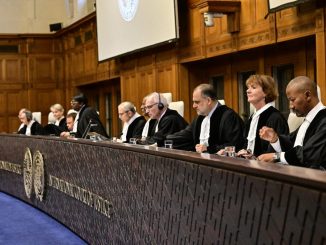
Tribunal against the blockade of Cuba in Brussels

Today and tomorrow, an international tribunal is being held in the Belgian capital to denounce the damages suffered by the Cuban people as a result of the U.S. blockade that the island has been experiencing for more than six decades.

This tribunal was convened last July 18 at the parallel summit of the peoples that took place in Brussels, and from the very first moment, it was a call to debate in the European Parliament, in a political and legal way, the effect of the blockade and the denunciation of its extraterritoriality. The violation of the sovereignty not only of the Cuban people but also of the European peoples and people who want to relate to Cuba.

Let us remember.

Lester Mallory. 1960. His memorandum to overthrow the Cuban Government. Seeing in textual words that “the people want Castro,” they could not come up with a more macabre idea than to drown the people and their desires with a blockade that, over the years, has been turning into a war in all its aspects. To quote the objective they had:

“To provoke disillusionment and discouragement through economic dissatisfaction and hardship, to weaken the economic life of Cuba, denying it money and supplies in order to reduce nominal and real wages, to provoke hunger, despair and the overthrow of the Government.”

But the blockade grew as time went by and as different U.S. presidents passed through the White House. We could write and smudge pages, but in the shortest possible way, let us synthesize, making use of redundancy.

Then came the Torricelli Act in 1992; the Helms-Burton Act in 1996, whose Title III went into effect in 2019. The 243 new measures against the people of Cuba were imposed during the Donald Trump Administration.

And then the inclusion of the island in the list of countries sponsoring terrorism, sponsored in a capricious and criminal manner by the United States of America.

It reads fast without delving into what it implies, but it means a lot. Just to quantify the damage that all these measures have caused to the population, let’s stop her at the losses in the first 14 months of the mandate of the current U.S. President Joe Biden.

According to the Cuban Institute of Friendship with the Peoples (ICAP), the damages caused by the blockade reached 6,364 million dollars, or more than 15 million dollars a day. Between August 2021 and February 2022, they set a record, for only seven months, of 3,806 million dollars. In the absence of the blockade, in that period, the GDP could have grown by 4.5%.

At present, this system of unilateral coercive measures has intensified in the midst of a complex scenario, marked by the consequences of the COVID-19 pandemic and the combined effects of a multidimensional crisis at a global level, reflected in the energy, food, environmental, and transportation sectors, among others.

And it is taking into account all these scenarios of violation against a people that representatives of the European and American society, political parties, associations of jurists, businessmen, scientists, and friends of Cuba are convening this tribunal today. It will be made up of five European and American judges and three prosecutors together with witnesses also from both locations and Cubans. With more than 300 confirmed participants from 17 countries.

In an interview granted to Resumen Latinoamericano, German judge Norman Peach stated:

“We are hopeful that the European governments will make valid an influence on the US government to put a definitive end to a policy that is in violation of international law (…) We appeal to the reason not only political, but also legal, of a government that must comply with the basis of the UN Charter to ‘live and coexist in peace with neighboring states’”.

And although the court’s ruling will not be legally binding, it will serve as a theoretical and legal argumentation and also as working material for solidarity associations, political parties, trade union organizations, companies, and countries.

The participants and congregants agree that the blockade is a crime and must be condemned. So much so that the United States, in the words of Spanish activist and solidarity activist David Rodriguez, should reward Cuba for the aggressor country that it is.

This meeting will mean a qualitative and quantitative advance in the world struggle against the inhuman blockade suffered by Cuba and all those who want to relate to it in any way. Without leaving behind its significance in showing the truth beyond the disinformation and the constant media manipulation in this regard.

The international support for the cause that occupies the court will also be evident these days in Belgium. Along with the screening of the documentary La gota de agua, produced by Resumen Latinoamericano, which shows the effects of the blockade on the life of a little girl suffering from cancer at only a few years old, as just one example.

The humanism that Cuba has shown since 1959 is what the aggressors cannot bear. Because Martí was not just a passing breath of air in Fidel. Not even a source of inspiration. He was not an influence on him. He was a presence. Fidel was all his life in consistent dialogue with Martí’s teachings. And this fact made him forge his personality as a man, politician, and leader that influenced a people towards sovereignty and freedom.

Nor can they refute the fact that a people were taught to read and write from the first days of the triumph of the Revolution. That today, even with all the impediments and obstacles they put in their way, it can be said loud and clear that this island is home to, I dare say, the most educated people in the world. History fulfilled its absolution with Fidel, and it was demonstrated with the passion he put into education.

What can we say about the fulfillment of the Moncada program and the fact that so many men and women chose a leader to lead a national project for more than half a century?

And do you know in spite of what? Invasions, bandits, biological warfare, terrorist attacks and all kinds of daily threats. And always helping people in need around the world. Where others sowed war, he sent life.

That is why, to this day, the world loves Fidel as the great freedom fighter he was and is. And of the rest, of those who tried to overthrow him, no one remembers their names.

Source: Cubadebate, translation Resumen Latinoamericano – English

Strugglelalucha256


Once again the great majority of nations of the world stand with Cuba calling for an end to the blockade

Havana, Nov. 2 — Today, as happens at the beginning of November every year, the resolution presented by Cuba to call for the end of the economic, commercial, and financial blockade imposed by the United States was overwhelmingly approved Thursday by the General Assembly with 187 votes in favor. There were two votes against that were not a surprise: the U.S. and Israel, with Ukraine abstaining.

The resolution recognizes the blockade as the central element of U.S. policy towards Cuba for more than six decades. In all that time, its effects have not ceased for a single day; 80% of the Cuban population have never known their country free of the blockade.

Speaking at the plenary of the 78th session of the General Assembly in New York, Cuban Foreign Minister Bruno Rodríguez Parrilla denounced the violations against the right to life, education, progress, and well-being of Cubans caused by the U.S. blockade.

“Families in the country feel it in the shortages, excessive prices and devalued salaries,” said the foreign minister, and recalled the efforts that the Government of Havana must go through to guarantee the basic food basket to the population despite the obstacles imposed.

“Only with one third of the cost of the effects of the blockade from March 2022 to February 2023 would it have been possible to cover the expenses for that concept”, he asserted.

At the same time, he pointed out that sectors such as agriculture and energy face serious obstacles in acquiring spare parts or new machinery.

Under strict licenses, some agricultural products in the United States travel to the island while subject to draconian and discriminatory laws that violate international trade regulations, he recalled. “These products,” he added, “arrive in U.S. ships that have to return empty because of the blockade itself.”

Rodríguez Parrilla pointed out the intensification of harassment policies during the hardest years of the pandemic when the exemption of sanctions was promoted for humanitarian reasons for some countries but not Cuba. Instead, the blockade was tightened up even further by Trump with 243 new sanctions that continue under Biden; in fact, it has gotten even worse under this Democratic president.

“Why was Cuba excluded from that temporary relief?” questioned Rodríguez Parrilla in rejection of the use of the pandemic as an ally in Washington’s policy of hostility towards Cuba.

Today is one of those days when the support and love we get from the entire world is on display, and we appreciate it. Since 1992, there have been 31 consecutive years of votes with resounding support to end the blockade in the General Assembly, and our question to our arrogant neighbor to the North is how many more will it take for you to get in stride with the humanitarian sentiment of the world.

Source: Resumen Latinoamericano – English

Strugglelalucha256


In Boston: Strategies against the blockade of Cuba being built

Oct. 14 — They came to Boston, the capital of Massachusetts, from all over the country on their own resources. Some paid for overpriced plane tickets to this region of New England, some took buses, but regardless it was worth it because “Cuba is calling us,” as a young activist from Virginia told me.

Representatives of now 70 organizations (13 new groups joined at this meeting) are gathered here for the U.S. National Network of Solidarity with Cuba’s (NNOC) annual conference to analyze, develop, and come up with new strategies. It also provides a renewed impetus to their main objective, which is to lift the economic, commercial, and financial blockade imposed for more than 60 years by both Democratic and Republican governments on the largest of the Antilles.

The meeting – under the slogan Victory in Unity – was also extended to those who could not attend in person through virtual participation from different U.S. cities.

The weekend events kicked off on Friday night with a Pan-African Forum coordinated by the African Studies Department of the University of Massachusetts, where the conference was hosted.

The meeting began this morning with a powerful intervention from the island by Fernando González, president of the Cuban Institute of Friendship with the Peoples (ICAP), who, in his words, recognized the value of the friends in the US who are committed to the struggle to lift the coercive measures that try to suffocate our people.”

“We have to do everything we can to defend our Cuban family,” said activist Gail Walker, a co-chair of the NNOC, speaking on a panel at the event that kicked off this morning and runs through Sunday at the University of Massachusetts Boston.

The executive director of the Interreligious Foundation for Community Organization (IFCO) highlighted the health internationalism of this Caribbean nation by saying, “We owe Cuba for the efforts it has made to train thousands of young people from 120 countries as doctors, who are not just any doctors. They are doctors trained in Cuba.”

The meeting was attended by officials of the Cuban Embassy in Washington, D.C. Diplomat David Ramirez, who thanked the solidarity of the U.S. people who are in favor of the elimination of that unilateral siege that has lasted more than six decades. He stressed how the continuity in the current Democratic administration of the policies of Republican Donald Trump has exasperated the accumulative effect of shortages and the resulting misery to the Cuban people.

Ramirez pointed out the impact of those measures of asphyxiation against Cuba has on the number of people leaving in the last three years.

Before the business part of the meeting began, support for the cause of the Palestinian people in their historic struggle against the occupation of their lands by Israel and the horror of what is transpiring in Gaza was raised.

“Cuba is an example of true brotherhood with Palestine, shown especially through its medical internationalism,” said Calla Walsh, co-chair of NNOC.

Hundreds of Palestinians have studied to become doctors at the Latin American School of Medicine in Havana since the beginning of the century, the young activist recalled.

“They tell us that Cuba’s example of surviving more than 60 years of blockade and siege by the most powerful country in the world gives them hope that Palestine will also survive and live on,” she said.

Walsh quoted Professor Tony Vandermeer, who at the Pan-African Forum denounced the devastation caused by the current Israeli siege of Gaza, which has already left more than 1,600 dead and more than 7,000 injured since the escalation Israel unleashed, with all its U.S.-provided weaponry, against the Gaza Strip after the surprise attack by the Islamic Resistance Movement (Hamas) into Israeli held territory on October 7.

Its open war against the Palestinian people has resulted in the daily bombardment of the Gaza Strip and a total blockade that aggravated the humanitarian crisis in this coastal enclave. Israel has now cut off water, electricity, and fuel services, as well as the entry of food and medicine, while now threatening to kill anyone who does not leave Gaza. This despite the fact that the people of Gaza have nowhere to go.

The Let Cuba Live campaign to gather a million signatures against the blockade and the convening of the next international tribunal to be held in Brussels, Belgium, to denounce that hostile policy towards the Caribbean nation are some of the initiatives discussed by the delegates in the Saturday session.

The conference concludes on Sunday in this coastal city in the New England region, famous for its key role in the revolution for U.S. independence, with the  NNOC coming out of it stronger, more united, and more determined.

As Cheryl LaBash, a co-chair of the NNOC, pointed out in a previous statement to Prensa Latina, if President Joe Biden listened to the voice of the American people, he would lift the economic, commercial, and financial blockade against Cuba because the majority of the people in this country are against it, along with the overwhelming majority of the people of the world

This is being concretely demonstrated by the 106 resolutions approved throughout the country by organizations representing more than 55 million people. LaBash concluded by saying,  “We condemn Biden’s inhumane starvation strategy. He owns this cruelty now, not Trump.”

Source: Resumen Latinoamericano – English

Strugglelalucha256


Greetings from Cuba: Message of solidarity to the U.S. LGBTQ+ community

On the day of the National March to Protect Trans Youth – held on Oct. 7 in Orlando, Florida – the U.S. Friends Against Homophobia and Transphobia Delegation received this solidarity message from our friend, Aylen, at Norteamérica ICAP.

Greetings from Cuba, a country that is advancing in the defense and deepening of equal opportunity rights for homosexuals and transsexuals. It is a privilege for me to learn about social problems you face on a daily basis.

Our struggles will be guided by achieving full rights for all people. That is why we defend the right to solidarity, respect, and tolerance. We reject the imposition of patriarchal dogmas, discrimination, and transgression of personal rights. We defend – as a right – the access to health and education without discrimination based on sexual orientation, skin color, social or religious status.

The right to health constitutes a fundamental right for all human beings.

I am an advocate for all social justice for all people, which also depends on respect for free and responsible sexual orientation and gender identity.

Cuba is moving forward in the implementation of the Family Code. We know that law alone does not achieve transformation. But in Cuba, love is the law.

A hug, and let us continue in struggle.

Lesmes Bonachea Aylen, Norteamérica ICAP

North American Division of the Cuban Institute of Friendship with the Peoples

Un saludo desde Cuba: un mensaje de solidaridad a la comunidad LGBTQ+ en EE.UU.

El día de la Marcha Nacional para Proteger a la Juventud Trans – celebrada el 7 de octubre en Orlando, Florida – la Delegación de Amigos Estadounidenses Contra la Homofobia y la Transfobia recibió este mensaje de solidaridad de nuestra amiga Aylen, en Norteamérica ICAP.

Un saludo afectuoso desde Cuba, país que avanza en la defensa y profundización de los derechos por la igualdad de oportunidades para homosexuales y transexuales. Es un privilegio conocer los problemas sociales que enfrentan ustedes en la vida diaria.

Nuestras luchas están guiadas siempre por alcanzar todos los derechos para todas las personas. Por eso, defendemos los derechos de la solidaridad, el respeto, y la tolerancia. Rechazamos la imposición de dogmas patriarcales, la discriminización, la transgresión, de los derechos personales. Defendemos – como derecho – el acceso a la salud y la educación sin discriminaciones por orientación sexual, color de la piel, estatus social o religioso.

El derecho a la salud constituye un derecho fundamental de todos los seres humanos.

Soy defensora de todas las justicias sociales para todas las personas, que dependen también del respeto a la libre responsable orientación sexual e identidad de género.

Cuba avanza en la implementación de un Código de las Familias. Sabemos que solo la ley no lo logra. Pero, las transformaciones con el amor son posibles.

Un abrazo, seguimos en lucha.

Lesmes Bonachea Aylen, Norteamérica ICAP

División Norteamericana del Instituto Cubano de Amistad con los Pueblos

Strugglelalucha256


‘Cuba in Africa’ cheered at Los Angeles showing

“Cuba in Africa,” a new documentary film by Negash Abdurahman, was shown at the Harriet Tubman Center for Social Justice in Los Angeles on Sept. 24. The meeting, which included reports from a recent delegation to Cuba, was opened up by Carlos Sirah of the Black Alliance for Peace and Jefferson Azevedo of the Harriet Tubman Center for Social Justice.

The film, “Cuba in Africa,” is currently being screened at film festivals. It celebrates the long history of Cuban solidarity with the African struggle against imperialism, including their military intervention that helped bring about the downfall of racist apartheid in South Africa. Abdurahman answered questions by Zoom after the film.

Pastor Kelvin Sauls of Sanctuary of Hope (SOH) joined the meeting from South Africa via zoom. He introduced the youth leaders from the SOH delegation to Cuba. Each of them shared their enthusiasm and astute observations about their trip. It was clear from their talks that these young people were already scholars of the revolutionary process underway in Cuba. A short video of the visit was shown as well.

There was also an announcement about Los Angeles’ role in the national effort to get Cuba #OFFTHELIST.

The Black Alliance for Peace and Let Cuba Live – LA co-sponsored the meeting.


Strugglelalucha256


Solidarity with Cuba continues to grow in the U.S.

New displays of solidarity with Cuba took place in the United States this weekend as part of that growing movement of support that carries an elementary request: Let live a people whose only sin has been to build and defend a different model under the very noses of the empire.

That demand means lifting the blockade, the longest in history against any country, and removing Cuba from the list of states that –according only to Washington’s criteria- sponsor terrorism.

But Cuba is loved, and it is admired, and that was heard today in Miami by the voices of Cubans who live in the US with other solidarity groups advocating for the lifting of that policy of asphyxiation that has lasted more than 60 years.

Despite the heavy rain at times, the participants gathered at the Miami International Airport as they often do at the end of every month, with signs that read: “Remove Cuba from the list of sponsors of terrorism,” “Bridges of Love,” “Down with the blockade”, while repeating slogans and calls for support for the island.

“Once again in Miami the seed of love triumphed over hate”, Cuban Roberto Yis told Prensa Latina. He also said that “ the harassment and provocations we sometimes face  is wrong because this is not about politics, it is not about left and right, it is about the right of our people to survive without being blockaded.”

From his page on the social network Facebook, activist Carlos Lazo said that Cuban Americans and Americans gathered “regardless of the rain, regardless of the thunder, rejecting hatred, imposing love.”

Yesterday in Oakland, California, a similar event for Cuba took place where more than 30 Cuba solidarity activists held banners at the busy farmers’ market near Lake Merritt and in front of the iconic Grand Lake Theater in Oakland.

As photojournalist Bill Hackwell recounted, many cars honked as they drove by, and passers-by were receptive to the literature we handed out calling for Cuba to be removed from the list of state sponsors of terrorism, an end to the blockade, and the closure of the illegal U.S. base on occupied Cuban territory at Guantanamo Bay.

It was not lost on some that the last time there was a demonstration in solidarity with Cuba in Oakland was in April of 2021, organized by Alicia Jrapko, a woman who is remembered for her life in the struggle and a dear friend of the Cuban people. That was her last public event.

Other actions also took place this past week in Chicago, Illinois, and in cities in Minnesota. Many of the people participating in these events for Cuba in the US will be attending the annual meeting of the National Network on Cuba (NNOC) in Boston on October 13-15.

Still resonating is the vocal presentations of several world leader in support of Cuba at the high  evel segment of the 78th regular session of the United Nations General Assembly, calling for the elimination of the blockade against Cuba.

President of Brazil, Luiz Inacio Lula Da Silva, for example, once again condemned the unilateral siege maintained by the White House for more than six decades on Cuba when he said, ”Brazil will continue to denounce measures taken without the protection of the UN Charter, such as the economic and financial blockade imposed on Cuba.”

The Bolivian President, Luis Arce, described Washington’s unilateral siege as “inhuman and criminal”.

Speaking in the debate, the dignitary criticized such coercive measures and the reprisals applied by hegemonic powers against peoples to the detriment of their development and the most elementary human rights.

Arce affirmed that these policies confirm the dysfunctionality of a system far removed from international law and multilateralism. “A clear example of these measures is the illegal, inhumane and criminal economic and financial blockade imposed by the United States against Cuba,” he reiterated.

“I want to call attention to the use of unilateral measures of coercion. In accordance with the UN Charter, the only legitimate sanctions are those imposed by the Security Council to enforce its decisions on the maintenance of peace and security,” said Argentine President Alberto Fernández.

By virtue of this, he added, Argentina joins the demands of the peoples of Cuba and Venezuela for the lifting of the blockades suffered by those nations.

The president of Cuba, Miguel Díaz-Canel, denounced on the same stage of the UN that the blockade is an extraterritorial, cruel and silent economic war that is accompanied by a powerful political machinery of destabilization against his country.

“The Cuban people creatively resists and wins in the face of that ruthless economic war, which since 2019, in full pandemic, opportunistically escalated to an even more extreme dimension, the head of state emphasized.

For that reason, speaking later at a solidarity event, he thanked those who stand by his country’s side in the demand for an end to the blockade.

To his friends in the United States he said: “Receive a fraternal embrace and solidarity from the people of Cuba, receive a message of friendship for the American people”.

Deisy Francis Mexidor is a Cuban journalist, a regular contributor to Resumen Latinoamericano and is a correspondent for Prensa Latina in the United States.

Source: Resumen Latinoamericano – English

Strugglelalucha256
https://www.struggle-la-lucha.org/cuba/page/11/