Dispatches from the housing war

The Red House eviction blockade in Portland, Ore.

Jan. 1 — Millions of renters and homeowners received a last-minute reprieve when President Donald Trump finally signed the (pitiful, inadequate) congressional stimulus bill on Dec. 27 after several days’ delay. The measure extended the Centers for Disease Control (CDC) eviction ban for another month, through Jan. 31, 2021 — just in time to put off a spate of New Year’s evictions amidst the worst of the COVID-19 pandemic.

A Census Bureau survey released just before the holidays found that an incredible 35.3% of adults in the U.S. are “living in households not current on rent or mortgage where eviction or foreclosure in the next two months is either very likely or somewhat likely.”

“The survey found that residents of Washington, D.C., are the most likely to face eviction or foreclosure, with 67.3% of adults living in households where the prospect is at least somewhat likely,” Newsweek reported. “States with a majority of adults also likely to lose their homes include South Dakota, South Carolina, Georgia and Oregon.”

Desperate workers and families, faced with being thrown into winter streets, could finally take a breath when the stimulus bill was signed — but only just. The CDC eviction ban was extended for just another month, during which time high unemployment and the ravages of disease are unlikely to improve. 

And the measure still requires that all back rent and mortgage payments be paid to the landlords and banks — meaning the massive debt crisis facing workers is only getting worse.

“The Federal stimulus bill extends the flimsy CDC ban on evictions (the one that requires you to swear to pay your landlord everything you can) to the end of January,” noted the Crown Heights Tenants Union. “All this moratorium does is require tenants to beg judges not to evict them. 

Clianda Florence-Yarde speaks at a rally after her family’s eviction in Rochester, N.Y.

“It did not, for example, stop the ‘legal’ eviction of public school teacher Clianda Florence-Yarde and her three children in Rochester, N.Y., on Friday night.”

Florence-Yarde, a Black woman, was jailed, as were 15 housing activists who attempted to block the family’s forcible eviction on Dec. 18. Florence-Yarde had withheld payments because of awful conditions and numerous code violations, which her landlord refused to correct.

Diane Yentel, president of the National Low Income Housing Coalition, told National Public Radio, “One of the flaws is that [the CDC ban is] not automatic, and so renters need to know that the protection exists and they need to know what actions to take in order to receive that protection.”

“The order is also being treated differently by judges around the U.S.,” notes NPR, “so outcomes vary wildly depending on where people live or what court they end up in,” citing the case of Tiffany Robinson, a Texas mother of three, who was evicted despite doing her best to fulfill the CDC requirements.

A quick survey of local news media across the U.S. is enough to show that this is a deep, widespread, countrywide crisis, not limited to the most expensive coastal cities. From Tampa, Fla., to Youngstown, Ohio, the story is the same: working-class families with few resources facing eviction, landlords hungrily preparing for mass evictions as soon as restrictions are lifted, and already overburdened tenants’ advocates unable to meet the massive need for legal and material support.

Not a new crisis

As the Lower Hudson news site reported Dec. 21, “Before the pandemic, 48% of rental households in the nation were already ‘rent burdened,’ or paying more than 30% of their income towards rent, according to the 2018 American Community Survey data from the U.S. Census Bureau.

“The majority of renter households below the poverty line spent at least half of their income toward rent in 2018, with one in four spending over 70% of their income toward housing costs, according to 2018 U.S. Census Bureau data.”

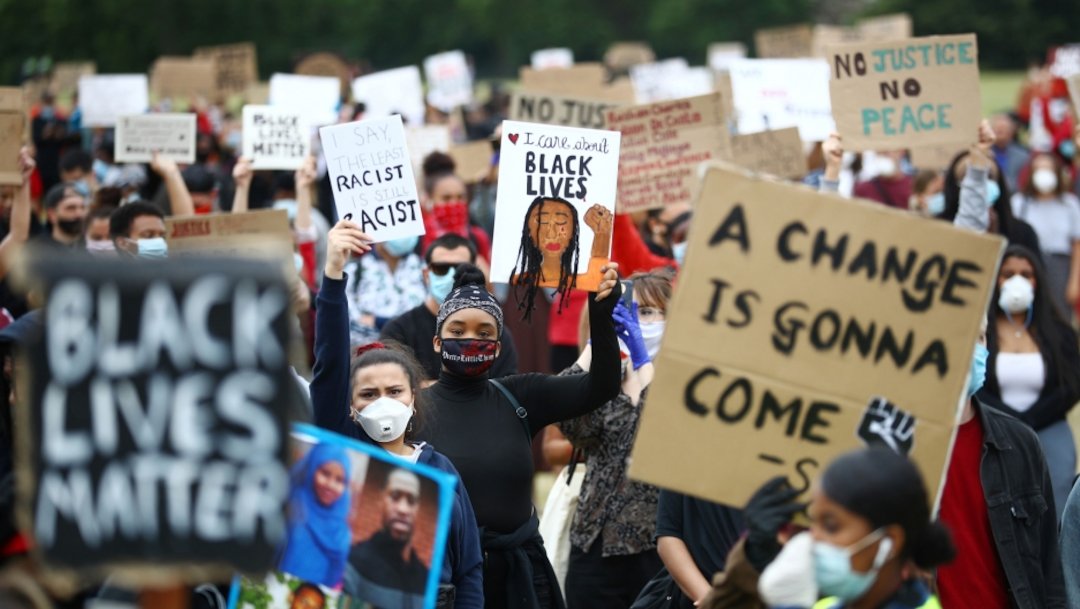
No wonder that the fight for housing rights has been among the most widespread working-class struggles in recent years, along with the movement to defend Black lives from police violence. Because of widespread housing discrimination, racist redlining by banks and attacks on public housing residents by white supremacist politicians, these struggles also overlap to a great extent.

Even before the current economic crisis, Black women were twice as likely to be evicted as white people in at least 17 states, according to Sandra Park, senior attorney at the American Civil Liberties Union Women’s Rights Project. 

“Unfortunately, the fallout will be borne most by women of color, who have also had to bear so much of the fallout of the pandemic and economic crisis overall,” Park told The 19th News.  

Here are a few current hotspots in the housing struggle. 

Portland: Red House defense

In early December, police in Portland, Ore., attempted to raid a house in the gentrified North Portland neighborhood and evict the Kinney family. Their home, known as the Red House, is one of the few remaining Black and Indigenous-owned homes in what was once a predominantly Black neighborhood.

Activists supporting the Kinneys, who have camped out near the house since September, managed to fight off the cops. An eviction blockade” has been established around the house, including barricades and spikes on the street, with 24-hour people’s patrols to keep cops out. The defense of the Red House is being carried out in the militant spirit of the Black Lives uprising that has kept up a nightly presence in Portland since late May.

Bankers and developers have been attempting to steal the Kinney’s house — owned by the family since 1955 — using Oregon’s policy of “nonjudicial evictions” that allows for automatic foreclosures without the protections that would be present in a court case. The Kinneys and their supporters explain that this is just a modern version of Portland’s long history of segregation and theft of Indigenous lands. 

“Known white supremacists continue to illegally brandish arms without consequences,” the Kinney family said in a statement. “We refuse to be characterized as a violent movement when our leadership is rooted in an Afro-Indigenous ethic of land reclamation.”

For more information, visit RedHouseOnMississippi.com.

New Yorkers win stronger eviction ban

New York City is notorious for its exorbitant rents. Workers and families are forced to double, triple or quadruple up in cramped apartments, often owned by slumlords who refuse the most basic repairs for health and safety. According to the Coalition for the Homeless, nearly 60,000 New Yorkers were homeless on any given night in October 2020 — many of them children. That’s twice as many as 10 years ago. 

Politicians in City Hall and the New York state Capitol in Albany, including Mayor Bill de Blasio and Gov. Andrew Cuomo, are beholden to the interests of big landlords and real estate developers.

So it was an important victory for fighters for housing justice and all New York state residents when the state Legislature and Cuomo were forced to enact a strengthened ban on evictions during a special session Dec. 28. 

Under the measure, most evictions will be halted until May 1, 2021, as long as tenants and homeowners sign a declaration stating that “they have lost income or dealt with increased costs, or if moving would put them or a member of their household at higher risk of COVID-19 due to an underlying medical condition.” 

“An eviction moratorium is only a temporary solution,” said Cea Weaver of the Upstate-Downstate Housing Alliance. “Between now and May 1, we have to come together as a movement, stronger than ever before, to ensure that all back rent accrued during the crisis is cleared. New York’s leaders need to fund social and supportive housing, and make a real plan to end homelessness.”

“Now we have to ORGANIZE, continue to build the #RentStrike, to #CancelRent by May Day so that no one owes any rent and all cases are permanently dismissed on May Day. We won this victory on the eviction ban by persistent struggle in our buildings and the streets. We can and WILL cancel rent by May Day,” vowed the Crown Heights Tenant Union.

Los Angeles: Families seize empty houses

A pitched battle between houseless families and the vicious California Highway Patrol (CHP) on Nov. 25 made national headlines. The families and supporters were attempting to occupy 19 empty homes in the El Sereno neighborhood of Los Angeles. 

The homes are owned by the California Department of Transportation, which acquired them decades ago as part of a since abandoned plan to extend the 710 Freeway. In March 2020, the Reclaiming Our Homes movement, led by homeless Black and Latinx women, seized 13 of these long-vacant homes, inspired by the 2019 Moms 4 Housing takeover in Oakland, Calif.

“During a press conference in March 2020, Reclaimer Ruby Gordillo stood on the porch of the modest bungalow she occupied with a banner that read ‘shelter from the storm.’ She told a crowd of news media that reclaimers were calling on officials to open the homes for Angelenos experiencing houselessness, reported Bitch Magazine.

“With this health crisis and this housing crisis, we need every vacant house to be a home for those who don’t have a safe and stable place to sleep in,” Gordillo said.

Taken off guard by the bold action, the California Department of Transportation (Caltrans) and the Los Angeles Housing Authority allowed them to stay. But there are 200 vacant houses in all. Now CHP stormtroopers patrol the area to prevent further attempts to house people in need, like the one in November.

A homeless census released in June 2020 counted more than 66,000 unhoused people in Los Angeles County, a 12.7% increase over 2019. But that’s only part of the story. Downtown Los Angeles has one of the country’s largest concentrations of homeless people, while families in the suburbs cram into garages rented out as “apartments.” In July 2019, the L.A. City Council cruelly reinstituted a ban on sleeping overnight in cars, criminalizing thousands for using their only shelter.

Strugglelalucha256


Jeff Bezos says you don’t deserve $2,000


Jeff Bezos has a fortune of $194 billion. Just in the United States, over a third of a million people have died from the coronavirus.  

The tragedy has been a gold mine for the owner of Amazon. Bezos’ stash gained another $79 billion in 2020. 

Yet the richest man on earth doesn’t think you deserve a $2,000 stimulus check. His personally owned newspaper, the Washington Post, came out against the proposed $2,000 checks in a Dec. 29 editorial.

The Post calls this “a bad idea.” It attacked “the progressive left, spearheaded by Sen. Bernie Sanders,” for saying that the $2,000 would go to desperate families. 

Bezos’ newspaper claimed that “huge amounts [are] destined for perfectly comfortable families.” The same phony argument could be made against Social Security and Medicare.

The Washington Post is furious about the alleged $464 billion cost but is silent about the twice as large annual cost of the Pentagon and U.S. spy agencies.  

The real crime in the bill is cutting federal supplemental unemployment benefits from $600 per week to just $300.  

The initial $600 weekly amount actually reduced the poverty rate. Seven million more people were thrown below the absurdly low federal poverty level when the checks expired at the end of July. 

Sweatshop billionaire

The attitude of Bezos’ mouthpiece shouldn’t surprise anyone. Mr. Amazon’s $194 billion treasure is based on working to the bone hundreds of thousands of workers in the U.S. and other countries.

Amazon warehouse workers are monitored and if they can’t keep up with the pace they’re fired. Fifteen workers collapsed during a 2011 heat wave at an Amazon warehouse in Breinigsville, Pa., 11 miles from Allentown. 

The company knew of the health dangers but refused to reduce the line speed. Amazon instead parked ambulances outside the door. 

Even before Bezos bought it, the Washington Post was a company town newspaper, the “company” being the CIA and the military-industrial complex. Its real name should be the Pentagon Post.

The Post broke the 1976-1977 strike of its printing press operators. This defeat of labor whetted the appetite of other union busting capitalists.

Poor and working people ― led by Black, Indigenous and Latinx voters ― defeated Trump by over 7 million votes. But all the capitalists, landlords and cops have some Trump in them.

Just in order to live, we have to struggle. Union organizing drives at Amazon, Walmart and Target are no more impossible than making Henry Ford sign a union contract in 1941.

The new year will be a fightback against all the billionaires.

Strugglelalucha256


Billionaires got a trillion. We get $600.

After months of doing nothing, the super Scrooge Congress finally provided a little help for poor and working people. We desperately need it.

The coronavirus pandemic has killed over 320,000 people in the United States. Black, Indigenous and Latinx people are almost three times as likely to die from it. 

The real number of unemployed was at least 30 million people In October, according to Dr. Heidi Shierholz, former chief economist of the U.S. Department of Labor.

Eight million more people have been pushed below the official poverty line since June. Close to 28 million adults ― and millions of children ― live in hungry households. Landlords and banksters want to launch a tidal wave of evictions and foreclosures. 

So what did we get? Eleven weeks of $300-per-week supplemental unemployment checks. The moratorium on evictions and home foreclosures will be extended until Jan. 31, 2021 ― the middle of winter. 

And a $600 “stimulus” check that will last an average family who rents an apartment or house just 11 days. Congresswoman Ayanna Pressley, a member of The Squad, rightfully calls this money “survival” checks. 

This absolutely needed yet criminally delayed assistance for millions of poor and working people is chump change to what billionaires have stolen. Between March and November of 2020, the 647 U.S. billionaires grabbed another $960 billion.

That’s enough money to give $15,000 checks to 64 million poor and working families. Instead, Jeff Bezos deposited another $70 billion in his piggy bank. All of Bezos’ loot is produced by Amazon workers, 20,000 of whom have caught COVID-19.

Three members of the Walton family ― who own Walmart and the state of Arkansas ― added another $48 billion to their pile. Yet Walmart refuses to provide hazard pay to its 1.4 million U.S. employees.

Then there’s Mr. Grinch himself, John Tyson, CEO of Tyson Foods. The dead animal capitalist gained another $800 million while 11,000 Tyson workers were infected with the coronavirus.

They don’t really care about us  

Why did Congress dawdle for almost six months after the last set of assistance measures expired at the end of July? Even the airlines and mass transit agencies were screaming for help.

The aid that finally dribbled out was $50 billion less than what 647 billionaires had grabbed while 320,000 nonbillionaires died of the coronavirus. Paid leave for workers with COVID-19 was blocked. 

But another $696 billion could be found for the Pentagon. As Michael Jackson pointed out, they don’t really care about us. 

It was no different 90 years ago at the start of the Great Depression. Then, President Herbert Hoover claimed he was given the following advice by Treasury Secretary Andrew Mellon: “Liquidate labor, liquidate stocks, liquidate the farmers, liquidate real estate.”

Isn’t that what’s happened in the last six months? Hundreds of thousands of small and not-so-small businesses have gone to the wall with millions of workers losing their jobs.

Meanwhile, the big banks are doing swell. Among them is the Bank of New York Mellon with $381 billion in assets. 

As Larry Kudlow ― Trump’s $185,000-per-year director of the National Economic Council ― once said, Recessions are therapeutic.”  

It was cleanup time for Big Capital. One capitalist always kills many,” was how Karl Marx, the founder of scientific socialism, described the process. More important was the drive to further impoverish the working class. Capitalists wanted to force workers to take any job and lower wages even more. 

Many on Wall Street and in Congress even blamed the original $600-per-week supplemental unemployment checks for the Black Lives Matter movement.

They figured the only reason that 26 million people protested police murders was that they had nothing to do and cash in their pocket. Kudlow claimed that extending the $600 checks was a disincentive for people to try to find a job. 

The beds never get cold

Kudlow’s remarks echo those of his class. In their country clubs and mansions, they tell each other that the working class is lazy and has to be compelled by hunger, evictions and police terror to take any job.

They not only don’t really care about us, they have no idea how millions of people live. 

On Dec. 19, three people died in a fire that spread through a crowded building in the Elmhurst neighborhood of Queens, N.Y. This tragedy occurred less than a mile from the Elmhurst Medical Center, where, in the springtime, refrigerator trucks stored the bodies of those who died of COVID-19.

According to City Councilperson Daniel Dromm, “Many of the inhabitants [of the burned building] are immigrants who share beds, switching off for 12 hours at a time while they are working, because they cannot afford to live in better conditions.”  

Those were the conditions of the working class in Britain 200 years ago. Here’s how John Fielden, a capitalist himself, described them:

“The profits of manufacturers were enormous; but this only whetted the appetite that it should have satisfied, and therefore the manufacturers had recourse to an expedient that seemed to secure to them those profits without any possibility of limit; they began the practice of what is termed “night-working,” that is, having tired one set of hands, by working them throughout the day, they had another set ready to go on working throughout the night; the day-set getting into the beds that the night-set had just quitted, and in their turn again, the night-set getting into the beds that the day-set quitted in the morning. It is a common tradition in Lancashire, that the beds ‘never get cold’.(Quoted by Marx in “Capital.”) 

“Power concedes nothing without a demand,” declared Frederick Douglass. It was the fear of what millions of suddenly unemployed workers might do that forced Trump and Congress to provide $600 weekly unemployment checks and a $1,200 stimulus check in the springtime.

We need to make them fear us again. The year 2021 will be a year of struggle.

Strugglelalucha256


Why won’t Congress deliver badly needed stimulus checks?

“Stimulus bill and checks not likely to arrive before Biden takes office,” Newsweek reported on Dec. 5. 

On Dec. 2, House Speaker Nancy Pelosi and Senate Minority Leader Chuck Schumer announced that they had offered Senate Majority Leader Mitch McConnell a $908 billion coronavirus stimulus plan. Under the Pelosi-Schumer plan, there will be no stimulus checks at all, only a new $300-per-week unemployment benefit that is not retroactive for those whose $600-per-week benefits have ended. McConnell says he’ll accept something that’s a little more than half that amount, $550 billion.

Pelosi and Schumer had rejected an offer from President Trump two months ago, on Oct. 1, for $400 per week in retroactive unemployment benefits for those whose $600-per-week benefit had ended, plus a stimulus check, because it “wasn’t enough.”  

Of course, Trump’s election campaign might have benefited from checks going out then — which is why he offered it — but why put forward something that’s much, much less now? Are they even trying?

There’s a puzzle here. At first glance, it might appear that the capitalist class favors the stimulus since the stock market rises whenever passage appears more likely. Is there a common interest between Wall Street and the workers, who certainly need the extended unemployment benefits and stimulus checks? 

The stimulus checks are newly printed money from the U.S. Treasury and some say that the new money is what is raising stock prices. That’s the New Deal Democrats’ approach, which is also given as the reason that reactionary Republicans are opposed to the stimulus.

Why would Mitch McConnell — who more openly than most speaks for big capitalist interests — oppose the proposal to put extra money into the hands of the workers if it is so good for the stock market? Is McConnell turning against the interests of business? 

From the standpoint of the capitalists, the mass unemployment created by the COVID-19 pandemic provides a unique opportunity for employers to lower wages and increase the rate of surplus value gained from the exploitation of workers. Don’t ignore the reports that say that in this pandemic, the billionaires are winning. While many have suffered, the richest among us kept getting richer, reported Farhad Manjoo in the New York Times, Nov. 25.

To the extent that the government feels obliged to put money into the hands of workers, if only to subdue unrest, the opportunity to raise the rate of surplus value — the ratio of unpaid to paid labor — is lost if the workers aren’t desperate and are able to in any way resist wage cuts.

Why does the stock market rise when the passage of the stimulus appears more likely? The stock market looks only at the short term. What is going to happen in the next quarter? If money is put into the hands of workers now, the pace of business will increase. Seeing the prospect of more business activity, the stock market rises.

But any reduction in the rate of surplus value will reduce the rate of profit in the long run. While the stimulus can improve business activity, it also reduces the rate of profit — more business at a lower rate of profit.

So Sen. McConnell is right from the viewpoint of the capitalist class. And the working class has the exact opposite interest. McConnell and his capitalist patrons sense that without the stimulus there will be a higher rate of surplus value — gained by cuts in wages and benefits — even if this means less business activity in the next few quarters. Therefore, in the long run, the less stimulus put out by the government, the higher the rate of profit will be. 

The interest of the capitalist class in the stimulus is thus diametrically opposed to the interest of the working class.

Strugglelalucha256


The war against street merchants

Jobless men sold apples during the Great Depression. Ninety years later, many city sidewalks are lined with street merchants trying to sell food, clothing and other needed goods.

Why are these women and men willing to stand in all sorts of weather for 10, 12 or more hours a day? Because they have to.

That’s the only way the sellers can eat and pay the rent, not only for themselves but also for their children. Many street merchants send money to their families in other lands, keeping them alive.

Even during periods of capitalist “prosperity,” millions are unemployed. Discrimination in hiring, particularly against the undocumented, drives many immigrants to sell on the street. The current coronavirus pandemic and economic crisis have forced many more to become street merchants. 

Deliberate deindustrialization is another reason. Black workers in Baltimore who used to have union jobs at the now closed Sparrows Point steel mill or GM plant can be found selling goods.

None of these workers are criminals, yet they are victimized by police.

In 2019, 319 street merchants received a $188,531 settlement in New York City after cops stole their property. 

The big-hearted Los Angeles City Council voted in March to ban unlicensed street vending. As many as 50,000 people are to be driven off the streets, sidewalks and parks. 

“Don’t put fines on us, let us work,” responded one worker, Aureliano Santiago. Thousands of street merchants have exhausted their savings because of the coronavirus pandemic. 

The same city government gave L.A. real estate developers and hotel owners around $1 billion in tax abatements from 2005 to 2018. 

Long standing hate

Donald Trump always hated street merchants. He tried to drive out disabled veterans from selling near Trump Tower on Manhattan’s posh Fifth Avenue. 

GIs can be saluted, paraded and buried after they come home from another war for Big Oil. But cops are to be sicced on them when they try to earn a living.  

The New York Times ― now an opponent of Trump ― also demanded the vets’ removal in a 1991 editorial. The Times lamented that “merchandisers of cut-rate ties, scarves, jewelry, counterfeit Rolexes, Bart Simpson T-shirts and other cheap goods have recruited a sales force of disabled veterans.” 

Why didn’t the newspaper try to recruit veterans for decent-paying jobs?  Over the past 60 years, nearly 900,000 manufacturing jobs in New York City have been destroyed.

Along Junction Boulevard in Queens, N.Y., this writer hasn’t found any “counterfeit Rolexes” or, horror of horrors, “Bart Simpson T-shirts” for sale. Instead, winter clothing, housewares and plenty of tasty food, including pupusas, are being offered.

It wasn’t any different a century ago in Manhattan’s Lower East Side ― today’s Loisaida ― with the exception of knishes being sold. Streets were filled with pushcarts operated by Jewish and Italian poor people trying to survive.   

Police fired 41 shots at Amadou Diallo on Feb. 4, 1999, murdering the unarmed immigrant from Guinea. Right-wing commentator Heather Mac Donald dismissed the African victim as “a peddler of bootlegged videos and tube socks.” 

Does selling tube socks deserve the death penalty? For displaying a complete lack of humanity, Mac Donald has become a fixture at the anti-union Manhattan Institute. 

Hilter didn’t like peddlers, either. Nazis targeted Jewish peddlers to divert people’s hatred away from big capitalists like the Krupps.

Landlords want to get rid of street merchants because they don’t collect rent from them. The same goes for the banks that own the landlords’ mortgages.

It’s Amazon, not street merchants, that is ruining thousands of retail stores. It’s owner Jeff Bezos, with his $186 billion fortune, who’s responsible for emptying out the shopping centers.

What do you have to sell?

In a capitalist society like the U.S., everybody has to sell something. For the vast majority of the population, this means selling one’s ability to perform labor. 

Karl Marx, the founder of scientific socialism, called this ability “labor power.” Skilled labor is compounded simpler labor.

Capitalism couldn’t exist if everyone was “their own boss.” The capitalists need you to work for them.

Andrew Carnegie wanted his tombstone to read, “Here lies a man who knew how to get other men to work for him.” Tens of thousands of “other men” worked in Carnegie’s steel mills 12 hours a day, seven days a week.

It took centuries in Western Europe to force people to work for capitalists. They had to be cut off from their means of sustenance.

The reason there’s been no British king named Henry since the 1500s wasn’t because Henry VIII had six wives. It’s because this tyrant hanged 72,000 homeless people, who were called “vagabonds.” Rudy Giuliani would have been one of Henry’s lawyers.

British colonizers forced Africans to work for them by violence and imposing taxes. It was the African Holocaust that supplied the U.S. with the enslaved labor that produced most of the country’s exports until the Civil War.

Millions of farmers in the U.S., including sharecroppers, have been driven off the land since the Great Depression. But not everybody could find a job.

That includes activists who were put on “do not hire” lists. Martin Irons, a leader of a 1886 railroad strike, was forced to sell peanuts on the streets of St. Louis to survive. The Black communist organizer Hosea Hudson had to sell shaving goods during the 1950s anti-communist witchhunt.

The tens of millions who sell their labor power to capitalists and the millions of people who are forced to sell on the streets are natural allies.

Defending street merchants goes hand-in-hand with fighting police terror. It’s part of the same struggle as fighting for health care and unemployment compensation during the coronavirus crisis.

Strugglelalucha256


NYC postal workers rally

Postal workers and their supporters demonstrated across the country on Aug. 25. They were protesting the attacks on the postal service by President Trump and Postmaster General DeJoy.

In New York City, a protest rally gathered at lunchtime on the steps of the main post office on Manhattan’s Eighth Avenue, across from Pennsylvania Station. 

Among the speakers was Jonathan Smith, the president of the 5,000 member New York Metro Area Postal Union, the largest local in the American Postal Workers Union. Smith described how postal workers delivered “not the Republican mail or the Democratic mail — they deliver all the mail.”

Smith spoke in front of the best-recognized U.S. post office. It’s named after former Postmaster General James A. Farley, who was a political fixer for President Franklin Roosevelt. 

Inscribed across the front, above its stone columns, are the words of Herodotus: “Neither snow nor rain nor heat nor gloom of night stays these couriers from the swift completion of their appointed rounds.”

The Greek historian was describing the Iranian couriers of 2,500 years ago, who, along with the Inca messengers in Peru, were employed in the most famous postal systems of olden times. 

The words of the ancient writer also describe the hundreds of thousands of postal workers who promptly deliver medicine and other mail from Florida to Alaska. Dozens of postal employees have died of the coronavirus. The anthrax attacks in 2001 killed two postal workers.

Other rallies defending the postal system were held in Sunset Park in Brooklyn and in front of the Knickerbocker post office in lower Manhattan. There, on East Broadway in Manhattan’s Chinatown, 20 people gathered to denounce the cutbacks, which include the proposed closing of the Knickerbocker station.

Strugglelalucha256


“Billionaire landlords have to go!”

Aug. 20 ― Over five hundred people came to New York City’s public research library on Manhattan’s Fifth Avenue this afternoon. They were determined to stop the wave of evictions that is coming.

New York Gov. Cuomo’s ban on evictions will expire on Sept. 4. Tenant groups across the state are preparing to stop the slumlords and sheriffs from throwing families into the street.

The action today was called by the Right To Counsel NYC Coalition, Housing Justice for All and the Metropolitan Council on Housing. People belonging to local tenant organizations came from all over the city.

Members of the Crown Heights Tenant Union, the Flatbush 

Tenants Union, the Northwest Bronx Community and Clergy Coalition, Community Action for Safe Apartments (CASA), Tenants & Neighbors and other neighborhood groups came with their colorful banners.

“Cops and landlords have to go!” was a favorite chant. Speakers in both Spanish and English denounced evictions with their remarks translated. 

One woman talked of how she wanted to move to another state so she could be near her terminally ill mother, but the big landlord refused to break her lease.

This writer carried a sign from Struggle-La Lucha that said, “Never Forget Eleanor Bumpurs.” The 66-year-old Black grandmother was killed on Oct. 29, 1984, as police enforced an eviction from her Bronx apartment. New York policeman Stephen Sullivan fired two blasts from his 12-gauge shotgun at her.

Bumpers owed $394 in back rent. As the sign read, evictions kill!

REBNY here we come

People were eager to march through the biggest concentration of corporate criminals on the planet. They chanted, “We believe that we will win!” as they left Fifth Avenue and went east on 42nd Street.

Hundreds of people trooped up Madison and Park avenues past dozens of skyscrapers that house much of U.S. big business.

There were probably at least 100 construction workers who died building these structures. Nowhere was there a plaque remembering those who were killed.

People ended up at 51st Street and Lexington Avenue, the headquarters of the Real Estate Board of New York. Known as REBNY, it’s the united front of all the landlords and developers in the city.

If it was up to REBNY, every poor person would be driven out of the Big Apple. People held a speakout right in their face.

Tiffany King of the Crown Heights Tenant Union told listeners of her family’s righteous struggle against their greedy landlord. Ms. King is determined to persevere.

That spirit is shared by thousands who are determined to stop evictions.

SLL photos: Stephen Millies

Strugglelalucha256


Wrecking the post office and the election

From Harlem to Seattle, mail boxes are being removed by orders of Trump’s handpicked postmaster general, Louis DeJoy. Trump is sabotaging the post office in an attempt to steal the 2020 presidential election. 

The mail is being deliberately delayed with processing machines being removed from postal facilities. Postal workers have been told to leave mail behind if delivering it will result in overtime pay. 

The first victims will be seniors and all other persons whose prescription medicines are arriving late. For people with diabetes, the delay in receiving insulin could be fatal. 

To Trump and DeJoy, anyone dying as a result is just “collateral damage.” That’s the lying term used by the Pentagon to justify the deaths of children and other civilians in bombing raids carried out for Big Oil.

Being targeted are the tens of millions of voters who will be mailing in their ballots because of the COVID-19 pandemic. The postal service sent letters to 46 states and Washington, D.C., warning that the mail-in ballots may be delayed and thus not counted. 

DeJoy sent out this threat not only to discourage people from voting by mail but also to cast doubt on the result. It’s part of a White House campaign that’s meant to enable Trump to claim vote fraud if he’s losing the election.

This attempted election tampering is a follow-up to Trump’s June 1 coup attempt. Millions of people were in the streets demanding that Black lives matter!

Trump threatened to invoke the 1807 Insurrection Act ― which was enacted to suppress rebellions of enslaved Africans ― to send troops to shoot protesters. 

It’s absurd to claim that the post office can’t handle the mail-in ballots. Last year the postal workers handled 142.6 billion (that’s “billion” with a “b”) pieces of mail. In three weeks, postal workers handle as much as UPS Inc. and FedEx combined handle in a year.

Just the 16.5 billion single pieces of first class mail that were delivered is 110 times the 150 million ballots that will be cast, many of which will be cast in person. 

They sneer at democracy 

Stealing elections in the United States is nothing new. That’s how George W. Bush got to the White House 20 years ago with help from his brother, then-Florida Gov. Jeb Bush.  

The wealthy and powerful scorn democracy. They find it repulsive that the vote of a homeless person ― or any poor and working person ― should count as much as theirs.

The late oil billionaire H.L. Hunt ― who may have been a co-conspirator in John F. Kennedy’s assassination ― wanted a social order in which the richest could cast the most votes. Hunt even wrote a novel entitled Alpaca describing this monstrosity. 

The Wall Street Journal’s editorial page editor Robert L. Bartley justified George W. Bush going to the White House despite winning 543,895 less votes than Al Gore. Bartley did so on the basis that many of the Democratic votes were cast by “union households” and “Blacks.”

The day after this racist rant was published, five U.S. Supreme Court justices selected Bush as president on Dec. 12, 2000. 

The 15th Amendment to the U.S. Constitution was ratified in 1870. It mandates that the right to vote can’t be denied “by any state on account of race, color or previous condition of servitude.”

The capitalist class never enforced their own constitutional amendment while millions of Black people were denied the vote by Ku Klux Klan terror.

The FBI did nothing when Harriette and Harry T. Moore were bombed in their home on Christmas Day, 1951. They were murdered by the Klan for registering Black voters. 

The 24th Amendment is also a dead letter. Ratified in 1964, this amendment prohibits poll taxes.

Yet the U.S. Supreme Court has upheld state laws requiring voters to have photo identification, which usually costs money. If people have to spend money to vote, isn’t that a poll tax?

If the U.S. were a democracy, people could vote in referendums for free health care, a $20 per hour minimum wage and community control of the police.

After people in Baltimore voted for rent control in a 1979 referendum, a judge threw out the election. 

Why they hate postal workers

The attacks on the post office are not just because of the election. For over 40 years, postal workers have been under assault. Dozens of employees have died of the coronavirus.

Employment has fallen from almost 800,000 workers in 1999 to a half-million last year. Yet the Postal Service is the largest employer of union workers in the U.S.  

These cuts have fallen heaviest on Black workers, who comprise 27 percent of postal employees. The post office is the largest employer of African Americans earning more than $50,000 per year.

Over 40 percent of postal workers are Asian, Black, Indigenous or Latinx. 

Billionaires have never forgiven postal employees for their rebellion, the Great Postal Strike of 1970. President Richard “Watergate” Nixon sent GIs to try to break the strike.

The 200,000 workers who went on a wildcat strike won a victory for all poor and working people.

Postmaster DeJoy is a multimillionaire who bought his position with millions in campaign contributions. As CEO of the New Breed Logistics, he refused to hire members of the International Longshore and Warehouse Union in a Compton, Calif., facility.

Four women in New Breed’s Memphis warehouse suffered miscarriages in 2014 because supervisors refused their requests for light duty. 

On Aug. 18, DeJoy announced that he’s suspending, but not reversing, any further cutbacks in postal service until after the presidential election. 

This union buster can’t be trusted. The capitalists want to privatize the postal service and break the postal unions.

That disaster would be followed by Social Security being taken over by Wall Street brokerage firms and hedge funds.

The people need to be mobilized to defend the post office and the elections.

Strugglelalucha256


Unemployed Workers Committee launched to stop evictions and utility shutoffs

The Peoples Power Assembly is launching an Unemployed Workers Committee to Stop Evictions, Foreclosures and Utility Shutoffs. Its slogan is, “Through solidarity we can protect each other against capitalism and injustice.”

Here is the list of seven things the group plans to do:

  1. Stop evictions and foreclosures through mass action, by forming a human shield to physically prevent evictions;
  2. Advocate for governments and sheriffs’ departments to extend no eviction and foreclosure orders until people are safely back to work and able to pay; 
  3. Hold the big landlords and banks responsible during this crisis, which includes demanding no rent increases, evictions or foreclosures, and housing fit for human beings;
  4. Work to ensure unemployment rights and guaranteed income for all jobless workers;
  5. Protect unemployed workers, the homeless and also small landlords who are at the mercy of the big banks, and whose foreclosures will impact their tenants;
  6. Demand safe working conditions and hazard pay for all workers to ensure that they do not get sick or spread infection to their families and friends; 
  7. Defend the community from utility shutoffs; heat, water and light are a right!

Baltimore Peoples Power Assembly organizer Steven Ceci said: “This is a long-term project aimed at uniting workers in the community for our self-defense through solidarity. Our goal is to be able to declare eviction-free and foreclosure-free zones.”

The Rev. Annie Chambers, a PPA organizer and housing advocate at Douglas Homes Housing Project, stated: “If we can’t work, then how can we pay? We are demanding no evictions, foreclosures and utility shut-offs until this crisis is over.”  

Chambers, along with the Ujima People’s Progress Party and the Peoples Power Assembly, distribute free food as part of the Food Is A Right Campaign from Monday to Friday at Douglas Homes in East Baltimore.

Ceci added: “Those most impacted are Black, Latinx and poor workers. In fact, it was the 2008 subprime mortgage scandal in combination with deindustrialisation and the loss of union jobs that stripped wealth from Black and Latinx families.” 

The PPA sees the launch of this mutual aid group as a continuation of its protests against racism and police terror. It invites all groups and individuals to join and pledges to unite with all groups that want to stop evictions and defend workers and the poor.  

If you would like to join the Unemployed Workers Committee, please sign up here

For more information, visit PeoplesPowerAssembly.org or call (410) 218-4835. Follow on Facebook @PeoplesPowerAssembly or Twitter @BaltoPPA.

Strugglelalucha256


Election by coup?

With President Donald Trump ruling mainly by decree, there were many who thought his recent tweet about delaying the election meant that he intends to decree himself president for another four years. The purpose of that tweet seemed to be to raise uncertainty about the validity of the November vote.

The November vote is to select electors for the Electoral College, which then elects a president and vice president. Trump lost the popular vote in 2016 but won the Electoral College vote, which is the only one that matters. The U.S. has never had a democratically elected president. All have been selected by the Electoral College.

In 2016, the Electoral College was manipulated with vote challenges. Some 1,913,369 ballots were challenged and thrown away in key states in 2016, giving Trump the Electoral College win. George W. Bush did this in the 2000 election, challenging and invalidating the Black vote in Florida. When a recount to include the Black vote was demanded, the Supreme Court intervened and handed the Electoral College and the presidency to Bush.

According to the U.S. Civil Rights Commission, which investigated in Florida, the chance of your ballot being challenged and uncounted is 900 percent higher if you are Black than if you are white.

That’s what Trump did in Detroit in 2016, challenging the Black vote. Trump “poll watchers” challenged every single Black vote in Detroit, preventing the counting of 75,355 ballots in the city. That gave Trump a “victory margin” of 10,000 to take Michigan’s Electoral College vote and the White House.

There is already a widespread suppression of Black, Latinx and Indigenous peoples’ voting rights. 

At least 1,688 polling places have been closed across 13 states, nearly all in the South and West, between 2012 and 2018, according to a report by the Leadership Conference on Civil and Human Rights.

In addition, states “have shortened voting hours, enacted new barriers to registration, purged millions from voter rolls, implemented strict voter identification laws, reshaped voting districts and closed polling places,” the report says.

“For many people, and particularly for voters of color, older voters, rural voters and voters with disabilities, these burdens make it harder — and sometimes impossible — to vote,” the report adds. 

Using voter suppression and challenges to win the Electoral College votes in so-called swing states like Florida, Michigan, Pennsylvania and Wisconsin, Trump can lose the popular ballot by as many as five million votes nationwide and still win an Electoral College majority.

Trump’s July 30 tweet casting doubt on the November election’s legitimacy said it “will be the most INACCURATE & FRAUDULENT Election in history” due to states’ decisions to expand mail-in voting during the coronavirus pandemic. As a result, Trump suggested the vote be postponed: “Delay the Election until people can properly, securely and safely vote???”

Jamelle Bouie wrote, “Trump has made no attempt to win a majority of voters, no effort to bring a skeptical public to his side. Instead, he has directed his energy toward suppressing opposition in hopes of winning by technical knockout for a second time. His chief target right now is the United States Postal Service, whose operation, it almost goes without saying, is critical for the success of mail-in voting.” 

An Electoral College victory like that should not be accepted as legitimate. The mass anti-racist movement, Black Lives Matter and more — the largest movement in U.S. history — can and should respond.

June 1 coup attempt

The U.S. is in the midst of a great crisis, an economic and political crisis. Unemployment is in the tens of millions, at levels not seen since the Great Depression of the 1930s. Homelessness has reached record levels. For those workers who have jobs, pay is at record lows, income inequality at record highs. 

Before the coronavirus shutdown, 44 percent of all U.S. workers were in poverty, not even a living wage. More than 160,000 have died from COVID-19, with the spread of the infection and the daily death toll continuing. All of these have hit the Black and Brown communities the hardest, exposing the devastating conditions of racism in the U.S.

On top of that came the murder of George Floyd by the Minneapolis cops, the police murder of Breonna Taylor in Louisville, Ky., and the lynching of Ahmaud Arbery in Georgia. In response, an uprising for justice, against police terror, defending Black lives and rights swept the country.

The protests were described by the New York Times as the largest movement in U.S. history.” 

Anti-racism had become the majority view for the first time and the protests were continuing and expanding. The White House was gripped by fear. Trump responded with what can only be described as a military coup attempt.

A reminder here: Richard Nixon also saw the massive civil rights and anti-war protests, in the hundreds of thousands, as a revolutionary challenge. In the spring of 1971, Nixon brought troops from the U.S. Army’s 82nd Airborne division into Washington, D.C., in response to a planned mass anti-war protest. The police, the military and the National Guard rounded up and held some 12,000 protesters. 

Later, during Nixon’s impeachment, it was widely believed that Nixon had begun organizing a military coup, talking about the need to bring in the 82nd Airborne to “protect” the White House, in order to keep the presidency. Both Henry Kissinger and Al Haig, who were part of Nixon’s White House staff, are reported to have been involved in the coup talks. 

On Monday, June 1, 2020, outside the White House, Donald Trump declared, “I am your president of law and order.” He proceeded to characterize the large-scale protests in response to the murder of George Floyd and against police violence as “acts of domestic terror.”

If the marches and demonstrations did not cease, Trump promised to invoke the Insurrection Act of 1807 and “deploy the U.S. military” on the streets of every major city, including Washington. Trump went on, “As we speak, I am dispatching thousands and thousands of heavily armed soldiers, military personnel and law enforcement officers to stop the rioting, looting, vandalism, assaults and the wanton destruction of property.”

He then issued the following threat: “If a city or state refuses to take the actions that are necessary to defend the life and property of their residents, then I will deploy the U.S. military and quickly solve the problem for them.” (See Trump’s June 1 coup attempt)

The unidentified paramilitary secret police force that was unleashed in Washington on June 1 has since been used by Trump against the cities of Portland, Ore.; Seattle; Chicago; and other places, targetting any and all anti-racist protests.

Trump’s effort to establish a personal dictatorship on the basis of military rule is the product of a protracted economic and political crisis in the U.S. of extreme social inequality and endless war. The system is in crisis and is unstable.

November 3 to January 20

The run-up to the Nov. 3 Electoral College selection (Election Day) and the 11-week period between the selection and the Jan. 20 inauguration threaten to be periods of deep political crisis.

The Washington Post reported: “As Trump demurs, an unimaginable question forms: Could the president reach for the military in a disputed election?” 

The Post reports:

“President Trump’s refusal to commit to accepting the results of the November election, paired with his penchant for plunging the military into the partisan fray, has prompted scholars and legal experts to ask a once-unthinkable question: How would the armed forces respond if pulled into a disputed election?

“Speculation about whether the military could be asked to play a role in events following the 2020 presidential vote has intensified in the wake of the Pentagon’s involvement in the government’s response to demonstrations against racism and police brutality. …

“As the election approaches, the president has once again declined to say he would accept its results. ‘I have to see,’ he said during a Fox News interview this month. ‘I’m not going to just say yes. I’m not going to say no. And I didn’t last time either.’

“The president has warned for months that mail-in voting — expected to be used more widely than ever due to the coronavirus pandemic — or potential foreign interference in Democrats’ favor could yield widespread fraud and a ‘rigged’ election, comments his critics worry are laying the groundwork in case he decides to dispute the result. …

“Scholars cautioned that they are not suggesting that the military would proactively seek to influence the vote, but rather that Pentagon leaders could be forced in a disputed election to become involved in a way that would appear partisan, similar to what occurred in the nation’s capital in the wake of protests in June. …

“Fears about the use of the military have arisen during some previous presidential transitions. …

“In 1934, a retired Marine Corps general, Smedley Butler, testified before Congress that a group of industrialists had conspired to create a fascist veterans group with him at the helm and use the organization to overthrow President Franklin D. Roosevelt in a scandal that became known as the ‘business plot.’

Nevertheless, experts said they are most worried about a handful of hypothetical situations, including a scenario in which Trump might refuse to concede victory to Biden, or a legal challenge to the outcome might remain unresolved by Inauguration Day, prompting him to assert presidential authority beyond Jan. 20.

“In that scenario, experts hypothesized, the White House might call on the military to protect the president or, more likely, respond to potential protests on ‘law and order’ grounds, possibly leading the president to follow through with earlier threats to send active-duty troops to American cities or take control of state-commanded National Guard members.

“Already, his administration has mounted a shock-and-awe response to protests in Portland, Ore., sending in federal agents from the Department of Homeland Security over the objections of local and state officials, in what critics have called a political effort to boost Trump in the polls. …

“Crucially, a contested outcome lasting beyond Jan. 20 would force the military to make an implicit decision about who is commander in chief. According to the Presidential Succession Act of 1947, Trump would cease to be president on noon of Jan. 20 if Congress does not certify him as the winner, passing his authority as commander in chief of the military to the acting president, the speaker of the House of Representatives.”

Strugglelalucha256
https://www.struggle-la-lucha.org/capitalist-crisis/page/3/