Renee Good’s murder shines spotlight on far-right war on queer women

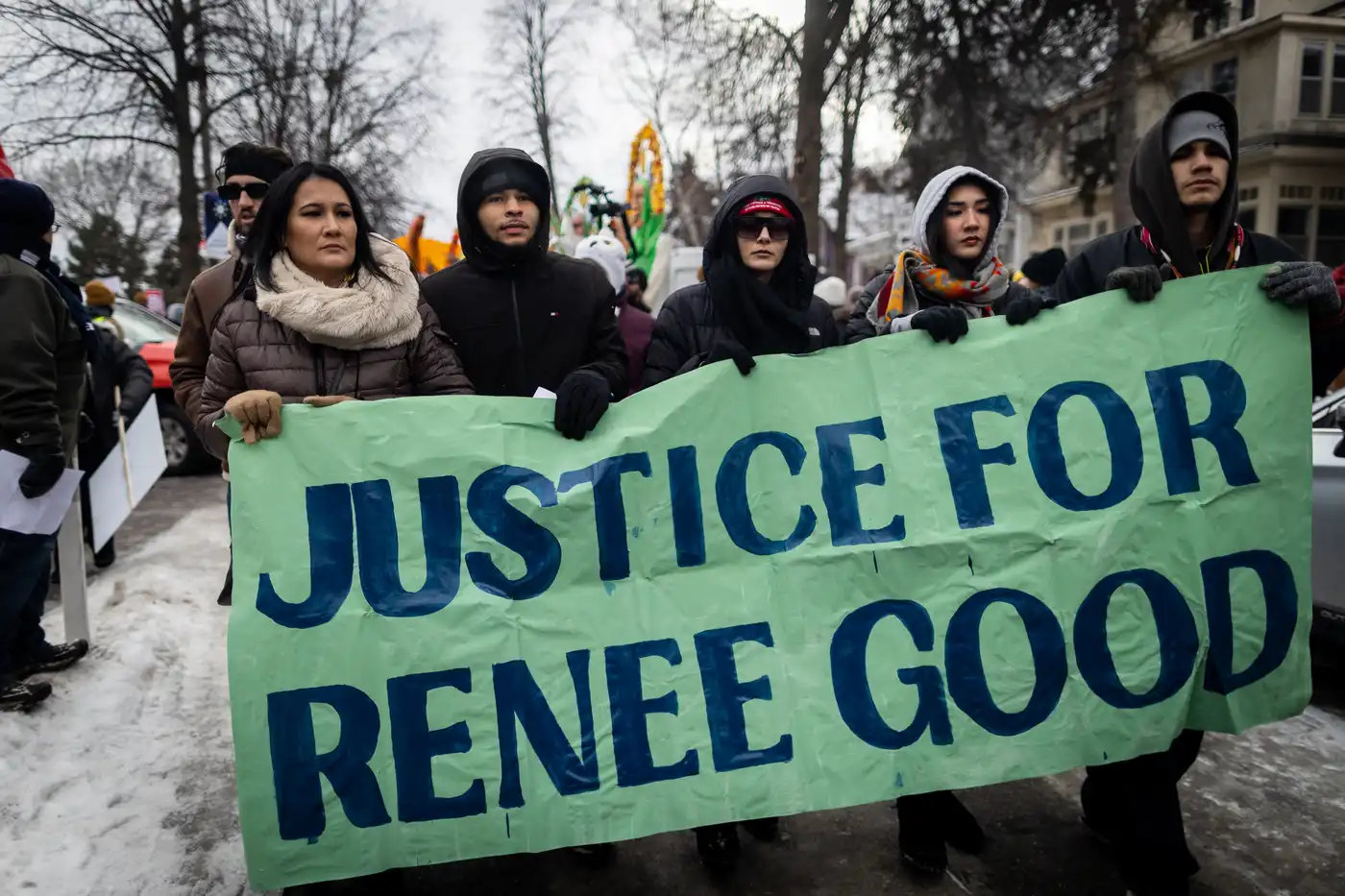
Renee Good banner
Protesters hold ‘Justice for Renee Good’ banner at Minneapolis mass march on Jan. 10.

Previous articles in this series:


“If they are going to shoot us and then call us ‘fucking b*****s,’ then we need to be bigger fucking b*****s.” 

-Hand=lettered protest sign in Minneapolis

First, let’s make something clear. Renee Nicole Good was a lesbian. She had a wife. She was not only a mom; she was a queer mom. That matters.

Don’t let anyone erase her.

Everyone who can stomach it, and many who cannot, has seen at least one of the multiple recordings of Immigration and Customs Enforcement (ICE) terrorist Jonathan Ross murdering Renee Nicole Good in Minneapolis.
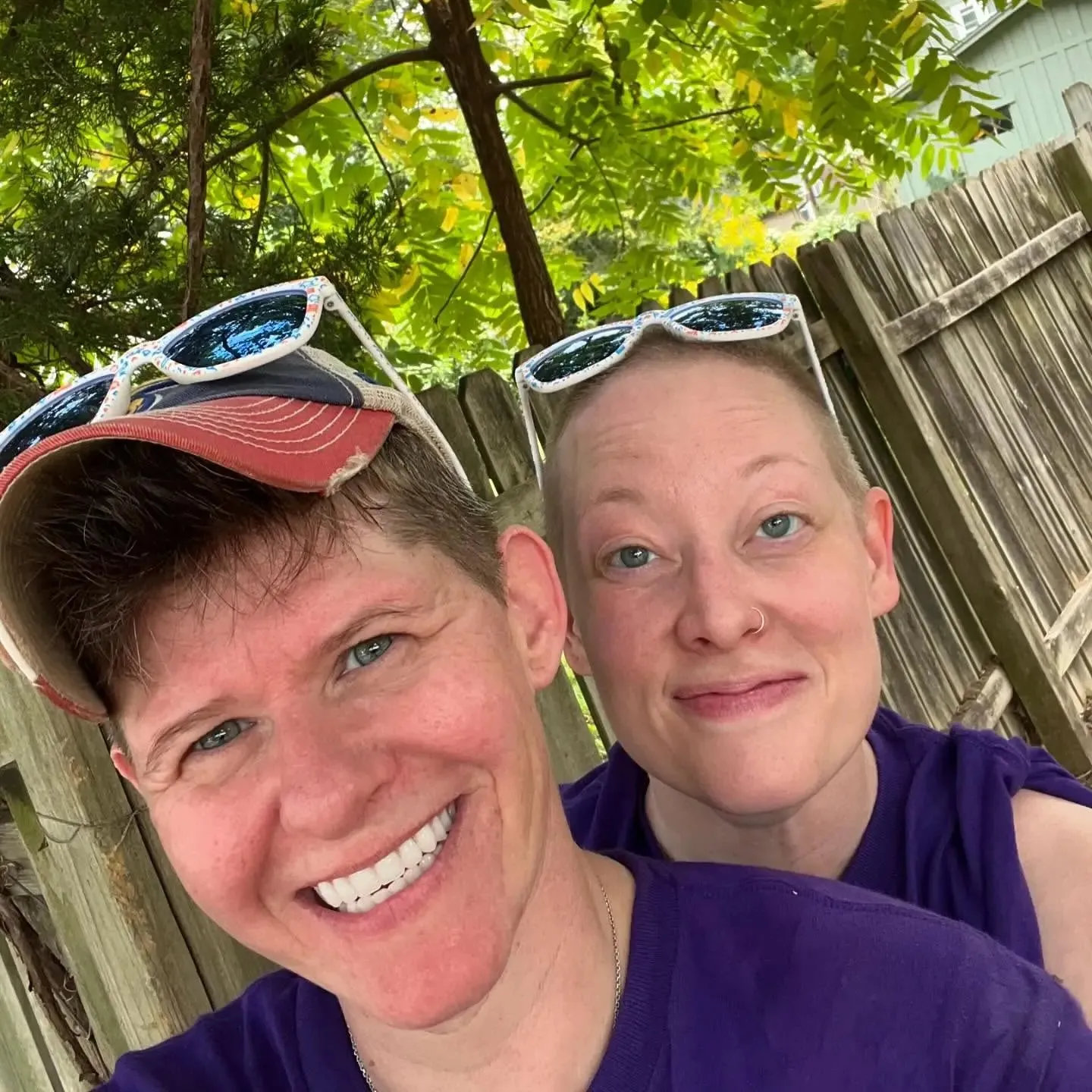
Becca and Renee Good

Good and her wife, Becca Good – both white and U.S.-born – had just dropped off their child at school. They heard about a nearby ICE raid and drove over to legally observe and document the attack on their immigrant neighbors.

Ross and other ICE agents threatened the couple. The Goods retreated, attempting to drive away.

Ross stepped toward their departing vehicle – a standard practice for Border Patrol agents, documented over a decade ago – to justify shooting at the occupants. 

Ross then shot Renee Good four times, killing her. In the aftermath, he shouted at the woman he’d just murdered: “Fucking b****!”

Jonathan Ross is no newbie lacking in training. He is a career repressor who worked for U.S. Customs and Border Protection (CPB) prior to joining ICE in 2015. 

Before that Ross was part of a National Guard contingent deployed to occupy Iraq – something he later bragged about at a College Republican event in Texas.

As Dr. Martin Luther King Jr. said, the bombs the U.S. dropped on other countries come back to explode at home.

Erasure and demonization

As of this writing, it is just 12 days since Good was murdered. 

During that brief time, she and her wife have been subject to a parallel campaign of queer erasure and queer demonization.

Erasure by politicians and the “mainstream” corporate media. Demonization by the far-right web of billionaire-owned social media, MAGA politicians, and corporate platforms like Fox News.

President Donald Trump dismissed Becca as Renee Good’s “friend.” More media coverage has sought out comment from her ex-husband and former in-laws than from her wife. Others refer to Good only as a “widow” (her second husband died in 2023).

Renee’s six-year-old child is called an “orphan” – despite living with a loving and responsible step-mother. The parents of Good’s second husband have already made noises about seeking to take custody.

All this is very familiar to queer people, who often find our identities and our closest family members being erased when tragedy strikes; who find biological relatives and exes ready to seize our children from loving homes at the first opportunity.

Renee and Becca Good were part of the “Pink Migration” – the massive internal refugee crisis inside the U.S., as many states become more dangerous and restrictive for LGBTQIA+ people. The Goods left Missouri for Minnesota, considered a “sanctuary state” for queers as well as migrants. 

A recent survey estimated that at least 400,000 trans people alone have fled their home states since Trump’s election in November 2024, seeking safety and access to health care. Others are fleeing abroad.

‘Pronouns in bio’

Meanwhile, the fascist propaganda machine that currently dominates U.S. politics has worked overtime to shine a spotlight on Renee Good’s queerness, to show why she was an acceptable target.

Within hours of her murder, Fox News host Jesse Waters sent out the first volley, describing Good as someone with “pronouns in bio” – a dogwhistle to justify the murder of a white, middle-aged woman to his white supremacist audience.

Trump administration officials labeled Good a “domestic terrorist,” refusing to hand over Jonathan Ross to local authorities. Minnesota was iced out of the “investigation” of Good’s killing. The Justice Department then ordered federal prosecutors to investigate Becca Good rather than Ross – resulting in at least five resignations so far.

On social media platforms like Elon Musk’s “X” and Trump’s “Truth Social,” viral posts spread focusing on disparaging the appearance of Becca Good, and justifying the murder because of the Goods’ being “disrespectful” to ICE agents – the term used by Trump. 

CBS News, now controlled by pro-Trump propagandist Bari Weiss, pushed out a story of Ross suffering “internal injuries” from contact with the Goods’ vehicle – a lie about something which never happened.

Meanwhile, Ross’s slur over Renee Good’s body has become the far right’s slogan du jour for any woman who dares resist.

A history of terror

ICE, CPB, the Department of Homeland Security, and the Federal Bureau of Prisons all have long histories of abusing queer immigrants and U.S.-born LGBTQIA+ people.

Some readers may recall the case of Roxsana Hernandez, a trans woman with AIDS who fled the U.S.-sponsored coup regime in Honduras. She died in ICE custody in 2018, during Trump’s first term, after awful abuse and refusal of medical care.

Last year, trans and other queer immigrants held at an ICE detention center in southern Louisiana exposed how they were subjected to hard labor and sexual assault by prison authorities.

More people have recently learned about the common U.S. prison policy called “v-coding,” which not only places transgender women in men’s prisons, but houses them with “aggressive” male inmates to subject them to rape as a form of punishment. 

At the same time, these women are denied their right to feminine appearance and often denied gender-affirming medical care like hormone therapy. Overwhelmingly, it is Black and Brown trans women who suffer this torture.

Trans prisoners, including military whistleblower and former political prisoner Chelsea Manning, fought hard for the right to gender-affirming care. The Trump administration is pushing to strip those rights from incarcerated people in the federal prison system.

Anna Brauch arrest
Anna Brauch was held in a chokehold as she and Mar Navarro were detained by ICE on Jan. 8.

Queers in the crosshairs

“Anna Brauch wanted to do something to help her neighbors the day after Renee Good was fatally shot,” reported Minnesota Public Radio. “So she stationed herself outside her favorite local bakery in the northeast corner of the city and told the bakery’s immigrant owner she’d be there if ICE came for them.

“Instead, ICE came for her.”

Baruch and her spouse, Mar Navarro, were rushed by ICE agents and violently attacked. Brauch thinks it may have been the mural on her car, which says “Trans Rights are Human Rights,” that attracted their attention. 

“I had my phone in one hand and my keys in my other hand, and they all started screaming, like, ‘Get her! She’s got a weapon! Get her!’” Brauch said. “I put my hands up and I said, ‘I don’t have anything!’ But I also had a whistle around my neck, and I blew the whistle so that the people in the bakery would know that ICE was there.” The queer couple was detained.

“Brauch showed agents her injuries and said they promised to call her a medic, who never appeared during her two-hour long detention,” reported MPR. “Eventually, she said the agents called an ambulance, and after failing again to identify her arresting officer, took off her leg shackles and let the paramedics take her to the emergency room.

“Brauch’s spouse was also released later that evening. Neither has been charged with a crime.”

On Jan. 12, another queer couple, Alice Valentine and Sofia Martin – both U.S.-born trans women – responded to a report of ICE agents raiding the Star City Mall, home to many Somali businesses, in the city of St. Cloud, northwest of Minneapolis. Their subsequent ordeal was first reported by Marisa Kabas of The Handbasket.

As soon as the women arrived on the scene, they were surrounded by armed federal agents, tear-gassed and physically assaulted. They were thrown into the back of a van with Somali detainees and driven to ICE headquarters – the Whipple Federal Building in Minneapolis.

“The two were questioned separately by ICE officers, and Sofia was subjected to particularly invasive and humiliating questions. They asked her if she had had a sex change and if she had a penis. Alice said back in the cell Sofia told her she answered truthfully to both questions to avoid the officers from groping her for answers.”

Kabas reported: “I asked Alice if she felt like, as visibly queer people, they were particular targets at the protest of agents working for an administration known to be virulently anti-LGBTQIA+, and especially after they shot Renee Good four times — including once in the head — and killed her in a car with her wife Becca. Alice said it didn’t occur to her until she had time to reflect in the van. She said to Sofia ‘You know, I just realized that they probably knew Renee was a lesbian before they shot her.’

“When I was in the cell, I overheard a woman asking to call her girlfriend, and I started crying because I just thought of Renee, and I thought of my girlfriend and this girl. And I was like, ‘Why are so many lesbians being fucked up by ICE right now?’”

Immigrants & queers: targets of white supremacy

The question Alice Valentine asked is important. In fact, it cuts to the heart of capitalist white supremacy in general and the brand of fascism perpetuated by the Trump regime in particular.

Marxists from Frederick Engels to Leslie Feinberg have demonstrated how patriarchy is central to capitalist exploitation. Similarly, white supremacy is central to the U.S. brand of colonialism and imperialism. 

White supremacy as practiced in the post-Reconstruction U.S., from Klan lynchings of Black people to eugenics practices targeting people of color, disabled people, queers and women, inspired the Nazi German practice of genocide against Jews, Romani, LGBTQIA+ people, and other “undesirables.”

In the same vein as German fascism, the “Great Replacement” conspiracy touted by Trump and his movement provides the ideological foundation for imposing naked fascist rule by capitalist corporations and billionaires today.

According to this conspiracy, the greatest threat to the so-called U.S. “nation” is the increasingly diverse working class and falling birth rates among whites. Immigrants from the Global South – whether heterosexual or queer – are seen as a threat to white (meaning white capitalist) domination and its foundation of dividing and conquering the working class with racism.

Similarly, U.S.-born queer women and trans people, and even straight women who no longer feel forced to “perform” their reproductive duties under patriarchy, are also seen as an existential threat. 

Our oppressions are not the same, though often they overlap. But they are connected, because our very existence is fundamentally irreconcilable with the needs of the profit system.

More than ever, the survival of the working class, in its great diversity, calls for us to unite and fight back. 

Queer women in Minnesota are showing us how, with their courage to show up in solidarity, even in the face of physical danger and death.

Renee Good won’t be forgotten.


Statement by Becca Good:

First, I want to extend my gratitude to all the people who have reached out from across the country and around the world to support our family.

This kindness of strangers is the most fitting tribute because if you ever encountered my wife, Renee Nicole Macklin Good, you know that above all else, she was kind. In fact, kindness radiated out of her.

Renee sparkled. She literally sparkled. I mean, she didn’t wear glitter but I swear she had sparkles coming out of her pores. All the time. You might think it was just my love talking but her family said the same thing. Renee was made of sunshine.

Renee lived by an overarching belief: there is kindness in the world and we need to do everything we can to find it where it resides and nurture it where it needs to grow. Renee was a Christian who knew that all religions teach the same essential truth: we are here to love each other, care for each other, and keep each other safe and whole.

Like people have done across place and time, we moved to make a better life for ourselves. We chose Minnesota to make our home. Our whole extended road trip here, we held hands in the car while our son drew all over the windows to pass the time and the miles.

What we found when we got here was a vibrant and welcoming community, we made friends and spread joy. And while any place we were together was home, there was a strong shared sense here in Minneapolis that we were looking out for each other. Here, I had finally found peace and safe harbor. That has been taken from me forever.

We were raising our son to believe that no matter where you come from or what you look like, all of us deserve compassion and kindness. Renee lived this belief every day. She is pure love. She is pure joy. She is pure sunshine.

On Wednesday, January 7th, we stopped to support our neighbors. We had whistles. They had guns.

Renee leaves behind three extraordinary children; the youngest is just six years old and already lost his father. I am now left to raise our son and to continue teaching him, as Renee believed, that there are people building a better world for him. That the people who did this had fear and anger in their hearts, and we need to show them a better way.

We thank you for the privacy you are granting our family as we grieve. We thank you for ensuring that Renee’s legacy is one of kindness and love. We honor her memory by living her values: rejecting hate and choosing compassion, turning away from fear and pursuing peace, refusing division and knowing we must come together to build a world where we all come home safe to the people we love.

First published by Minnesota Public Radio on Jan. 9, 2026.

Strugglelalucha256


‘We fought until almost all of us were down’: Cuban combatant recounts U.S. attack in Venezuela

The weight of death

By Elia Rosa Yera Zayas Bazán
Adelante

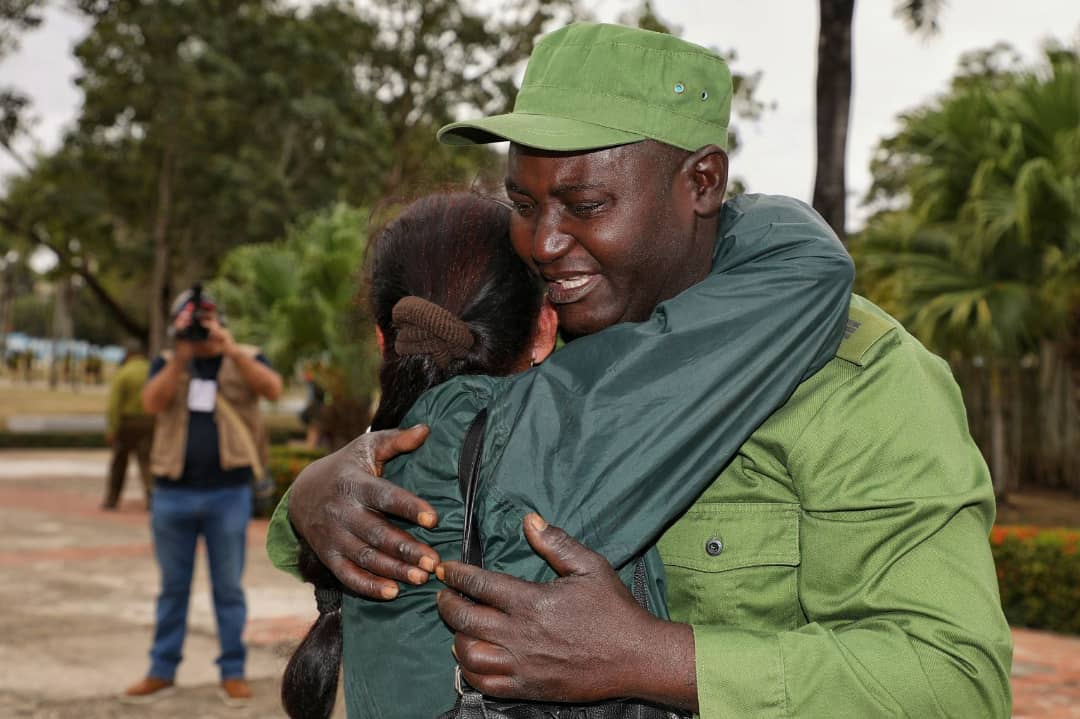
CAMAGÜEY, Cuba — Yohandris Varona Torres saw the photos of the 32 Cubans killed in Venezuela on Jan. 3 and could not help but become emotional. He did so this morning during the tribute held in the Nicolás Guillén Protocol Hall in Camagüey. It was not the first time he had looked at them. He did not have images of strangers in front of him. They were his comrades. And we know that death becomes more real when it touches close to your family, friends, your team.

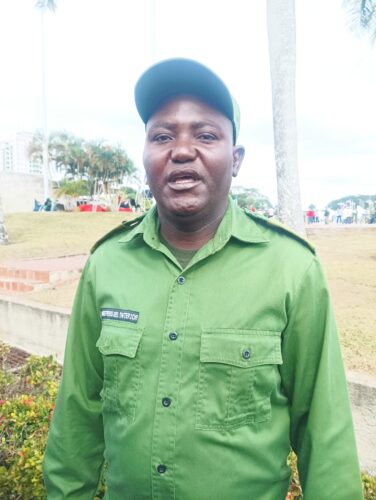
He spoke little. Perhaps he could not find the words. Only the precise ones needed to make us understand the pain. All in less than five minutes. He walked upright, but his eyes still held a sadness difficult to explain. From Vertientes in Camagüey, he had been in Venezuela for two months and six days as part of personal security when the attack occurred—the most intense experience in 23 years of military service, and his very first internationalist mission.

“We fought there against the aircraft that were machine-gunning us. Despite the fact that our weapons were smaller, we never stopped fighting—we confronted them. I have my training and I know how to fight, but they were superior to us. In that moment my only thought was to fight. We had to fire, and I started doing it.

“That night I had gone on guard duty at midnight and was supposed to be on post for six hours. The attack happened around 2:00 a.m. It was early morning. Everything was dark. If a helicopter comes straight at you, the only thing you can do is shoot at it and defend yourself. That’s how it was. Until the very last moment we were firing.”

Yohandris—spelled with an h in the middle, as he corrected us—was there that night, in the same place where his comrades fell, those of all Cuba. This good Cuban carried them all, and today I can only imagine the weight he carried and still carries with him: the weight of death, pain, helplessness, and injustice.

“Our comrades are a source of glory for all of Cuba. They were my brothers. They were working with me. I saw them all fall and I carried all of them. There was no support from anyone for that, but no body was left on the field. We preserved them in one of our sleeping quarters. I cannot explain the pain. But at least no one was left in Venezuela. They are here, in our homeland.

“My country will always have my willingness to confront the enemy wherever necessary. That’s how the Commander taught us. And the deaths of my comrades cannot be in vain.”

The pain is inside. Just above the stomach. He does not need to tell me. I know it. Noble men feel it that way. And there, a few fingers higher up, in the throat, the helplessness, the rage toward those who believe they have the right and the power to take the lives of good people, the not knowing what to say, the shame of carrying in one’s arms the weight of unjust death.

All that remains is the pain that we could not stop them.

Img 20260116 wa0067

What his eyes saw

By Gretel Díaz Montalvo
Trabajadores

What Yohandri Varona Torres saw with his own eyes on Jan. 3 during the United States’ attack on Venezuela will never be forgotten. He had arrived in the South American nation barely two months and six days earlier. This man from Camagüey, born in the community of Jagüey in Vertientes, had gone there to serve in personal security support. That, he says, is what Fidel taught him—so wherever he was needed, he would go.

But that Saturday turned fatal. At midnight he took up his position. He was assigned a six-hour guard shift. And although everything seemed calm, Yohandri knew that the greatest danger was letting one’s guard down. That is why he carried out his duty with vigilance bordering on excess.

It was close to 2 a.m. when he saw the first of the helicopters belonging to the group of U.S. commandos that would land in Caracas that morning to kidnap President Nicolás Maduro.

He barely had time to leave the post where he was standing guard, take cover several meters away, and begin firing. To that decision—or to luck—he owes his life. As if guided by a plan of millimetric precision, the attackers directed their fire at the guard booth that only seconds earlier he had occupied.

“They had much greater firepower than we did,” Yohandri recounts. “We only had light weapons. Another advantage they had was that they seemed to know exactly where everything was. That’s how they fired at the guard posts and the sleeping quarters where we Cubans were, and they managed to kill—among the first—our leaders.”

With some 23 years of experience in the Department of Personal Security, this first sergeant had never lived through anything even remotely similar. But training had prepared him well, and that morning he emptied magazine after magazine firing at the enemy.

“There was nothing to do but fire and fire. Defend and kill,” he stated.

“Despite their advantage in firepower,” he added, “I am sure we inflicted casualties on them. More than they acknowledge. We fought hard. We kept firing until almost all of us were falling, dead or wounded.”

This was not a quick or easy battle, as Trump and his henchmen initially tried to make people believe. As the days have passed, it has been confirmed that only death and the lack of ammunition managed to extinguish the Cubans’ resistance.

Yohandri remembers everything with terrible clarity. His eyes seem to replay the images one by one. He cries. He cries with rage. He says he will never forget the confrontation, but above all the hours afterward, when the surviving members of the group had to transport the bodies of their fallen compatriots.

“We carried them and took them to a building that had been damaged but allowed us to shelter them. It was very hard, because they were men we knew, with whom we had lived until just hours earlier. But we took them all. We did not abandon a single one.

“When the bombs begin to fall, the only thing you think about is fighting. We were there for that, and that is what we did. All that remains for me is the pain that we could not stop them. And this pain,” he says as he strikes his chest, “I have to settle it with the enemy.”

Foto 1 testimonio seguridad personal cmg 376x500.x10671

Testimony of a Cuban combatant who defended President Maduro

Taken from the Facebook page of Ignacio Ramonet

Yohandris Varona Torres had been in Venezuela for two months and six days as a member of the Personal Security detail when the attack occurred—the most intense experience of his 23 years of military service, and his first internationalist mission.

But that Saturday, Jan. 3, turned fatal. At midnight he took up his position. He was assigned a six-hour guard shift. And although everything appeared calm, Yohandri knew that the greatest danger was letting one’s guard down. That is why he carried out his duty with vigilance bordering on excess.

It was close to 2 a.m. when he saw the first of the helicopters belonging to the group of U.S. commandos that would land in Caracas that morning to kidnap President Nicolás Maduro.

He barely had time to leave the post where he was standing guard, take cover several meters away, and begin firing. To that decision—or to luck—he owes his life. As if guided by a plan of millimetric precision, the attackers directed their fire at the guard booth that only seconds earlier he had occupied.

“They had much greater firepower than we did,” Yohandri recounts. “We only had light weapons. Another advantage they had was that they seemed to know exactly where everything was. That’s how they fired at the guard posts and the sleeping quarters where we Cubans were, and they managed to kill—among the first—our leaders.”

With some 23 years of experience in the Directorate of Personal Security, this first sergeant had never lived through anything even remotely similar. But training had prepared him well, and that morning he emptied magazine after magazine firing at the enemy.

“There was nothing to do but fire and fire. Defend and kill,” he stated.

“We fought there against the aircraft that were machine-gunning us. Despite the fact that our weapons were smaller, we never stopped fighting—we confronted them. I have my training and I know how to fight, but they were superior to us. In that moment my only thought was to fight. We had to fire, and I started doing it.”

“Despite their advantage in firepower,” he added, “I am sure we inflicted casualties on them. More than they acknowledge. We fought hard. We kept firing until almost all of us were falling, dead or wounded.”

This was not a quick or easy battle, as Trump and his henchmen initially tried to make people believe. As the days have passed, it has been confirmed that only death and the lack of ammunition managed to extinguish the Cubans’ resistance.

Yohandri remembers everything with terrible clarity. His eyes seem to replay the images one by one. He cries. He cries with rage.

He says he will never forget the confrontation, but above all the hours afterward, when the surviving members of the group had to transport the bodies of their fallen compatriots.

“We carried them and took them to a building that had been damaged but allowed us to shelter them. It was very hard, because they were men we knew, with whom we had lived until just hours earlier. But we took them all. We did not abandon a single one.

“When the bombs begin to fall, the only thing you think about is fighting. We were there for that, and that is what we did. All that remains for me is the pain that we could not stop them. And this pain,” he says as he strikes his chest, “I have to settle it with the enemy.”

Yohandri Varona Torres: a moving testimony

By Yamylé Fernández Rodríguez
Radio Reloj

Camagüey, Cuba — With a voice broken by pain and indignation, first officer Yohandri Varona Torres from Camagüey recalls Jan. 3, when his comrades fell in combat after fighting fiercely against the U.S. aggression against Venezuela.

Backed by 23 years of experience as a personal security specialist, Varona Torres had arrived in Caracas just over two months earlier. On the day of the tragic events, he was on guard duty.

He recalls that around 2:00 a.m. they spotted the enemy helicopters, and there was always the certainty that it was necessary to fight to the end, because the Yankees had come determined to leave death and destruction.

He shared daily life with all of the fallen Cubans, and their loss is deeply painful, says first officer Yohandri Varona Torres, who held their lifeless bodies in his arms and now swears he will know how to honor them as they deserve.

Originally published by Adelante, Trabajadores, and Radio Reloj.
Translated by Struggle-La Lucha.

Source: cubainformacion.tv

Strugglelalucha256


MLK 2026: From the “demonic suction tube” of war to the fight against tech-capitalism

In 2026, there are three lessons from Dr. Martin Luther King Jr. – and the Civil Rights struggle he played a major role in – that will aid us in our continuing fight to destroy the racist, sexist, homophobic, capitalist system. 

Dr. King said that, “when machines and computers, profit motives and property rights are considered more important than people. … The giant triplets of racism, materialism, and militarism are incapable of being conquered.” This quote is far from an admittance of defeat, or a praise of strength to the capitalist enemy. This quote is a call to action – a wake up call to reject the disempowering blinders of capitalist ideology so we can fight back. 

Dr. King understood that corporate politicians and their backers in the banks and military-industrial complex would continue to squeeze everything they can out of people. They would continue to look for ways to strip communities, and displace them to make way for profits. 

During the ‘60s, it was the construction of highways and the government’s commitment to “Urban Renewal” (or as James Baldwin coined it , Negro Removal) which led to the razing of Black communities all across the country to make way for the expansion of private investment and military spending. Today, the government is continuing its process of Negro Removal through the expansion of gentrification in cities, the gutting of work and education opportunities and, most notably, the construction of AI data centers in predominantly Black and working-class areas, which pollute the water, land and air, turning them into unlivable wastelands.

The second lesson from Dr. King is the importance of exposing and educating people on the intersections of U.S. imperialist foreign policy and its oppression of people within its borders. 

Here is a longer quote by Dr. King that clearly states this exact lesson:

“There is a very obvious and almost facile connection between the war in Vietnam and the struggle I and others have been waging in America. … America would never invest the necessary funds or energies in rehabilitation of its poor so long as adventures like Vietnam continued to draw men and skills and money like some demonic, destructive suction tube.” 

In the ‘60s and ‘70s the United States found itself spending today’s equivalent of nearly 2 trillion dollars to carry out a brutal genocide and occupation of Vietnam all to protect the financial interests of Washington. The U.S. killed over 1 million Vietnamese people, mainly women and children, and subjected those that survived the calamity with long term irreparable health defects from the use of chemical weapons. 

While this was going on across the globe, back in the United States, Black communities were getting erased and Black bodies were thrown into the meat grinder of a draft, also in the name of profits and military expansion for those in Washington. 

Today, the U.S. continues its occupation and genocide of the Global South for the same bankers and war profiteers. The government spends nearly 900 billion dollars annually on maintaining its chokehold over the working people of the world. 

While the U.S. spends that much money overseas, communities within the country go without adequate housing, access to a stable supply of food, proper and well-rounded health care, education and employment. These communities instead see the influx of around 300 billion dollars spent on expanding and maintaining the police departments in their communities across the country. 

The capitalist class will do whatever it takes to defend its stranglehold on the world and maintain the status quo. A status quo that not only prioritizes profits over people, but one that is emphasized by the brutality and depravity in which it goes about holding onto and increasing profits.

Lastly, Dr. King knew that it was the younger generations, the youth that will be the key to continuing and making strides in the struggle to overturn these oppressive systems. 

“They are a new seed of radicalism. … They carry out a serious rebellion against old values but have not yet concretely formulated the new values.” 

Nothing can continue without the buy-in of younger generations and the system knows this. 

Whether in the ‘60s or now in 2026, the war on Black youth is precisely to keep the younger generations from learning how to formulate the new values Dr. King was talking about. The capitalists have created this boogeyman in the “juvenile” which they can use to justify any and all tactics it uses to imprison or kill any young Black child or teen that chooses not to submit to the racist systems of the United States. 

The word “juvenile,” which replaced “thug,” which replaced “super predator,” which replaced “brute and savage,” is only the newest of terms used to dehumanize Black existence. However, we see that the youth – especially Black youth – continue to resist police occupation and are not conforming to the fascist system. 

As the system increases its oppression and raises the level of brutality against Black youth, it is only natural that Black youth rise to meet and overcome these new horrors and challenges. 

May Dr. Martin Luther King Jr.’s teachings continue to mold and shape the struggle ahead. The working and oppressed people of the world must continue to struggle and fight the U.S. empire. Dr. King said that “the price that America must pay for the continued oppression of the Negro and other minority groups is the price of its own destruction.” This destruction will be the smashing of the capitalist system and in its place will be a socialist system that ultimately puts people’s needs and lives over profit.

Rest in Power Dr. King and Happy Birthday!

Strugglelalucha256


The siege of Minneapolis: testimonies from the front lines

In an effort to provide readers with a clearer picture of events in Minneapolis, Struggle-La Lucha has spoken to local activists and community members and gathered testimonies from other participants in the local response to Trump-ICE terror. These voices are being ignored, minimized or distorted by the corporate media.

For weeks and months prior to the new year, activists in the Minneapolis-St. Paul area had been preparing for a full-scale invasion by federal agents – particularly after President Donald Trump leaned into attacks on the Somali immigrant community. The area is home to the country’s largest Somali diaspora and to Rep. Ilhan Omar, a frequent lightning rod for white supremacists.

But the murder of Renee Nicole Good by ICE agent Jonathan Ross on Jan. 7 ignited a mass response to ICE repression throughout the city. Good, a 37-year-old white woman and U.S. citizen, together with her wife Becca Good, were acting as observers documenting an ICE raid. 

Multiple videos of Ross’s brutal killing of Good provide ample proof of the vicious misogyny, anti-lesbian and anti-queer hate that fueled the murder.

“The queer community is furious,” local activist Meredith Aby-Keirstead told Struggle-La Lucha. “Not only was Renee Good murdered and labeled a ‘domestic terrorist’ by the Trump administration, but now the Justice Department is investigating Renee’s wife Becca, when in reality they should go after the ICE murderer instead.”

But that anger isn’t limited to LGBTQIA+ people, said Aby-Keirstead, an organizer with the Anti-War Committee. “Minneapolis is outraged at Good’s murder. Many communities are angry at how ICE is tearing our city apart. We had over 100,000 people in the streets on Saturday [Jan. 10].”

Children under siege

P, a young teacher, who asked SLL to remain anonymous, said: “Right away at school today one of my students told me he’s afraid of ICE. These are K-2 students with developmental delays.

“He said three men in vests came to his house over the weekend. He said his older brother was cursing at them and his mother told him to hide. 

“I asked him if he wants a whistle to keep in his bag, so he can blow it if he feels scared and he needs to call for help, and he said yes.”

The teacher continued: “I think it’s very odd that the news articles about the closing of Minneapolis schools are connecting it only to the shooting of Renee Good and not the coincidental fact that within hours ICE assaulted children going home from school at Roosevelt High School. 

“While it’s true that the shooting did cause an elementary school to go into lockdown, the reason they’re allowing students to learn from home until Feb. 12 is because ICE is kidnapping, assaulting, and tear gassing children as they leave school.”

E, a parent and coordinator of an all-volunteer bookstore, posted on social media: “I really want people without Minneapolis connections to understand. You might’ve heard that Minneapolis public schools went hybrid because so many families are in hiding. Well, a coworker just told me that today, during his kid’s hybrid class, another kid’s apartment building was raided on screen.

“Everyone has stories like this.”

‘Money for names’

Legal observer Brandon Siguenza was violently detained by ICE Jan. 11 and held at the Whipple Federal Building in downtown Minneapolis. Siguenza made a statement shared on social media and was also interviewed by local television station KARE-11.

“They finally told me that they could offer undocumented family members of mine legal protection if I have any… or money, in exchange for giving them the names of protest organizers, or undocumented persons. I was shocked, and told them no.”

Hwa Jeong Kim, vice president of the St. Paul City Council, posted a video for residents of her district, stating: “Before 9:30 this morning ICE already kidnapped someone off the streets of my ward. We have first-hand accounts of neighbors reporting ICE showing up at their homes, asking people to identify pictures … 

“They ask them, ‘Do you know any of your Hmong neighbors?’ They even go so far as asking, ‘Do you know any Asian people in your neighborhood?’ And they said no.

“This going door-to-door to random homes is a clear escalation. I don’t want to be the person to say that it’s not safe to go outside today, but folks really need to decide for themselves how safe they feel out in their neighborhoods. 

“And still there are community patrols keeping an eye out for you. There are caring neighbors who want to deliver groceries to you and provide mutual aid. Please stay safe.”

‘Our movements are connected’

Sarah Martin is an organizer of Women Against Military Madness (WAMM), which started in the 1980s to oppose U.S.-funded wars in Latin America. Martin told SLL, “WAMM and the anti-war movement in Minneapolis understand that all our movements are connected and that we are fighting the same enemy: U.S. imperialism. 

“In the case of ICE, it’s about the connections. That monstrosity has connections to the IOF [Israel Occupation Forces] through training and reports of direct involvement. The wars the U.S. perpetrates in Latin America and beyond – whether military or sanctions or regime changes – have forced people out of their homelands and to migrate here.

“It is unjust and so cruel,” said Martin. “Our government makes life unbearable for people in their countries, they feel they have no choice but to leave, and then they make it just as miserable for them here. So of course, we respond when ICE is terrorizing a neighborhood.”

Martin added: “For at least 10 years WAMM has held a weekly bannering at the Whipple Federal Building, which holds the immigration court and from which immigrants are deported. The bannering happens at 7:30 a.m., when vans holding deportees go by. Now it’s the site of ICE agents staging every morning.”

Chris Juhn is a photojournalist who covers many protests in Minneapolis, including during the 2020 uprising after the police murder of George Floyd.

On the night of Jan. 14, Juhn was documenting the federal agents’ attack on protesters and legal observers after ICE shot a person in the leg. He photographed the feds unleashing an unidentified green gas not seen at previous protests.

“That was the most tear gas I’ve ever experienced in my life,” Juhn recalled. “I must’ve been hit with at least five rounds of tear gas, some incredibly thick. Had some shrapnel from flashbangs fly around me. When you see a flaming ball shooting sparks fly by your head, it’s terrifying.

“I was next to a crowd that was completely peaceful. Next thing, they’re tossing tear gas and flash bangs at everyone without warning. A car nearly hit me as everyone scrambled.

“The Minneapolis PD seemed useless. I had my editor tell me to clear out.”

Somali community patrols

The Intercept published a report on ICE watch patrols organized by Somalis to keep their community safe. 

Those participating are mainly people with U.S. citizenship, explained Abdi Rahman, a founder of the West Bank neighborhood patrol. “The non-citizens have stopped stepping out entirely. We buy groceries for them and drop them off at their homes.”

“The armed men and women, with their faces covered, roaming our streets and profiling us – we thought we had left all that behind, but now this moment in America is reminding us again of the Somali civil war,” said Imam Yusuf Abdulle of the Islamic Association of North America.

“But we are fighting. We didn’t come this far, make our lives here, to again be targeted and abused like this.”

“We fled a civil war,” community activist Mahmoud Hasan said. “We are more resilient than they think.”

Strugglelalucha256


Kaiser nurses set to strike as health care giant profits from ICE detention camps

When 31,000 Kaiser Permanente nurses and health care workers walk off the job on Jan. 26, they will be fighting for safe staffing at a nonprofit health system sitting on $66 billion in reserves — reserves that include investments in the private prison companies caging migrants for ICE.

Kaiser Permanente Group Trust has held investments in both CoreCivic and GEO Group, the two largest operators of Immigration and Customs Enforcement detention facilities, according to financial disclosures reviewed by the union UNAC/UHCP. The investments appear in Kaiser’s Form 5500 filings from 2020 through 2022, the most recent years for which public filings are available.

These are not obscure holdings. ICE now holds a record 68,000 people in detention nationwide, up from 40,000 at the start of 2025. At least 30 people have died in ICE custody in 2025 — the deadliest year in two decades. CoreCivic and GEO Group facilities have been at the center of documented medical neglect and preventable deaths, even as their executives celebrate “unprecedented” profits from the Trump administration’s deportation campaign.

Death and neglect for profit

GEO Group operates the Adelanto ICE Processing Center in California’s San Bernardino County, the state’s largest immigration detention facility. In September 2025, 39-year-old Ismael Ayala-Uribe died there after repeated pleas for medical care were ignored. Internal emails later showed staff had flagged his condition as potentially life-threatening, yet he was sent back to his dormitory, where his health deteriorated over several days without treatment. Ayala-Uribe had lived in the United States since he was four years old.

When Disability Rights California inspected Adelanto in June 2025, investigators documented “abuse and neglect of people with disabilities.” In a matter of weeks, the detained population ballooned from about 300 to nearly 1,400. Detainees reported going days without clean clothes or basic hygiene items, while guards responded to mounting tensions by tear-gassing entire dormitories.

CoreCivic’s record is similarly grim. The company reopened the 2,400-bed South Texas Family Residential Center in Dilley, Texas — a facility that can hold children — after it was shuttered in 2024. In Georgia, ICE also reopened the Irwin County Detention Center, which had closed in 2021 following a bipartisan Senate investigation into medical abuse of detained women.

Executives from both companies openly celebrate the surge. GEO Group’s chairman has described an “unprecedented opportunity,” projecting up to $1 billion in additional annual ICE revenue. CoreCivic’s CEO has declared the company’s business “perfectly aligned with the demands of this moment.” GEO Group has backed that alignment with $1 million in contributions to a PAC supporting Trump’s 2024 campaign.

Billions in reserves, no money for nurses

Kaiser Permanente calls itself a mission-driven nonprofit dedicated to health and healing. One in four California residents receives care through Kaiser. Yet the system has accumulated $66 billion in unrestricted reserves — projected to reach $70-75 billion by the end of 2026 — while telling workers it cannot afford the staffing improvements they say patients desperately need.

The union’s “Profits Over Patients” report, released Jan. 15, documents how Kaiser reported $7.9 billion in net income in the first three quarters of 2025 alone. Meanwhile, nurses’ wages have lost 10% of their purchasing power since 2021, with raises that failed to keep pace with inflation.

At the top, the numbers tell a different story. Kaiser CEO Gregory Adams averaged approximately $13 million in annual compensation from 2020-2023 — 69 times what the health system pays an average optometrist, 29 times what it pays an average rehab therapist, and 27 times what it pays an average nurse. Board members averaged $251,000 in 2023, and a third of them have banking and investment backgrounds.

The open-ended strike set to begin Jan. 26 follows a five-day walkout in October 2025 that failed to produce a contract agreement. Workers have been without a contract since Sept. 30. Kaiser paused national bargaining in mid-December, and the union has filed an unfair labor practice charge with the National Labor Relations Board alleging the company is trying to bypass the agreed-upon negotiating process.

Where the money goes

The investments in CoreCivic and GEO Group fit a pattern. The union report documents that Kaiser’s investment portfolio has also included holdings in fossil fuel companies linked to elevated rates of cancer and respiratory disease in working-class communities, predatory lenders like Enova International (which operates CashNetUSA and NetCredit at interest rates exceeding 100%), and Elliott Management — the hedge fund run by Paul Singer, who has bankrolled the Manhattan Institute’s campaigns against critical race theory education and LGBTQIA+ rights.

The private prison investments stand out because of what Kaiser claims to be. CoreCivic and GEO Group facilities disproportionately hold Black, Latine, and immigrant workers and their families. The medical neglect documented at these facilities — medication withheld, chronic conditions ignored, emergency care delayed — is the opposite of what a health system is supposed to do.

Yet Kaiser, a California-based nonprofit that enjoys tax-favored status precisely because it is supposed to serve a public benefit, has channeled worker pension funds into ICE’s concentration camp operations. The $66 billion in reserves came from somewhere — from the premiums paid by workers, from the Medicare and Medicaid dollars that flow through Kaiser’s books, from the labor of the nurses now preparing to strike.

Those financial decisions are not abstract — they materialize every day in Kaiser hospitals, where nurses now preparing to strike confront the human consequences of understaffing and neglect.

Workers fight back

Kaiser workers say the strike is about more than wages. They point to chronic understaffing that has resulted in dangerous delays in care and what they call “moral injury” — knowing what patients need but being unable to provide it.

In December 2023, 53-year-old Francisco Delgadillo died in a Kaiser Vallejo emergency room after waiting more than eight hours for treatment for chest pain. Federal and state investigators found critical deficiencies in nursing coverage, with 30 to 40 patients in the waiting area and no systematic oversight. Frontline workers had circulated a petition demanding safe staffing just days before his death.

Southern California Kaiser workers filed 13,807 formal staffing objections between November 2023 and November 2025 — an average of 19 per day — documenting conditions they consider unsafe for patients. The actual number is likely higher, workers say, because many have given up filing reports that seem to change nothing.

“We’re not going on strike to make noise,” said UNAC/UHCP President Charmaine S. Morales. “We’re authorizing a strike to win staffing that protects patients, win workload standards that stop moral injury, and win the respect and dignity Kaiser has denied for far too long.”

The 31,000 nurses and health care workers walking out Jan. 26 are asking a straightforward question: If Kaiser can find billions to invest in companies that profit from caging and neglecting migrants, why can’t it find money to staff its hospitals safely?

Strugglelalucha256


From Minneapolis to Arizona, ICE targets Native peoples

Jan. 17 — Immigration and Customs Enforcement has escalated a nationwide campaign of racial profiling and arbitrary detention against Indigenous people, seizing members of federally recognized tribes in Minnesota, Arizona, and Oklahoma in what tribal leaders are denouncing as open treaty violations and a direct attack on Native sovereignty.

What began earlier this month with mass arrests in Minneapolis has now spread across state lines. Native citizens are being stopped, detained, and threatened despite presenting valid tribal identification and proof of U.S. citizenship. Across all three regions, the pattern is the same: ICE treating Native identity itself as grounds for suspicion.

ICE raids Minneapolis, detains Native peoples

The Minneapolis raids set the stage. In early January, roughly 2,000 ICE agents and other federal personnel flooded the Twin Cities in one of the largest immigration enforcement operations in the region’s history. At least five Indigenous people were seized. Four Oglala Lakota citizens remain in federal custody after being arrested near the Little Earth housing complex in Minneapolis’ East Phillips neighborhood.

A fifth person, Jose Roberto “Beto” Ramirez, a 20-year-old Red Lake Anishinaabe man, was violently detained after ICE agents repeatedly punched him while he was complying with orders, according to video evidence and family testimony.

“This is a treaty violation. Treaties are not optional. Sovereignty is not conditional. Our citizens are not negotiable,” Oglala Sioux Tribe President Frank Star Comes Out said in a statement.

Those arrests were carried out from Fort Snelling, a site inseparable from the history of genocide and forced removal in Minnesota. In 1862, Dakota people were imprisoned at Fort Snelling following the U.S.-Dakota War, culminating in the mass execution of 38 Dakota men — the largest mass execution in U.S. history. Today, Indigenous citizens are again being taken to the same grounds by federal agents.

When the Oglala Sioux Tribe demanded information about its detained members, federal officials responded with an ultimatum: The tribe would only receive details if it entered into a formal agreement with ICE. Tribal leadership refused, stating that such an agreement would violate binding treaties recognizing tribal sovereignty. Days later, the tribe formally banned Homeland Security Secretary Kristi Noem from the Pine Ridge Reservation, citing her repeated racist claims about “cartels” operating on tribal lands and her role in promoting militarization.

Community resistance followed. On Jan. 10, Indigenous activist Rachel Dionne-Thunder narrowly avoided detention when ICE agents surrounded her vehicle and threatened to smash her window. Community members quickly converged, forcing agents to retreat. Tribal governments across the region issued condemnations, circulated “Know Your Rights” guidance, and warned that documentation alone does not guarantee safety under ICE operations.

Racist arrests spread to Arizona and Oklahoma

According to a Jan. 16 report by Brenda Norrell at Censored News, ICE agents this week detained Navajo and Pascua Yaqui citizens in Arizona while expanding harassment of Absentee Shawnee members in Oklahoma.

In the Phoenix Valley, Peter Yazzie, Diné, was seized early Monday morning while on his way to work. ICE agents ignored his tribal ID and citizenship documents, forced him into a vehicle, and detained him before eventually releasing him hours later.

Near Tucson, a Pascua Yaqui tribal member was tackled and detained near the San Xavier District of the Tohono O’odham Nation after being followed by an unmarked van. Held for nearly eight hours, the individual described hearing screams and threats inside the facility. Federal agents dismissed their tribal ID as “fake,” called them “illegal,” and threatened deportation or death. When released, the person overheard agents saying, “I can’t wait to get rid of them all” and “I’m gonna turn them into my slaves.”

In Oklahoma, Absentee Shawnee leaders reported that ICE agents have begun approaching and detaining tribal members using racial profiling. 

As raids continue, deportation operations are also intensifying nationwide. On Jan. 16, a deportation flight departed Mesa Gateway Airport in Arizona bound for Venezuela. Flight monitors have also tracked a deportation flight from Minneapolis to the U.S. naval base at Guantánamo earlier this month.

The legal reality is unambiguous. Native people are not immigrants. They are citizens of sovereign nations whose status is defined by treaties that predate the Department of Homeland Security, ICE, and the modern U.S. immigration system itself. The Native American Rights Fund has reiterated that ICE has no jurisdiction over Indigenous people in immigration matters.

The political reality is equally clear. ICE is operating as a militarized arm of the capitalist state, carrying out repression that has always been central to U.S. imperialist rule. From the removal of Native nations to the policing of migrant labor today, surveillance, detention, and forced displacement are not abuses of the system but necessary tools for maintaining class domination. Immigration law is simply the current legal mechanism for enforcing that power.

From Fort Snelling to the Sonoran Desert, Indigenous communities are responding with resistance — through rapid-response defense networks, legal challenges, and public mobilization. As tribal leaders have stated repeatedly, Native citizenship is not negotiable, and treaties are not historical artifacts. They are living obligations the federal government is now openly violating.

Strugglelalucha256


‘We will get ICE out of Minnesota’: Community, unions mobilize for Jan. 23

Imagine federal agents are besieging your neighborhood. Gas canisters and explosives are popping off all around. Immigration and Customs Enforcement (ICE) agents have just shot someone nearby. 

You pile your children, including your six-month-old baby, into the family car to get them out of harm’s way.

“Officers threw flash bangs and tear gas in my car. I got six kids in the car,” Shawn Jackson told TV station KMSP. “My 6-month-old can’t even breathe.”

“The explosions were strong enough to trigger the car’s airbags,” Raw Story reported.

“They were innocent bystanders driving through what should have been a peaceful protest when things took a turn,” Destiny Jackson, the children’s mother, explained. ICE agents “began to start throwing tear gas bombs everywhere.”

“One of the bombs rolled under our truck, and within seconds our truck lifted up off the ground, and the airbags deployed, the car doors locked themselves, and the car began to fill with the powerful tear gas. We fought hard to get the doors open and get all of the kids out. Bystanders had to help.”

The baby stopped breathing, requiring emergency CPR on the scene. All six children were hospitalized.

Now imagine you and your wife just dropped off your child at school. You get a notification that ICE agents are threatening neighbors nearby. You drive to the location to observe and document the abuses.

An ICE agent threatens you. You and your wife return to your vehicle and attempt to move away from the scene. The federal cop pulls a gun and shoots your wife in the face four times, killing her.

“We had whistles,” said Becca Good, the widow of Renee Nicole Good. “They had guns.”

Imagine you are a disabled person on your way to a checkup at the Traumatic Brain Injury Center. ICE agents stop your car. You explain your situation and ask to be flagged through. Instead, the masked, gun-toting men pull you violently out of your vehicle. 

“In the video, one masked agent smashes [Aliya] Rahman’s passenger side window while others cut her seatbelt and drag her out of the car through the driver’s side door. Numerous guards then carried her by her arms and legs toward an ICE vehicle,” reported the CBC.

“While in custody, Rahman said she repeatedly asked for a doctor, but was instead taken to the detention center.”

“I thought I was going to die,” said Rahman. She was put in detention, where she lost consciousness. Eventually, she was hospitalized, and credits the emergency staff with saving her life.

It’s January 2026. Welcome to Minneapolis.

Community fights back

The horrors are real. For many workers across the U.S., especially white people, the plentiful videos and testimonies are shocking. To Black and Brown people, the scenes seem all too familiar. 

All of the people mentioned above were U.S. citizens. None were doing anything illegal. 

The scale of the repression unleashed on the Upper Midwestern city by the Trump regime and its ICE, Department of Homeland Security (DHS) and U.S. Customs and Border Protection (CBP) is genuinely shocking. The city has been flooded with thousands of federal agents, far outnumbering the local police force.

Agents have begun going door-to-door to terrorize residents, under the command of CPB head Gregory Bovino. Schools began offering remote classes after high school students were attacked by Border Patrol agents. 

Members of the Oglala Sioux tribe have been detained in violation of treaties. It’s believed that the U.S. government is holding them hostage to force the Indigenous nation to make an agreement with ICE.

The pretext for the violence? A story promoted by a MAGA YouTube “influencer” about a supposed scandal involving state funding of child daycares in the Somali community.

Last year, “Congress gave ICE $75 billion over four years, approximately $18.7 billion each year. Added to the $10 billion Congress already appropriated ICE for fiscal year 2025 in March, ICE now has $28.7 billion at its disposal this year. That $28.7 billion figure is nearly triple ICE’s entire budget for FY24,” reported Brennan Center for Justice.

That money has been used to recruit thousands of far-right bigots – including members of the Patriot Front and Proud Boys, participants in the January 6, 2021, coup attempt, and former police, Special Forces and prison guards. The government’s recruitment campaign is built on openly fascist imagery and slogans. There is no effort to vet the recruits

The results, seen on the streets of Minneapolis, are exactly as intended.

On Jan. 15 – the birthday of Dr. Martin Luther King Jr. – President Donald Trump threatened to invoke the Insurrection Act and send in U.S. troops to crush protests in Minneapolis. Readers may remember that Trump made similar threats when the country erupted in protests following the police murder of George Floyd in Minneapolis in 2020.

But there are other viral videos too. They show dozens, hundreds, and thousands of Minnesotans responding to every ICE attack on Somalian, Hmong, and Mexican migrants and other people of color – often chasing off the armed bigots, sometimes freeing targeted people, being wounded and threatened but refusing to back down. Students have walked out of classes from Minneapolis and neighboring St. Paul to Duluth and Madison, Wisconsin.

Videos show working people and youth adopting creative tactics, like pouring water around ICE headquarters in the freezing Minnesota cold to slow down and trip up the fascist troops.

While the federal government uses its familiar tactic of claiming “outside agitators” are responsible for protests, the real outsiders – ICE and other federal goons – have shown themselves poorly equipped to deal with the Minnesota winter, slipping and sliding on black ice patches as they attempt to terrorize legal observers.

Across the city, people armed with whistles, phone cameras and gas masks are ready to respond to ICE raids at a moment’s notice. Community organizations and churches deliver meals to immigrant families so they don’t have to leave their homes. 

On Jan. 10, three days after the cold-blooded murder of Renee Good by ICE agent Jonathan Ross, 100,000 people answered a call to protest by the Minnesota Immigrant Rights Action Committee (MIRAC) to demand “ICE Out of Minnesota, Real Sanctuary Now, and Justice for Renee Good.” 

The march united migrant communities, unions, the LGBTQIA+ community, Indigenous nations, students, anti-war organizations, and people of all nationalities against government terrorism.

Jan. 23 ‘Day of Truth and Freedom’

Struggle-La Lucha spoke to Mira Altobell-Resendez of the Minnesota Immigrant Rights Action Committee (MIRAC). “We’re unable to go about business as usual with these racist attacks taking place everywhere, all day, every day,” they explained. 

“We will keep up the fight for immigrant rights no matter what the Trump regime throws at us because we are powerful when we stand united. We will get ICE out of Minnesota.”

MIRAC, along with local unions, churches and community-based organizations, has called for an ICE Out of Minnesota day of action on Friday, Jan. 23: “Day of Truth and Freedom: No Work, No School, No Shopping.” A mass march is planned in downtown Minneapolis at 2:00 p.m.

The demands for the day of action are:

  • ICE must leave Minnesota now. 
  • The agent who killed Renee Good must be held legally accountable. 
  • No additional federal funding for ICE in the upcoming Congressional budget; ICE must be investigated for human and constitutional violations.
  • Minnesotan and national companies must cease economic relations with ICE and refuse ICE entry or using their property for staging grounds. 

“MIRAC sees the Jan 23 call to action as a necessary escalation in resisting the violent federal occupation by ICE,” Altobell-Resendez told SLL.

On Jan. 16, local and state labor federations and councils officially endorsed the call, opening up the possibility for the Day of Truth and Freedom to take on the character of a general strike.

Minneapolis Regional Labor Federation President Chelsie Glaubitz Gabiou said: “Working people, our schools and our communities are under attack. Union members are being detained commuting to and from work, tearing apart families. Parents are being forced to stay home, students held out of school, fearing for their lives, all while the employer class remains silent. 

“Our labor federations are encouraging everyone to participate on Jan. 23. It’s time for every single Minnesotan who loves this state and the notion of truth and freedom to raise their voices and deepen their solidarity for our neighbors and coworkers living under this federal occupation.”

Strugglelalucha256


Children’s rights vs. cells

The contradictions in this colony are immense. Not only do the people face the imperial power of the United States, but they are also held hostage by the internal squabbles of a local administration that won the elections with less than 40% of the vote. In other words, 60% voted against them, which anywhere else in the world would be a majority. Represented by the New Progressive Party, which is anything but progressive, these bastions of the right wing, both in the executive and legislative branches, maintain a dangerous rivalry, competing to see who is most irrelevant to the well-being of the people and who can advance the most detrimental legislative projects for the population.

Moreover, they compete to see who is the most supposedly “religious.” But not the religion based on working for the well-being of others, on doing good without regard for who it benefits, but rather on doctrines that criminalize women and youth.

These days, a law and a bill have been passed in the Senate that classify the killing of an unborn child as murder. Abortion is legal in this country, but now, from the highest levels of government, there is an attempt to criminalize it. Terms like “unborn” and “conceived but unborn human being.” in practice, grant more rights to two cells that unite, since these terms include any stage of gestation. Thus, the egg and sperm have more rights as legal persons than children who have already been born. Debates, statements, and media interviews attempt to justify the unjustifiable.

In a country where our children and youth have been denied so much by closing schools and eliminating programs that enhance human well-being, such as the arts and music; where decent housing is unaffordable and the cost of living has skyrocketed to the point that aid for those without adequate income isn’t even enough for basic necessities; where access to health care is minimal; where our children disappear, are murdered, and are recruited by drug cartels; where femicides and domestic violence are on the rise. But that’s not important to the government. No laws are passed, no programs are developed for that. For them, it’s easier to talk about the rights of cells than the rights of the living being once it’s born.

From Puerto Rico in struggle, with Radio Clarín of Colombia, Berta Joubert-Ceci

Strugglelalucha256


Derechos de niños vs. células

Las contradicciones en esta colonia son inmensas. No solo el pueblo se enfrenta al poder imperial gringo, sino que está secuestrado por las peleas internas de una administración local que ganó las elecciones con menos de un 40% del electorado. O sea, que el 60% les votó en contra, lo que en cualquier parte del mundo sería una mayoría. Representado por el Partido Nuevo Progresista, que de progresista no tiene nada, estos baluartes de la derecha, tanto en la rama ejecutiva como en la legislativa, mantienen una rivalidad peligrosa compitiendo entre sí a ver quién es más irrelevante para el bienestar del pueblo, y quién avanza los proyectos legislativos más detrimentes para la población. 

Encima, compiten a ver quiénes son más disque “religiosos.” Pero no la religión basada en obrar por el bienestar del prójimo, en la de hacer bien sin mirar a quién, sino en las doctrinas que criminalizan a la mujer y a la juventud. 

Estos días se ha aprobado una ley y un proyecto en el Senado que tipifica la muerte del “concebido” no nacido  como asesinato. En este país el aborto es legal, pero ahora desde las más altas esferas del gobierno, se intenta criminalizarlo. Términos como “nasciturus” y “ser humano concebido, pero no nacido,” en práctica, otorgan más derechos a dos células que se unen, pues estos términos incluyen cualquier etapa de gestación, así que el óvulo y el espermatozoide tienen más derechos como persona jurídica, que los niños y niñas ya nacidos. Debates, comunicados y entrevistas en los medios tratan de justificar lo injustificable. 

En un país donde se le ha negado tanto a nuestros niños y a nuestra juventud al cerrar escuelas, eliminar programas que elevan la calidad humana del ser como las artes y la música. Donde la vivienda digna es inasequible y el costo de vida se ha disparado tanto que las ayudas para quienes carecen de un ingreso adecuado, no les dá para una compra básica. Donde al acceso a los servicios de salud es mínimo. Donde nuestros niños y niñas desaparecen, mueren asesinados, los narcos los reclutan. Donde aumentan los feminicidios y la violencia intrafamiliar. Pero eso no es importante para el gobierno. Para eso no se promulgan leyes, no se desarrollan programas. Para ellos y ellas es más fácil hablar de los derechos de las células y no del ser una vez nacido.

Desde Puerto Rico en lucha, para Radio Clarín de Colombia, les habló, Berta Joubert-Ceci

Strugglelalucha256


Kalaallit Nunaat (aka Greenland) vs. Trumpland: the fight for sovereignty in the geopolitical Arctic

“Finance capital in general strives to seize the largest possible amount of land of all kinds in all places, and by every means, taking into account potential sources of raw materials and fearing to be left behind in the fierce struggle for the last remnants of independent territory, or for the repartition of those territories that have already been divided.” V.I. Lenin, Imperialism, the Highest Stage of Capitalism (1917)

Donald Trump, at the behest of salivating tech billionaires, oil and gas barons and Pentagon generals, is hunting for fresh acquisitions for his 21st‑century empire‑building project. Greenland — Kalaallit Nunaat — is the latest prize in his sights, a living nation talked about in Washington as if it were an empty “Trumpland” waiting to be branded and bought.

A strategic bridgehead in the North Atlantic

Greenland has long been treated as a strategic outpost by imperialist powers. During World War II, its location gave its name to the feared “Greenland Air Gap,” a stretch of the mid‑Atlantic beyond the reach of land‑based aircraft, where Nazi U‑boats turned Allied merchant shipping into a killing ground. In any future major war, whoever controls Greenland would command vital Atlantic sea lanes and enjoy a major advantage in anti‑submarine and air operations.

Today, the U.S. base at Pituffik (formerly Thule) already plays a key role in Washington’s early‑warning missile detection and space surveillance systems. As Arctic ice melts and new sea routes open “on the roof of the world,” Greenland is becoming hotter both literally and geopolitically. Trump and his cronies see how critical this island is to controlling North Atlantic and Arctic chokepoints in its hostilities toward China and Russia.

Greenland is also rich in yet‑untapped offshore oil and gas fields. As its tundra thaws, the island’s rare earth mineral deposits — crucial to high‑tech industries and advanced weapons systems — become easier and cheaper for corporations to exploit. With enough investment, U.S. planners fantasize about turning Greenland into a “Silicon Valley of AI data centers”: a cold, renewable‑energy‑powered server farm for the next wave of digital capitalism.

A living Indigenous homeland, not an empty frontier

But Kalaallit Nunaat is not a blank space on a Pentagon map. It is the Inuit people’s homeland. The island is the world’s largest, straddling the Arctic Circle off the northern edge of North America. Roughly three times the size of Texas, its interior is not open range but a vast ice sheet more than a mile thick in many places. Of its approximately 57,000 residents, about 90% are Indigenous Inuit. Kalaallisut (Greenlandic) is the official language and the language of daily life.

Only a narrow southern belt of Greenland is arable. For thousands of years, people have relied on the sea and tundra for food. Hunters and fishers bring in seals, whales, fish, seabirds, muskox, caribou and small land animals, selling “country foods” in local markets alongside imported goods. These wild foods are not a romantic relic; they remain central to community nutrition and income, and there is constant pressure from the people themselves to keep harvesting sustainable rather than let profit‑driven exploitation destroy their environment.

Most Kalaallit — the name refers to both the people and the country — live in 17 towns and dozens of smaller coastal settlements, working in transportation, education, health care, commerce and a growing tourism sector. Smaller coastal settlements still depend heavily on hunting and fishing, living as much as possible from land and sea. This is the living society erased when Trump and his media echo chamber speak of Greenland as a “real estate deal.”

4,000 years of Inuit history, centuries of colonial intrusion

Inuit ancestors, small groups adapted to the harsh Arctic, reached Greenland from Siberia at least 4,000 years ago. Around 800 years ago, new Inuit cultures spread along the coasts and fjords, developing sophisticated marine economies based on whales, seals and walrus. Around the same time, Norse farmers from Iceland established small settlements in a few southern fjords. Their communities, never more than a few thousand people, survived about five centuries before disappearing for reasons still debated, leaving ruins and little evidence of sustained contact with the Inuit.

By the 18th century, European ships from many nations were plundering the waters around Greenland for fish, whales and walrus, feeding the factories and street lamps of Europe. In 1721, the Danish crown sent an expedition to search for surviving Norse settlers and instead found a land firmly inhabited by Inuit communities. Missionaries followed, intent on conversion and control, and laid the foundation for centuries of Danish colonial domination.

This is the historical backdrop to Trump’s surreal campaign to “own Greenland.” Behind the bombast and bullying stands a familiar imperialist pattern: powerful capitalist nations treating Indigenous lands as commodities, to be carved up and sold over the heads of the people who actually live there.

Rare earths, land and the lie of ‘security’

Why does Trump want Greenland? The capitalist media repeat a narrow set of answers: strategic real estate, access to minerals, a forward military base in the Arctic. None of these explanations grapple with the basic irrationality of imperialism, where financial oligarchs and their political servants seek control for profit, not for any rational human need.

U.S. strategists see in Greenland an opportunity to lock down rare earth minerals that feed tech, AI and weapons industries. Many of these elements are not truly rare, but extracting them is often extremely expensive or environmentally catastrophic. The Inuit people, dependent on clean water, ice and land, have every reason to oppose transforming their home into an open‑pit sacrifice zone for Silicon Valley and the Pentagon.

Private ownership of land is not allowed in Kalaallit Nunaat. This collective principle clashes head‑on with the logic of real‑estate speculation that Trump represents.

The most gruesome example of how U.S. imperialism has used access comes from 1953. During the Cold War, Washington secretly expanded the Thule Air Base (now Pituffik Space Base) to store nuclear weapons — in violation of the base agreement and without informing either Denmark or the Inuit. 

To make room, the U.S. forced a small Kalaallit community off their ancestral land with four days’ notice, sending them 81 miles away to poorer hunting grounds. Their descendants remain angry and continue to fight for justice. Later, a B‑52 bomber carrying nuclear weapons crashed nearby, spreading radioactive contamination that was only fully acknowledged years afterward. Plutonium still shows up in tests of seabed shellfish.

This is not “security.” It is colonial violence.

Greenland belongs to Greenlanders

The Arctic has often been described as a zone of “exceptionalism” where great‑power rivalry is muted. Trump’s push to claim Greenland, backed by tech capital and the Pentagon, threatens to turn it instead into a heavily militarized front line in conflicts over shipping lanes, missile routes and critical infrastructure.

Junior capitalist partners in Europe would do well to see the handwriting on the wall: Bow down; U.S. imperialists do not intend to share.  

For the Inuit majority, the core message is clear: Greenland is not for sale. Decisions about the land, the sea, and the future of the island belong to the people who live there — not to Trump, not to U.S. generals, not to tech billionaires and not to European capitals. The real struggle is to ensure that this moment of climate crisis and imperialist interest becomes a step toward full Indigenous sovereignty, not the opening act of a new colonial grab.


Strugglelalucha256
https://www.struggle-la-lucha.org/2026/01/page/2/