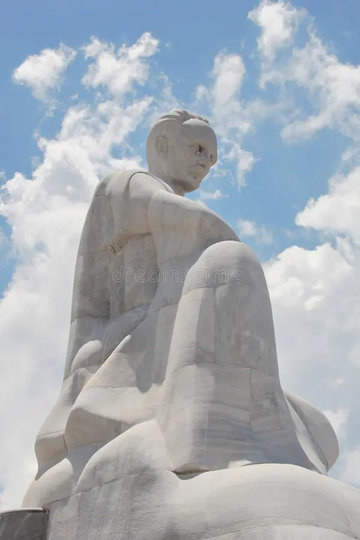
José Julián Martí Pérez (Jan. 28, 1853 – May 19, 1895) is often sanitized in bourgeois histories as a gentle poet or a generic patriot. To understand Martí, however, is to recognize him as a revolutionary internationalist whose life’s work was the forging of a unified, anti-racist, and sovereign Cuban nation. His legacy is not a museum piece but a living tradition rooted in anti-colonial struggle across the Americas.
The colonial crucible: a conscience forged in childhood
Martí’s revolutionary consciousness did not emerge in a vacuum; it was forged in the harsh crucible of colonial Cuba. Born in Havana to a Spanish artillery sergeant and a Canary Islands native, he witnessed from his earliest years the brutal contradictions of the slave-owning colony. His humble family moved from the city to the countryside, where the young Martí saw firsthand the inhumanity of the plantation system. This direct, visceral exposure to the violence of chattel slavery planted the seeds of his lifelong, uncompromising abolitionism.
He was a brilliant student, but his education was inextricably linked to the political ferment around him. His primary school teacher, Rafael María de Mendive, was not merely an instructor but a fervent patriot who became Martí’s political mentor, nurturing his literary talent and his hatred of colonial oppression.
Youthful defiance and political baptism by fire
Martí’s adolescence was a period of rapid political acceleration, coinciding with the rising revolutionary tide on the island. At only 15, he was already publishing fiercely patriotic poems and newspapers. His defining moment came in 1869, at the age of 16, in the fiery aftermath of the Grito de Yara that launched the Ten Years’ War.
In a fearless act of defiance, Martí and a friend penned a letter condemning a fellow student for joining the Spanish Volunteer militia — the repressive paramilitary force of colonial loyalists. For this act of political sedition, the colonial regime sentenced the teenage Martí to six years of hard labor in a prison quarry. The chains cut into his ankles, the sun blistered his skin, and the experience marked his body and mind indelibly.
After several months of this brutalization, his sentence was commuted to exile to Spain — a deportation meant to break him, which instead globalized his struggle.
From exile to revolutionary organizer: building the Cuban Revolutionary Party
This early baptism by fire meant that Martí’s political consciousness was fully formed in the prison yards and exile ships of the empire. His subsequent decades abroad — particularly in the belly of the beast, New York — provided him with a dialectical understanding of modern empires. He saw the Gilded Age’s brutal inequalities and recognized the “monster” of U.S. expansionism, understanding that Cuban independence had to be won against Spain but also in defiance of the northern colossus.
His genius was as an organizer of the oppressed and exiled. He did not simply write; he built. Among the exploited tabaqueros (cigar workers) in Florida and New York, Martí found a disciplined, class-conscious base. In 1892, he fused disparate exile groups into the Cuban Revolutionary Party (PRC), a political instrument unique for its time.
It was not a vehicle for a caudillo, or one-man rule, but a disciplined party with a clear program: full independence, the abolition of all racial privilege, and the establishment of a republic “with all and for the good of all.” This was a program for social revolution, not merely a change of flags.
The indivisibility of national and social liberation: abolition as revolutionary strategy
To separate Martí’s nationalism from his radical social vision is an error, a lesson rooted in those early years witnessing the plantation. For Martí, the liberation of Cuba was inseparable from the destruction of the slaveholding plantation system. He understood, with crystal clarity, that the colonial power rested on the social division between enslaved Africans, exploited peasants, and a creole elite often compromised by economic ties to Spain.
His analysis of the failed Ten Years’ War (1868-1878) was a masterclass in revolutionary strategy. That earlier struggle faltered because it failed to fully unleash and unite the most oppressed sectors — particularly the enslaved Afro-Cuban population — behind a program of total emancipation. Martí corrected this. He declared that to win, the revolution had to dismantle the very economic and social foundation of Spanish rule. “Man cannot be held in perpetual servitude to man,” he wrote, framing abolition not as a future concession but as a prerequisite for victory.
Martí’s legacy: Fidel and the Cuban people resurrect its vision
Martí died in combat at Dos Ríos in 1895, a martyr to the cause he built. The republic that emerged after 1902 was a bitter betrayal of his vision, falling under the neocolonial dominance of U.S. capital and perpetuating deep social inequalities. The bourgeois regimes that followed paid lip service to his name while gutting his program.
It was the Cuban Revolution of 1959, led by Fidel Castro, that consciously resurrected the revolutionary Martí from the mausoleum of official history. Fidel declared the revolution to be the fulfillment of Martí’s unfinished work, asserting, “I believe in Martí, and I believe in Marx.”
The revolution’s radical literacy campaigns, its internationalist missions in Africa, the Henry Reeve brigades of Cuban doctors, and its defiant stand against U.S. imperialism are all part of a continuation of Martí’s anti-colonial, unifying project.
For socialists, Martí represents the essential link between the struggle against imperialism and the deeper fight for social justice — a thinker who understood that true independence is impossible without a fundamental transformation of social relations.
José Martí’s significance, therefore, is not merely historical. He stands as a titan of anti-colonial thought and practice, a revolutionary whose conscience was tempered in the prisons of his youth, and who grasped the necessity of uniting the oppressed of all nationalities in a disciplined party to destroy the old state and build a new one.
His struggle continues wherever people fight against the empire and for a world where, as he dreamed, the first law of the republic is the “cultivation of human dignity.”
The lyrics of the ballad “Guantanamera” are drawn from Martí’s poetry, linking his love for Cuba with his commitment to the poor and the oppressed.