Photos: Bill Hackwell
Jan. 7, 2026
From Arroyo Naranjo, Cuba
Gerardo Hernández Nordelo, the national coordinator of Cuba’s Committees for the Defense of the Revolution (CDR), has a large office on the top floor of the organization’s headquarters on the busy Línea Avenue in Havana. The problem is you will never find him there. Hernández, one of the Cuban Five heroes who spent 16 years in U.S. federal prisons for monitoring the activities of anti-Cuban terrorists operating with impunity in South Florida, is making up for lost time circulating around Cuba, listening to the needs and problems of the people at the community level while engaging in homegrown methods of solving them.
The CDRs were created in 1960 after the Revolution, when a wave of sabotage and bombings followed Fidel’s victory. Fidel said, “We’re going to set up a system of collective vigilance; neighborhood by neighborhood, block by block.” Today, the CDR structure continues as a viable, grassroots problem-solving mechanism, including direct representation in Cuba’s National Assembly, with each having access to a medical clinic.
U.S. blockade of Cuba: the longest and most severe in modern history
The battle that Cuba and the CDRs face is the U.S. blockade, which has created scarcity and restricted access to everyday necessities that most developed countries take for granted. This has been going on since the Eisenhower administration followed the Mallory memo in April 1960, which recognized the overwhelming popularity of the Revolution while offering this solution to overthrow it: “…every possible means should be undertaken promptly to weaken the economic life of Cuba. If such a policy is adopted, it should be the result of a positive decision which would call forth a line of action which, while as adroit and inconspicuous as possible, makes the greatest inroads in denying money and supplies to Cuba, to decrease monetary and real wages, to bring about hunger, desperation and overthrow of government.”
The Mallory directive has been and remains the basis of U.S. policy toward the island nation through every Democratic and Republican administration, with a couple of brief periods of opening up. The bottom line is that the United States perceives Cuba as a runaway colony that represents a dangerous example to other countries because it reveals that a better world is possible by establishing relations based on respect for sovereignty and mutual benefit for all, instead of for the corporate rich.
“A Cuba hay que quererla”
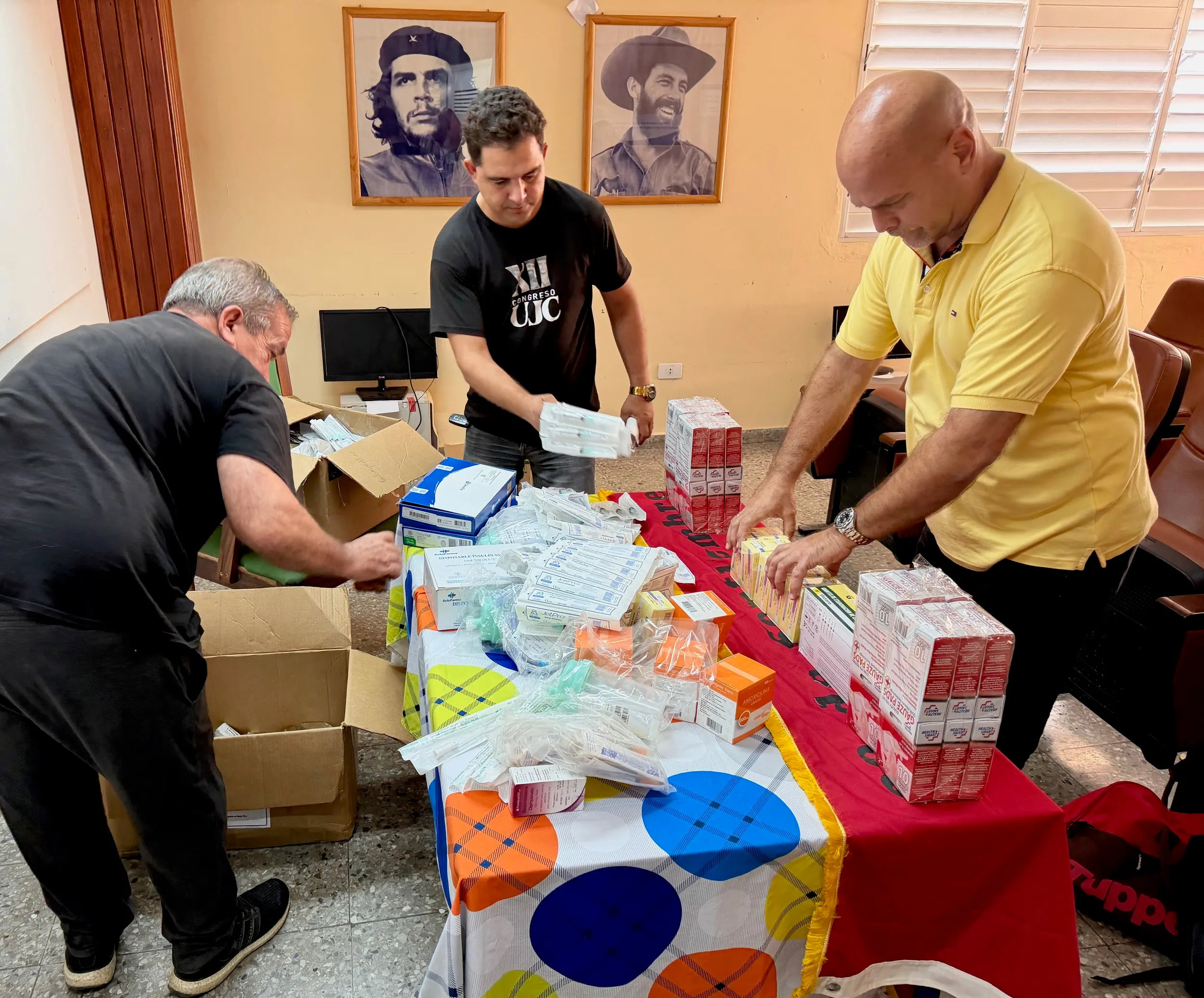
Acute shortages are a way of life in Cuba, and the CDR response has to be creative, collaborative and immediate; quite literally, lives depend on it. Today, Gerardo is traveling to Arroyo Naranjo, a community on the outskirts of Havana, to bring emergency medical supplies to Julio Trigo Hospital so that a number of medical procedures — some of them lifesaving — can proceed.
This is part of a network he helped set up called A Cuba hay que quererla (“Cuba must be loved”), named after a song by popular Cuban musician Raúl Torres. In this project, he is working with Amado Riol, a facilitator who connects medical supplies with need. Riol is on the phone constantly, working with a sense of urgency, talking with doctors and hospital staff, connecting the dots. He explains that the hospital is completely out of medical stents and that he has found some to deliver.
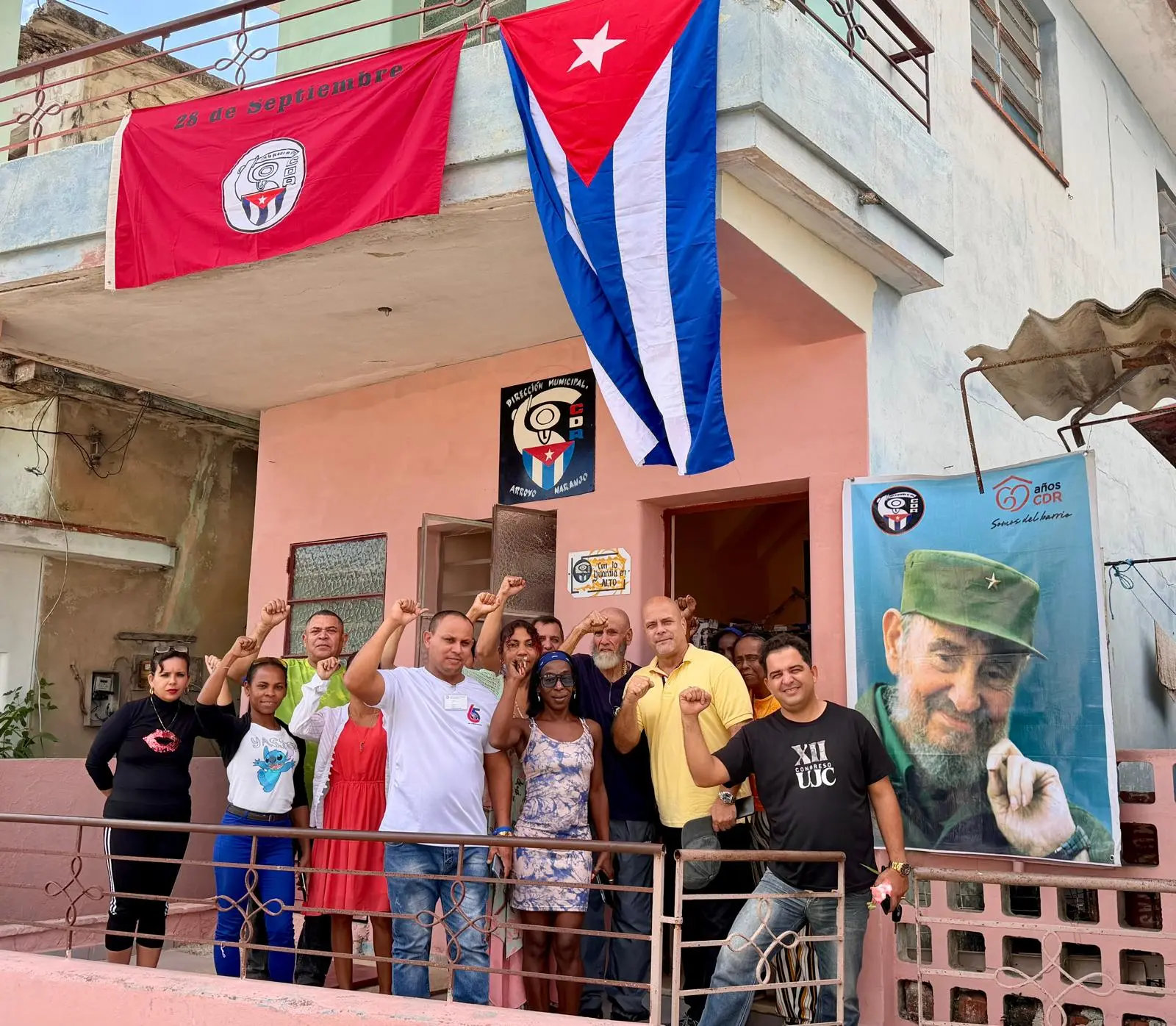
Visit to the Arroyo Naranjo CDR
While he was in the area, Gerardo took the opportunity to attend a meeting with the Arroyo Naranjo CDR to get an update on the well-being of the community and its ongoing projects. He makes himself accessible and listens to everyone’s comments and suggestions. This is grassroots Cuba, forced to struggle against all odds. What is apparent here — and what the empire cannot fathom — is the sense of cooperation, respect and determination to make things happen, something the Revolution has instilled in Cuban society at all levels.
Source: Resumen Latinoamericano – U.S.