Chile: another turn to the right?

Chile has a general election today. Around 15 million voters can take part in the first round to elect a new president, the lower house and half the seats of the senate. Incumbent President Gabriel Boric, who was elected in 2021, is constitutionally barred from seeking a consecutive second term. So all is up for grabs.

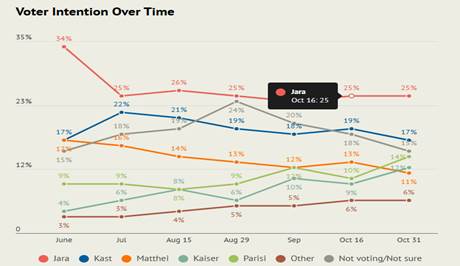
Boric was a former student activist who got a decisive victory in 2021. In a 56% turnout, the highest since voting was made voluntary, 35-year-old Boric took 56% of the vote compared to ultra-right Antonio Kast’s 44%.  But this time, the voter share could be the other way round. Although the leftist alliance led by Jeannette Jara of the Communist Party, who served as Boric’s labor minister, is ahead in the opinion polls, she will not get an outright majority in the first round as Boric did.  And a collection of right-wing parties is likely to combine their vote and get Kast into the presidential office in the second round in December.
Image

Chile is the richest country in Latin America as measured by GDP per head. It is a member of the OECD, the rich nations club, and in the (NAFTA-USMCA) trade bloc with Canada, Mexico and the US.  As a result, its real GDP growth rate has generally been slightly faster than the rest of Latin America, and so its successive governments have thus been relatively stable. 

Many mainstream economists and political theorists often use this to claim that Chile is a ‘free market’ capitalist economic success story and consider Chile as the “Switzerland of the Americas”. But this apparent success story is only relative compared to other Latin American economies.  Moreover, such gains have mainly gone to the rich in Chile.  Income inequality is among the worst in the OECD, only surpassed by Brazil and South Africa. The income share of the bottom decile in Chile is one of the lowest in the world. Only a few countries, largely from Latin America, have lower income share accruing to the bottom decile of the distribution, and this share has deteriorated in relative terms in the last 20 years. 

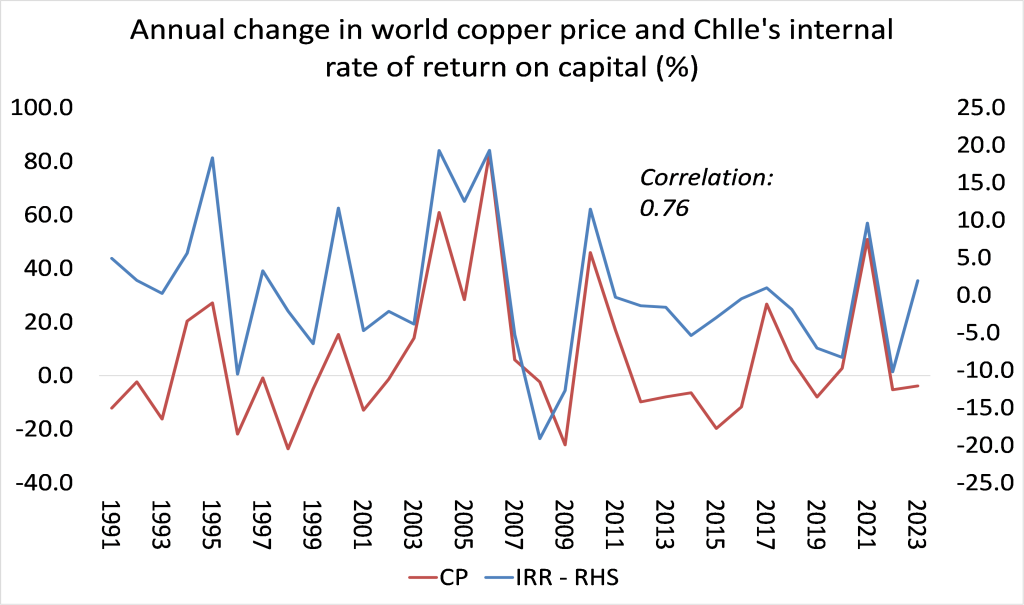
Chile’s relative economic success has always been based on its copper and mineral exports. The country has been the world’s top copper producer now for over 30 years, and close to 50% of the country’s exports come from copper-related products. The mining sector contributes 15% of Chile’s GDP  and generates 200,000 jobs.  If copper and mineral prices are high and rising, Chile’s economy does better and conversely. The profitability of Chilean capital has been driven by the copper cycle, as the graph below shows.
Chl1
Source: Penn World Tables 11.0 series

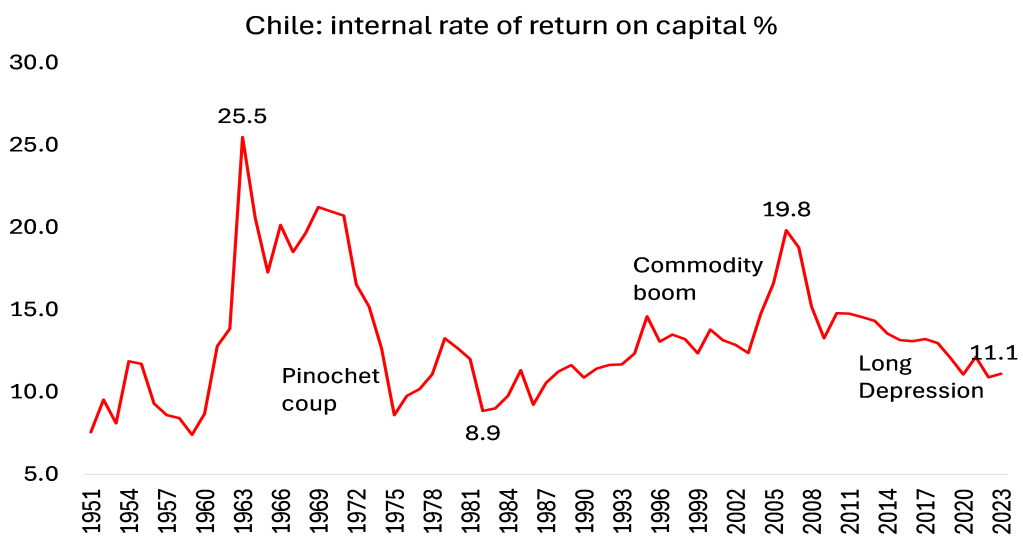
The neo-liberal period after the military coup by General Pinochet from 1973 and after the global slump of the early 1980s achieved a temporary rise in profitability, enabling the regime to maintain its control during the 1980s. Eventually, Chile returned to democracy in 1989, and the commodity price boom of the 2000s led to a new rise in profitability until the Great Recession of 2008-9.
Chl2
Source: Penn World Tables 11.0

The fall in profitability after 2010 led to slowing growth in GDP, investment, incomes and a further squeezing of public services prior to the COVID slump. With COVID and the health disaster, there was a collapse in the economy, with the main impact falling on those with the lowest incomes and worst jobs.  Copper prices jumped hugely when the pandemic slump ended, but then fell back by nearly 10% during the Boric presidency.

Why is the Leftist Alliance likely to lose? The main reason is that the Boric presidency failed to change the economic structure and the social inequalities in Chile. In recent decades, public services have been reduced, forcing people to use private profit operations. In particular, pensions are dominated by private sector companies. Most Chileans find that their savings for retirement are just too meagre to fund a decent standard of living in old age. Replacement rates (ie, pension income relative to average working income) in Chile are very low relative to other OECD economies. Amid high and rapidly increasing costs of living since the pandemic, alongside limited income growth and low pensions, many households have accumulated considerable amounts of debt. Taxes on the rich are small, so that income redistribution is lower than almost all OECD peers and many other poor economies.

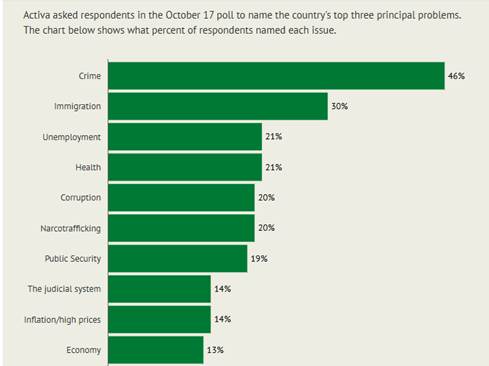
The damage of the COVID pandemic on people’s lives and livelihoods was blamed on Boric, as it was on many incumbent governments during COVID.  Boric did not take on the mining companies, but merely tried (and generally failed) to redistribute the largesse appropriated by capital somewhat more evenly.  After the pandemic, inflation rocketed, and the multinationals and the Chilean business sector, Congress and the media mounted an incessant campaign of attack.  Boric’s popularity plummeted. Boric was blamed for everything, including rising crime rates and increased immigration from Venezuela, as millions left that country in the search for a better living in Chile. These issues now seem to dominate the electorate, rather than the economy and the cost of living.
Image

The main right-wing candidate in the election, José Kast, is pitching hard, Trump style, on these issues. Kast, an admirer of the former dictator Pinochet, opposes the rights to abortion and same-sex marriage. He wants to build a Trump-style wall – called Escudo Fronterizo (Border Shield) –of ditches and barriers along Chile’s northern border to keep immigrants out. “Chile has been invaded … but this is over,” Kast has declared.

So it seems likely that another centre-left government in South America will eventually fall to the hard right, as it has recently in Bolivia and perhaps soon in Colombia and Peru. As Javier Milei put it on winning Argentina’s recent mid-term elections, Latin America was undergoing a “liberal renaissance.” Expressing hope that elections in several big nations over the next year would return conservative governments, Milei said: “We hope the blue wave continues. We’ve had enough reds. The world today is heading towards a different format, in which there will be a bloc led by the United States, a bloc led by Russia and a bloc led by China.  In this world order, the United States understands that its bloc is in America — and without doubt, we are its biggest strategic ally.”

Source: Michael Roberts Blog

Strugglelalucha256


32 days to surgery: How health care privatization kills

There are over 14 million people in California enrolled in Medi-Cal, making it one of the largest Medicaid programs in the U.S. Below is my story, one of many stories of people who face barriers to accessing services through this program.

The 32-day odyssey

On Oct. 4, 2025, I ruptured my Achilles. I was brought to the ER in Gardena, California, where the ER doctor claimed that the MRI unit was “non-operational” that night. I later looked on their website, which states that their MRI unit is operational “24/7.” Did I mention I have Medi-Cal for health insurance?

The doctor then prescribed me codeine to manage the pain, and said that I need to see my primary care physician (PCP), to get a referral to see an orthopedic doctor, to get a referral to get an MRI, to get the MRI of my Achilles, to prove that I need surgery. All the while, the ER doctor tested me in the ER and confirmed that I had ruptured it.

I see my PCP a few days later, and they write me a referral for me to see an orthopedic doctor. Through my insurance, the referral is sent to an entity called the “Medical Group,” which handles the finances for my subsidized health care — they take my referral and distribute that money to private companies, so that everyone gets their profit from someone’s injury / illness. It took the Medical Group, “Prospect Health,” seven days to approve an “urgent” referral for me to see an orthopedic doctor. At Los Angeles Orthopedic Surgery Specialists (LAOSS), the doctor examined me and said, “This patient needs surgery ASAP” (10 days post-rupture).

LAOSS sends another “urgent” referral to Prospect Health to approve an MRI for me. After calling back and forth to each entity for a week and getting nowhere, I decided to go to the ER to see if I could get the MRI done directly. I visited Cedars-Sinai Medical Center in LA, and after spending five hours in the ER, the ER doctor explained that “the hospital will not pay for the MRI, given your insurance.” She did, however, order me an Air Cast to make it more comfortable. She also recommended that I visit LAOSS directly to get this squared away. This is day 16 post-rupture, and typically these surgeries are performed within the first week.

I visited LAOSS the next day, on Oct. 21, to get to the bottom of this. A clerk in the office calls Prospect Health directly for me, and the MRI referral gets approved during this call. The same clerk schedules me for surgery on Friday, Oct. 24.

I had purchased concert tickets prior to the injury for Oct. 24 — and I couldn’t attend the concert if I had surgery at 8 a.m. the same morning — so I asked to move the surgery to the following week, which the clerk agreed would be on Oct. 28. I confirmed, “So my surgery is on the 28th?,” and they confirmed, “Yes, your surgery is on the 28th.” I left that meeting feeling relieved, and I got the MRI done that same night.

On Friday the 24th, I called LAOSS to confirm the details of my surgery on Oct. 28. They responded, “No, you have a pre-op appointment scheduled, not surgery. The surgeon will do some tests and prep you for the surgery.”

I went to my pre-op appointment on Oct. 28 (24 days post-rupture), and after doing a few tests, the surgeon explained that my Achilles had healed a lot, and he did not recommend surgery — this was the answer that I was expecting from this system. He explained that if we did go through with surgery, he could schedule me in two weeks, because of “more urgent surgeries” on the calendar. I went home to do my own research before making a final decision.

The decision was to get the surgery; the literature says the difference in outcomes is “inconclusive,” but I read through many personal accounts both from people who went with surgery and those who went the non-surgical route. They explained that the risk of re-rupture is significantly higher for non-surgical versus surgical. The only difference is non-surgical gets you back to baseline activities quicker (think walking, errands, light chores), while surgery helps you return quicker to high-impact exercise (like jumping, running and cutting) with considerably less risk. 

Basically, if you’re older, non-surgical is best (fewer complications); if you’re younger, surgical is best (quicker recovery). Rule of thumb: If the rupture is greater than 3 cm, it requires surgery. My tear has a gap close to three times that.

I sent an email to the surgeon the night after the pre-op, requesting urgent surgery, and outlined the reasons above. The next day, LAOSS calls me and says that “we’re scheduling you for surgery in two days (Oct. 31).”LAOSS calls me on Oct. 30 and says, “We weren’t able to secure an operating room, so we have to postpone the surgery until Nov. 5 (32 days post-rupture).

I secured surgery on Nov. 5 with no complications, and have been recovering since.

I’m one of the lucky ones

I’ve currently been out of work for over five weeks, and not to mention lost wages — I’ve also lost critical time with my students. I teach high school, and I see my students as my own children — I asked the surgeon, “How would you feel if you went without seeing your kids for over five weeks?”

All this is to say — I’m one of the lucky ones. I have most of my needs met, and communities to support me through this. I have access to rides to-and-from my appointments and access to some savings. I shared with my students the story of Noor Faraj, a 10-year-old Palestinian who lost three limbs during the U.S.-funded genocidal onslaught of Gaza. I explained that “I’ll be able to walk after this — I didn’t lose my leg.” Perspective helps with our own suffering and building empathy with those who have it so much worse.

There are so many people on Medi-Cal / Medicare / etc. who do not have their needs met. I can wait on the phone for hours to deal with this bureaucracy because I have safe and stable housing. And I think about people that don’t — and the people that give up, rightfully so. This story is for everyone.

The answer lies with socialism

We need a new system that serves health care, not one that hoards money at the expense of people’s suffering. Capitalism will never offer that because it’s not designed to — its function is to build profit. The answer lies within the social fabric of our humanity and concern for our communities to be safe and healthy. The answer lies with socialism.

Strugglelalucha256


Top commanders brief Trump on attack options against Venezuela

On Nov. 12, senior U.S. military officials presented President Trump with updated options for direct military operations against Venezuela — including the possibility of ground attacks, according to multiple sources familiar with the closed-door meetings at the White House. Secretary of War Pete Hegseth, Joint Chiefs Chair Dan Caine, and other top commanders laid out potential plans for the coming days. No final decision has been announced, but Washington’s trajectory is unmistakable.

U.S. intelligence agencies are feeding detailed targeting information into the process, while both the White House and Pentagon refused public comment. Notably absent from the high-level discussions were Director of National Intelligence Tulsi Gabbard and Secretary of State Marco Rubio — who was in Canada for a G7 foreign ministers’ meeting — underscoring how tightly controlled and military-centered these deliberations have become.

The timing was no coincidence. Earlier this week, the USS Gerald R. Ford carrier strike group — the most advanced in the U.S. arsenal — entered the U.S. Southern Command theater, joining a flotilla of destroyers, warplanes, submarines, and special operations units already positioned throughout the Caribbean. SOUTHCOM is the Pentagon’s primary combat command for operations in the Caribbean and South America, and its footprint is expanding rapidly.

For the past two months, U.S. forces in the region have already carried out lethal strikes on at least 21 boats, killing at least 80 people. Only two survived — one from Ecuador and one from Colombia. The Ecuadorian man was released after authorities admitted they had no evidence he had committed a crime. These deadly attacks, carried out under the false pretext of “counter-narcotics,” now form the backdrop for open planning of a wider assault.

What is happening in the Caribbean is not about drugs. It is about Venezuela, Cuba, Colombia, Nicaragua — about forcing sovereign governments into submission and tightening U.S. control over resources, shipping routes, and political direction across the region. And behind every ship, jet, and missile stands a class of corporations poised to profit from the buildup.

A massive U.S. military presence across the Caribbean

Warships, submarines, drones, and aircraft have flooded the region in a manner not seen in decades. Guided-missile destroyers armed with the Aegis combat system — including the USS Gravely, USS Jason Dunham, and USS Stockdale — now patrol Caribbean waters. They are joined by the cruiser USS Gettysburg, the littoral combat ship USS Wichita, and the nuclear-powered attack submarine USS Newport News, capable of launching Tomahawk cruise missiles.

On November 11, the Gerald R. Ford carrier strike group — the Navy’s newest and most technologically advanced aircraft carrier — steamed into the region with thousands of personnel and escort ships including the USS Bainbridge, USS Mahan, and the USS Winston Churchill. This brings the U.S. military footprint to roughly 14,000 troops, with more deployments under review.

Washington is expanding infrastructure at its former naval base in Puerto Rico and assessing additional forward-operating sites — signs that this is not a short-term move but preparation for a long-term imperialist operation.

The real targets: states that refuse U.S. domination

Venezuela, Cuba, and Nicaragua have long been in Washington’s crosshairs for maintaining sovereignty over their resources, political direction, and alliances. Colombia has also broken with U.S. directives on key issues — strengthening relations with its neighbors and resisting pressure to isolate Venezuela and Cuba.

For Wall Street and the Pentagon, these governments represent a challenge to U.S. control over the Caribbean Basin and northern South America. The buildup reinforces the old imperialist doctrine: Any nation in the region that asserts independence will face U.S. pressure — political, economic, and military.

This is about regime change, containment of sovereign states, and securing access to oil, minerals, shipping lanes, and strategic chokepoints.

War profiteers help shape the buildup

Behind this escalation is a familiar class of war profiteers — not the authors of U.S. foreign policy, but deeply invested participants in shaping it. Through lobbying, revolving-door positions, campaign donations, and coordinated messaging from think tanks and consultants, weapons corporations help steer policy toward options that guarantee continued militarization.

They don’t set the imperialist agenda — but they encourage, reinforce, and profit from it.

For these corporations, a militarized Caribbean isn’t a crisis. It’s an opportunity.

The weapons currently deployed are among the most expensive in the Pentagon’s inventory:

  • Arleigh-Burke destroyers: $2.5 billion each
  • AC-130J Ghostrider gunships: $165 million each
  • P-8 Poseidon surveillance aircraft: $83 million each
  • LCAC hovercraft: nearly $90 million apiece

And war profiteers don’t just profit from procurement. Roughly 70% of a weapons system’s lifetime cost comes from maintenance and sustainment, which skyrocket during long deployments. Every additional ship in the Caribbean means millions more for contractors.

Drone and missile makers rush to cash in

In September, General Atomics received a $14.1 billion contract to sustain MQ-9 Reaper drones — the same drones now flying strike and surveillance missions across the region. Lockheed Martin, the Pentagon’s biggest contractor, is visible in nearly every part of the operation:

  • F-35 fighter jets
  • AC-130J Ghostrider gunships
  • The Aegis system aboard U.S. warships (supported by a $3.1 billion contract)
  • Hellfire missiles used in recent strikes

Lockheed’s $50 million investment in Saildrone ensures unmanned naval surveillance remains embedded in U.S. operations.

Missile makers are also profiting. Ships in the region are estimated to carry nearly 200 Tomahawk missiles, each costing $1.3 million. RTX — the Tomahawk’s manufacturer — stands to rake in billions if the Pentagon replenishes its stocks. The Navy has already authorized the purchase of 837 upgraded Maritime Strike Tomahawks.

War profiteering reinforces U.S. policy

Stephen Semler of the Security Policy Reform Institute notes that the “Big Five” weapons corporations — Lockheed Martin, Boeing, RTX, Northrop Grumman, and General Dynamics — already capture one-third of all Pentagon weapons contracts. The possibility of confrontation with Venezuela or conflict involving Cuba, Nicaragua, or Colombia will trigger even more budget increases.

For weapons corporations, the Caribbean escalation isn’t a crisis. It’s a business plan.

A dangerous moment for the region

The Caribbean is being transformed into a launching pad for a new imperialist assault — one aimed at crushing sovereign governments, tightening U.S. control, and securing profits for Wall Street and the Pentagon. This buildup threatens tens of millions across the region, from Venezuela and Cuba to Puerto Rico and Colombia.

Working people — here and abroad — have nothing to gain from another U.S. war. Only the arms corporations, their lobbyists, and the policymakers who serve them stand to profit. One thing is certain: The war profiteers will collect their profits long before the first missile is launched. The task before us is clear: Expose this war drive and mobilize to stop it before more lives are taken.

Strugglelalucha256


The Gaza ceasefire isn’t — Washington helps the war go on

Nov. 14 — A month has passed since the latest ceasefire was declared in Gaza, yet Israeli forces continue attacking Palestinian neighborhoods from Khan Younis to Rafah. The Israeli Occupation Forces (IOF) have repeatedly violated the agreement, enforcing the siege as tightly as ever. Food and medicine are still blocked, starvation is still being used as a weapon, and Palestinians continue to be killed even as world headlines speak of a “truce.”

Washington echoes the language of restraint while continuing to arm the assault. The genocide has not paused — it has simply been repackaged.

Washington has long treated Israel as its “unsinkable aircraft carrier” in West Asia, a key platform for projecting U.S. power and protecting corporate interests. The ongoing assault on Gaza is another chapter in that strategy. Behind the talk of de-escalation is a stark reality: continued attacks, deepening siege, expanding U.S. involvement, and a war economy that profits from Palestinian suffering.

The ‘ceasefire’ is being violated every day

The ceasefire announced on Oct. 10 was never honored in practice. Since then, the IOF has continued launching airstrikes, drone attacks, and artillery fire across Gaza. Israeli operations during this supposed truce have killed 271 Palestinians and injured 622. In the first month alone, at least 242 Palestinians were killed.

As Francesca Albanese, the UN’s special rapporteur on human rights in the occupied Palestinian territories, put it: “Ceasefire according to Israel = ‘you cease, I fire.’”

This pattern extends beyond Gaza. In Lebanon — where a ceasefire has stood for a year — Israel has carried out more than 500 strikes on the south and the Bekaa Valley, killing over 300 people. The term “ceasefire” provides a political shield while the attacks continue.

And while the world is told the situation is stabilizing, Washington is quietly expanding its direct role in the occupation.

Washington is deepening its military presence

Even as U.S. officials claim they will not put “boots on the ground in Gaza,” documents and reports suggest Washington is considering a major expansion of its military presence near the enclave. In early November, Israeli sources reported plans for a $500 million installation to house several thousand troops as part of an international “stabilization force.” Bloomberg reported that the U.S. Navy circulated internal requests for cost estimates on a temporary base supporting 10,000 personnel. 

Though CENTCOM denied reports of a confirmed base, the U.S. has already deployed 200 troops to the Civil-Military Coordination Center (CMCC) in Kiryat Gat—a foothold that represents a significant escalation of U.S. involvement in the occupation.

This is not a break with past policy. Every U.S. administration — Republican or Democrat — has strengthened Israel’s military operations. A permanent base would deepen U.S. involvement in the siege and give Washington more direct control over the occupation.

As the U.S. lays the groundwork for a long-term military presence, the IOF continues another form of warfare each day — one carried out through hunger.

Starvation is being used as a weapon

The humanitarian crisis in Gaza is not incidental. It reflects a deliberate long-term strategy. Since 2007, Israel’s blockade has been structured to “enforce surrender through starvation.” Under the current ceasefire, this policy has intensified.

Since Oct. 10, Israeli authorities have blocked 76% of the agreed-upon humanitarian aid. More than 350 basic food items — including eggs, meat, fresh vegetables, and legumes — have been prohibited, while non-essential items were allowed in.

Aya Abu Qamar, a mother of three, describes the daily struggle:

“I haven’t found eggs, chicken, or cheese since food supplies started entering the Gaza Strip. All I see are chocolate, snacks, and instant coffee. These aren’t our daily needs. We’re looking for something to keep our children alive.”

By the end of October, 463 Palestinians — including 157 children — had died from malnutrition.

This is not a separate crisis from the military assault. The siege, the starvation, and the bombardment are part of the same strategy — and part of the same set of economic interests.

War profits drive the assault

Gaza’s coastline holds natural gas reserves valued at up to $4 billion per year. Control of these resources has long been identified as a strategic objective underlying the assault on Gaza.

Meanwhile, U.S. arms manufacturers are profiting from the genocide. Wall Street giants BlackRock, Vanguard, and State Street are major shareholders in the largest U.S. weapons firms: Raytheon Technologies (RTX), Lockheed Martin, Northrop Grumman, General Dynamics, and Boeing. Every missile, bomb, drone, and tank part used against Gaza yields direct profit.

As Raytheon CEO Greg Hayes said:

“Across the entire Raytheon portfolio, you’re going to see a benefit of this restocking. … on top of what we think is going to be an increase in the [Defense Department] budget.”

The genocide in Gaza is not only political — it is profitable.

The endgame for Gaza

In February 2025, President Trump openly proposed that the U.S. “take over” Gaza and transform it into the “Riviera of the Middle East” — but only after forcibly relocating its 2 million Palestinian residents to other countries. The proposal, which was condemned internationally as ethnic cleansing, reveals the ultimate vision behind the destruction: complete dispossession followed by redevelopment for profit.

The genocide is ongoing

A month into the declared ceasefire, Israel continues to bomb homes, block food and medicine, and starve an entire population. Washington continues to fund and arm the assault while preparing for a deeper military role. Corporations continue to profit from every weapon dropped.

The facts are unavoidable: The ceasefire is not real. The siege continues. The genocide continues.


Strugglelalucha256


Erasing Black history: from Florida’s classrooms to a cemetery in the Netherlands

Donald Trump’s war on Black history continues as the Netherlands American Cemetery Visitor Center quietly removed a memorial to Black U.S. soldiers who died in World War II. The move was made without announcement and with little attention from big corporate media. Only CNN and Newsweek covered the story. The New York Times, Fox News, MSNBC, the Washington Post, Bloomberg, the LA Times, ABC, and CBS have all been silent.

More than 174 Black U.S. soldiers are buried or memorialized at the Netherlands American Cemetery in the town of Margraten. These soldiers gave their lives fighting Nazi Germany in the service of a country — the United States — that did not recognize their basic civil and human rights at home. When Black soldiers returned to the U.S., they were met with Jim Crow and apartheid conditions.

Before it was removed, the exhibit “African American Servicemembers in WWII: Fighting on Two Fronts” detailed how Black soldiers enlisted en masse despite brutal systemic racism at home. Janice Wiggins, the widow of Black veteran Jefferson Wiggins, had to fight for the display in the first place. Her husband Jefferson — and hundreds of other Black soldiers in the U.S. Army — dug hundreds of the graves of U.S. soldiers killed in the Netherlands fighting the Nazis. 

When the cemetery opened its visitor center in 2023, none of the information or exhibits mentioned Black soldiers’ contributions. After a prolonged struggle, the exhibit on Black soldiers opened in 2024. Less than a year later, it is gone.

The dismantling of the display comes at a time when the Trump administration is escalating its mission to erase the achievements of the Black community and hide the truth about racist oppression. On March 27 of this year, Donald Trump signed an executive order mandating an investigation into “un-American practices” at the Smithsonian’s National Museum of African American History and Culture. The removal of the Margraten exhibit occurred in this broader climate of repression. 

Janice Wiggins was not informed. She learned from two friends in October 2025 that her husband’s legacy — and the legacy of so many Black soldiers — had been erased seven months earlier.

The war on Black history and the war on honest teaching about U.S. racism have been brewing for years. While the Trump administration has taken up the reins, this assault began in Florida’s neo-fascist laboratory. In 2023, Gov. Ron DeSantis signed a law blocking African American studies from the state’s course offerings and requiring schools to teach that the Black community “benefited” from slavery. DeSantis repeated this absurd claim many times. Such a policy is especially outrageous in a state with Florida’s brutal history of racism and genocide.

The Republican Party is not alone in its disdain for Black history or its attempts to minimize U.S. racism. When then-President Joe Biden spoke at the 100-year commemoration of the Tulsa Race Massacre of 1921, he refused to support the community’s demand for reparations.

Having found success in its Florida experiment, the neo-fascist movement around Trump has now taken the war on Black history nationwide. The working class and the progressive movement must unite to fight back. To erase Black history is to erase the real history of U.S. capitalism — and to erase the proof that the working class can struggle, resist, and win.

Strugglelalucha256


El gobierno impide acceso a información pública

Una colonia se sostiene esclavizada con la ayuda de los administradores locales. Estos son los achichincles que reprimen directamente al pueblo que se levanta en contra del imperio invasor. Y lo hacen de varias formas. Una de estas, es por la vía dizque “legal”, proponiendo y adoptando leyes que faciliten la dominación, o que impidan la resistencia.

Pues esta semana, en una maniobra oscura y obscena, la Cámara de Representantes adoptó un proyecto de ley presentado por el Senado para prevenir que el pueblo tenga libre acceso a documentos que de por sí son públicos. 

En un país donde nos están robando nuestros recursos naturales; destruyendo nuestras costas para construir mansiones lujosas para millonarios extranjeros; privatizando los servicios básicos de salud, de energía, esenciales para la sobrevivencia. Donde el encarecimiento de la canasta básica, del acceso a viviendas asequibles, y de todo lo que se requiere para una vida digna, está empujando a la gente a la miseria, al exilio y hasta al suicidio y la violencia generalizada. Es difícil vivir en este país. Y esto sucede para privilegiar a unas capas altas de la sociedad, pero sobre todo, a multimillonarios y mafias  extranjeras que impulsan el vaciamiento del archipiélago, para sustituirnos y hacer de nuestro país un  paraíso fiscal y residencial para ellos.

Y cuando se busca información para exponer estos crímenes del estado, lo que se encuentra es una pared impenetrable. Centros de noticias han tenido que demandar al gobierno para acceder a informaciones. 

Pero ahora, con este nuevo proyecto, será casi imposible saber sus mafiosas y corruptas acciones. Han sustituido la “Ley de Transparencia y Procedimiento Expedito para el Acceso a la

Información Pública” del 2019, que se aprobó para establecer una política pública para facilitar el acceso a la información pública, con una que establece barreras impenetrables. Sin vistas públicas, porque aunque se convocaron, no aceptaron a la mayoría de las organizaciones y personas interesadas en testificar en contra de la medida. La aprobaron como ladrones, en la noche, al final de una sesión, con votaciones aceleradas. Y aunque dicen que se discutirá pronto, sus acciones reflejan lo obvio, que su propósito es prevenir el acceso.

Pero la última palabra la tendrá el pueblo con sus acciones, ya sea más temprano o más tarde, el pueblo vencerá.

Desde Puerto Rico, para Radio Clarín de Colombia, les habló Berta Joubert-Ceci

Strugglelalucha256


People of the United States: Listen to Maduro


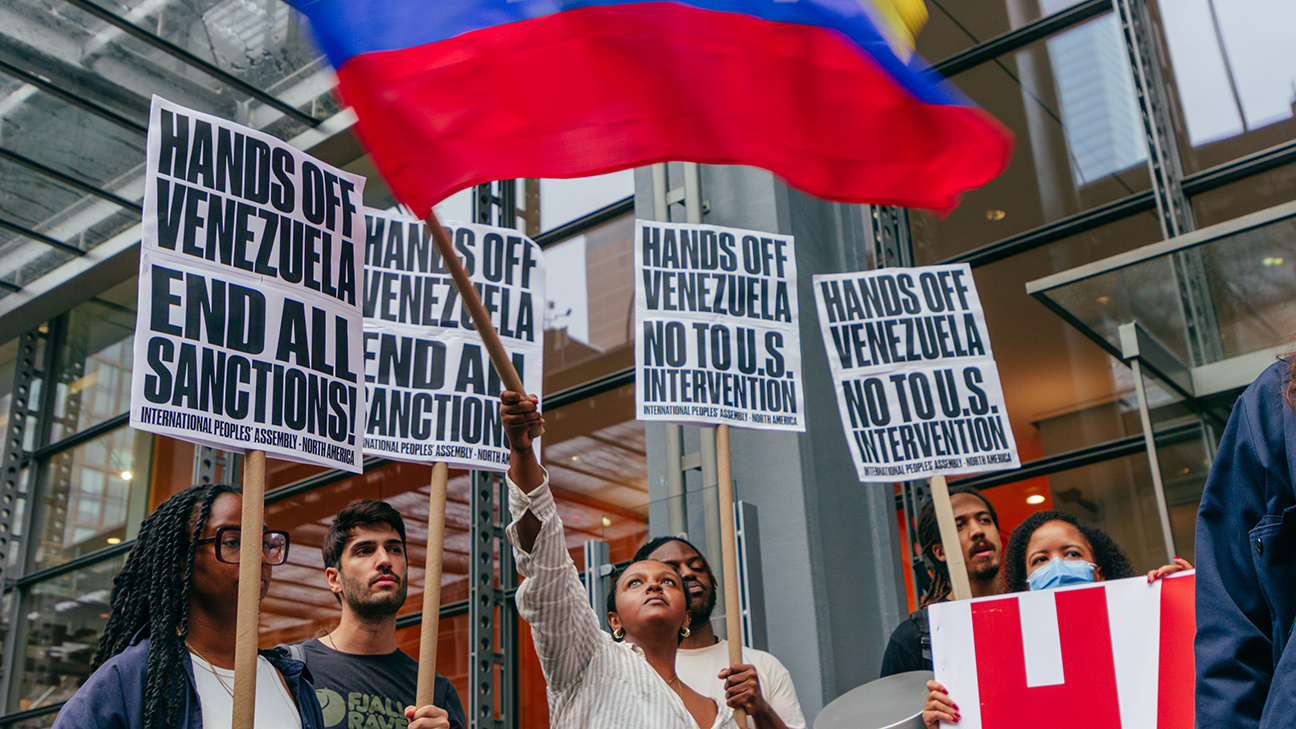
Hands off venezuela

In what CNN described as an exclusive conversation during a mass rally in Caracas, Venezuelan President Nicolás Maduro issued a direct appeal to the working class of the United States.

Maduro called for an end to Washington’s foreign wars, saying: “No more endless wars. No more unjust wars. No more Libya. No more Afghanistan.”

When asked by CNN’s Stefano Pozzebon whether he had anything to say to U.S. President Donald Trump, Maduro answered simply: “Yes, peace. Yes, peace.”

These remarks come from a leader whom much of the U.S. corporate media regularly slanders as a dictator.

A dangerous escalation

According to CBS News, U.S. forces have carried out at least 20 strikes in international waters in the Caribbean since September, destroying 21 vessels and killing at least 80 people. A United Nations official has described these killings as extrajudicial assassinations.

This pattern echoes the kinds of interventions that brought catastrophe to Libya and Afghanistan. Maduro’s warning is a reminder of how quickly such escalations can deepen.

Why people in the U.S. should pay attention

Maduro’s message was aimed at people in the United States — especially working people, who are already struggling with rising costs, low wages, and economic insecurity.

Wars are always justified in the name of “national interest,” but it is working-class communities who bear the burden: through cuts to social programs, higher military spending, and the diversion of resources away from housing, health care, schools, and basic public needs.

People in the United States are one of the forces capable of pushing back against a new war drive. History shows that mass protests and organized antiwar movements have made a difference. Early, organized opposition has slowed or stopped interventions before — and it can make a difference again.

A call for peace

As the U.S. expands military operations in the Caribbean, the need for a broad, inclusive antiwar movement becomes more urgent.

Maduro’s appeal is a reminder that the path to peace depends on people acting before a new war takes deeper root.

There is still time to prevent the kind of destruction the U.S. brought to Libya and Afghanistan — but only if people in the United States say no to war and no to any escalation against Venezuela now.


Strugglelalucha256


National Network on Cuba reaffirms actions in solidarity

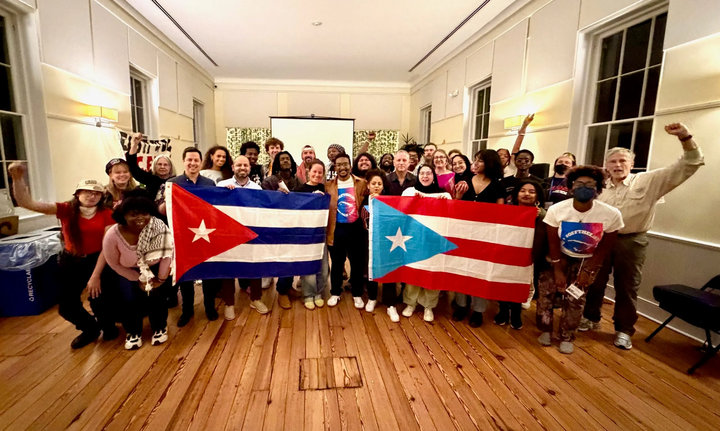
Charleston, S.C., Nov. 11 — More than 100 National Network on Cuba delegates and friends rededicated their solidarity with socialist Cuba during its annual fall meeting held in Charleston, South Carolina, November 7 to 9. The meeting, themed “Unity in Action,” was hosted by the Lowcountry Action Committee, one of more than 50 engaged member organizations of the NNOC.

ICAP president highlights challenges and priorities

In a video message, the president of the NNOC’s Cuban partner, the Cuban Institute for Friendship with the Peoples (ICAP), Fernando González Llort, outlined the challenges faced by the peoples of both the U.S. and Cuba as they confront the global crisis. He described the extensive damage caused by the recent hurricane and the effectiveness of Cuba’s civil defense system, designed under Fidel Castro to preserve life.

González Llort emphasized that the greatest obstacle to recovery is the criminal economic, commercial, and financial blockade imposed by the U.S. government. While the U.S. media machine conceals the political and legal framework of the blockade, he noted that people in the United States continue to demonstrate consistency and solidarity.

“The work you do from the United States is essential. Every local resolution passed, every caravan, every brigade, every piece of communication that dismantles the lies, is a decisive blow against the policy of suffocation,” he said.

He outlined Cuba’s key priorities:

  • Intensify the campaign to denounce the blockade and Cuba’s inclusion on the List of State Sponsors of Terrorism.
  • Develop an effective solidarity response that channels medical supplies, construction materials, and essential equipment to Cuba.
  • Promote travel to Cuba as a political act that reveals the truth about the island.
  • Strengthen national and inter-regional alliances to confront and overcome the blockade.

IMG 9687 scaled

NNOC leadership calls for strategic action

During opening remarks, NNOC Co-Chair Onyesonwu Chatoyer emphasized the urgent importance of the Network’s work. “We are not here to merely resist. We are here to build a unified, strategic, and disciplined force that can win,” she said. From delivering medicine to forming brigades to passing resolutions, the NNOC’s efforts contribute directly to building a world beyond imperialism.

New campaign: Let Cuban athletes compete

To actively engage in the perspective outlined by Chatoyer, one of the NNOC key leaders, the gathering unanimously endorsed a new international effort: Let Cuban Athletes Compete in the 2028 Olympics! Grant visas now for qualifying games of the 2028 Olympics and Paralympics. The campaign will launch later this month.

See Belly of the Beast Instagram video

The campaign responds to a report from the Cuban Sports Institute documenting 81 incidents this year affecting Cuban athletes, coaches, and officials due to U.S. visa denials. Prensa Latina has reported: “Visa issues have affected Cuban athletes in table tennis, basketball, track and field, soccer, triathlon, fencing, volleyball, and softball, as well as officials from the Cuban Olympic Committee, who are unable to attend meetings of Panam Sports, the governing body for sports on the continent.”

Workshops build national and international solidarity

The experiences learned in the 9th Continental meeting in solidarity with Cuba held in Mexico City was carried through the weekend where four workshops aimed at expanding solidarity work.

Growing NNOC Action for Cuba Committees

A national growth strategy through NNOC Action for Cuba Committees to organize and mobilize returning Cuba brigadistas; a material aid strategy to expand the resource contacts and communication across the country. In addition to supporting hurricane relief donations through the Peoples Forum, continuing the Saving Lives Campaign born during the COVID-19 crisis and the Hatuey Project bringing critical pediatric medicines to Cuban children, a workshop discussed building a national ongoing coordination of material aid beginning with filling containers for Cuba as initiated by the LA Hands Off Cuba in partnership with the Pan American Medical Medical Association and Not-Just-Tourists.

C 9428 scaled

Building support for ending the blockade

Another workshop, We Are Resolute: Building and Documenting Support for Ending the Blockade, focused on resolution campaigns. Participants proposed adding a “what to do after a resolution is passed” resource to NNOC.org.

More than 120 resolutions have already been adopted by elected bodies and labor organizations, representing more than 60 million U.S. residents. Ypsilanti, Michigan, and Chicago, Illinois, are among the most recent jurisdictions calling for Cuba’s removal from the State Sponsors of Terrorism list. The Coalition of Black Trade Unionists reaffirmed its support with a resolution at its 2025 International Convention.

Coordinating media work

The fourth workshop focused on expanding media coordination. This was a major focus of the recent Mexico conference where coordination was urged over duplication.

New members and renewed leadership

Two new organizations — Philly4Cuba and Colorado Cuba Sí — were voted in as NNOC members. Two of the Network’s five co-chair positions were renewed. Representatives of the Cuban Embassy brought greetings and took part in a panel discussion.

IMG 9714 scaled

Honoring Palestine and the history of Charleston

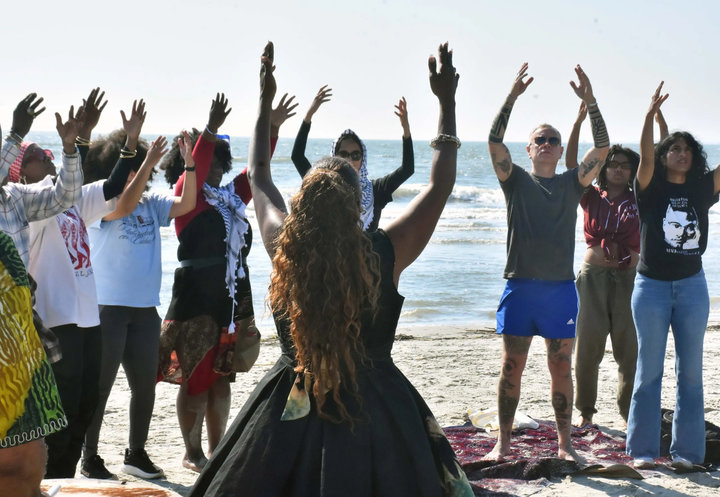
The weekend’s agenda incorporated solidarity with Palestine and deep recognition of the historic setting of the place the delegates gathered. The last session of the conference was held on the Atlantic shore in a stirring and fitting conclusion. While drummers set the tone in tribute to Assata Shakur, who died recently, a free woman in Cuba, the memory of the ancestors who arrived on slave ships was also present.

For a local perspective, see: Charleston, SC: National Network on Cuba Fall Meeting.

Source: National Network on Cuba (NNOC)


Strugglelalucha256


Does capitalism work? Depends on who you ask

A heated discussion about capitalism arose during a recent family gathering. It began with a defense of the capitalist system: Capitalism is the only system that works, they said, because it is based on the incentive for personal gain; it supposedly fosters competition, innovation, and individual freedom, resulting in economic growth.

That’s when I pointed out that a worker whose labor is exploited to create profit for the capitalists might see things from the other side. As Karl Marx explained: Under capitalism, workers are paid the value of their labor-power — what it costs to keep them able to work — while the value they actually produce exceeds this. The difference is surplus value, the basis of profit, which the capitalist appropriates.

Words like incentive, innovation, and personal enterprise cloak the real relationship between the boss and the worker. They reinforce capitalist propaganda and deserve to be examined in real time. Starting with:

Competition — the basic drive of capitalism, where every enterprise must outdo others simply to survive. To extract bigger profits, bosses intensify exploitation of workers while degrading products and the environment. The entrepreneurs who grow most powerful — by crushing their rivals — end up competing with capitalists in other countries, fueling global rivalries and war.

Innovation — Name a few of the biggest capitalists. Did Elon Musk, Warren Buffett, or Donald Trump rise through the genius of their own innovations? No. Let’s be honest: Workers are the ones who constantly innovate, using their skills and experience to increase efficiency and develop technology. While individuals may contribute ideas, the real source of innovation is collective labor. The billionaire class accumulates wealth not through brilliance but through inheritance, ownership, and exploitation.

Freedom of choice and incentives — This argument is especially galling. How many people have the actual freedom to pursue their talents and reap the rewards? Those who manage to save enough to start a small business are often crushed by larger competitors. For the vast majority of people in capitalist countries, it is becoming harder than ever to secure decent employment. The system is failing to meet even basic human needs.

And the brutality of capitalism goes even deeper for those it has historically super-exploited. For people whose ancestors survived slavery in the U.S., or the genocide of Indigenous peoples, or who are forced to leave their home countries because of capitalist plunder and imperialist wars, the system’s violence is ongoing.

The massive wealth of U.S. capitalism was built on this super-exploitation. The ruling class deliberately cultivates racism and bigotry to turn workers against each other, making it easier to erode the living standards of all. Today, figures like Donald Trump openly try to erase this grim history. His agenda is to roll back the gains won by the oppressed and their allies — all to enrich himself and his class.

So I asked: Why do capitalists believe they have the right to exploit the labor of others?

I was told that capitalists profit as a reward for “taking risks” and because they own the means of production — the factories, businesses, and equipment. But who produced those factories, businesses, and equipment? Workers did. Capital expropriates what we create — just as it does with the value we produce every day.

Shouldn’t workers be able to use our labor to ensure everyone has healthy food, livable housing, health care, education — to meet all our needs? Shouldn’t we be working for a better society, free of racism and bigotry? Shouldn’t we be protecting the planet instead of serving the greed of a tiny minority?

We will do that when we reclaim what is ours — when workers collectively own and control the means of production. That’s socialism.


Strugglelalucha256


346 dead — and no charges: How the system protects Boeing

A system built to shield corporate power

It’s official: Mass-casualty airplane manufacturer Boeing will face no criminal charges for the two 737 MAX jetliner crashes that killed 346 people. With this latest development, the U.S. “justice” system has provided yet another example of how, at the heart of U.S. capitalism, profit is prioritized over human life.

On Nov. 7, a Texas federal judge announced he would grant the Department of Justice’s request to drop all criminal charges against Boeing. The decision caps a three-year saga dating back to the DOJ’s 2021 deferred prosecution agreement (DPA) with the company. In exchange for fines and promises to strengthen its safety and ethics programs, Boeing effectively gets to walk away from the deaths of 346 people with minimal consequences.

Families denied justice

The victims’ families have rightly argued that the DPA was unjust from the start, allowing a mega-corporation to buy its way out of prosecution. Their outrage only grew as Boeing’s safety failures continued to mount, including the January 2024 Alaska Airlines door-plug blowout — an event so serious that the DOJ later concluded Boeing had breached the 2021 agreement. Yet even after that breach, Boeing is once again being allowed to pay its way out of accountability.

Just three months after the Alaska Airlines blowout, prominent whistleblower and aviation-safety advocate John Barnett was found dead under suspicious circumstances. Barnett had been testifying to federal authorities that Boeing was cutting corners and creating significant risks for pilots and passengers.

Bipartisan impunity for big capital

After all this death, danger, and deception, the justice system’s priority remains the same: Protect the corporate executives whose decisions led to catastrophe. Boeing gets to mislead regulators, rush unsafe aircraft into service, smear pilots when disaster strikes, and walk away with a slap on the wrist.

It’s worth noting that the government’s gentle treatment of Boeing spans both the Biden and Trump administrations. While the Biden administration sought to enforce the DPA after the Alaska Airlines incident, it still signed the agreement in the first place — opening the door for Boeing to escape criminal charges. On matters of corporate power and the hoarding of wealth by the few, Democrats and Republicans are united.

The capitalist state at work

Under capitalism, elected officials do not represent the people; they represent big capital. Their role is not to restrain corporate greed but to enforce the rule of banks and mega-corporations like Boeing.

In “State and Revolution,” Lenin described the capitalist state plainly:

“The state is an organ of class rule, an organ for the oppression of one class by another; it is the creation of ‘order’ which legalizes and perpetuates this oppression by moderating the conflict between classes.”

This “moderation” — which shields the wealthy while sacrificing the working class — is on full display in the government’s refusal to prosecute Boeing in exchange for what amounts to blood money. Boeing will pay its fines. Politicians will claim justice has been served. But what happens when Boeing’s negligence and fraud take more lives?

The DPA is a disgrace. The dismissal of criminal charges is a disgrace. And Boeing’s impunity is a disgrace. Working people are tired of back-room deals and token penalties. Corporations like Boeing — and the banks and investors behind them — must be dismantled and replaced with institutions that truly serve the people.

Strugglelalucha256
https://www.struggle-la-lucha.org/2025/page/9/