Voting for Mamdani is voting against racism

Mamdani
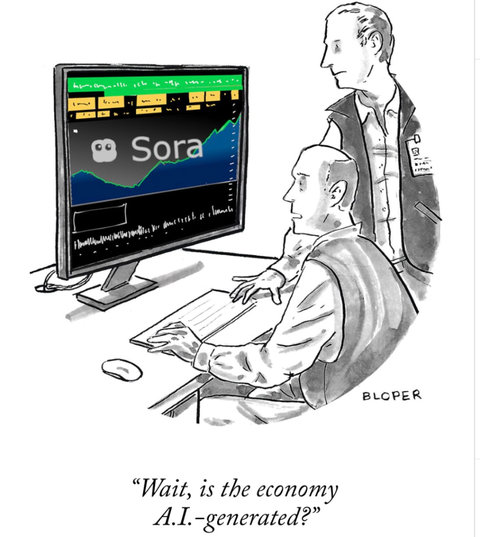
Zohran Mamdani speaks at a rally in Jackson Heights, June 21, 2025.

Stop the billionaires from stealing the NYC election

On the eve of the Nov. 4 New York City mayoral election, the billionaire class is going all out to defeat Zohran Mamdani. 

The chief weapon of the wealthy and powerful is racism against Mamdani, who is Muslim and was born in Uganda. 

It’s not just Fox News and the New York Post, both owned by the Murdoch family, which are spewing hate nonstop.

Mamdani’s chief opponent — former New York Gov. Andrew Cuomo — went on Sid Rosenberg’s bigoted WABC radio talk show. Cuomo laughed when Rosenberg claimed Mamdani would welcome another Sept. 11, 2001, attack.

Mamdani responded eloquently. “Islamophobia is not seen as inexcusable,” he said in a video appeal. “Elected officials can sell T-shirts calling for my deportation.”

Cuomo visits Trump-loving neighborhoods in Staten Island, where he denounces Mamdani for being against statues of genocidal Columbus.

He’s also courting a handful of right-wing synagogues, attacking the Muslim Mamdani for demanding an end to the genocide in Gaza — even as tens of thousands, perhaps hundreds of thousands, of Jewish New Yorkers have joined his call for justice for the Palestinian people, against genocide, and are backing Mamdani’s campaign.

The Nov. 4 election is a referendum on racism. Voting for Mamdani is saying no to Islamophobia and every form of racism and bigotry.

The big money against Mamdani

More than $40 million is being spent to defeat the Democratic Socialist Zohran Mamdani, who wants to freeze rents and make the buses and child care free.

These absolutely needed reforms horrify former New York Mayor Bloomberg, who has shoveled over $8 million into the Stop Mamdani slush fund. That’s spare change for Bloomberg, whose fortune is estimated at $109.4 billion

During Bloomberg’s 12-year reign in City Hall, up to a million people per year were detained by police under “Stop and Frisk” policies. The overwhelming number of people who had their Fourth Amendment rights against illegal searches stolen were Black and Brown.

The money-bags mayor also wanted to close 20 firehouses across the city.

Bloomberg let public housing rot while the average monthly rent for a 691 square foot, one-bedroom apartment in Manhattan has risen to $5,494. NYC transit fares are scheduled to rise to $3 in January, 60 times what they were in 1948, when it cost a nickel to take a bus or subway.

But Zohran Mamdani must not be allowed to be elected mayor!

Other donors to the Stop Mamdani campaign include Joe Gebbia, co-founder of Airbnb, who has given $2 million. Also giving money is Alice Walton, whose $111.4 billion fortune comes from the poverty wages paid to two million Walmart workers. 

Cuomo’s rotten record

When he was governor, Andrew Cuomo was forced to resign for being accused of being a sexual predator. He compelled thousands of seniors hospitalized with COVID-19 to go to nursing homes, where the disease spread, killing thousands more.

His daddy, Mario Cuomo, was also governor. The elder Cuomo took $8 billion in funds meant for affordable housing and used them to build more prisons than any other governor in New York history.

Zohran Mamdani’s campaign has become a mass movement against decades of capitalist austerity and cutbacks. Even more so it’s a way to say no to anti-Muslim racism that became official policy after Sept. 11, 2001. 

It was the struggle of Palestinians against U.S./Zionist genocide — and all the pro-Palestinian demonstrations — that helped spark Mamdani’s campaign. 

Mamdani’s program of mild reforms may not seem extraordinary. But it gives people a chance to mobilize against capitalism in the capital of capitalism.

It’s crucial that revolutionary socialists and all progressive people support Mamdani against racism, against Islamophobia, and against Wall Street’s billionaires. For further analysis, please check out “The Mamdani NYC mayoral campaign, ‘Which side are you on?,’’” by Sharon Black.

Strugglelalucha256


What’s a billionaire doing paying off the troops?

The “anonymous donor” Donald Trump bragged about on Oct. 23 — the one supposedly giving $130 million to pay U.S. military personnel during the government shutdown — turns out to be billionaire Timothy Mellon, heir to one of the oldest capitalist dynasties in the United States.

The donation from the 83-year-old member of the filthy-rich Mellon financial dynasty amounts to $100 per member of the Armed Forces.

That’s about 2% of the Pentagon’s monthly payroll for those wearing a uniform. So what’s the point? 

Is Mellon’s money earmarked for elite units who could be mobilized to attack demonstrators protesting ICE raids? Or to pay off key generals and admirals in some future plot like the Jan. 6, 2021, takeover of the United States Capitol?

The $130 million payoff is likely illegal and violates the Antideficiency Act. Mellon isn’t donating paintings to the National Gallery of Art like his granddaddy, Andrew Mellon, did to get off tax evasion charges. 

It goes around Congress, which, in a republic, is supposed to decide where the tax money goes. Mellon’s money allows Trump to say to GIs, “I’m the one providing for your families, not the liberals in Congress.” 

SNAP benefits — formerly known as food stamps — for 42 million people are going to run out of money on Nov. 1. Why couldn’t Timothy Mellon make a donation to food banks?

Even with increasing food prices, $130 million could still buy a lot of eggs. 

This isn’t a random act of generosity.

The Mellon family octopus

What the DuPonts are to Delaware, the Mellons are to Pittsburgh and Western Pennsylvania. For over 150 years, the family has sliced and diced industries while breaking strikes.

Key to Mellon power is their bank, the Bank of New York Mellon, with assets of $440 billion. Its assets under management — funds belonging to its wealthy clients, which the bank manages — amount to $2.1 trillion.

Timothy’s grandfather, Andrew Mellon, used the family bank to control a whole series of blue-chip corporations, including Alcoa. Because of its patents, the outfit held a virtual monopoly on U.S. aluminum production for decades.

Interior Secretary Harold Ickes declared that if the United States lost World War II, it would be because Alcoa was holding back on producing aluminum for planes. The federal government had to break Alcoa’s patent monopoly.

The jewel in the family crown was Gulf Oil, which merged with Texaco to form Chevron in 1985. Andrew Mellon served as Treasury Secretary for three presidents in the 1920s (Harding, Coolidge and Hoover), giving tax cuts to his fellow plutocrats.

Afterwards, he was appointed ambassador to Britain, where he demanded a 50% cut of the British crown colony of Kuwait’s petroleum production for Gulf Oil. Sixty years later, the first U.S. war in the Arab/Persian Gulf began.

Machine guns for the miners

Every generation of Mellons has been at war with the working class. After their Pittsburgh Coal Company crushed a miners’ strike in the 1920s, a Senate inquiry exposed the firm’s private armies. Richard Mellon, Andrew’s brother, coolly told senators that “you couldn’t run a coal mine without machine guns.”

Timothy Mellon carried that tradition into modern times. As owner of several New England railroads, he fought union contracts and ran them into bankruptcy, slashing jobs and safety. 

His autobiography drips with racist contempt, describing Black people in racist terms. He poured $1.5 million into defending Arizona’s vicious SB 1070 anti-immigrant law, most of which was thrown out by the courts.

No wonder this bigot is a friend of Donald Trump.

The real question

Why should one billionaire decide who gets paid while tens of millions go hungry?

Why can a private fortune fill the gap left by a “shutdown” — but only for the armed forces, never for the poor?

The government always finds money for bullets, never for bread.


Strugglelalucha256


Trump approves war escalation against Russia

The so-called “peacemaker” president is at it again. Donald Trump talks peace while preparing war.

Much has been made in the media in recent weeks about whether Donald Trump would deliver Tomahawk cruise missiles to Ukraine. It is without question that sending such missiles would represent a significant escalation in NATO’s proxy war against Russia. 

Tomahawks now join a long list of military equipment touted as the game-changer for Ukraine in the war with Russia. Narratives that a particular weapon will turn the tide of war have saturated the news and social media since the war began in 2022. 

If it wasn’t the F-16 fighter jet, it was Germany’s “Leopard” tank. If it wasn’t German tanks, it was cluster munitions, or the High Mobility Artillery Rocket System or Patriot missile systems. And every time, the propaganda was the same: Ukraine just needed one more piece of crucial equipment to achieve its victory. 

This narrative was a lie from the beginning, and an intentional one. Ukraine has already deployed all these so-called game-changing weapons. None of them has led to the reversal or even the slowing of Russia’s steady advance. 

The ‘silver bullet’ myth

From the beginning, this “silver bullet” narrative was just a smokescreen to justify spending millions upon millions of government funds on a U.S.-NATO war to drain Russia strategically. 

Just like the rest of the equipment now burning on the war’s long front, Tomahawks will make little difference in the grand scheme of the war’s progress. While these are powerful weapons intended to decimate enemy logistical infrastructure and supply hubs, the math doesn’t add up. 

The Tomahawk illusion

Currently, the Trump administration has proposed sending 50 Tomahawks to Ukraine. Military analysts note that the number under discussion — just 50 missiles — would barely dent Russia’s vast energy infrastructure. Further, the missiles are wildly expensive to produce. 

To make any significant difference in the outcome of the war and have any chance to overcome Russia’s advantage in mobilization and war industry over Ukraine – the U.S. would have to send thousands of Tomahawk missiles. And even that could be futile

The U.S. would likely exhaust its entire arsenal of an estimated 4,000 missiles without seeing real deterioration in Russia’s military capabilities. 

The real motive: profit

So why the push for Tomahawks? It’s not strategy — it’s profit.

The U.S. and European arms industries have made record gains from the war in Ukraine. Each new shipment guarantees new government contracts to replace what’s sent. When Washington ships 50 Tomahawks abroad, it must order 50 more — using state funds diverted from social needs to corporate profit.

That’s how the system works. The government transfers the public wealth to the monopolies of war. Every missile fired means another payday for Raytheon, Northrop Grumman, and General Dynamics.

Even with the limitations of the Tomahawk missile and the motivation having more to do with profit than with the actual prosecution of a war, the shipment of such missiles to Ukraine for strikes deep in Russia would still represent a dangerous escalation. 

Such missiles would allow Ukraine to strike major Russian cities like Moscow and St. Petersburg. There is no other way for Russia to interpret U.S.-supplied Tomahawks to Ukraine than as a signal of escalation from NATO. 

For now, Donald Trump has seemingly decided that he isn’t prepared to publicly provide Ukraine with the capability to strike deep in Russian territory via Tomahawks. But in the same stroke as publicly declining to send Tomahawks, Trump’s State Department lifted key restrictions on Ukraine’s use of missiles provided by European allies. 

Even with Trump’s bluster, the escalation is apparent, dangerous, and terrifying. 

Trump’s administration lifted these restrictions a day after Ukraine used a British-supplied Storm Shadow missile to strike a Russian chemical plant in Bryansk, deep behind the front lines. The message here seems clear: “Keep it up, but get what you need from Europe.” 

This has been Trump’s strategy since he took office. The right-wing demagogue claims to be a peacemaker while pushing the war through European allies and enacting new sanctions against Russia. 

The world doesn’t need another “peacemaker” who feeds the war machine. The working class of the United States — and everywhere — needs those vast public resources now wasted on war redirected to human needs: housing, healthcare, education, and rebuilding communities, not destroying them.


Strugglelalucha256


An Urgent Message from the Peoples Forum for Hurricane Melissa Relief

10 29 8f190c096d82774c974a9f5707420c50d0171e340739c00b9d1f054cd5e3dcbb

Dear subscribers, colleagues, and friends:

Right now, the people of Cuba are facing an unprecedented crisis: crippling electrical blackouts, the relentless weight of the U.S. blockade, and now the arrival of Hurricane Melissa. We are sending urgently-needed food, clean water, and supplies to the island—and we need your help

This hurricane is not merely a severe storm; it is a catastrophic event that has shredded infrastructure and left entire communities in life-threatening conditions. But this natural disaster is amplified exponentially by a man-made catastrophe. For over six decades, the U.S. blockade has choked the Cuban economy, preventing access to essential goods, medicines, and the materials needed for recovery. This policy of strangulation has been devastatingly intensified by measures put in place under the Trump administration and championed by figures like Marco Rubio.

DONATE HERE
The direct result of this cruel policy is staggering: the blockade has cost the Cuban people an estimated $7.5 billion in damages in the last year alone. This deliberate economic warfare prevents Cuba from acquiring the necessities they need right now to survive, including generators, building materials, food, and drinking water.

The resilience of the Cuban people is undeniable, having endured 65 years of economic blockade, but Hurricane Melissa has created an even more challenging situation. The Cuban people urgently need solidarity from us around the world. We have a profound responsibility to act and to deliver urgent, life-saving aid directly to the Cuban people.

Our immediate goal is to raise $50,000 to send essential food, clean drinking water, and supplies to the areas affected by the hurricane. Every dollar you donate is a lifeline to the Cuban people in this urgent and challenging moment. Please donate what you can today. Rally your community, and let’s prove that humanity and neighborly love are stronger than any blockade.

The Hurricane Melissa Relief donation drive is a collaborative effort between The People’s Forum, IFCO/Pastors for Peace, The Hatuey Project, The ANSWER Coalition, and The Party for Socialism & Liberation, in partnership with The Dr. Martin Luther King, Jr. Memorial Center (CMMLK) in Cuba.

DONATE HERE

All Donations are tax deductible

To donate by check:

  • Make check out to: The People’s Forum
  • On memo line write: “Urgent Aid”
  • Make check out to: The People’s Forum
  • Mail to: The People’s Forum 320 W 37th St New York, NY 10018
Strugglelalucha256


Harlem rallies for Cuba, Colombia and Venezuela

Oct. 26 — Under the statue of Congressperson Adam Clayton Powell, Jr., people rallied in Harlem today to say no to Trump’s war moves in the Caribbean.

The rally’s co-chair — long-time Cuba activist Rosemari Mealy, JD, Ph.D. — pointed across the street to the former Hotel Theresa, where Cuban leader Fidel Castro met Malcolm X in 1960. Mealy, a member of the New York / New Jersey Cuba Sí Coalition, wrote about that famous encounter in her book, Fidel & Malcolm X: Memories of a Meeting.” 

Ike Nahem of the coalition also co-chaired the rally. It was held on the eve of the annual vote in the United Nations General Assembly condemning the U.S. economic blockade of Cuba. According to Cuban Foreign Minister Bruno Rodríguez Parrilla, the country has suffered over $170 billion in losses over the decades because of it.

Just two months of the blockade cost Cuba $1.6 billion. That’s enough money to pay for the imported fuel needed to power all of Cuba’s electricity. 

The Trump regime is strong-arming countries to vote against condemning the blockade or at least abstain during the roll call. Trump’s flunky Secretary of State Marco Rubio wants to avoid last year’s humiliating 187 to 2 vote denouncing the vicious blockade.

Speakers at the rally reminded onlookers of Cuba’s aid to oppressed people around the world. As the late Pan-African educator and organizer Elombe Brath declared, “When Africa called, Cuba answered.”  

Thousands of Cuban volunteers died fighting alongside their African comrades, defeating the Nazi armies of then apartheid South Africa invading Angola.

The Cuban people shielded the Black revolutionary Assata Shakur from U.S. bloodhounds despite a $2 million bounty on her. Shakur, who became a doctor in Cuba, died free there on Sept. 25.

Thousands of people from around the world, including hundreds from the United States, have received free medical education in Cuba. The only condition is that they go back to their countries and help heal the poor.

Defend Cuba, fight ICE

William Camacaro of the Bolivarian Circle denounced Trump’s war threats to Colombia and Venezuela. Ten thousand sailors and marines are on an armada of warships in the Caribbean.

Ed Ventura of the Bronx chapter of JUPI — Youth United for Independence — denounced Trump for using Puerto Rico as a staging ground for threatening Colombia and Venezuela.

The human rights attorney Roger Wareham, a member of the International Secretariat of the December 12th Movement, pointed out that Zimbabwe — like Cuba — has been sanctioned by the United States. Zimbabwe’s “crime” was to take back land stolen from Africans by European settlers.

Cesar Santos, a co-chair of the National Network on Cuba, urged people to keep on fighting to defend Cuba. Santos also videotaped the rally.

New York State Senator Cordell Cleare, whose 30th district includes Harlem, mentioned how the blockade of Cuba harms people in the United States as well. She described how the Roswell Park Comprehensive Cancer Center in Buffalo, New York, is hindered in its collaboration with Cuban scientists to fight lung cancer. 

Different artists, including a spoken-word performance from the Harlem Bomb Shelter, gave cultural performances.

Cuba Sí Coalition member Jason Corley urged people to check out books about Cuba.

The rally was held while ICE agents were kidnapping people across the United States. National Lawyers Guild President Suzanne Adely urged people to unite against this terror campaign and connected the struggle with defending Cuba.

Hands off Cuba, Colombia and Venezuela! Stop ICE!


Strugglelalucha256


Campaña antisindical en PR

La intensificación del modelo neoliberal y colonial se manifiesta en Puerto Rico de muchas formas, en contubernio con figuras políticas y de la prensa subordinada a esos intereses.

Esta semana hemos visto en los medios la proliferación de terribles mentiras y difamaciones en contra de la clase trabajadora boricua, especialmente de la industria energética. Esos trabajadores que por años sirvieron a nuestro pueblo, en muchas ocasiones arriesgando sus vidas para brindarle al pueblo luz hasta en los rincones más recónditos de nuestro archipiélago. Muchos perdieron sus vidas en ese intento. 

Pero ahora con la privatización de la energía, esos mismos trabajadores han sido desplazados de sus puestos, sustituídos por extranjeros que no conocen nuestro territorio de montañas y cuerpos de agua difíciles de accesar. Pero lo peor, son las compañía privatizadoras corruptas y mafiosas que generan la energía y la distribuyen: las extranjeras Genera cuya matriz es New Fortress, que por cierto está en bancarrota, y la incompetente Luma Energy para la transmisión y distribución. 

Se privatizó con la excusa de que abarataría el costo. Sin embargo desde que comenzaron, los aumentos han sido continuos.

El colmo ha sido que el gobierno hace ya años, dejó de pagar su parte obligada a las pensiones de los trabajadores de la que fuera Autoridad de Energía Eléctrica pública, ahora privatizada. Así que al descapitalizarse el fondo de pagos de pensiones, la privatizadora, con el aval del gobierno, ha impuesto un recargo a la factura para el pago de las pensiones, aumentando aún más los pagos de luz. 

El sindicato Utier ha sometido propuestas para financiar las pensiones, pero el gobierno las ha ignorado. Prefirió montar una campaña de odio hacia los trabajadores utilizando los medios televisivos y radiales que se han prestado, intentando dividir al pueblo para que culpen a los trabajadores y no al gobierno corrupto.

Pero esta semana, uno de esos programas que invitó a Ricardo Santos Ramos, expresidente del sindicato UTIER recibió una sorpresa cuando éste valientemente le contó las verdades sobre la corrupción y el contubernio de los medios al satanizar a los trabajadores. Dio cátedra de lo que hay que hacer con estos medios. Fue un acto de dignidad al cual el presentador del programa no tuvo forma honesta de contestar, quedando en evidencia la complicidad de los medios. 

¡Viva la clase trabajadora boricua! ¡La privatización fracasó! ¡Cancelen los contratos Ya!

Desde Puerto Rico, para Radio Clarín de Colombia, les habló Berta Joubert-Ceci.

Strugglelalucha256


The ‘Big Stick’ is back: And it’s pointed at Venezuela, Colombia and Cuba

The U.S. continues to escalate military pressure against Venezuela — and against Colombia and Cuba as well.

On Friday, Oct. 24, 2025, Secretary of War Pete Hegseth announced the deployment of the aircraft carrier USS Gerald R. Ford (CVN-78) to the Caribbean.

The USS Ford — the most lethal strike platform in the world — joins an already massive U.S. military buildup in the region: 10,000 U.S. troops, at least eight warships, P-8 surveillance planes, and F-35 jets are now deployed under the Trump administration’s so-called “counter-narcotics” operation. U.S. troops have also landed in Trinidad and Tobago, just miles from Venezuela, for five days of “joint exercises” seen across the region as a clear act of intimidation.

Colombian President Gustavo Petro called it a violation of international law and Latin American sovereignty. Petro charges Washington with illegal acts of imperialist aggression driven by economic motives rather than genuine counter-narcotics efforts.

Petro has condemned the U.S. missile strikes on vessels in the Caribbean and Pacific as “acts of tyranny” and “extrajudicial executions.” He charged that U.S. forces violated Colombia’s sovereignty, describing the attacks as “murders” carried out in territorial waters.

The Colombian leader highlighted the case of Alejandro Carranza, a Colombian fisherman allegedly killed when his small vessel suffered engine failure and raised a distress signal. 

“They committed a murder and violated our sovereignty in territorial waters,” Petro said, stressing that the victims were not drug traffickers but “poor young people from Latin America.” He confirmed that at least one Colombian vessel was struck and that Colombian citizens were killed in the attacks.

Cuba is also a target in Washington’s expanding war drive.

Havana’s Foreign Ministry denounced the U.S. military buildup in the Caribbean as “an aggressive show of force” that threatens peace and stability across the region. Cuban officials warned that U.S. maneuvers near the island represent “a real and imminent danger,” aimed at intimidation and destabilization. 

Venezuela’s history as a battleground of empire

Venezuela’s long history shows how U.S. imperialism evolved from Teddy Roosevelt’s “big stick” diplomacy to today’s mix of sanctions, economic strangulation, and ‘big stick’ warfare. Oil made Venezuela a prize for foreign capital a century ago; it still makes the country a strategic battleground between imperialist control and national sovereignty. The Bolivarian Revolution, led by Hugo Chávez, tried to break that pattern — and Washington has treated that challenge as an existential threat.

The oil-looting era

In the early 20th century, U.S. oil barons — anchored to Rockefeller’s Standard Oil — carved out vast concessions from the colonial puppet regime that ruled Venezuela on behalf of Wall Street. By the 1920s, companies like Standard Oil of New Jersey (later Exxon) and Royal Dutch Shell dominated production. The profits flowed north; Venezuelan workers remained poor under repressive regimes that enforced foreign concessions.

By mid-century, oil accounted for over 90% of Venezuela’s exports, but ownership, technology and pricing power stayed in foreign hands. The state’s courts, ports and pipelines served Wall Street; infrastructure and social investment lagged, producing sharp inequality and long dependence on external markets.

The 1976 nationalization and the creation of PDVSA altered ownership on paper, but Big Oil’s control remained deep. Technical links, commercial contracts, and international financing meant that de facto control — and much of the profit — remained tied to U.S. and European oil giants. 

Big stick imperialism 

Teddy Roosevelt turned the Monroe Doctrine into a license for U.S. policing across the Americas — asserting the right to intervene whenever Washington judged instability a “threat.” 

Roosevelt’s gunboat diplomacy forced Venezuela to satisfy European creditors and put U.S. naval power at the center of Washington’s imperialist domination of the Americas. 

The pattern never changed: U.S. coups and invasions — in Guatemala, Chile, Grenada, and Panama — were sold as defending “democracy” but served Wall Street and the Pentagon.

The Bolivarian Revolution

Elected in 1998, Hugo Chávez launched the Bolivarian Revolution to reclaim national control over oil and redirect its revenue toward social programs. His government expanded free health care, education and food programs, cut poverty, and deepened Latin American solidarity through ALBA and Petrocaribe.

Oil revenues funded mass literacy drives, subsidized food distribution, new housing and broadened health care — material gains that changed millions of lives and built grassroots organizations that anchored the revolution.

A U.S.-backed coup briefly removed Chávez in 2002; mass popular mobilization returned him to power within 48 hours. That moment crystallized Venezuela’s turn toward a politics of sovereignty — and Washington’s determination to push back.

Sanctions and war

After Chávez’s death in 2013, the U.S. escalated economic pressure. Sanctions aimed at oil, banking and trade were tightened under successive administrations and intensified under Trump. These measures froze assets, choked imports of medicine and spare parts, and restricted Venezuela’s access to global finance — turning sanctions into a tool of collective punishment.

Trump said recently, “When I left [after his first term], Venezuela was ready to collapse. We would have taken all the oil.”

Beyond sanctions, Washington has funded opposition groups, backed parallel leadership claims, and deployed disinformation campaigns in an attempt to erode the Bolivarian Revolution.

Despite interference, Venezuelans have repeatedly defended their institutions at the polls. International delegations and regional observers have documented consistent mass participation and contested the phony U.S. claim that Venezuelan democracy lacks popular support.

Sovereignty and resistance

Millions remain mobilized — in communal councils, unions and militia structures — defending the Bolivarian Revolution in the streets and at the ballot box.

Venezuelans have shown repeatedly they will resist recolonization — by voting, organizing and arming for self-defense when necessary.

Across Latin America, Africa and Asia, states and movements have condemned U.S. sanctions and military threats. Venezuela, Colombia and Cuba’s struggles have become a symbol for the Global South’s resistance to imperialist domination.

The U.S. cannot recolonize Venezuela, only destroy it. The Venezuelan people will fight back, and the world will support them.


Strugglelalucha256


Rubio and international blackmail

Marco Rubio has unleashed an aggressive campaign of falsehoods and bullying to secure votes against Cuba in the United Nations General Assembly. With one week to go before the annual vote on the blockade of Cuba, the Secretary of State has launched a diplomatic offensive to try to shift the balance: not so much to add “no” votes as to transform affirmative votes into abstentions or absences.

A State Department cable, leaked to Reuters and dated October 2, reveals the strategy: to link the resolution on the blockade to the war in Ukraine and present Cuba as a threat to regional peace.

The document, distributed to dozens of embassies, instructs U.S. diplomats to pressure governments to oppose the resolution, based on the accusation that between 1,000 and 5,000 Cubans are fighting alongside Russian forces. “After North Korea, Cuba would be the largest contributor of foreign fighters,” the text states.

The objective is explicit: to significantly reduce the number of affirmative votes in the UN; “no” votes are “preferred,” but abstentions or non-participation also serve the purpose. Speaking to the press on Wednesday in Havana, Cuban Foreign Minister Bruno Rodríguez Parrilla showed a facsimile copy of the State Department document and stated that Cuban-born congressmen had sent additional letters in which, in a threatening tone, they made the vote conditional on other aspects of the bilateral relationship. These are unmistakable gestures of neighborhood bullies.

The offensive comes in a context of tougher sanctions following Trump’s return to the White House, which does not tolerate the fact that last year the resolution was approved by 187 votes in favor, with the United States and Israel against and Moldova abstaining. This precedent highlights the countercurrent nature of the current maneuver.

Havana’s response has been categorical: Cuba is not part of the armed conflict in Ukraine nor does it participate with military personnel “there or in any other country.” The Ministry of Foreign Affairs has published details of criminal proceedings for mercenary activities related to this front: nine cases (2023-2025) against 40 defendants; eight trials and five convictions involving 26 people, with sentences ranging from five to 14 years; three cases pending sentencing and another in progress. The Foreign Ministry maintains a policy of “zero tolerance” against mercenary activity, trafficking, and the participation of nationals in conflicts abroad.

Meanwhile, the Caribbean is being militarized under the pretext of the “war on drugs.” Washington extrajudicially kills crew members on board ships, reinforces its naval presence, and tests rules of engagement that increase the intensity of the use of force. The campaign to blackmail governments into rejecting the Cuban resolution is not a separate chapter, but rather the narrative cover for this escalation, which also opportunistically takes advantage of a diplomatic operation to divert attention from the profound suffering caused by the blockade of the Cuban people.

Confirmed as Secretary of State in January, Marco Rubio has placed Cuba at the center of his hemispheric agenda. Among his measures is the repeated use of visa restrictions against foreign officials whom he accuses of participating in the alleged “coercive labor export scheme” of Cuban medical missions. Rubio has done everything possible to criminalize one of the island’s most recognized cooperation programs.

The Secretary of State has also amplified controversial narratives from the past—such as hypotheses about the external causes of the so-called “Havana syndrome”—which the U.S. intelligence community considers “highly improbable” following interagency assessments in 2023 and 2025. The contrast between that evidence and political rhetoric illustrates the method: loading the media climate with fallacious national security allegations to weaken support for the resolution.

But historical arithmetic is stubborn. Since 1992, the General Assembly has overwhelmingly approved calls to end the blockade, and in 2024, the score was 187-2-1.

With that precedent, the most likely scenario is that the resolution will again pass by a very large majority, even if Washington manages to scrape together a few abstentions or absences.

If history is any guide, the overwhelming pronouncement of the assembly will be repeated once again.

Source: La Jornada, translation Resumen Latinoamericano – English


Strugglelalucha256


Intelligence artificial, profits fictitious

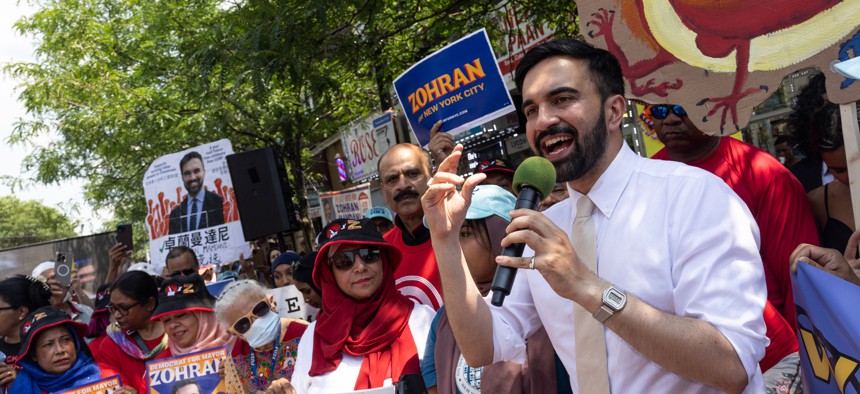
Aigenerated

The U.S. economy isn’t booming — it’s levitating. What keeps it up isn’t productivity or innovation, but speculation.

The so-called “AI revolution,” hailed as a new industrial dawn, is in reality a massive bubble — a speculative fever driving stock prices far beyond what the technology can actually deliver.

The anatomy of a bubble

A speculative bubble forms when the price of something — like tech stocks — rises far beyond its real, sustainable value. 

That real value comes not from market hype or quick profits, but from workers’ labor power — their capacity to create more value than they’re paid for.

But in a bubble, prices rise not because real production or value creation is expanding, but because investors are chasing promises — each betting that someone else will pay even more for the same asset.

The pattern isn’t accidental. It’s built into capitalism itself.

Step one: Capital needs to expand

Capitalism runs on an “expand or die” engine. Every firm must grow constantly to survive — outspending, outproducing, and out-innovating its rivals.

When one wave of growth slows, capital hunts for another.

After smartphones and social media stopped generating explosive profits, investors went searching for a new frontier. They found one in artificial intelligence.

The dream of “intelligent machines” became a new gold rush. Investors declared that AI would transform every industry — from health care to law — and didn’t care that most promises were decades from reality. The only thing that mattered was that AI looked big enough to sustain the expansion.

Step two: Credit makes it look real

Once hype takes hold, the credit floodgates open. Trillions pour into data centers, chips, and cloud infrastructure — all on the assumption that future profits will justify today’s staggering costs.

Marx called this stage “fictitious prosperity” — an expansion of paper claims on future profits that have no immediate basis in the value created by labor. It makes the appearance of growth without its substance.

AI now fills that role. Capital is pouring into technologies that do not yet produce surplus value, but inflate the balance sheets of corporations through speculation and state contracts.

Stock markets surge, investment booms, and politicians hail the “AI economy” as proof of recovery for an economy still addicted to cheap credit. Beneath the surface, profits are scarce — it’s all fueled by expectations and debt.

At its peak, Nvidia’s stock traded at roughly 138 times its annual profits — a level of frenzy that made the dot-com era look restrained. Nearly 60% of the 2024 S&P 500 gains came from just seven companies. The AI mania has now surpassed the dot-com madness of 1999.

Step three: When illusion meets limits

Eventually, reality breaks through. Chatbots hallucinate. Image models can’t pay their own server bills. Consumers aren’t buying AI products in meaningful numbers.

Yet stock prices keep climbing because no one wants to be the first to admit that capital’s paper claims have outgrown the value created by labor. That’s when the bubble is complete — when financial values are totally unmoored from production and profit.

The new U.S. mirage

AI is the latest chapter in speculative capitalism. Beneath the rhetoric of innovation lies a simple truth: The U.S. economy is being propped up by fictitious capital, not productive labor.

Manufacturing is shrinking. Service jobs are fading. Household debt is climbing. The glittering tech boom hides stagnation everywhere else.

Even figures within the tech establishment — from Eric Schmidt, Google’s former CEO, to analyst Selina Xu — admit Silicon Valley’s obsession with Artificial General Intelligence (AGI) has bypassed the real opportunities to use the AI that already exists. 

AGI refers to a hypothetical machine intelligence that could learn and reason across any task as flexibly as a human being — a kind of “universal mind.”

Unlike today’s narrow AI systems, which are built for specific functions, AGI would supposedly understand and act in many domains on its own.

In reality, AGI doesn’t exist. Its promise serves capital as a speculative frontier — a projection of limitless productivity used to justify vast investment and state subsidies.

From a Marxist perspective, the AGI hype embodies capitalism’s technology fetish — the belief that machines, not labor, create value.

The pursuit of AGI is a chase for power and profit, not progress.

AI as empire

Behind the bubble lies empire. The Pentagon, CIA, and venture capital share the same fantasy: that AI supremacy will guarantee U.S. global dominance.

Massive government contracts — from surveillance software to autonomous weapons — now serve as subsidies for Silicon Valley. Nvidia, Microsoft, Amazon, and Palantir sit at the crossroads of finance capital and the military-industrial complex.

Even Joe Biden, in his farewell address from the White House in January 2025, spelled it out plainly — a rare moment of honesty.

Biden said that “an oligarchy is taking shape in America of extreme wealth, power and influence that literally threatens our entire democracy, our basic rights and freedoms.” 

He spoke of “a dangerous concentration of power in the hands of a very few ultra-wealthy people.” 

He specifically talked about the rise of a “tech-industrial complex,” deliberately echoing Dwight Eisenhower’s 1961 warning about the “military-industrial complex.” Biden said this new power bloc is “infringing on Americans’ rights and the future of democracy.”

The fusion is now complete — a military-tech-industrial complex, edging toward what some have begun calling tech fascism.

Biden compared today’s situation to the Gilded Age of “robber barons” — a time when the U.S. economy was dominated by extreme wealth and imperialist expansion into Cuba, Puerto Rico, and the Philippines. It was also a time when Mark Twain and organizations such as the American Anti-Imperialist League were fighting the expanding empire.

Biden didn’t name names. But his remarks landed as Elon Musk, Mark Zuckerberg, and Jeff Bezos aligned themselves with the incoming Trump administration, planning to attend Trump’s inauguration.

Silicon Valley has metastasized into a merger of big capital, big tech, and big war. The empire’s newest weapon isn’t a missile — it’s the algorithm.

Washington’s chip bans on China, its trade sanctions against Huawei, and its AI-driven military pacts — from AUKUS to its defense-tech alliances with Japan and South Korea — all follow the same imperialist logic. Civilian technology and military infrastructure are being fused into a single system of global dominance.

China’s different path

China, by contrast, is treating AI not as a casino chip but as a tool. Instead of betting on abstract intelligence for future profit, China applies AI to real sectors — manufacturing, logistics, energy, and urban planning.

Chinese government white papers outline over 400 industrial-AI pilot zones focused on logistics, steel, and energy — showing production-first deployment.

The difference is stark. The U.S. is using AI to inflate a bubble. China is using it to build.

Industrial policy or financial subsidy

Washington insists it’s rebuilding industry through the CHIPS and Science Act, the Inflation Reduction Act, and new “AI innovation zones.” In reality, these are less industrial policy than corporate welfare — government funds funneled into private monopolies.

Billions more flow to Intel, TSMC, and Nvidia — the same firms driving speculation. The state isn’t reviving manufacturing; it’s financing and guaranteeing corporate profits, socializing risk while privatizing gains. The “AI economy” isn’t rebuilding the U.S. productive base; it’s inflating the next crash.

While the U.S. bankrolls hype, China retools for production. This isn’t just a tech race — it’s a clash between two systems: finance-driven capitalism versus planned development.

Breaking the cycle

Real progress means ending the profit system itself — where production serves private wealth, not human needs. Capitalism turns every advance into a new source of profit, not a means to improve life.

Technology should serve society, not capital. The wealth created by human intelligence — through research, education, and labor — shouldn’t be siphoned off into yet another speculative frenzy.

Until we take tech out of the casino, every so-called “revolution” will end the same way: the bubble bursts, and workers are the ones who pay — with layoffs, wage cuts, and gutted public services.

The rich walk away richer. Everyone else is left to bear the cost of their crash.
Strugglelalucha256


If people have a right to live, don’t they have a right to health care?

The only parts of the U.S. Government that have been shut down are those that are actually trying to help people. Three-quarters of a million workers have been locked out of their jobs by Trump.

Other federal employees have been forced to work without getting paid, including air traffic controllers. That’s the sort of stress that they — as well as passengers and crew members — don’t need.

Inspectors from the Occupational Safety and Health Administration (OSHA) have been told to stay home. Meanwhile, 16 workers were killed in an explosion at the Accurate Energetic Systems munitions plant in Tennessee. 

However, the ICE Gestapo agents terrorizing Chicago and the rest of the United States are still getting paid. The U.S. Navy is executing people in the Caribbean while plans for invading the Bolivarian Republic of Venezuela are going ahead.

The shutdown didn’t prevent live artillery shells from being fired from the Marine Corps Base Camp Pendleton across Interstate Highway 5, stopping traffic between Los Angeles and San Diego. (Amtrak trains were also halted.) One shell exploded prematurely, showering shrapnel over two vehicles.

The Oct. 18 spectacle was presided over by Vice-Führer JD Vance and Secretary of War Pete Hegseth. It was a not-too-subtle threat to the millions of people demonstrating the same day across the United States in the “No Kings” rallies against Trump.

That’s more proof that the real capitalist state is the “deep state” of violence, prisons, cutbacks and war.

We need to organize our own resistance

Almost all Democrats in Congress are refusing to vote for a “continuing resolution” that will fund Trump’s regime. It was another story back in March, when Charles Schumer, the Democratic majority leader in the Senate and nine other members of the Democratic caucus voted for a similar measure.

Trump praised Schumer for capitulating. A few days earlier, almost none of the over 200 Democrats attending Trump’s March 4 speech to a joint session of Congress did anything to protect Texas Rep. Al Green. The 77-year-old Black congressperson was dragged off the floor for shouting, “You have no mandate to cut Medicaid.” 

The reason for Schumer’s about-face is that millions of voters are demanding resistance to Trump’s march towards fascism. The Democratic Party establishment wants to keep this struggle within the bounds of capitalist elections.

They don’t want anti-war and pro-Palestinian slogans raised at the No Kings rallies. The wealthy and powerful are fearful of an even larger struggle than the Black Lives Matter demonstrations in 2020. 

The Democratic Party leadership’s opposition to the “continuing resolution” is centered against the so-called Big Beautiful Bill that will force millions of people off Medicaid. It will also remove the subsidies for getting health insurance under the Affordable Care Act, which will make monthly premiums skyrocket. 

The response of Trump and his Fox News cheerleaders is to claim that Democrats want to provide free health care to undocumented immigrants, who these bigots call “illegal aliens.” 

No child is illegitimate, and no human being is illegal. Without the absolutely essential labor of undocumented workers on the farms and in the food processing plants, we would starve.

Instead of denouncing this hate mongering, Democratic Party spokespeople are denying they want to give any aid to human beings without papers. 

Are people born in other lands supposed to be denied medications and drop dead in front of hospitals? Are immigrant children needing treatment to be left to die? 

Health care is a human right!

Refusing poor people health care is old news in the United States. Hundreds of Black men were deliberately denied treatment for syphilis in the notorious Tuskegee Study. These experiments lasted from 1932 to 1972.

T. Harry Moore and Harriette Moore were murdered in their Brevard County, Florida home on Christmas Day, 1951, by Ku Klux Klan members who planted a bomb. The Black couple helped tens of thousands of Black people to register to vote.

Both were driven 30 miles away to a Black hospital because the nearby white hospital would have denied them admission. Hundreds of medical facilities refused treatment to Black, Indigenous or Latine people until well into the 1960s.

It’s political cowardice for Democratic congressional leaders to say they’re against providing health care for the undocumented. It’s capitulating to racist Trump.

People’s movements, especially the labor movement, need to declare that health care is a human right. Our enemies are the billionaires, not our fellow poor and working people. 


Strugglelalucha256
https://www.struggle-la-lucha.org/2025/page/12/