Analysis of the Brazil elections and Bolsonaro’s reaction

Bolsonaro supporters raised a Nazi salute after their defeat at the polls. Photo: Reprodução

The elections in Brazil were without a doubt among the most important and anticipated events of the year in Latin America. The largest economy in the regional economy’s political definition is a core element in the current political context ever since the scope of the new Latin America progressive wave depends to a large extent on its political and economic trajectory. Domestically, it was vital, as Brazil had over 6 years of right-wing governments combined with the pandemic, which plunged millions of Brazilians into poverty.

Fortunately, the winning candidate was the Workers’ Party (PT) representative Luiz Inacio Lula da Silva, who won by a narrow margin of 2 million votes, or 0.8% of the vote. Despite the narrowness, the victory is still resounding.

The ultra-right-wing politician, Jair Bolsonaro, had the government machinery on his side. On top of it, he counted on the oligarchy and the Brazilian upper middle class’ support, meaning an economic and influential power able to define any electoral process.

The main component of Lula’s victory was his collective leadership strategy and alliances with the most diverse political forces, ranging from the center-right to the most progressive and left-wing organizations in the country. However, once the elections are won, this type of coalition turns into a challenge. Given the fact that Bolsonaro will be out of power in two months, differences could emerge, putting Lula’s government strategy at risk and leaving him exposed in front of right-wing forces, whose main objective is to destroy him politically. Therefore, a lot of work and conscientious strategy will be needed to avoid such a scenario.

The elections result

An interesting fact about the election result is that young adults voted for Lula. This is peculiar since ultra-right politicians are often popular in this sector. However, in Brazil, it seems to be different. Today’s young adults were born before Lula’s first term and saw how the country improved after 13 years of PT governments. These same people have witnessed the disastrous management of Bolsonaro and are willing to recover what they consider normal living standards. At the same time, Bolsonaro’s neoliberal approach to social and economic issues is not preferable to Lula’s fair and modern treatment of key topics like LGTBQ+, women, Black people’s rights, and environmental policies.

The elections showed a country divided economically and politically. It is no coincidence that Bolsonaro won in the states with the highest Human Development Index (HDI), the lowest illiteracy rate, and the richest Amazonian states. His agreement to cut down millions of hectares of forests, ignoring the environmental consequences, earned him the logging and cattle sector’s support. Many of these businessmen not only funded Bolsonaro but campaigned by threatening their workers with consequences, claiming Lula’s government will shut down their businesses.

Bolsonaro clearly won in the two states with the largest urban population, while Lula won in those with the largest rural population. This distribution of the vote shows the abysmal chasm that exists between the countryside and the city in Brazil, one of the problems that both Lula and his PT successor Dilma Rousseff tried to alleviate through the implementation of social policies.

According to the vote by states, Lula won in 13 of the 23 states. Those with less population, low incomes, and hit hardest by COVID-19 due to their health systems’ weakness and governmental neglect.

However, the power distribution in state-level elections was different, although balanced. The PT won only 4 out of the 23 governorships, featured with another 3 from the Brazilian Democratic Movement (MDB), whose presidential candidate was Simone Tebet, one from the Solidaridade Party, and 3 from the Brazilian Socialist Party (PSB). The rest of the governorships are in Bolsonaro’s and his fellows’ hands. In the Senate and the House of Representatives, the correlation between forces is equally unfavorable for Brazilian progressivism, which makes government management even more complex.

The overseas vote also reveals the transnationalization of the right-wing agenda in the region. Although Lula won the overseas vote in general, in the United States, for example, Bolsonaro won overwhelmingly. Something similar happened in Latin America, except for Colombia, Uruguay, Argentina, and Cuba. Lula won all across Europe, where Brazilians are less exposed to the media might of Latin America’s right-wing and the frenetic smear campaigns organized against Lula.

Lula is aware of the current political and social situation, which explains his conciliatory stance. During the victory speech, he said he will work for all Brazilians regardless if they voted for him or not. Then, uniting the country is one of his priorities and, at the same time, his biggest challenge, given the right-wing parties’ political strength and capacity to mobilize their supporters.

Regarding domestic policy, Lula had a strong environmental and social justice agenda. These remain two neuralgic topics, ever since they were totally neglected by the previous administration. However, moving forward with concrete proposals may be complicated due to the opposition of agribusiness and economic elites who are reluctant to improve the country’s wealth distribution.

On the other hand, Congress’ composition will be Damocles’ Sword on Lula’s neck. The lawfare impeachment of Dilma is still fresh in many lawmen’s minds. Moreover, the polarization, the division of political forces, and the constant alliances changes in Brazil are all elements that weaken democracy and pave the way for the lawfare to act.

The response of the international community

Lula’s victory was a cause for joy not only for Brazil, where millions celebrated in the streets but for the region in general. Dozens of presidents and Prime Ministers immediately congratulated Lula, most of them regional leaders such as Colombia’s Gustavo Petro, Venezuela’s Nicolas Maduro, Cuba’s Miguel Díaz-Canel, and Argentina’s Alberto Fernandez. After this victory, integration mechanisms such as the Southern Common Market (Mercosur) and the Community of Latin America and Caribbean States (CELAC) will get momentum. Brazil played a leading role in both projects, and the arrival of right-wing presidents like Bolsonaro marked the stagnation of both. Today, the obstacles are fewer, and the opportunities to work together and move forward now that many countries in the region are more inclined to challenge neo-liberalism.

The President of the United States did not miss a chance to make public his relief with Lula’s victory. His congratulations were among the first. This reaction was influenced by Biden’s deep differences with Bolsonaro, who is a faithful follower of former President Donald Trump. This reality led to a rift between the two nations, something Biden is eager to change due to Brazil’s geopolitical and diplomatic importance in multilateral forums and organizations.

Bolsonaro’s response

While the whole world was celebrating, Bolsonaro went to sleep and took over 24 hours to make a statement. In his first words after the elections, he did not acknowledge the results or congratulate Lula, as is the tradition. He rather questioned the results, which was interpreted by his supporters as a call to maintain federal highways blocked. However, hours later, when chaos had taken over the highways, Bolsonaro made a call to withdraw the blockades, but to maintain the protests.

He intends to keep Brazilian democracy in check, as Trump did in the United States. Once again, the right wing’s modus operandi remains the same: not recognizing the election results and betting on social disorder and instability to hinder the new government’s work, many calling for the military to step in to fulfill their fantasies.

In this context, the presidential transition will be very complicated due to Bolsonaro’s uncooperative attitude and the perennial threat of a coup d’état lingering around.

Source: Resumen Latinoamericano – US

Strugglelalucha256


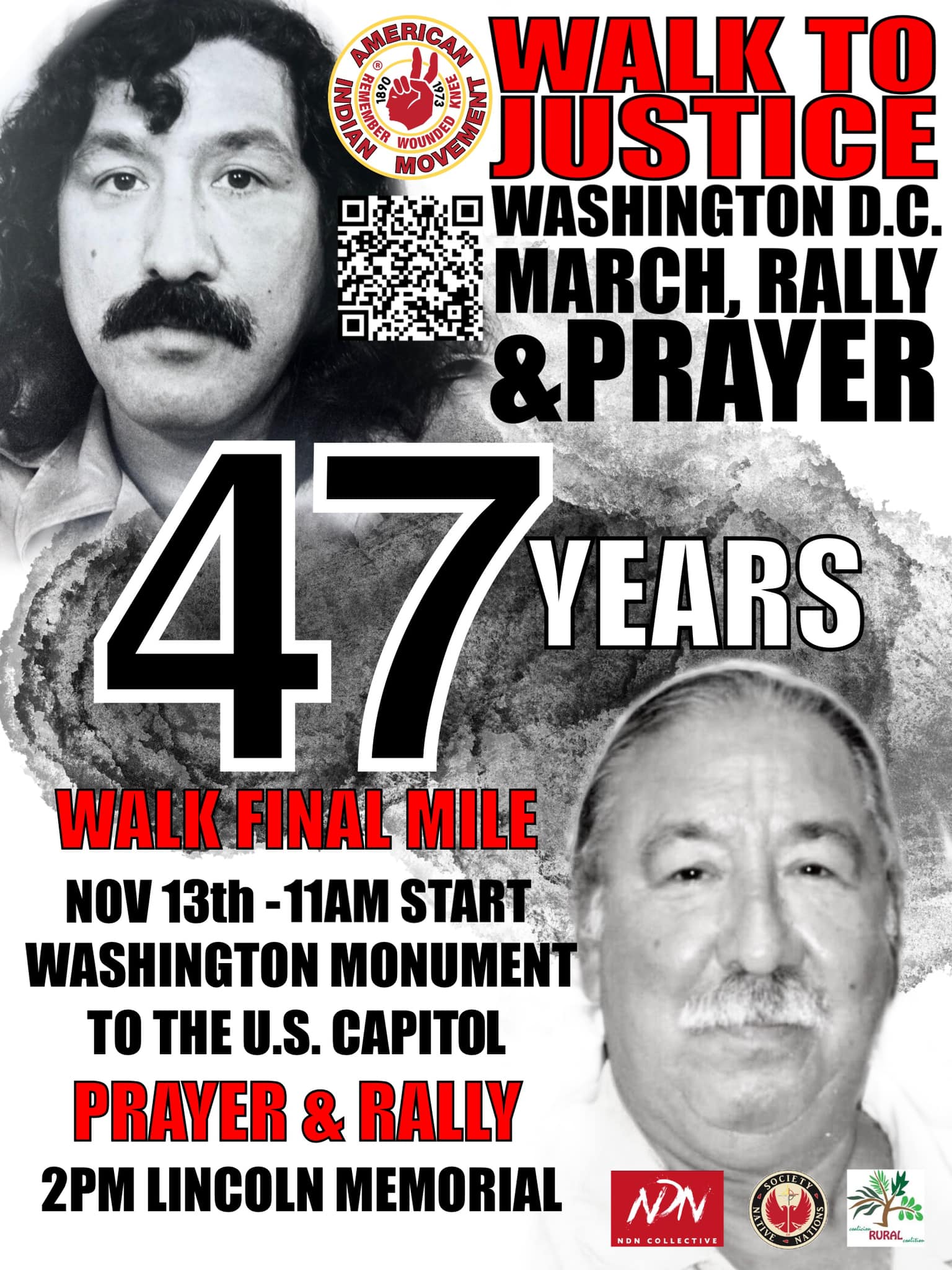
Leonard Peltier’s Walk To Justice – Washington, D.C., Nov. 13

Washington DC
Nov. 13th Walk to Capital @11am
Rally Lincoln Memorial @2pm

Strugglelalucha256


The world stands with Cuba once again!

Once again, the United States has been left alone in its efforts to stifle Cuba. The General Assembly of the United Nations once again pronounced itself overwhelmingly against the economic blockade that Washington insists on maintaining against the island.

The UN member countries voted this Thursday on the Cuban resolution “Necessity of putting an end to the economic, commercial and financial blockade imposed by the United States of America against Cuba.” On this occasion, the document had 185 votes in favor, two against (the United States and its unconditional ally Israel), and two abstentions (Jair Bolsonaro’s Brazil and Ukraine).

Today, the world is with Cuba, and it is no surprise. That U.S. policy is an outdated and ineffective measure that hasn’t achieved and will not achieve its objective and has ended up discrediting and isolating the United States itself.

It has already been 30 years of continuous defeats. Since 1992, the Caribbean island, besieged and on the verge of economic asphyxiation, has presented this resolution before the UN in New York. Today, not even U.S. citizens themselves support this policy of hatred. Proof of this is that two nights ago, in the mythical Chrysler skyscraper in the Big Apple, a luminous sign caught the attention of the city dwellers and the world: “Down with the Blockade,” next to an image of the Cuban flag.

At the top of the building, the messages “Sanctions are a violation of human rights,” “Biden, vote for peace and justice” were also read; images that have been on the front page of major international media in the last hours, prior to the vote. New York, the American people, and the world want peace, but the White House doesn’t want to listen to these demands. It is stuck in the past, and without an ounce of courage, Biden has followed in the footsteps of previous administrations, Republican and Democrat alike, who adhere to the single notion of crushing Cuba and the example it projects to the world.

During its first opportunity to pronounce itself, in 2021, the administration of Joseph Biden voted against the resolution, and today it rejected once again the document, which shows, among other painful facts, that during the first 14 months of the Biden administration, the damage to the Cuban economy is estimated at $6.35 billion, equivalent to more than $15 million per day.

Cuban authorities have repeatedly denounced the blockade that has not only been in place for more than six decades but that it has intensified in recent years. Besides, the unilateral and fraudulent designation of Cuba as a state sponsor of terrorism reinforces the impact of that policy of economic asphyxiation.

Fidel’s words expressed 13 years ago came to life to me today: “The cynicism of U.S. policy hurts. It speaks of democracy while it includes Cuba on the list of terrorist countries, applies the murderous Cuban Adjustment Act exclusively to our nation, and blocks it economically.”

According to Cuban journalist Elson Concepción, being blockaded continues to be the price paid by those of us who declare ourselves free and sovereign, a condition conquered during years of struggle against Spanish colonialism, first, and U.S. neocolonialism, later.

“The blockade causes Cuban children to suffer the lack of some medicine, the implant of an organ, or the use of a reagent, for the ridiculous reason of having only 10% of U.S. components,” he added.

During his election campaign, Biden promised to change the U.S. policy path toward Cuba, but this has not happened. Meanwhile, Cuban families suffer when their children decide to emigrate in an unsafe way; they suffer from the lack of indispensable goods, such as food and medicine. They also suffer because they want their country to grow economically. After all, there’s no better place to live than where you were born and raised.

For the thirtieth time, the world said “No” to the blockade and is anxiously waiting for this to be the year of definitive changes. The U.S. would be a better place for it, a fairer one.

Source: Resumen Latinoamericano – US
Strugglelalucha256


U.S. escalates war against Russia

The Pentagon has confirmed reports by the Associated Press and the Washington Post that the U.S. has boots on the ground in Ukraine. 

These troops are deployed to inspect and monitor U.S.-provided weapons in Ukraine, confirmed Pentagon press secretary Brig. Gen. Pat Ryder in an official briefing on Nov. 1. The troops will be operating far from the U.S. Embassy in Kiev and are in no way involved with embassy security.

Travis Tritten of military.com asked Ryder, “I’m wondering what the rules of engagement for those personnel are if they are fired on by the Russians or they are targeted by the Russians.”

In a long-winded reply, Ryder never answered Tritten’s question about what the U.S. would do if the Russians fired on any active-duty U.S. troops.

Tritten then said, “This [is] different because they would be working outside the embassy. I would just ask if people should read this as an escalation.”

The AP reported that a Pentagon official would not say where the military advisers are operating or how close to the battlefronts the U.S. troops are getting. The official said U.S. personnel are engaged in “inspections” where security conditions allow, not on the front lines.

On Feb. 24, when President Joe Biden announced sanctions on Russia, adding that the people of the U.S. must make a sacrifice and gas prices would rise, he said, “Our forces are not and will not be engaged in the conflict.”

Since that statement by Biden, the U.S. has intervened militarily in Ukraine with U.S. mercenaries (called contractors in media reports) engaged in the fighting. In addition, U.S. military advisers have been deployed to the Ukrainian military command, supplying military intelligence in real-time and engaging in planning and executing operations against Russian forces. Also, the U.S. has sent some $70 billion in aid to Ukraine, including tens of billions of dollars worth of weapons and ammunition. 

While the White House says there are no “combat” troops, this is how U.S. military escalations are launched. The U.S. military invasion of Vietnam began in May 1961 when President John Kennedy sent 500 military “advisers,” not combat troops, to Saigon (now Ho Chi Minh City).

With U.S. troops inspecting Ukrainian arms and ammunition at Ukrainian military bases, this puts U.S. troops directly into a war zone, with the possibility of direct engagement with Russia. That makes it possible that the U.S. would engage in a direct shooting war with Russia.

This is definitely an escalation. The U.S./NATO “proxy war” against Russia may be shifting into direct conflict.

Strugglelalucha256


Remembering Fatima Bernawi: Historic Palestinian fighter and liberated prisoner (1939-2022)

On Thursday, 3 November, Palestinian struggler and liberated prisoner, Fatima Bernawi, the first Palestinian woman prisoner of the modern Palestinian revolutionary era and a prominent Afro-Palestinian figure, passed away in the Palestine Hospital in Cairo, Egypt at the age of 83. Bernawi was renowned as a symbol of Palestinian women’s participation and the participation of Palestinians of African descent in the armed struggle and the Palestinian prisoners’ movement.

Bernawi was born in Jerusalem in 1939 to her Nigerian father and Palestinian mother. In 1948, she was forced to a refugee camp near Amman with her mother before returning to Jerusalem, where her father had remained, in 1960; they lived in the African quarter of Jerusalem. At the age of 9, Bernawi had earlier smuggled herself into Jerusalem to reunite with her father. Bernawi’s father had been an active participant in the 1936-39 revolution in Palestine and in the defense of Palestine during al-Nakba, and she became an early member of the newly formed Fateh movement.

Bernawi worked as a UNRWA nurse in Qalqilya during the 1967 occupation and saw firsthand the impacts of the Zionist onslaught on the West Bank of Palestine. She would later declare that she undertook armed struggle “because you destroyed Qalqilya,” in a statement to the interrogators who held her.

She was one of the first women to plan an armed operation in Palestine, the attempted bombing of a cinema screening a film celebrating the occupation of 1967 in Jerusalem; she and a fellow woman freedom fighter left behind a handbag containing an explosive. Although it was found before being detonated, she was seized by occupation forces on 19 October 1967 and became the first Palestinian woman political prisoner of the contemporary Palestinian revolution.

She was sentenced to 30 years in prison and was released on 11 November 1977 in a prisoner release agreement. She was exiled to Jordan and then Lebanon under the exchange terms, where she returned to the Palestinian revolution as a member of social organizations. She later returned to Gaza in 1994 and lived with her husband, fellow liberated prisoner Fawzi al-Nimr, who died last year. She and al-Nimr have lived in Cairo for the past several years. Al-Nimr, who had been a fighter with the Akkawi group that targeted specific Zionist military installations, served over 15 years in occupation prisons with his comrades, and he was freed in an exchange with the Palestinian resistance in May 1985.

Her sister, Enaam Bernawi, was jailed for one year alongside her sister. During Fatima Bernawi’s time in the occupation prisons, she was jailed with fellow Palestinian woman freedom fighter Zakia Shammout, who was pregnant and gave birth in her prison cell accompanied by her fellow women prisoners. As a trained nurse, Bernawi cut the umbilical cord and ensured the life and health of Shammout and her daughter, Nadia.

While Bernawi was the first Palestinian woman prisoner of the contemporary (post-1967) Palestinian revolution, she was always certain to cite fellow Palestinian women who had been jailed in the two decades of occupation prior, including many women detained, held in forced labor camps and subjected to harsh violence by occupation soldiers during the Nakba, as well as notable Palestinians like Ikhlas Ali, jailed for teaching children revolutionary songs in Palestine ’48, and Nayfeh Akilah, a member of Al-Ard group — one of the first Palestinian revolutionary organizations formed following the Nakba — accused of sharing military information about Zionist forces with the Syrian army in 1956.

One journalist who interviewed Bernawi recalled that she discussed a memorable interaction with Omar al-Qasim, the imprisoned leader of the Democratic Front for the Liberation of Palestine who is renowned for his role in sparking Palestinian armed resistance inside the occupied West Bank of Palestine as well as for his later leading role in the prisoners’ movement. Both she and al-Qasim were brought by occupation soldiers where several Palestinian resistance fighters were holding Zionist military trainees hostage, while prison guards demanded they use a megaphone to call on the fighters to let the soldiers go. Bernawi refused to speak through the megaphone at all, while al-Qasim took up the megaphone and instead called on the fighters to carry through with the orders of their leadership. Al-Qasim was beaten and dragged away by occupation forces; later, in 1989, he died in Israeli occupation prisons after lengthy medical neglect and following weeks of appeals by his family for his freedom.

Along with Dalal al-Mughrabi, Shadia Abu Ghazaleh, and Leila Khaled, Bernawi remained a symbol of Palestinian women’s steadfastness and commitment by all means to liberate their homeland from the river to the sea. In fact, Bernawi met Dalal al-Mughrabi before she led her commando operation to occupied Palestine, although she was not aware of the operation planned; al-Mughrabi told Bernawi, “I am going to the place you came from.” Bernawi understood the full meaning of al-Mughrabi’s words when she received news of the commando operation and her martyrdom.

Fellow freed prisoner Aisha Odeh saluted Bernawi in a Facebook post: “Goodbye Fatima Bernawi, daughter of Jerusalem and great fighter, the first to seek freedom and dignity and refuse defeat…she became a beacon for us, guiding us to the path of struggle,” Odeh wrote.

Source: Samidoun

Strugglelalucha256


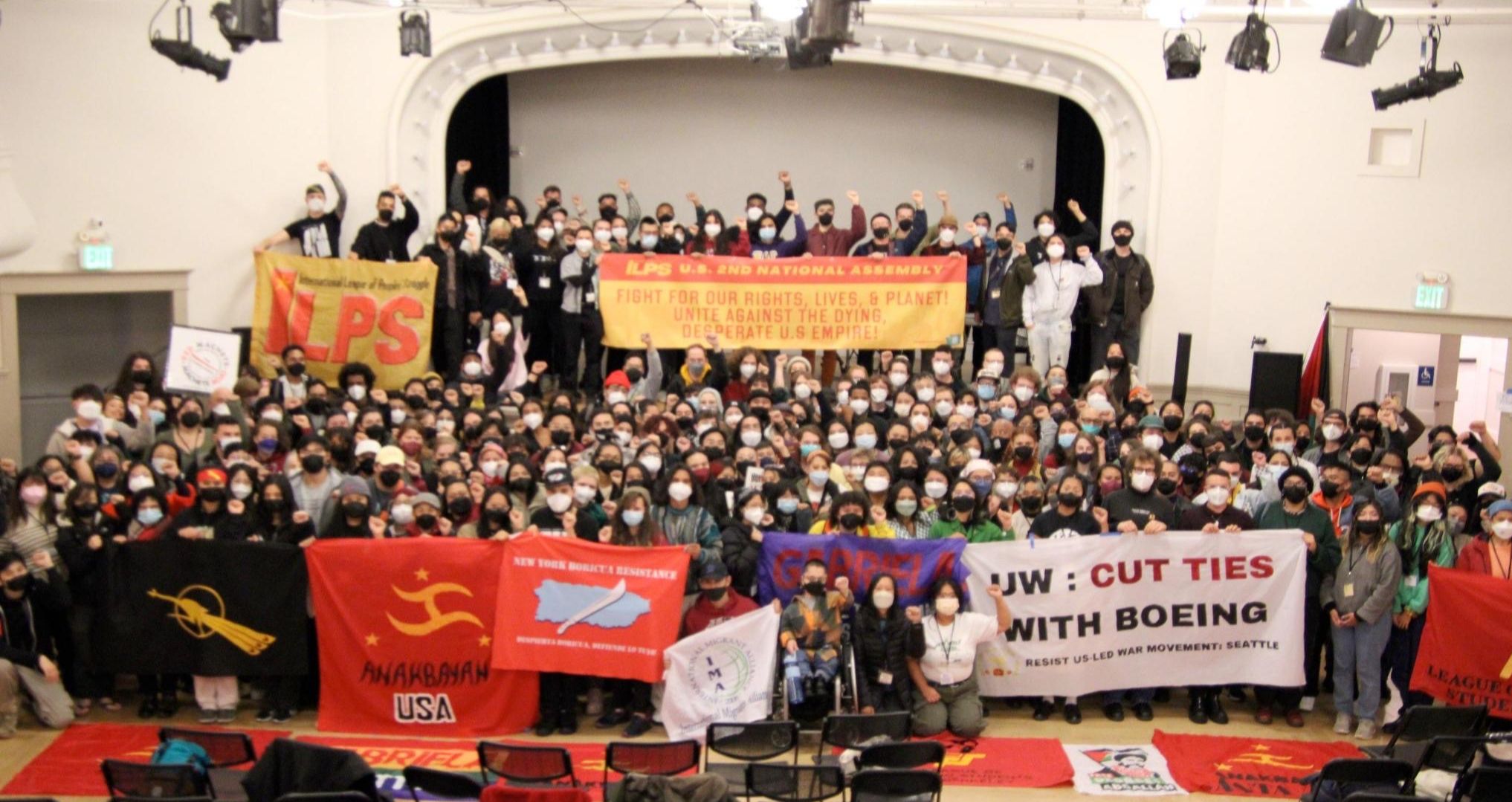
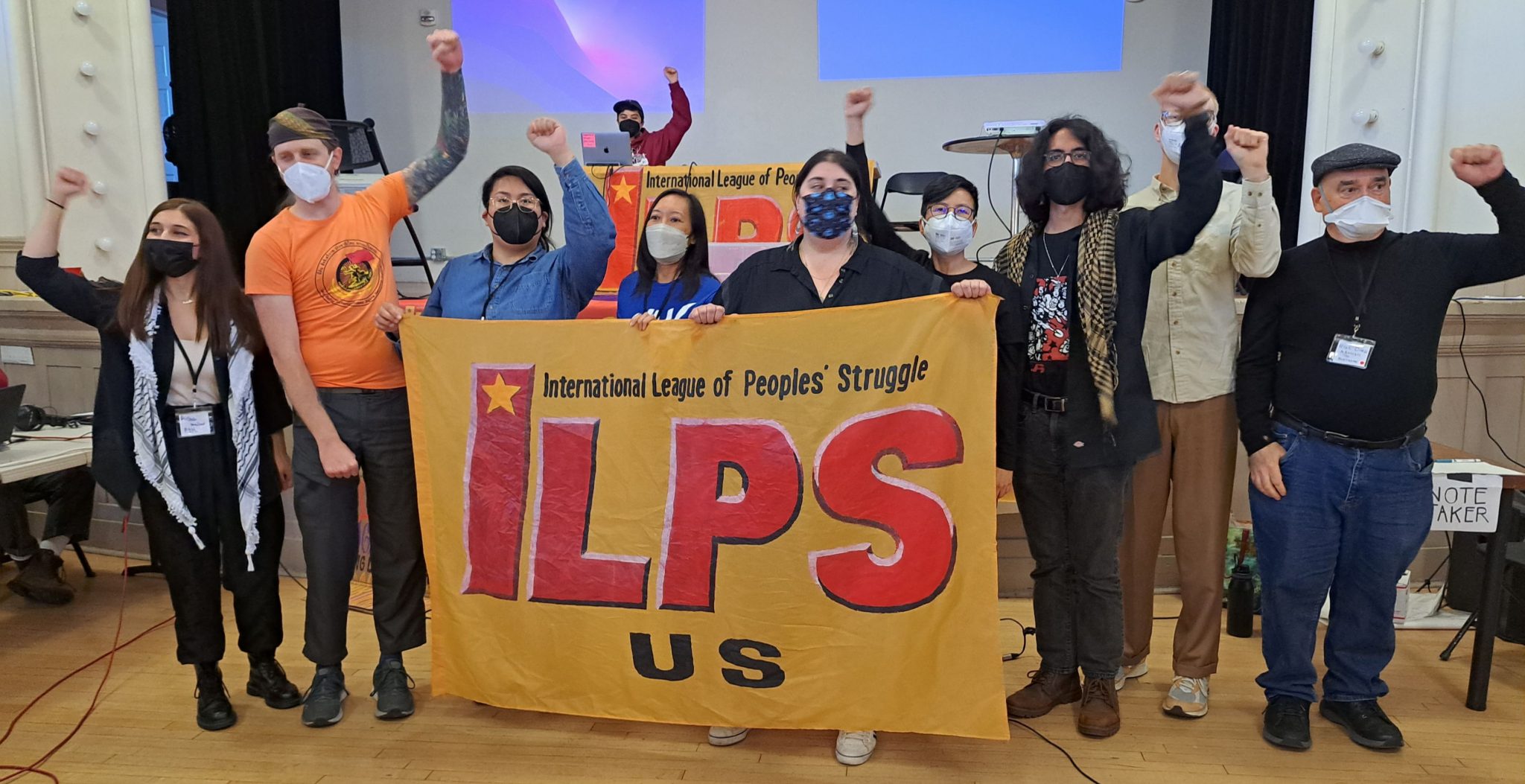
Second International League of Peoples’ Struggle U.S. Assembly: Fighting for our rights, lives, and planet!

The 2nd National Assembly of the International League of Peoples’ Struggle (ILPS) was a success! From October 21-23 270 attendees from 122 organizations participated in a protest march, four plenaries, and 8 workshops; passed 12 resolutions, new country chapter by-laws, and an assembly declaration; approved 3 new member organizations; and elected a new Steering Committee. For those who participated, there’s still time to share your thoughts and assessments so we can continue to improve our work!

We opened the first two days with international greetings from ILPS formations around the globe and a keynote speaker from Kilusang Mayo Uno, Kara Taggaoa. With fierce militancy we took to the streets of Seattle, showing the strength of our forces in exposing the exploitative and oppressive business activities of multinational corporations in the Seattle area such as Boeing, Amazon, Google, Microsoft, and Starbucks, calling out in a united voice their superprofits at the expense of their struggling workers and their complicity in arming the US war machine.

During the General Assembly we heard from the plenaries on the global people’s movements highlighting the challenges of workers organizing and the resurgent labor movement, the relationship between anti-colonial struggle and defense of land and the environment against imperialist plunder, organizing efforts against heightening political repression and surveillance, and the key role which struggles for women’s liberation and bodily autonomy play in this time of rising fascism.

As a major step in the development of the League and the growth of the anti-imperialist movement in this country, the business portion of this General Assembly resulted in the further development of our national structure with the passing of new bylaws and successful uniting on the following resolutions to guide our work in the coming period:

  • ILPS Joins Call to Release Simon Trinidad

  • Resolution on Latin America and the Caribbean

  • Resolution in support of medical care for Kevin “Rashid” Johnson

  • El Grito De Lares

  • 1898 Treaty of Paris

  • Resolution to Support BAYAN USA Campaign for the “Makibeki NYC 3” and Fight Against Repression of the National Democratic Movement of the Philippines

  • Solidarity with the Palestinian People on the 75th Anniversary of Al Nakba

  • Resolution on opposing the use of the terror label to brand activists as terrorists

  • Resolution on sanctions, blockades, and coercive economic measures

  • ILPS Endorsement of 2024 March on RNC

  • Free Alex Saab

Delegates from ILPS-US organizations elected a new national Steering Committee to carry out the day-to-day leadership of the Country Chapter.  The new Steering Committee consists of the following members:

  • Aisha Mansour (Palestinian Youth Movement)

  • Bev Tang (Chicago Committee for Human Rights in the Philippines)

  • Bill Dores (Abolish the Pentagon & CIA)

  • Cody Urban (People Organizing for Philippine Solidarity)

  • Daniel Felde (Resist US-Led War Movement Seattle)

  • Michela Martinazzi (Committee to Stop FBI Repression)

  • Nina Macapinlac (BAYAN USA)

  • Nyusha Lin (Students for Justice in Palestine at UCLA)

  • Rhonda Ramiro (BAYAN USA)

The final day of the Assembly concluded with the passing of a declaration that summarized the remarks made over the three days into a description of the current crisis of US imperialism and resolved to launch a national campaign against state repression with the calls to, “Defend freedom fighters, mass organizations and movements for peace and justice being targeted relentlessly by state forces through so-called “counter-terrorism” programs.  Stand with organized and unorganized communities alike as they experience brutalization in the workplace, in racially policed neighborhoods, in prisons and at the militarized borders.  Raise high the banner of the League and uphold the justness of all fights for national and social liberation!”

Finally, the Assembly members took part in a solidarity night with cultural performances from the many attending orgs to celebrate our commitment to continue to raise up the anti-imperialist struggle together.

The empire is desperate and dying – We Must Fight for our Rights, Lives, and Planet! Long Live International Solidarity!

Strugglelalucha256


North Korea responds to massive, ‘reckless’ U.S.-led war games

The Democratic People’s Republic of Korea has condemned the five days of U.S.-South Korea joint war drills that launched Nov. 1. 

After a flurry of joint exercises held in April, August, September and October – some of which included Japan – a DPRK spokesperson said the Nov. 1 aerial drills were the “largest-ever” in history and showed that “the U.S. nuclear war script against the Democratic People’s Republic of Korea has entered the final stage.”

The north vowed to take “all necessary measures” to defend itself, saying that the joint aerial drills are in preparation for a nuclear strike on the DPRK. 

A statement from a foreign ministry official cited in KCNA describes “an aggression-type war exercise with the basic purpose of hitting strategic targets of the Democratic People’s Republic of Korea,” which presents the risk of “serious confrontation with great powers.”

“Nowhere in the world can we find a military exercise with an aggressive character like the joint military exercise held by the United States and its followers in terms of duration, scale, content and density,” the foreign ministry official said. “The U.S. nuclear war script against the Democratic People’s Republic of Korea has entered the final stage.”

The drills include about 100 U.S. warplanes and 140 South Korean aircraft, with Australia also participating. 

The DPRK foreign ministry official said, “We are ready to take all necessary measures to protect the sovereignty of the country, the safety of our people and our territorial integrity from external military threats,” adding that Washington will “pay an equal price if it attempts to use force against the Democratic People’s Republic of Korea.”

The foreign ministry official reiterated that the DPRK’s nuclear arsenal is for defensive purposes only.

Massive protests are ongoing in South Korea, demanding the end of right-wing President Yoon Suk-yeol’s tenure and the U.S.-South Korea-Japan war exercises.

Strugglelalucha256


Protests across Europe: ‘Let’s get out of NATO’

Mass demonstrations continued across Europe in October. Primarily they were protests against skyrocketing energy prices and soaring inflation. They were also against war and the sanctions on Russia that are seen to be directly responsible for the cost of living crisis across Europe.

Tens of thousands of people have marched in cities in France, Belgium, the Czech Republic, Hungary and Germany. Most are fed up with sanctions on Russia that have sparked economic ruin. Also, support for the U.S./NATO proxy war in Ukraine is falling.

Here are some of the protests in Europe:

https://twitter.com/AxelLeReer/status/1583877250419605504

https://twitter.com/Ukraine66251776/status/1586080828622503936

https://twitter.com/China_News12/status/1586382062902448129

https://twitter.com/RadioGenova/status/1586771762288775171

https://twitter.com/RadioGenova/status/1587031205286928384

Strugglelalucha256


Pentagon’s ‘Broken Nest’ strategy for Taiwan

In the midst of a growing economic attack on the People’s Republic of China (PRC) by the Biden Administration, an Oct. 12th article in the tech newsletter gizmodo.com carried the extraordinary title “Taiwan Official Explains with Extreme Calm Why the U.S. Doesn’t Need to Blow Up TSMC if China Invades”. TSMC refers to the Taiwan Semiconductor Manufacturing Company, the world’s leading manufacturer of equipment to create the most powerful computer semiconductors, known as “chips”:

 The country’s defense minister Chiu Kuo-cheng reportedly said ‘there is no such plot’ for the U.S. to start dropping bombs on TSMC factories if the country were invaded.

National Security Bureau Director-General] Chen further tried to tamp down on fears the U.S. is going to sap Taiwan’s top chipmaking minds from the country, calling those wargaming plans “just scenarios” while adding “If they understood TSMC’s ecosystem better, they would realize that it’s not as simple as they think. That’s why Intel can’t catch up with TSMC.

Despite these assurances from Taiwan’s officials, the Pentagon is indeed discussing proposals to destroy TSMC facilities on the island and to whisk away its research workers off the island.

The U.S. Army War College Quarterly published a Nov. 2021 article titled “Broken Nest: Deterring China from Invading Taiwan”. The authors call on the Taiwan government to threaten to destroy the TSMC facilities in a Dr. Strangelove-like scenario:

The challenge, of course, is to make such a threat credible to Chinese decisionmakers. They must absolutely believe Taiwan’s semiconductor industry would be destroyed in the event of an invasion. If China suspects Taipei would not follow through on such a threat, then deterrence will fail. An automatic mechanism might be designed, which would be triggered once an invasion was confirmed. In addition, Taiwan’s leaders could make it known now they will not allow these industries to fall into the hands of an adversary. The United States and its allies could support this endeavor by announcing plans to give refuge to highly skilled Taiwanese working in this sector, creating contingency plans with Taipei for the rapid evacuation and processing of the human capital that operates the physical semiconductor foundries.

Imagine working in a facility ringed with explosives. Taiwan is within the Pacific Rim’s “Ring of Fire”, subject to frequent earthquakes, including a 6.8 one this year. Could not one of these accidentally trigger the “automatic mechanism”?

In January 2018, a nuclear attack false alarm created panic on the Hawaiian island of Oahu. Could not such a mistake trigger the destruction of the TSMC facility while its researchers and staff are working?

But a PRC “capture” of the TSMC computer chip factory is not really what the warmakers at the Pentagon, the Washington politicians or their Wall Street patrons are concerned about. Since TSMC’s main customers are companies within the PRC, U.S. imperialism seeks to squelch the amazing technical and scientific advances made by socialist China by any means. For them, the destruction of this remarkable research facility is a small price to pay. Certainly, it is telling the Taiwan leadership if they are not willing to turn their island into a “porcupine” of U.S. weaponry, if they are not ready to blow up their own facilities at the behest of Intel, Texas Instruments and the rest of Silicon Valley and of course the Wall Street banks, the U.S. will do it for them.

Semiconductors: the nexus of U.S. imperialism’s economic war with China

That is only part of the Biden strategy to prevent China’s scientific and technical development. This last summer, Biden pushed through the $52 billion “CHIPS and Science Act”, subsidizing Intel and other computer monopolies building new facilities matching those in Taiwan and, most importantly and explicitly, keeping U.S. imperialism ahead of the PRC in computer chip development.

The Act’s political and corporate sponsors promised thousands of new jobs. But it did not take long for that pledge to be broken, as an October Time magazine article revealed:

When a group of semiconductor companies, including Intel Corp., lobbied Congress to pass the $52 billion chip-stimulus bill earlier this year—one of the biggest federal investments in a private industry—they argued in part that the subsidies and tax breaks would protect American jobs.

But now just months before the funding applications open, the nation’s largest semiconductor company is reportedly planning a major reduction in its workforce—yet could still receive billions in federal subsidies. Thousands of Intel employees are expected to be laid off later this month to cut costs amid a steep decline in demand for PC processors, according to Bloomberg. Some divisions, including sales and marketing, could lose 20% of their staff.

Even so, the reported job cuts come at an awkward time for Intel, given that the company lobbied heavily for the subsidies and committed $20 billion to build a manufacturing mega-site on the outskirts of Columbus, Ohio earlier this year. The move also puts Intel chief executive Pat Gelsinger—who received a $179 million compensation package last year—in a difficult position. In December, he lobbied Congress to pass the funding, co-signing a letter to lawmakers that said federal subsidies would be “supporting millions of jobs for Americans.”

Biden, not China, disrupts international semiconductor industry

Not yet satisfied with this corporate boondoggle, Biden on Oct. 7th announced through his Commerce Department stern measures to outlaw U.S. and foreign semiconductor companies from doing any business with China.

Wall Street has responded with ecstatic glee, with, for example, benziga.com, a Wall Street newswire, headlining an October 26th article: “China’s Semiconductor Industry ‘Decapitated Overnight’: What ‘Annihilation Looks Like’.” U.S. imperialism’s standard bearer, the New York Times, published an Oct. 20th opinion piece titled “Biden Just Clobbered China’s Chip Industry.”

Biden himself could not restrain himself from getting in on the act, with Bloomberg.com, after an interview, headlining an article with: ”Biden Crows About Chips Bill, Says Xi ‘Concerned’ About US Plans”.

China’s government has responded to the U.S. new restrictions:

Liu Pengyu, a spokesman for the Chinese Embassy in Washington, said the United States was trying “to use its technological prowess as an advantage to hobble and suppress the development of emerging markets and developing countries.”

“The U.S. probably hopes that China and the rest of the developing world will forever stay at the lower end of the industrial chain,” he added.

China is not the only one objecting to Biden’s international extortion scheme. An opinion piece from the Oct. 20 New York Times describes the international network for creating new computer chips:

A typical chip might be designed with blueprints from the Japanese-owned, U.K.-based company called Arm, by a team of engineers in California and Israel, using design software from the United States. When a design is complete, it’s sent to a facility in Taiwan, which buys ultrapure silicon wafers and specialized gasses from Japan. The design is carved into silicon using some of the world’s most precise machinery, which can etch, deposit and measure layers of materials a few atoms thick. These tools are produced primarily by five companies, one Dutch, one Japanese and three Californian, without which advanced chips are basically impossible to make. Then the chip is packaged and tested, often in Southeast Asia, before being sent to China for assembly into a phone or computer.

An Oct. 27 New York Times article describes the impact of Biden’s anti-China campaign on the smaller companies in the computer industry and its workers here:

The Biden administration delivered its own blow this month with sweeping restrictions aimed at hobbling China from using U.S. technology related to chips. The measures restrict sales of some advanced chips to Chinese customers and prevent U.S. companies from helping China develop some kinds of chips.

Lam Research, which produces tools that etch silicon wafers to make chips, estimated that the China limitations would reduce its 2023 revenue by $2 billion to $2.5 billion. “We lost some very profitable customers in the China region, and that’s going to persist,” Doug Bettinger, Lam’s chief financial officer, said during an earnings call last week.

Applied Materials, the biggest maker of chip manufacturing tools, also said sales would suffer because of the restrictions. On Wednesday, another maker of chip manufacturing tools, KLA, said its revenue next year was likely to shrink by $600 million to $900 million as it reduces equipment sales and services to some customers in China.

‘Wargaming’ Biden: Hands off Taiwan! It does not belong to you!

On Taiwan itself, whose main trading partner is the PRC, and with companies there facing these same U.S. restrictions, there is deep concern, as expressed in an Oct. 19th Euronews article:

The new rules require U.S. companies to cease supplying Chinese chipmakers with equipment to make relatively advanced chips, though Washington has granted some non-Chinese companies operating in China one-year licenses.”

“The difficulty this time will be a very big challenge,” Nicky Lu, chairman of Taiwan chip design firm Etron Technology Inc, told reporters ahead of the event. “No one will escape the impact.”

Frank Huang, chairman of Powerchip Semiconductor Manufacturing Corp, said the sector was caught in a difficult situation.

“We do business on both sides of the Strait. So we can’t listen to the U.S. and not do any business with mainland China. Then what would everyone eat?” Huang said. “Our industry’s position is to maintain our competitiveness.”

Ideally, semiconductor development could help make the world’s population far more prosperous. But once again U.S. imperialism through its political and military minions demonstrates its only goal is its own hegemony, not the welfare of the workers and oppressed here and abroad.

Taiwan is part of Socialist China. Our class has a duty to prevent the U.S. from interfering in the internal affairs of China as it resolves this issue. And it has the right to maintain normal commercial and trade relations with the rest of the world.

Source: Fighting Words

Strugglelalucha256


Plymouth, Mass.: National Day of Mourning 2022, Nov. 24

THURSDAY, NOVEMBER 24, 2022 AT 12 PM
2022 National Day of Mourning
Cole’s Hill, Plymouth, MA

E-mail: info@uaine.org
Website: http://www.uaine.org

Masks Up! Mayflowers Down!

WHAT IS THE NATIONAL DAY OF MOURNING?

An annual tradition since 1970, the Day of Mourning is a solemn, spiritual, and highly political day. Many of us fast from sundown the day before through the afternoon of that day. We are mourning our ancestors and the genocide of our peoples and the theft of our lands. NDOM is a day when we mourn, but we also feel our strength in action. Over the years, participants in Day of Mourning have buried Plymouth Rock a number of times, boarded the Mayflower replica, and placed ku klux klan sheets on the statue of William Bradford, etc.

WHEN AND WHERE IS THE NATIONAL DAY OF MOURNING?

Thursday, November 24, 2022 (U.S. “thanksgiving” day) at Cole’s Hill, Plymouth, Massachusetts, 12 noon SHARP. Cole’s Hill is the hill above Plymouth Rock in the Plymouth historic waterfront area.

WILL THERE BE A MARCH?

Yes, there will be a march through the historic district of Plymouth. Plymouth agreed, as part of the settlement of 10/19/98, that UAINE may march on the National Day of Mourning without the need for a permit as long as we give the town advance notice.

PROGRAM: Although we very much welcome our non-Native supporters to stand with us, it is a day when only Indigenous people speak about our history and the struggles that are taking place throughout the Americas. Speakers are by invitation only.

For those who cannot attend in person, THIS YEAR’S NDOM WILL HAVE LIVESTREAMING DIRECT FROM PLYMOUTH AS WELL AS MESSAGES FROM INDIGENOUS STRUGGLES IN MANY HOMELANDS!

Please note that NDOM is not a commercial event, so we ask that people do not sell merchandise or distribute leaflets at the outdoor program. Also, we ask that you do not eat (unless you must do so for medical reasons) at the outdoor speak-out and march out of respect for the participants who are fasting. Finally, dress for the weather!

SOCIAL: There will be NO sit-down pot-luck social this year due to COVID-19, but we may have small box lunches available for hungry travelers after the march.

TRANSPORTATION: If you cannot get to Plymouth, you can watch it online!

For carpools, please go to https://www.groupcarpool.com/t/mqyiup and offer to carpool if you have a car or join a carpool if you don’t.
We will post bus information for 2022 when we have it.

DONATIONS: Monetary donations are gratefully accepted to help defray the costs of the day and of UAINE’s many other efforts during the year:
https://gofund.me/de371f07

FOR UPDATES: Please join and check the UAINE Facebook group https://www.facebook.com/groups/UAINE for updates on the National Day of Mourning this year. Our website uaine.org will be updated, but not as quickly or frequently as the Facebook group.

COVID-19 has hit Indigenous communities very hard, and we want to ensure that no one gets sick from attending the National Day of Mourning. Everyone must wear a mask covering their mouth and nose – no exceptions!

Strugglelalucha256
https://www.struggle-la-lucha.org/2022/11/page/5/