‘Lamarca’: Movie about Brazilian revolutionary sparks lively discussion

SLL photo: Maggie Vascassenno

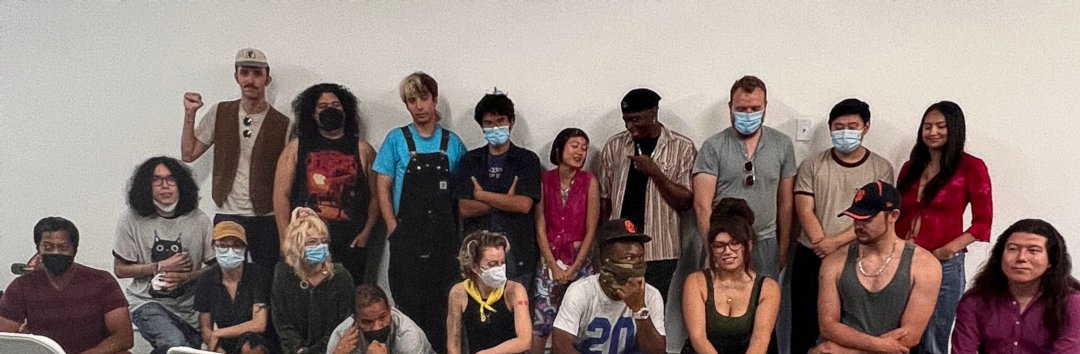
On a quiet Sunday afternoon in Los Angeles, folks chose to watch “Lamarca,” in a warm room, unintentionally replicating Brazil’s heat. “Lamarca” is a movie made in 1994 that depicts the true story of a Brazilian revolutionary who defected from the Brazilian army to fight against the regime. After the intense film, the viewers got up to chat and mingle. Then, a circle of chairs was made to facilitate a discussion. 

Organizers and agitated folks of various classes, age, and nations shared a space at the Harriet Tubman Center for Social Justice to answer the guiding questions: 

  1. What is the role of women and other oppressed gender people in the revolution? 
  2. What were the conditions that would’ve made Carlos Lamarca and his comrades more successful? 
  3. How do we build towards sustainability in the movement? 
  4. What can we take from this movie into our organizing here in LA? 

So much was shared, from personal life experiences to organizing successes and failures. All of these accounts and opinions capture the concerns of the left here in the imperial core: How do we build an un-psy-opable (some new terms were developed in this discussion) united movement? How do we engage with the masses? 

Though there weren’t clear answers, there were a lot of grounding ideas to work with, and some concrete proposals to pursue. For one, let’s talk to those in our lives. We should learn and be willing to engage with the struggles of the people. 

Linh Co is an organizer with LA MAS, Los Angeles Movement to Advance Socialism, the organization that put this event together. 

Strugglelalucha256


Estados Unidos extiende a Zambia su alcance militar

El 26 de abril de 2022, el Comando de Estados Unidos para África (AFRICOM, por sus siglas en inglés) anunció el establecimiento de una oficina en la embajada de los Estados Unidos en Lusaka, Zambia. Según el general de brigada, sub director de Estrategia, Involucramiento y Programas del Comando, la Oficina para la Cooperación en Seguridad se ubicará en la sede de la embajada. Las redes sociales en Zambia reverberaron con rumores sobre la creación de una base militar estadounidense en el país. Ambrose Lufuma, el ministro de defensa, emitió un comunicado manifestando que “Zambia no tiene ninguna intención de establecer o alojar ninguna clase de base militar sobre suelo zambiano”. “Sobre nuestros cadáveres” Estados Unidos tendrá una base militar en Zambia, declaró el doctor Fred M’membe, presidente del Partido Socialista de Zambia.

En su visita a Lusaka, el general de brigada Bailey del AFRICOM se reunió con el presidente de Zambia, Hakainde Hichilema. Su Gobierno enfrenta desafíos económicos serios a pesar del hecho de que Zambia tiene una de las mayores riquezas de materias primas en el mundo. Zambia regresó al Fondo Monetario Internacional (FMI) buscando asistencia financiera en diciembre de 2021 cuando el total de la deuda pública creció hasta aproximadamente 27 mil millones de dólares (con una deuda externa de aproximadamente 14.5 millardos de dólares), derivando en una espiral de deuda inducida por el ente multilateral.

En junio, dos meses después de que Hichilema se reuniera con el equipo del AFRICOM, este recibió a la subdirectora de administración del FMI, Antoinette M. Sayeh, quien le agradeció al presidente su compromiso con los “planes de reforma” del FMI. Estos incluyen un paquete de austeridad general que no sólo provocará que la población zambiana quede atada a la pobreza sino que también le impedirá a su Gobierno ejercer su propia soberanía.

Régimen títere

El doctor M’membe, presidente del Partido Socialista, ha emergido como una de las voces más importantes en contra de la presencia militar de los Estados Unidos en su país. La afirmación del ministro de defensa Lufuma de que los estadounidenses no están construyendo una base en Zambia le provoca risa a M’membe. “Creo que de su parte existe un elemento de ignorancia”, me dijo M’membe. “Esto es mera ingenuidad. Lufuma no entiende que prácticamente no existe diferencia entre una base militar y una oficina del AFRICOM. Es sólo un asunto de semántica para ocultar sus verdaderas intenciones”.

La verdadera intención, me dijo M’membe, es que los Estados Unidos usen la ubicación de Zambia “para monitorear, controlar y alcanzar rápidamente a otros países en la región”. Zambia y su vecina, la República Democrática del Congo, dijo, “poseen no menos del 70% de las reservas de cobalto del mundo. Hay enormes reservas de cobre y otros minerales necesarios para las tecnologías modernas”. En parte, dijo M’membe, “esto es lo que ha aumentado el interés sobre Zambia”. En el país está operando un “régimen títere”, dijo M’membe, un gobierno que de iure es independiente pero que de facto es “completamente dependiente de un poder extranjero y está sometido a sus órdenes”, agregó, haciendo referencia a la interferencia de los Estados Unidos en el funcionamiento del Gobierno zambiano. A pesar de sus promesas de campaña en 2021, el presidente Hichilema ha seguido, como su antecesor Edgar Lungo, las mismas políticas subordinadas al FMI. Sin embargo, en términos de una base estadounidense, incluso el propio Lungu resistió la presión norteamericana para permitir que aparezca esta clase de oficina en suelo zambiano.

Luego de que trascendieran las noticias del establecimiento de la oficina, Emmanuel Mwamba, ex representante permanente de Zambia ante la Unión Africana (UA), se apresuró a reunirse con Hichilema y le advirtió de no llevar a cabo este acuerdo. El embajador Mwamba dijo que otros presidentes del país – Lungu (2015-2021), Michael Sata (2011-2014), Rupia Banda (2008-2011) y Levy Mwanawasa (2002-2008) – tampoco le permitieron al AFRICOM a que entrara en su país desde su creación, en 2007.

¿Base u oficina?

El ministro de defensa Lufuma alega que la función de la “oficina” establecida en Lusaka es de asistir a las fuerzas zambianas dentro de la Misión Multidimensional de las Naciones Unidas para la Estabilización de la República Centroafricana (MINUSCA, por sus siglas en inglés). Desde 2014, los Estados Unidos le han suministrado alrededor de 136 millones de kwacha (8 millones de dólares) en asistencia al ejército de Zambia. Lufuma dijo que esta oficina apenas le dará continuidad a ese trabajo. Pero Zambia ni siquiera se encuentra entre los cinco principales países que contribuyen con la MINUSCA (estos incluyen a Bangladesh, Camerún, Egipto, Pakistán y Ruanda). Las razones de Lufuma, por lo tanto, parecen una cortina de humo.

Ni Zambia ni el ejército estadounidense han hecho público el acuerdo firmado en abril. Como es natural, el no haber publicado el texto ha conducido a una cantidad considerable de especulaciones. Mientras tanto, en Ghana, donde el acuerdo de cooperación en defensa que se firmó entre los dos países en mayo de 2018, los Estados Unidos habían dicho, inicialmente, que solamente estaba creando un depósito y una oficina para sus fuerzas armadas, algo que luego pasó a significar que el ejército estadounidense está asumiendo el control de uno de los tres terminales del aeropuerto de Accra y, desde entonces, lo ha estado utilizando como su base de operaciones en África occidental. “Basado en la experiencia de Ghana, sabemos de qué va esto”, me dijo M’membe, mientras hablaba sobre el plan norteamericano de establecer una oficina en su embajada en Zambia. “No es algo muy diferente de una base. De forma lenta pero segura se convertirá en una con todas sus letras”.

Desde que se manifestó la primera señal de que los Estados Unidos crearían una base del AFRICOM en el continente, la oposición en su contra creció rápidamente. Fue liderada por el ex presidente surafricano Thabo Mbeki y su ministro de defensa de entonces, Mosiuoa Lekota, ambos haciendo lobby para rechazar cualquier tipo de base estadounidense en el continente en la UA y en la Comunidad para el Desarrollo del Sur de África. Sin embargo, en el transcurso de los últimos cinco años, el apetito por un rechazo a las bases a gran escala se ha marchitado a pesar de una resolución de 2016 del organismo regional en contra de permitir bases de este tipo. El ejército estadounidense tiene, que se sepa, 29 bases militares en 15 países africanos.

Estos 15 países no sólo han ignorado el consejo de sus propios organismos regionales en lo concerniente a permitir que países de afuera establezcan bases militares, sino que la UA en sí misma le permitió a los Estados Unidos crear una oficina para un agregado militar dentro de su propia sede en Addis Ababa. “La UA que le opuso resistencia al AFRICOM en 2007”, me dijo M’membe, “no es la de hoy en día”.

Este artículo fue producido para Globetrotter.

Vijay Prashad es un historiador, editor y periodista indio. Es miembro de la redacción y corresponsal en jefe de Globetrotter. Es editor en jefe de LeftWord Books y director del Instituto Tricontinental de Investigación Social. También es miembro senior no-residente del Instituto Chongyang de Estudios Financieros de la Universidad Renmin de China. Ha escrito más de 20 libros, entre ellos The Darker Nations y The Poorer Nations. Sus últimos libros son Struggle Makes Us Human: Learning from Movements for Socialism y The Withdrawal: Iraq, Libya, Afghanistan, and the Fragility of U.S. Power (con Noam Chomsky).

Strugglelalucha256


Baton Rouge: Keep the clinics open! July 18

Yesterday a judge reinstated the temporary restraining order which lifts Louisiana’s total ban on abortions. Clinics are reopening. Monday a judge will determine whether they remain open.

The outcome on Monday, just like every major legal decision, hinges not on this or that legalism but on how strong we push back against their attempts to grind us down. History shows that laws follow the people’s struggle for progress, not the other way around. The fight for union rights, civil rights, and the right to the vote all bear this out.

Join us on Monday, July 18, 8:30 AM to tell AG Landry and his fellow flunkies for the rich that WE WON’T GO BACK.

Driving up Monday, let us know if you need a ride.

Reach out to Louisiana4AbortionRights@gmail.com get involved in the newly formed Abortion Rights Action Committee.

#WeWontGoBack #AbortionIsHealthcare #StandUpFightBack

Strugglelalucha256


$2 trillion for war vs $100 billion to save the planet

During late April and early May, South Asia experienced the terrible impacts of global warming. Temperatures reached almost 50 degrees Celsius (122 Fahrenheit) in some cities in the region. These high temperatures came alongside dangerous flooding in Northeast India and in Bangladesh, as the rivers burst their banks, with flash floods taking place in places like Sunamganj in Sylhet, Bangladesh.

Saleemul Haq, the director of the International Center of Climate Change and Development, is from Bangladesh. He is a veteran of the UN climate change negotiations. When Haq read a tweet by Marianne Karlsen, the co-chair of the UN’s Adaptation Committee, which said that “[m]ore time is needed to reach an agreement,” while referring to the negotiations on loss and damage finance, he tweeted: “The one thing we have run out of is Time! Climate change impacts are already happening, and poor people are suffering losses and damages due to the emissions of the rich. Talk is no longer an acceptable substitute for action (money!)” Karlsen’s comment came in light of the treacle-slow process of agreement on the “loss and damage” agenda for the 27th Conference of Parties or COP27 meeting to be held in Sharm el-Sheikh, Egypt, in November 2022.

In 2009, at COP15, developed countries of the world had agreed to a $100 billion annual adaptation assistance fund, which was supposed to be paid by 2020. This fund was intended to assist countries of the Global South to shift their reliance on carbon to renewal sources of energy and to adapt to the realities of the climate catastrophe. At the time of the Glasgow COP26 meeting in November 2021, however, developed countries were unable to meet this commitment. The $100 billion may seem like a modest fund, but is far less than the “Trillion Dollar Climate Finance Challenge,” that will be required to ensure comprehensive climate action.

The richer states—led by the West—have not only refused to seriously fund adaptation but they have also reneged on the original agreements, such as the Kyoto Protocol (1997); the U.S. Congress has refused to ratify this important step toward mitigating the climate crisis. The United States has shifted the goalposts for reducing its methane emissions and has refused to account for the massive output of carbon emissions by the U.S. military.

Germany’s money goes to war not climate

Germany hosts the secretariat of the United Nations Framework Convention on Climate Change. In June, as a prelude to COP27, the UN held a conference in Bonn on climate change. The talks ended in acrimony over finance for what is known as “loss and damage.” The European Union consistently blocked all discussions on compensation. Eddy Pérez of the Climate Action Network, Canada, said, “Consumed by their narrow interests, rich nations and in particular countries in the European Union, came to the Bonn Climate Conference to block, delay and undermine efforts from people and communities on the frontlines addressing the losses and damage caused by fossil fuels.”

On the table is the hypocrisy of countries such as Germany, which claims to lead on these issues, but instead has been sourcing fossil fuels overseas and has been spending increasing funds on their military. At the same time, these countries have denied support to developing countries facing devastation from climate-induced superstorms and rising seas.

After the recent German elections, hopes were raised that the new coalition of the Social Democrats with the Green Party would lift up the green agenda. However, German Chancellor Olaf Scholz has promised €100 billion for the military, “the biggest increase in the country’s military expenditure since the end of the Cold War.” He has also committed to “[spending] more than 2 percent of the country’s gross domestic product on the military.” This means more money for the military and less money for climate mitigation and green transformation.

The military and climate catastrophe

The money that is being swallowed into the Western military establishments does not only drift away from any climate spending but also promotes greater climate catastrophe. The U.S. military is the largest institutional polluter on the planet. The maintenance of its more than 800 military bases around the world, for instance, means that the U.S. military consumes 395,000 gallons of oil daily. In 2021, the world’s governments spent $2 trillion on weapons, with the leading countries being those who are the richest (as well as the most sanctimonious on the climate debate). Money is available for war but not to deal with the climate catastrophe.

The way weapons have poured into the Ukraine conflict gives many of us pause. The prolongation of that war has placed 49 million more people at risk of famine in 46 countries, according to the “Hunger Hotspots” report by the United Nations agencies, as a result of the extreme weather conditions and due to conflicts. Conflict and organized violence were the main sources of food insecurity in Africa and the Middle East, specifically in northern Nigeria, central Sahel, eastern Democratic Republic of Congo, Ethiopia, Somalia, South Sudan, Yemen and Syria. The war in Ukraine has exacerbated the food crisis by driving up the price of agricultural commodities. Russia and Ukraine together account for around 30 percent of the global wheat trade. So, the longer the Ukraine war continues, the more “hunger hotspots” will grow, taking food insecurity beyond just Africa and the Middle East.

While one COP meeting has already taken place on the African continent, another will take place later this year. First, Abidjan, Côte d’Ivoire, hosted the UN Convention to Combat Desertification in May and then Sharm el-Sheikh will host the UN Climate Change Conference. These are major forums for African states to put on the table the great damage done to parts of the continent due to the climate catastrophe.

When the representatives of the countries of the world gather at Sharm el-Sheikh, Egypt, in November 2022 for COP27, they will hear Western representatives talk about climate change, make pledges, and then do everything possible to continue to exacerbate the catastrophe. What we saw in Bonn is a prelude to what will be a fiasco in Sharm el-Sheikh.

This article was produced by Globetrotter. Murad Qureshi is a former member of the London Assembly and a former chair of the Stop the War Coalition.

Strugglelalucha256


Summer of Rage: Women’s group sits in at White House

Washington, D.C. – Thousands of mostly young women marched in pouring rain from 14th and I Streets to the White House July 9 as part of the “Summer of Rage” called by the Women’s March. When the group reached the White House, a sea of green bandanas with “Bans Off Our Bodies” written on them were tied to the White House fence.  

In defiance of park rules at Lafayette Square, hundreds of protesters sat down in front of the White House preparing for arrest. While no arrests were made, the charge against the Biden administration was very clear: Not enough is being done to protect abortion rights.  

The group is calling for President Joe Biden to declare a national emergency which would provide additional funds for abortion and health care. This includes access to abortion pills and the leasing of federal land to abortion providers.

Many protesters proclaimed that the White House and mainstream Democratic Party politicians are not doing enough and that “we cannot wait until the elections.”

On July 8, protesters organized by the Louisiana Abortion Rights Action Committee took over the streets in front of the Civil District Court in New Orleans where a hearing about Louisana’s anti-abortion “trigger laws” was being heard.

Sally Jane Black from LARAC proclaimed at the protest: “We’re not going to let the Supreme Court’s Dobb’s decision stand! The original Roe v. Wade was won in the streets with a mass movement. We shut it down this morning to show that we mean business and that they cannot continue like this.”  

Black emphasized that their battle was connected to the fight against racism and for workers’ rights.

LARAC is one of several organizations, including the Workers Voice Socialist Movement and Socialist Unity Party, calling for a national week of civil disobedience from Sept. 18-24. The Louisiana protest represents the mounting resistance taking place across the country.  

On June 24, thousands of protesters in Phoenix, Arizona, were met with riot police firing tear gas outside the State Capitol. In defiance, protesters returned on July 8, despite the erection of razor wire fences.   

The battle has just begun.

Strugglelalucha256


Join the National Week of Civil Disobedience to Restore Abortion Rights

Women’s Lives Are at Stake

Call for a National Week of Civil Disobedience to Restore Abortion Rights, September 18-24

Higher Wages, Workers’ Rights & Full Funding for Childcare, Healthcare & Education

No to Militarism and War

Fight the Right! No Business as Usual!

Initiated by: Workers Voice Socialist Movement, Socialist Unity Party, Louisiana Abortion Rights Action Committee, Women In Struggle/Mujeres En Lucha, Louisiana Workers Councils

Sign on to the call: Louisiana4AbortionRights@gmail.com

All Cities, All Organizations, United 

It took a mass, militant movement coast to coast, north and south, to win Roe v. Wade – not politicians or the conscience of Supreme Court “justices.” We have had to fight for abortion rights every day of the almost 50 years since—not only against the openly extreme right wing but against the Democratic Party, which has supported anti-abortion judges and laws, including the hideous Hyde Amendment that took away the right of poorer women to get abortions.

Emboldened by the overturning of Roe, the right wing is pushing forward. They are seeking a national anti-abortion law and a ban on the abortion pill. They are escalating terroristic violence everywhere—including in “abortion-protected states.” Attacks on protesters by fascists and police and bombings of abortion clinics across the country have not stopped protesters from taking to the streets. We will not let this stand.

We are not going to be content with politely lobbying Congress for a law it won’t pass, Biden’s toothless executive order, or a handful of cities making prosecution a “low priority” while the clinics stay closed and the state police take up prosecution of those who get abortions. Supporting and funding the courageous abortion underground is important, but many will be unable to travel or access their support. It is time we joined together, arm in arm, united against these assaults on our rights. They need to know that we are serious. We need to carry out mass civil disobedience across the country.

We stand against this attempt to control all women and child-bearing people of all genders, especially workers and other poor people and communities of color. We will not let them divide us. Our enemy is the super-rich and their government lackeys who are trying to strip away our rights. We fight not only for the restoration of abortion rights, but for everything necessary to be able to choose to raise children, including free childcare, parental leave and more. We fight for unions and workers’ rights, LGBTQ rights, environmental protections and universal healthcare, and we demand an end to racist terror and wars for profit. Their profits are not our concern—our survival is.

It is time to say NO to business as usual. Let’s unite to get every city, group and individual to shut it down. Let’s follow the example of the women in Ireland, Spain, Mexico, Poland and Argentina—we too can strike. We need to build up a united national fightback so we can move towards a women’s strike — even for a day — and withhold our labor. The labor of women workers is super-exploited, especially women of color, but our labor keeps everything running. We are powerful if we assert our collective power. We can and need to hit back forcefully.

Resistance inspires, resistance can win!

We ask that you or your organization endorse this call for a National Week of Civil Disobedience to Restore Abortion Rights.

Sign on to the call: Louisiana4AbortionRights@gmail.com

Strugglelalucha256


Baltimore protest demands justice for Jayland Walker

Baltimore, July 9 – The Peoples Power Assembly held a protest demanding justice for Jayland Walker — gunned down in a hail of 60+ bullets by Akron, Ohio, cops —  at the Douglas Homes Projects as part of a call by the National Alliance Against Racism and Political Repression.

Rev. Annie Chambers, who is a PPA leader and the co-chair of Welfare Rights Union, opened the rally with a clear call for an end to police terror. Joyce Butler, PPA radio host and organizer with the Unemployed Workers Union, spoke on how the killing impacted her family; Ian Schlakman connected the increased police terror with the war on Russia and economic hardship in the surrounding community. Andre Powell led the group in counting out the 60 bullets that struck Jayland Walker, noting that 90 bullets were fired.

The rally was held at the site of Peoples Power Assembly food distributions. Chambers resides at Douglas Homes and is an organizer against the privatization of public housing. The surrounding area is being gentrified by John Hopkins Hospital in East Baltimore. 

https://www.facebook.com/PeoplesPowerAssembly/videos/514363950486277/

Strugglelalucha256


Struggle-La Lucha audio articles now available

Many Struggle-La Lucha articles are now available in audio format. Audio articles are more widely accessible to anyone with difficulty seeing or reading. The audio articles can also be listened to like a podcast – while traveling to work, for example.

Look for the audio link at the beginning of many SLL articles or check the list on the “Struggle – La Lucha audio articles” page.

Strugglelalucha256


Mujeres en Lucha de la FDIM presenta en Encuentro Antiimperialista en Cuba

Participación de Mujeres en Lucha – Women in Struggle, en representación de la Región de las Américas de la Federación Democrática Internacional de Mujeres (FDIM), en el ‘Encuentro antiimperialista y anticolonialista, Principales desafíos para nuestros pueblos’, que tuvo lugar el 4 de Julio previo a la IX Asamblea de los Pueblos del Caribe en la provincia Santiago de Cuba. La Asamblea estaba presidida por el tema central “Cultura, Resistencia, Revolución y Soberanía”.

Buenas tardes compañeras y compañeros,

Mujeres en Lucha envía un saludo y felicitaciones al CTC, al ICAP, y a todas las organizaciones que participan de este Encuentro tan necesario en estos momentos.

En Borinken estamos viviendo momentos muy difíciles, pero que por necesidad, nos tendrá que llevar pronto a la suprema definición: o yanquis, o puertorriqueños. Al fin de la colonización.

La intensificación del dominio yanki en la colonia se está haciendo a través de la imposición por el Congreso estadounidense de una Junta de Control Fiscal dictatorial de Wall Street, que intenta robarle hasta el más mínimo recurso que tiene el pueblo, para pagar una deuda ilegal a unos bonistas buitres. Y de paso implantar medidas neoliberales de privatización que están empobreciendo al pueblo. 

Y haciéndole juego, el gobierno de Puerto Rico legisla para beneficiar los intereses de millonarios extranjeros que se van mudando aquí desplazando a la población y adquiriendo las propiedades en los terrenos más preciados.

Pero como sólo el pueblo salva al pueblo, hay muchas organizaciones que se han levantado en contra de todos estos crímenes. Hoy mismo, en la costa oeste, hay un junte de pueblo defendiendo nuestras playas. En Rincón, donde los gringos se han querido apropiar y la clase rica del país los secunda.

Pero el imperio yanqui no está seguro, su necesidad de dominar a nivel mundial, como lo quiere hacer ahora contra Rusia y China, forzando a los países europeos y enviando armamentos y militares, se está convirtiendo en su propia decadencia. Incluso dentro de sus entrañas, se está abriendo más y más la brecha entre su propia ciudadanía, lo vemos con los movimientos neofascistas que intentaron un golpe el 6 de enero, con las enormes protestas a raíz de la decisión Roe vs Wade de una Corte Suprema derechista, con la sindicalización de corporaciones que hasta ahora eran impenetrables al sindicalismo como Amazon y Starbucks. 

Por eso, ahora hay que arreciar la lucha contra el bloqueo de Cuba, esa Cuba Revolucionaria, esa Cuba digna, que es nuestro faro, nuestra guía moral. Que nunca dice no a un pedido de ayuda.

Y esa lucha se refuerza con todas nuestras luchas unidas, por eso es importante que sepamos más de cada una e intercambiemos, que nuestras luchas se conviertan en una gigante  nivel caribeño. Porque cada victoria de nuestros pueblos es un clavo más en el ataúd del imperialismo yanqui, en contra de su abuso. 

Debemos convertirnos en ese obstáculo insalvable que impida la continua agresión yanqui. Tornémonos en esa fuerza arrolladora, en esa fuerza Caribeña, Antillana. 

Quisiera terminar con unas estrofas del poema
MI PATRIA ES DULCE POR FUERA de Nicolás Guillén:

Hoy yanqui, ayer española,
sí, señor,
la tierra que nos tocó
siempre el pobre la encontró
si hoy yanqui, ayer española,
¡cómo no!
¡Qué sola la tierra sola,
la tierra que nos tocó!

Un marino americano,
bien,
en el restaurant del puerto,
bien,
un marino americano
me quiso dar con la mano,
pero allí se quedó muerto,
bien,
pero allí se quedó muerto
el marino americano
que en el restaurant del puerto
me quiso dar con la mano,
¡bien!

¡Abajo el bloqueo! ¡Fuera yanquis del Caribe!

Strugglelalucha256


Cuba’s solidarity with Africa and the Soviet Union

“When Africa called, Cuba answered” is a well-known and true description of how Cuba aided the African liberation struggle. The slogan was popularized by Elombe Brath, the late Pan African educator and organizer who was a founder of the December 12th Movement.

Over 2,000 Cuban soldiers died fighting alongside their African comrades in defeating the fascist army of apartheid South Africa.

At the decisive battle of Cuito Cuanavale in southern Angola, soldiers from the People’s Armed Forces of Liberation of Angola threw back the apartheid invaders in 1988. Joining Angolans were soldiers from the People’s Liberation Army of Namibia (PLAN), the armed wing of the South West Africa People’s Organization (SWAPO); uMkhonto we Sizwe (MK), the armed section of the African National Congress (ANC), and the Revolutionary Armed Forces of Cuba.

Also present were military advisers from the Socialist Republic of Vietnam and the Soviet Union. It was Soviet-built MiG-25 jet fighters that gave the African forces air superiority.

Less than two years later Nelson Mandela walked out of prison on Feb. 11, 1990. Mandela declared that “the Cuban people hold a special place in the hearts of the peoples of Africa.

“The Cuban internationalists have made a contribution to African independence, freedom and justice, unparalleled for its principled and selfless character,” said Mandela. “Cubans came to our region as doctors, teachers, soldiers, agricultural experts, but never as colonizers. They have shared the same trenches with us in the struggle against colonialism, underdevelopment, and apartheid.”

Che and Fidel in Africa

One million Algerians died winning independence from France in 1962. Forty thousand Algerians were tortured to death by war criminals like Jean-Marie Le Pen, the founder of the French fascist movement now called the National Rally.

In 1963, Cubans helped Algeria fight off an attack by the U.S.- backed Moroccan monarchy. Che Guevara and other Cuban internationalists fought alongside the followers of the murdered Patrice Lumumba in Congo in 1965.

Fidel Castro helped freedom fighters in Zimbabwe unite and form the Patriotic Front that overthrew the white minority regime. Just as the U.S. economically blockades Cuba, Wall Street sanctions the people of Zimbabwe for taking back their land from white settlers.

Amílcar Cabral, the leader of the African Party for the Independence of Guinea and Cape Verde (PAIGC), met with Fidel Castro in Cuba. Cabral was assassinated in a plot masterminded by the Portuguese secret police, which was a close ally of the CIA.

Cuban military instructors assisted PAIGC liberation fighters while Cuban doctors treated their wounds.

Meanwhile the Pentagon was sending napalm bombs to its fellow NATO member, the fascist regime then in power in Portugal. Today the U.S. and NATO are supplying fascists in Ukraine with billions of dollars of bombs.

Portuguese communists aided their African comrades and helped overthrow the fascist regime in Lisbon on April 25, 1974. The hundreds of thousands of Africans who died fighting for independence also brought some freedom to poor and working people in Portugal.

Saving the world twice

When the Cuban revolution triumphed on Jan. 1, 1959, the Bolshevik Revolution was 41 years old. Lenin and the other Bolshevik leaders hoped their revolution would inspire people around the world to break their chains.

The Bolshevik Revolution itself was an international event since more than 150 nationalities and peoples took part. Oppressed peoples who had been humiliated by the Russian czar and Russian capitalists now stood up.

After Lenin died on Jan. 21, 1924, the Honorable Marcus Garvey said, “We as Negroes mourn for Lenin because Russia promised great hope not only for Negroes but to the weaker people of the world.” 

A year after the Bolshevik victory, the German Kaiser was overthrown in November 1918. German workers and sailors formed soviets, councils of poor and working people.

But this revolution was drowned in blood. Revolutionary leaders Rosa Luxemburg and Karl Liebknecht were killed on Jan. 15, 1919.

A dozen armies invaded the new Soviet Republic. U.S. soldiers occupied Vladivostok on the Pacific and Arkhangelsk near the Artic.

Millions of people died in a civil war supported by the imperialist capitalist powers. It was followed by a terrible famine with more victims.

In 1919, the Hungarian Soviet Republic lasted 133 days before it was overthrown by foreign troops. The Soviet people were all alone.

Instead of a fellow socialist republic in Germany ― the homeland of Karl Marx and Frederick Engels ― the Nazis came to power over the bones of the working class.

Twenty-seven million Soviet people died defeating Hitler. Close to 80% of the Nazi regime’s military casualties were on the eastern front.

President John F. Kennedy described the destruction wrought by Nazis as comparable to everything east of the Mississippi River in the United States being destroyed.

After World War II, Soviet workers and peasants not only had to rebuild their country. They also had to devote a large part of their economy to match the U.S. nuclear arsenal.

Whistleblower Daniel Ellsberg, who revealed the Pentagon Papers, wrote that the military-industrial complex had plans to launch a nuclear first strike on the socialist countries. An estimated 600 million people would be killed.

It was only because the Soviet Union was able to match the Pentagon’s arsenal that this genocide was averted. The Bolshevik Revolution saved the world twice: first from the Nazis and then from Wall Street.

Dangerous illusions

Lenin described a strike as a small revolution. In a long strike of a few months, some strikers weaken. Capitalists do everything to demoralize workers.

All of the socialist countries have been on strike against world capitalism for decades.

Last year the official U.S. spy budget was $84 billion. The U.S. State Department ― which is just another spy shop ― is getting another $83 billion.

All this money is spent to fight socialist countries, workers’ movements and any country that wants to be independent of world capitalism. At the same time, the capitalist media lies 24/7, like their current denials about the fascist gangs in Ukraine.

After being isolated for over 25 years, the peoples of the Soviet Union welcomed the Chinese Revolution. The world’s most populous country had chosen communism!

Yet the post-war world capitalist economic boom nurtured political illusions, which were spread by U.S. propaganda outlets like Radio Free Europe and Radio Liberty.

At least 60 million people died in World War II. For capitalism, however, the destruction of much of Western Europe and Japan got rid of a vast inventory of unsold goods that  had caused the Great Depression. Capitalist “prosperity” sprung from the ruins.

Capitalist illusions were particularly dangerous in the new socialist countries of Eastern Europe. For example, around a quarter of Hungarians had relatives in the United States.

In the 1920s the Communist Party published a Hungarian language daily newspaper in Cleveland. The great CIO union organizing drives improved the living conditions of millions of U.S. workers, including those from Eastern European backgrounds.

So some Hungarians compared their living standards in a region rebuilding from war with their cousins in the United States. Many people thought that everybody in the U.S. had a car. In fact, in the 1950s less than 50% of households in the U.S. had a car, with only about 10% of households having two cars.

Radio Free Europe wasn’t telling Hungarians about the living conditions of Black people or the millions of poor white people. The propaganda outlet was saying socialism was inferior.

There were also unnecessary concessions towards political reaction in the Soviet Union. It didn’t help world peace to allow Vice President Richard Nixon to come to Moscow with a “typical” U.S. kitchen.

The truth was that millions of working-class families in the United States couldn’t afford those “typical” appliances Nixon was advertising. What Soviet people needed to be told was that millions of people in the U.S. were hungry.

It was the Black liberation movement that won food stamps, now called SNAP benefits. The Black Panther Party pioneered school breakfast programs.

More than 20 years before Mikhail Gorbachev became General Secretary of the Communist Party of the Soviet Union, “One Day in the Life of Ivan Denisovich,” by Aleksandr Solzhenitsyn, was allowed to be published in 1962.

Solzhenitsyn was so right-wing that he later praised Soviet Gen. Andrey Vlasov―who defected to the Nazis ― in his book “The Gulag Archipelago.”

Welcome Fidel!

While Nixon was in Moscow, the Cuban Revolution was already six months old. Cuban workers and peasants were taking back their country.

This included $2 billion of U.S.-owned plantations, railroads, mines and other properties. That was one-sixth of Wall Street’s loot in Latin America.

As Fidel Castro said after the attempted U.S.-mercenary invasion at Playa Girón (Bay of Pigs), “This is what they cannot forgive: the fact that we are here right under their very noses. And that we have carried out a socialist revolution right under the nose of the United States!” 

In October 1962, the U.S. threatened nuclear war over the defensive missiles placed in Cuba by the Soviet Union. A few months later, Fidel Castro was invited to visit the USSR.

The historical leader of the Cuban Revolution spent 40 days in the Soviet Union, from April 26 to June 3, 1963. Everywhere the Soviet people of every national background welcomed him, particularly the youth.

That the Cuban people made a socialist revolution right under Wall Street’s nose lifted the spirits of Soviet communists ― while it set back the cynics and the pro-capitalist elements.

The Soviet Union and the other socialist countries gave much aid to Cuba. After 80% of Cuban doctors were enticed to leave their country, Czechoslovakia helped train a new generation of medical workers.

This aid wasn’t all one way. Cuban exports also helped the socialist bloc. Even more important was Cuba’s revolutionary policies, like its aid to Africa.

The overthrow of Soviet power and the socialist countries in Eastern Europe was an immense tragedy. But what if these counter revolutions had occurred not in 1989-1991 but ten years earlier?

It would have been even worse. Besides all the other accomplishments of the Cuban Revolution, it helped set back capitalist restorationist elements in the Soviet Union during the early 1960s. 
Strugglelalucha256
https://www.struggle-la-lucha.org/2022/07/page/4/