- SUMMER OF RAGE: Women sit in at White House
- Join the National Week of Civil Disobedience to Restore Abortion Rights
- 40 years too long! Free Mumia Abu-Jamal!
- ‘Lamarca’: Movie about Brazilian revolutionary sparks lively discussion
- Protest demands justice for Jayland Walker
- Wages, prices and the minimum wage
- Justice for Jayland Walker and Randy Cox!
- New Orleans fighters for abortion rights close down streets
- $2 trillion for war vs $100 billion to save the planet
- Struggle-La Lucha audio articles now available
- Heat waves tied to Big Energy capitalism
- No to NATO!
- Exporting blood and Benjamins: U.S. capitalism is the real Dracula
- Friendshipment Caravan tours 21 cities, set to travel to Cuba
- Cuba’s solidarity with Africa and the Soviet Union
- Fuera Luma y Pierluisi!
- Mujeres en Lucha de la FDIM presenta en Encuentro Antiimperialista en Cuba
Struggle ★ La Lucha PDF – July 4, 2022
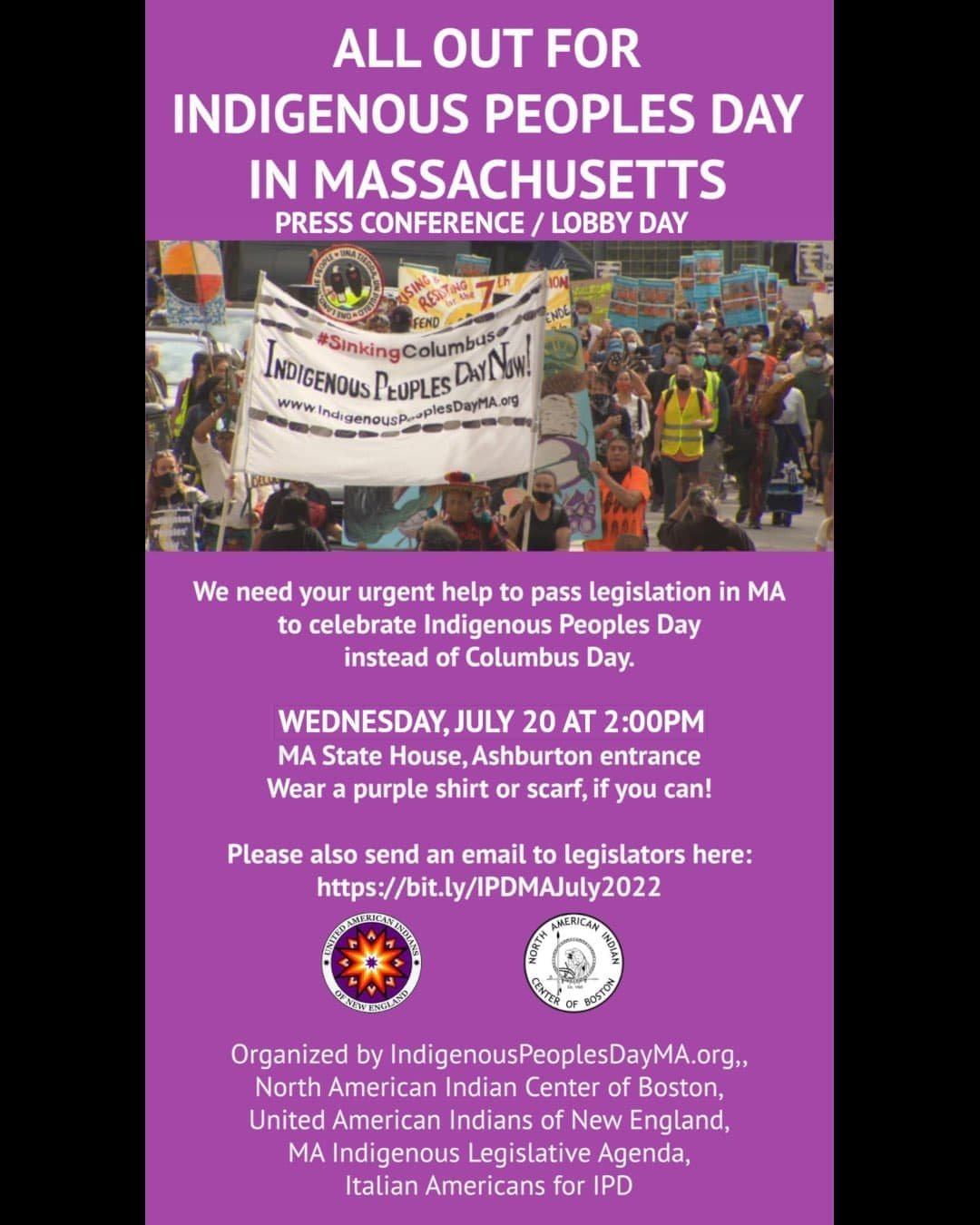
Boston: Support Indigenous Peoples Day in Massachusetts, July 20

WE NEED YOUR HELP WITH INDIGENOUS PEOPLES DAY MA: We only have days left to get this legislation passed!
I know people can’t necessarily take off work or whatever to get to the MA State House on July 20 (but please come if you can). But absolutely everybody can send an email through this link https://bit.ly/IPDMAJuly2022 to MA legislators as WE DEMAND THAT THE INDIGENOUS PEOPLES DAY BILLS BE BROUGHT TO THE FLOOR FOR A VOTE BEFORE THE LEGISLATURE ENDS ITS SESSION THIS MONTH.
We made it easy for you. Just use a Massachusetts address and it will take you only a minute, unless you decide to revise the letter to express your thoughts in your own unique way (which is also great). And please share with all your networks!
Wages, prices and the minimum wage

Today the federal minimum wage is $7.25! Let that sad fact sink in. Right now you can barely buy a gallon of gas in some parts of the country with that little cash.
July 24 will mark the anniversary of the last increase that took place in 2009. In 13 years the capitalist government in the United States has not raised the minimum wage even a nickel. And this is in the wealthiest country in the world. Well, wealthiest for the wealthy!
Labor Department data for 2021 shows that approximately 250,000 people still earned $7.25 and, to add insult to injury, domestic, farm, student, disabled, and restaurant workers can be paid less than $7.25 an hour. It’s called a “subminimum wage” — it’s legal and it implies that these workers are considered subhuman by their bosses.
The majority of low wage workers are Black, Brown, immigrant, women and young.
It is such a disgrace that some states and local municipalities have been forced to pass minimum wage increases on their own — but only as a result of concerted struggle by groups like “Fight for $15,” labor unions and community groups.
But still close to 52 million workers — 32% of the workforce — earn less than $15. And when you factor in the large number of workers who can only find part-time work, or do gig work, the situation is even more dire.
Of course, any worker can tell you that $15 is a barely, barely, barely enough to get by wage.
A September 2021 broadcast on CBS Money Watch reports that the “minimum wage would be $26 an hour if it had grown in line with productivity.”
What the broadcast says in plain language is that workers are working themselves to death, producing more and more — utilizing productivity-boosting technology — and killing themselves on the job.
Workers have “been more industrious,” in the words of CBS, making bosses’ profits soar.
On top of this, today’s inflation that continues to spiral upward has wiped away wages for all workers across the board. Wages were down 2.7% in April and are down much more than that in July.
So it is no wonder that workers and their organizations have begun to demand a minimum wage of $25. In the case of Amazon workers, the Amazon Labor Union is demanding a $30 minimum from the $191 billion Bezos.
What did Karl Marx have to say about wages?
Karl Marx spent his entire life writing and explaining the inner workings of the capitalist system and the development of human history. Along with colleagues, Marx participated in the workers movement of the time and was forced to live in exile.
You could say Marx, who was impoverished and reviled by the ruling classes of that time, also worked himself to death. He drove himself tirelessly not under the direct whip of a capitalist boss, but in the service of emancipating the working class.
So what did he explain in a meticulous and scientific way that earned him the hatred of the industrialists, landlords, bankers and capitalist class?
He revealed how wages and prices were determined, what surplus value is and how profit is derived.
There is a pamphlet, “Value, Price and Profit,” that was presented first as an address at a gathering of the leading workers’ organization at that time that sums up some of the more detailed analysis in “Capital.”
Marx explains that profit for the capitalist bosses comes from the unpaid labor of workers, who produce surplus value, which is the source of profit and the source of wealth for the capitalist class.
It’s amazing that at that time Marx was responding to some of the same arguments heard today against raising wages. But it’s true. “Value, Price and Profit” starts with a presentation of Marx’s response to trade unionist John Weston who claimed that raising wages would be harmful to workers, causing inflation. Weston’s views at the time were supported by John Stuart Mill.
It wasn’t the individual Weston but rather his ideas that Marx argued with.
Karl Marx explained that raising wages will not automatically lead to higher prices. The only outcome of a rise in wages is a decline in profits. There is no reason for prices to increase.
However, there is almost nothing that a capitalist boss won’t do to make profit. It is not an individual thing, but built into the system. And so herein lies the heart of why there is so much propaganda about raising wages — that it will cause inflation, unemployment, and an endless list of disasters. The mere thought of declining profits causes terror.
So you might say that what Karl Marx described was wage theft, but only on a broader scale — meaning the entire system is predicated on ripping off the working class and that the real relations between bosses and workers is one of wage slavery.
Conclusion: We need to fight for every penny we can get and more. Let’s raise the minimum wage to $25 or even $30 an hour. But, as Karl Marx proclaimed, the ultimate solution is to do away with wage slavery totally and build socialism.
Half the nations, half citizens

“Half the nation, half citizens.”
The recent Roe v. Wade decision by the U.S. Supreme Court to reverse a half century of legal precedent has sent shockwaves throughs millions of American women.
A week ago, they lived with an illusion that they were full U.S. citizens protected in their personal and professional lives, under the protections guaranteed by the constitution until, that is, the Supreme Court decided otherwise.
In one fell swoop, the court cut down the freedom to some 40 million women of child-bearing age. That freedom, of deciding when to give birth to another human being, was snatched away like Charlie Brown’s football. What is citizenship without freedom? Indeed, how can one be a half citizen without freedom?
Citizenship is but a mirage. Now, because of some coo-coo conservative theory, the rights of millions are tossed back to the states where rights are cribbed, narrowed, shoved to the corners of the dark. Legal theory thus reaches back to the 19th century when slavery was as legal as dueling and U.S. soldiers killed Indians for sport and to steal more of their lands.
Even if a woman is no longer of child-bearing age, isn’t she still a citizen entitled to certain constitutional protections? When does that end? It ends when five or more judges say it does.
In love, not fear. This is Mumia Abu-Jamal.
These commentaries are recorded by Prison Radio.
Fuera Luma y Pierluisi!

Buenos días audiencia,
Esta semana la privatizadora Luma Energy ha lucido su incompetencia como nunca. En menos de 48 horas estallaron dos subestaciones eléctricas dejando a miles de usuarios sin luz.
El contrato de Luma es tan leonino que puede hacer las barbaridades que quiera sin tener ninguna consecuencia, porque ni el gobernador – que la defiende a capa y espada- ni ninguna agencia del gobierno, la supervisa. Todo lo contrario. Así que siguen sin dar mantenimiento a la infraestructura eléctrica, sin reparar, sin tener el personal requerido, y encima, enviando a los usuarios unos recibos de luz estimados, completamente inflados, que a veces son de miles de dólares.
Pero poco le queda de paz a esta compañía mafiosa y al gobierno corrupto.
Unos días atrás, el alcalde de Juana Díaz, en el sur de la isla convocó al pueblo en asamblea para enfrentar la mala operación de Luma en ese pueblo donde la luz se va diariamente. Los representantes de Luma rehusaron ir aduciendo que temían por su seguridad.
Pero de ahora en adelante Luma está emplazada, no solo por un alcalde, sino por el pueblo entero porque en la mañana del 20 de julio habrá una gran manifestación en su contra.
Numerosas organizaciones comunitarias, ambientalistas, religiosas, partidos de izquierda, sindicatos, y hasta artistas, han estado movilizando a sus bases para que demuestren su fuerza de pueblo en contra de este atropello de Luma y el gobierno. El miércoles 20 de julio a las 9 de la mañana, ni Luma, ni Pierluisi podrán esconderse.
¡Fuera LuMafia, fuera gobierno corrupto!
Para Radio Clarín de Colombia, les habló, Berta Joubert-Ceci
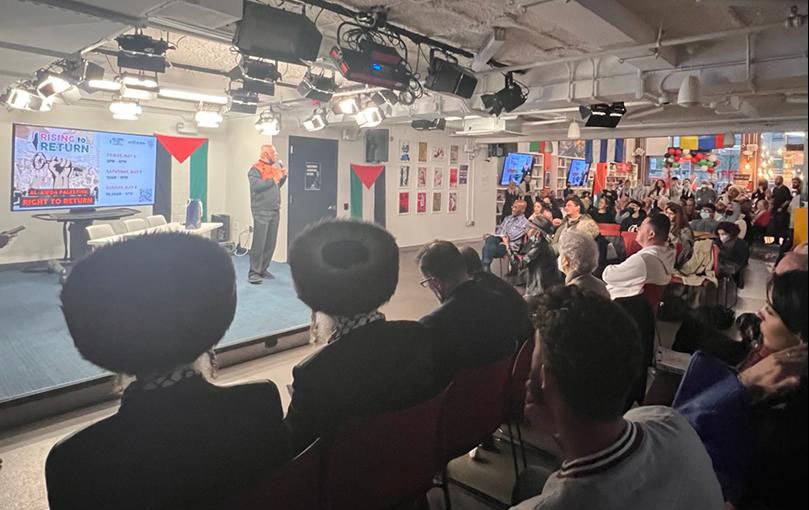
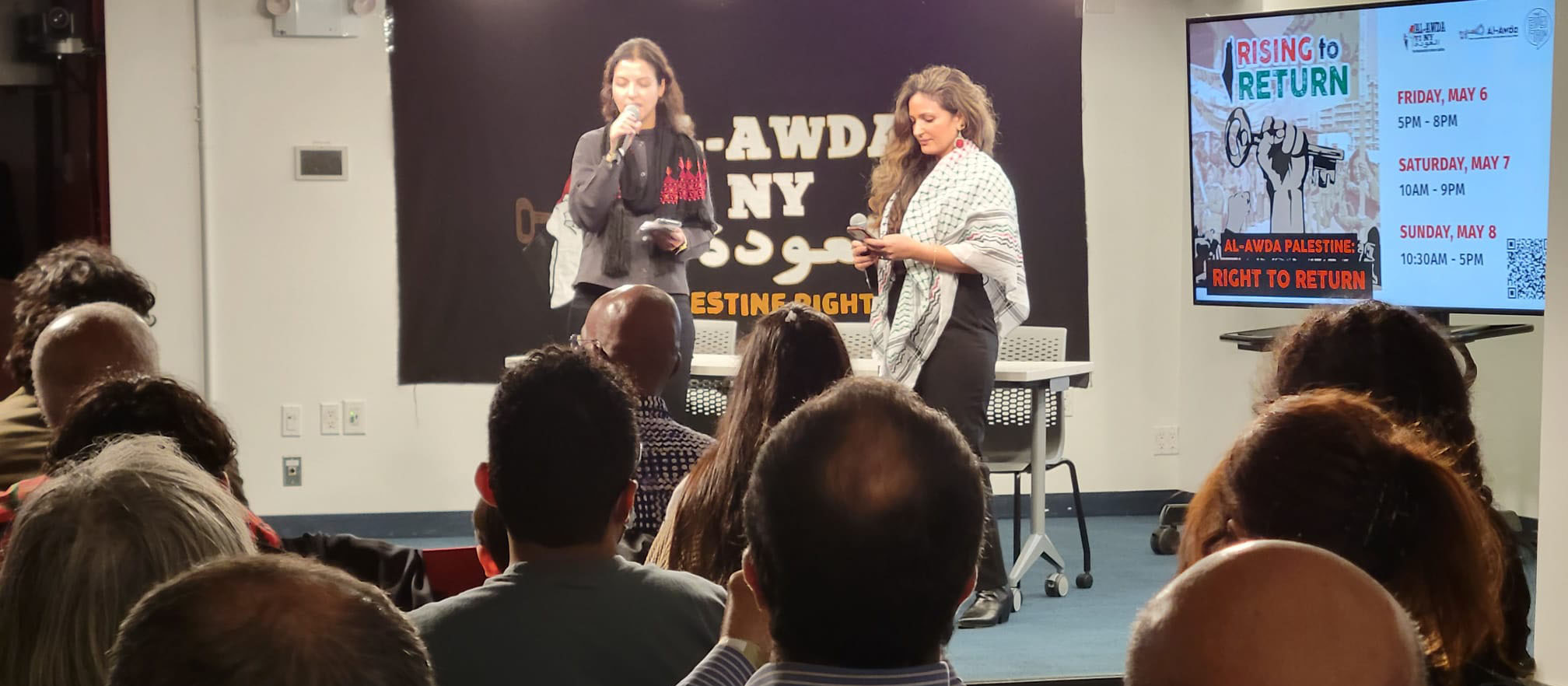
Rising to Return: the 14th Al Awda National Conference

Rising to Return: the 14th Al Awda National Conference Mobilizes for Global Peace by Launching Holistic Strategies Toward Dismantling Zionist Colonization and Supremacy
The 14th National Al-Awda Conference at The People’s Forum in New York from May 6-8, 2022 was a three-day long weekend of intensive discussion and strategy aimed at advancing the Palestinian struggle for liberation from zionist supremacy and colonization. As renowned artist Samia Halaby noted, “If we want peace, we must work to dismantle Israel,” a sentiment shared by Lamis Deek, who identified the return of Palestinian refugees and the dismantling of zionist colonization as a critical step toward removling a key cog in the global war machine and western imperialism. The conference also hosted Palestinian artists, film screenings, and convened community to strengthen bonds and cross-sector support and coordination.
The keynote speakers expressed confidence in the liberation of Palestine. One academician stressed that there is no technical or military superiority that can defeat the Palestinian struggle for liberation, while noting the need for a paradigm shift as offered and adopted at the Al Awda Conference. Speakers stressed the need to revive indigenous knowledge and practices, to engage in critical inquiry and investigations, and to build active strategic solidarity networks (vertical and horizontal, especially outside the US). Speakers also addressed the need to recenter Palestinian self-determination in the Palestinian and solidarity movements, with Palestinian author and journalist Ramzy Baroud detailing the “super-structure” of Palestinian culture itself as playing a decisive role in Palestinian survival, resistance and victories — big and small. Raja Abdulhaq also addressed the need to discursively embrace Palestinian Muslim and Muslim culture as a needed tactic against the violent, islamophobic rhetoric advancing the judaization of Palestine’s Christian and Muslim communities and institutions.
The conference’s three tracks — “implementing return”; “from zionist accountability to enhanced Palestinian support and resistance”; and “strategic coordination” — were dedicated to each aspect of the work required to meet this primary goal.
On the implementing return track, discussants and attendees considered prior global efforts to break the siege on Gaza — and delegations generally — as a paradigm for developing return and reunification support convoys to implement UN Resolution 194, which calls for the safe and immediate return of Palestinian refugees, and which “israel” has violently breached and never honored since agreeing to its implementation in 1948. Discussants also began consideration of US and global political advocacy campaigns for return, so as to recenter return in all Palestinian liberation efforts. Discussants in this and other tracks also reviewed and assesed needed support to facilitate independent Palestinian efforts to return and reenter Palestine safe from zionist privacy invasions, interrogations, and threats to their families.
The conference’s second track was dedicated to identifying and holding accountable zionist organizations in the US which mobilize human and financial resources to colonization and violence in Palestine, in order to launch campaigns to dismantle, defund, and disempower these criminal organizations. Shortly after the conference, the US government, by way of this “democratic” administration, legalized a Jewish terrorist organization, the Kach Group, which is tied to murder and home invasion operations against Palestinians. Discussants at the conference identified several key zionist actors and organizations around which to launch multi-tiered campaigns in the coming months — and investigative partnerships to identify US citizens involved in prosecutable actions in Palestine. Reciprocally, discussants on this track also considered strategies to increase Palestinian access to resources, to allow them to withstand and preempt the escalating violent zionist colonization by the zionist regime and its settler agents. In this regard discussants addressed the need to reframe zionist and western demonization and criminalization of the Palestinian right to life and self-defense, and to launch discursive and material strategies globally to mobilize for Palestinian defense resources. Simultaneously the conference addressed the need to rebuild Palestinian self-sustainability and to move away from the imposed NGO dependency, so as to build sovereign economies of resistance and sumoud. Palestinian organizations, in coordination with Al Awda, will be launching mechanisms to allow for borderless economies in the coming months.
Recognizing the central need to continue empowering youth and student organizing for Palestinian liberation, the third track considered strengths, weaknesses and needs of the student and youth organizers. Discussants considered challenges faced by youth and student organizers,and academics, concluding that strong offensive strategies in dealing with school and campus administrations were more effective than defensive postures- especially when joined by community, intergenerational, and cross-sector organizing. Students requested detailed materials in this regard, and for other challenges, while discussants offered tactics and potential, and tested, avenues for successful organizing. The Campus to Community sessions stressed the need to confront and remove racist, anti-Palestinian examination questions and curriculum, and the murky administrative recourse process in the public school system. Al Awda NY will be releasing support resources and manuals addressing these issues, along with policy manuals.
In sync with the global shift toward cyber/electronic war, the conference dedicated substantial time to addressing the global zionist surveillance, social media and IT war on Palestinians. Experts described the “israeli” surveillance system against Palestinians as a panopticon system: a constant all-consuming surveillance and information gathering system aimed at exacting near-total control and intimidation of Palestinians inside and outside Palestine, with the US government a willing collaborator and facilitator of such illegal practices. Discussants assessed US and western based companies’ adoption of policies of digital discrimination against Palestinians under pressure from US and “israeli” forces, in both the banking and social media arenas. Experts shared strategies to defend against and preempt zionist electronic repression of Palestinians and Palestinian advocacy — and ways to seek accountability for zionist incitement to violence in these arenas. They also discussed the need to expose the relationships between zionists, weapons manufacturers, and social media/media outlets as key to confronting and exposing these practices. Social and alternative media experts covered best practices and tactics to expose and bypass zionist narratives and media dominance. Building from these discussions, their own strategies developed over the years, and expert information, Al Awda NY will be releasing resources addressing this aspect of the struggle as well.
The conference also addressed the recent lack of central coordination to support Palestinian prisoners and targets. Survivors and targets of “israeli” imprisonment shared their experiences and called for more meaningful coordination, including boycotting and shutting down the corporations engaged in prison building and services, and delegitimizing the legal and political framework that sustain the zionist colonial prison system — while supporting and coordinating with legal institutions doing this work in Palestine.
As the Jewish anti-Zionist community grows, the founders of organizations doing the earliest work in this regard convened a space to discuss strategies for Jews to build community and actions to support their work — with several tactics proposed and in continued development, including strategies to confront Kahanists, documenting and exposing Zionists, and pushing back against the weaponized manipulation of anti-Semitism.
Across the board, for all efforts, and particularly through a hard-hitting panel on electoral activism, the conference presentors and attendees were in consensus that building horizontal power must be the main goal, while a smaller segment should be engaging in vertical organizing as well — provided that such vertical government advocacy does not compromise the Palestinian demand for full liberation, return, and reparations.
Keynote speakers underscored the class nature of the war of colonization and incremental genocide in Palestine, and that racial capitalism is at the heart of the struggle of all oppressed people, inside and outside the US. Councilman Charles Barron, Black liberation activist-attorney Roger Wareham, and New England American Indian organizer Jean-Luc Pierite stressed the need for solidarity against a common enemy and common practices which have stolen land, environmental integrity, and safety from Black, Indigenous, and Palestinian people.
To that end, the conference launched a coalition dedicated to self-determination and liberation of oppressed people — to be led by Black and people of color organizations committed to racial and socioeconomic justice, and to work in support of those fighting against US and western imperialism. The coalition infrastructure is under development and will go public in a few weeks.
Al Awda NY which crafted and hosted the program and its tracks has been at the forefront of advancing the Palestinian struggle for liberation for over 23 years, and has been dedicated to redistributing power to oppressed communities and struggles since then.
As we plan to advance the work of our conference in an era of escalated need, we request your help and support. We have set an ambitious goal to raise $125,000 for unpaid costs from the conference, and to hire staff, secure equipment, and to launch digital and material work detailed above.
This amount would cover outstanding conference costs for venue, speaker travel and hotel expenses, youth, travel expenses and food. $31,000 is needed to cover the money spent to develop and launch the Conference micro-site and related publicity, and to go towards video editing and publication of the conference plenary sessions in consumable format. With the balance we hope to hire a program coordinator and use the funds to build our electronic assets, launch and make accessible the above listed programs and materials, along with centralizing and digitizing 23 years of Palestine organizing in NY, to provide legal and political support to students, parents and communities in need of support, and to cover costs of trainings and materials for the coming two years- to ensure that the paradigm shifting work devised at the conference is implemented and that the movement for Palestinian liberation steadily proceeds.
You can donate via:
PayPal: https://al-awdany.org/support-our-work/
Venmo: @alawdany
CashApp: $AlAwdaNY
Our deepest thanks and ongoing commitment to justice and liberation, eternally.
Al Awda
Exporting blood and Benjamins: U.S. capitalism is the real Dracula

Malcolm X declared, “you show me a capitalist, I’ll show you a bloodsucker.” U.S. capitalists are the biggest bloodsuckers on the planet.
In 2017, human blood and plasma were the tenth largest U.S. export items, with sales of $28.6 billion. That’s half the value of car exports. Human blood easily outranked the sales of corn and soybeans abroad.
Most countries ban the selling of blood just as it’s illegal to sell one of your kidneys. (Although there’s an underground market for body parts in the U.S.)
It’s poor people who are compelled to sell their blood plasma. Another occupation of the oppressed in some states is collecting bottles and cans for deposit money.
Jacqueline Watson’s imprisoned son needed money to make phone calls. Phone companies ripping-off prisoners and their families is big business.
She took a 40-minute bus ride to a plasma center in North Philadelphia. Watson sold her blood for $30 so her son could talk to his family.
In 15 states, including Texas, New York and Illinois, it costs prisoners at least $6 for a 15 -minute-long in-state phone call. In some states children have to pay almost $1 per minute to talk to an incarcerated parent.
In 2019 there were 805 plasma centers in the United States. Forty-three of these blood sucking enterprises were located near the Mexican border.
Border Patrol pigs lock-up Mexican and other immigrant children in cages. But Mexicans can use a B1/B2 visa to sell their blood in the U.S.
In many cases they do so to buy food. This is what colonialism looks like. In 1848 the U.S. government stole half of Mexico to expand slavery.
People can sell their plasma twice a week or 104 times a year. For some people this has resulted in being exhausted and having weakened immune systems.
That’s particularly dangerous during the COVID-19 pandemic.
Lubricating the drug trade
An even bigger U.S. export is its paper money. In 2018 the U.S. exported $65.3 billion of its own currency, overwhelmingly in $100 bills.
That’s larger than the Gross Domestic Product of Tanzania, an African country with a population of 60 million people.
The hundreds of billions in $100 bills are not being used to play Monopoly or some other board game. Big corporations don’t keep huge amounts of cash.
Neither do most workers in the United States, even the millions who don’t have bank accounts. The 40% of U.S. people who can’t afford a $400 emergency expense don’t keep stacks of $100 bills.
It’s organized crime ― especially the trillion dollar drug trade ― that need $100 bills with slave-owner Ben Franklin’s picture on them. Working with the drug cartels are the big banks.
Wachovia Bank ― now part of Wells Fargo ― laundered hundreds of billions in drug money through its branches in Mexico. The $110 million fine that Wells Fargo paid in 2010 was less than two percent of its profits that year.
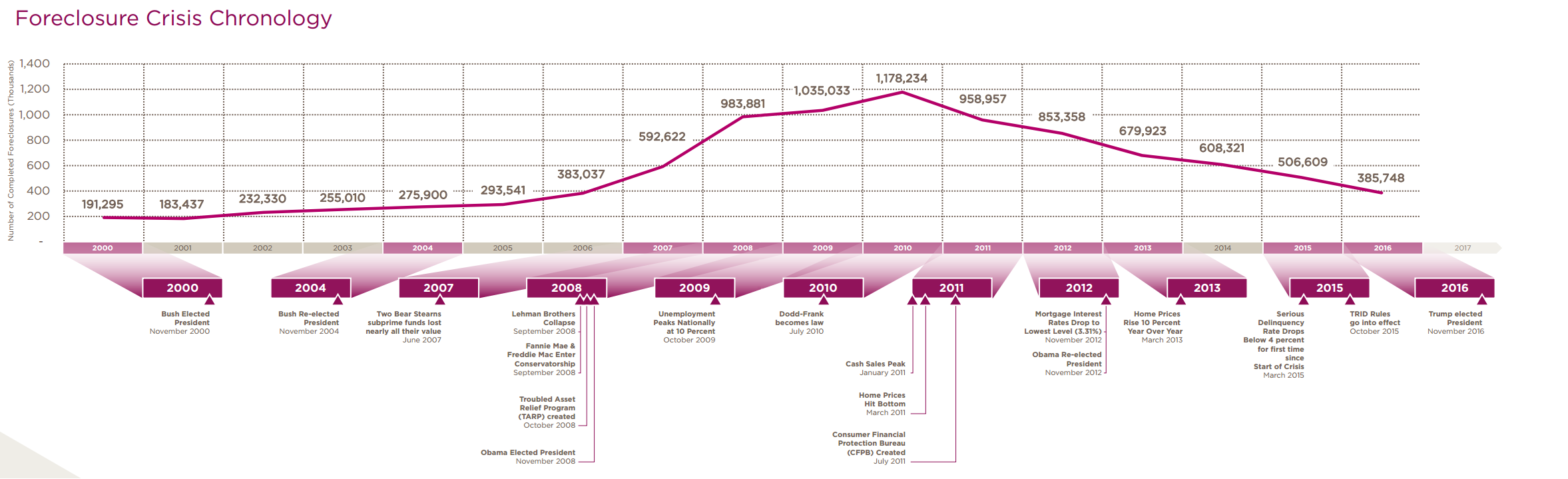
At the same time Wells Fargo and the rest of the banksters foreclosed nearly 7 million homes between 2007 and 2014. That’s over 25 million people thrown into the street.
Half of U.S. exports in 1860 were the cotton picked by enslaved Africans. This supplied capitalism’s biggest industry at the time, the cotton textile factories in Europe and the U.S..
Today the U.S. exports over $90 billion in human blood products and cash for the drug cartels. No wonder Karl Marx wrote that “capital comes dripping from head to foot, from every pore, with blood and dirt.”
Friendshipment Caravan tours 21 cities, set to travel to Cuba

July 14 — The 32nd Friendshipment Caravan of IFCO/Pastors for Peace will leave in several days for Cuba, bringing solidarity, love and medical support to underscore the urgent need to end the criminal U.S. blockade of Cuba. The caravan celebrates the 30th anniversary of the Pastors for Peace Friendshipment solidarity movement to demonstrate that the people of the U.S. do not support their government’s campaign against the people of Cuba.
Ninety-one participants, the majority of them young people of color and first-time visitors to Cuba, will take part in this rich educational experience. This brigade will break the blockade of lies and propaganda against Cuba.
The Friendshipment Caravan this year was launched with a national tour that included East Coast, Midwest, South, and all-Florida to speak with a variety of communities. The tour visited a total of 21 cities and towns.
Team East Coast on Facebook
Team Midwest: Dr. Samira Addrey and Cheryl LaBash on Facebook
At the Columbia, Maryland, stop, both Gail Walker — Executive Director of Interreligious Foundation for Community Organization and Reverend Dorlimar Lebrón Malavé, liberation theologist and IFCO Board member — stressed the need to end the U.S. blockade that is meant to strangle the Cuban people and create human suffering. They urged those who have not visited Cuba to participate and those who have to help a new generation experience Cuba for themselves.
Although IFCO stresses that the tons of much needed medicines carried with the brigade is only symbolic, it highlights the unimaginable crime committed by the U.S. government when the blockade was intensified in the midst of the pandemic when Cuba’s essential tourist income became unavailable. Financial contributions to buy medicines are accepted at Ifconews.org.
IFCO/Pastors for Peace enables young people, especially Black, Brown and poor students, to take advantage of Cuba’s generous full-ride scholarships to attend its Latin America School of Medicine (ELAM). The main requirement is that those who receive training as debt-free doctors return to serve in their communities.
ELAM was conceived by Cuba’s leader, Fidel Castro, to give an opportunity to students around the globe from Africa and the Americas to train to become doctors and contribute to solving global healthcare needs. The school now includes students from 124 countries. For more information go to Elam Medical School.
July 31, Urgent support needed for ‘Bridges of Love’
On Sunday, July 31, the day following their return, Pastors for Peace organizers will make it a priority to show support for the “Bridges of Love” bike and car caravans in Miami inspired by Cuban-American teacher Carlos Lazo. On the last Sunday of every month for two years, Cuban Americans supported by others have publicly displayed support for ending the U.S. economic warfare against their relatives living in Cuba — breaking the narrative monopoly. Across the U.S., Canada and in many countries, “last Sunday of the month” caravans show solidarity with their counterparts in Miami.
In June, for the first time the Miami caravan was physically attacked. Actions of solidarity across all states are being urged for Sunday, July 31. Whether you hold a solidarity caravan, picket line or simply gather on a street corner with signs and snap a photo, every effort will demonstrate that violence will not be tolerated and will not silence our voices. Send a photo of your July 31 activity to SundayCaravan@nnoc.org
If you are interested in traveling with IFCO/Pastors for Peace caravans, go to their website at IFCOnews.org. Sign up to receive the weekly e-newsletter CubaBuzz.
¿Cómo Cuba está desterrando las enfermedades de los pobres?
Pasar de 59 muertes infantiles de cada 1.000 nacidos vivos a ninguna muerte infantil en cuestión de unas pocas décadas es una hazaña extraordinaria.
Palpite, Cuba, está solo a unas pocas millas de Playa Girón, a lo largo de la Bahía de Cochinos, en donde los Estados Unidos intentaron derrocar a la Revolución Cubana en 1961. En una calle modesta, dentro de un pequeño edificio con una bandera cubana y un gran cuadro de Fidel Castro cerca de la puerta principal, la Dra. Dayamis Gómez La Rosa atiende pacientes de 8 am a 5 pm. De hecho, decirlo así no sería exacto. La Dra. Dayamis, como la mayoría de las y los médicos de atención primaria en Cuba, vive encima de la clínica que dirige. “Me convertí en doctora”, nos dijo mientras nos sentábamos en la sala de espera de la clínica, “porque quería hacer del mundo un lugar mejor”. Su padre era cantinero y su madre trabajadora de casa particular, pero “gracias a la Revolución”, dice, ella es médica de atención primaria y su hermano es dentista. Los pacientes vienen siempre que necesitan atención, incluso en mitad de la noche.
Además de la sala de espera, la clínica solo cuenta con otras tres salas, todas pequeñas y limpias. Las 1.970 personas de Palpite acuden a ver a la doctora Dayamis, quien resalta que tiene a su cargo a varias gestantes y lactantes. Desea hablar de las embarazadas y de los niños y niñas para resaltar que en los últimos tres años no ha muerto ni un infante en su pueblo ni en el municipio. “La última vez que murió un bebé”, dijo, “fue en 2008 cuando un niño nació prematuramente y tenía grandes dificultades para respirar”. Cuando le preguntamos cómo recordaba esa muerte con tanta claridad, nos dijo que como médica cualquier muerte es terrible, pero la muerte de un niño hay que evitarla a toda costa. “Desearía no haber tenido que pasar por eso”, dijo.
Erradicar las enfermedades de los pobres
Antes de la Revolución, la región de la Ciénaga de Zapata, en donde se ubica Bahía de Cochinos, tenía una tasa de mortalidad infantil de 59 por cada 1.000 nacidos vivos. La población de la zona, en su mayoría dedicada a la pesca de subsistencia y al comercio del carbón vegetal, vivía en una gran pobreza. Fidel pasó la primera Nochebuena después de la Revolución de 1959 con la recién formada cooperativa de productores de carbón, escuchándolos hablar sobre sus problemas y trabajando con ellos para encontrar una salida a la condición de hambre, analfabetismo y mala salud. Un proyecto de transformación a gran escala se había puesto en marcha unos meses antes, lo que atrajo a cientos de personas muy pobres a un proceso para salir de las condiciones miserables que los aquejaban. Esta es la razón por la que este pueblo se levantó masivamente para defender la Revolución contra el ataque de los Estados Unidos y sus mercenarios en 1961.
Pasar de 59 muertes infantiles de cada 1.000 nacidos vivos a ninguna muerte infantil en cuestión de unas pocas décadas es una hazaña extraordinaria. Esto se logró, dice la doctora Dayamis, porque la Revolución Cubana presta una enorme atención a la salud de la población. Las madres embarazadas reciben atención regular de médicos de atención primaria y ginecólogos, y sus bebés son atendidos por pediatras, todo pagado con la riqueza social del país. Poblaciones pequeñas como Palpite no cuentan con especialistas como ginecólogos y pediatras, pero a pocos kilómetros de distancia – en Playa Larga – pueden acceder a estos médicos.
Caminando por el museo de Playa Girón ese mismo día, su directora, Dulce María Limonta del Pozo, nos dice que muchos de los mercenarios capturados fueron devueltos a los EE. UU. a cambio de alimentos y medicinas para niños y niñas. Que esto fuese lo que exigía a cambio la Revolución Cubana, dice muchísimo del proceso. Desde principios de la Revolución, se desarrollaron campañas de alfabetización y campañas de vacunación para abordar la pobreza. Ahora, relata la Dra. Dayamis, cada niño y niña recibe entre 12 y 16 vacunas para enfermedades como la viruela y la hepatitis.
En el Centro de Ingeniería Genética y Biotecnología (CIGB) de La Habana, el doctor Merardo Pujol Ferrer nos cuenta que el país casi ha erradicado la hepatitis B con una vacuna desarrollada por su Centro. Esa vacuna, Heberbiovac HB, se ha administrado a 70 millones de personas en todo el mundo. “Creemos que esta vacuna es segura y efectiva”, dijo. “Podría ayudar a erradicar la hepatitis en todo el mundo, particularmente en los países más pobres”. Todos los niños y niñas de su pueblo están vacunados contra la hepatitis, dice la Dra. Dayamis. “El sistema de salud asegura que ninguna persona muera por diarrea o desnutrición, y ninguna persona muera por enfermedades de la pobreza”.
Salud pública
Lo que ahora aflige a la gente de Palpite, dice el Dr. Dayamis, son las enfermedades que se ven en los países más ricos. Es una de las paradojas de Cuba, que sigue siendo un país de medios limitados – en gran parte debido al bloqueo del Gobierno de los Estados Unidos a esta isla de 11 millones de habitantes – y, sin embargo, ha superado las enfermedades de la pobreza. Las “nuevas enfermedades” a las que se refiere son la hipertensión y las enfermedades cardiovasculares, así como el cáncer de próstata y de mama. Estos problemas, señala, deben ser abordados desde la educación pública, por lo que todos los jueves tiene un programa radial en Radio Victoria de Girón, la emisora de la comunidad local, llamado “Educación para la Salud”.
Si invertimos en deporte, dice Raúl Fornés Valenciano, vicepresidente del Instituto de Educación Física y Recreación (INDER), entonces tendremos menos problemas de salud. En todo el país, el INDER se enfoca en lograr que toda la población se active con una variedad de deportes y ejercicios físicos. Más de 70.000 sanitarios deportivos colaboran con las escuelas y los centros de mayores para facilitar el tiempo de ocio dedicado a la actividad física. Esto, junto con la campaña de educación pública de la que nos habló la Dra. Dayamis, son mecanismos clave para evitar que las enfermedades crónicas perjudiquen a la población.
Si uno toma un bote de Bahía de Cochinos y desembarca en otros países del Caribe, se encontrará en una situación en la que la atención médica es casi inexistente. En República Dominicana, por ejemplo, la mortalidad infantil es de 34 por cada 1.000 nacidos vivos. Estos países, a diferencia de Cuba, no han podido aprovechar el compromiso y el ingenio de personas como la Dra. Dayamis y la Dra. Merardo. En estos otros países, los niños y niñas mueren en condiciones en las que ningún médico estará presente para seguir llorando su pérdida décadas después.
Este artículo fue producido para Globetrotter.
Vijay Prashad es un historiador, editor y periodista indio. Es miembro de la redacción y corresponsal en jefe de Globetrotter. Es editor en jefe de LeftWord Books y director del Instituto Tricontinental de Investigación Social. También es miembro senior no-residente del Instituto Chongyang de Estudios Financieros de la Universidad Renmin de China. Ha escrito más de 20 libros, entre ellos The Darker Nations y The Poorer Nations. Su último libro es Washington Bullets, con una introducción de Evo Morales Ayma.
Manolo De Los Santos es codirector ejecutivo del People’s Forum e investigador del Instituto Tricontinental de Investigación Social. Coeditó, recientemente, Viviremos: Venezuela vs. Hybrid War (LeftWord Books/1804 Books, 2020) y Comrade of the Revolution: Selected Speeches of Fidel Castro (LeftWord Books/1804 Books, 2021). Es co-coordinador de la Cumbre de los Pueblos por la Democracia.
Heat waves tied to Big Energy capitalism

The population of the world is enduring crises from climate change that, until recently, climatologists thought may only happen decades from now.
Still, major energy companies and their banking partners are quietly investing heavily in oil wells and coal mining projects that would produce a massive surge in greenhouse gas emissions. The capitalist government is supposed to rein in the greed of corporations when it threatens the stability of the system.
But the earth is cooking, people are dying, livelihoods being destroyed, and even larger environmental crises are looming, and the three branches of the U.S. government are enabling at best — and facilitating at worst — the continued deadly emissions of methane and CO2 that threaten the habitability of the Earth.
Contradictions of capitalist science
It was a long time before climatologists acknowledged the correlation between extreme weather events and greenhouse gasses. One of the great contradictions of the capitalist economy is that science has moved forward at an astonishing rate compared to previous social systems, but at the same time scientific knowledge is kept on a short leash.
The unbelievable heatwave that hit the Pacific Northwest a year ago was so outside the realm of normality that it broke the scientific information blockade. Forces seeking to protect fossil fuel investors have pushed climate denial, but the June 2021 heatwave brought about the public debut of “Attribution Science,” a branch of climate change research that has been developing for years.
Attribution scientists can now use statistics and, with a good degree of confidence, determine how much more likely extreme weather events are in the era of rising global temperatures. Dr. Sjoukje Philip of World Weather Attribution Initiative asserted that the Pacific Northwest heatwave “would have been virtually impossible without human-induced climate change.” She and others estimated that event to be a one-in-a-thousand-year occurrence.
The science is still developing and some types of severe weather – like tornados – are less understood. But the study of heatwaves has yielded the most success. The study is more than academic. Understanding the relationship between heatwaves and other extreme weather and being able to forecast will help with adaptation to changing climate and can save lives.
A 2018 article on climate-xchange.org that focused on the increase in deadly heat waves over the last several decades said:
“Heat waves are more than just uncomfortable, they are dangerous, deadly, and the most obvious manifestation of a warming climate. They are repeated events of increased prevalence around the world, which are only forecasted to get worse as we keep pumping heat trapping gasses into the atmosphere.”
To understand the significance of this quote, one need only think back to the 1995 heat wave in Chicago that killed 739 mostly senior citizens over five days.
Year-over-year all-time temperature records are dropping like flies. BBC reported that in 2019 between May 1 and August 30 almost 400 records were toppled in 29 countries. The year 2022 has seen more high-temperature records broken.
On July 30, 2020, the temperature in Baghdad, Iraq, was 125℉. Triple digit temperatures in two separate areas of India persisted for weeks, moderated slightly and then resumed until the monsoon season finally brought some relief.
Beginning in June and continuing as of this writing, heat records have been topped in France, Switzerland, Austria, Poland, Germany, Spain and Portugal. The second of nearly back-to-back heat waves in the U.S. is affecting some 50 million people with temperatures in some parts of the South reaching 115℉ or higher. Also in June, the hottest temperatures ever for the region were recorded in 25 different areas of eastern China and throughout Japan.
Every dangerous event caused by the use of fossil fuels yields others. The crises are cascading. Scientists are now studying how the world’s ocean and air currents, distorted by the effects of greenhouse gasses, are distributing heat waves to particular areas of the Northern Hemisphere causing them to be concurrent, as they have been in the U.S. and India in 2022.
No ‘green new deal’
The Biden crew put on a good “green” show in the election campaign and in the early days after winning the White House. The new administration pushed a $2 trillion climate-change proposal.
The proposal was less substantial than the “green new deal” that was circulated by the more progressive Democratic congressional group nicknamed “the Squad,” but still stood no chance of passage in the face of an energy corporation-backed onslaught in Congress.
Now, however, Biden’s White House doesn’t look so “green.” They’ve issued more gas and oil drilling permits than the Trump administration, pushed Saudi Arabia to pump more oil and held the largest offshore drilling rights federal auction in years.
This is all being done to counter Russia’s oil and gas sales to Europe which the U.S. is trying to supplant. Their effort to do so has been ratcheted up with the sanctions against Russia and the pressure on European countries over the war in Ukraine. The surrender by Biden to the big energy section of the ruling class points to the dominance of energy companies and their investors under U.S. capitalism.
But none of that means that big energy can’t be stopped. After winning the drilling rights in Biden’s auction in the Gulf of Mexico, ExxonMobil and others were salivating over the potential profits. But in January, a federal judge invalidated the auction saying that the Biden administration failed to properly account for the climate change impact.
Earthjustice and four other environmental groups had challenged the sale and won. Activism to stop the energy giants is the key. So many lives are affected that the struggle will inevitably be taken up by the working classes and oppressed people who suffer the most throughout the world. A portion of the U.S. ruling class recognizes that potential for a heightened struggle that could morph into a class battle that would finally bring capitalism itself to an end.
1