In conversation with Dmitri Kovalevich

Dmitri Kovalevich is a Ukrainian journalist and activist of the banned communist organization ‘Borotba’.

The organization was banned in 2014 for active protests against pro-U.S. coup and against legalization of neo-Nazism. It was banned along with the Communist party. It acts illegally in Ukraine and legally in Donbas republics (Donetsk and Lugansk). His organization supported Donbass rebels in the civil conflict which lasts since pro-U.S. coup in 2014.

The International: How would you explain the events unfurling in Ukraine right now?

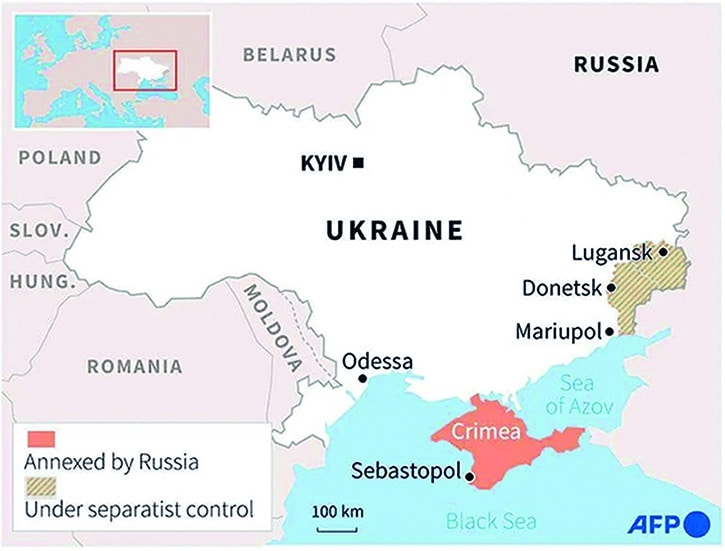
Dmitri Kovalevich: The current events are a continuation of the Donbass conflict which has been going on since 2014. For years Kyiv media and West MSM used to tell that Ukraine was confronting the Russian invasion – and now that happened in reality – as soon as Russia recognized the republics. The official stated aim of the operation: ‘denazification of Ukraine’. Donbass republics seceded in 2014 exactly because they were outraged by legalization of WW2 Nazi collaborators of Ukrainian origin.

The International: Was the situation inevitable? Could it have been resolved through a series of negotiations?

Dmitri Kovalevich: The negotiations have been going on since 2014. Ukraine twice signed the Minsk agreement but refused to fulfill them fearing that armed neo-Nazis would overthrow the government like in 2014. The Minsk agreement implied the reintegration of Donbass republics back in Ukraine but providing the special autonomy status with right to have their own cultural and language policy. This was unacceptable for our radical nationalists who would like to see unified and monoethnic pro-Nazi Ukraine. So, it is either communists are banned and here or Nazis. There is no third option.

Members of the fascist Azov Battalion at the March of Patriots in Kiev, March 2020.

The International: How are the Ukrainians dealing with this?

Dmitri Kovalevich: There are some 5-6% of Ukrainians sharing pro-nationalist or pro-Nazi ideology. There are some 5-6% of commited communists or sympathizers. The rest support those who are winning at the moment. Last years millions of Ukrainians migrated: some 3.5 million to Russia and they would like to come back in case of change of the government. Some 3.5 – labor migrants in western countries, they tend to share Western media narratives.

The International: What ramifications will this have for the Donbass Republics?

Dmitri Kovalevich: I suppose they will be a sort of independent countries like Abkhazia, South Ossethia, Transnistria. Since Ukraine refused from Minsk agreements, they will not come back, given also much blood spilt within 8 years which divide Kiev and Donetsk.

The International: So far everyone has been playing the blame game and rooting for either of the sides. Is there something that the media has hidden from the public?

Dmitri Kovalevich: The main thing hidden from the public is that there are numbers of outright Nazis integrated into Ukraine’s army, police and National Guard. The Ukrainian education system brainwashes children glorifying WW2 Nazis and blaming Soviets. West media preferred to ignore the daily shelling of Donbass cities and the resistance of Donetsk coal-miners, but are outraged when only when pro-U.S. side is being bombed.

The International: If the NATO pushes back, is there a possibility of a full-scale war?

Dmitri Kovalevich: I can’t predict that. But definitely, it’s a new war between pro-NATO and anti-NATO sides. There are deep changes on the geopolitical level and the First World countries face economic crisis. The only way they see in a conflict is profiting on arms trade and sales. They are also to show for the Third World countries that U.S./UK are still strong to impose their imperialist agenda, especially after fails in Afghanistan). A possible loss of any pro-NATO force or country may enforce further economic conflict within the First World countries providing more opportunities to the Third world countries to improve their economic situation.

Strugglelalucha256


France withdraws from Mali, but continues to devastate Africa’s Sahel

On February 17, 2022, French President Emmanuel Macron held a press conference in Paris just ahead of the sixth European Union-African Union summit in Brussels along with Senegal’s President Macky Sall and Ghana’s President Nana Akufo-Addo as well as European Council President Charles Michel. At the conference, Macron announced that the French forces would be withdrawing from Mali. This means that France and its European allies will start to wind down “Barkhane and Takuba anti-jihadist operations in Mali.” The protests in Mali against the presence of the French troops seem to have finally succeeded.

Macron said that France had to withdraw its troops because it would no longer like to “remain militarily engaged alongside de facto authorities whose strategy or hidden objectives we do not share.” A statement appeared on the French government website signed by the European Union (EU) and by the African Union (AU) that made the same point, namely that “the Malian transitional authorities have not honored their commitments.”

The language used by Macron and included in the AU and EU statement shows a lack of transparency about the real reasons behind the withdrawal of troops from Mali. The government of Mali (“de facto” and “transitional”) came to power through two coups d’état in recent years: Colonel Assimi Goïta, leader of the National Committee for the Salvation of the People of Mali, carried out the first coup in August 2020 against the elected government and installed Bah Ndaw, who was a military officer, as the interim president of Mali. Ndaw was then overthrown in a second coup in May 2021, when Goïta took over the position of interim president himself. By June, the European countries insisted that the new military junta hold elections by February 2022. Goïta said that he would honor this timeline. He did not do so, which gave the EU and the AU the excuse to break links with Goïta’s government.

That’s the excuse being used by these regional powers to wind down operations in Mali. Matters become far less clear, however, when it comes to the statements that were made by France in this regard. Macron spoke about Goïta’s “hidden objectives,” but did not elaborate on that accusation. What could these “hidden objectives” be?

Mali’s Troubles

Mali’s troubles do not start and finish with the unrest in northern Mali nor with the military coup. If you were to ask Alpha Oumar Konaré, the president of Mali from 1992 to 2002, he would tell you a different story. When Konaré took over the presidency in Mali in 1992, the people were exhausted by the debt crisis produced by International Monetary Fund (IMF) policies and by military rule. They wanted something more. One of Konaré’s close advisers said during his time in office, “We service our country’s debt on time every month, never missing a penny, and all the time the people are getting poorer and poorer.”

Konaré’s government asked for relief from the IMF so that it could marshal resources toward ensuring the development of the northern part of the country; the insurgency, Konaré argued, would be better confronted by development than by war. The United States government and the IMF disagreed.

From Konaré’s time in office as president to now, Mali’s governments—whether civilian or military—have been unable to craft a policy framework to tackle endemic social and economic crises. It is true that there has been a long-standing rebellion in the north that has brought together the Ifoghas aristocrats among the Tuaregs and the Al Qaeda factions that came out of the Algerian civil war (1991-2002) and the destruction of Libya (2011-2012); none of the many peace agreements have worked largely because there is simply no money in Bamako, the capital of Mali, to promise the kind of development needed to undercut a million frustrations. Less remarked, but equally true, are the devastatingly poor social indicators in the rest of Mali, where hunger and illiteracy appear normal in Bamako’s bidonvilles.

Western intervention in much of Africa has not resulted in beneficial economic assistance in the region. This assistance has come through IMF austerity policies and military aid.

France’s 2013 military intervention into Mali came alongside its construction of a military project across the Sahel belt called G5 Sahel (including Burkina Faso, Chad, Mali, Mauritania and Niger) in 2014. The military in each of these countries received aid, and its officers received training. It is no surprise that Goïta, for instance, received training from the U.S. armed forces in Burkina Faso alongside Colonel Mamady Doumbouya, who carried out a coup in Guinea in September 2021; it is no surprise either that Lieutenant Colonel Paul-Henri Sandaogo Damiba of Burkina Faso trained alongside these men and carried out his coup in Burkina Faso in January 2022; and no surprise that in Chad, “General Kaka” (Mahamat Idriss Déby Itno), the son of the former president, was installed as the president by the military in what was effectively a coup in April 2021. Three of the G5 Sahel countries—Burkina Faso, Chad and Mali—are now led by a military government (Niger’s authorities thwarted a coup in March 2021).

All the handwringing about why there are so many coup attempts in Africa these days fails to connect the dots: no agenda out of the IMF-austerity model is permitted by the Western states, which prefer to build up the military forces in the region rather than allow a genuine social democratic process to open in these key African countries.

Discomfort With the Western Interventions

In October 2021, Mali’s current Prime Minister Choguel Kokalla Maïga told a Russian news outlet that his government had “proof” that the French are training terrorist groups such as Ansar Dine. According to his interview, France had created an “enclave” in the Kidal region in 2013. “They have militant groups there, which were trained by French officers,” Maïga said. Kidal is in Mali’s north, not far from its borders with Algeria and Niger.

Nothing Maïga said should have raised an eyebrow. France’s former ambassador to Mali, Nicolas Normand, made some similar comments in 2019 when he released his book on the continent, Le grand livre de l’Afrique. Normand told Radio France Internationale that Macron’s government forged ties with the National Movement for the Liberation of Azawad and with the aristocrats of the Ifoghas region to prevent them from making a rapid advance toward Bamako. France wanted to play the “good armed groups” against the “bad armed groups,” but in the end failed to see that both these groups were terrible for Mali. This approach, combined with the civilian casualties of the French military operations (22 civilians died when France bombed a wedding in Bounti in 2021, for example), turned the people of Mali away from France.

French troops have now begun to leave Mali, but they are not returning to France. They will be deployed to next-door Niger, where they will continue their mission to prevent migration to Europe and to fight off the radicalized victims of IMF austerity (which often come in the form of frustrated young people, some of whom turn to terror). Macron’s eyes are on the French presidential elections, which are expected to take place in April this year, and on the rising tensions in response to Russia’s military intervention into Ukraine.

Meanwhile, the people of Mali came to the streets to celebrate the departure of the French. Interestingly, many of the signs thanked the Russians. Perhaps the entry of Russian aid and mercenaries are the “hidden objectives” Macron was referring to?

This article was produced by Globetrotter. Vijay Prashad is an Indian historian, editor and journalist. He is a writing fellow and chief correspondent at Globetrotter. He is the chief editor of LeftWord Books and the director of Tricontinental: Institute for Social Research. He is a senior non-resident fellow at Chongyang Institute for Financial Studies, Renmin University of China. He has written more than 20 books, including The Darker Nations and The Poorer Nations. His latest book is Washington Bullets, with an introduction by Evo Morales Ayma.

Strugglelalucha256


Why Russia recognized the Donbass republics

In order to have a clear anti-war, anti-imperialist position today, class-conscious workers need to understand the significance of the Russian Federation’s Feb. 21 decision to recognize the Donbass republics of Donetsk and Lugansk as independent, sovereign countries, nearly eight years after they first declared independence from Ukraine.

Following an unprecedented live telecast of the meeting of Russia’s National Security Council, President Vladimir Putin announced, “I deem it necessary to make a decision that should have been made a long time ago – to immediately recognise the independence and sovereignty of the Donetsk People’s Republic (DPR) and the Lugansk People’s Republic (LPR).”

Putin signed presidential decrees recognizing the republics; establishing treaties of friendship and mutual cooperation with them; and authorizing Russian peacekeepers to be deployed to the Donbass if requested. Reciprocal decrees were signed by the leaders of the DPR and LPR, Denis Pushilin and Leonid Pasechnik.

The U.S. and its global allies denounced the decision.

Russia’s decision came after several days of heightened Ukrainian military attacks on the two small republics. Two-thirds of Ukraine’s NATO-armed and -trained military forces are poised on the roughly 200-mile “line of contact” with Donetsk and Lugansk, near Russia. Some 175,000 NATO troops, meanwhile, are also stationed on Russia’s western border.

Hundreds of Ukrainian artillery attacks, shootings and terrorist acts have been carried out since Feb. 17, killing and wounding civilians and members of the Donbass People’s Militias, destroying homes and damaging vital infrastructure like water filitration plans, gas pipelines and schools. 

Mass evacuations of civilians from Donetsk and Lugansk began Feb. 18. Everyone understood that a Ukrainian invasion was imminent, even though the Biden administration, standing reality on its head, kept repeating that Russia was planning to invade Ukraine.

Although the shelling of Donetsk, capital city of the DPR, subsided briefly after Russia’s announcement, Ukrainian attacks soon resumed, including a bomb attack on the Donetsk television center and the killing of two Lugansk civilians by a Ukrainian anti-tank missile Feb. 22.

What Washington wants

Since November 2021, Washington has relentlessly pushed Ukraine to launch a major attack on the Donbass in hopes of drawing Russia into a conflict to justify further NATO expansion and shut down Russian fuel exports to Western Europe. 

For three decades, the bipartisan goal of U.S. capitalism has been to break up Russia and bring it firmly under Washington’s control – something Putin acknowledged in his Feb. 21 address to the Russian people.

On Feb. 22, Biden and “Defense” Secretary Lloyd Austin ordered the deployment of thousands more U.S. troops, attack helicopters and fighter planes to Eastern Europe. 

Biden imposed broad new sanctions on Russia, including individual sanctions on parliamentarians who supported the decision to recognize the Donbass republics. Other imperialist countries and U.S. puppet regimes quickly followed suit.

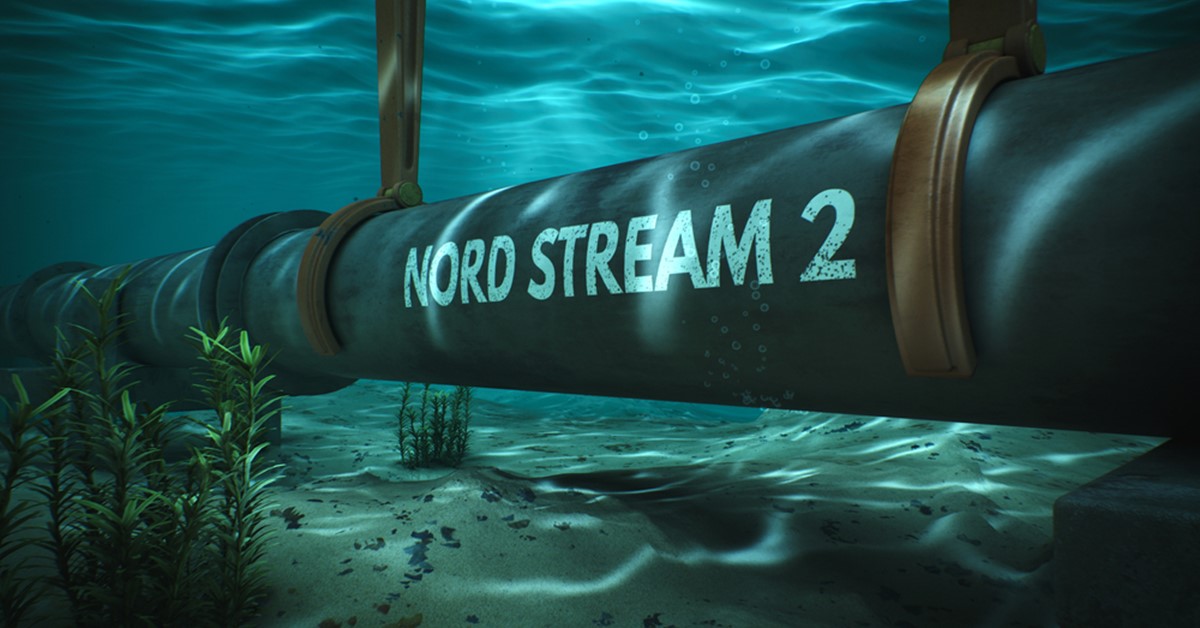
Perhaps most important, Germany announced Feb. 22 that it was stopping authorization of the newly completed Nord Stream 2 gas pipeline that was set to significantly increase the flow of fuel from Russia to the European Union. 

Cutting off this relationship – forcing Europe to buy oil and gas products from U.S.-owned and -controlled sources, directing the profits into U.S. banks – was a major goal of Washingon’s anti-Russia campaign. On cue, oil and gas prices jumped to near-record levels, with oil close to $100 a barrel on Feb. 23.

Of all the NATO imperialists, Germany had most dragged its feet in supporting the U.S. war drive. But it’s important to recall that Germany, though the strongest economic power in Europe, is also militarily occupied by the Pentagon, with a whopping 119 U.S. military bases, second only to another imperialist frenemy, Japan with 120.

Real significance of recognition

Russia’s recognition of the Donetsk and Lugansk republics was greeted with great enthusiasm by Donbass residents, who have lived under eight years of Ukrainian war and sanctions, at the cost of more than 14,000 lives. It was an important, if belated, acknowledgement of their democratic decision in the referendum of May 11, 2014 and the sacrifices they have made to fend off NATO/neo-Nazi encroachment.

They understand, as do the Ukrainian fascists that seek to “cleanse” the Donbass region, that further aggression by Kiev now means a military confrontation with Russia. Ukraine’s President Volodymyr Zelensky fears this, but as a willing tool of Washington has no power to resist.

At the same time, Russia had little choice but to take this step, which was forced upon it by Washington. For eight years, since the 2014 U.S.-backed coup in Kiev, Moscow has parried numerous Western attempts to draw Russian forces into a fight with Ukraine. But it has become apparent that room to maneuver has run out.

Among the Russian people there is massive support for the residents of Donbass. It’s doubtful that the Putin government could have survived the abandonment of Donetsk and Lugansk.

Putin’s televised address combined a clear-eyed assessment of the stakes of the current confrontation for Russia with an analysis of Ukrainian history severely distorted by anti-Sovietism and Russian nationalism. We must honestly acknowledge that this is an impediment to rebuilding solidarity between Russian and Ukrainian workers.

But the true significance of Russia’s decision to recognize the Donetsk and Lugansk People’s Republics goes in another direction. It’s an acknowledgement of the deeply rooted traditions of anti-fascism and internationalism of the multinational Soviet working class, even three decades after the socialist USSR was broken up.

Today as never before, the workers and oppressed of the U.S. and the world must reject the lies of Washington, Wall Street and the corporate media and demand: No war with Russia! Biden, recognize Donetsk and Lugansk! U.S. out of Ukraine!

Strugglelalucha256


Biden gives Big Oil a win, gas prices going up

On Feb. 22, President Joe Biden announced new sanctions on Russia and on the company that built Nord Stream 2 and its German CEO. These sanctions will mean higher gas prices in the U.S. as well as in Europe.

“As I said last week, defending freedom will have costs, for us as well and here at home,” Biden said. “We need to be honest about that.” Biden added that he will take measures to “blunt” gas price increases, “to limit the pain the American people are feeling at the gas pump.” 

Biden said he’s doing this in coordination with the major oil producers, but gave no details, meaning that there’s really no limit planned. It’s a signal of support to Big Oil profits, particularly in the heating gas market in Europe.

An inflation rate in the U.S. at 7.5% — higher prices for gas, food and rent — has been a severe wage cut for all workers here. At the same time, corporate profits have reached a 70-year high. 

“Two dozen of the most profitable oil and gas companies — a group that includes Shell, BP, ExxonMobil and Chevron — recorded $74.9 billion in net income” in the third quarter of 2021, reports Common Dreams. “Big Oil’s soaring profits come as gasoline prices have hit a seven-year high in the U.S. … with Americans now paying about $3.40 for a gallon of fuel compared with around $2.10 a year ago.”

The sanctions on Russia and Nord Stream 2 — the ones that will drive gas prices even higher, with some predicting pump prices going up to $7 a gallon — are driven, in part, by the demands of Big Oil. The sanctions were announced after Russia gave recognition to the Donetsk People’s Republic and the Lugansk People’s Republic in Donbass. 

If the goal of U.S. sanctions was really for peace in Ukraine, why didn’t the Biden administration demand implementation of the 2015 Minsk 2 agreement, which is the policy supported by both France and Germany? Minsk 2 requires Ukraine to negotiate with the two Donbass republics on autonomy, but no serious negotiations have been held.

EU gets gas from Russia

The European Union imports 40% of its gas from Russia. The primary route for gas from Russia is through the Nord Stream 1 pipeline to Germany. Nord Stream 2 was built to provide a more secure and stable pipeline that has at least double the capacity.

Biden really spilled the beans earlier when he indicated that he wanted to block Nord Stream 2, a pipeline built to bring Russian gas under the Baltic Sea directly to Germany.

On Feb. 7, Biden threatened to take control over the German-Russian project that the U.S. has no relation with. From the White House transcript:

[By previous arrangement, the first question went to a Reuters reporter.]

Reuters.  Andra- — Andrea. You’ve got the first question.

Q: Thank you, Mr. President. And thank you, Chancellor Scholz. Mr. President, I have wanted to ask you about this Nord Stream project that you’ve long opposed. You didn’t mention it just now by name, nor did Chancellor Scholz. Did you receive assurances from Chancellor Scholz today that Germany will, in fact, pull the plug on this project if Russia invades Ukraine? And did you discuss what the definition of “invasion” could be?

PRESIDENT BIDEN: The first question first. If Germany — if Russia invades — that means tanks or troops crossing the — the border of Ukraine again — then there will be — we — there will be no longer a Nord Stream 2. We will bring an end to it.

Q: But how will you — how will you do that exactly, since the project and control of the project is within Germany’s control?

PRESIDENT BIDEN: We will — I promise you, we’ll be able to do it.

Blocking Nord Stream 2 has been a goal of Big Oil and therefore of the U.S. government. It was near the top of Donald Trump’s agenda. Despite what reports may say, the record of the Trump administration is a long series of sanctions and hostile actions against Russia, as the Brookings Institution has detailed.

Mostly unknown here, Trump worked overtime to block the Nord Stream 2 pipeline. In 2018, Trump got German Chancellor Angela Merkel to agree to spend $1 billion building a new liquified natural gas (LNG) port to import highly priced U.S. LNG. The plan was canceled after Trump lost the election and Merkel left office.

With the U.S. pushing a NATO expansion to Russia’s borders and supporting a coup government in Ukraine, the Biden administration found another way to block Nord Stream 2. As Under-Secretary of State for Political Affairs Victoria Nuland explained in a State Department press briefing on Jan. 27: “If Russia invades Ukraine one way or another Nord Stream 2 will not move forward.”

On Feb. 22, when Biden announced his sanctions on Russia, Germany announced it was halting the certification process for Nord Stream 2. The Nord Stream 2 project was finished in September, but has stood idle pending certification by Germany and the EU.

Dmitry Medvedev, Russia’s former president and now deputy chairman of its Security Council, tweeted: “Welcome to the new world where Europeans will soon have to pay 2,000 euros per thousand cubic meters!” — suggesting prices were set to double.

Strugglelalucha256


From the U.S. to Honduras – Socialism & Black Liberation

From the U.S. to Honduras – Socialism & Black Liberation

Sunday, February 20, 2022, 5 pm ET, 4 pm CT, 2 pm PT

Exciting guests at this webinar also included Dr. Luther Harry Castillo, featured in the film “Revolutionary Medicine: A Story of the First Garifuna Hospital,” and Dr. Samira Addrey, both graduates of ELAM (Latin American Medical School) in Cuba.

Dr. Castillo is the newly appointed Secretary of Science and Technology of Honduras, and Dr. Addrey is the ELAM coordinator for IFCO Pastors for Peace.

Panelists included: John Parker, Berta Joubert, Hernan Amador.

Webinar participants saw the film “Revolutionary Medicine: A Story of the First Garifuna Hospital.” Award-winning documentary! “A truly moving story of the courage of the Afro-Honduran community and Garifuna Dr. Luther Castillo who graduated from the ELAM medical school in Cuba”

You can see the film viewed at the webinar on YouTube:

It took only eight days for the newly elected administration of Xiomara Castro and the Libre Party to make changes that impact poverty and racism in Honduras. One million people had electricity bills cut, tuition for schools ended, and Afro-Hondurans made gains in hiring by the new government.

Panelists:

John Parker is a founder of the Harriet Tubman Center for Social Justice and the Socialist Unity Party. He was part of an international delegation that attended the inauguration of President Xiomara Castro. Parker will speak on the present, and historic role socialism has played in the liberation of Black/African peoples here in the U.S. and abroad.

Berta Joubert, who lives in Puerto Rico, founded Women in Struggle/Mujeres En Lucha. Joubert is a writer for Struggle-La Lucha. They were also a part of the international delegation at the inauguration of Honduran President Xiomara Castro.

Hernan Amador is a member of the Libre Party of Xiomara Castro, who was part of the delegation. He lives in Costa Rica and will talk about the African ethnicities, including the Garifuna people in Honduras. In addition, Amador will discuss how conditions for Afro-Hondurans have changed since the U.S. supported the 2009 coup that unseated socialist and elected President Manuel Zelaya.

See John Parker’s report at Struggle-La-Lucha.org

Please subscribe to Struggle-La-Lucha.org

Strugglelalucha256


NYC: Mayor Adams, respect LGBTQ+ New Yorkers, Feb. 24

Join us Tomorrow (2/24 12:30PM) at City Hall Park for a Rally Against NYC Mayor Eric Adams’ Appointments of Anti-LGBT and Anti-Choice individuals to New York City Administration. https://t.co/PC9blnm7HF

Strugglelalucha256


A century of lies for war, about Russia

Before the planes can drop the bombs, capitalist newspapers and TV networks have to spread the lies. In 1898, U.S. banksters wanted to grab Puerto Rico, Cuba and the Philippines from Spain.

They used the explosion aboard the battleship USS Maine while it was docked in Havana to do so. Two hundred sixty sailors were killed. From coast-to-coast, newspapers ran headlines proclaiming “Remember the Maine!”

Within 10 weeks Congress declared war on Spain. Not until 1976 did U.S. Rear Admiral Hyman Rickover, as the head of an official inquiry, admit that the explosion was accidental and that Spain wasn’t responsible. Puerto Rico is still a U.S. colony.

In 1964, President Lyndon Johnson claimed Vietnamese PT boats attacked the U.S. naval vessels in the Gulf of Tonkin. This big lie was the excuse to step up bombing of Vietnam and Laos. Millions of people were killed in that dirty war, including 58,000 GIs.

Who can forget George W. Bush’s Big Lie that Iraq had weapons of mass destruction? The hundreds of thousands of Iraqi people whose family members were killed certainly can’t.

Now the target of war propaganda is the Russian Federation. An elected Ukrainian government was overthrown eight years ago with the assistance of fascist gangs. The 2014 coup was greased by $5 billion in U.S. payoffs since 1991.

The CIA was behind the Ukraine coup just as it pulled the strings in overthrowing Chile’s elected President Salvador Allende on Sept. 11, 1973. Communist organizations were outlawed in both Chile and Ukraine.

The Ukrainian regime even banned the singing of the revolutionary anthem “the Internationale,” which was which was written to commemorate the Paris Commune. Over 40 people were murdered when the House of Trade Unions in Odessa was set on fire by neo-Nazis.

This is the “democracy” that President Biden wants us to support. The man in the White House said nothing about 14,000 people being killed in the Donetsk and Lugansk People’s Republics by intense shelling by Ukraine.

The Russian intervention has helped rescue people in Donetsk and Lugansk. It’s aimed to prevent Ukraine from being a NATO base against Russia. Pentagon generals view the Russian Federation as six million square miles to be occupied by the U.S.

Lying in order to invade Russia

It’s not new for capitalist newspapers to lie about Russia. “Documents prove Lenine and Trotzky hired by Germans” was the New York Times’ front-page headline on Sept. 15, 1918.

The sensational article — first of a series — claimed Bolshevik leaders Vladimir Lenin and Leon Trotsky were “German agents” and “the Bolshevist revolution was arranged for by the German Great General Staff.”

According to the Times, the millions of people from dozens of nationalities that rose up in a socialist revolution, was just a conspiracy hatched by the German Kaiser. This is like John Birch Society members who claim the Black Lives Matter movement or the French Revolution are and were the result of conspiracies.

The 1918 Big Lie was based on 70 documents provided by U.S. government agent Edgar Sisson. The problem was the “Sisson Documents,” supposedly originating from different locations, were almost all typed on the same manual typewriter.

It was an obvious fraud that swiftly boomeranged. In the 1950s, retired U.S. Ambassador George Kennan — himself a Cold War architect — pronounced them forgeries.

Yet this fake news was used by President Woodrow Wilson to justify sending troops to occupy Arkhangelsk and Vladivostok in revolutionary Russia. That didn’t stop Seattle dock workers from smashing crates of rifles going to former Czarist Admiral Kolchak, who threw suspected Bolsheviks into the boilers of steam locomotives.

Black Liberation fighters including Claude McKay, Langston Hughes, W.E.B. Du Bois, Claudia Jones and Paul Robeson were inspired by the Bolshevik Revolution.

Less than two months after the “Sisson Documents” were published, German workers and sailors, inspired by the Bolshevik Revolution, overthrew the Kaiser.

Triumph and defeat

The Soviet Union that resulted from the Bolshevik Revolution lifted up people from more than 100 nationalities. They established the world’s first and largest affirmative action programs that fought for equality.

Ukraine is a good example. Between 1915 and 1965, the number of students in Ukraine more than tripled to reach 8.5 million. In the same period the number of college students increased twenty times. (“National Languages in the USSR: Problems and Solutions” by M. I. Isayev.)

These students were taught primarily in Ukrainian. Compare that to the mission schools in the United States and Canada where Indigenous youth were beaten if they spoke their own languages. Many died.

Never forget that 27 million Soviet people, including millions of Ukrainians, died defeating Hitler. It was the Red Army that liberated Auschwitz on Jan. 27, 1945. One of the sheroes was the Ukrainian woman sniper Lyudmila Pavlichenko who killed 309 Nazis. 

Tragically the Soviet Union was overthrown 30 years ago. Like Reconstruction’s bloody overthrow by the Ku Klux Klan, it was a defeat for all poor and working people.

While monuments to Confederate slave masters have been toppled by the Black Lives Matter movement, thousands of statues of revolutionaries and Red Army leaders have been destroyed in Ukraine. Meanwhile statues of the Nazi collaborator Stepan Bandera, whose followers slaughtered thousands of Jewish and Polish people, have been erected.

Eighty-one million people voted against Trump and racism in 2020. They didn’t vote for a war against the Russian Federation.

Our enemies are the landlords who are jacking-up rents by as much as 40%. President Biden isn’t able to defend voting rights but he’s threatening a new dangerous armed conflict with nuclear-armed Russia.

Hands off the Donetsk and Lugansk People’s Republics, and the Russian Federation!

Strugglelalucha256


Plan to build ballpark at the Port of Oakland threatens thousands of union jobs

On Feb. 17, Struggle-La Lucha interviewed Clarence Thomas, a third-generation longshore worker, retired past secretary-treasurer of International Longshore and Warehouse Union (ILWU) Local 10 and author of “Mobilizing in Our Own Name: Million Worker March.” The book is about the struggles of ILWU Local 10, one of the most radical unions in the country and maybe the world. It is an anthology based on articles and interviews, photographs, and posters, with Thomas’ introductory analysis containing vital lessons for today’s labor movement.

Struggle-La Lucha: It’s great to be talking with you as Local 10 and the Oakland teachers, along with other labor and community activists, rally in Oscar Grant Plaza to stop the privatization of Howard Terminal and the closure of eleven Oakland schools.

Clarence Thomas: At present, the City Council of Oakland is voting to certify an Environmental Impact Report presented by John Fisher, owner of the Oakland A’s baseball team, in his quest to gentrify the Port of Oakland with a waterfront ballpark and development at Howard Terminal.

The Port of Oakland is the third busiest port on the West Coast, an economic engine for the entire region of northern California. ILWU Local 10 is the largest labor force at the Port of Oakland. It has a long militant labor history.

SLL: Why is the history of the ILWU Local 10 so important in this struggle? 

CT: In the 1934 San Francisco General Strike, dock workers led by the legendary union leader Harry Bridges won control of the hiring hall and ended discriminatory hiring practices, known as the “shape-up.” During the following years, ILWU Local 10 — with African American leadership — became internationally recognized as one of the most democratic and radical trade unions in the U.S.

SLL: I’ve heard Fisher’s project described as building an “amusement park on top of an assembly line.”

CT: Fisher wants to shut down Howard Terminal and replace it with a 35,000 seat ballpark; including 3,000 skybox condominiums for the wealthy, where you can watch a baseball game from your condo; a 400-room luxury hotel; and 1.8 million square feet of retail and commercial space.

Presently, there is no infrastructure for public traffic at all at the port. Two railroad lines run right in front of the Howard Terminal. One is for Amtrak, the other is for Union Pacific Railroad which at times carry hazardous material.

There are good reasons why ports and other maritime facilities have zoning laws; which says that no matter how beautiful the scenery may be in terms of skylines and waterfront, you can’t build housing on the maritime facilities.

SLL: Who Is John Fisher?

CT: He is a right-wing billionaire, who owns the Oakland A’s, Gap clothing store, and is one of the major U.S. landowners. He is instrumental in many other gentrifying projects.

Fisher happens to be a major player in funding and operating charter schools. He owns KIPP (Knowledge is Power Program) charter schools and has affiliations with Rocketship charter schools. Fisher and his family are very much involved in the implementation of charter schools on the West Coast.

The reason why I’m emphasizing this is because the city of Oakland is in the midst of closing schools in predominantly African American and Brown communities. For the record, along with generations of ­other African American and working-class families, I have been the beneficiary of Oakland Unified School District. If we want to have real working-class democracy and not just bourgeois democracy, we need public schools. If a country does not invest in its youth, it has no future.

When they close public schools, it’s a precursor for charter schools. They are creating an environment where public schools can be converted into condominiums.

My father, Clarence C. Thomas, Sr., and his family were part of the great Black migration from Mississippi to Oakland, California, in 1936. He enrolled in Clawson Elementary School. For more than 20 years, Clawson elementary has been the site of upscale condominiums in Oakland. When I talk about the closure of schools — then the schools being converted into high-cost condominiums — it is based upon fact. 

SLL: I see that Local 10 and the Oakland teachers have joined forces.

CT: There are currently two Oakland teachers at Westlake Middle School — Maurice André San-Chez and Moses Olanrewaju Omolade — who are on a 17-day hunger strike. These teachers are demanding that the state invest money in education and not in closing schools. They say they will end their hunger strike if California Gov. Gavin Newsom, the superintendent of the Oakland Unified School District, and the School Board members, meet with them.

Thus far, Oakland Mayor Libby Schaaf and Newsom have been very dismissive of the teachers’ demands. 

Gov. Newsom wants to fashion himself as some kind of progressive. He had an opportunity to release many political prisoners from California state prisons, based on humanitarian release, because of the impact of the COVID-19 pandemic. He refused to do that. 

We have to be very clear about whose interests the Democratic Party serves, which leads me to bring up the issue of how Democratic politicians claim to be friends of labor. They have been demonstrating that they are anything but.

First of all, I’d like to call attention to two prominent California politicians. One is Rob Bonta, who is currently the Attorney General for the State of California. Bonta played a major role in effectuating legislation that would allow the publicly owned Howard terminal, specifically designated for maritime use, to be used as a site for recreation and luxury housing. In his role as State Assemblyman, Bonta and State Senator Nancy Skinner have been working in collaboration to make Fisher’s gentrification plan possible. 

Fisher is the stingiest baseball owner in Major League Baseball. This is not just hyperbole. During the pandemic last year he refused to pay the Oakland-Alameda County Coliseum Authority the rent on the property where the A’s currently play baseball. He said he had not been able to generate any money because of the pandemic. Yet he’s attempting to acquire some of the largest public space in the city of Oakland. He wants an amusement park for the rich at a thriving working port. 

SLL: Will Oakland benefit in any way from Fisher’s proposal?

CT: No! The city of Oakland, like many major cities, is suffering from a lack of affordable housing. There is a growing population of people who are living on the streets and in parks. John Fisher is asking for a billion dollars from Oakland taxpayers to pay for infrastructure, on-site and off-site, for this development. 

It’s important for people who will be reading this interview to understand how neoliberal policies are driving John Fisher’s efforts at the Port of Oakland. Neoliberalism is generally associated with economic policies including privatization, which is what is taking place at Howard Terminal and the closure of Oakland Public Schools. 

SLL: Are other union leaders supporting Local 10 and the teachers?

CT: Most of the unions represented by the Alameda County Central Labor Council are supporting Fisher’s project. The reason is because of the very large membership of the Building Trades unions. The Building Trades also have a lot of money and they support Democratic politicians. If we are to be very truthful, the Building Trades have a long history of racism and exclusion of people of color in their ranks. They say that the project will generate jobs. Yes, it will. Most of those jobs will be the better paying jobs which will go to the members of the Building Trades. 

What happens after the project is built? What jobs will be available to the working class in the city? Not the kind of jobs that will allow them to be able to rent apartments or buy homes. 

Let me get to some specifics as to what this development would mean to port workers at the Port of Oakland. ILWU Local 10 is the only predominantly African American longshore union on the entire West Coast. Local 10 has a history of social justice, activism, and solidarity with the oppressed and the working class, at home and abroad. 

ILWU Local 10 is one of the few places in the entire United States of America where Black people, specifically Black women and other women of color, can work and make the same amount of money as white men. 

This development would curtail the future not only of ILWU members but also mitigate the capacity for the Port of Oakland in the midst of a pandemic. It is absolutely scandalous. The reason for this interview with you today is to be able to shed some light on it. 

SLL: How did you become a member of ILWU Local 10?

CT: My grandfather migrated from Louisiana and went to work in a shipyard in Oakland in 1943. One year later he became a member of the ILWU. Some 20 years later, in 1963 — the year of the March on Washington — my father became a member of ILWU. In 1965 my great uncle Robert Harmon also became a member of Local 10. After the passing of my father, while an active member of Local 10 in 1985, I became a member of Local 10.

Trent Willis, who just completed his second term as ILWU Local 10 President, is a third-generation longshore worker. His father went to work on the waterfront the same year as my dad. 

Leo Robinson, the rank-and-file leader of ILWU who was responsible for writing the historic resolution calling for the boycott of South Africa’s apartheid cargo — also became a member of Local 10 in 1963. 

I am mentioning this because it is so important to understand what the ILWU meant to people who reside in the Bay Area and the impact that they’ve made, not only in the Bay Area but across the country and around the world. 

Former Oakland mayor and U.S. Congress member Ronald V. Dellums, whose father was a longshore worker, attended Westlake Middle School where the teachers are currently on a hunger strike. Rep. Dellums played a critical role in Congress in advocating for sanctions against apartheid South Africa.

Dellums, Robinson, and I all graduated from Oakland Technical High School. It is not a coincidence that all of our social justice activism was in some way influenced by our fathers’ membership in ILWU Local 10, one of the most democratic and militant rank-and-file unions. 

In conclusion, during the years when there has been turmoil in the fight to end segregation and apartheid in the U.S., those waterfront jobs have meant so much to many in the Bay Area, not only Black people but the entire working class. 

The union jobs allowed dock workers in the community to buy homes, to send their children to college, even though some of those members had no higher education at all. It enabled them to effectuate political change in the Bay Area. When Nelson Mandela was released from prison and did a worldwide tour, he came to Oakland where the longshore workers had refused to unload South African cargo. Mandela spoke to thousands at the Oakland Coliseum where the Oakland A’s currently play baseball.


Strugglelalucha256


NATO expansionism in Europe


“NATO’s enlargement in the last decades has been a great success and has also paved the way for a further enlargement of the EU”: this was reiterated last Saturday at the Munich Security Conference by NATO Secretary General Jens Stoltenberg. In order to fully understand his words, it is necessary to reconstruct this “great success” story in its essential terms.

It begins in the same year – 1999 – in which NATO demolishes Yugoslavia with war and, at the Washington summit, announces that it wants to “conduct crisis response operations, not provided for in Article 5, outside Alliance territory”. Forgetting that it had committed itself to Russia “not to expand even one inch to the East”, NATO began its expansion to the East. It includes the first three countries of the former Warsaw Pact: Poland, Czech Republic and Hungary. Then, in 2004, it extends to seven more: Estonia, Latvia, Lithuania (formerly part of the USSR); Bulgaria, Romania, Slovakia (formerly part of the Warsaw Pact); Slovenia (formerly part of the Yugoslav Federation). In 2009, NATO incorporates Albania (formerly a member of the Warsaw Pact) and Croatia (formerly part of the Yugoslav Federation); in 2017, Montenegro (formerly part of Yugoslavia); in 2020, North Macedonia (formerly part of Yugoslavia) In twenty years, NATO expands from 16 to 30 countries.

In this way, Washington achieves a triple result. It extends the military alliance close to Russia, even inside the territory of the former USSR, and maintains the levers of command: the Supreme Allied Commander in Europe is, “by tradition”, always a US general appointed by the US president and the other key commands also belong to the US. At the same time, Washington ties the Eastern countries not so much to the Alliance, but directly to the US. Romania and Bulgaria, as soon as they entered, immediately made available to the United States the important military bases of Constanta and Burgas on the Black Sea. The third result obtained by Washington with the enlargement of NATO to the East is the strengthening of its influence in Europe. Out of the ten Central-Eastern European countries that joined NATO between 1999 and 2004, seven joined the European Union between 2004 and 2007: the United States superimposed NATO on the EU, which expanded to the East, over Europe.

Today 21 of the 27 countries of the European Union belong to NATO under US command. The North Atlantic Council, the Alliance’s political body, according to NATO rules decides not by majority but always “unanimously and by common accord”, i.e. in agreement with what is decided in Washington. The participation of the major European powers in these decisions (excluding Italy, which obeys by keeping silent) generally takes place through secret negotiations with Washington on give and take. This involves a further weakening of European parliaments, in particular the Italian one, already deprived of real decision-making powers on foreign and military policy.

In this framework, Europe finds itself today in an even more dangerous situation than during the Cold War. Three other countries – Bosnia Herzegovina (formerly part of Yugoslavia), Georgia and Ukraine (formerly part of the USSR) – are candidates to join NATO. Stoltenberg, spokesman for the US before NATO, declares that “we keep the door open and if the Kremlin’s goal is to have less NATO on Russia’s borders, it will only get more NATO.”

In the US-NATO escalation, clearly directed to explode a large-scale war in the heart of Europe, nuclear weapons come into play. In three months, the U.S. begins mass production of the new B61-12 nuclear bombs, which will be deployed under U.S. command in Italy and other European countries, probably also in the East even closer to Russia. In addition to these, the U.S. has in Europe two land bases in Romania and Poland and four warships equipped with the Aegis missile system, capable of launching not only anti-missile missiles but also cruise missiles with nuclear warheads. They are also preparing intermediate-range nuclear missiles to be deployed in Europe against Russia, the invented enemy that can, however, respond destructively if attacked.

To all this is added the economic and social impact of growing military spending. At the meeting of defense ministers, Stoltenberg triumphantly announced that “this is the seventh consecutive year of increased defense spending by European Allies, increased by $270 billion since 2014.” More public money diverted from social spending and productive investment, while European countries have yet to recover from the 2020-21 economic lockdown. Italian military spending has exceeded 70 million euros per day, but it’s not enough. Prime Minister Draghi has already announced “We must provide ourselves with a more significant defense: it is very clear that we will have to spend much more than we have done so far”. Very clear: let’s tighten our belts so that NATO can expand.

Source: Il Manifesto (Italy)

Strugglelalucha256


Las democracias occidentales se han convertido en propagandistas de la guerra y el conflicto

La profecía de Marshall McLuhan de que “el sucesor de la política será la propaganda” se ha cumplido. La propaganda en bruto es ahora la norma en las democracias occidentales, especialmente en Estados Unidos y Gran Bretaña.

En cuestiones de guerra y paz, el engaño ministerial se presenta como noticia. Se censuran los hechos incómodos, se alimentan los demonios. El modelo es la propaganda corporativa, la moneda de la época. En 1964, McLuhan declaró célebremente: “El medio es el mensaje”. Ahora la mentira es el mensaje.

¿Pero es esto nuevo? Hace más de un siglo que Edward Bernays, el padre de la manipulación empresarial, inventó las “relaciones públicas” como fachada para la propaganda de guerra. Lo que es nuevo es la eliminación virtual de la disidencia en la corriente principal.

El gran editor David Bowman, autor de The Captive Press, llamó a esto “una defenestración de todos los que se niegan a seguir una línea y a tragarse lo desagradable y son valientes”. Se refería a los periodistas independientes y a los denunciantes, los inconformistas honestos a los que las organizaciones de medios alguna vez dieron espacio, a menudo con orgullo. Ese espacio ha sido abolido.

La histeria bélica que ha llegado como un maremoto en las últimas semanas y meses es el ejemplo más llamativo. Conocida por su jerga, “dar forma a la narrativa”, la gran parte, si no la mayoría, es pura propaganda.

Los rusos vienen. Rusia es peor que mala. Putin es malvado, “un nazi como Hitler”, salivó el parlamentario laborista Chris Bryant. Ucrania está a punto de ser invadida por Rusia: esta noche, esta semana, la próxima semana. Las fuentes incluyen a un ex propagandista de la CIA que ahora habla por el Departamento de Estado de los Estados Unidos y no ofrece ninguna prueba de sus afirmaciones sobre las acciones rusas porque “viene del Gobierno de los Estados Unidos”.

La regla de la no-evidencia también se aplica en Londres. La ministra de Asuntos Exteriores británica, Liz Truss, que gastó 500.000 libras de dinero público volando a Australia en un avión privado para advertir al Gobierno de Canberra que tanto Rusia como China estaban listos para atacar, no ofreció ninguna prueba. Las cabezas antípodas asintieron; la “narrativa” es indiscutible allí. Una rara excepción, el ex primer ministro Paul Keating, calificó de “demente” el belicismo de Truss.

Truss confundió con ligereza a los países del Báltico y del Mar Negro. En Moscú, le dijo al ministro de Asuntos Exteriores ruso que Gran Bretaña nunca aceptaría la soberanía rusa sobre Rostov y Vorónezh, hasta que se le señaló que esos lugares no formaban parte de Ucrania, sino de Rusia. Lean la prensa rusa sobre la bufonada de esta pretendienta al 10 de Downing Street y retuérzance.

Toda esta farsa, protagonizada recientemente por Boris Johnson en Moscú interpretando una versión payasa de su héroe, Churchill, podría disfrutarse como sátira si no fuera por su abuso deliberado de los hechos y de la comprensión histórica y el peligro real de guerra.

Vladimir Putin se refiere al “genocidio” en la región oriental de Dombás, en Ucrania. Tras el golpe de Estado del 2014 en Ucrania – orquestado por la “persona clave” de Barack Obama en Kiev, Victoria Nuland – el régimen golpista, infestado de neonazis, lanzó una campaña de terror contra el Dombás de habla rusa, que representa un tercio de la población de Ucrania.

Supervisadas por el director de la CIA, John Brennan, en Kiev, las “unidades especiales de seguridad” coordinaron ataques salvajes contra la población de Dombás, que se oponía al golpe. Los vídeos y los informes de testigos presenciales muestran a matones fascistas en autobuses, quemando la sede del sindicato en la ciudad de Odesa, asesinando a 41 personas atrapadas en su interior. La policía se mantiene al margen. Obama felicitó al régimen golpista “debidamente elegido” por su “notable moderación”.

En los medios estadounidenses se minimizó la atrocidad de Odesa, calificándola de “turbia” y de “tragedia” en la que “nacionalistas” (neonazis) atacaron a “separatistas” (personas que recogían firmas para un referéndum sobre una Ucrania federal). El Wall Street Journal de Rupert Murdoch condenó a las víctimas: “Un incendio mortal en Ucrania probablemente provocado por rebeldes, dice el Gobierno”.

El profesor Stephen Cohen, aclamado como la principal autoridad estadounidense en materia de Rusia, escribió:

“La quema hasta la muerte de rusos étnicos y otras personas en Odesa… despertó recuerdos de los escuadrones de exterminio nazis en Ucrania durante la Segunda Guerra Mundial. … [Hoy] los ataques al estilo de las tropas de asalto contra homosexuales, judíos, ancianos de etnia rusa y otros ciudadanos ‘impuros’ se han extendido en toda la Ucrania gobernada por Kiev, junto con las marchas de antorchas que recuerdan a las que acabaron por encender Alemania a finales de l920 y comienzos de los 30…”

“La policía y las autoridades legales oficiales no hacen prácticamente nada para impedir estos actos neofascistas ni para condenarlos. Por el contrario, Kiev los fomenta oficialmente rehabilitando sistemáticamente e incluso conmemorando a los colaboradores ucranianos con los pogromos de exterminio alemanes nazis…, cambiando el nombre de las calles en su honor, construyéndoles monumentos, reescribiendo la historia para glorificarlos, y más…”

Hoy en día, rara vez se habla de la Ucrania neonazi. Que los británicos estén entrenando a la Guardia Nacional ucraniana, que incluye neonazis, no es noticia. (Véase el informe desclasificado de Matt Kennard en Consortium News del 15 de febrero). El regreso del fascismo violento y avalado a la Europa del siglo XXI, para citar a Harold Pinter, “nunca sucedió… ni siquiera mientras estaba sucediendo”.

El 16 de diciembre, las Naciones Unidas presentaron una resolución que pedía “combatir la glorificación del nazismo, el neonazismo y otras prácticas que contribuyen a alimentar las formas contemporáneas de racismo”. Las únicas naciones que votaron en contra fueron Estados Unidos y Ucrania.

Casi todos los rusos saben que fue a través de las llanuras de la “zona fronteriza” de Ucrania que las divisiones de Hitler barrieron desde el oeste en 1941, reforzadas por los cultistas y colaboradores nazis de Ucrania. El resultado fue más de 20 millones de muertos rusos.

Dejando a un lado las maniobras y el cinismo de la geopolítica, sean cuales sean los actores, esta memoria histórica es el motor de las propuestas de seguridad de Rusia, que buscan el respeto y la autoprotección, publicadas en Moscú en la semana en que la ONU votó 130-2 a favor de volver ilegal el nazismo. Estas son:

  • La OTAN garantiza que no desplegará misiles en las naciones fronterizas con Rusia. (Ya están en marcha desde Eslovenia hasta Rumanía, y le seguirá Polonia).
  • La OTAN detendrá los ejercicios militares y navales en las naciones y mares fronterizos con Rusia.
  • Ucrania no se convertirá en miembro de la OTAN.
  • que Occidente y Rusia firmen un pacto de seguridad vinculante entre Oriente y Occidente.
  • que se restablezca el acuerdo histórico entre Estados Unidos y Rusia sobre armas nucleares de alcance intermedio. (Estados Unidos lo abandonó en 2019).

Todo esto viene a ser un borrador integral para un proyecto de plan de paz para toda la Europa de posguerra y debería ser acogido con satisfacción por Occidente. Pero, ¿quién entiende su importancia en Gran Bretaña? Lo que se les dice es que Putin es un paria y una amenaza para la cristiandad.

Los ucranianos de habla rusa, sometidos durante siete años a un bloqueo económico por parte de Kiev, están luchando por su supervivencia. El ejército “en masa” del que rara vez oímos hablar, es el de las 13 brigadas del ejército ucraniano que asedian Dombás: se calcula que son 150.000 soldados. Si atacan, la provocación a Rusia significará, casi con seguridad, la guerra.

En 2015, con la mediación de alemanes y franceses, los presidentes de Rusia, Ucrania, Alemania y Francia se reunieron en Minsk y firmaron un acuerdo de paz provisional. Ucrania aceptó ofrecer autonomía a Dombás, ahora las repúblicas autoproclamadas de Donetsk y Luhansk.

El acuerdo de Minsk nunca ha tenido una oportunidad. En Gran Bretaña la línea, amplificada por Boris Johnson, es que Ucrania está siendo “dictada” por los líderes mundiales. Por su parte, Gran Bretaña está armando a Ucrania y entrenando a su ejército.

Desde la primera Guerra Fría, la OTAN realmente ha marchado hasta la frontera más sensible de Rusia, habiendo demostrado su sangrienta agresión en Yugoslavia, Afganistán, Irak y Libia, e incumpliendo las solemnes promesas de retirarse. Habiendo arrastrado a los “aliados” europeos a guerras estadounidenses que no les conciernen, el gran tópico es que la propia OTAN es la verdadera amenaza para la seguridad europea.

En Gran Bretaña, se desencadena una xenofobia estatal y mediática ante la sola mención de “Rusia”. Obsérvese la hostilidad visceral con la que la BBC informa sobre Rusia. ¿Por qué? ¿Es porque la restauración de la mitología imperial exige, sobre todo, un enemigo permanente? Ciertamente, nos merecemos algo mejor.

Este artículo fue producido para Globetrotter.

John Pilger es un galardonado periodista, cineasta y escritor. Puedes leer su biografía completa en su sitio web, y seguirlo en Twitter: @JohnPilger.

Strugglelalucha256
https://www.struggle-la-lucha.org/2022/02/page/2/