The Haitian people need a true rupture

Wharf Jérémie, one of the poorest quarters of Port-au-Prince and the Western Hemisphere, reveals the inhuman conditions in which Haitians are living. Only a “rupture” with imperialism will allow Haitians to rebuild their nation. Photo: John Wesley Amady/Haiti Liberté

Most of Haiti’s traditional politicians have taken completely erroneous positions on how to deal with the dramatic insecurity problem that now grips the nation. Their solutions all generally revolve around one sinister proposal: to strengthen the police, or even go so far as to build many more prisons.

This political class does not live in the real world. The privileged class position of Haiti’s politicians means that their thinking aligns with imperialism’s ruthless logic, which dismisses the plight of our citizens without any future. Instead of resorting to repressive solutions, which will only make matters worse, we must look at the root of the problem, touch the gaping wound to remove the infection, and ask precisely how we got to this stage of deterioration.

Just as they did in 2003 when working to destabilize the government of President Jean-Bertrand Aristide, certain Haitian politicians and intellectuals (many of whom are the same that we see holding forth today) accused the Lavalas government of creating the chimères, as the mobilized youths of Haiti’s underclass were then called. Today, they have resorted to the same formula, the same charges without foundation, accusing the Jovenel Moïse government of federating the Revolutionary Forces of the G9 Family and Allies, Mess with One, You Mess with All. This slander just hides the real motive forces behind the lumpen-proletariat’s mobilization, which is accelerating, and inflames the situation, fueling the total chaos in which we are now living.

The bourgeois opposition’s demagogic statements, proposals, and actions cannot solve the problem. On the contrary, they make matters worse.

The “American Plan,” as we used to call it in the 1980s when launched under the global right-wing offensive led by Margaret Thatcher and Ronald Reagan, has almost reached its final objective: to completely destroy Haiti’s economy and sovereignty. Washington has patiently orchestrated the monumental failure of our society. However, our political class, subservient to American interests and greedy for its bribes and rewards, has made no effort to recognize or denounce the structural adjustment policy that has brought about Haiti’s complete destabilization today.From 2004 until today, almost two decades later, the Haitian political class has not changed its tactics. It uses the same tools of yesteryear to create confusion and induce the naive into error. They don’t denounce the current capitalist economic and political model, based on Washington’s neoliberal policies, which has slowly destroyed Haiti’s economy. These policies have crushed national production, uprooted the peasantry, driven millions off the land and into crowded slums, where they live in horrendous conditions without jobs, food, services, or hope. Instead of pointing their finger at our main enemy – the capitalist system and its subservient local bourgeoisie – our politicians, human rights groups, and some journalists point to the enemy’s victims – millions of shantytown dwellers and their organizations – as the source of all our problems.

The percentage of unemployed poor and young executives looking for jobs has reached its dizzying zenith, and, as a result, the population is getting poorer every day. Imagine if Aristide had been able to prevent, as he tried, the privatization of the state enterprises, which were then often shut down completely. The state would have been able to hire thousands to make essential oils, cement, and flour, fix telephone lines, or repair electric plants around the country, creating jobs, goods, and services. Today, all these sectors are either smashed or in the hands of foreign corporations or our greedy bourgeoisie, who have no qualms at making millions off the backs of the impoverished.

With half of our population under the age of 25, most Haitians are able and anxious to work, but they can find nothing to do. There has never been a strong state policy to fight for workers’ interests, either in salaries, benefits, unions, or work conditions. Even the timid attempts made under Aristide and Préval were largely beaten back by the U.S. State Department, as we revealed in the secret diplomatic cables which Wikileaks gave Haiti Liberté in 2011.

Imagine if the Haitian state would simply raise taxes and duties on our super-rich bourgeoisie to pay to fix our decrepit roads, unclog our choked, overflowing canals, and provide schools, hospitals, sanitation, housing, and internet for the poor to live decently. Instead, we see scenes like what just happened under the Del Rio bridge in Texas, and similar expressions of our nation’s desperation will happen again somewhere soon.

Our comprador bourgeoisie no longer even engages in import-export. It is all import, with just a trickle going out from the ever-ailing assembly industries. Even there, only the labor comes from and stays in Haiti.

Agricultural production and development have shrunken dramatically. The anti-national bourgeoisie has only sold off entire sections of the economy and national resources to foreign capital, which only envisages destructive, polluting activities like gold-mining.

This somber tableau is the result of our politicians’ allegiance to the “laboratory,” as Aristide used to call it. The traditional political class serves capitalist interests, which are antithetical to workers’ or peasants’ interests and popular democracy. The suited delegations which file into certain embassies are only humiliating ceremonies of allegiance to the principle of imperialist interference against our national sovereignty.

The irony of today’s situation was captured in a Nov. 1 tweet by Luis Moreno, the U.S. chargé d’affaires who orchestrated President Aristide’s kidnapping in 2004.

“Haiti is literally being held hostage by a gang leader,” he wrote, referring to Jimmy “Barbecue” Cherizier. “He has more ‘soldiers,’ better weapons, and controls a large swath of the capital. As distasteful as it is, the resulting humanitarian, security, and emigration crisis will force the International Community’s hand.”

Jimmy Cherizier is accused of holding Haiti “hostage” by the very U.S. officials and Haitian oligarchs, who are, in fact, holding the Haitian people by the throat. Photo: John Wesley Amady/Haiti Liberté

In other words, he is proposing that the U.S. and its vassals will have to invade Haiti for a seventh time to crush Cherizier and his FRG9 in order to resolve a “crisis” that threatens their interests and local allies.

Meanwhile, Washington is not threatened at all by the talk of “rupture” coming from certain sectors of Haiti’s liberal bourgeoisie and petit bourgeoisie.

What transitional “rupture” and “Haitian-led solution” are they talking about if the final decision about Haiti’s destiny rests in the hands of the United States of America? This is nonsense, but the bourgeoisie knowingly maintains the ambiguity of the “rupture,” which serves as a deceptive argument to hide its contempt for the Haitian cause.

We must put an end to this myth, which is very well maintained by capitalism’s supporters. The day that Haiti’s working-class fully understands that foreign capitalist power will not liberate us, but only further impoverish and enslave us, the victory will be near. The struggle for a new Haiti will then go through a true rupture, that of severing all allegiance to imperialism and its institutions. We will rebuild the nation with the force, resources, and genius of our 16 million compatriots, including the diaspora, just as our founding father Jean-Jacques Dessalines had envisaged.

Source: Haiti Liberté

Strugglelalucha256


El gobierno neoliberal de Ecuador anuncia estado de emergencia para imponer la austeridad

El 18 de octubre de 2021, el presidente de Ecuador Guillermo Lasso declaró estado de excepción por 60 días. Esta declaración se tradujo en la suspensión de los derechos constitucionales de ecuatorianos y ecuatorianas y en tropas ​​– fuertemente armadas – inundando las calles del país. El hecho puntual que definió la medida fue el asesinato, el 17 de octubre, de un niño de once años llamado Sebastián Obando. Sebastián estaba en una heladería del barrio del Centenario, en Guayaquil, y cayó muerto durante un tiroteo entre “un ladrón armado y un policía”.

El niño recibió tres impactos: un tiro en el corazón, otro en el brazo derecho y otro en la espalda, según declaró su padre, Tomás Obando. La declaración de estado de emergencia por parte de Lasso se basó la reacción pública ante este asesinato. El presidente dijo que necesitaba suspender los derechos constitucionales del pueblo de Ecuador para enfrentar el dominio de las bandas de narcotraficantes en el país.

El 19 de octubre, el secretario de Estado norteamericano, Antony Blinken llegó a Quito para brindar el apoyo estadounidense a Lasso. Blinken y Lasso se reunieron, reafirmando los estrechos vínculos entre los Estados Unidos y Ecuador. En una rueda de prensa conjunta de Mauricio Montalvo (ministro de Relaciones Internacionales de Ecuador) y el secretario de Estado de EE.UU., este declaró, “en las democracias hay momentos en los que, con circunstancias excepcionales, es necesario tomar medidas para enfrentar emergencias y situaciones urgentes, como las que se viven ahora en Ecuador”.

Lasso, quien fue electo en abril, ha presidido situaciones excepcionales, una tras otra. La economía de Ecuador se tambalea mientras el Gobierno se esfuerza por responder al aumento de la violencia en el país. En septiembre, un motín en la Penitenciaría del Litoral (Guayaquil) terminó con 116 vidas. Antes, en febrero de 2020, una serie de motines coordinados en cuatro cárceles provocó la muerte de 79 reclusos en Ecuador. Tras el incidente de septiembre, Lasso declaró estado de emergencia en las cárceles ecuatorianas. Esto fue el antecedente del estado de emergencia nacional.

Un Problema Estructural, No Una Situación Excepcional

La declaración de Lasso sugiere que hay algo apremiante en Ecuador que requiere medidas. Nela Cedeño, una jóven líder de Revolución Ciudadana, nos dijo que Ecuador se ha mantenido en una crisis de largo aliento. Solo este año, dice, ha habido 1.213 asesinatos, muchos de ellos no relacionados con el tráfico de drogas. “El decreto [de estado de emergencia] no se justifica”, dice Cedeño. Las estadísticas muestran un “incremento de la violencia en el país en los últimos seis años, lo que entendemos como un problema estructural y no una situación excepcional”, agregó Cedeño.

De los – aproximadamente – 18 millones de personas que viven en Ecuador, 5,7 millones viven “en la pobreza”, y de “estos 5,7 millones de personas, unos 2,6 millones” de ecuatorianos y ecuatorianas están viviendo “en la pobreza extrema”, según el Instituto Nacional de Estadísticas y Censos. UNICEF calcula que tres de cada 10 niños y niñas menores de dos años en Ecuador sufren de desnutrición crónica infantil. “El país es el segundo con mayor proporción en América Latina y el Caribe, después de Guatemala”, según UNICEF. La vida cotidiana en Ecuador se ha deteriorado radicalmente desde la implementación de un programa de austeridad impulsado por el Fondo Monetario Internacional bajo la gestión del presidente anterior, Lenín Moreno. El acuerdo de Moreno con el FMI, en marzo de 2019, dio lugar a protestas generalizadas a lo largo del país.

Como parte del acuerdo de Moreno con el FMI, se recortaron los fondos del Gobierno para la atención sanitaria, llegando a despedir a 3.680 trabajadores y trabajadoras de salud. Como resultado de esto, en Guayaquil – la misma ciudad en donde sucedieron los motines carcelarios y fue asesinado Sebastián – las calles se llenaron de cuerpos muertos durante el punto más alto de la pandemia del COVID-19: el sistema de salud estaba desbordado y no tenía recursos para atender la emergencia. Guayaquil fue el “epicentro del brote”, durante abril del 2020 y Ecuador tuvo una de las más altas tasas de COVID-19 en América Latina, como resultado del destrozo del sistema sanitario. Lasso, cuyo partido solo tiene 12 de los 137 escaños de la Asamblea Nacional, quiere profundizar el programa de austeridad de Moreno; este programa incluye recortes de los impuestos para los ricos y la disminución de derechos para los trabajadores y trabajadoras, así como la autorización para que las empresas extranjeras sigan operando en el sector minero ecuatoriano.

La agenda de austeridad de Lasso, nos dijo Cedeño, no resuelve los problemas de la gente. No hay una agenda que enfrente la precarización del empleo, el irrespeto del pago mínimo de sustentación (PMS) para los campesinos y campesinas, el aumento en el costo del combustible, la crisis carcelaria y los niveles de inseguridad y violencia que van en aumento. El Gobierno de Lasso es “políticamente incapaz” de afrontar los problemas reales, por lo que se refugia en la militarización de una crisis social, concluye Cedeño.

Militarización de una Crisis Social

El estado de emergencia de Lasso, dijo Cedeño, no ha calmado a una “ciudadanía aterrorizada y preocupada”. De hecho, se volvió aún más aterrador cuando Lasso despidió a su ministro de Defensa, Fernando Donoso, para reemplazarlo por un General retirado, Luis Hernández. Sacar a los militares a las calles de Ecuador e impulsar leyes que les permite actuar sin escrutinio (y con inmunidad de acción) crea las condiciones para una dictadura militar con una insignificante participación civil en el Gobierno. El decreto de emergencia de Lasso otorga amnistía a las fuerzas de seguridad que, según él, son “injustamente condenadas por su trabajo”.

Desde 2019, los movimientos sociales de Ecuador, incluyendo el movimiento indígena, han tomado con frecuencia las calles para exigir una vía alternativa. Este año, dice Cedeño, “hemos tenido varias paralizaciones y protestas contra la falta de gestión, y contra varias medidas adoptadas por el Gobierno de Lasso. Los protagonistas han sido agricultores, transportistas y maestros. Estos últimos [incluso] se declararon en huelga de hambre”.

El decreto de Lasso llegó, puntualizó Cedeño, justo cuando los movimientos sociales hicieron un llamado a las movilizaciones contra el alza de los combustibles y las propuestas de austeridad de Lasso. “Nos resulta fácil suponer que el estado de excepción [fue] declarado a conveniencia de Lasso”, para proteger sus políticas, “y no por la violencia que azota al país”.

Las protestas contra el decreto de estado de excepción comenzaron el 26 de octubre. Encabezadas por el Frente Unitario de Trabajadores (FUT), la Unión Nacional de Educadores (UNE), la Confederación de Nacionalidades Indígenas de Ecuador (CONAIE) y Revolución Ciudadana, las movilizaciones han tomado fuerza. A pesar de que se encontraron con una fuerte resistencia opresiva de las fuerzas armadas, no desaparecieron. Las carreteras fueron bloqueadas en varias zonas claves de la Sierra y la Amazonia, y protestas masivas se congregaron en frente del Palacio de Carondelet, la sede presidencial de Quito. Después de algunos días de manifestaciones, el 28 de octubre, el presidente de CONAIE, Leonidas Iza, pidió que estas se suspendieran durante la conmemoración del día de los muertos. Iza declaró que las protestas se reanudarán después de las celebraciones.

Este artículo fue producido para Globetrotter.

Vijay Prashad es un historiador, editor y periodista indio. Es miembro de la redacción y corresponsal en jefe de Globetrotter. Es editor en jefe de LeftWord Books y director del Instituto Tricontinental de Investigación Social. También es miembro senior no-residente del Instituto Chongyang de Estudios Financieros de la Universidad Renmin de China. Ha escrito más de 20 libros, entre ellos The Darker Nations y The Poorer Nations. Su último libro es Washington Bullets, con una introducción de Evo Morales Ayma.

Taroa Zúñiga Silva es escritora asociada y coordinadora de medios en español de Globetrotter. Es co-editora, junto con Giordana García Sojo, del libro Venezuela, Vórtice de la Guerra del Siglo XXI (2020). Forma parte del comité coordinador de Argos: Observatorio Internacional de Migraciones y Derechos Humanos. También es parte de Mecha Cooperativa, un proyecto del Ejército Comunicacional de Liberación.

Strugglelalucha256


CUBA IN AFRICA – International Film Premiere & Webinar, Nov. 7

SUNDAY, NOVEMBER 7, 2021 AT 4 PM EST
CUBA IN AFRICA – International Film Premiere & Webinar
Online Event

The dramatic untold story of 420,000 Cubans– soldiers and teachers, doctors and nurses – who GAVE EVERYTHING to end colonial rule and apartheid in Southern Africa.

FEATURING SPEAKERS:
Negash Abdurahman, Ethiopian-American filmmaker and educational technology consultant. Founder of RI Systems Inc. His acclaimed, award-winning film Cuba in Africa was years in the making, overcoming many obstacles, to tell the truth (mostly untold in the US) of Cuba’s revolutionary internationalist mission from 1976-1991 that was decisive in winning the sovereignty of Angola, the independence of Namibia, and securing the unraveling and defeat of apartheid South Africa.

Ambassador Lianys Torres Rivera, Cuba’s Ambassador to the United States

Piero Gleijeses, Professor of American Foreign Policy, Johns Hopkins University; Author, Conflicting Missions: Havana, Washington and Africa, 1959–1976 (winner, 2002

Robert Ferrell Prize from the Society for Historians of American Foreign Relations); Visions of Freedom: Havana, Washington, Pretoria, and the Struggle for Southern Africa, 1976–1991.

Isaac Saney, Co-chair & national-spokesperson, Canadian Network on Cuba; Cuba specialist, Dalhousie University, Halifax, Nova Scotia, Canada; Author of the forthcoming Africa’s Children Return! Cuba, Africa and Apartheid’s End

Sponsored by: Organizing Committee, International Conference for the Normalization of US-Cuba Relations (us-cubanormalization.org)
Saving Lives Campaign (savinglivescampaign.org)
New York-New Jersey Cuba Sí Coalition (cubasinynjcoalition.org)
Canadian Network On Cuba (canadiannetworkoncuba.ca)
National Network On Cuba (http://nnoc.info)
Table de concertation et de solidarité Québec – Cuba (https://www.facebook.com/TCSQC)

Strugglelalucha256


Ecuador’s neoliberal government announces state emergency to impose austerity

On October 18, 2021, Ecuador’s President Guillermo Lasso declared a state of emergency for 60 days. This declaration led to the constitutional rights of Ecuadorian nationals being suspended and heavily armed troops flooding the streets in Ecuador. The immediate reason for the declaration was the murder of an 11-year-old boy named Sebastián Obando, who was killed in a crossfire between “an armed robber and a police officer” on October 17 at a cafeteria and ice cream parlor in the Centenario neighborhood in Guayaquil.

The boy, who was shot three times, was shot in the heart, right arm and his back, said his father Tomás Obando. Lasso’s declaration of emergency built on the public outcry relating to this murder. The president said that he needed to suspend the constitutional rights of the people of Ecuador to confront the grip of the drug gangs on the country.

On October 19, U.S. Secretary of State Antony Blinken arrived in Quito to provide U.S. support for Lasso. Blinken met with Lasso, affirming the close ties between the United States and Ecuador. At a press conference held by Ecuador’s Foreign Minister Mauricio Montalvo and the U.S. Secretary of State, Blinken said, “in democracies there are times when, with exceptional circumstances, measures are necessary to deal with urgencies and urgent situations like the one Ecuador is experiencing now.”

Lasso, who was elected in April, has presided over one extraordinary moment after another. The economy of Ecuador splutters as the government struggles to respond to an increase in violent incidents in the country. In September, a prison riot in the Litoral Penitentiary (Guayaquil) resulted in the loss of 116 lives. Earlier, in February 2020, a coordinated series of riots in four prisons led to the death of 79 inmates in Ecuador. Responding to the recent incident in September, Lasso declared a state of emergency inside Ecuador’s prisons, which was a precursor to the national emergency.

Structural problem, not extraordinary moment

Lasso’s decree suggests that there is something pressing taking place in Ecuador that requires action. Nela Cedeño, a youth leader of the Citizen Revolution of Ecuador, told us that Ecuador has been in a long-term crisis. Just this year, she says, there have been 1,213 murders, many of them unrelated to the drug trade. “The decree [state of emergency] is not justified,” Cedeño said. The data shows an “increase in violence in the country over the past six years, which we understand as a structural problem and not an exceptional situation,” Cedeño added.

Out of Ecuador’s approximately 18 million people, 5.7 million live “in poverty,” and out of “these 5.7 million people, about 2.6 million” Ecuadorians are living “in extreme poverty,” according to the National Institute of Statistics and Censuses. UNICEF calculates that three out of every 10 children in Ecuador under the age of two suffer from chronic child malnutrition. “The country is the second with the highest proportion in Latin America and the Caribbean, after Guatemala,” according to UNICEF. Everyday life in Ecuador deteriorated sharply ever since the implementation of an International Monetary Fund-driven austerity program under the previous President Lenín Moreno. Moreno’s agreement with the IMF in March 2019 resulted in widespread protests across the country.

As part of Moreno’s deal with the IMF, he cut government funding for health care, including firing 3,680 health care workers. As a result, in Guayaquil—where the prison riot had taken place and where Sebastián was murdered—dead bodies were left on the streets during the peak of the COVID-19 pandemic because the health care system was underfunded and overwhelmed. Guayaquil was the “epicenter of the outbreak” during April 2020 and Ecuador had one of the highest rates of COVID-19 in Latin America as a result of the broken health care system. Lasso, whose party only has 12 of 137 seats in the National Assembly, wishes to deepen the austerity program of Moreno; this program includes tax cuts for the wealthy and withdrawal of rights for workers as well as the allowance for foreign companies to continue to operate in Ecuador’s mining sector.

Lasso’s austerity agenda, Cedeño told us, does not solve the problems of the people. There is no agenda to tackle the precariousness of employment, the need for a minimum support price for farmers, the need for subsidies for fuel, the exploding social crisis in prisons, and the general problem of violence in society. The Lasso government is “politically incapable” of dealing with the real problems, so it takes refuge in the militarization of a social crisis, Cedeño said.

Militarization of a social crisis

Lasso’s emergency, Cedeño said, has not calmed a “terrified and worried citizenry.” In fact, it was even more frightening when Lasso fired his Defense Minister Fernando Donoso and replaced him with a former general, Luis Hernández. Putting the military on the streets of Ecuador and pushing for laws to allow them to operate without scrutiny (and to give them immunity of action) creates the conditions for a military dictatorship with a civilian fig leaf of a government. Lasso’s emergency decree gave amnesty to the security forces who, he said, are “unjustly condemned for their work.”

Since 2019, Ecuador’s social movements, including the Indigenous movement, have frequently taken to the streets to demand an alternative path. This year, Cedeño said, “we have had several stoppages and protests against the various measures adopted by the government of Lasso. Farmers, teachers, and transportation workers have been in the lead. Teachers [even] went on hunger strike.”

The decree by Lasso came, Cedeño pointed out, just when the people’s movements gave a call for social mobilizations against the rise in fuel prices and Lasso’s austerity proposals. “It is easy for us to assume that the state of exception [was] declared at the convenience of Lasso,” to protect his policies, and “not because of the violence that plagues the country.”

Protests against the emergency decree began on October 26. Led by the United Front of Workers (FUT), the National Union of Educators (UNE), the Confederation of Indigenous Nationalities of Ecuador (CONAIE), and the Citizen Revolution, the protests took off in earnest. While these protests were met with stiff resistance from the armed forces, they did not fade away. Roads were blocked in key areas in the Sierra and the Amazon and mass demonstrations gathered in front of the Carondelet Palace, the seat of the president in Quito. After a few days of protest, on October 28, CONAIE leader Leonidas Iza called for their suspension to honor the Day of the Dead holidays. Iza said that the protests will start-up again after the celebrations.

This article was produced by Globetrotter.

Vijay Prashad is an Indian historian, editor and journalist. He is a writing fellow and chief correspondent at Globetrotter. He is the chief editor of LeftWord Books and the director of Tricontinental: Institute for Social Research. He is a senior non-resident fellow at Chongyang Institute for Financial Studies, Renmin University of China. He has written more than 20 books, including The Darker Nations and The Poorer Nations. His latest book is Washington Bullets, with an introduction by Evo Morales Ayma.

Taroa Zúñiga Silva is a writing fellow and the Spanish media coordinator for Globetrotter. She is the co-editor with Giordana García Sojo of Venezuela, Vórtice de la Guerra del Siglo XXI (2020) and is a member of the Secretaría de Mujeres Inmigrantes en Chile. She also is a member of the Mecha Cooperativa, a project of the Ejército Comunicacional de Liberación.

Strugglelalucha256


12 years after coup, Honduran resistance fights for fair election

Twelve years have passed since the fateful 2009 coup in Honduras by the oligarchy, private companies and the leaders of the Catholic and evangelical churches. How can you forget Cardinal Oscar Andrés Rodríguez supporting the coup and asking the constitutional president of Honduras, Manual Zelaya Rosales, not to return to Honduras, his own country, in which he was democratically elected by the people?

We cannot and should never forget that the coup was supported by the U.S. government, at that time headed by Democratic President Barack Obama and Secretary of State Hillary Clinton.

This crime against humanity is responsible for the deepening of the crisis and social, economic, and political chaos in which Honduras has found itself ever since. It’s a country sunk in misery produced by natural disasters like Hurricanes Eta and Iota, due to climate change and global warming. But also by political disasters, such as the imposition of the narco-dictatorship of the National Party, and by a U.S. government which does not rest in maintaining its failed imperial and neoliberal model in Honduras.

U.S.-controlled dictatorships

We cannot forget that Honduras has always had a colonial relationship with the North American empire. That empire has always seen and treated us as its backyard. 

It is where the Monroe Doctrine of 1823 and the famous Manifest Destiny has been most brutally implemented. Time has borne out the words of our liberation hero Simón Bolívar, who said, “The United States seems destined by Providence to plague America with miseries in the name of freedom.”

And that is precisely what the U.S. has always done in Honduras. At the beginning of the 19th century, it turned our country into a banana enclave and enslaved thousands of Honduran peasants who worked in its banana prisons. In the 1980s, President Ronald Reagan turned Honduras into his military platform, establishing there the pack of contras at the Soto Cano and Palmerola U.S. air bases, to fight against the revolutions in Nicaragua and El Salvador. 

Today, the U.S. Southern Command operates in Palmerola with about 600 military personnel, and across Honduras there are another 12 U.S. military bases. Honduras has always been a geostrategically convenient country for the interests of the U.S. and a zone of exploitation of natural resources, such as mining, for large transnational corporations.

The North American empire has imposed its culture of domination in all spheres of our country — to the point that in Honduras the U.S. Embassy has always been the one in charge. We have never had true independence. 

Besides our unionist hero Francisco Morazán Quesada, President Zelaya has been the only one who in modern times has dared to say, “Enough already!” and to demand respect for our dignity and sovereignty as a people. The result of daring to defend us was that they took him out of his own house at the point of bayonets on the early morning of June 28, 2009.

From that moment on, the Honduran people have risen in resistance and have been victims of the worst repressions, murder, forced displacement, political persecution, exile, and the whims of a brutal, nationalist narco-dictatorship that to this day continues to be fueled by the U.S. government.

However, as a people we have taken very important steps in our struggle for a true liberation from the imperialist and capitalist domination of Washington. In 2012 we turned the resistance movement into our political arm — the Libertad y Refundación (Freedom and Refoundation) or LIBRE Party. Inside and outside Honduras, we are organized and on our two feet in struggle. In the U.S., Latin America and Europe, there is resistance that is also LIBRE. 

Most of the immigrant community, especially the most recent wave, is in opposition. And that is why in this electoral process the community has been the victim of one of the worst violations of its constitutional rights. 

The narco-dictatorship of the National Party, through its Foreign Ministry, decided to leave us out of the new census that has been taken in Honduras and that issues the new National Identity Document (DNI) necessary to vote. Therefore most Hondurans abroad will not be able to vote. 

Of the 300,000 Hondurans that we had to register, we were able to register only 14,000, since the Ministry of Foreign Affairs removed the Census Kits after a week, arguing technical failures — something absurd. This is an abuse of our rights. 

And that is why the D19-LIBRE in the U.S. has filed a legal suit before the Supreme Court of Justice in Honduras against the Honduran Foreign Ministry. It’s a milestone in the history of the Honduran community against an institution of the Honduran state, for which we are awaiting a response. They will never shut us up or shut us down.

Stolen elections

 As the LIBRE opposition, we have already participated in two elections that we have won (in 2013 and 2017), but with gringo intervention and the murderous repression of the narco-dictatorship, they robbed us of our victory by the force of bullets.

Terrible misfortunes have been perpetrated by the narco-nationalist puppets of the gringos in Honduras. One of the worst and most recent is the sale of our territory for the realization of the Employment and Development Zones, better known as ZEDES. These are large areas of our territory that are being handed to transnationals to build cities where Hondurans will not be able to live, since they will have their own governments and legal systems outside the Honduran state.

That is why the change of path in Honduras at this time is urgent and crucial. If we do not turn the political situation around and remove the narco-nationalists from power in the next elections of Nov. 28, we are condemned to lose the Honduras we know today to strangers. Honduras will no longer belong to us.

But we have an alternative: the LIBRE Party and our candidate Xiomara Castro, now in a pact of unity with the Partido Salvador de Honduras (PSH) and Pinu. Xiomara Castro is the only candidate with a true government plan that she publicly presented to the people. It is a government plan with a social and humanistic approach. 

It is a plan designed for the needs of the people and above all for the most unprotected and historically forgotten, which will begin to attend to them in the first hundred days of government, with education, health, housing, family reunification, food security and social security among many other programs that are non-existent at this time. 

For the first time, attention will be given to science, the arts and sports, to the protection of our cultural heritage, and other issues that are fundamental for the development of a dignified and healthy society.

As Honduran people, we are at a crucial moment in our history. This is a unique opportunity to change the order of things. It’s now or never. It is with Xiomara that we are going to achieve it. 

Don’t be fooled or sell your conscience. From here, in the D19 Department [North America], we ask that our family, friends and colleagues vote not only for yourselves, but also for us. We were practically left out of the process since only a few of us managed to enter the new census. But we understand that the outcome of the elections will be defined in Honduras. Behind the curtain and at the poll you have the power to change the Honduras that they have imposed on us for one that we deserve. 

We need the vote to be massive so that there is not the slightest possibility that they will carry out fraud again. We need to protect the polls and not allow ourselves to be provoked or extorted by those who want to buy our votes. Remember that dignity is priceless, but it is worth a lot.

To the U.S. government and its embassy in Honduras, we say: If you do not want to continue facing the massive exodus of displaced people from your failed imperial and neoliberal policies, leave the Honduran people alone. Let us take charge of our present and future, let us elect the leaders we want, and stop imposing on us sellout puppets to do your errands and dirty work for you. 

U.S. hands off Honduras! Out with the narco-dictatorship! Xiomara president!

Pagoada-Quesada is a teacher and electoral campaign commission coordinator for Xiomara Castro in D19: U.S.

Strugglelalucha256


Biden targets China: Turning Taiwan into a military outpost

The Guardian reports that U.S. Secretary of State Antony Blinken threatened a U.S. military buildup in Taiwan in a “side meeting” at the G20 summit in Rome on Oct. 31. 

The Guardian added that Blinken’s threat “came a week after Biden said the U.S. may support Taiwan’s independence militarily and Blinken called for Taiwan to be recognized within U.N. institutions.”

On Oct. 7, the Wall Street Journal reported that about two dozen U.S. special operations and support troops were “secretly operating in Taiwan to train military forces there for at least a year.” 

The U.S. government officially recognizes that Taiwan is a province of China, not a separate nation. By a 1979 agreement, the U.S. promised to remove all military personnel from Taiwan. 

Therefore, what the Biden administration is now doing — secretly sending military forces into the Chinese province — is in violation of both U.S. and international law.

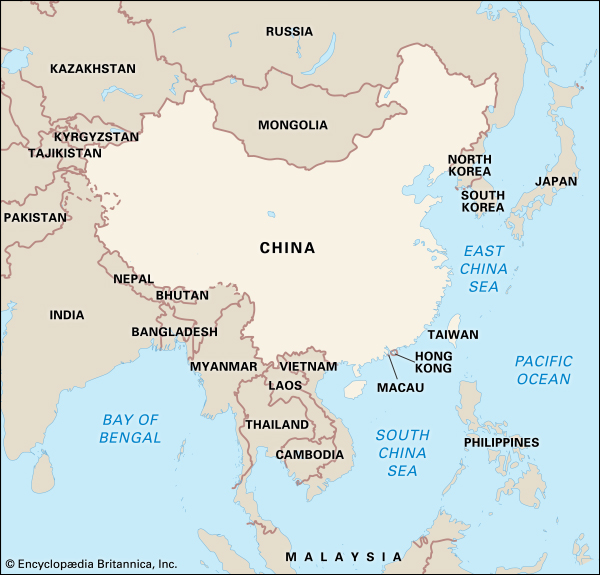
The Chinese province of Taiwan, once a colony of Japan, now calls itself the Republic of China. The U.S. government decided to designate Taiwan as the government of all China after Mao Zedong proclaimed the People’s Republic of China on Oct. 1, 1949. Taiwan was never the capital of China, but it has been part of China for millennia.

To the people of China, Blinken probably sounds like a reminder of the European and Japanese colonialists of the 19th century who had seized Taiwan and other parts of China and used military force to “protect” their possessions.

Century of colonialism

In China it’s known as the “century of humiliation”: the years of dismemberment and subjugation by the European and Japanese imperialists from 1839 to 1949. 

The First Opium War began in 1839. Britain grew opium in India and sold it in China, using the profits to purchase Chinese goods, including porcelain, silk and tea. When the Qing government in China tried to stop the importation of opium, Britain launched the “Opium War” to keep the drug flowing into China.

In the century of colonialism, China was fractured, with Outer Manchuria, parts of Northwest China and Sakhalin seized by Tsarist Russia; Jiaozhou Bay by Germany; Hong Kong and Tibet by Britain; Macau by Portugal; Zhanjiang by France; and Taiwan by Japan. 

Japan was a relative latecomer to the imperialist club. Taiwan was its first colony. Japanese rule of Taiwan lasted from 1895 to the end of World War II in August 1945.

At the end of the war in 1945, the U.S. military, led by General Douglas MacArthur, occupied Japan and took charge of Japan’s colonies, particularly Korea and Taiwan. The U.S. military forces put Taiwan under the administrative control of the Kuomintang-led Republic of China, with Chiang Kai-Shek at the head. This was a confirmation that Taiwan was a part of China.

Retrocession Day is the name given to the annual observance and former public holiday in Taiwan to commemorate the end of Japanese rule of Taiwan, and the retrocession (“return”) of Taiwan to the Republic of China on October 25, 1945.

From the end of World War II in 1945 to 1949, a war of liberation was fought by the People’s Liberation Army and the Communist Party of China, which led to the founding of the People’s Republic of China. In 1949, Chiang Kai-Shek and the Kuomintang army fled to Taiwan under U.S. military protection.

The U.S. strongly supported the Kuomintang forces against the Chinese Revolution. The Kuomintang received $4.43 billion from the U.S., most of it military aid, according to William Blum in his book “Killing Hope.”

In June 1950, when the U.S. launched its war on Korea, the U.S. government also sent the Seventh Fleet into the Taiwan Strait with the Chinese mainland as its target. At the time, MacArthur wanted to use nuclear weapons against China — in an interview he said he would have dropped “30 or so atomic bombs.” MacArthur also wanted to use Chiang Kai-Shek’s forces in Taiwan to invade the mainland.

In 1949, Chiang Kai-Shek and the Kuomintang had declared martial law in Taiwan, imposing a brutal military regime that wasn’t lifted until 1987. During these decades of martial law, some 140,000 Taiwanese were arrested, tortured and imprisoned, according to a 2008 report by the Executive Yuan (government) of Taiwan. Some 4,000 people were executed.

Secret U.S. military operations

In the early 1950s, a secret group of U.S. military “advisers,” led by retired Adm. Charles M. Cooke, former commander of the Seventh Fleet, launched covert military operations in Taiwan to prop up the unpopular and weak Kuomintang regime.

The struggle over Taiwan has continued to this day.

After the victory of the Chinese Revolution and the formation of the People’s Republic of China, Washington proclaimed the military dictatorship in Taiwan to be the “Republic of China” and the government of all China. The Taiwan military regime was even given China’s seat in the imperialist-dominated United Nations!

The U.S. didn’t change this policy until 1972, when it was losing the Vietnam War.

In the 1972 Shanghai Communiqué, the U.S. agreed “that all Chinese on either side of the Taiwan Strait maintain there is but one China and that Taiwan is a part of China. The United States Government does not challenge that position. It reaffirms its interest in a peaceful settlement of the Taiwan question by the Chinese themselves.”

This was followed by the Normalization Communiqué of 1979, with the U.S. formally ending recognition of the “Republic of China” and agreeing to withdraw all U.S. military personnel from Taiwan. 

However, the U.S. never stopped arms sales to Taiwan. These arms sales are supposed to be public and of a “defensive nature” only. The list of U.S. arms sales is publicly available on the Federal Register. Secret arms sales or operations are forbidden, which is what makes the Biden administration’s secret deployment of military special operations trainers a clear escalation of hostilities.  

Following the 1979 communiqué, U.S. arms sales to Taiwan have increased every year. In 2020, the Pentagon announced more than $1.8 billion in arms to Taiwan, including 135 precision-guided cruise missiles and rocket launchers.

Separatists vs. Indigenous Taiwanese

Following the end of martial law in 1987, a new political party emerged in Taiwan to challenge the Kuomintang. The Democratic Progressive Party (DPP) is a Taiwanese nationalist party and currently controls the presidency and the Legislative Yuan. The Kuomintang remains as the second major party in Taiwan.

While the Kuomintang agrees there is only one China and opposes Taiwanese “independence,” the DPP claims Taiwan to be a separate nation. The Kuomintang is based on the mainland Chinese population that came with Chiang Kai-Shek’s military occupation force; the DPP is led by the Chinese who had preceded them.

Over 95% of Taiwan’s population of 23.4 million consists of Han Chinese, whose traditional ancestral homes are in the southern part of Fujian, China.  

The Indigenous peoples in Taiwan are Austronesian Taiwanese, who make up 2.3% of the total population. The DPP does not represent the Indigenous population and, in fact, is considered to be hostile to the Indigenous Taiwanese. 

In 2016, during a legislative committee meeting, a DPP legislator used a racist, anti-Indigenous slur in responding to a request made by Indigenous legislators who opposed a move to lift a ban on Japanese food imports from the prefectures surrounding the Fukushima nuclear power plant.

The DPP’s secessionist claim is getting support in the U.S., with Washington stepping up military and diplomatic support for the island’s government. This is part of the new Cold War the U.S. is waging against China.

The U.S. has expanded its naval operations in the South China Sea and Strait of Taiwan. The increasing frequency of the exercises by aircraft carrier strike groups is extremely provocative. 

The recent sale of nuclear submarines to Australia as part of the formation of the AUKUS bloc was another aggressive move. AUKUS is an alliance between Australia, Britain and the United States that is clearly aimed at confrontation with China.

The reunification of China after the “century of humiliation” has always been seen as an essential part of building socialist China. The Chinese constitution states: “Taiwan is part of the sacred territory of the People’s Republic of China. It is the lofty duty of the entire Chinese people, including our compatriots in Taiwan, to accomplish the great task of reunifying the motherland.”

Without warfare or any kind of military incursion, China carried out the reunification of Hong Kong and Macau using an approach called “One Country, Two Systems.” Something like this was expected to happen with Taiwan, leading to a gradual reintegration. The Communist Party of China has always stressed its desire to achieve a peaceful reunification with Taiwan.

Strugglelalucha256


Cuba Friendshipment Caravan Send-Off, Nov. 5

Cuba Friendshipment Caravan Send-Off

Friday, November 5 – 7:30 p.m. Eastern

Online and at The People’s Forum, 320 W. 37 St., Manhattan

Hosted by IFCO/Pastors for Peace

Our caravanistas are headed to Cuba on Nov. 15 for the first time in two years! Join us as we unite in national support of the 31st Friendshipment. In person for NYC Metro and virtual throughout the country.

Register today at this link:

https://us02web.zoom.us/meeting/register/tZctcu-qrjwvEtOu8f6wRWWG4__xw3T66s2V?_x_zm_rtaid=8Um4MWv3SMaWBh8_rFiPPA.1635434584713.65974f2f1bef72e056dffed3ad01f63d&_x_zm_rhtaid=940&fbclid=IwAR0qzWWsb3EEO5PPz_9s94cFLW3Y848OQ-yknCo_GgXGQGxwI8byk8nCiPY

Strugglelalucha256


Climate crisis: Who’s pulling strings of budget negotiations?

The consequences of a century’s worth of industrial capitalist destruction of the atmosphere continued lashing out at the earth in late October. A “bomb cyclone” attacked the U.S. West Coast, while a nor’easter slammed the Northeast. 

The damaging weather from the west then sped clear across the country after causing floods and mudslides. Tornadoes and thunderstorms rocked the region known as Tornado Alley, from South Dakota all the way south to Texas. 

On the East Coast, from as far south as North Carolina and all the way north, thunderstorms with winds clocked in between 60 and 100 miles per hour. In New England, a storm surge of three to four feet knocked out power to well over 500,000 people. 

The extreme weather of 2021 has surpassed so many previous records. It has been severe and frequent.

The most important international conference on climate change since the Paris Climate Accords were reached in 2015 began in Glasgow, Scotland, on Oct. 31. The White House was counting on getting an assortment of climate change proposals included in a broader spending bill through Congress before Glasgow – to avoid international embarrassment. 

The U.S. is the worst per capita emitter of greenhouse gases in the world and hasn’t moved forward in its commitments. Biden has to present a puffed-up picture of progress. Negotiations with a handful of right-wing members of his own party sent Biden and other U.S. representatives to Glasgow empty-handed.

The Build Back Better spending bill was initially proposed with a price tag of $3.5 trillion. Along with a handful of other Democrats, Senator Joe Manchin of West Virginia has beaten that down to $1.75 trillion, and is still pushing for more cuts. 

Manchin himself was already a coal baron before he became a U.S. senator. He’s raked in more than $5 million since then. In April he was made chair of the Senate Energy and Natural Resources Committee in a bipartisan vote. That should be seen as a major conflict of interest, but it doesn’t raise any eyebrows in Washington. There’s plenty of that in capitalist government.

Alongside programs that would be key to mitigating climate change, the bill would have boosted crucial social services like paid family leave, student debt relief, child nutrition, an expansion of Medicare and Medicaid, and more. The spat within the Democratic Party has put all of that on the chopping block. 

Manchin, the senator from Big Coal, says he wants the total spending bill cut to just $1.5 trillion.

CEPP on cutting room floor

Also left on the cutting room floor as of this writing is the Climate Energy Performance Program (CEPP.) That proposal would have paid power generators incrementally to switch to wind, solar, hydro or nuclear power instead of coal or diesel. It would have imposed penalties for non-compliance. 

CEPP was the flagship among the climate change proposals included in the spending bill, and the Biden administration was counting on it to happen before Glasgow.

The overall bill is framed in the media as grand and ambitious, but it doesn’t live up to the urgency of the climate crisis. None of these climate change proposals go after the profits of the giant U.S. banks or energy industry. The CEPP came the closest — and that was too close for comfort from the point of view of Big Capital. Manchin is their attack dog.

The congressional group aligned against the bill used phony concern over deficit spending – a favorite of the right-wing — as a cover story. It’s really the profits of giant corporations that they’re defending. 

The money is there. Much of it is locked away in the bloated military budget with near-unanimous bipartisan support. U.S. military spending over the same 10-year period projected in the Build Back Better spending bill will add up to at least $800 trillion — and that’s a conservative guess, because there will be increases. 

But Pentagon spending is considered untouchable, as are the trillions of dollars in the coffers of the tiny handful of corporate owners that dominate the world. 

Their wealth far outstrips that of the rest of the population of the planet. The White House could have pushed harder to get the banks and corporations to pay for the entire spending bill. If they were looking for an easy target, Trump’s tax break gift of $2 trillion to the capitalist class was staring them right in the face. 

If you add that to the $2.1 trillion that parasitic corporations like Amazon, Walmart and others stole since the COVID-19 pandemic began, the total is far more than the original amount of the spending bill.

The real negotiations

Biden didn’t have to cave in to Manchin and his hit squad. But the real center of power that the White House is negotiating with is the collection of giant banks, energy companies and other corporations – the capitalist class. 

Big banks and oil companies put on an act that they are investing in “going green.” But a study called Banking on Climate Chaos reported that seven U.S. banks have invested about $1.3 trillion in fossil fuels in the six years since the Paris Climate conference. 

JPMorgan Chase was out front with $268 billion; Wells Fargo, Bank of America and Citibank are close behind. They’re at the top of the list globally. Their investments were in some of the biggest U.S. oil and gas corporations. 

The U.S fossil fuel industry has not budged an inch in the interest of saving the planet, and the Democratic Party has done nothing about it.

The White House may try to put a good face on it, but the U.S. is lagging way behind the 2015 Paris goals to keep the rise in the earth’s temperature below 2 degrees Celsius by 2030 or reach net zero carbon emissions by mid-century. The Glasgow conference is meant to strengthen those goals. 

Further, the catastrophic weather events of 2021 have the world’s climatologists studying the question of whether that timeline is adequate.

In mid-October, 655 people were arrested during “People vs. Fossil Fuels” protests in Washington, D.C. Youth blockaded a road while Indigenous leaders — the initiators of the protests — sat in at the Bureau of Indian Affairs and the U.S. Chamber of Commerce, demanding that Biden call a climate emergency. 

These brave activists have the right idea. Big Oil can’t be negotiated away. 

The people’s movement that is needed has to be more than independent – it has to be revolutionary. To save the planet, capitalism must die.

Strugglelalucha256


Nicaragua stands up to U.S. election interference

On Sunday, Nov. 7, voters in Nicaragua will go to the polls in elections for president, vice president and National Assembly representatives. According to polls, they are likely to hand a convincing victory to incumbent President Daniel Ortega and the Sandinista party. Wall Street, Washington and reactionary forces throughout Latin America are not happy about it.

Reports in mainstream U.S. media present as fact that the upcoming elections will be “fraudulent” and denounce “dictator” Ortega’s administration for detaining opposition leaders and businesspeople. 

Left out is the fact that those who’ve been arrested, detained or disqualified from the elections have been exposed for participating in the violent 2018 anti-government protest movement and collaborating with Western governments and NGOs to halt the country’s progressive social reforms.

Rarely mentioned is that seven political parties, including pro-U.S. opposition parties, are on the ballot.

“It is every country’s right to defend its peace and sovereignty. That is what we will do, in accordance with the United Nations Charter. The Nicaraguan people are the only ones responsible to resolve their problems,” President Ortega declared Oct. 26.

The Nicaraguan Ministry of Foreign Affairs has condemned U.S. Ambassador Kevin Sullivan. A Donald Trump appointee kept in his position by Joe Biden, Sullivan continues a long and inglorious tradition of U.S. diplomatic personnel coordinating counterrevolutionary plots and scheming with the CIA against the peoples of Latin America.

“We demand that Mr. Sullivan cease his covert attacks, his hypocritical salutations, disguised as a diplomatic courtesy that he abandoned long ago, and that rather has been, and is, an example of the continuous, perverse, detestable, invasive interference of the U.S. in our Nicaragua, so many abusive and criminal interventions that we have denounced and will continue to denounce,” according to the ministry’s Oct. 11 statement.

A delegation from the U.S., led by the Nicaragua Network/Alliance for Global Justice, visited the country from Oct. 3-10 to observe election preparations firsthand and investigate Nicaragua’s progress in the fight against COVID-19. The delegation met with numerous government officials and leaders of the National Assembly. They also traveled to cities and towns throughout the country to see Nicaragua’s public healthcare system in action.

At the end of the visit, the delegates condemned “the tsunami of false information generated daily by the U.S. State Department and its allies in the national and international media against Nicaragua” and called for “the mobilization of the entire progressive movement in defense of Nicaragua.”

On Oct. 18, the Bolivarian Alliance for the Peoples of Our America – People’s Trade Treaty (ALBA-TCP), an alliance of Latin American and Caribbean countries that seek to be independent of U.S. domination, also condemned the U.S. and Organization of American States for “destabilizing attempts against the legitimate government of the sister Republic of Nicaragua.

“The Alliance welcomes the preparation of the electoral process of the Republic of Nicaragua. Moreover, it reaffirms its support to the Sandinista government, President Daniel Ortega Saavedra, Vice President Rosario Murillo and the Nicaraguan people in their decision to continue defending the sovereignty, peace and notable social, economic and security advances, as well as the national unity achieved.

“The member countries of the Alliance call on the international community to reject [U.S.-directed] intimidations and to defend the sovereignty, the self-determination and the political independence” of Nicaragua. 

Setbacks and advances

The Sandinista political party is the offspring of the Sandinista National Liberation Front (FSLN), an alliance of guerrilla movements which overthrew the U.S. puppet Anastosio Somoza in 1979. The wealthy and brutal Somoza family had ruled the country nonstop since the 1930s. As President Franklin D. Roosevelt (FDR) said in 1939, “Somoza may be a son of a bitch, but he’s our son of a bitch.”

Because of an unrelenting U.S. proxy war throughout the 1980s, coupled with internal differences in the FSLN, the Nicaraguan Revolution was not able to fully overturn the capitalist state and uproot the system of exploitation for profit. Nevertheless, great efforts were made throughout the decade to raise the living standards of the masses, eliminate illiteracy and increase access to housing and healthcare, in the midst of a civil war that killed more than 30,000 people.

(Washington famously funded the so-called “contra war” in part by flooding Black and other oppressed communities in the U.S. with cocaine — serving the additional purpose of accelerating racist mass incarceration of “surplus” workers here at home.)

In 1990, after years of bloody war and as counterrevolutionary developments overwhelmed Nicaragua’s socialist allies in the USSR and Eastern Europe, U.S.-allied Violeta Chamorro was able to capture the presidency. Over the next two decades, Nicaragua’s capitalist class rolled back many of the gains of the revolution.

The Sandinista movement was converted into an opposition political party with an essentially social-democratic program. Nevertheless, its strong popular roots allowed the party to reemerge as a force in the early 2000s with the rise of Chavismo in Venezuela and the subsequent “pink tide” in Latin America. In 2006, Sandinista leader Daniel Ortega was elected president again, and the party has led Nicaragua since.

In 2018, a violent, far-right protest movement, financed and encouraged by the U.S. government, threw the country into chaos. It attempted to topple Nicaragua’s government the same way the right ousted Bolivian leader Evo Morales in 2019. 

Fortunately the Sandinistas were able to weather this storm and begin rebuilding from the attempts to wreck the country’s economy, including U.S. sanctions.

‘Liberal’ media used against Nicaragua

A key role in the information war against Nicaragua is being played by some left/liberal media. These efforts aim to isolate Nicaragua by breaking down solidarity from supporters among Western progressives.

For example, British newspaper The Guardian has recently published articles attacking Nicaragua’s election process. An Oct. 22 piece by Guardian Latin America correspondent Tom Phillips sports the headline, “Nicaraguan business leaders arrested in Ortega’s pre-election crackdown.”

Leading off with the detention of Michael Healey, president of Nicaragua’s business association Cosep, Phillips quotes unnamed opposition activists who called it a “kidnapping” of “a key figure in the unusual alliance between student activists and big business that tried to topple Nicaragua’s strongman president in 2018.” 

The Guardian then goes on to spread the slander, approvingly quoting right-wing newspaper La Prensa’s claim that Nicaragua is experiencing “a level of repression that surpasses even violent and oppressive governments such as Venezuela’s.”

Similarly, The Nation magazine has been drawn into the imperialist propaganda war, publishing a hit piece on Sept. 28 entitled “Why the media no longer cares about Nicaragua” by Eric Alterman. After reviewing the long history of U.S. intervention in Nicaragua, Alterman then stands reality on its head, asserting that the current Sandinista government is somehow the modern version of the U.S. contras, shielded by Washington and media “elites.”

Alterman’s lies were exposed in a letter to the editor of The Nation written by Richard Kohn, a member of Friends Of Latin America, and shared with Struggle-La Lucha:

“The Nation should be embarrassed for publishing such right-wing drivel and CIA propaganda. … Neoliberal governments that let their people starve while shipping their resources north for a pittance are ‘free’ and ‘democratic’ and what we all want. Governments that try to improve the lives of their own people are corrupt Marxist dictatorships. …

“In the 1980s, Stephen Kinzer corresponded for the New York Times, writing some of the most virulently anti-Sandinista lies that were dutifully repeated by most other outlets. The Nation was one of the few outlets that occasionally reminded us that the Sandinistas’ supposed human rights violations were exaggerated, and that they did improve the lives of many Nicaraguan people early after overthrowing the dictator Somoza and before the U.S. sanctions and war had their full impact. They had reduced illiteracy and poverty and built health clinics throughout the countryside, all achievements that were systematically attacked by U.S.-backed terrorists (Contras).

“Ortega returned to power in 2007 and Alterman claims he ‘proved himself not to be a [Bernie] Sanders-style democratic socialist’. That may be true. The Sandinistas built 21 hospitals, hundreds of health clinics, and low-income homes. They supported women’s rights and now Nicaragua is fifth in the world (after the Nordic countries) for gender equity. They did not legalize abortion because most of their population would not support it. They reintroduced free public education to everyone from primary school through university. I don’t recall Senator Sanders accomplishing anything like that. 

“What the Sandinistas didn’t do is arrest people for running for office or speaking out against President Ortega. Some people were arrested for laundering money from the U.S. to promote violent protests, but none of them were candidates for office, although some became candidates after being arrested. The police eventually used force against violent street protests that had killed many bystanders and police officers in 2018. They did not censor the press or kill or torture journalists (that’s the U.S.).”

With the Biden administration continuing to promote anti-people, pro-war policies against Cuba and Venezuela to Colombia and Peru, it is important for workers, anti-war activists and progressive people not to be misled by the deluge of anti-Nicaragua propaganda. 

We must be ready to take to the streets in solidarity with Nicaragua if the U.S. engineers another right-wing attack tied to the upcoming election.

Strugglelalucha256


Stop terrorist ‘no-knock’ police raids!

Louisville, Kentucky, police with a “no-knock” search warrant broke down Breonna Taylor’s door after midnight on March 13, 2020, and started shooting. Six bullets struck the 26-year-old Black woman, killing her. 

There were no Fourth Amendment rights against illegal search and seizure for Breonna Taylor. The police didn’t even search the home of the emergency room technician who helped save lives.

The Fourth Amendment didn’t apply to Alberta Spruill either. The 57-year-old city worker, a member of the Convent Avenue Baptist Church and AFSCME Local 1549, was looking forward to retirement. She liked to walk around her Harlem neighborhood and give candy to children.

Her life meant nothing to the dozen New York City police officers who had a no-knock warrant. At 6:10 am on May 16, 2003, they threw a flash grenade into Spruill’s apartment that stunned her. Two hours later she died of a heart attack

On Nov. 21, 2006, Atlanta police with a no-knock warrant broke down the door of 92-year-old Kathryn Johnson. The cops fired 39 shots, killing the Black senior. Johnson was handcuffed as she lay dying.

Detroit police with a no-knock warrant invaded the home of 7-year-old Aiyana Jones on May 16, 2010. The Black girl was killed by a bullet fired by cop Joseph Weekly using a MP5 submachine gun. 

An A&E network crew accompanied the cops, filming for the network’s police propaganda show, “The First 48.” Killer cop Weekly was a frequent star on cop shows. He was later cleared of all charges in the death of Aiyana Jones.

Jose Guerena was shot 22 times on May 5, 2011―Cinco de Mayo―by a SWAT team with a no-knock warrant in Tucson, Arizona. The 26-year-old father of two children and Marine Corps veteran was killed.

He was sleeping at home after working a 12-hour graveyard shift at ASARCO’s Mission copper mine. Cops prevented medics from aiding Guerena for an hour.

Rockefeller’s police state laws

All these atrocities were war crimes in the war against Black, Latinx and all oppressed people. The killing of Breonna Taylor helped inspire 26 million people to take to the streets to declare “Black Lives Matter!”

No-knock raids are like the bloody U.S. “search and destroy” missions during the Vietnam War. Or the massacre of Lakota people at Wounded Knee.

There’s never been a no-knock raid against the banksters who stole over 7.8 million homes from families through foreclosure proceedings.

It was New York Gov. Nelson Rockefeller who first demanded no-knock raids, which had been illegal. Rockefeller signed these laws that also authorized “stop and frisk” by police on March 3, 1964. Similar laws spread across the U.S.

Rockefeller’s family is Big Oil. It controls ExxonMobil and Chevron. Nelson’s brother David was head of the Chase Manhattan Bank, now JPMorgan Chase, with $3.68 trillion in assets.

Fifty years before Nelson Rockefeller signed the no-knock bills, his family had striking coal miners and their families in Ludlow, Colorado., killed with machine guns on April 20, 1914. Seven years after no-knock, Gov. Rockefeller ordered the Attica prison inmates slaughtered on Sept. 13, 1971.

There was immediate resistance to Rockefeller’s police state legislation. Hundreds of people came to a Harlem rally on March 7, 1964, to protest. Among the speakers was Jesse Gray, who led a rent strike in Harlem. 

Because of the Black Lives Matter movement, 28 states and 20 cities have passed restrictions on no-knock raids since the murder of Breonna Taylor. They should be abolished altogether.

Strugglelalucha256
https://www.struggle-la-lucha.org/2021/11/page/6/