Maryland public-sector workers, forced back into line of fire, fight back

Baltimore Teachers Union car caravan against unsafe school reopenings. Photo: Annette Licitra/BTU

Though there’s no end to the pandemic in sight, including new mutations being confirmed at the University of Maryland College Park campus, Maryland Gov. Larry Hogan ordered public-sector workers back to work

Of course, most public-sector workers, essential or non-essential, did not have the luxury of working from home. Many public-sector workers in Maryland — teachers, custodians, sanitation workers, government employees, to name some — have been in the line of fire since the very first COVID-19 shutdowns. 

For much of that time, they’ve had to work in unsanitary conditions, hostile work environments, and without hazard pay or employer-provided PPE. 

When we fight, we win! A victory for Baltimore City teachers

Governor Hogan originally ordered the reopening of schools for the middle of February. In response, the Baltimore Teachers Union, an affiliate of the American Federation of Teachers-Maryland, held a massive online meeting of over 2,000 participants, followed by a 300-vehicle car caravan. 

On their widely-circulated petition, the union demanded that:

  • City schools staff be fully vaccinated before returning to their facilities (including both doses and waiting period to reach full efficacy);
  • Ventilation upgrade work be completed before any students or staff are brought back into their facilities;
  • Minimum public health metrics be met for at least a week (positivity rate and case rate) before expanding in-person programming;
  • A robust, reliable and proactive testing program for staff and students, both symptomatic and asymptomatic, before expanding in-person programming.

“It’s been a team effort as we continue to work for a safe reopening plan,” said Diana Desierto, a speech pathologist for Baltimore City Public Schools and chair for the BTU’s International Committee. 

“The recent victories led by student group SOMOS pressured Comcast to increase internet speed for certain packages, a 300-plus car rally led by BTU members and parents, as well as students organizing a strike, forced the school district to delay in-person learning by two weeks. 

“We are not finished yet, as we hope that more safety measures are put in place before we all return.”

The union forced the governor’s hand. But this only delayed the schools’ reopening by two weeks.

On March 19, the BTU tweeted a COVID-19 update, indicating a sudden jump in positive cases.

Uniting to fight for protections

Nearly every union in Maryland (including several locals each of the Service Employees International Union, American Federation of State, County and Municipal Employees, and American Federation of Teachers), an impressive number of community organizations, and even some Maryland state agencies formed a coalition called Protect Maryland Workers to push for the passage of the Maryland Essential Workers Act through the Maryland General Assembly. 

This bill would give workers in Maryland the right to refuse unsafe work conditions, a guarantee of employer-provided PPE, $3 per hour hazard pay for essential employees, and universal health and bereavement leave. 

On March 18, the coalition hosted a virtual Remembrance Ceremony with moving testimony from community leaders and public sector employees all over Maryland about the people they lost to COVID-19 and the conditions they faced on the front line. 

At the time of writing, the Maryland Essential Workers Act has been referred to committee in both the Maryland House and Senate. 

Baltimore County Library Employees fight for a union

Almost a year before the initial COVID-19 lockdowns, the Baltimore County Library Employees quietly began working with the International Association of Machinists and Aerospace Workers (IAMAW) to start fighting for a union and collective bargaining. A few members of the Peoples Power Assembly were involved from the beginning. 

“I worked for the Baltimore County Public Library for 10 years, and over that course of time I occupied positions on both the circulation and librarian side of things before I voluntarily left to pursue my education,” said Matt Ross, a BCPL worker at the time the union campaign started. “I think a union will be important for current employees, many of whom I am still very close with, because oftentimes there were changes made to positions by management, without the input of the employees.”

Ross explained: “The most recent change that was really aggravating was how they changed the way a portion of our paid time off accrued, which resulted in a net decrease in time off. It wasn’t necessarily a big portion of time that was lost, but it was the principle of the whole thing. 

“We, the employees, were losing out because of a decision made by the administration. It was part of a continuing trend of this kind of behavior and I think it really needs to change.”

As soon as the first COVID-19 lockdowns began, BCPL employees kicked it into high gear, understanding how important their libraries are to their communities. Now, in the 2020-21 Maryland legislative session, the bill for their right to collective bargaining is on the floor.

The BCPL Board of Directors, despite promising the workers they would do nothing to stand in the way of the collective bargaining bill, launched a union-busting campaign as soon as the bill hit the General Assembly. 

They hired anti-union lobbyists who spread a rumor among Baltimore County parents that “the union would prevent the library from opening.” These parents then took to highly-populated Facebook groups to spread this blatant lie so that others would contact their Maryland representatives and urge them to vote “no” on the collective bargaining bill. 

The Peoples Power Assembly rang the alarm on social media, urging Maryland constituents to contact their representatives to alert them to this union-busting campaign and pressure them to vote “yes” for the BCPL union. 

Ex-BCPL worker Ross added: “Seeing BCPL talk publicly about their employees’ right to collective bargaining, then finding out they had hired a lobbying firm from Washington, D.C., to challenge the bill, was not surprising. They have a pattern of saying one thing and doing another.

“They talk about supporting progress, being anti-racist, being for equality, and how librarians pride themselves on being institutions of democracy. Yet when the employees want a more democratic relationship with their employer, they hire a lobbying firm to fight them in the General Assembly.”

At this time, the collective bargaining bill has been passed by the Baltimore County delegations in both the House and Senate, crossed chambers, and is working through committees. The House and Senate versions must be reconciled and passed before going to the governor.

Organizer Bridget Fitzgerald added: “We’re looking forward to seeing this bill passed, successfully going through the election process, then helping BCPL employees negotiate a contract that protects the best things about their jobs and gives them a voice in improvements.”

Blatant COVID violations by the MTA

A Maryland Transit Administration superintendent forced a worker to come into work despite living with his wife, son and grandson, who all tested positive for COVID-19. When this worker provided a doctor’s note recommending that he stay quarantined for ten days, the superintendent said that he didn’t care — report to work or lose your job.

Another worker, who was in the hospital with COVID-19, struggling to breathe, kept receiving calls from the same superintendent, demanding to know when she would return to work. When she recovered and returned to work, this superintendent retaliated by changing her schedule to the most inconvenient shifts. 

Because some of these instances are in process of either being grieved or pursued in the State Labor Relations Board, specific details cannot be released.

Without revealing too much — in response, the MTA workers are getting organized.

A lesson for workers: Fight, fight, fight!

The recurring theme in these struggles is that the organized fightback is key. It’s also crucial to note that despite decades of union-busting, labor struggles are popping up everywhere. Workers everywhere are recognizing the absolute necessity to get organized and fight for their survival.

Strugglelalucha256


Why Ukraine’s borders are back at the center of geopolitics

On March 11, Ukraine’s Foreign Minister Dmytro Kuleba wrote on Twitter that his government has “approved the Strategy for Deoccupation & Reintegration of Crimea.” What he referred to is a new strategy driven by Ukraine’s President Volodymyr Zelensky to retake Crimea — including the Black Sea port of Sevastopol. Ukraine’s National Security and Defense Council passed Decree no. 117/2021 on March 24 that laid out the government’s decision to contest Russia’s control over Crimea. 

On Twitter, President Zelensky used the hashtag #CrimeaIsUkraine to send a clear signal that he is prepared to escalate conflict with Russia over Crimea. The Ukrainian government set up a Crimean Platform Initiative to coordinate strategy alongside the United States and the North Atlantic Treaty Organization (NATO) to pressure Russia over both Crimea and the conflict in the Donbass region of eastern Ukraine.

Zelensky, an actor, was thrust into politics when he played the role of Ukraine’s president in a television show called “Servant of the People.” Fiction became reality when his television show became a political party, which ran on a decidedly vague platform to bring decency back to politics. He won the presidency in 2019 with 73 percent of the vote. 

There was a general sense that Zelensky’s blank slate, and advocacy for Russian actors in Ukraine, would translate into a peace process for eastern Ukraine and with Russia. Instead, Zelensky — egged on by his NATO allies — has become far more aggressive against Russia than his predecessor Petro Poroshenko.

In March 2014, after Russian troops entered Crimea, the population voted to join Russia; eight days later, the United Nations General Assembly passed a resolution asking Russian troops to withdraw. The stalemate set up by the vote in Crimea and the UN resolution persists.

NATO’s march eastward

Current tensions should not masquerade as ancient animosities. This is the case with the relationship between Ukraine and Russia. For seven decades, both countries were part of the USSR, and for over a decade after 1991, relations between the two countries remained cordial. 

On February 9, 1990, U.S. Secretary of State James Baker told the last leader of the USSR Mikhail Gorbachev that NATO would not move “one inch to the east” from the Oder-Neisse line that divides Germany from Poland. “NATO expansion is unacceptable,” Gorbachev told Baker. Baker agreed: “Not an inch of NATO’s present military jurisdiction will spread in an eastern direction.” In a letter to the German chancellor Helmut Kohl the next day, Baker recounted this conversation, emphasizing the “extension of the zone of NATO would be unacceptable.” “By implication,” Baker wrote, “NATO in its current zone might be acceptable.”

The Western powers broke their commitment immediately. In 1999, the Czech Republic, Hungary and Poland joined NATO, while in 2004, the alliance drew in Bulgaria, Estonia, Latvia, Lithuania, Romania, Slovakia and Slovenia. A line of states that comprise Ukraine, Belarus and Moldova — all of which border Russia — remain outside NATO. 

In 2002, the NATO-Ukraine Action Plan opened up a framework for Ukraine’s possible entry into NATO. This process has raised serious questions not only about the eastward expansion of NATO, but also — more significantly — about the deeper cultural relationship that Ukraine has had with Russia to its east and with Europe to its west; in what direction should Ukraine orient itself? (A fifth of the Ukrainian population is Russian-speaking, with the largest numbers in Ukraine’s urban areas and in the Donbass region.)

NATO has aggressively courted Ukraine and Belarus, with NATO’s various plans deeply focused on putting pressure on Russia. The most recent “NATO 2020” report highlights its strategic focus around Russia, which is seen as “destabilizing” and “provocative.” In the interest of putting pressure on Russia at its border with Ukraine, the NATO-Ukraine Commission met throughout 2020 to advance the NATO-Ukraine Distinctive Partnership (set up in 1997). 

In June 2020, NATO recognized Ukraine as an Enhanced Opportunities Partner, the closest form to full NATO membership. Ukraine’s armed forces, now substantially trained with NATO, joined NATO forces for three major military exercises last year (Saber Junction, Sea Breeze and Combined Resolve).

At a meeting of NATO foreign ministers on March 24, NATO Secretary General Jens Stoltenberg said, “Russia has increased its pattern of repressive behavior at home and aggressive behavior abroad.” To this end, NATO’s approach to Russia will be, Stoltenberg said, “deterrence and defense,” with an “openness to dialogue.” Dialogue seems to have been downgraded between the Western alliance and Russia, with a green light to Ukraine to make provocative statements and actions.

Europe’s need for Russian gas

Beneath the tension lies Europe’s appetite for energy. As a result of U.S. actions over the past two decades, Europe lost three major sources of energy: Iran, Libya and Russia. Because Ukraine has become a hotspot, Russian energy investors — mainly the state energy firm Gazprom — moved to build a pipeline under the Baltic Sea to connect Russian oil fields with Germany. The two pipeline projects (Nord Stream and Nord Stream 2) began in 2011-2012, before the outbreak of hostilities in eastern Ukraine and before Russia formally took Crimea (both in 2014).

Germany welcomed the pipelines, since these would resume gas delivery to Europe on a regular basis. U.S. President Joe Biden’s administration has sharpened the attack on Nord Stream 2; Biden’s Secretary of State Antony Blinken warned “that any entity involved in the Nord Stream 2 pipeline risks U.S. sanctions and should immediately abandon work on the pipeline.” Poland’s anti-monopoly regulator — UOKiK — has fined Polish subcontractors to the tune of about $7.6 billion for participation in the project. German Chancellor Angela Merkel’s close ally Peter Beyer, who is Germany’s coordinator for transatlantic affairs, called for a suspension of the pipeline.

Nord Stream 2’s Andrei Minin said that his project’s fleet have been targets of “regular provocations on the part of foreign civilian as well as military vessels.” This could only refer to the military exercises that NATO and its allies — including Ukraine — have conducted in the Baltic Sea; Minin directly pointed to Polish aircraft flying low over the project in Danish waters.

Nord Stream 2 is 95 percent complete and is projected to be ready to go by September 2021. Failure of the U.S. to properly return to the Iran deal and the continued crisis in Libya make Nord Stream 2 fundamental to Europe’s energy planning. But Nord Stream 2 is trapped in the attempt by NATO to isolate Russia.

Ukraine’s minority problem

No country is truly culturally homogenous. Ukraine has substantial populations with cultural roots in neighboring states. This applies mainly to the Russian-speaking population, which has close ties to Russia both culturally and politically. One in five Ukrainians speaks Russian, while about one in 10 Ukrainians identify with a range of cultural worlds that emerge from Belarus to Gagauz (a Turkish community from Budjak).

NATO’s pressure against Russia exacerbated and joined with extreme Ukrainian nationalists—including fascists such as the Azov Battalion—to drive an anti-Russian cultural and political movement in the country. Former Ukrainian President Petro Poroshenko, who benefited from Western backing, put forward a language law in 2017 that hampers the teaching of the minority languages in the country’s schools. The target for the law was to de-Russianize the population, but it had an impact on the country’s smaller minorities. For that reason, Bulgaria, Greece, Hungary and Romania filed complaints with the Council of Europe.

Hungary’s Foreign Minister Péter Szijjártó said on Facebook in late 2020 that his government would “stand up for Transcarpathian Hungarians in every international forum.” Ukraine, he said, “not a member of NATO, has launched an attack against a minority group originating from a NATO member country.” The contradictions of Ukraine-NATO’s anti-Russian agenda run afoul of other NATO members for reasons that were not calibrated carefully.

Firing across the Ukraine-Russia border has stepped up, egged on by Biden’s full-throated support of Zelensky’s newly found anti-Russian ambitions. A senior United Nations official at the Department of Political and Peacekeeping Affairs tells me that they want military forces to withdraw from the border. All the main platforms for negotiation — the Normandy Format and the Arria Formula meetings at the U.N. — are in a stalemate. “We need cool heads to prevail,” said the U.N. official. “Anything other than that could lead to a catastrophic war.”

This article was produced by Globetrotter

Vijay Prashad is an Indian historian, editor and journalist. He is a writing fellow and chief correspondent at Globetrotter. He is the chief editor of LeftWord Books and the director of Tricontinental: Institute for Social Research. He is a senior non-resident fellow at Chongyang Institute for Financial Studies, Renmin University of China. He has written more than 20 books, including The Darker Nations and The Poorer Nations. His latest book is Washington Bullets, with an introduction by Evo Morales Ayma.

Strugglelalucha256


Global proposal against the economic blockade

At least twenty countries are formally victims of U.S. “sanctions”. Since 1992, in the United Nations General Assembly, all countries except the U.S. and Israel have voted against the unilateral coercive measures imposed by the United States on Cuba. Despite the evident majority, the U.S. has ignored them. Good wishes, denunciations and calls to lift the blockades have not been enough to prevent these genocidal actions against entire peoples.

To put an end to these interference practices, we must make amends for two serious mistakes we made as humanity in 1944 and 1971. To do so, it is first necessary to know how “sanctions” work. Let’s look at an example.

When food company “X” from, for example, Mexico wants to trade with company “Y” from Venezuela (a sanctioned country), the U.S. government, through the Office of Foreign Assets Control (OFAC) sends a little message and says: “if you sell food to Venezuela, we will freeze all the bank accounts you have in the world financial system. Therefore, if Venezuelan company “Y” pays you for the food, you will not be able to dispose of that money, nor the money already in your accounts. Don’t even bother to transfer it to another bank account because we will block it as well. Oh, and if you put it in the name of another person or company, we will block that one too.”

The U.S. government can block financial resources because it is the owner of the purse strings of all financial transactions made in dollars in the world. Through the Swift (global payment clearing system) the U.S. has the power to decide what financial transactions are made, when and under what conditions. With that power it instills fear, threatens, blackmails, “sanctions” and blockade.

Removing this power from the U.S. is the strategy to be followed to combat criminal blockades, which involves suspending the Bretton Woods Agreement (1944) and the petro-dollar (1971).

In 1944, in the midst of World War II, 44 countries met in Bretton Woods to decide on the new commercial, monetary and financial order that still prevails today. At that time, when Europe was destroyed and ruined by the war, the United States imposed itself, taking advantage of its status as not only the country that produced 50% of the world total with a surplus trade balance, but above all as the world’s largest lender.

They decided that the U.S. dollar would be, the world’s reference currency. In other words, the U.S. was granted the exclusivity and therefore the power that all the world’s currencies should be referenced to the dollar, which in turn was backed by gold. That was the first big mistake. Incidentally, the IMF was created, which granted the largest share, 31.1%, to the U.S. and with it the greatest voting power and control in that organization.

Then, in 1971, mankind committed the second great mistake by silently allowing the United States to unilaterally disassociate itself from gold as the standard for fixing the price of its currency. Nixon announced to the world that from that moment on, the price of the dollar, to which all the world’s currencies would continue to be pegged, would depend on confidence in the U.S. economy. This announcement was accompanied, not by chance, by the creation of the petro-dollar. From that moment on, all the oil bought in the world had to be traded in dollars, and since there was no country that did not buy hydrocarbons, all of them would need the U.S. currency, which would be available in sufficient quantities because it could be issued without the restriction of the amount of gold in the vaults of the U.S. Federal Reserve.

They flooded the planet with dollars and, in order to be able to trade them, they created the SWIFT payment clearing system, also unilaterally granting themselves the monopoly of the world financial market. It was a masterful move on the part of the country of the North.

Today, 80 years after Bretton Woods and half a century after the petro-dollar, the world has turned upside down.

The U.S. has gone from being the world’s largest lender in 1944 to the most indebted country on the planet; it literally owes the whole world, its debt amounts to US$ 25 trillion. The situation worsens for those in the North when their international reserves do not even cover 2% of their foreign debt. In contrast, China tops the list with the largest international reserves, which also covers 153% of its foreign debt. Not to mention that the U.S. has had a negative trade balance for half a century, importing more than exporting. The Chinese have been in surplus for 5 decades. U.S. production no longer represents 50% of the world total, it dropped to 24% while China went from 1% to 16%.

Proposal against the economic blockade

In this context, what should be submitted for debate and decision in the United Nations National Assembly is not only whether countries are for or against the “sanctions” and blockades imposed by the United States. The debate should focus on the democratic construction of a new trade, monetary and financial system.

The questions to be taken to the UN Assembly for consultation should be:

Are you in favor of the U.S. dollar not being the only world reference currency? Are you in favor of there being many world reference currencies and not granting exclusivity, and therefore economic power, to a single country? Are you in favor of countries being able to buy oil and its derivatives in any currency and not exclusively in dollars? Are you in favor of all currencies being considered international reserve assets and not only the dollar, the euro, the pound sterling, the yen or the yuan? Do you agree that countries should be free to trade their goods in any currency? Do you agree that there should be several, many, payment clearing systems in the world and not only SWIFT, including the exchange of goods itself? Do you agree that, within the framework of regional integrations, currencies should be created for exchange in that region that can also be used for transactions with other regions or countries? Do you agree that decisions in the IMF should be democratized and, therefore, that each country should have the right to vote, eliminating the quotas that apply there?

The coalition of countries against the blockade that has recently been formed by Venezuela, China, Russia, Iran, Cuba, among others, should, besides continuing to add nations, besides denouncing the criminal “sanctions” of the U.S., and besides calling for compliance with the UN Charter, include in the agenda of the United Nations Assembly the creation of a new commercial, monetary and financial system that would allow us to move towards a pluripolar, multicentric, truly democratic world in which the sovereignty and self-determination of the peoples would be respected. Thus, in passing, and in the face of the imminent decline of the most genocidal empire that history has ever known, they would give it a little push to finish its fall.

Source: Ultimas Noticias, translation Resumen Latinoamericano – English

Strugglelalucha256


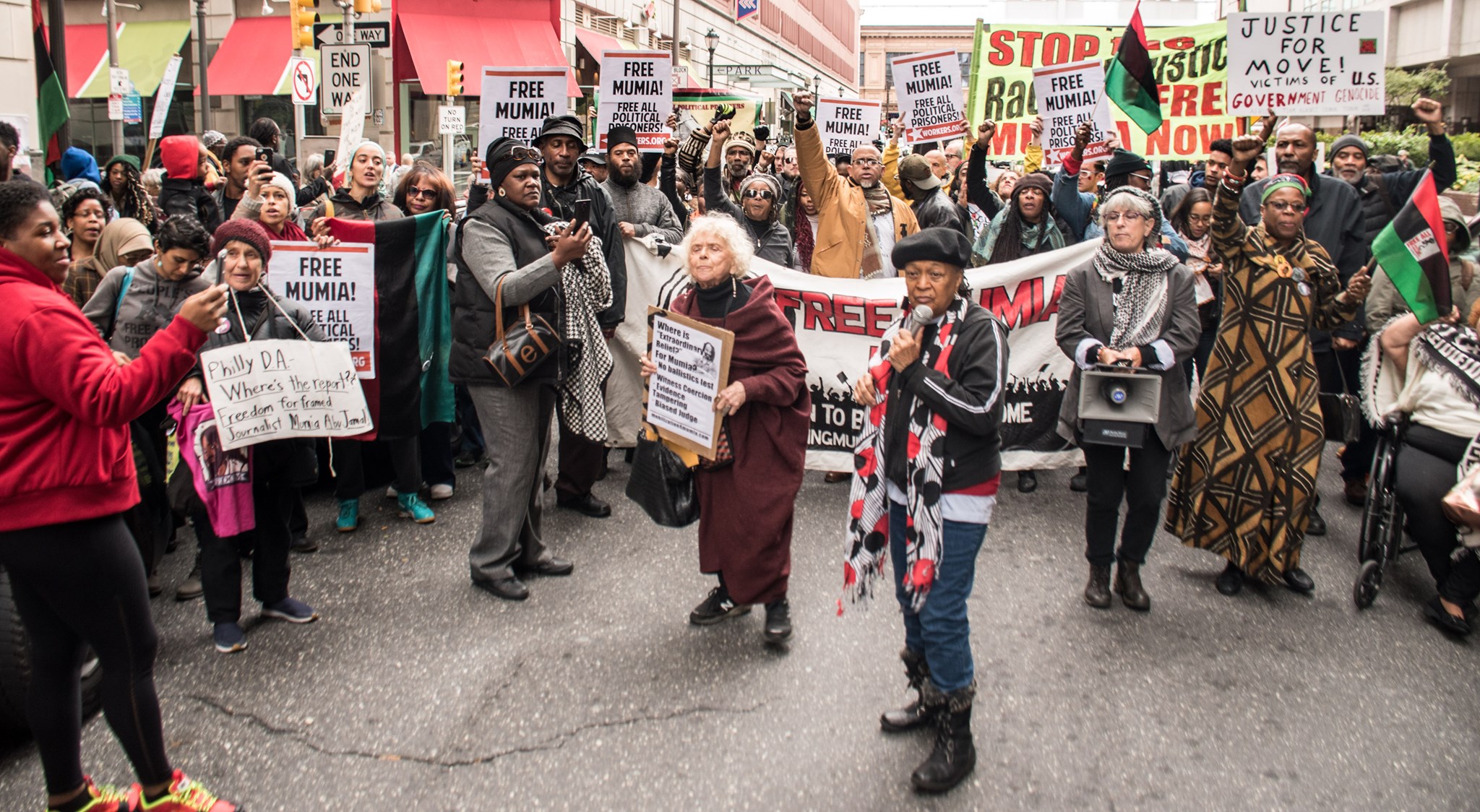
NYC: Organize for April 24th Mumia events

APRIL 24 AT 12 PM EDT – 2 PM EDT
NYC: Organize for April 24th Mumia events
17th Street and Park Avenue, New York

Street demonstration in NYC on April 10th from NOON to 2 PM to mobilize support for the All out for Mumia rally and march on April 24th in Philadelphia.
We will gather at the northeast corner of Union Square (17th Street and Park Avenue) at NOON.
The demonstration will include information about Mumia Abu-Jamal’s current legal appeal, his current medical situation, the current status of other political prisoners, the global movement to free Mumia and all political prisoners, and how you can take action to help.
Tickets for the bus, van, and other modes of transportation to the events in Philadelphia on April 24th will also be available.
Strugglelalucha256


Wall Street Journal lies about Detroit vaccinations

Detroit — The Wall Street Journal proudly admits it is a mouthpiece for capitalism. According to WSJ the private, for-profit sector is the best solution for the problems faced by the earth’s human inhabitants. 

Thus it is no surprise that an April 3 article about Detroit’s COVID-19 vaccination battle would reflect this bias. The article’s subhead asserts: “City’s mostly Black residents largely aren’t using the mass vaccination site at Ford Field, with many finding access difficult.” It lies by telling only part of the story.

The common capitalist view of post-bankruptcy Detroit was that this proud, Black, working-class city had been forced into the dominant privatized capitalist model. Virtually every municipal asset was monetized or privatized to satisfy the banks and bondholders. 

A Feb. 22 Detroit News article quotes Chief Deputy Financial Officer Tanya Stoudemire confirming that “the pension fund is the lone remaining asset creditors could go after.”  

The COVID-19 pandemic unmasked the fallacy of the for-profit private sector panacea, especially in its most dominant ideological center, the United States. The warp-speed vaccine rollout continued the indictment of neoliberal capitalism, as each state competed for resources, every county and town had its own testing, masking, education and vaccination responses to the pandemic, with this chaos resulting in unnecessary deaths and hardships. 

In Baltimore, for example, people wanting the vaccine signed up at multiple registration sites, and showed up at vaccination sites at the end of the day hoping to get a leftover vaccine before it expired and was thrown away.

Instead of explaining what Detroit did correctly, the WSJ article presents the city as yet another poster child for the failure of government; in this case the prominent Democratic Michigan Gov. Gretchen Whitmer. Its reporter only examines the Michigan state vaccination center at Ford Field, home of the Detroit Lions football team, plus an individual pastor, as though that was the full picture. 

This auxiliary regional vaccination center opened just weeks ago, on March 23, but its problems and demographics are used to falsely claim that Detroit’s Black population, hard-hit in the early pandemic, is not being served. In fact, Detroit began drive-through mass vaccinations at the TCF Convention Center on January 14.

Coordinated government response

Looking at history, the current post-bankruptcy Detroit city administration would seem to be free market proponents. Mayor Mike Duggan, the first white, suburban mayor since the 1973 election of the widely revered Coleman A. Young, privatized the Detroit Medical Center — home of Detroit Receiving Hospital, formerly Detroit General. 

Yet when the pandemic ravaged Detroit at the outset, killing Black elected officials, bus drivers and thousands of our loved ones in the first few months, the city administration organized a centralized response. 

First, the administration gave in to a longstanding community campaign opposing shut-offs and demanding affordable water. It restored service to thousands of homes where service was denied for non-payment of unfair bills that were inflated to repay bonds. The city even worked with the Plumbers union to fix failed pipes in some homes. 

Mass, centralized COVID-19 testing was organized. When the vaccine became available, mass vaccination began. 

Weekly televised reports from the mayor, health officials and community representatives addressed new measures to confront the virus and vaccinate Detroiters. The Detroit COVID-19 Vaccine Dashboard provides the numbers and outlines the effort to reach the most vulnerable, the homeless, nursing homes and senior apartments, essential workers, first responders, teachers, Detroit residents and those who work here. 

There are “good neighbor” vaccinations for people who drive eligible seniors to vaccination appointments, and $2 rides for people who need them, including people with disabilities. Senior Saturdays vaccinated 500 people each week at each church designated across the city. 

When the Johnson & Johnson vaccine was finally available, a new site opened at the Northwest Activity Center. All appointments are made through a well-staffed central phone number — not multiple websites. 

Alongside the city’s effort, health plans at Henry Ford Health Systems and Beaumont Hospital also rolled out appointments for their clients, many of them also Detroiters. 

It’s definitely not socialism. Yet Detroit does show that coordinated government response is necessary, even in a capitalist system, to begin to successfully confront the pandemic. It rebuffs the Wall Street Journal’s narrow article.

Detroit and Michigan elected officials are also aware of Cuba and its healthcare achievements, made with few material resources under a U.S. economic war. But they were constrained by the capitalist norms and fell back on them under the pressure of the crisis. Cuba’s life-saving tools that prevented infection and the death of health care workers were not considered. 

National Nurses United just revealed that 3,200 health care workers in the U.S. have died of COVID-19. 

Beginning last May 5, twelve U.S. City Councils and six labor councils, including the Washington State Labor Council, have passed resolutions calling for cooperation with Cuba to end the pandemic and to end the U.S. blockade. These actions by the Saving Lives Campaign — a joint project of the National Network on Cuba and the Canadian Network on Cuba — represent millions of U.S. residents who stand to benefit from Cuba’s excellent medical and pharmaceutical advances. 

International solidarity, not sanctions and blockades, are the key to improving lives right here at home.

Strugglelalucha256


Justice for Vladik! No U.S.-Ukraine war on Donbass and Russia

Stop provocations ⬝ Stop drone strikes on civilians ⬝ Stop killing children!

The right-wing government of Ukraine, supported by the U.S., has been at war with the people of the independent Donetsk and Lugansk republics in the Donbass region of eastern Europe for 7 years. More than 14,000 people have been killed, according to the United Nations. The people of Donetsk and Lugansk live under a blockade by Ukraine and its Western allies. Workers in Ukraine suffer repression, joblessness and price hikes while their government sells off the country to Wall Street.

On April 3, a Ukrainian military drone strike killed 5-year-old Vladik Shikhov and wounded his 66-year-old grandmother in Aleksandrovskoye, Donetsk. On April 4, another Ukrainian drone strike wounded a civilian in Nikolaevka, Lugansk. On March 22, a 71-year-old pensioner was killed by sniper fire near the capital of Donetsk. Many members of the anti-fascist People’s Militia have also been killed while defending residents.

Since January, Ukraine has been building up its military forces on the front line of the conflict. It uses prohibited weapons, targets civilians, schools and homes in violation of international law and regional ceasefire agreements. Battalions of troops affiliated with neo-Nazi groups have been sent to the region, replacing regular Ukrainian Army troops. But the Ukrainian and U.S. governments and mainstream media blame Donetsk and Lugansk for taking steps to defend themselves, and threaten Russia for pledging to protect the people there if Ukraine invades.

The Biden administration, as the Trump administration did before it, wants to stop the Nord Stream 2 pipeline project that would allow Germany and other Western European countries to purchase Russian gas. Children, elders and other civilians in Donetsk and Lugansk are considered expendable targets by Kiev and Washington as they try to provoke a crisis to give them an excuse to further NATO military expansion and punish Russia.

In recent days, the U.S. and NATO have been warning of a Russian military buildup near the Ukrainian border, but never mention that one of the largest U.S. Army-led military exercises in decades has begun and will run until June: Defender Europe 2021, with 28,000 troops from 27 countries operating in a dozen countries from the Balkans to the Black Sea. This is where the real danger of war is coming from.

We say no! People in the U.S. don’t want war with Russia to protect the profits of Big Oil and U.S. banks. We don’t want the U.S. proxy regime in Ukraine to kill our sisters and brothers in Donetsk and Lugansk. We don’t want U.S. troops to be sent to fight and die in another needless conflict. We need an end to racist police brutality and anti-Asian violence. We need money for jobs, housing, healthcare and schools, not war.

End U.S. aid to the Kiev regime! End all U.S. wars and sanctions! Shut down NATO and bring the troops home! 

Initiated by Solidarity with Novorossiya & Antifascist in Ukraine

Endorsers (list in formation):

Individuals: Jose Maria Sison, Chairperson Emeritus of the International League of Peoples’ Struggle*; Phil Wilayto, Coordinator, Odessa Solidarity Campaign; Berta Joubert-Ceci, Coordinator, International Tribunal on U.S. Crimes against Puerto Rico; William Camacaro, Alberto Lovera Bolivarian Circle; Sharon Black, Peoples Power Assembly; John Parker, Harriet Tubman Center for Social Justice, Los Angeles; Joe Lombardo, National Co-Chair, United National Antiwar Coalition (UNAC)*; Professor Vijay Singh, editor, Revolutionary Democracy journal, New Delhi (India); Bridget Dunne, Solidarity with the Anti-Fascist Resistance in Ukraine (UK); Theo Russell, International Ukraine Anti-Fascist Solidarity (UK); Andy Brooks, General Secretary, New Communist Party of Britain; Gedrius Grabauskas, Chairperson, Lithuanian Socialist Front; Donatas Shultsas, Chairperson, Lithuanian Union on Human Rights; Heinrich Bücker, Coop-Anti-War-Café Berlin; Panagiotis Papadomanolakis, Editor, GuernicaEu (Greece); Gerry Downing, Socialist Fight (UK)

Organizations: Anti-Imperialist Front; Socialist Unity Party (U.S.); Struggle-La Lucha newspaper; Borotba (Ukraine-Donbass); Communist Party of the Donetsk People’s Republic; Union of Political Emigrants and Political Prisoners of Ukraine; Women In Struggle-Mujeres En Lucha; Samidoun Palestinian Prisoner Solidarity Network; Workers Voice Socialist Movement (U.S.); International Action Center; No Pasarán Hamburg (Germany); Anti-NATO Group Berlin-Brandenburg (Germany); “Frente Unido América Coordinamento Ucraina Antifascista (Italy); Latina” Berlin (Germany); Communist Revolution Action – KED (Greece); Liaison Committee for the Fourth International (LCFI); Frente Comunista dos Trabalhadores (Brazil); Tendencia Militante Bolchevique (Argentina); Socialist Workers League (U.S.); Trotskyist Faction/Consistent Democrats (UK); Socialist Solidarity Party of Bangladesh; Molotov Club; Panhellenic Antiwar Κinematic Coordination – PAKC (Greece); Red Banner Anti-Imperialist Collective (U.S.)

*For I.D. only

To endorse or for more info, contact:
solidarityukraineantifa [at] gmail [dot] com

In New York City, an emergency protest is planned for Saturday, April 10, 2:30 p.m., at the U.S. Armed Forces Recruiting Station in Times Square, W. 43rd Street and 7th Avenue, Manhattan. Visit the event page on Facebook.

Strugglelalucha256


‘Is COVID-19 as deadly as they say?’ Stupid question. Deadly answer.


“Is COVID-19 as Deadly as They Say?” was a headline in the Wall Street Journal on March 25, 2020.

One year later, over 2.8 million people around the world have died of the coronavirus. In the United States, the pandemic killed 551,638 people as of March 31.

Even Dr. Deborah Birx, who was on Trump’s coronavirus panel, admits hundreds of thousands of lives could have been saved if safety measures had been taken earlier. That’s what socialist China did in Wuhan and surrounding Hubei province starting in January 2020.

The 58 million people living there had their companies and schools closed for several weeks. Seniors weren’t left to die in nursing homes, as they did in New York state and across the U.S.

No one in Wuhan went hungry. While U.S. cops murder poor people like George Floyd, China’s socialist police delivered meals to people in their homes. 

The result is that China suffered 4,636 deaths, less than one percent of the U.S. total.

China’s actions were unthinkable for capitalists like those at the Wall Street Journal. They can’t imagine putting people’s lives ahead of corporate profit.

Now a fourth wave of the virus may be starting. Cases in Michigan have increased five-fold since February. Centers for Disease Control Director Dr. Rochelle Walensky said she had a feeling of “impending doom.” 

At this point, it seems the only answer being pursued by the U.S. government is to hope vaccinations outpace a possible virus upsurge. Ultra-right elements, like those at Fox News, want all the remaining safety measures dismantled.

Racism and the virus

Under capitalism, the coronavirus is not an equal opportunity killer. The Navajo Nation had the highest per capita rate of covid cases in the United States last year. As of April 1, some 1,252 members of the Navajo Nation have died from COVID-19. 

That’s almost three times as many deaths as suffered by socialist Cuba, whose population of 11.3 million people is 50 times as large.

Before the 1959 revolution, when Cuba was a sugar colony for Wall Street, it couldn’t even manufacture an aspirin. Now the socialist country is testing different vaccines against COVID-19. It’s sharing them with Iran and other countries around the world. 

Big pharmaceutical outfits like Pfizer don’t foresee vaccinating a billion Africans until 2024 or later. That’s vaccine apartheid, similar to the denial of retroviral therapies for HIV-AIDS to Africans for a decade after they were being used in the U.S.

Millions of people died as a result. Andrew Natsios ― the head of the U.S. Agency for International Development under President George W. Bush ― thought it was useless to provide help to Africa. The drugs were to be taken at certain times of the day and Natsios claimed in 2001 that Africans ”don’t know what Western time is.” 

So what’s the excuse for the East Elmhurst neighborhood in Queens, N.Y.? One out of 160 people in the 11369 zip code have died there of COVID-19. That’s almost four times the overall U.S. rate.

Malcolm X and his family lived in East Elmhurst at 23-11 97th Street in the Black and Latinx neighborhood. Two hundred ten people have died of the virus in the community of 33,000 people. 

That’s six times the 35 people who’ve died of COVID-19 in the Socialist Republic of Vietnam, a country of 98 million people. 

The U.S. dropped thousands of napalm and phosphorus bombs on Vietnam, burning alive children and older folk. The Pentagon dropped even more bombs on Vietnam’s neighboring country of Laos. Hundreds of thousands of people had to live in caves in order to survive. 

No one has died of the coronavirus in the socialist Lao People’s Democratic Republic, a country of 7.1 million people. But in New York City ― the capital of capitalism with 8.6 million people ― 31,262 people have died of COVID-19 as of April 1.

Please remember this whenever you hear somebody claim that “socialism doesn’t work.”


Strugglelalucha256


Manny Mayí, présenté! Murdered 30 years ago by racist mob in NYC

People gathered outside the office of Queens County District Attorney Melinda Katz on April 2 to demand justice for Manuel Mayí. The 18-year old Dominican man, known as Manny, was murdered 30 years before on March 30, 1991, by a white racist mob in the Corona neighborhood of Queens, New York City.

Altagracia Mayí, Manny’s mother, spoke to supporters and the media. She movingly described her decades-long struggle to bring her son’s murderers to trial.

A son of Dominican immigrants, Manny was an honor student who wanted to become an engineer. He was chased almost 20 blocks through the streets of Corona.

The racists caught up to Mayí at the corner of 36th Avenue and 108th Street (two blocks away from the home of the late Louis Armstong). The mob used baseball bats, pipes and a fire extinguisher to beat Manny to death. 

New York City was later forced to name the corner after Mayí. But the power structure refused to conduct any real prosecution or even investigation of those who lynched him.

Police protected the perpetrators. Cops refused to let witnesses ride in police cars to find the killers.

One alleged killer was allowed to join the police department. The late Queens District Attorney Richard Brown postponed court proceedings 47 times.

Justice Committee founder Richie Perez, who died in 2004, fought tirelessly to secure justice for Manny Mayí. Martha Laureano Perez, a leader of the Justice Committee and wife of Richie Perez, told the media how the Queens County DA’s office has refused to even include Manuel Mayí on its “cold case” webpage.

It took over 30 years to convict the assassin of Mississippi NAACP leader Medgar Evers. The power of the people ― seen in the 26 million people who declared “Black Lives Matter” following the murder of George Floyd ― will secure justice for Manny Mayí.

Strugglelalucha256


Call Out Kroger’s Greed & Store Closures, April 8

THURSDAY, APRIL 8, 2021 AT 2 PM EDT – 3 PM EDT
Call Out Kroger’s Greed & Store Closures (Los Angeles, Long Beach, & Seattle)
5420 Sunset Blvd, Los Angeles

On April 8th, UFCW Locals 21, 324 and 770 are mobilizing to call out Kroger’s greed, and protest the closure of 7 stores. These demonstrations will take place simultaneously in Seattle, Long Beach, and Los Angeles where the participants will collect pennies as a symbolic donation to shame Kroger’s CEO, Rodney McMullen and expose the company’s attack on workers’ livelihoods and neighborhood supermarkets.

An oversized McMullen character will ask shoppers to drop pennies in a collective piggy bank to help the CEO out so that he can pay workers hazard pay wages.

Kroger is the largest supermarket chain in the nation. In 2020, the company pocketed a net profit of $2.6 billion while hundreds of grocery employees got infected and many even died from Covid.

As grocery employees continue to risk their lives while serving their communities, Kroger announced stores closures almost immediately after hazard pay ordinances were passed – 2 stores in Seattle, 2 in Long Beach, and 3 more stores in the LA-area.

Kroger owns the California Ralphs and Food 4 Less stores and Washington QFC stores set to shut down. The corporation falsely claims that these supermarkets are closing as a result of hazard pay, when in reality it was a clear effort to intimidate workers, the community and elected officials in an attempt to discourage any additional hazard pay ordinances from passing.

Join Ralphs, Food 4 Less, and QFC workers and their communities in their fight to stop worker layoffs and displacement. Defend the community’s right to fresh and affordable food in underserved neighborhoods!!

Strugglelalucha256


Defending Palestine, Fighting Repression, April 9

FRIDAY, APRIL 9, 2021 AT 1 PM EDT
Defending Palestine, Fighting Repression
Online Event

Join Samidoun for a webinar bringing together organizers from France, Italy, Germany, Spain and Canada to discuss efforts to repress the Palestinian and Palestine solidarity movements – and the fightback against repression and for liberation!

REGISTER TO JOIN: https://bit.ly/eventpalestine

FRIDAY, APRIL 9
10 am Pacific – 1 pm Eastern
7 pm central Europe – 8 pm Palestine

English/French translation will be provided!

SPEAKERS:
Charlotte Kates, international coordinator, Samidoun Palestinian Prisoner Solidarity Network, based in Canada
Anti-Zionists on trial, Milan, Italy
Collectif Palestine Vaincra, Toulouse, France
Palästina Antikolonial, Münster, Germany
Liliana Cordova Kaczerginski, International Jewish Anti-Zionist Network, Samidoun España

Strugglelalucha256
https://www.struggle-la-lucha.org/2021/04/page/8/