International update – March 28 – End the U.S. blockade, for Cuban families

What Cuban-Americans started 9 months ago in Miami, bike/car caravans have spread across the U.S. and Canada month by month to call for bridges of love between the people of the U.S. , Canada and Cuba. U.S. unilateral sanctions — particularly the 240 measures instituted in the last 4 years — hurt Cuban families.

At least 16 U.S. cities have joined. Two, Miami and now Tampa, in Florida. Boston and Holyoke in Massachusetts; Hartford, Conn.; New York City and Albany in NY; Washington, D.C.; Detroit; Chicago; Minneapolis; Seattle; Las Vegas; Seattle; San Francisco; Los Angeles
March 27 and 28 the caravans have spread to Europe, Africa and more. Internationally: Windhoek, Namibia; Zurich, Friburgo, Yverdon-les-Bains in Switzerland; Finland; Denmark, Berlin, Bon, Oberhaussen and Frankfurt in Germany; Belgium; the UK; Spain. Check out @SiempreConCuba on Facebook or the web for international updates. The Facebook page of Carlos Lazo for reports from Florida and other parts of the U.S. and Canada. #unblockCuba2021

Strugglelalucha256


Project Sunlight: Podcast on epidemic of missing and murdered Filipinas in U.S.

Inspired by the growing movement to address the epidemic of missing and murdered Indigenous women (MMIW) throughout North America, true-crime podcast Project Sunlight aims to address the worsening crisis of missing and murdered Filipinas in the United States. 

The solo-hosted podcast, relaunching in April, is based on the first-ever database documenting more than 350 missing and murdered Filipino American women.

Project Sunlight takes its inspiration from the MMIW movement as a podcast focused on untold stories of true crimes, whose victims are national minority women. There are more than 4 million Filipinos in the United States; as a demographic, Filipinos are the third-largest Asian American subgroup after Chinese and Indian Americans. 

Despite the rich multi-generational history of Filipinos in the U.S. and the rapid growth in immigration, Filipinos are chronically underrepresented in mainstream media and culture. Filipino women who have disappeared or died as a result of violent crime have been woefully ignored.

Project Sunlight will appeal to audiences that are looking for an in-depth podcast that dares to examine how colonization, foreign policy, immigration and institutionalized oppression have created an epidemic of missing and murdered Filipino American women. As the first-ever show of its kind, Project Sunlight is a groundbreaking venture that will draw the listener into a world where true crime and social sciences intersect.

The podcast will provide a bedrock of information from which Filipino American communities and the greater public can glean, but its broader goal is to promote a culture of awareness around the epidemic, leading to a reduction in incidences. Listeners can expect that “taboo” subjects, from intimate partner violence, divorce, immigration status, sexual assault, intergenerational trauma and mental health, will be covered through the lens of the Filipina as a Filipino American-hosted show.

The victims documented in the database range in age, background and circumstances, but what they all have in common is that they were daughters, sisters, aunts, mothers and grandmothers whose stories must be told. The hope is that this podcast can lead by example in its mission to promote awareness and healing, inspiring others to be active participants in this important initiative.

Project Sunlight has been on hiatus since early last year, but returns with all new episodes April 30. Project Sunlight is available on popular streaming platforms iTunes, Spotify and Google Podcasts. 

Strugglelalucha256


Baltimore supports Bessemer Amazon workers

Beautiful weather greeted demonstrators gathered outside Baltimore City Hall on March 20, a national day of solidarity with the 6,000 Amazon workers fighting for a union in Bessemer, Ala.

The rally included a program of powerful speakers. These included: Rev. Annie Chambers, Peoples Power Assembly; NAACP Baltimore Chapter President Rev. Kobi Little; Courtney Jenkins, president of the Coalition of Black Trade Unionists-Baltimore Chapter; Nnamdi Lumumba, Ujima People’s Progress Party; and Asian Pacific American Labor Alliance representative Virginia Rodino. 

All the speakers gave passionate talks in support of the Amazon unionization effort. Rev. Annie  Chambers also expressed solidarity with the victims of the recent horrific anti-Asian shooting spree in Atlanta. 

Peoples Power Assembly members Joyce Butler and Lars chaired the event, while PPA organizer Andre Powell read a powerful statement from a local Baltimore Amazon worker. 

Groups of workers from the International Brotherhood of Electrical Workers (IBEW) and American Federation of Government Employees (AFGE) attended. So did Van Green, whose spouse Duryea Green is unjustly imprisoned, and Marilyn Barnes, mother of police victim Marlyn Barnes, from the Prisoners Solidarity Committee.

At the conclusion of the rally, the crowd marched to Amazon-owned Whole Foods, chanting, “When Amazon workers are under attack, what do we do? Stand up! Fight back!” 

Strugglelalucha256


Protest marks 18th anniversary of U.S. invasion of Iraq

Chants of “No more bombing, no more sanctions, no more regime change, no more war!” rang out in New York’s Times Square March 21, on the 18th anniversary of the U.S. invasion of Iraq. The protest, which marched to Herald Square, was called by Americans of Pakistani Heritage (AOPH). 

Imam Dr. Sakhawat Hussain Sandralvi and Imam Shamsi Ali addressed the rally, which was emceed by Ali Mirza of AOPH. Two young speakers, Serene Ali Mirza, 8, and Jahanay Abidi, 10, spoke of the suffering of children in Iraq, Syria and Yemen and called for an end to war and sanctions. 

Other participating organizations included Jaafari Youth of New York, the Jaafria Association, Muslims for Peace, New York Peace Action, Samidoun Palestinian Prisoner Solidarity Network, Struggle-La Lucha and United National Antiwar Coalition.

Strugglelalucha256


Puerto Rico: Organizaciones de base desafían al gobierno

Podríamos decir que en Puerto Rico se están formando las bases que podrían ser el sustento de la conformación de un sistema paralelo de gobierno, si esto pudiera darse en una colonia antes de su liberación completa.

Por la falta de un gobierno que aunque colonial, pudiera atender las necesidades básicas de su población, organizaciones comunitarias de base se organizan para suplir muchas de estas necesidades. Hay muchos ejemplos como lo son defensa de la mujer frente a la violencia de género y los comedores sociales, entre otros.

También hay coaliciones de organizaciones que estudian seriamente aspectos de la infraestructura del país y crean propuestas. Una de estas es Queremos Sol que ha diseñado un proyecto exhaustivo de energía renovable utilizando lo que aquí tenemos de sobra, el sol. Recientemente anunciaron este trabajo que incluye el instalar paneles solares en el techo de las casas lo que lograría un 50% de esta generación para el año 2035 y un 100% para el 2050.

Sin embargo, y muy al contrario, el gobierno que opera en contra de los intereses populares, se empecina en desmantelar la agencia nacional de energía y regalarla a una compañía privada extranjera que prolongaría el uso de energía no renovable.

Pero no le será fácil porque se han convocado múltiples acciones estos días para frenar este asalto del gobierno.

Desde Puerto Rico para RADIO CLARIN de Colombia, les habló Berta Joubert-Ceci.


Strugglelalucha256


Remembrance of the 1976 military coup in Argentina

March 24, 2021, marks the 45th anniversary of the bloody military coup in Argentina that killed tens of thousands, particularly young people. The coup was a response to people rising up demanding a better world, nothing different from what we are witnessing today. Right before and after the coup I lost some of my best and closest friends. I was studying journalism at the time in the School of Information Science, in Cordoba. They were the years with change in the air, full of effervescence, optimism, joy, and what felt like a real possibility that the dreams my generation was sharing could materialize into reality. It was this growing movement that posed a threat to the power establishment and they responded with a deadly military coup and in a very short time, everything changed to a period of terror. I still remember to this day those moments of sadness and pain.

People were taken in the middle of the night and were never heard from again. Cars with no license plates would drive slowly around and stop people in the street or in buses, snatching them away into torture and disappearance. It suddenly became a time of generalized fear where nobody felt safe.

In Cordoba, there was a big catholic church in the downtown area right next to a police station where people were tortured before being taken to concentration camps. We always wondered how the catholic authorities were capable of remaining silent with such atrocities taking place right under their noses.

At the Journalism school, I was part of a student group with 4 other people, made up of two sisters, Maria Ester and Mabel, Jose Alberto who was also Maria Ester boyfriend, and another woman who was afraid and left the group. We became an inseparable group of friends, who shared a common political view but also we had a good time in the process playing guitars, singing songs, going camping, etc. We were far from imagining what was about to come.

On May 11, 1976, Mabel and Jose Alberto were kidnaped in the middle of the night by a police gang and gone forever without a trace. Along with them were 30,000 people.

Then came the exile for many of us, the loss of family connection and cultural norms, the uprooting, and the guilt I felt for what I was leaving behind.

Time went by but what happened was never erased. My three children carry in their middle names the memory of the closest; Mabel, Jose Alberto, and Emma, who was not from the same school but affiliated with a revolutionary organization.

I was one of the lucky ones who managed to stay alive to tell the story. What happened during the military dictatorship was nothing more than a barbaric crime against humanity, and changed our lives forever, but the memory of these young people and their example is always with me. To them, I dedicated my life and all the struggles I have been a part of from the moment I left my homeland.

Living in the United States I joined different struggles for peace and justice. I learned that no matter where one lives the important thing is to be active and engaged in the process of change to feel helpful and useful.

In the early nineties, I had the good fortune of traveling to Cuba on a Pastors for Peace Caravan to challenge the inhumane US blockade of Cuba. The visionary leader of the group, Rev. Lucius Walker, became an extraordinary example to me of how one could be involved in something worth fighting for with commitment and determination while never losing your love and belief in humanity. That initial trip helped me visualize what solidarity was about and revolutionary Cuba was clearly something to stand up for.

Then came the struggle for the return of Elian Gonzalez to Cuba, a young boy who was rescued at sea after his mother and others died trying to get to the US in a raft. I saw for the first time Fidel and the entire Cuban people in action demanding the return of Elian. He did return, and it was without a doubt because of the determination of Cuba and the people of the US who agreed that Elian should not be a political pawn but rather be home with his father.

From 2001 to 2014 I was involved in the struggle to free the Cuban Five political prisoners in the US. These were five unarmed agents of the Cuban government who infiltrated and monitored dangerous anti-Cuba organizations to protect the island against terrorist attacks. Despite being told over and over that they would never be free I became involved as an organizer in the struggle for their freedom that happened on December 17, 2014 thanks to the leadership of Fidel, the strength of the Cuban people, and a worldwide movement that relentlessly demonstrated in front of the White House and every US consulate and embassy around the world demanding their freedom.

From that initial experience of fleeing my homeland I was set on a path and today in particular I remember all those who gave their lives during that bloody coup. They will accompany me forever and I am indebted to them and their memory because I now know that nothing is gained without struggle and that includes loss.

Today along with all the people who are having to flee their homeland, because of oppression, poverty, and terror we declare together Never Again, We Will Never Forget and We Will Never Go Backwards! We Continue Forward in Their Honor!

Source: Resumen

Strugglelalucha256


Erdoğan starts a political earthquake in Turkey

Significant developments are underway in Turkey. Most ominously, the government of President Recep Tayyip Erdoğan of the Justice and Development Party (AKP) has moved toward the banning of one of the country’s main opposition parties, the Peoples’ Democratic Party (HDP).

Erdoğan says that the HDP is not a legitimate political party, but merely the offshoot of the outlawed Kurdish Workers’ Party (PKK). Bekir Şahin, the chief public prosecutor of the Supreme Court of Appeals, echoed this view, arguing that the HDP “was acting together with the PKK terrorist organization and affiliated organizations.” But in 2019, as an example of its independence, the HDP broke with PKK leader Abdullah Öcalan on the Istanbul municipal elections.

One of the co-leaders of the HDP — Selahattin Demirtaş — has been in prison since November 2016. He is charged with instructing pro-PKK groups toward the 2014 protests over the ISIS invasion of Kobanî in Syria; protests across Turkey led to the death of 53 people. Demirtaş, who remains in prison, has not been tried or convicted despite a ruling by the European Court of Human Rights for his release. His party is now in danger of being banned.

Nowruz fires

Each year in March, Kurds across the Middle East celebrate the Nowruz or New Year festival. This year, across Turkey, Kurdish communities burned their Nowruz fires and celebrated the new year. Everywhere the mood was similar: people felt angry that the health of the Kurdish leader Öcalan — imprisoned in solitary confinement since 1999 — has deteriorated and that the Turkish state is attempting to ban the HDP. In Diyarbakir, HDP co-leader Mithat Sancar said with defiance, “As long as the Nowruz fire is burning, nobody can make us kneel.”

What is happening to the HDP now is a recurrent feature of Turkish politics since the republic was established in 1923. Kurds, who make up almost 20 percent of the Turkish population, have struggled to get their political voice heard in the country. The PKK (formed in 1978) went into an armed struggle in 1984, thereby ceding the political space to other Kurdish forces. Over the past several decades, Kurdish political groups and the Turkish left have worked together in a range of alliances to widen democracy in the country; each of these attempts has been shut down. In 1990, the political left and the Kurds came together to form the People’s Labor Party (HEP), which was then banned in 1993. Out of HEP came the Freedom and Democracy Party (ÖZDEP), which only lasted four months. Then came the Democracy Party (DEP, 1993-1994), the People’s Democracy Party (HADEP, 1994-2003), and the Democratic People’s Party (DEHAP, 1997-2005).

The streams of the Turkish left and the Kurdish emancipatory currents came together in 2012 to form the HDP. Unlike its predecessors, the HDP aspired to be, and acted like, a truly inclusive rather than purely ethnically based political movement. Initially, the HDP and the government worked together to grant Kurds social and political rights in exchange for the transition to a presidential system. The process stalled (or was perhaps sabotaged). Erdoğan has supported the negotiations, then denounced them.

Everything came to a head in 2016, after Demirtaş was accused of praising Öcalan in a March 2016 Nowruz address. Not long after that, in May 2016, the parliament voted to strip HDP members of immunity, and in November of that year, the police arrested nine HDP leaders, including Demirtaş and the other party co-chair Figen Yüksekdağ. Two years later, the Turkish state arrested Yüksekdağ’s successor as party leader, Serpil Kemalbay, in February 2018, and by March 2018, 11,000 HDP members were reported to have been arrested. The current attempt to ban the HDP is part of this long-standing attempt of the Turkish state to delegitimize both Kurdish political forces and the political opposition.

A bed inside parliament

On March 17, the Turkish parliament stripped HDP lawmaker Ömer Faruk Gergerlioğlu, a medical doctor, of immunity from prosecution and revoked his parliamentary status; this revocation is the first step toward imprisonment. The immediate reason was that Gergerlioğlu had shared content on Twitter in 2016 that the government said was tantamount to support for terrorism (it was actually a news story, which remains accessible on the news site T24, about how the PKK in northern Iraq had called for a peace process). In 2018, for the 2016 tweet, Gergerlioğlu was convicted, which he appealed. He recently publicized violations of human rights in Turkey, which could send him to prison for two to six years.

Gergerlioğlu refused to buckle. He said that he had been elected by the people of Kocaeli, east of Istanbul, and he would be guided only by their will. Gergerlioğlu moved into the HDP offices inside parliament, where he slept until Sunday, March 21, when the police entered the building and arrested him on his way to the morning prayers.

The extreme right-wing leader Devlet Bahçeli of the fascist Nationalist Action Party (MHP), whose parliamentary support is essential to keep Erdoğan in power, tweeted that when Gergerlioğlu slept in parliament, he left “a black stain on democracy.” Bahçeli called Gergerlioğlu a “dirty person” and urged his removal both from the parliament and from high office.

Erosion of democracy

Erdoğan faces an economy in tatters, a foreign policy in shambles, and a splintering AKP. The alliance between the AKP and the MHP seeks to maintain power by breaking up the parliamentary opposition.

Frustration with the economy in Turkey led Erdoğan to fire central bank governor Naci Ağbal, the third person in this post to be removed in two years. Turkey’s economy continues to show modest growth, but its currency—the lira—has been struck by inflationary pressure. Ağbal and his predecessors had kept interest rates high to control inflation; this is something that his successor — Şahap Kavcıoğlu — said he would reverse. Kavcıoğlu is a close ally of Erdoğan, whose theory that high interest rates are the cause of inflation has long raised eyebrows. Following Kavcıoğlu’s appointment, the Turkish lira lost 15 percent of its value when the Asian markets first opened, eventually stabilizing around a loss of 9.5 percent. Without parliamentary scrutiny, the central bank will become more of an appendage of the presidency.

Finally, in the midst of all this chaos, Erdoğan withdrew his country from the Istanbul Convention, a 2011 Council of Europe treaty for the prevention of violence against women. Many speculate that it has to do with pressure from traditionalist and extreme right groups that are the base of his support.

Anger, dismay and confusion reign among those in Turkey who see Erdoğan’s actions as the slow destruction of Turkey’s modest democratic gains. If the HDP is banned and its parliamentarians are deprived from holding on to their seats, the only way the plans of the government alliance can be stopped will be an extremely improbable act of defiance on the part of the official opposition. Only if the Republican People’s Party (CHP) and the Good Party (IP), the official opposition along with the HDP, walk out of the parliament, the three of them holding a combined total of 226 seats in the 600-seat parliament, will there be a deep embarrassment to Erdoğan.

This article was produced by Globetrotter.

Vijay Prashad is an Indian historian, editor and journalist. He is a writing fellow and chief correspondent at Globetrotter. He is the chief editor of LeftWord Books and the director of Tricontinental: Institute for Social Research. He is a senior non-resident fellow at Chongyang Institute for Financial Studies, Renmin University of China. He has written more than 20 books, including The Darker Nations and The Poorer Nations. His latest book is Washington Bullets, with an introduction by Evo Morales Ayma.

E. Ahmet Tonak is an economist who works at Tricontinental: Institute for Social Research. He is the co-editor or author of several books, including Marxism and Classes, From Right to the City to the Uprising, and Turkey in Transition.

Strugglelalucha256


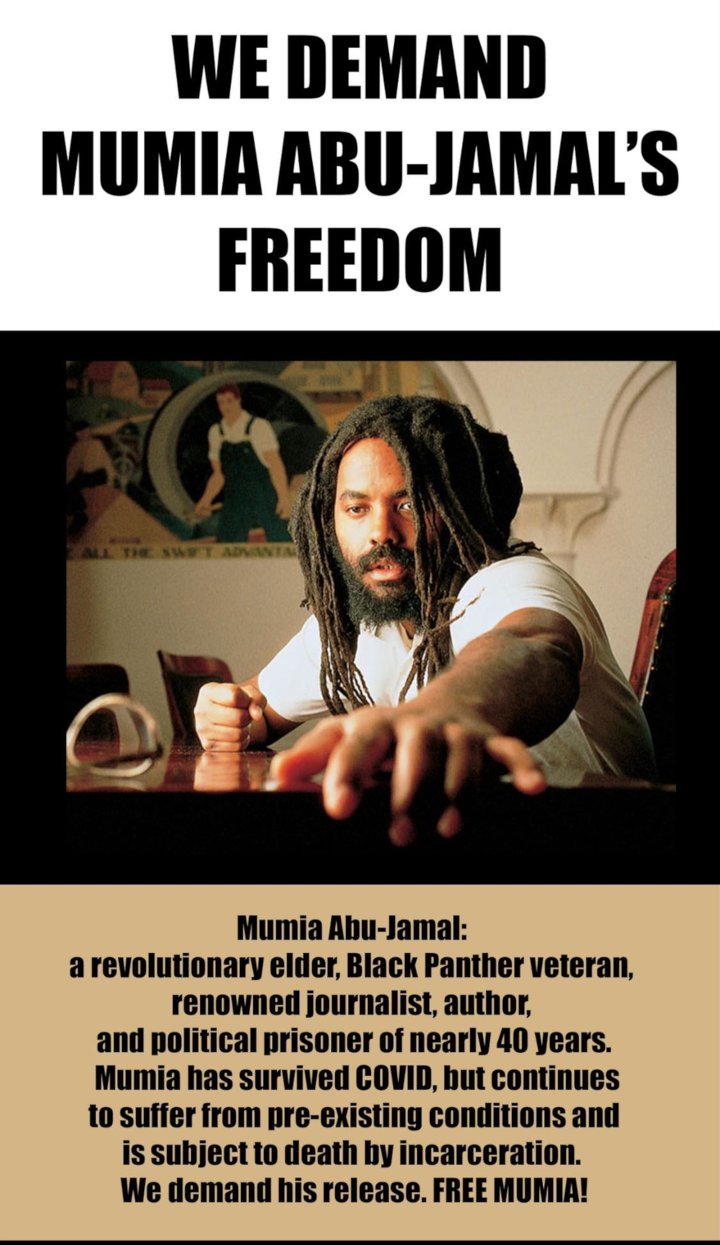
Newark, NJ: We demand Mumia Abu-Jamal’s freedom, March 26

This Friday, March 26th at Noon! We demand that Mumia Abu Jamal is immediately set free! A powerful voice for the People who has been falsely imprisoned for 40 years, with the govt intent of killing him in prison!
We are calling on NJ District Attorney Rachael Honig to put pressure on Pennsylvania DA Larry Krasner to release Mumia. We encourage everyone to use their voices as well to do the same to free our elders behind the walls!
Strugglelalucha256


Struggle ★ La Lucha PDF – March 22, 2021

Get PDF here

  • Anti-Asian murders and the capitalist state
  • Biden continues war to control oil
  • It’s not your fault
  • Young workers are losing access to pensions. Why?
  • End vaccine apartheid in Baltimore
  • ‘Free the vaccine’ protest hits Pfizer profiteering
  • With Minneapolis under police siege, Congressional bill would give more money to cops
  • Los Angeles police gangs you should know
  • George Floyd, say his name!
  • Keep Our Eyes on Minneapolis
  • Free Mumia! Free them all!
  • From Minneapolis to Philippines, shut down U.S.-funded death squads
  • Protest condemns massacre in Philippines
  • The real reason for U.S. attacks on China: global class struggle
  • Free Pablo Hasél
  • Clara Zetkin, fundadora del Día Internacional de la Mujer, ideas sobre el fascismo
Strugglelalucha256


GABRIELA USA calls for the protection and defense of Asian communities

Statement from Irma Shauf-Bajar, Chairperson GABRIELA USA, March 19:

GABRIELA USA vehemently condemns the March 16th attack and murders of eight people in Atlanta, Georgia, six of whom were Asian women. We send our deepest condolences, solidarity, and love to the families who have lost their mothers, daughters, aunties and sisters in the wake of this violent tragedy. We are devastated and mourn alongside the greater Asian community and allies as we continue the struggle towards genuine safety and justice.

These targeted killings are part of a continual increase of anti-Asian violence and murder in the U.S. Individual acts of violence must be connected to the larger systems – we understand that this act of racist and patriarchal violence is a symptom of the ever worsening conditions rooted in capitalism and U.S. imperialism.

From the Chinese Exclusion Act in the U.S., to U.S. wars of aggression in Japan, Korea, and Vietnam (to name a few), to the massacres and occupation of the Philippines by U.S troops, violence towards Asians in this country is part of the rising tide of white supremacy and fascism and is inextricably linked to the hyper-militarized and patriarchal culture rooted in the U.S. maintaining its Imperialist domination.

The exploitation of Asian women stems from decades of U.S. occupation in our motherlands. From Okinawa to Olangapo, one glance at the histories of U.S. military bases will turn up evidence of relentless sexual violence. Jennifer Laude and Yumiko Nagayama are only two of the countless Asian women and children who have suffered at the hands of American men.

We must protect our Asian communities, particularly that of working class immigrant and migrant lives, and ultimately we must DEFEND the lives and safety of Asian, immigrant, and other exploited and working class communities in the US. This defense must come in the form of organizing in our communities to address the symptoms and root out the cause of this vicious violence due to the capitalist and imperialist culture that is maintained by the ruling class and white supremacy. We must continue to organize for genuine safety, security and the right to live free from terror supported by the state.

In the face of fear, sadness and grief, let us direct our energy towards collective action and solidarity. Let us remember and hold near to our hearts the countless Asian women, sisters, daughters, mothers, aunties and cousins who have died by the hands of imperialism and continue this struggle for them! Let us link arms and work together to interrogate the US empire whose creation has come at the demise of our people! Isang bagsak!

Strugglelalucha256
https://www.struggle-la-lucha.org/2021/03/page/2/